
Science is supposed to make the world less mysterious, yet some discoveries keep pushing the fog just out of reach. The more we measure, the more reality answers with a shrug and a new puzzle. These aren’t fringe curiosities – they’re bedrock findings that refuse to fit neatly into our best theories. If you ask me, that’s the thrill: the sense that tomorrow’s breakthrough could redraw the map we thought we knew. Here are ten live-wire mysteries that keep researchers up at night and the rest of us looking up in wonder.
Hubble Tension: Two Cosmic Clocks Don’t Agree
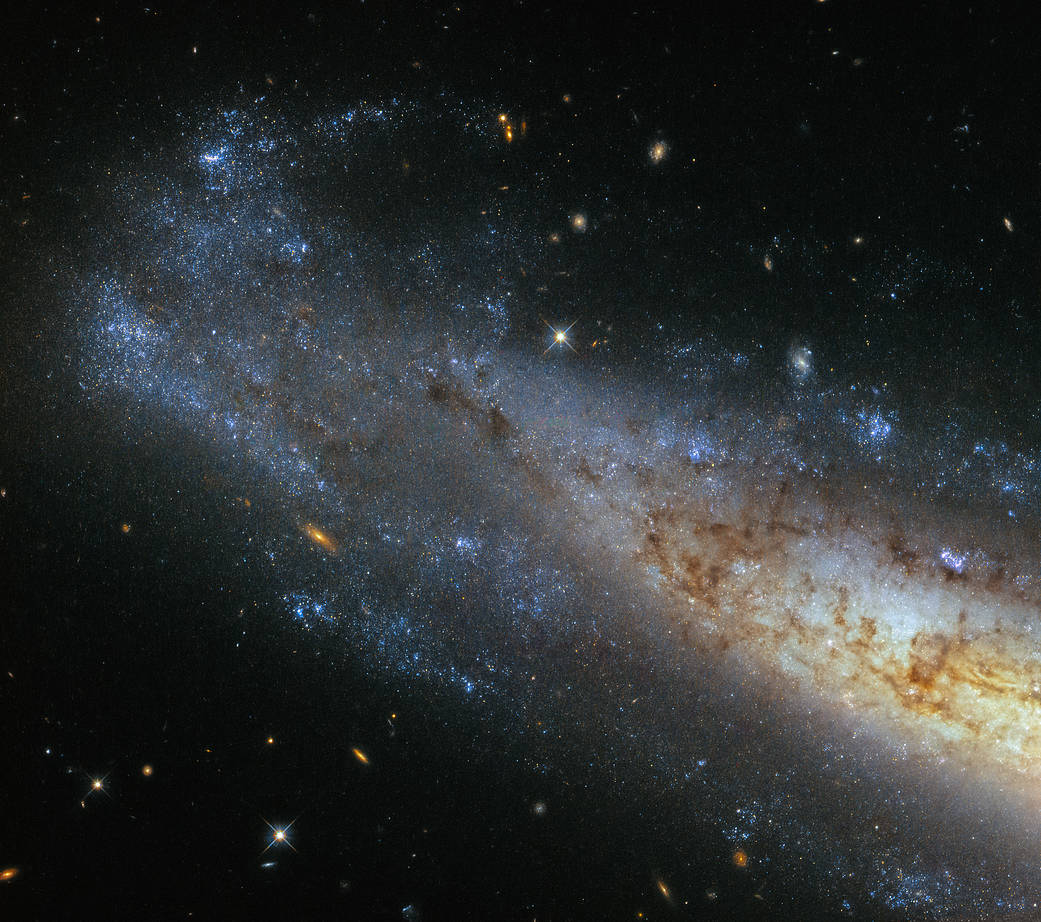
Using nearby stellar yardsticks, astronomers measure an expansion rate for the universe that is higher than what early-universe evidence implies. The discrepancy – nicknamed the Hubble tension – pits late-time measurements of supernovae and variable stars against the exquisitely precise glow of the cosmic microwave background. Both methods are careful, repeatable, and peer-reviewed, yet they don’t converge.
That split suggests either hidden systematics in one or both techniques or, more provocatively, new physics beyond the standard cosmological model. Imagine two trusted wristwatches that refuse to tick in sync; you start wondering if time itself works differently than you thought. Until these clocks agree, our story of the universe’s past and fate remains unsettled.
Dark Matter’s Invisible Hand
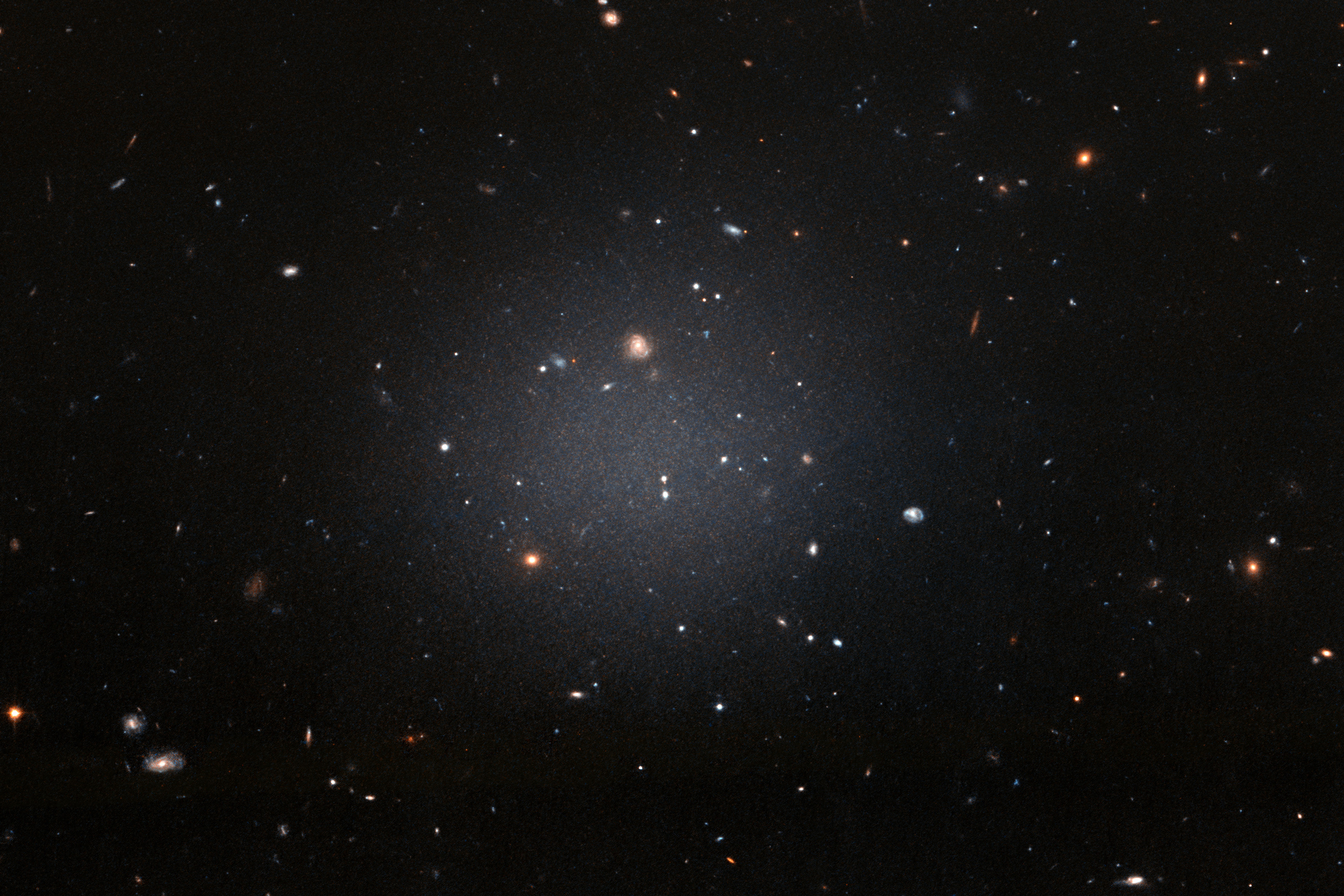
Galaxies spin as if cradled by an unseen mass, and clusters of galaxies lens light in ways that ordinary matter can’t explain. This evidence points to dark matter – roughly about five times more abundant than the stuff that makes up stars, planets, and people – yet decades of ultra-sensitive detectors have not snagged a single confirmed particle. Astronomers can map where dark matter is, but physicists still can’t say what it is.
Leading candidates range from weakly interacting massive particles to axions and more exotic possibilities. Every null result forces a creative pivot – new detector materials, fresh frequency windows, different astrophysical tests. The mystery endures because the gravitational fingerprint is unmistakable, even if the culprit remains offstage.
Dark Energy and the Runaway Universe
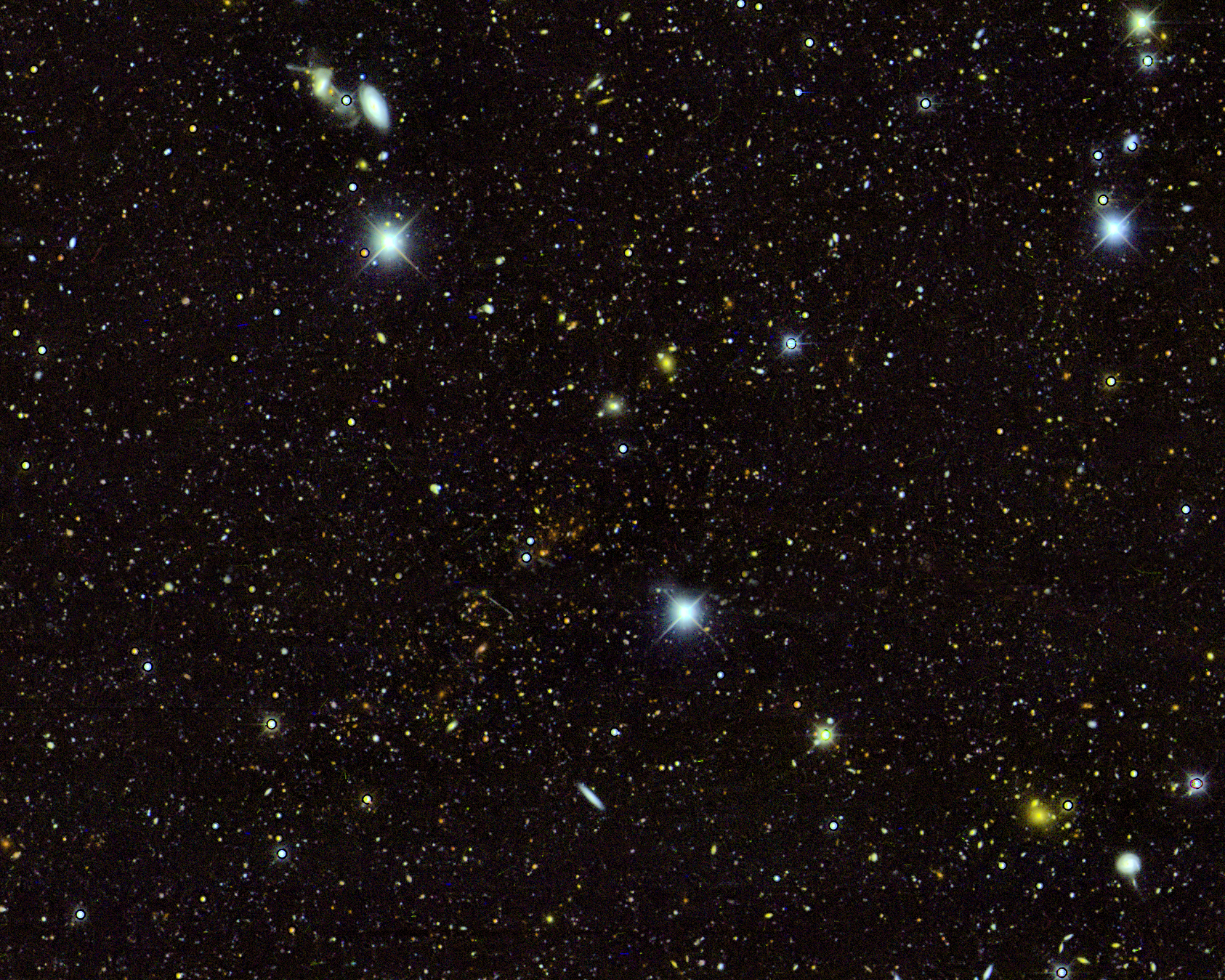
The universe isn’t just expanding – it’s accelerating, as if driven by a cosmic tailwind. This discovery, built on observations of distant supernovae and cross-checked with large-scale structure, demanded a new term in the equations: dark energy. The simplest interpretation acts like a constant energy density of empty space, but that simple idea comes with profound theoretical headaches.
For one, attempts to calculate the vacuum energy from quantum field theory overshoot the observed value by an absurd margin. If dark energy changes over time – even slightly – it would rewrite our predictions for the universe’s long-term evolution. For now, it’s the quiet engine we can’t see, tuning the fate of everything.
Fast Radio Bursts: Millisecond Mysteries
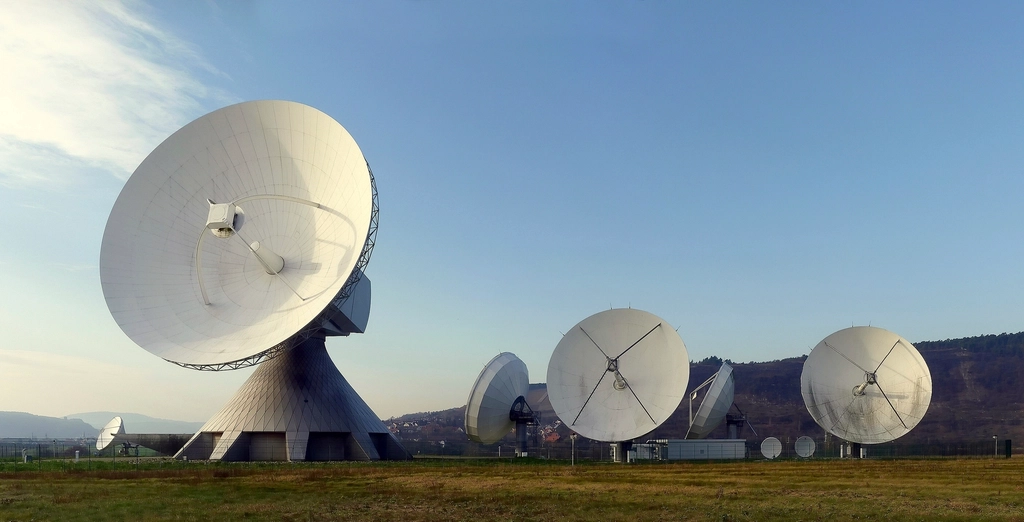
Fast radio bursts are intense blips of radio light that flare and fade in the blink of an eye, often from unimaginably distant galaxies. Some repeat, some don’t, and a few have been traced near star-forming regions, suggesting magnetars as likely engines. Yet the diversity is stubborn: not every burst fits the magnetar story, and the population looks more like a family reunion than a single lineage.
New arrays can now catch these bursts in real time and triangulate their host galaxies with remarkable precision. Even so, the “how” and “why” of their emission remain unsettled – akin to hearing a chorus through a wall without seeing the singers. Each new detection sharpens the picture and simultaneously adds a new wrinkle.
Ultra-High-Energy Cosmic Rays at the Edge of Physics

Now and then, Earth is peppered by particles so energetic they dwarf anything we can produce in accelerators. Their paths are bent by magnetic fields, so tracing them back to a pinpoint source is like rewinding spaghetti. Some appear to arrive from directions with no obvious powerhouse nearby, challenging our catalogs of extreme astrophysical engines.
The interactions of these particles with the cosmic background should limit how far they can travel, adding another layer of confusion. Composition studies hint at a mix trending heavier at the highest energies, complicating the picture rather than clarifying it. The sky keeps the secret, and the detectors keep listening.
‘Oumuamua: An Interstellar Visitor That Refused to Behave
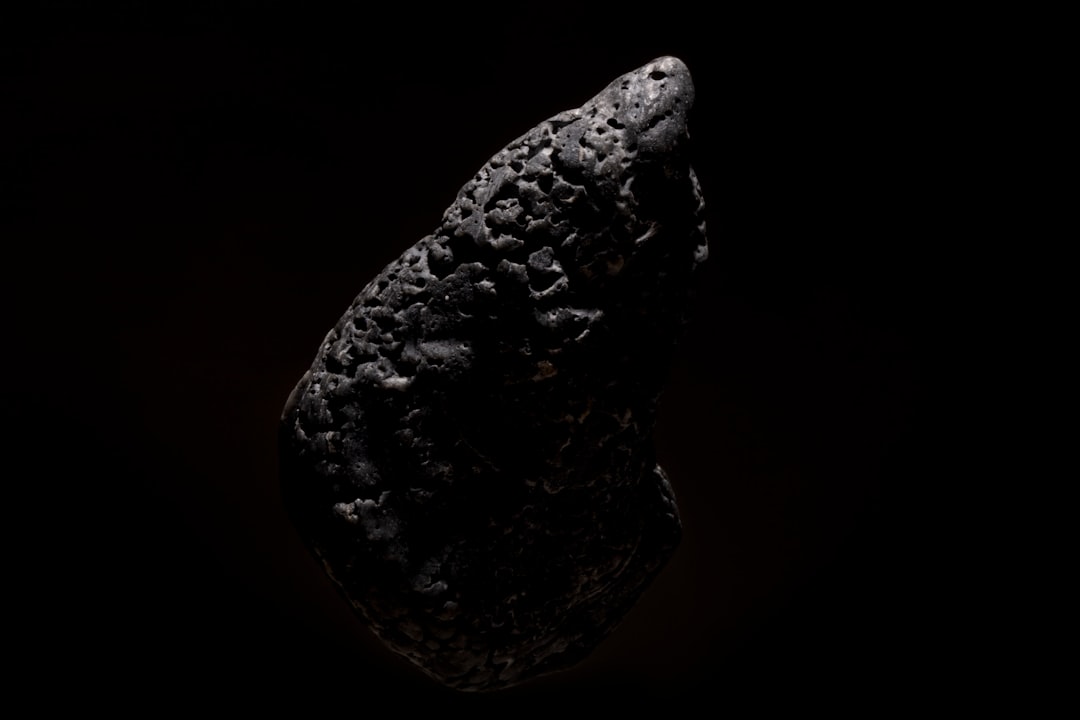
When the first known interstellar object breezed through our solar system, it didn’t act like a typical comet or asteroid. It accelerated slightly in a way best explained by outgassing, yet telescopes couldn’t catch obvious tails or dust. Its shape, inferred from brightness changes, looked elongated or perhaps pancake-like – either way, strange by local standards.
Hypotheses multiplied: unusual ices, exotic fracturing, or subtle outgassing that hid its tracks. With the object long gone, we’re left with competing models and the promise that future surveys will spot the next visitor early enough to examine it up close. Until then, ‘Oumuamua stands as the cosmic tourist who checked out before anyone could ask questions.
The Origin of Life: Bridging the Prebiotic Gap

Lab experiments show that amino acids, nucleotides, and lipids can form under plausible early-Earth conditions, but turning chemistry into self-sustaining biology remains a cliff we haven’t fully climbed. Did life begin in warm little ponds, deep-sea vents, or icy films that concentrated building blocks? Each setting offers elegant chemistry and tough practical hurdles.
Researchers are closing in on pathways that link simple precursors to RNA-like polymers and protocells that can grow and divide. Yet stitching these steps into a continuous, robust scenario is still a work in progress. The moment when mere molecules learned to copy and evolve stays just out of reach.
Why Matter Won: The Antimatter Asymmetry
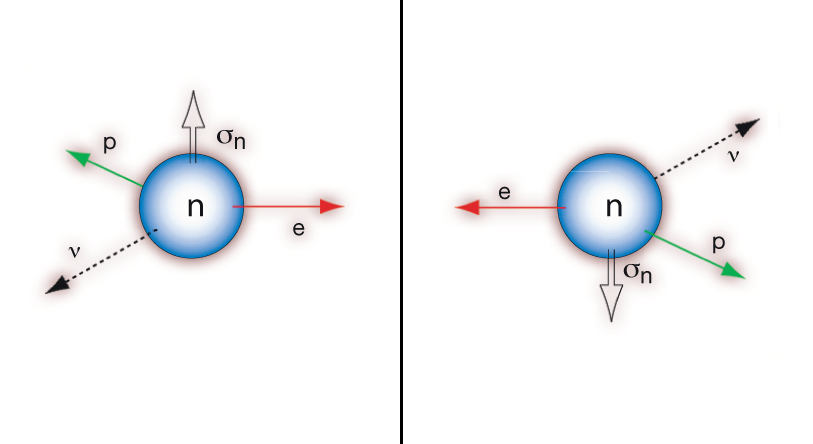
The early universe should have produced matter and antimatter in nearly equal amounts, which ought to annihilate into light and leave little behind. Instead, we live in a cosmos dominated by matter, a cosmic heads-or-tails that came up heads almost everywhere. Known sources of asymmetry in particle physics are too small to account for this dramatic preference.
Experiments hunt for tiny electric dipole moments, rare decays, and subtle symmetry violations that could tip the balance. Finding a new mechanism would echo far beyond particle physics, explaining why there’s something rather than almost nothing. Until then, the imbalance remains one of creation’s most unsettling receipts.
High-Temperature Superconductors and the Strange Metal State

Some copper-oxide and iron-based materials superconduct at temperatures far above the old textbook limits, yet the glue that pairs their electrons is still debated. Instead of acting like tidy quasiparticles, electrons in these compounds can behave like a restless crowd, defying simple models. The notorious “strange metal” phase, with its linear-in-temperature resistivity, deepens the riddle.
Techno-optimists see a path to lossless power lines and maglev everything, but engineers can’t design reliably without a controlling theory. New probes – from ultrafast lasers to quantum oscillation studies – map the landscape, revealing patterns that are tantalizing but incomplete. The recipe works; the cookbook is missing pages.
Quantum Measurement: Does Reality Wait for Us?

Quantum mechanics predicts outcomes with stunning accuracy, yet how those probabilities become a single, concrete result when we measure remains philosophically and experimentally thorny. Competing interpretations – many worlds, objective collapse, pilot waves – make identical predictions most of the time, leaving us with metaphysics wrapped in math. Recent experiments close loopholes in tests of entanglement, but they don’t pick a winner.
Some researchers look to gravity’s role or to subtle signals of collapse that might finally distinguish the options. For now, the quantum world works flawlessly while refusing to tell us what it really is. It’s a magician who shows every trick yet never reveals the method.
Call to Action: Stay curious and support the slow, careful work behind big breakthroughs. Follow your local university’s public talks, visit observatories and science museums, and champion robust research funding when it’s on the ballot. If you’re hands-on, join community science projects that help classify cosmic events or monitor the night sky. Small actions add up, and today’s bafflement is often tomorrow’s textbook chapter – written by people who cared enough to look closer.
Sources:
- NASA Science – Dark Energy and Dark Matter: https://science.nasa.gov/astrophysics/focus-areas/what-is-dark-energy/
- Nature – The Hubble Constant Dispute (news and views): https://www.nature.com/articles/d41586-023-02197-5
Suhail Ahmed is a passionate digital professional and nature enthusiast with over 8 years of experience in content strategy, SEO, web development, and digital operations. Alongside his freelance journey, Suhail actively contributes to nature and wildlife platforms like Discover Wildlife, where he channels his curiosity for the planet into engaging, educational storytelling.
With a strong background in managing digital ecosystems — from ecommerce stores and WordPress websites to social media and automation — Suhail merges technical precision with creative insight. His content reflects a rare balance: SEO-friendly yet deeply human, data-informed yet emotionally resonant.
Driven by a love for discovery and storytelling, Suhail believes in using digital platforms to amplify causes that matter — especially those protecting Earth’s biodiversity and inspiring sustainable living. Whether he’s managing online projects or crafting wildlife content, his goal remains the same: to inform, inspire, and leave a positive digital footprint.