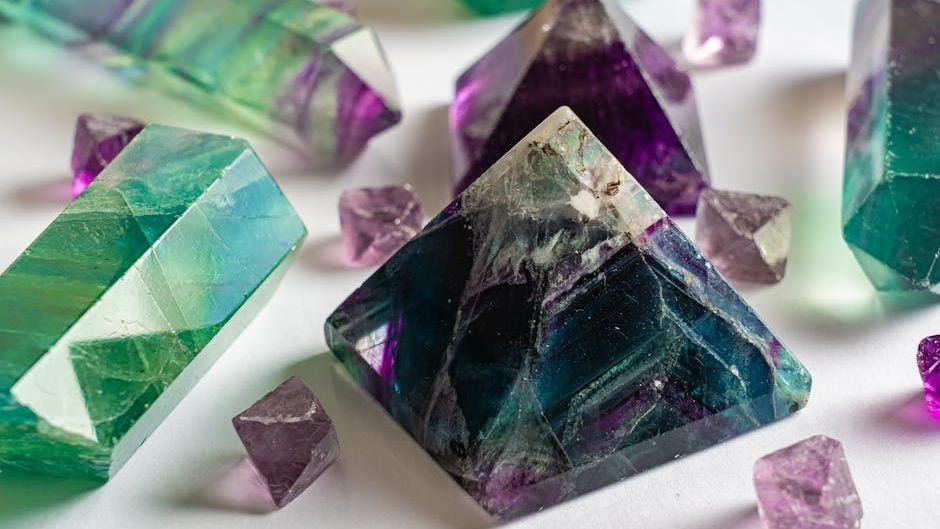

You probably think you know what rare looks like. A diamond. Maybe a ruby. Perhaps some glimmering blue sapphire locked behind museum glass. But honestly, those are practically common when you stack them up against what the Earth has actually been hiding. Underneath our feet, tucked inside volcanic cavities, crushed between colliding tectonic plates, and born from pressures that would crush anything we’ve ever built, there are minerals so extraordinary they make diamonds look like gravel.
Some of these minerals exist only in microscopic grains or isolated deposits. Others formed during ancient meteor impacts or appeared deep in volcanic pipes under conditions so extreme and specific they are unlikely to ever repeat. That’s not dramatic language. That’s just geology being wilder than any science fiction writer could dream up. So buckle in, because you’re about to meet ten of the strangest, rarest, and most jaw-dropping minerals our planet has ever produced.
1. Kyawthuite: Earth’s One and Only
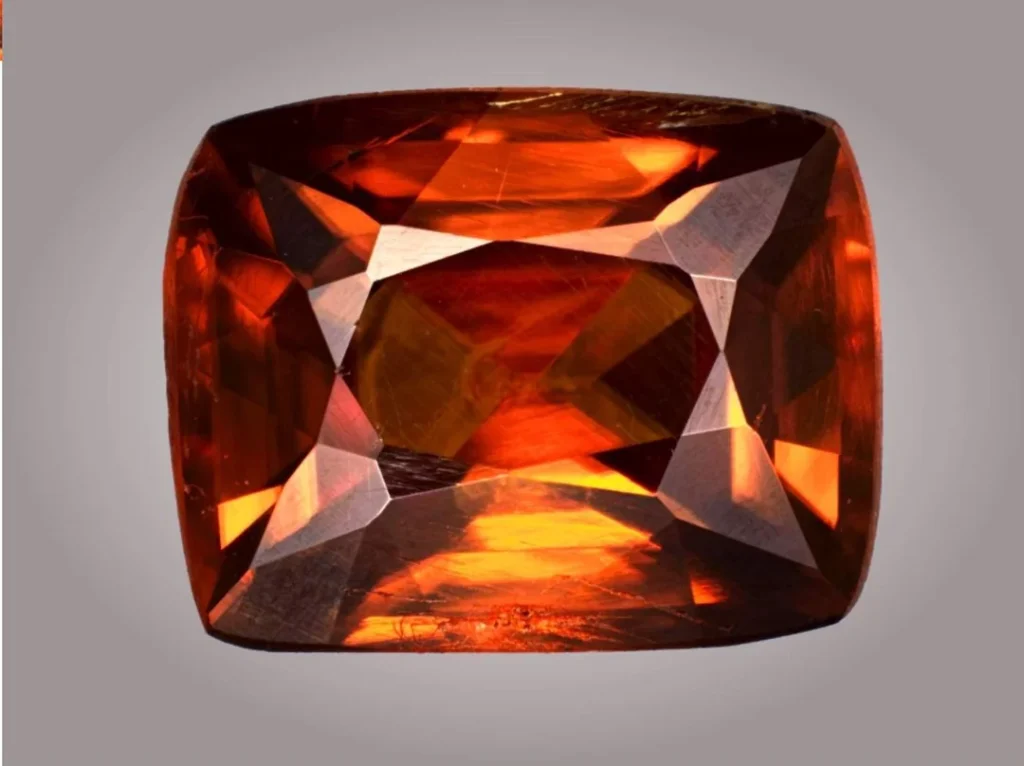
Let’s start with something that will genuinely shake your sense of scale. The rarest mineral on Earth is kyawthuite, and only one crystal, found in the Mogok region of Myanmar, is known to exist. Not one deposit. Not one mine. One. Single. Crystal. Think about that for a moment. Every other mineral ever discovered exists in at least a few specimens somewhere on this planet. Kyawthuite stands completely alone.
The only sample found thus far weighs a mere 1.61 carats, roughly 0.3 grams, and has sparked immense intrigue among scientists and collectors alike. It now sits alone in a museum case in Los Angeles. Kyawthuite is a unique bismuth-antimony oxide mineral containing traces of titanium, niobium, tungsten, uranium, and tantalum, with a density eight times that of water due to its unusual atomic structure, making it much heavier than it appears. You could hold it in your palm and never guess you were holding the rarest object on Earth.
2. Painite: The Geological Accident
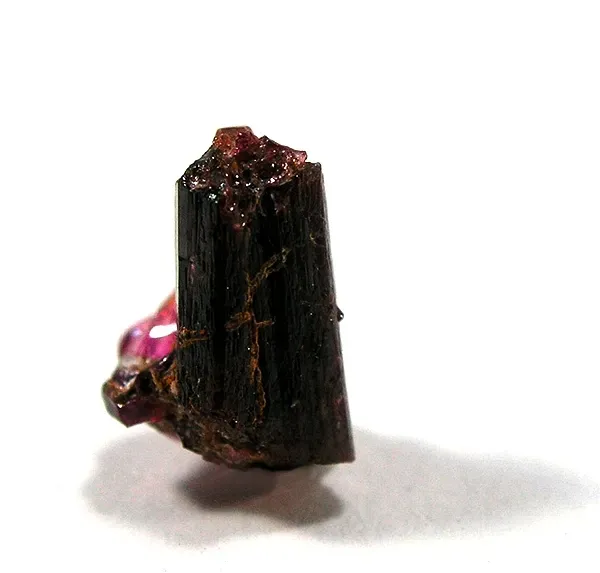
Painite was long considered the rarest mineral on Earth, so rare that for decades only a single known specimen existed. First discovered in Myanmar in the 1950s by British mineralogist Arthur Pain, painite baffled scientists for years before being identified as a completely new mineral species containing zirconium, boron, and rare trace elements. Here’s the thing. Its initial discovery was so shocking that scientists literally did not know what to do with it. It didn’t fit any known category.
The extreme rarity of painite stemmed from the unusual geological conditions needed to form it. Few regions on Earth have the right combination of boron and zirconium, and even when present, they rarely crystallize together. When new pockets were discovered in Myanmar in the early 2000s, the total number of specimens increased, but most are tiny fragments unsuitable for cutting. Even now, some gemologists refer to it as a “geological accident,” a nearly impossible combination of ingredients that Earth rarely repeats.
3. Red Beryl: Utah’s Fiery Secret

Beryl is a family of gemstones that includes emerald and aquamarine, stones that are already prized and valuable. Red beryl, however, stands apart as something almost mythical. Also known as bixbite, this gemstone is found almost exclusively in one area of Utah in the United States. I think what makes this one so staggering is the sheer improbability of its existence. It’s not just rare. It defies logic.
What makes red beryl so rare is the precise chemistry required for its formation. Beryllium must be present, along with trace amounts of manganese, in a volcanic environment that allows crystals to grow without being destroyed. These conditions are so specific that red beryl occurs in only a handful of small pockets. Its vibrant red color comes from traces of manganese, and fewer than 10 crystals are found for every 150,000 diamonds mined. Let that number sink in.
4. Alexandrite: The Gemstone That Changes Its Mind
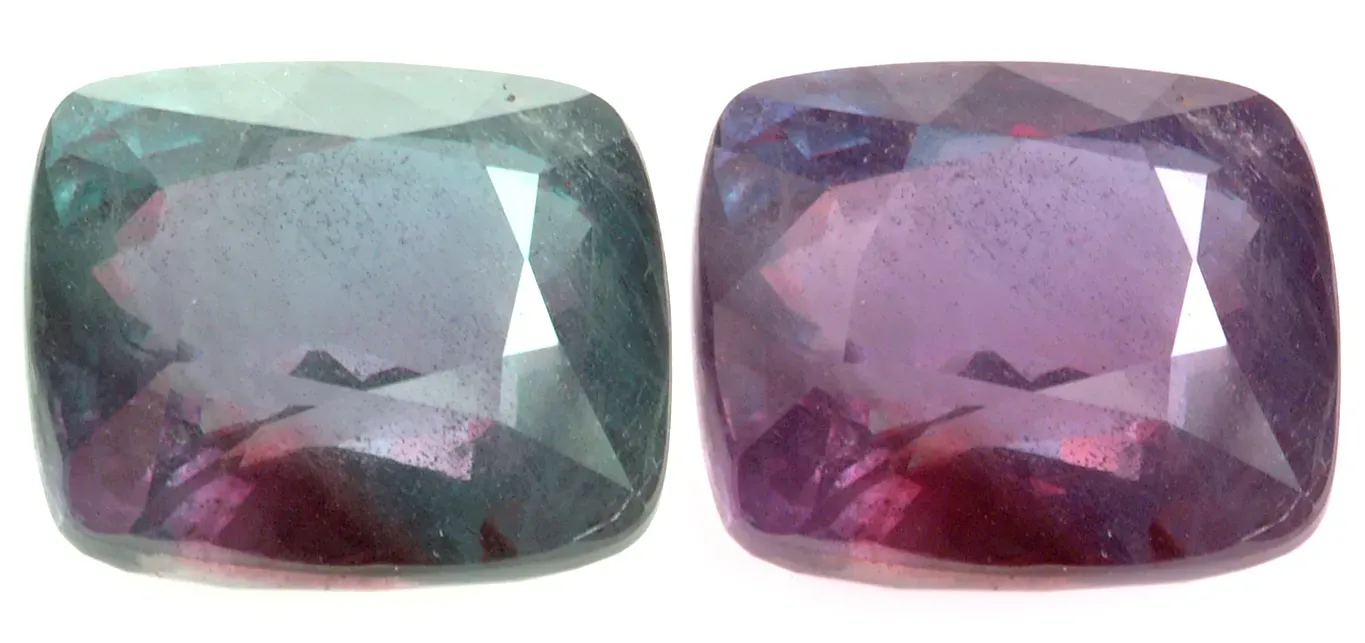
Alexandrite.net contributors. Step Cut Alexandrite Cushion, 26.75 cts. In Alexandrite.net, Tsarstone collectors guide. December 07, 2006, 16:42 UTC. Available at: http://www.alexandrite.net/viewpage.html?id=ALX-001-00001. Accessed February 26, 2007., CC BY-SA 3.0)
Named after Russian Czar Alexander II, the first alexandrite crystals were discovered near the Tokovaya River of the Urals in 1834. According to legend, alexandrite was found on the day that Alexander II came of age to become the future Czar. Dramatic origins aside, what makes alexandrite genuinely mind-bending is what happens when you shine different light on it.
Discovered in Russia’s Ural Mountains in the 19th century, this gemstone is famous for its remarkable color-changing ability. In daylight, it appears green or bluish-green. Under incandescent light, it shifts to red or purplish-red. This dramatic transformation is due to the presence of chromium and the way alexandrite absorbs light. It has even earned a nickname: “emerald by day, ruby by night.” No other mineral does this with quite the same theatrical flair, and that’s exactly what makes it so wildly compelling.
5. Benitoite: California’s Glowing Blue Star
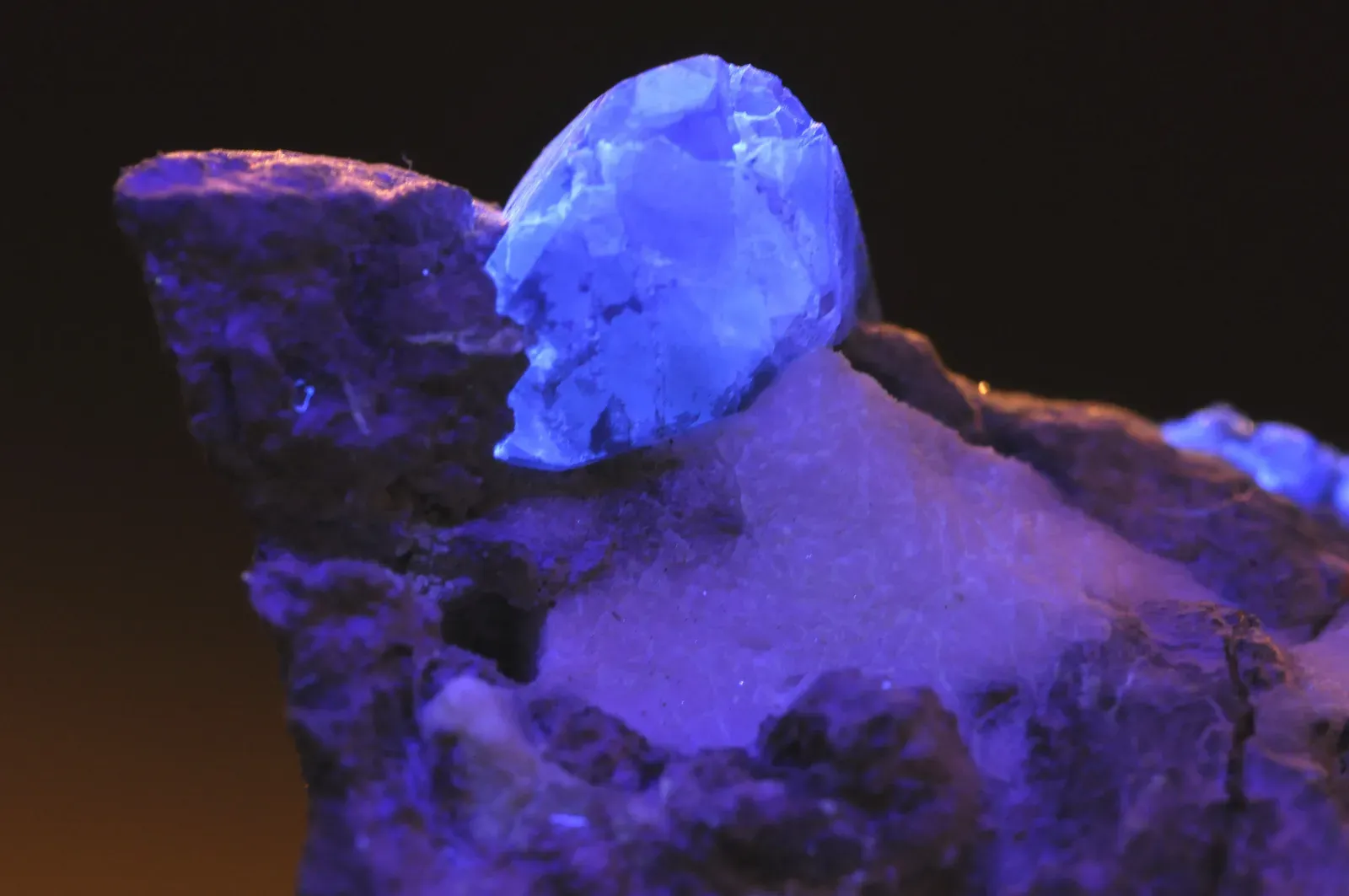
Benitoite is an extremely rare gemstone with only one known deposit in the world located in California, USA. It is known for its intense blue color, which can rival that of sapphire. It exhibits strong fluorescence under UV light, glowing a bright blue to bluish-white. Honestly, “glowing” feels like an understatement. Under ultraviolet light, benitoite practically ignites.
First discovered in 1907 in San Benito County, California, benitoite was initially thought to be sapphire. It was later identified as a new mineral and subsequently became California’s state gemstone in 1985. Benitoite is a vivid blue barium titanium silicate, famously from San Benito County, California, where it occurs in hydrothermally altered serpentinite. The mine site itself is now largely protected, which means what already exists is essentially all you’ll ever get. A finite, glowing, impossible blue.
6. Grandidierite: The Ocean Locked in Crystal
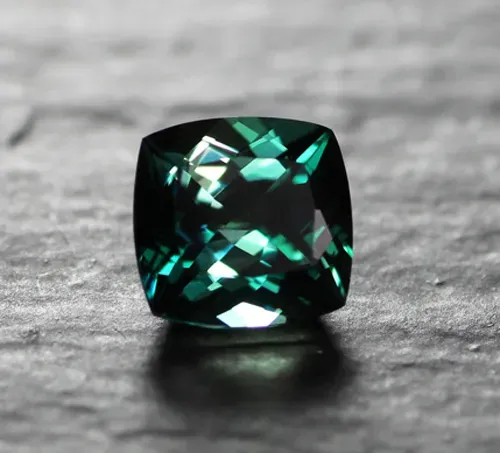
First discovered in Madagascar in 1902, grandidierite is one of the rarest gemstones in the world. Its distinctive blue-green color comes from iron and aluminum compounds. Named after French explorer Alfred Grandidier, this gemstone is renowned for its remarkable trichroism, showcasing an enchanting play of colors that dance within its depths. It’s the kind of stone that makes you want to simply stare at it from every possible angle.
What makes grandidierite so scarce is its extreme difficulty in forming transparent, gem-quality crystals. Most specimens are opaque or heavily included, making clean stones exceptionally rare. When high-quality grandidierite does appear, it commands astonishing prices. Some specimens have sold for amounts far beyond diamonds, driven by intense collector demand and minimal supply. It’s less a gemstone and more a geological lottery ticket, except with far longer odds.
7. Musgravite: A Stone Born From Extremes
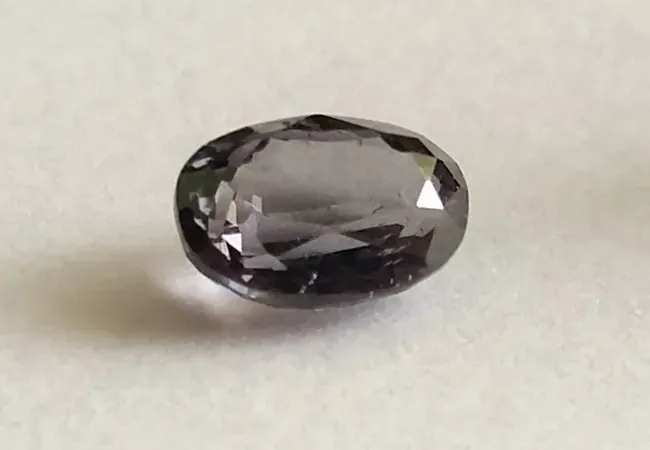
Musgravite was first discovered in 1967 in the Musgrave Ranges of South Australia and is named after the location. It is known for its vibrant green color, which can range from light green to deep green. It is also known for its high refractive index, which gives it exceptional brilliance. For decades, it was so obscure it barely registered in the gemstone world. Then collectors finally caught on, and the race was on.
Until 1993, only eight specimens of gem-quality musgravite were known to exist. This grayish-green to purple stone shares chemical properties with taaffeite but is significantly rarer. Musgravite is extremely rare and valuable, with prices ranging from $30,000 to $50,000 per carat, depending on the quality and size of the stone. That price tag for a stone most people have never even heard of tells you everything you need to know about how extraordinary it truly is.
8. Tanzanite: The Countdown Gem
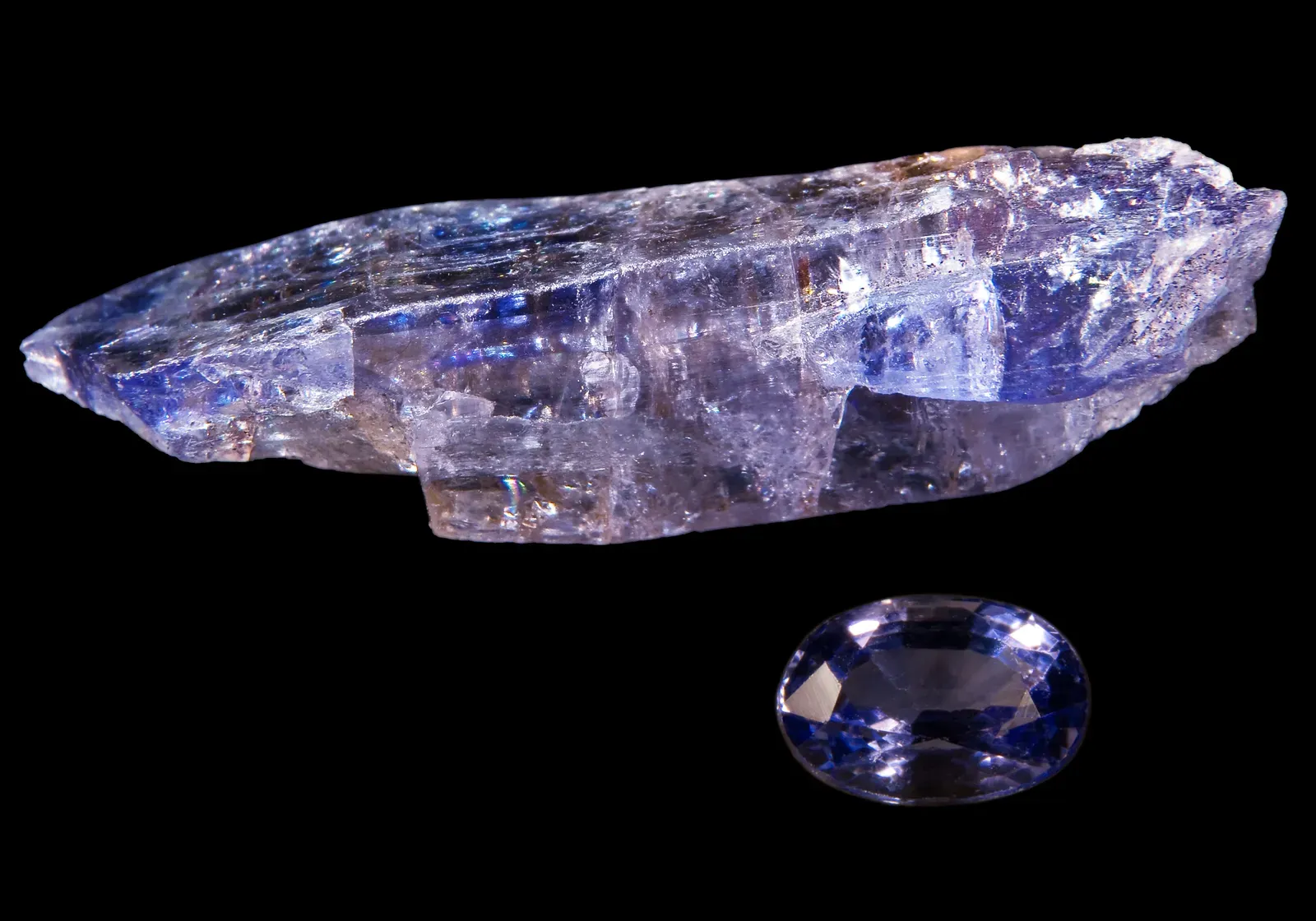
Tanzanite is a stunning blue-to-violet gemstone found only in one location on Earth: the foothills of Mount Kilimanjaro in Tanzania. Discovered in 1967, tanzanite has gained immense popularity for its vivid hues and relative affordability compared to other rare stones. The formation of the tanzanite crystal started roughly 600 million years ago as Mount Kilimanjaro erupted and created the unique conditions needed to form the crystals deep within the Earth. Six hundred million years in the making. That’s humbling.
Tanzanite’s rarity lies in its unique geological origin. It is found exclusively in the Merelani Hills of Tanzania, in a mining area of just 8 square miles. Experts predict that the limited deposits could be exhausted within 20 to 30 years, adding to its allure and collectibility. Think of it like a ticking clock buried in the earth. Once it’s gone, there is simply no more tanzanite to be found anywhere on this planet. That urgency makes it one of the most emotionally charged minerals on this entire list.
9. Serendibite: Rarity That Whispers
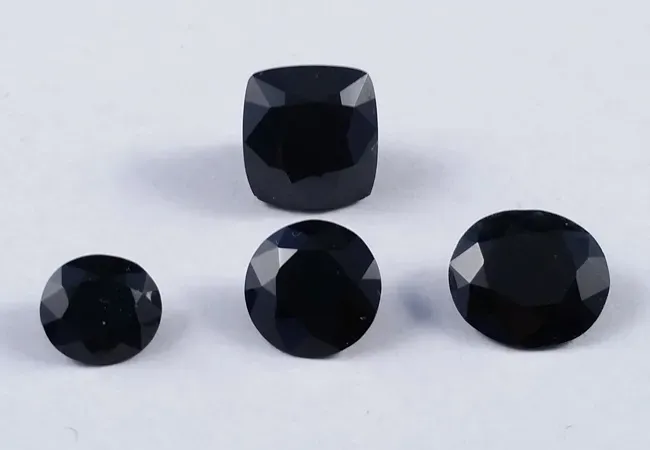
Serendibite is so rare that for many years it was known only from opaque specimens unsuitable for gemstones. Named after “Serendib,” an ancient name for Sri Lanka, this mineral exists in just a few locations worldwide. Transparent, gem-quality serendibite is almost unheard of. When such stones do appear, they are typically small and dark, with deep green or bluish-black tones.
With fewer than 30 known faceted specimens worldwide, serendibite is among the rarest of all gemstones. Its dark blue-green color is often confused with sapphire. Exceptional examples can be valued at up to $18,000 per carat, reflecting both scarcity and desirability. Serendibite forms in boron-rich metamorphic rocks and requires precise conditions to develop, such as high pressure and specific chemical components. It was first discovered in Sri Lanka, with limited occurrences in Myanmar and Madagascar. It’s not flashy. It doesn’t glow under UV. It simply exists, barely, and that restraint is its own kind of power.
10. Taaffeite: The Gem Discovered by Accident
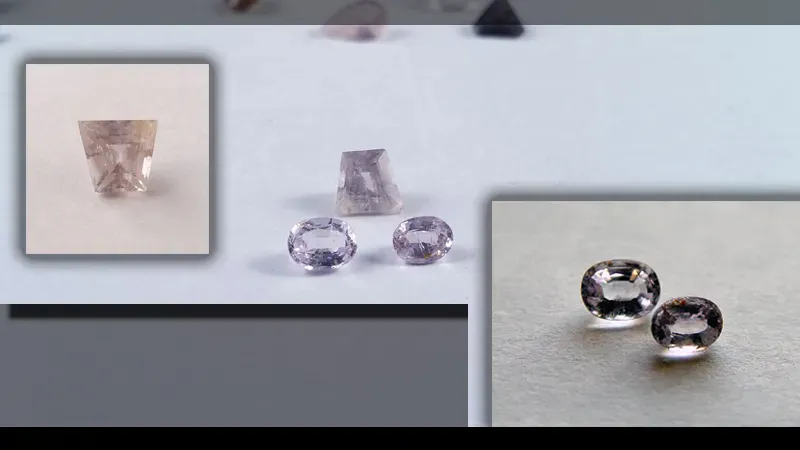
Originally mistaken for spinel until gemologist Richard Taaffe recognized it was a new mineral in 1945, taaffeite comes in shades from mauve to lavender and is extremely scarce. Let that sink in. A collector bought a stone he thought was relatively ordinary, looked more closely, and realized nobody had ever classified what he was holding. That almost never happens, especially not in the modern era of mineral science.
Taaffeite is a mauve to violet mineral originally misidentified as spinel, first recognized from a cut stone in Sri Lanka and later traced to limited alluvial gem gravels. First identified in 1945, taaffeite remains one of the rarest gemstones, with most specimens coming from Sri Lanka and Tanzania. The fact that it was discovered in an already-cut stone, not pulled raw from the ground, makes its story arguably the most delightfully accidental on this entire list. Sometimes the greatest discoveries hide in plain sight, waiting for someone observant enough to notice what everyone else walked past.
A Final Thought Worth Sitting With
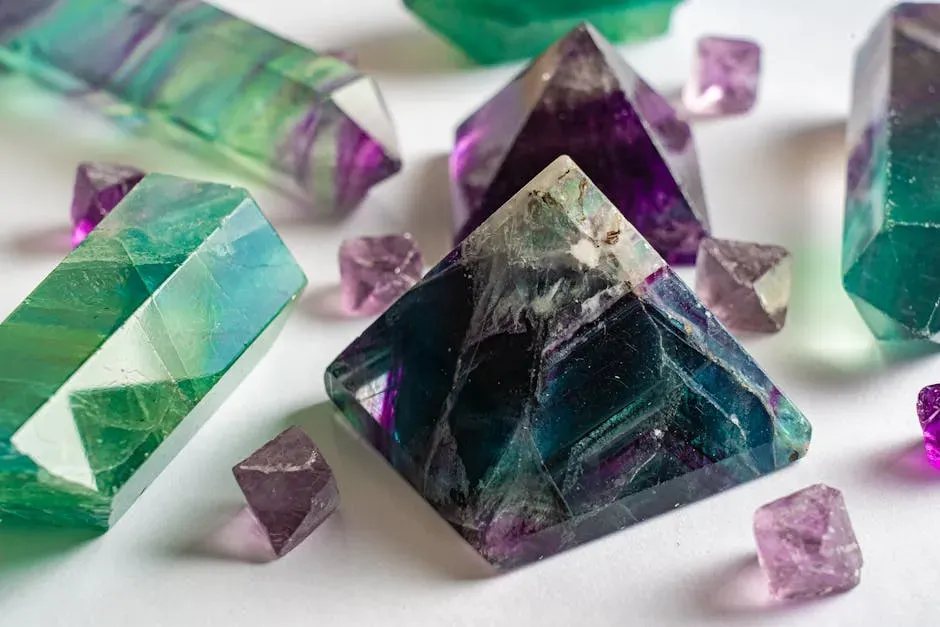
Minerals are among Earth’s most captivating treasures, crystals, metals, and formations born from the planet’s deepest pressures, rarest chemical interactions, and most unusual geological environments. While many minerals are common enough to fill museum shelves or jewelry stores, a select few are so rare that they exist only in microscopic grains, isolated deposits, or single specimens held in secure vaults.
What strikes me most about this list isn’t the dollar values or even the jaw-dropping rarity. It’s the reminder that the Earth is still full of secrets it hasn’t quite finished revealing. Hundreds of new mineral species are still being described every year, meaning today’s rare “superstars” could be joined by even stranger finds tomorrow. The next kyawthuite might already be sitting in a river gravel pile somewhere, waiting for the right pair of eyes. Which of these ten surprised you the most? Drop your thoughts in the comments below.