
Walk into any physics lab today and you will find a quiet revolution underway: reality, as quantum experiments keep reminding us, is far stranger than the sturdy, everyday world our senses insist is true. Particles tunnel through barriers they seemingly have no energy to cross, information appears to leap across space faster than anything material could travel, and empty vacuum crackles with invisible activity. For decades these effects sounded like science fiction or philosophical puzzles, but increasingly precise experiments have nailed them down as hard facts. What is changing now is not just our theories but our technologies, as engineers learn to harness these weird behaviors for computing, encryption, and even sensing the human body in new ways. The result is a moment in science where common sense keeps losing – and human imagination keeps catching up.
The Double-Slit Mystery: When Particles Behave Like Ghostly Waves
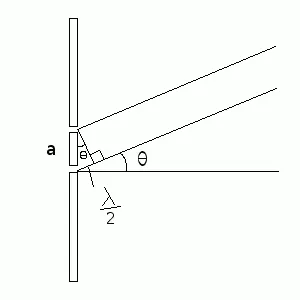
Imagine firing tiny bullets at a wall with two narrow slits and finding, not two neat stripes behind it, but a whole pattern of bright and dark bands, as if waves of water had somehow interfered with each other. That is exactly what happens in the famous double-slit experiment when you send electrons or photons, one at a time, toward the slits: they build up an interference pattern over time, as though each particle spread out like a wave and passed through both slits at once. The real shock comes when you try to “watch” which slit each particle goes through using detectors; the instant you do this, the interference pattern disappears, and the particles snap back into behaving like small solid objects. Reality, at the quantum scale, seems to care about what can be known, not just what is. Physicists have repeated and refined this experiment in countless variations, and the bizarre result keeps holding up: nature refuses to pick a simple wave-or-particle lane.
Modern versions use single photons in ultra-quiet optical setups, or even massive molecules made of dozens of atoms, and the wave-like pattern still emerges as long as no which-path information leaks out. That means “observation” is not just a human act but any interaction that leaves a trail in the environment, blurring the line between measurement and reality itself. It also means that our everyday intuition – that objects always have definite positions and paths – is a kind of large-scale illusion that only works when quantum fuzziness averages out. This one experiment has shaped everything from interpretations of quantum mechanics to designs of quantum computers, which depend on keeping superpositions alive by isolating them from environmental “observers.” If the double-slit setup feels like a magic trick that never gets old, that is because it keeps revealing just how thin our common-sense picture of the world really is.
Quantum Entanglement: Spooky Connections That Ignore Distance
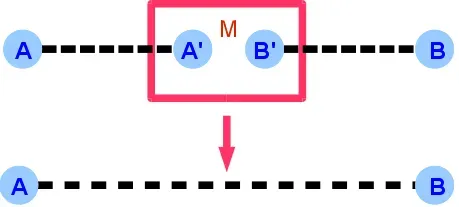
Take two particles that have interacted, separate them by miles, and then measure a property of one – its polarization, say – and you will find that the other particle’s measurement outcome is mysteriously correlated, as if they were still whispering to each other. This deep link, called entanglement, was once derided as a strange artifact of equations, but experiments starting in the late twentieth century and sharpening in the twenty-first have shown it is a very real feature of nature. By testing so-called Bell inequalities, researchers have demonstrated that no model based only on hidden local variables can explain the observed correlations. In plain language, what happens to one entangled particle instantly reshapes the probabilities for the other, no matter how far apart they are.
That does not mean information travels faster than light in the way a message does; you cannot use entanglement alone to send a controllable signal. Still, it wrecks the classical idea that distant things are completely independent unless something physically moves between them. Entire fields now spring from this oddity, including quantum cryptography, where entangled photons reveal eavesdroppers by their very attempts to measure the system. Quantum networks being built in Europe, China, and the United States rely on distributing entangled states over tens or even hundreds of kilometers through fiber and free space. What once looked like a philosophical headache has turned into a resource, a kind of invisible glue that lets pieces of a future “quantum internet” share a common reality.
Superposition: One System, Many Possibilities at Once
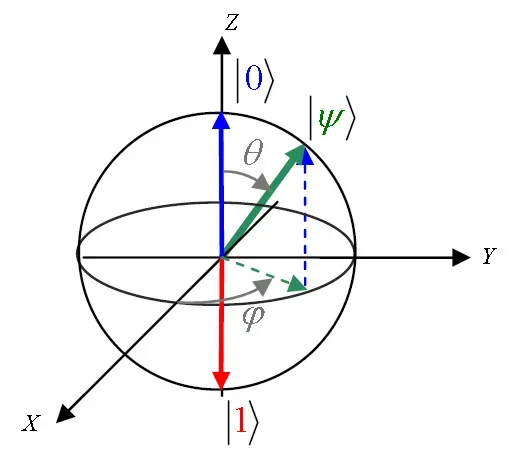
In the everyday world, a light switch is either on or off, a coin is either heads or tails, and a cat is definitely either alive or not. In the quantum world, though, a system can exist in a superposition of states – on and off, here and there, spin up and spin down – at the same time, described by a wave of probabilities. Only when a measurement is made does this wave “collapse,” yielding a single outcome. This concept, formalized in the early days of quantum theory, sounded abstract for decades, but in laboratories today, superposition is something you can literally program into devices.
In superconducting qubits cooled near absolute zero, for example, an electrical current can flow clockwise and counterclockwise around a loop at once, encoding the equivalent of a zero and a one simultaneously. Trapped ions, neutral atoms in optical lattices, and photons in resonators can all be coaxed into superpositions, then read out like ultra-delicate coins that only settle when you look. The power of quantum computing stems from this ability to explore many computational paths in parallel, though getting usable answers requires clever algorithms and error-correction strategies. To keep superpositions intact, engineers fight a constant battle against decoherence, where interactions with the environment destroy the delicate quantum mixture. That problem sounds technical, but it is basically the same tension that the double-slit experiment dramatizes: the universe allows many possibilities, but our messy macroscopic world keeps dragging them back to one.
Quantum Tunneling: Passing Through Walls That Should Be Impossible
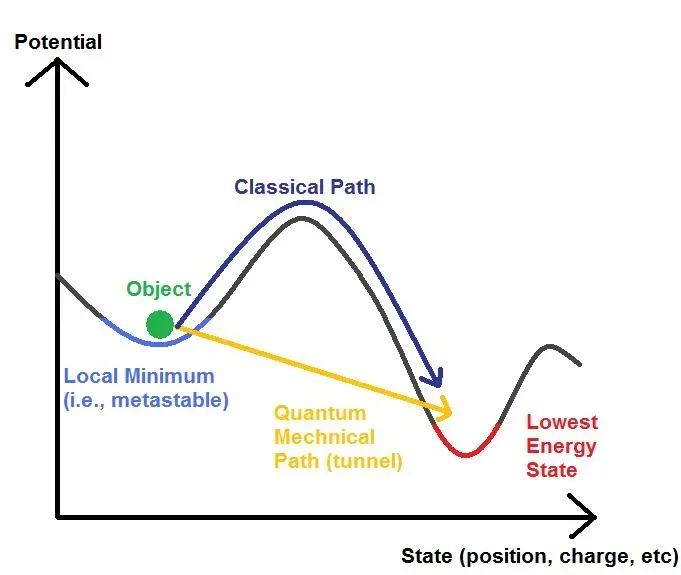
Picture a skateboarder stuck in a bowl without enough energy to roll over the edge; classically, they are trapped forever unless you give them a push. At the quantum level, though, particles do something wildly different: they can “tunnel” through barriers even when they do not have enough energy to climb over. Mathematically, the wavefunction describing a particle does not abruptly drop to zero at a barrier; it leaks into and beyond it with a small probability. In experiments, electrons routinely appear on the far side of insulating layers, and alpha particles escape atomic nuclei despite seemingly insurmountable potential walls.
This defiance of common sense is not a fringe effect; it underpins real technologies and even life itself. Scanning tunneling microscopes use a tiny tip brought extremely close to a surface, letting electrons tunnel across the gap; the resulting current maps individual atoms with astonishing resolution. In stars, including the Sun, tunneling helps protons fuse at temperatures that would otherwise be too low to overcome their mutual repulsion, allowing nuclear fusion to power galaxies for billions of years. Evidence also suggests that tunneling plays a role in enzyme reactions and proton transfers in biological systems, hinting that quantum weirdness threads right into our biochemistry. What once sounded like a cheat code in physics textbooks is, under the hood, how the universe actually gets things done.
Vacuum Fluctuations and the Casimir Effect: When “Nothing” Pushes Back
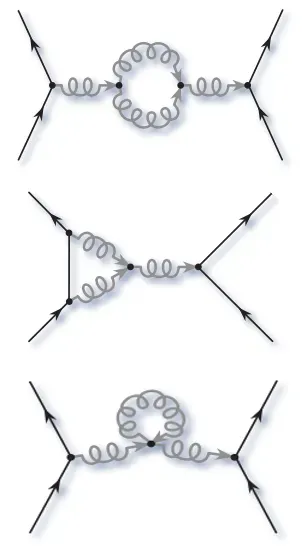
Ask most people what a vacuum is and they will say it is empty space, pure nothingness. Quantum field theory, however, tells a more unsettling story: even in what we call vacuum, fields are constantly fluctuating, with pairs of virtual particles popping in and out of existence too quickly to be directly seen. These restless fluctuations normally cancel out, but when you place two metal plates extremely close together in a vacuum, something measurable emerges. The plates restrict which electromagnetic modes can exist between them, changing the energy density and producing a tiny force that pushes them together, known as the Casimir effect.
This seemingly esoteric phenomenon has been confirmed with exquisitely sensitive experiments, measuring forces between surfaces separated by distances thinner than a human hair. Engineers now have to account for Casimir forces when designing micro- and nano-scale machines, where even a subtle quantum push can cause moving parts to stick or drift. Some researchers are exploring whether carefully engineered surfaces can harness vacuum fluctuations for ultra-precise sensing or novel actuation, though practical energy extraction remains more science fiction than fact. Still, the very idea that “empty” space can exert a force you can measure in the lab changes how we think about nothingness itself. In a way, the vacuum is less a void and more a restless sea, and our devices are learning to feel its waves.
Quantum Biology: Life’s Machinery May Be Tapping the Quantum World
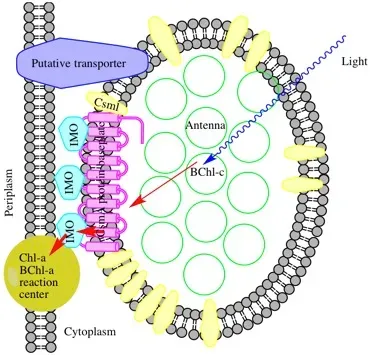
For a long time, biologists and physicists treated quantum effects as something that belonged strictly to cold, isolated labs, not to the warm, wet messiness of living cells. That view has been challenged over the past two decades by evidence that certain biological processes may not just survive quantum effects but actively exploit them. In photosynthetic complexes in plants and some bacteria, experiments suggest that excitations created by light may move through pigment arrays using a kind of quantum coherence, sampling multiple routes at once before settling on an efficient path. Similarly, there is ongoing investigation into whether birds use entangled chemical reactions in their eyes to sense Earth’s magnetic field.
Researchers studying enzymes have also found hints that quantum tunneling helps protons and electrons leap between sites, speeding up reactions far beyond what classical models predict. These ideas are still debated and refined, but they point toward a view of life as deeply intertwined with quantum physics rather than merely sitting on top of it. If this emerging field of quantum biology holds up, it could inspire new designs for solar cells that mimic nature’s energy transport tricks or drugs that better account for the fuzzy, probabilistic world inside proteins. It might even reshape how we think about consciousness, memory, and perception, though those frontiers remain more speculative than solid. Either way, the old boundary between “quantum weird” and “biological normal” is starting to blur in fascinating ways.
Why It Matters: Rethinking Reality, Technology, and Even Common Sense
It would be tempting to file all these quantum oddities under “cute physics stories” and move on, but that would miss their deeper impact. First, they have forced scientists to abandon the comforting idea that the world is simply made of tiny billiard balls obeying crisp, deterministic rules. Instead, we are left with a reality built from probabilities, correlations, and fields that do not fit neatly into everyday language. That shift has philosophical weight, certainly, but it also carries immediate practical consequences: designing a quantum computer or secure communication system demands we think in terms of superposition and entanglement, not classical bits and wires.
Compared with traditional electronics and communication, quantum technologies promise radical leaps. Conventional computers process bits that are either zero or one, while quantum bits can inhabit many states at once and become entangled with others, opening shortcuts through computational landscapes that would otherwise take ages to explore. Classical cryptography often relies on mathematical problems that are hard to solve; quantum cryptography grounds security in the laws of physics themselves, where any eavesdropping unavoidably disturbs the system. Even in medicine and imaging, quantum sensors can detect minute changes in magnetic and electric fields with sensitivities that older tools cannot touch. In a sense, taking quantum strangeness seriously is not optional anymore; it is the price of admission to the next era of technology.
The Future Landscape: Quantum Tech Moves From Lab Curiosity to Global Infrastructure
Right now, the world is in the middle of what many call a second quantum revolution, one focused on control rather than just discovery. Governments and companies are pouring billions into building scalable quantum computers, secure quantum communication links, and ultra-precise quantum sensors. Early quantum processors, still noisy and limited, have already tackled specialized tasks like simulating small chemical systems or optimizing narrow problems, hinting at what more mature machines may handle. In parallel, prototype quantum networks are knitting together labs and cities, using entangled photons to test out what a larger-scale “quantum internet” might look like.
The road ahead is packed with challenges: decoherence, error correction, materials limitations, and the sheer complexity of engineering devices that live near absolute zero. There are also social and geopolitical questions, such as who will control powerful decryption capabilities if large quantum computers are built, and how to protect existing data before that happens. Yet the potential benefits are equally dramatic, from accelerating drug discovery and materials design to enabling navigation and sensing systems that do not rely on vulnerable GPS signals. In a decade or two, many of the strangest quantum effects discussed here could be quietly embedded in devices we barely notice, much as transistors vanished into the background of everyday electronics. The future, in other words, may be profoundly quantum without shouting about it.
How You Can Engage: From Everyday Curiosity to Supporting Quantum Research
Quantum physics can feel remote, like something that belongs to Nobel prizes and billion-dollar labs, but there are simple ways to bring it closer to home. One is to nurture curiosity: watch public lectures, read accessible books, or follow reputable science outlets that translate new quantum findings into everyday language. Many universities and research institutes share open educational materials and outreach events, from virtual lab tours to citizen-science projects that help analyze data or optimize algorithms. If you work in fields like computing, engineering, or healthcare, staying informed about quantum developments can help you anticipate how your own tools and practices might change.
There are also more concrete steps. People who are able can support science education programs, museums, or nonprofits focused on broadening access to STEM, helping the next generation feel at home with these counterintuitive ideas. Policymakers and voters can push for sustained, transparent funding of basic research, recognizing that the oddest experiments often lay the groundwork for tomorrow’s breakthroughs. Even simple actions, like talking with friends or kids about why the universe is stranger than it looks, help build a culture that values curiosity over easy answers. The quantum world may be bizarre, but it is also ours, and learning to live with its surprises is part of the adventure of being human.
Suhail Ahmed is a passionate digital professional and nature enthusiast with over 8 years of experience in content strategy, SEO, web development, and digital operations. Alongside his freelance journey, Suhail actively contributes to nature and wildlife platforms like Discover Wildlife, where he channels his curiosity for the planet into engaging, educational storytelling.
With a strong background in managing digital ecosystems — from ecommerce stores and WordPress websites to social media and automation — Suhail merges technical precision with creative insight. His content reflects a rare balance: SEO-friendly yet deeply human, data-informed yet emotionally resonant.
Driven by a love for discovery and storytelling, Suhail believes in using digital platforms to amplify causes that matter — especially those protecting Earth’s biodiversity and inspiring sustainable living. Whether he’s managing online projects or crafting wildlife content, his goal remains the same: to inform, inspire, and leave a positive digital footprint.