
You know the feeling when you pick up your phone and there’s a message from an unknown number? That slight thrill of curiosity mixed with caution. Now imagine that on a cosmic scale. Scientists around the world scan the skies every night with powerful telescopes, listening to the universe’s whispers. Sometimes, what comes through isn’t what anyone expected.
These aren’t just blips on a screen or background noise. We’re talking about signals so strange, so powerful, so inexplicable that they’ve left even the most brilliant minds scratching their heads. Some last mere milliseconds but pack the energy of billions of suns. Others repeat with eerie regularity, like a cosmic metronome ticking away in the darkness. A few have sparked wild speculation about alien civilizations, though the truth is often stranger than fiction.
Let’s be real, the universe has been sending us messages for years, and we’re only just beginning to understand the language. Here are ten of the most baffling transmissions that continue to challenge everything we think we know about space.
The Wow Signal: A 72-Second Mystery From 1977
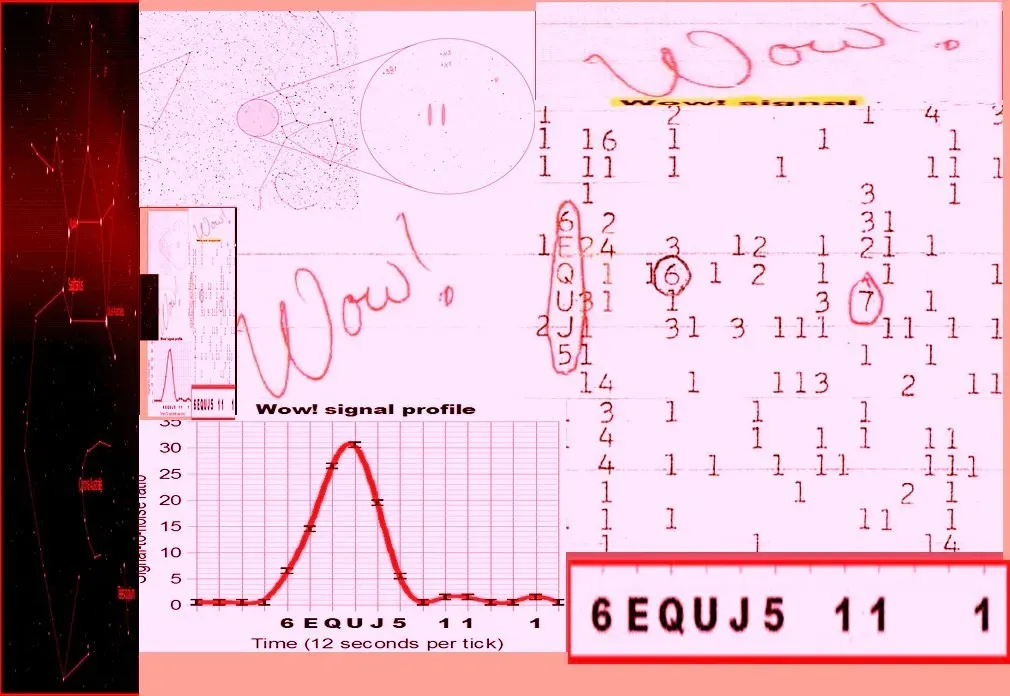
On August 15, 1977, Ohio State University’s Big Ear radio telescope detected a strong narrowband radio signal that appeared to come from the direction of the constellation Sagittarius and bore expected hallmarks of extraterrestrial origin. Astronomer Jerry R. Ehman discovered the anomaly a few days later while reviewing the recorded data, circled the signal’s intensity reading “6EQUJ5” on the computer printout, and wrote “Wow!” beside it, giving the event its widely used name.
The signal’s highest measured value was “U,” which is thirty standard deviations above background noise. What makes this particularly fascinating is that the entire signal sequence lasted for the full 72-second window during which Big Ear was able to observe it. Despite decades of searching, the signal has never recurred, and no explanation, terrestrial or otherwise, has been confirmed. Recent research suggests the signal was created when a flare from a hypermagnetized, hyperdense star called a magnetar struck a cold interstellar cloud of hydrogen gas. Still, after nearly fifty years, we’re left wondering whether we briefly heard from someone out there, or just caught nature doing something extraordinary.
Tabby’s Star: The Dimming Enigma
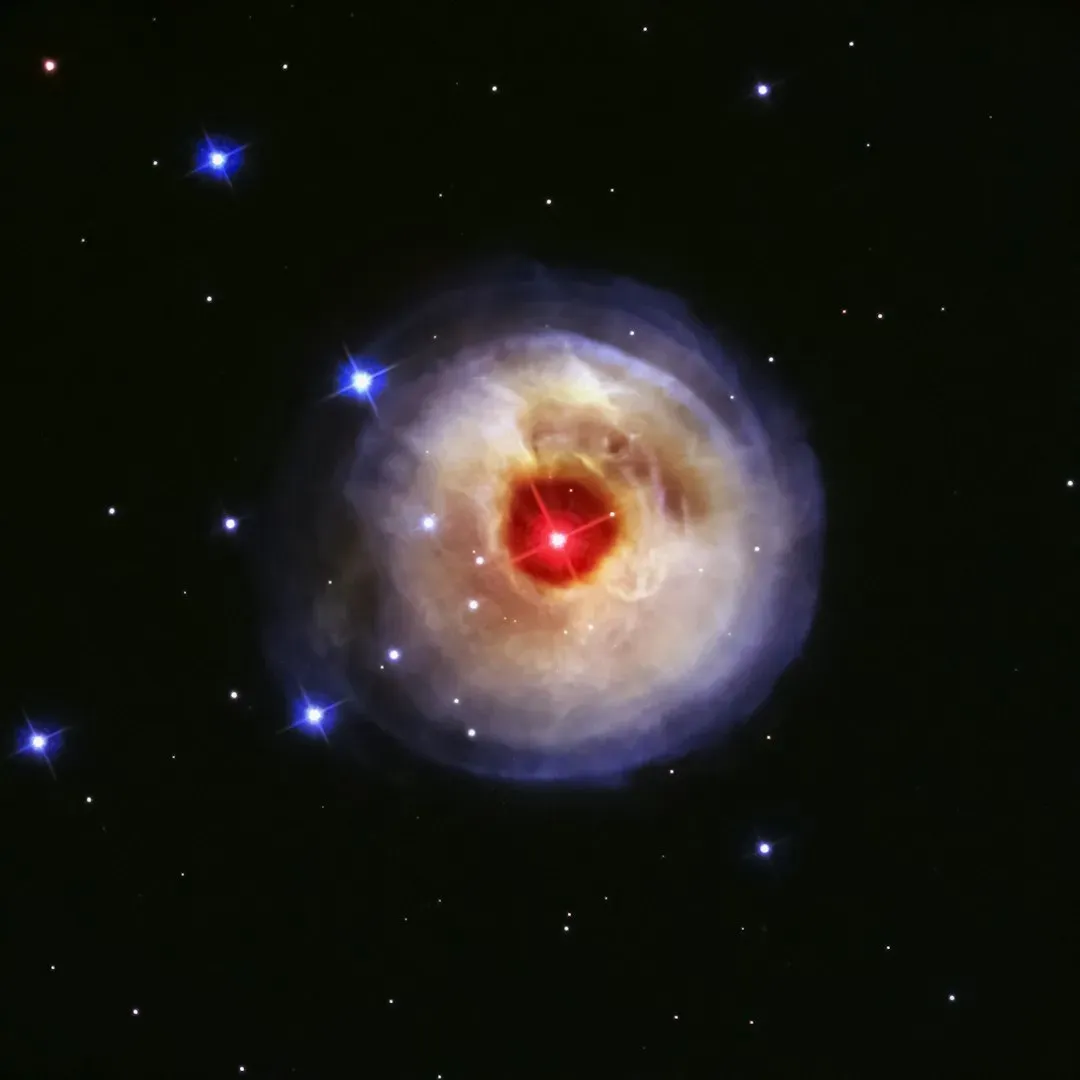
Unusual light fluctuations of Tabby’s Star, including up to a 22% dimming in brightness, were discovered by citizen scientists as part of the Planet Hunters project. Think about that for a moment. A star, sitting there roughly 1,470 light-years from Earth, suddenly dims by more than a fifth of its brightness. A Jupiter-size planet would cause only about a one percent drop in brightness. So what on Earth, or rather not on Earth, could block that much light?
As of 2024, none of the proposed hypotheses fully explain all aspects of the resulting light curve. Scientists initially wondered whether the objects eclipsing Tabby’s Star could be parts of a megastructure made by an alien civilization, such as a Dyson swarm, though this idea has largely fallen out of favor. More recent observations suggest dust orbits the star with a roughly 700-day orbital period, ruling out the alien megastructure theory, but even the dust explanation doesn’t quite fit all the observations. The star continues to be monitored, and every so often it throws another curveball at astronomers.
Oumuamua: The Interstellar Visitor That Won’t Behave
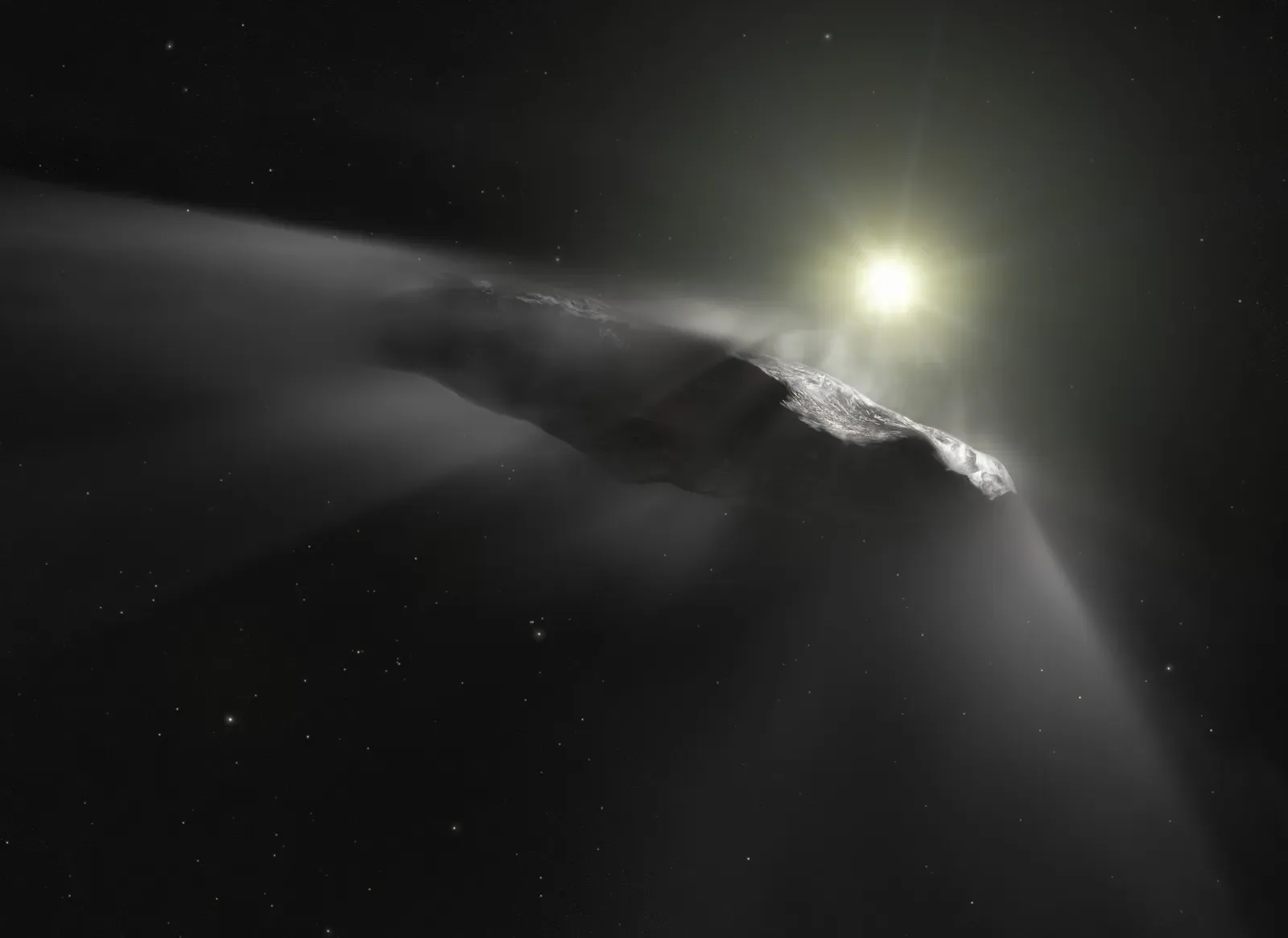
Oumuamua is the first confirmed object from another star to visit our solar system, discovered in October 2017, and appears to be a rocky, cigar-shaped object with a somewhat reddish hue. Here’s where it gets weird. This interstellar object appeared to be slightly accelerating in a way that normally is associated with the outgassing of some kind of material. The problem? Astronomers couldn’t detect any comet-like tail of dust or gas.
The scientific community went into overdrive trying to explain this anomaly. In December 2017, astronomer Avi Loeb cited Oumuamua’s unusually elongated shape as one reason the Green Bank Telescope would listen for radio emissions, although no radio signals were detected. Some researchers proposed it might be an artificial thin solar sail accelerated by solar radiation pressure. Others suggested more mundane explanations, and recent research indicates the release of hydrogen from trapped reserves inside water-rich ice might account for the acceleration. Whatever Oumuamua actually was, it’s now forever beyond our reach, speeding away into the cosmic void.
Fast Radio Bursts: Milliseconds of Cosmic Power
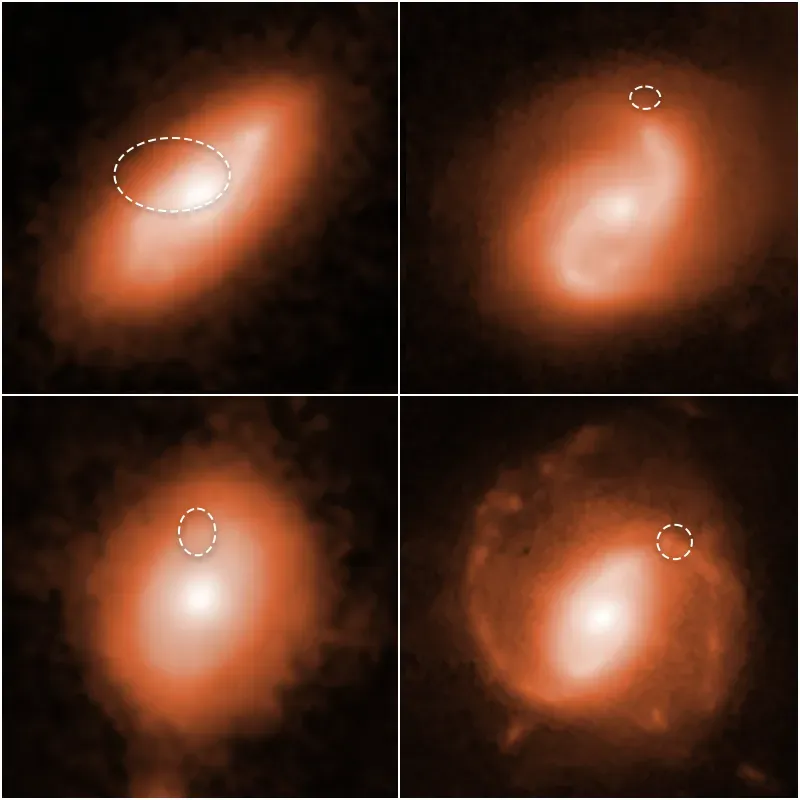
While they only last for a fraction of a second, fast radio bursts can release about as much energy as the Sun does in a year, and their light forms a laserlike beam, setting them apart from more chaotic cosmic explosions. Imagine all the energy our star produces over twelve months condensed into a fleeting instant. That’s the kind of mind-bending power we’re talking about.
Since astronomers first discovered FRBs in 2007, they have determined the waves originate from outside our galaxy, including some that are billions of light-years from Earth. The mystery deepened when one of these fast radio bursts was detected within the Milky Way itself, coming from a magnetar called SGR 1935+2154. This discovery gave scientists their first real clue, yet many questions remain. Why do some FRBs repeat while others fire just once? What mechanism produces such concentrated energy? The newest FRB discovered in March 2025, named FRB 20250316A, was found in the galaxy NGC 4141 about 130 million light-years away and is an exceptional target for follow-up studies.
The Cosmic Hum: An Unexplained Background Noise
In 2006, astronomers conducted the ARCADE experiment to study cosmic microwave background radiation by launching a high-altitude balloon with a radiometer, but instead of the expected uniform signal, scientists found unexplained radio noise with an intensity six times greater than theoretical predictions. They called it the “cosmic hum.”
This isn’t just a little bit louder than expected. It’s screaming at us. One hypothesis states that it is an echo of the first stars and galaxies formed in the Universe, but this cannot fully explain the high intensity of the noise. Another hypothesis links the cosmic hum to radio emission from hot gas in galactic halos, and some scientists associate its origin with the annihilation of dark matter particles. The universe has a soundtrack, and we don’t know who’s composing it or why it’s so much louder than it should be. That’s both thrilling and deeply unsettling.
Long-Period Radio Transients: Slow Cosmic Lighthouses
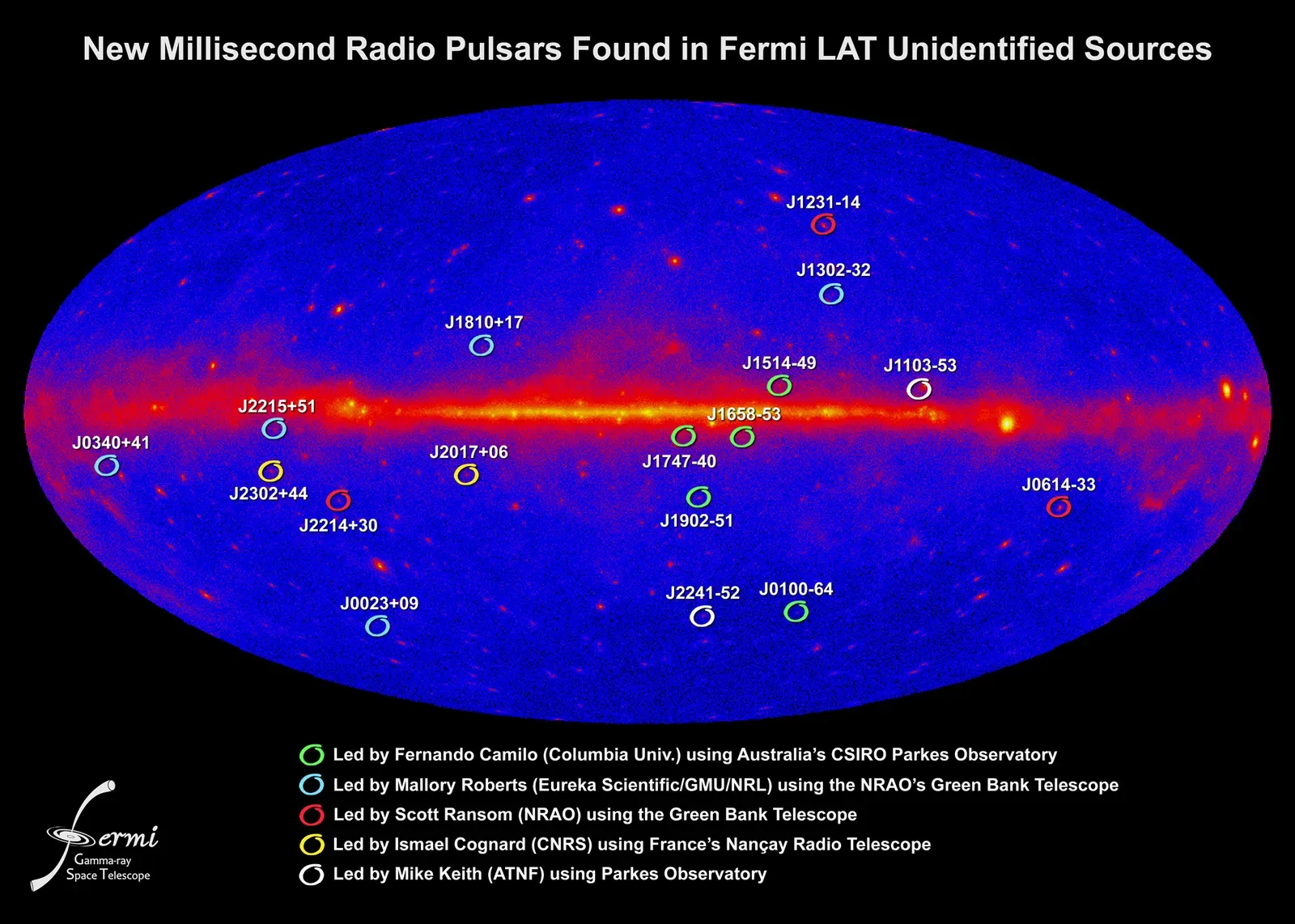
Slowly repeating bursts of intense radio waves from space have puzzled astronomers since they were discovered in 2022, and researchers have for the first time tracked one of these pulsating signals back to its source: a common kind of lightweight star called a red dwarf, likely in a binary orbit with a white dwarf. These aren’t your typical pulsars. Unlike traditional pulsars, which emit radio signals every few seconds or milliseconds, LPTs emit pulses at intervals of minutes or hours apart – a period previously thought to be impossible.
Dubbed GLEAM-X J0704-37, one such object produces minute-long pulses of radio waves, and these pulses repeat only once every 2.9 hours, making it the slowest long-period radio transient found so far. More recently, astronomers discovered ASKAP J1832-0911, which spits out pulses of radio waves and X-rays for two minutes straight, once every 44 minutes. The mechanism behind these slow, powerful beacons remains one of astronomy’s freshest puzzles. It’s hard to say for sure, but these objects might force us to rethink everything we know about neutron stars and stellar physics.
EP240408a: The Signal That Doesn’t Fit
Having launched in January 2024, the Einstein Probe detected several new events during its commissioning phase, including EP240408a, an unusual blast that lit up discussions between astronomers after discovering around 60 very strong transient celestial objects. The researchers studying it were blunt about their confusion. One team member stated, “The source is not clearly falling into any class.”
EP240408a doesn’t fit with existing transient models because the explosion lit up X-rays for somewhere between seven and 23 days – fast X-ray bursts last from sub-seconds to hundreds of seconds, while longer transients last months to years, and the unusual mid-range sets EP240408a apart. Additionally, the object fired off a 12-second flare 300 times brighter than the underlying X-ray emission before fading. Nature apparently decided to create something that breaks all the rules, and astronomers are left scrambling to rewrite their textbooks.
The Signal From Galaxy M82: Unexplained Radio Burst
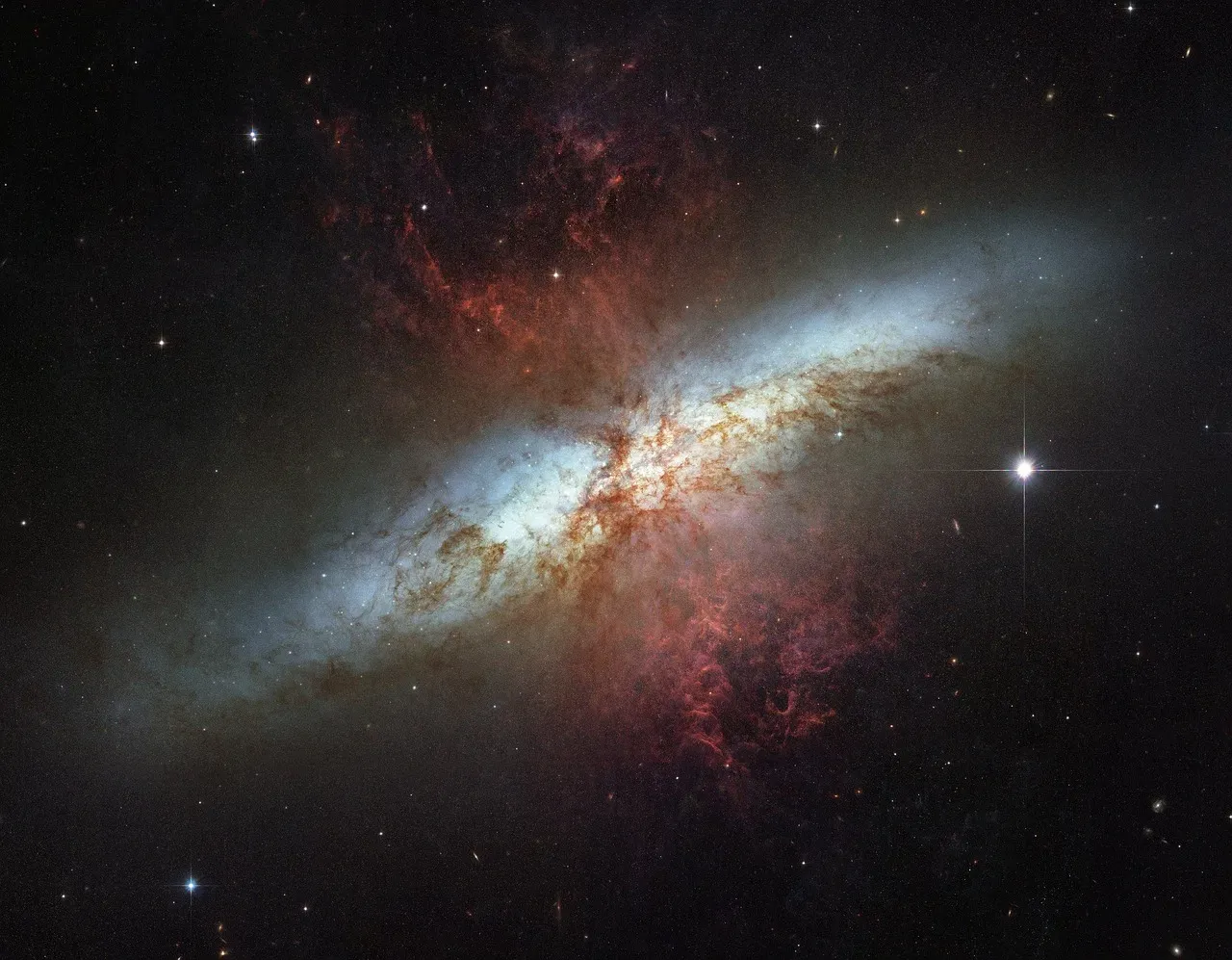
M82, located 10 million light years from Earth, undergoes intense star formation with stars being born 10 times faster than in the Milky Way, but the signal detected by the Lovell radio telescope had unique characteristics that did not correspond to the radiation of pulsars, quasars, or other known space objects. The galaxy itself is fascinating enough, often called the “Cigar Galaxy” due to its shape. Yet what came from within it left scientists stunned.
Scientists have put forward several hypotheses about its origin, including a microquasar with unusual properties or a relativistic outburst from a massive black hole, but none of the versions has been definitively confirmed, and the signal from galaxy M82 remains one of the biggest mysteries of radio astronomy. Sometimes the universe sends us postcards we simply can’t read. This is one of those frustrating, tantalizing moments when we know something extraordinary happened, but we lack the tools or knowledge to fully understand it.
FRB 20220610A: The Most Energetic Burst Yet
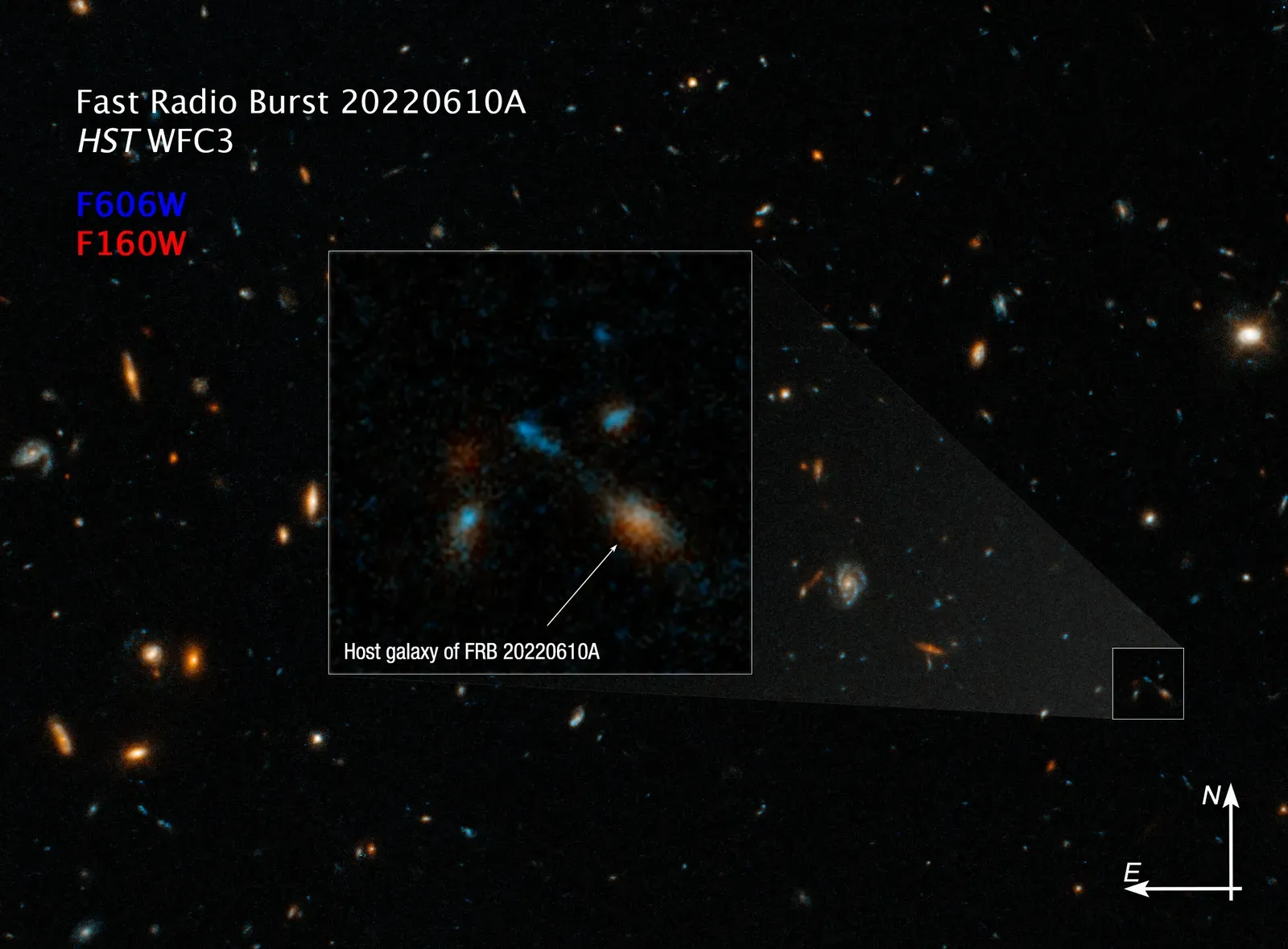
In June 2022, the Australian Square Kilometre Array Pathfinder radio telescope detected FRB 20220610A, a short and incredibly powerful pulse of radio waves that was four times more energetic than other fast radio bursts. Four times. Let that sink in. These bursts already release staggering amounts of energy, and this one quadrupled the record.
Researchers from the European Southern Observatory using the Very Large Telescope in Chile found that FRB 20220610A comes from a distant galaxy located 8 billion light-years from Earth. That signal traveled for most of the universe’s existence just to reach our telescopes. Think about the journey it made across billions of light-years, passing through countless clouds of gas, around galaxies, through the warped fabric of spacetime itself. What caused such an enormous outburst? Scientists suspect magnetars or colliding neutron stars, but the sheer power of this event suggests there’s still much we don’t understand about the violent processes happening in distant corners of the cosmos.
ASKAP J1935+2148: The Hour-Long Radio Pulse
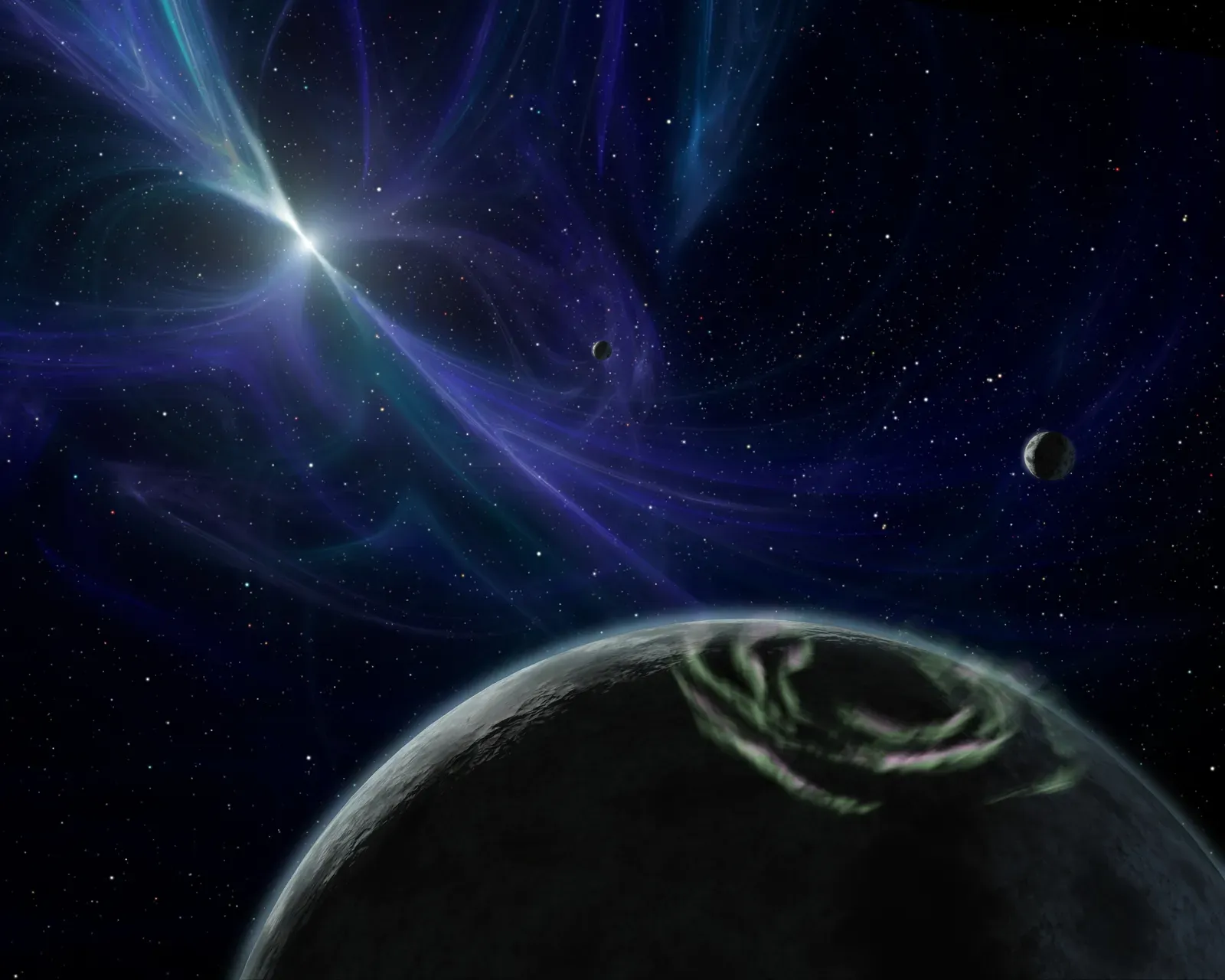
Recently, astronomers discovered a radio transient unlike anything seen before – not only does it have a cycle almost an hour long (the longest ever seen), but over several observations they saw it sometimes emitting long, bright flashes, sometimes fast, weak pulses, and sometimes nothing at all. The unpredictability is what makes this so strange. It’s like trying to understand someone who speaks in different languages at random intervals.
The origin of a signal with such a long period remains a profound mystery, with a slow-spinning neutron star the prime suspect, though scientists cannot rule out the possibility the object is a white dwarf. White dwarfs often have slow rotation periods, but scientists don’t know of any way one could produce the radio signals being observed, and there are no other highly magnetic white dwarfs nearby. Each observation brings more questions than answers, and ASKAP J1935+2148 might be showing us a completely new type of cosmic object that nobody predicted.
The Relay 2 Mystery: When Space Junk Mimics Cosmic Signals
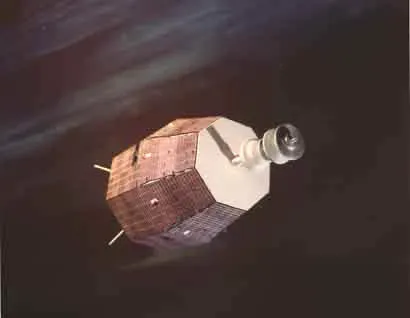
A powerful and mysterious blast of radio waves that astronomers believed was a fast radio burst from far beyond the Milky Way turned out to be an emission from a long-dead NASA satellite called Relay 2, initially detected by the Australian Square Kilometer Array Pathfinder in June 2024 as a burst lasting less than 30 nanoseconds but strong enough to drown out all other signals from the sky. Scientists got excited, thinking they’d discovered something extraordinary, and technically, they did – just not what they expected.
The Relay 2 satellite was launched in 1964 as part of NASA’s Relay program, operated until 1965, but by 1967, its systems had completely failed. So what caused a 60-year-old piece of space junk to suddenly emit a powerful radio signal? When asked what caused this signal from Relay 2, the researchers admitted, “That’s a good question. We don’t know!” Even our own technological artifacts orbiting Earth can surprise us. It’s a humbling reminder that mystery doesn’t always require billions of light-years of distance – sometimes it’s lurking just above our heads.
Conclusion
The universe is speaking to us in ways we’re only beginning to comprehend. These ten mysterious signals represent just a fraction of the unexplained phenomena detected by our telescopes and radio arrays. Some may have natural explanations we haven’t discovered yet. Others might be telling us something profound about physics, stellar evolution, or the nature of matter itself.
What strikes me most about these cosmic mysteries is how they challenge our assumptions. Every time we think we’ve got the universe figured out, it throws something completely unexpected our way. Whether it’s a star that dims impossibly, an interstellar object that accelerates without visible cause, or radio bursts that pack a year’s worth of solar energy into milliseconds, each signal reminds us how much we still have to learn.
The next great discovery could happen tonight. Somewhere right now, a telescope is scanning the sky, collecting data that might contain the answer to one of these puzzles – or reveal an entirely new mystery we never imagined. What do you think is really out there sending these signals? Could some of them be technological in origin, or is nature simply more creative than we give it credit for?