
Our planet is roughly four and a half billion years old. You’d think we’d have figured most of it out by now. Yet the more geologists dig, drill, and analyze, the more Earth seems to shrug and say, “Good luck with that.” Honestly, it’s both humbling and thrilling. Beneath every mountain, beneath every desert, beneath every quiet lake, there are processes so ancient and so strange that modern science still struggles to put them into clean, satisfying boxes.
From a crater that’s been on fire for over half a century to rocks that wander across a desert floor all on their own, these geological mysteries don’t just bend our expectations. They shatter them. If you’ve ever looked at a landscape and felt that electric sense of something being just a little too perfect, too strange, or too impossibly beautiful to be real, you’re about to feel it ten times over. Let’s dive in.
1. The Eye of the Sahara, Mauritania: Earth’s Bullseye Nobody Can Explain
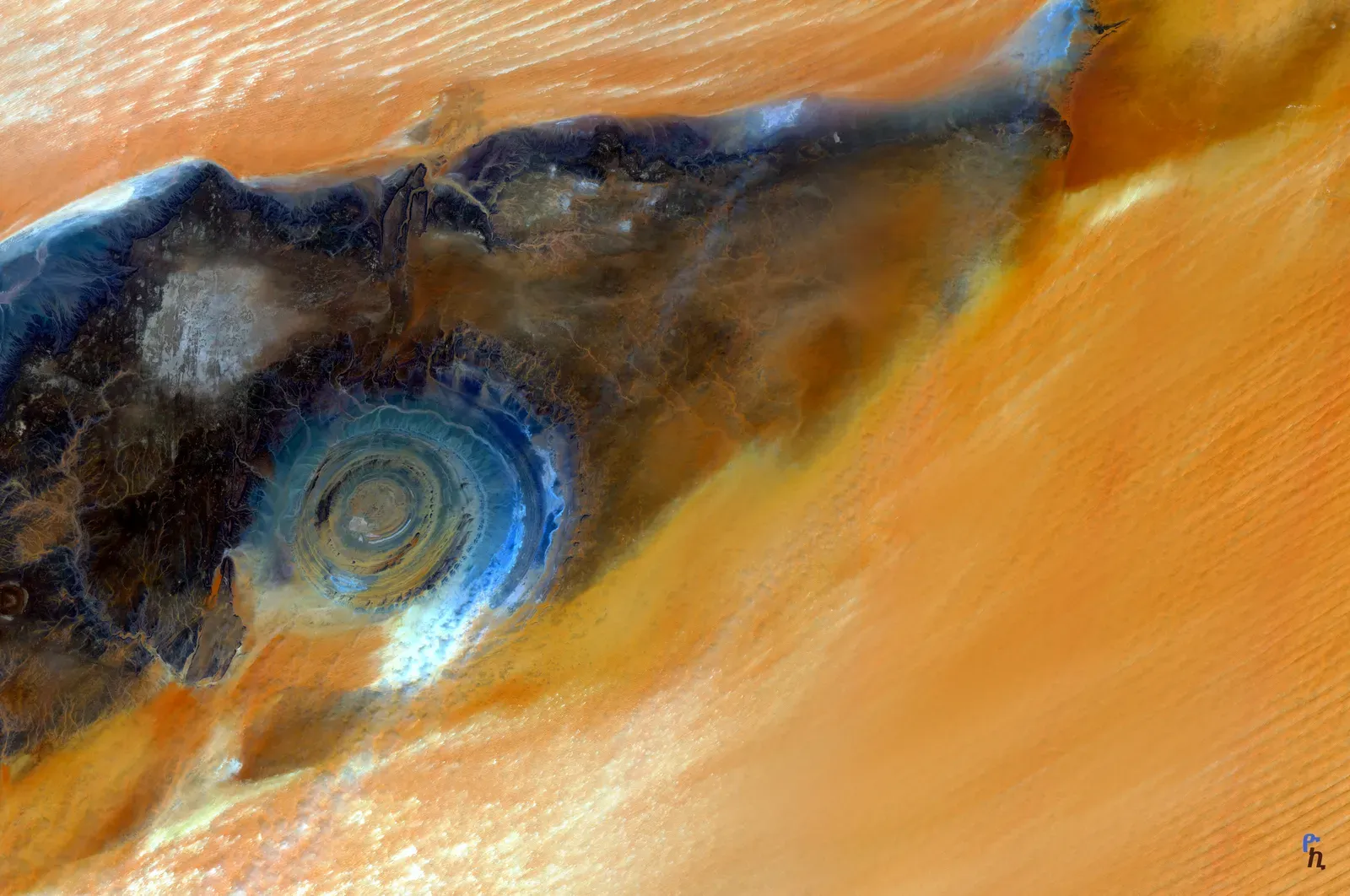
You could be forgiven for thinking this was a photograph from another planet. The Eye of the Sahara, also known as the Richat Structure, is a 28-mile-wide site of huge concentric circles found in the western African nation of Mauritania. When you look at it from space, it looks almost engineered, a near-perfect bullseye stamped into the ancient Saharan rock. Geologists initially thought the site was created by an asteroid impact, but there isn’t enough melted rock among the rings to support this theory. Similarly, there’s no evidence to suggest a volcanic eruption.
More recently, geologists have proposed that the Eye of the Sahara could be an eroded, collapsed geological dome, formed some 100 million years ago when the supercontinent Pangea broke up. Bolstering this theory are ancient rocks found on the surface, which originated as much as 125 miles beneath the Earth’s crust and before life existed on Earth. That’s an almost incomprehensible depth. New Age enthusiasts hint that the Eye of the Sahara could represent the remains of the mythical sunken island of Atlantis, based on Plato’s allegory. Science hasn’t confirmed that, of course, but you can see why people go there. It’s the kind of place that makes your imagination run wild.
2. The Door to Hell, Turkmenistan: A Fire That Was Never Supposed to Last
Hellbus (derived work), CC BY-SA 2.0)
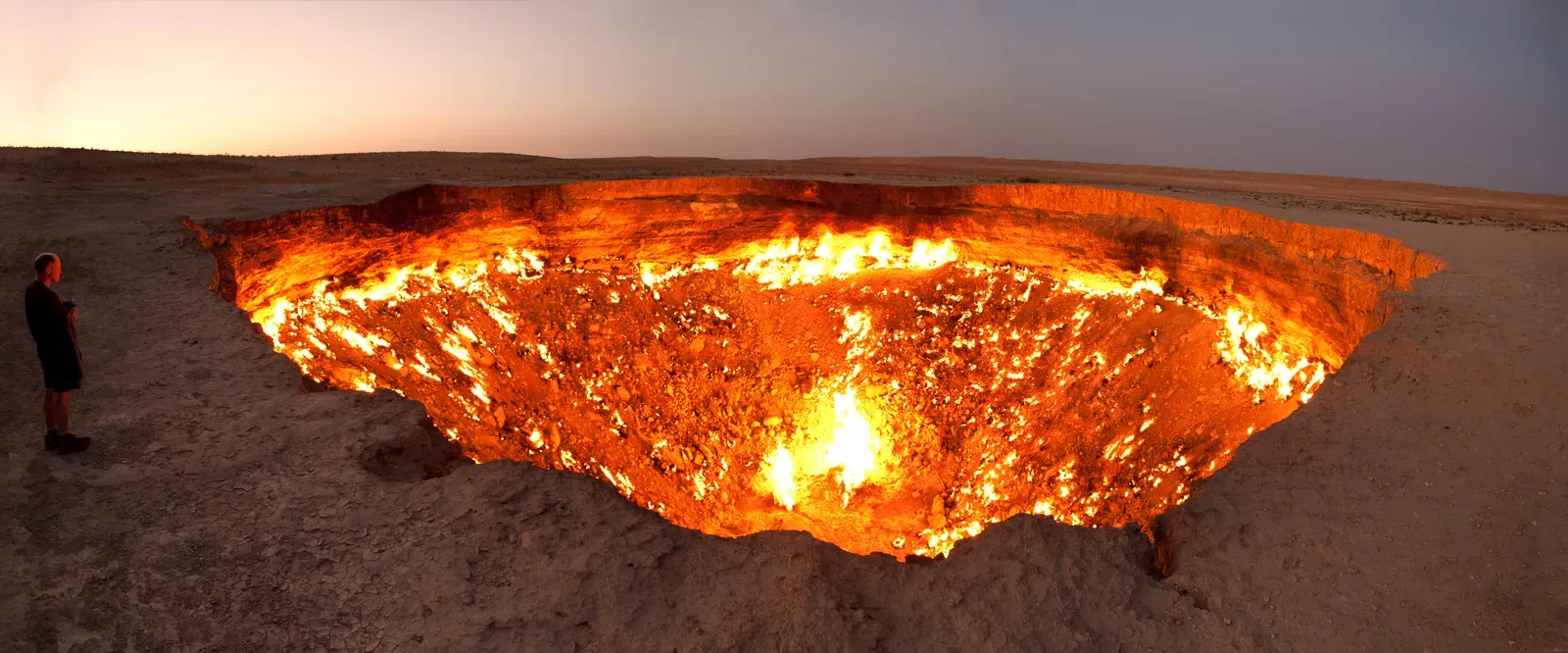
Here’s a story that sounds like a cautionary fable. In the barren expanses of Turkmenistan’s Karakum Desert sits a crater that has been burning continuously since 1971. Known locally as the Door to Hell, this 70-metre-wide inferno began as a Soviet drilling accident when geologists struck a massive underground gas cavern. Their equipment vanished into the earth, and faced with methane leaking at dangerous rates, they made a decision that seemed logical at the time: light it on fire to burn off the gas.
This massive, fiery crater in the Karakum Desert has been burning continuously since Soviet engineers accidentally collapsed a natural gas cavern in 1971. They lit it on fire, expecting it to burn out in a few weeks, but it hasn’t stopped for over 50 years. The pit is 230 feet wide and glows with an eerie orange light that can be seen for miles across the desert at night. I think what makes this so unsettling is that it started as human error and just kept going, long after everyone expected it to stop. It’s not exactly a geological mystery in the classical sense, but the sheer stubbornness of it defies every engineering expectation. What does it mean when we light something on fire and the Earth refuses to let it go out?
3. The Sailing Stones of Death Valley, California: Rocks That Move Themselves
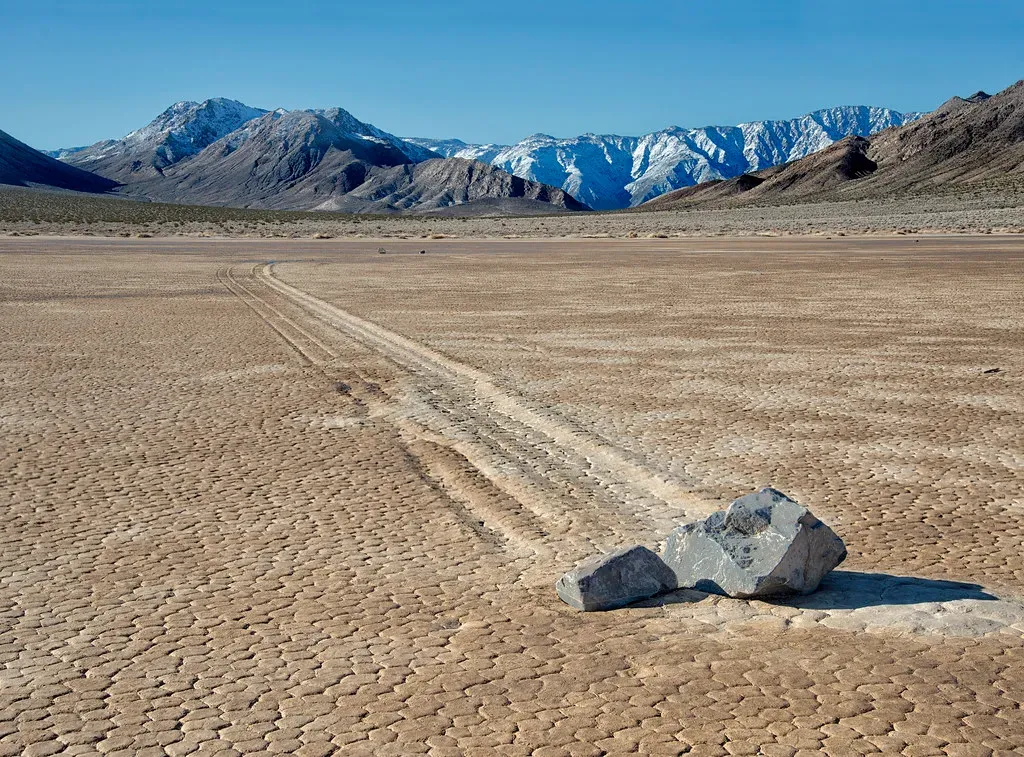
No, you haven’t misread that. Deep in California’s Death Valley, massive rocks mysteriously glide across the desert floor, leaving long trails in their wake. For decades, scientists were baffled by how these stones moved without human or animal interference. Think about that for a moment. A rock that could weigh several hundred pounds, sliding across a dry desert lake bed with no help from any living thing. The phenomenon of the “Sailing Stones” is a mysterious geological occurrence that has puzzled scientists and intrigued visitors for years. Located in the Racetrack Playa of Death Valley National Park in California, these rocks appear to move across the desert floor on their own, leaving behind long tracks that can stretch for hundreds of feet.
Research now suggests a rare combination of freezing temperatures and wind creates thin ice sheets that push the rocks along. Even with this explanation, the sight of these “wandering stones” remains eerie and surreal. The ice-sheet theory is the most widely accepted today, but it requires a very specific and rare combination of conditions. It’s a little like explaining magic by describing the trick very precisely. You understand it intellectually, but standing in front of those tracks in the dust, you’d still feel a chill up your spine that no amount of science entirely dissolves.
4. The Great Unconformity: A Billion Years of Earth’s History That Simply Vanished
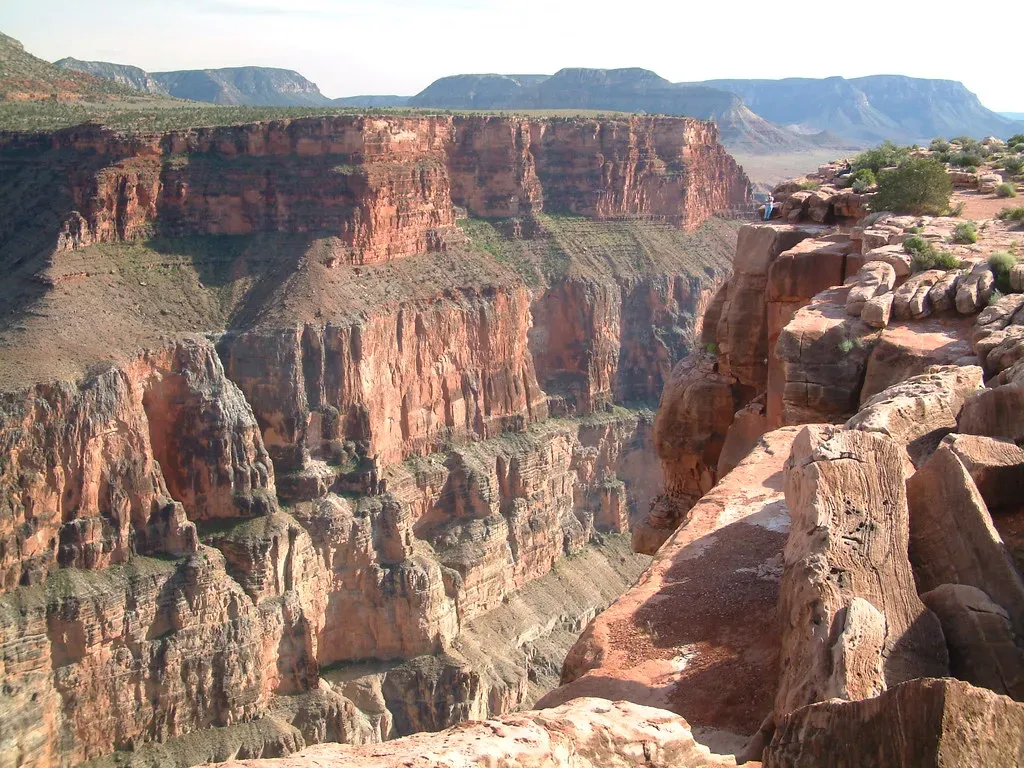
This one is genuinely mind-bending, even by geological standards. The Great Unconformity is a huge gap in the geological record: layers of rock dating from about 1.2 billion to 250 million years ago are completely missing from certain areas around the globe. This enormous chunk of lost time can be seen clearly in the stratigraphy of the Grand Canyon in Arizona. Geologists studying the anomaly there have noted that there is plenty of rock, full of fossils, from the Cambrian period (540 million years ago) but the layer beneath it is basement rock, formed roughly 1 billion years ago and empty of fossils.
What happened to everything in between? That’s the billion-dollar question, literally. An emerging theory, “Snowball Earth,” may explain where the rock disappeared to. Around 700 million years ago, Earth was encased in snow and ice. Moving glaciers peeled off the planet’s crust with the help of lubricating sediments, pushing it into oceans, where it was reabsorbed by subducting tectonic plates. It’s hard to say for sure whether that fully explains such a colossal gap, but the Snowball Earth concept is as dramatic as it sounds. Picture our entire planet, completely frozen, grinding away at its own crust for millions of years. It’s a geological horror story of the deepest order.
5. The Fairy Circles of Namibia: The Desert’s Unexplained Polka Dots
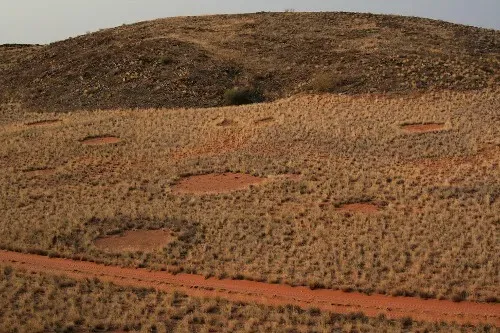
At first glance, you might think someone went wild with a giant hole-punch across the Namib Desert. The mysterious “fairy circles” of Namibia are circular patches, typically six to 40 feet in diameter, of barren soil that are bordered by grass. They extend for over 1,000 miles throughout the Namib Desert in Southern Africa, one of the driest regions on Earth. Researchers have also spotted them in a part of the Pilbara in Western Australia. They’re hauntingly regular in size and spacing, almost as if some invisible architect laid them out deliberately.
For decades, scientists debated whether they were caused by radioactive soil, toxic plants, or even UFOs. The current leading theories are a battle between sand termites and self-organizing plants competing for water, but neither explanation fits every circle perfectly. While no theory fully explains the origins of “fairy circles,” a 2022 study linking them to “ecohydrological feedback” has proven convincing. In other words, the circles may be nature’s own water management system, a self-organizing trick the desert uses to survive. It’s beautiful, really. Even the emptiness has a purpose.
6. Blood Falls, Antarctica: Two Million Years of Trapped, Bleeding Ice
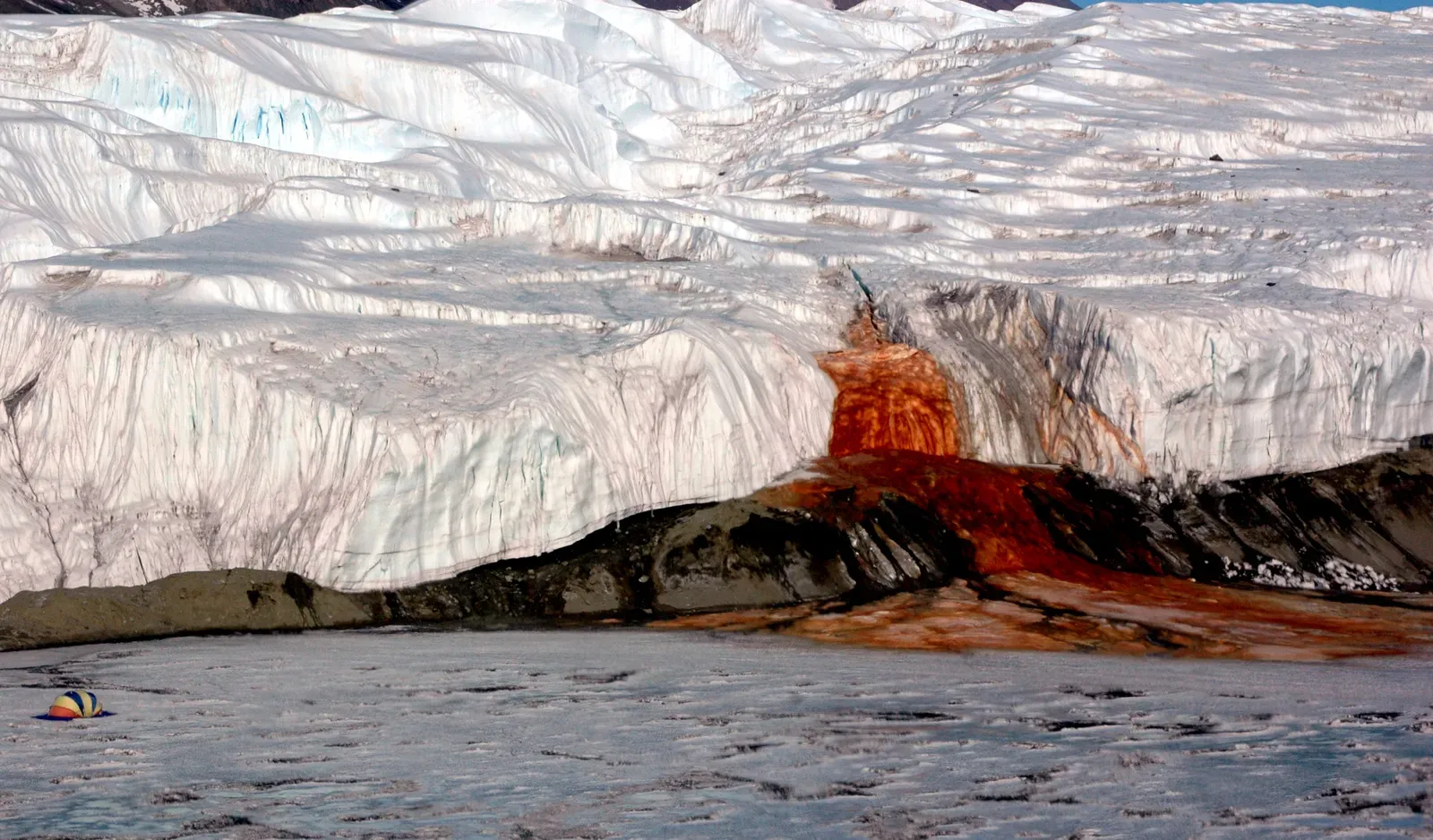
Picture a waterfall trickling out of a glacier in Antarctica, only the water isn’t blue or clear. It’s the color of blood. This deep-red waterfall looks like a scene from a horror movie, flowing out of the Taylor Glacier into a frozen lake. For years, scientists thought red algae was to blame, but it turns out the water is actually rich in iron that oxidizes when it hits the air. This blood is coming from a subglacial lake that has been trapped under the ice for two million years.
This waterfall gets its name from the iron-rich red-colored water that flows down from the Taylor Glacier in Antarctica. The blood-red color flowing can be both haunting and fascinating, making it a unique phenomenon. The clear water turns red as it comes into contact with air. What makes Blood Falls so scientifically precious is what lives inside that ancient trapped lake. Researchers have found microbial life that has survived without light or fresh oxygen for two million years, raising the very real possibility that similar life could exist beneath the icy surfaces of other worlds. A bleeding glacier might just be our best clue to life on other planets. Wild, right?
7. The Nastapoka Arc, Hudson Bay, Canada: Nature’s Suspicious Perfect Circle
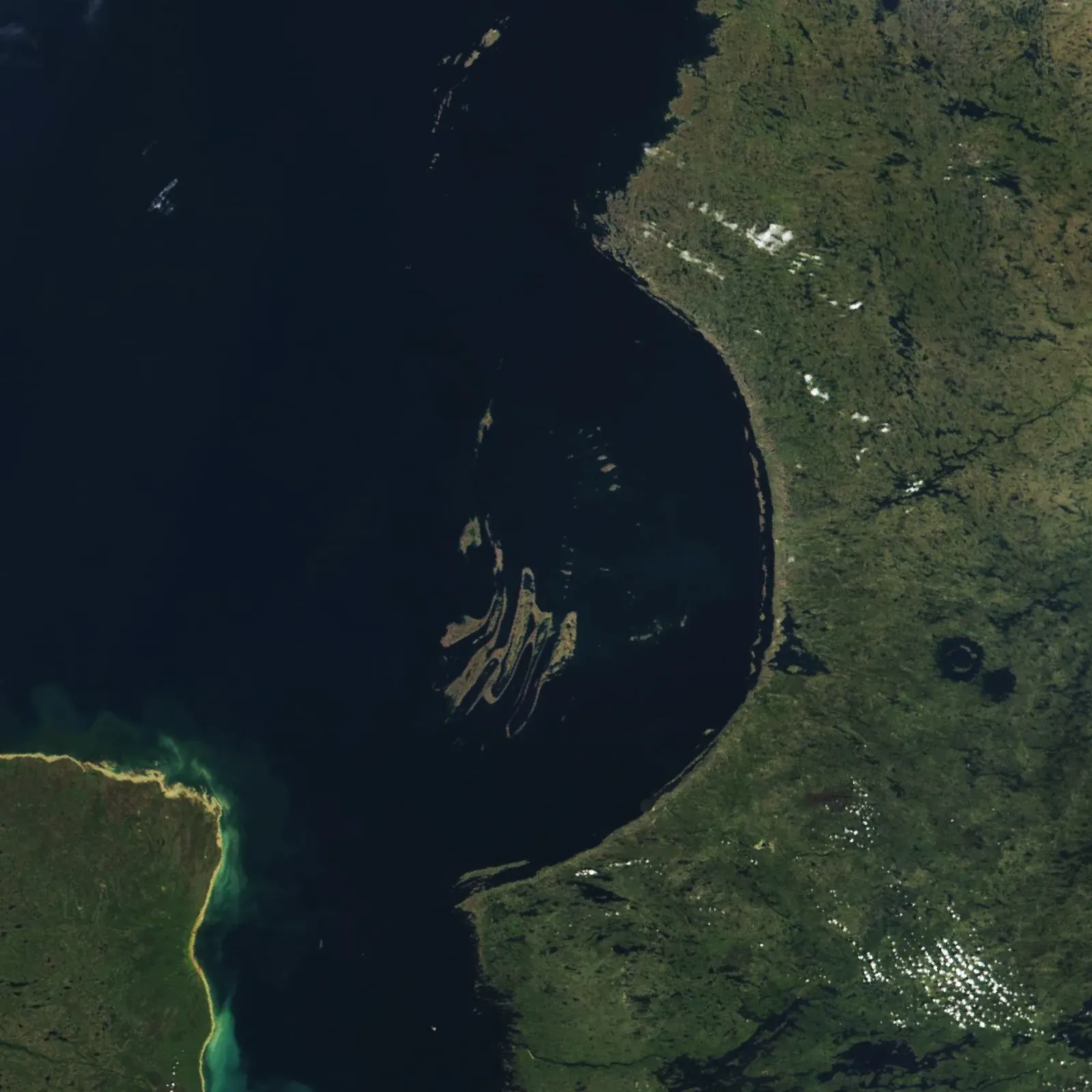
When something in nature forms a perfect circle, scientists get suspicious. In the southeast corner of Hudson Bay, Canada, lies a near-perfect arc. The mysterious half-circle, also known as the Hudson Bay Arc, was first thought to be an impact crater from a meteorite. But none of the usual confirming evidence, such as shatter cones or unusual melted rocks, has been found in the vicinity. That’s the thing about this arc. It doesn’t look accidental. It looks deliberate, which of course only deepens the mystery.
The most commonly accepted theory for the arc, based on geological evidence collected in the 1970s and later, is that it is a boundary formed when one shelf of rock was pushed under another. That doesn’t explain how or why it’s so perfectly round, so the Nastapoka Arc remains subject to ongoing study. Tectonic collisions are messy, chaotic events. They don’t typically produce something this geometrically precise. The Nastapoka Arc is essentially nature producing a shape that nature shouldn’t be producing, and the best geologists in the world are still scratching their heads over it.
8. The Mima Mounds, Washington State: Burial Grounds That Aren’t Burial Grounds
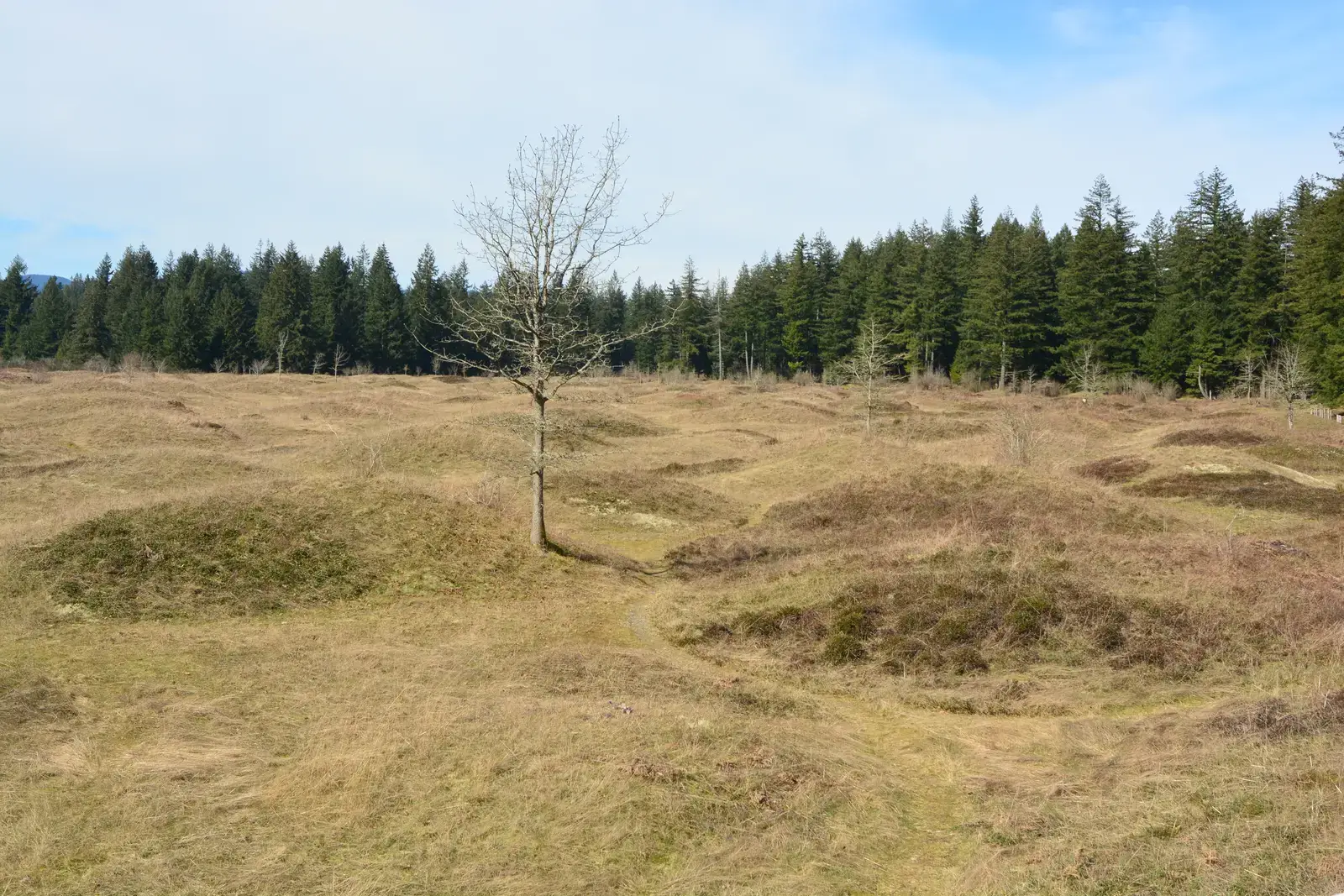
Standing in the middle of Washington’s Mima Mounds prairie is a genuinely strange experience. The Mima Mounds are mysterious, uniform undulations in the grasslands of Washington State near Olympia, ranging from 10 to 164 feet in diameter and up to 6.5 feet tall. When American explorer Charles Wilkes set eyes on them in 1841, he believed they were human-made burial mounds and had three of them excavated, only to find them filled with loose stones. You can’t blame him for thinking that. The regularity of their shape and spacing is just too precise to feel random.
Similar mounds are found from California to Colorado and have puzzled naturalists for years. Scientists suggest that some of the mounds may be 30,000 years old, which makes decoding them complex; humans are believed to have arrived in North America several thousand years later than that. So if humans didn’t build them, what did? Proposed explanations over the years have ranged from seismic activity to ancient glacier movements to burrowing pocket gophers working over tens of thousands of years. Let’s be real: the pocket gopher theory sounds almost too absurd to be true, yet it’s one of the most seriously considered explanations in the scientific literature.
9. The Giant’s Causeway, Northern Ireland: Too Perfect for Coincidence
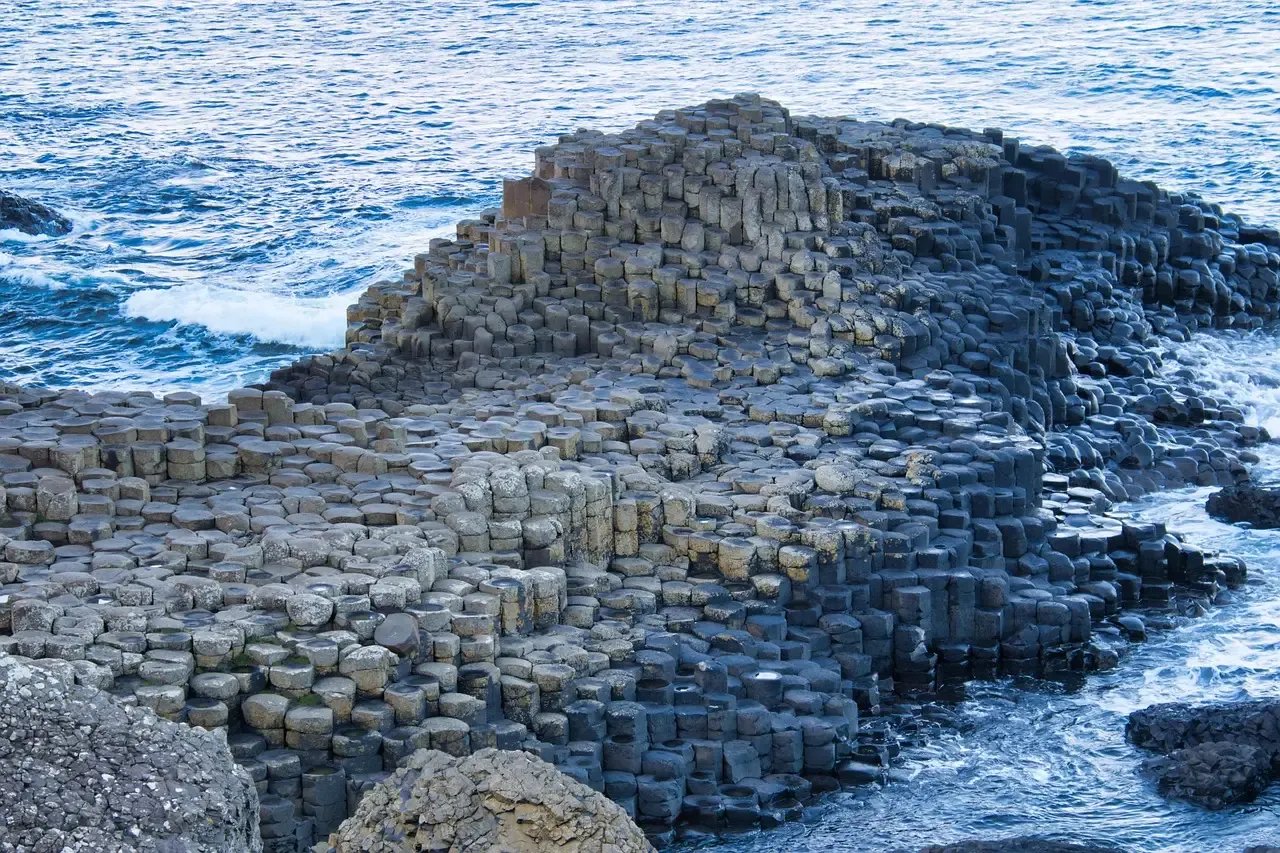
The Giant’s Causeway is a natural geological formation located in Northern Ireland that consists of over 40,000 hexagonal basalt columns that are interlocked like puzzle pieces. The basalt columns vary in height and width, with some reaching as high as 39 feet. The first time you see a photograph of it, your brain genuinely fights you on it. It looks like enormous floor tiles laid by some ancient, careful hand. The formation is named after a legend that claims it was created by the giant Finn McCool as a path to Scotland, where he planned to fight his Scottish counterpart, Benandonner.
The unique hexagonal shape of the basalt columns is due to the way the lava cooled and solidified as it flowed into the sea. As the lava cooled, it contracted and cracked, forming the distinctive polygonal shapes that make up the columns. The geometry is scientifically explainable, yes, but it remains deeply, almost disturbingly beautiful. The Giant’s Causeway is a popular tourist attraction and is also recognized as a UNESCO World Heritage Site. It has been the subject of scientific study for centuries, with researchers using it as a natural laboratory to better understand the processes that shape our planet. Still, the sheer precision of those columns, all those interlocking hexagons stretching into the sea, feels less like a volcanic accident and more like a message we haven’t decoded yet.
10. The Cave of the Crystals, Mexico: A Cathedral Built by Time Itself
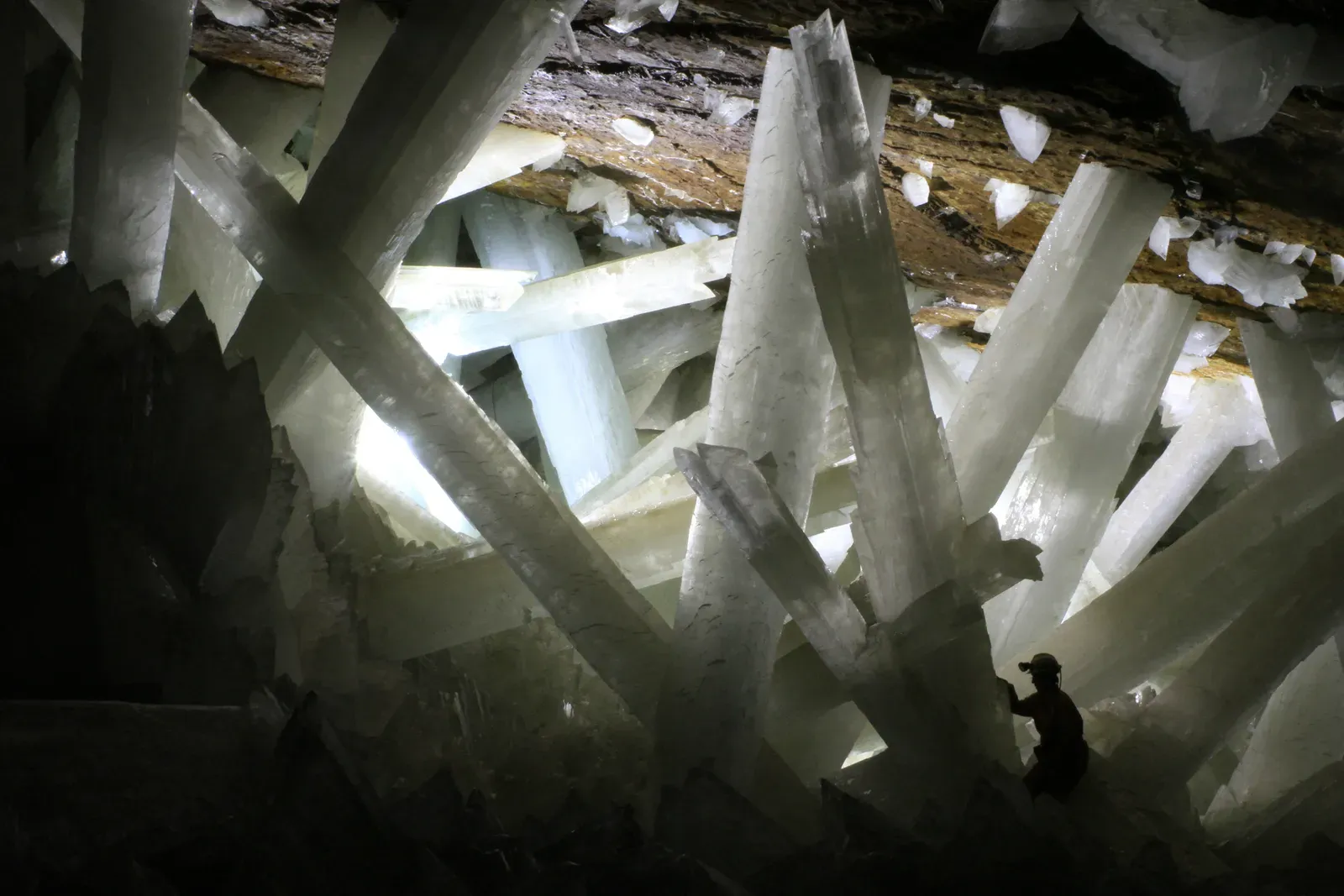
The otherworldly crystals in the Cave of the Crystals in Mexico can reach sizes larger than houses, by far the largest such crystals known on the planet. The remnants of a 2-billion-year-old nuclear reactor and a cave of house-sized crystals might seem too strange to be natural, but the world is apparently full of such bizarre natural phenomena. Located deep beneath the Chihuahuan Desert near Naica, this cave was only discovered in the year 2000, and the word “breathtaking” barely begins to cover it. The gypsum formations take as long as a million years to grow more than two stories tall. Researchers speculate that microscopic pockets of liquid within these giant crystals might hold microbes.
The temperature at this depth varies from 45°C to 50°C, while the percentage of humidity ranges from 90 to 100%, meaning that human beings cannot survive there for longer than two hours. You visit the Cave of the Crystals in a protective suit, and even then, your body begins to fail you quickly. It’s as if the cave wants to be left alone, to keep growing in the dark, in the heat, in its own impossible silence. The idea that microbes might be living inside those crystals, surviving in conditions that would kill a human in minutes, is one of the most extraordinary scientific possibilities on Earth right now. Some of the greatest mysteries aren’t found in the sky. They’re found far, far beneath your feet.
A Final Thought: Earth Is Still Keeping Secrets
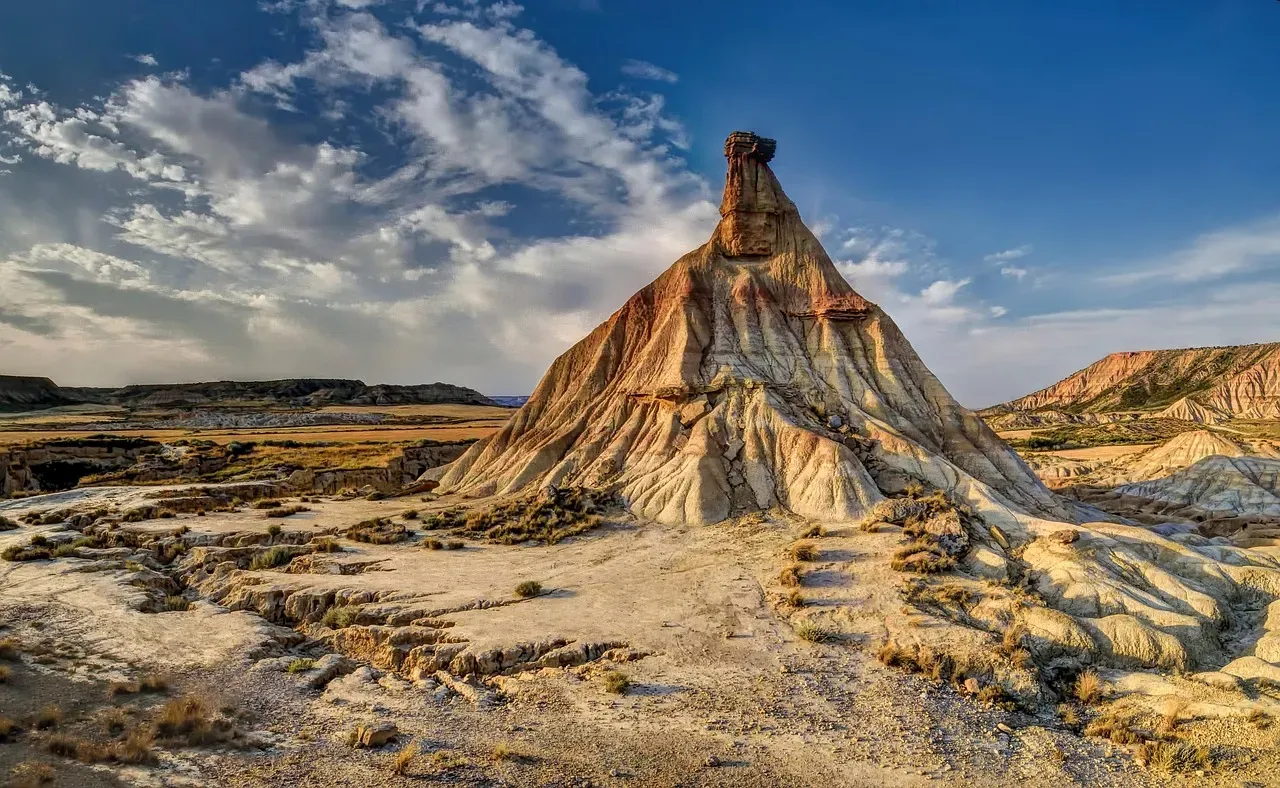
What’s remarkable about every single site on this list is that none of them exist on the fringe of knowledge. They’re studied, photographed, debated, and analyzed by serious scientists with serious tools. While science has unraveled many mysteries, some wonders remain unexplained, hinting at forces we have yet to fully comprehend. These formations remind us that Earth is a dynamic, evolving planet full of surprises. That’s not a failure of science. That’s the best possible news for anyone who still finds the world genuinely thrilling.
The planet we live on is not a solved equation. It’s a living, churning, ancient, and endlessly complex system that has been building secrets for billions of years longer than we have existed to ask questions. A vanishing river. A fire that won’t die. A glacier that bleeds. Rocks that walk. These aren’t anomalies. They’re reminders. Which of these ten sites surprised you the most? Tell us in the comments below.