
Some stories never stop tugging at our imagination, no matter how many decades or even centuries pass. Disappearances sit right at that intersection of history and haunting uncertainty: people and entire groups who walked into the world and then simply vanished, leaving behind only scattered clues and a lot of uncomfortable questions. Scientists, historians, and investigators have brought satellite data, forensic genetics, and climate modeling to bear on these cases, yet many still refuse to resolve cleanly. That tension between evidence and emptiness is exactly what keeps researchers coming back. As our tools get sharper, the question is shifting from whether we will ever find answers to what we will do with them if the truth proves stranger than we expected.
The Roanoke Colony: A Vanished Settlement on a Vulnerable Coast
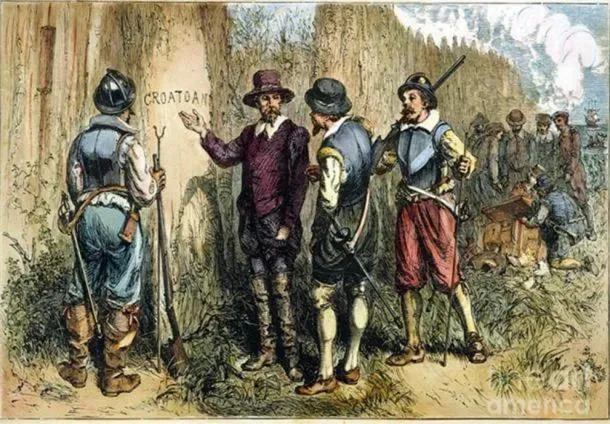
The Roanoke Colony in what is now North Carolina is one of those stories you meet in school and never quite shake off. In the late sixteenth century, roughly about one hundred settlers established an English foothold on a windswept barrier island, only for a later supply ship to find the settlement eerily deserted. The only apparent clue was a single word carved into a post: the name of a nearby Indigenous group, hinting at migration, conflict, or both. Modern researchers have revisited the site with ground-penetrating radar, archaeological digs, and analysis of tree rings that suggest the region was suffering a severe drought at the time. That drought could have pushed a precarious colony into crisis, forcing desperate decisions that left no easily traceable trail.
When you walk along that coast today, with storms chewing at the sand and houses stilted high above rising waters, the fragility of the whole enterprise feels obvious. The Roanoke mystery now sits in a broader scientific conversation about climate vulnerability, colonial violence, and how easily small communities can be erased by a bad run of years. Some artifacts found inland hint that at least a portion of the colonists may have assimilated into local Indigenous societies, an outcome that would not leave the neat documentary footprint colonial officials preferred. For scientists, Roanoke has become less a ghost story and more a complex case study in how competing pressures – environmental, social, political – combine to push human groups into extreme choices. Yet that single carved word still functions like an unfinished sentence, a reminder of how much of history will always remain just out of reach.
The Princes in the Tower: Politics, Bones, and Forensic Limits
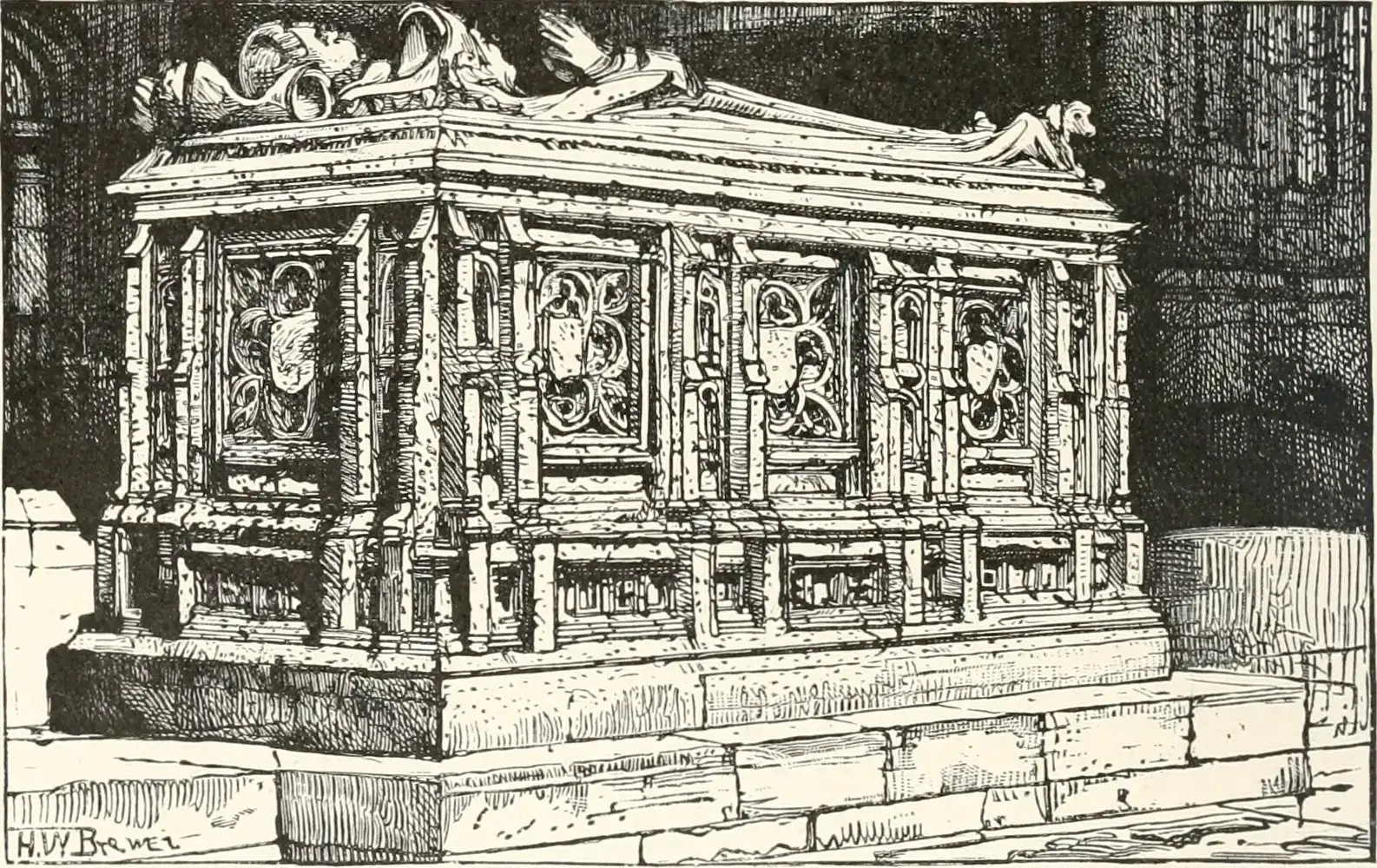
Few disappearances are as tightly tied to power as the fate of the two young princes locked in London’s Tower in the late fifteenth century. Officially, no clear record states what happened to them after their uncle seized the throne, and for centuries blame has shifted between monarchs, rival families, and ambitious courtiers. In a world before modern forensics, rumor quickly filled the vacuum, painting images of secret murders and hidden graves beneath castle stones. Centuries later, skeletal remains discovered in the Tower reignited the case, inviting modern science to weigh in. Researchers have used early forms of forensic anthropology and, more recently, genetic testing to try to match the bones to known royal lineages, but conclusive proof is still tricky when you are working with degraded material and centuries of disturbed burial sites.
This case is a stark illustration of both the power and the boundaries of scientific investigation into historic mysteries. DNA analysis has revolutionized cold cases from the twentieth century, yet medieval remains suffer from contamination, poor preservation, and sometimes politically sensitive questions about exhumation. In the princes’ case, any scientific move is tangled with national memory and royal institutions, which are not always eager to reopen the past. As a science journalist, I’ve watched geneticists explain how even a tiny surviving segment of DNA could, in theory, tip the scales, while historians caution that power struggles rarely leave a single, simple smoking gun. The boys’ disappearance has become less about a single villain and more about how systems of power can quietly erase inconvenient lives, leaving scientists and the public to piece together motives from fragments and silence.
Amelia Earhart: Aviation Icon in an Ocean of Theories

Amelia Earhart’s disappearance in 1937 might be the most famous unsolved case of the aviation age, and it sits right where pioneering technology meets the brutal indifference of the open ocean. Earhart and her navigator vanished over the Pacific during one of the last legs of a round-the-world flight, despite radio contact and an expected rendezvous with a waiting ship. Almost immediately, her story turned from a triumph of modern flight into a symbol of its fragility, prompting massive search efforts that scoured thousands of square kilometers of sea. Since then, researchers have brought everything from sonar mapping to high-resolution satellite imagery and computer modeling of currents to the question of where her aircraft might have gone down. Each new expedition seems to find tantalizing hints – metal fragments, radio logs, scattered bones – but nothing that the scientific community can unanimously call definitive.
The Earhart mystery shows how even in an age obsessed with tracking, data, and geo-location, humans can still slip through the cracks of our technology. Flight paths, weather records, and communications logs have been reanalyzed using modern tools, and simulations suggest possible crash sites or emergency landings on remote atolls. At the same time, the sheer vastness of the Pacific, with its shifting sands and corrosive saltwater, means physical evidence can be swallowed and scattered beyond recognition. I remember talking with a marine archaeologist who compared searching for Earhart’s plane to hunting for a single lost tooth on a constantly moving conveyor belt. The enduring uncertainty speaks not only to the ocean’s power, but also to the limits of even our best tools when confronted with distance, time, and deep-sea geology.
The Mary Celeste: A Ship Found Whole but Empty
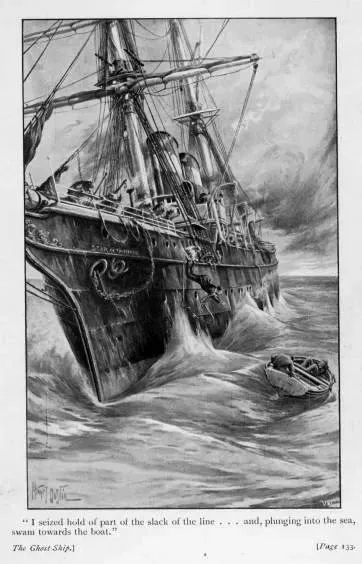
The case of the Mary Celeste, discovered adrift in the Atlantic in the 1870s with no crew aboard, feels almost tailor-made to provoke sleepless speculation. The ship itself was seaworthy, the cargo mostly intact, and there were no obvious signs of piracy or violent struggle, which is exactly what makes the scene so unsettling. Investigators at the time leaned on the limited tools they had: eyewitness accounts, superficial inspections, and guesswork about storms or mutiny. Modern analysts have gone further, exploring everything from chemical reactions in the cargo that might have produced toxic fumes to rogue waves that could have panicked an experienced captain into a catastrophic decision. Experimental reconstructions and careful readings of weather patterns have lent some of these theories weight, but none has fully closed the case.
From a scientific standpoint, the Mary Celeste is an important reminder that the environment can manipulate human perception in ways that are hard to re-create in a lab. For example, small gas explosions that leave no long-term damage might still terrify a crew into abandoning ship, especially without the benefit of modern safety standards or reliable forecasts. Oceanographers and maritime historians have worked together to map likely routes, currents, and storm systems, using techniques that simply did not exist during the original investigation. Yet all of this still leaves the core mystery intact: an empty ship that looks, at first glance, as if its crew simply stepped out for a moment and never returned. It is that contrast – between the normal and the utterly abnormal – that keeps the story anchored in our collective imagination.
The Flannan Isles Lighthouse Keepers: Work, Isolation, and a Vanishing Trio
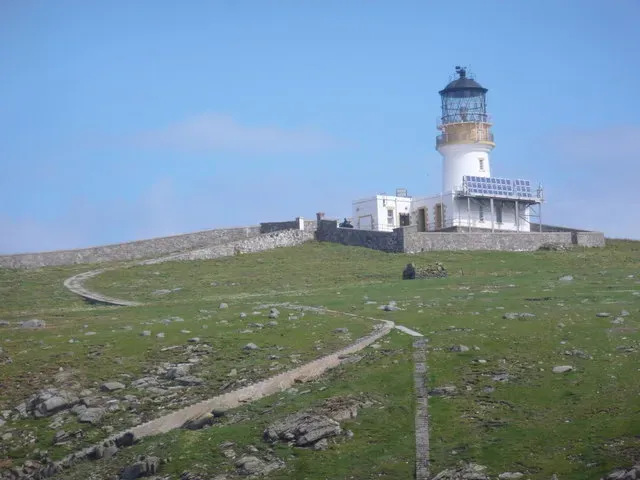
The disappearance of three lighthouse keepers from the remote Flannan Isles off Scotland at the turn of the twentieth century reads like the opening scene of a psychological thriller. Relief workers arrived to find meals left untouched, chairs overturned, and oilskins missing, but no trace of the men themselves. The isolated rock they worked on was notorious for violent storms and towering waves, and initial explanations pointed to a freak wave or sudden gale sweeping them away. Modern researchers have examined detailed weather logs, structural reports of the lighthouse, and personal diaries to piece together what life was like on that desolate post. The picture that emerges is one of relentless isolation, punishing weather, and constant exposure to risk, where one misjudged step in a storm could be fatal.
For scientists and historians, the Flannan case highlights the human cost of maintaining early warning systems in extreme environments long before automation and remote sensors. Psychologists have also weighed in, examining how prolonged isolation and stress might have affected the keepers’ judgment under pressure. When modern engineers design offshore platforms or Antarctic stations, they do so with a deeper understanding of these human factors: safe walkways, redundancies, and better communication links. The lighthouse keepers’ disappearance sits at the intersection of physical danger and psychological strain, a place where even well-trained professionals can be pushed past their limits. The unanswered questions about that night echo in current debates about how far we should ask individuals to go in the name of safety for everyone else.
The Crew of the USS Cyclops: A Naval Giant Lost Without a Trace
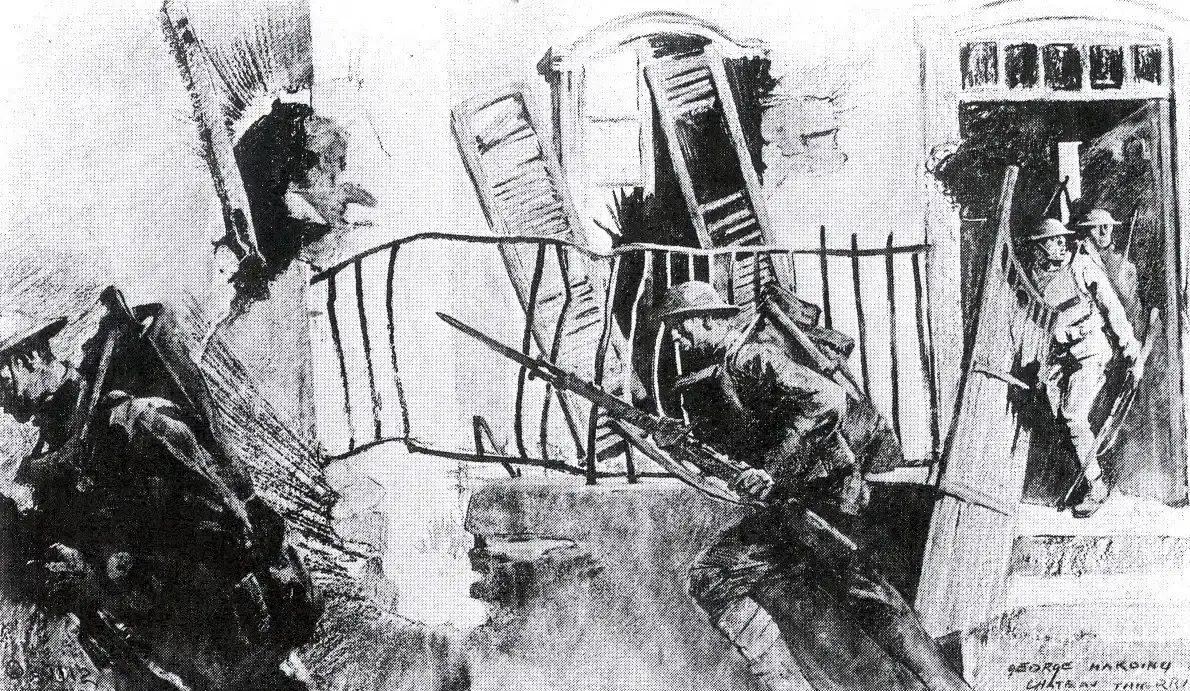
In 1918, the United States Navy collier USS Cyclops vanished somewhere in the Atlantic on a journey between the Caribbean and the East Coast, taking more than three hundred people with it. There was no distress call, no confirmed wreckage, and no clear evidence of enemy action, despite the backdrop of global war. For a vessel of that size to disappear so completely was shocking even then, when maritime tracking was far less sophisticated than it is today. Over the decades, explanations have ranged from structural failure and overloaded cargo to sudden storms and uncharted hazards. Modern naval historians and oceanographers have pored over surviving logs, weather data, and records of similar ships to see whether small weaknesses might have combined into a catastrophic failure.
In the scientific community, the Cyclops case is often discussed as a classic example of how rare events can slip past standard engineering assumptions. Today, ship design and monitoring incorporate data from thousands of voyages, modeling how vessels behave under different loads and sea conditions. In the early twentieth century, that kind of statistical insight simply did not exist, leaving crews vulnerable to edge cases no one had yet imagined. Deep-sea mapping projects have occasionally raised hopes of locating the wreck, as sonar surveys gradually fill in blank spaces on the ocean floor. But until clear physical evidence is found, the Cyclops will remain one of the starkest reminders that even the biggest machines can disappear into the gaps of our knowledge.
The Disappearance of South American Dictators’ Victims: When People Are Erased by Policy

Not all great disappearances involve remote islands or high seas; some are orchestrated in the heart of cities, under the cover of bureaucracy and fear. During the military dictatorships that gripped several South American countries in the late twentieth century, thousands of people were detained and never seen again. Their fate was often an open secret – torture centers, clandestine burials, bodies dropped from aircraft – but official records were destroyed or never kept. In recent decades, forensic anthropologists, geneticists, and human-rights investigators have worked together to identify remains from mass graves and return names to families. Techniques such as forensic DNA matching and isotope analysis have transformed these efforts, allowing scientists to reconstruct life histories from fragments of bone and tooth.
What makes these disappearances especially chilling is that they were designed to be untraceable, a deliberate use of the state’s power to erase people so completely that even their absence could not be safely named. Modern scientific work on these cases has a dual purpose: uncovering the truth for legal accountability, and building a historical record that cannot be easily rewritten. In some countries, genetic databases now help match family members with remains decades after the initial abduction, stitching together genealogies that were violently broken. When you talk to investigators on these projects, a common theme emerges: the power of science to challenge enforced silence. These are mysteries that societies are still actively trying to solve, not for curiosity alone, but as a foundation for justice.
Why These Disappearances Matter to Science and Society

On the surface, historical disappearances can look like mere curiosities, perfect fodder for late-night documentaries and campfire storytelling. But dig a little deeper, and they reveal themselves as laboratories for testing our scientific methods, our ethical boundaries, and our understanding of risk. Each unsolved case pushes investigators to refine tools: better radiocarbon dating, more sensitive DNA extraction from ancient or degraded material, improved ocean-current models. At the same time, these mysteries force us to confront how easily records can be lost or manipulated, and how much of the past is filtered through incomplete or biased accounts. The tension between scientific rigor and the human urge to fill gaps with speculation is especially sharp here.
There is also a broader societal lesson embedded in these stories. When a community, a ship’s crew, or a political dissident disappears without a clear record, it exposes weaknesses in how we track, protect, and remember human lives. By studying past disappearances, scientists and policymakers can identify patterns that still matter today: vulnerable working conditions, underestimated environmental threats, or legal systems that allow people to vanish with little accountability. Roughly about one third of modern missing-persons cases involve some form of systemic failure – gaps in data sharing, under-resourced investigations, or marginalization that keeps certain victims out of the spotlight. Historical enigmas remind us that mystery is not just a romantic concept; it can signal places where our systems are breaking down. Treating these stories as living questions rather than closed legends helps keep that critical lens sharp.
The Future of Solving Historical Disappearances

Looking ahead, the toolkit for investigating old disappearances is expanding in ways that would have sounded like science fiction even a generation ago. Advances in environmental DNA, for example, raise the possibility of detecting past human activity in soil or sediment samples from suspected sites, even when no visible bones remain. High-resolution satellite imagery, combined with machine-learning algorithms, is already being used to scan vast areas for subtle anomalies that might indicate wreckage or disturbed ground. Underwater, autonomous drones can map the seafloor in extraordinary detail, turning once-blank stretches of ocean into searchable landscapes. These technologies will not magically solve every case, but they drastically increase the chances of finding the key piece of evidence that earlier generations missed.
At the same time, future investigations will have to navigate ethical and political questions more carefully than ever. Who gets to decide whether a suspected grave is excavated, or a royal tomb is opened for DNA testing? How do we balance the potential for closure against the possibility of cultural or religious offense? As climate change accelerates coastal erosion and melts ice, previously inaccessible sites – from Arctic crash locations to long-buried settlements – are coming into reach, sometimes at disturbing speed. There is a real risk that crucial evidence will be destroyed faster than researchers can document it. The next few decades may offer a narrow window where technology, political will, and environmental conditions align just enough to answer some of these long-standing questions, if we choose to act.
How Readers Can Engage with Unsolved Historical Mysteries
For most of us, the idea of investigating disappearances sounds like something reserved for forensic labs and expedition teams, but there are surprisingly direct ways to take part. One practical step is supporting organizations that apply scientific methods to human-rights cases and historical identifications, from forensic anthropology groups to university labs that maintain open genetic databases with strong privacy safeguards. Citizen science is also starting to play a role: volunteers help scan satellite images for signs of wreckage or disturbed landscapes, much the way they assist in wildlife surveys or asteroid-hunting projects. Public archives and digitization initiatives often rely on volunteers to transcribe old logs, letters, and records, which can reveal previously overlooked details about vanished people or ships. Even carefully consuming and sharing accurate information – rather than sensational but misleading theories – shapes which kinds of investigations get attention and funding.
On a more personal level, paying attention to how your own community treats missing-persons cases can be an act of quiet resistance to the patterns that allowed many historical disappearances to go unchallenged. Supporting local efforts to improve data sharing, crisis hotlines, and social services helps close the gaps that let vulnerable people simply drop out of sight. Reading widely, including voices from communities most affected by enforced disappearances or environmental risk, keeps the human stakes at the center of the story rather than turning everything into abstract puzzle-solving. I still remember the first time I realized that the mysteries I grew up reading about were connected, in a straight line, to current debates about justice, memory, and technology. The unknown will always be part of our world, but whether it becomes a space for curiosity, accountability, or neglect is something we all help decide.
Suhail Ahmed is a passionate digital professional and nature enthusiast with over 8 years of experience in content strategy, SEO, web development, and digital operations. Alongside his freelance journey, Suhail actively contributes to nature and wildlife platforms like Discover Wildlife, where he channels his curiosity for the planet into engaging, educational storytelling.
With a strong background in managing digital ecosystems — from ecommerce stores and WordPress websites to social media and automation — Suhail merges technical precision with creative insight. His content reflects a rare balance: SEO-friendly yet deeply human, data-informed yet emotionally resonant.
Driven by a love for discovery and storytelling, Suhail believes in using digital platforms to amplify causes that matter — especially those protecting Earth’s biodiversity and inspiring sustainable living. Whether he’s managing online projects or crafting wildlife content, his goal remains the same: to inform, inspire, and leave a positive digital footprint.