
There is something almost primal about the pull of a dark opening in the earth. Long before we had maps, satellites, or underwater drones, caves were places of shelter, worship, and pure, bone-deep mystery. Humanity has always been drawn to what hides underground, and honestly, I think that fascination has never really left us.
Today, with all the technology we possess, you might expect the world’s caves to hold few secrets. You’d be completely wrong. Some of these underground worlds are so vast, so alien, and so breathtaking that even seasoned scientists struggle to describe them without sounding like they’re reading from a fantasy novel. Get ready to have your expectations shattered. Let’s dive in.
1. Hang Son Doong, Vietnam – The Cave That Has Its Own Weather
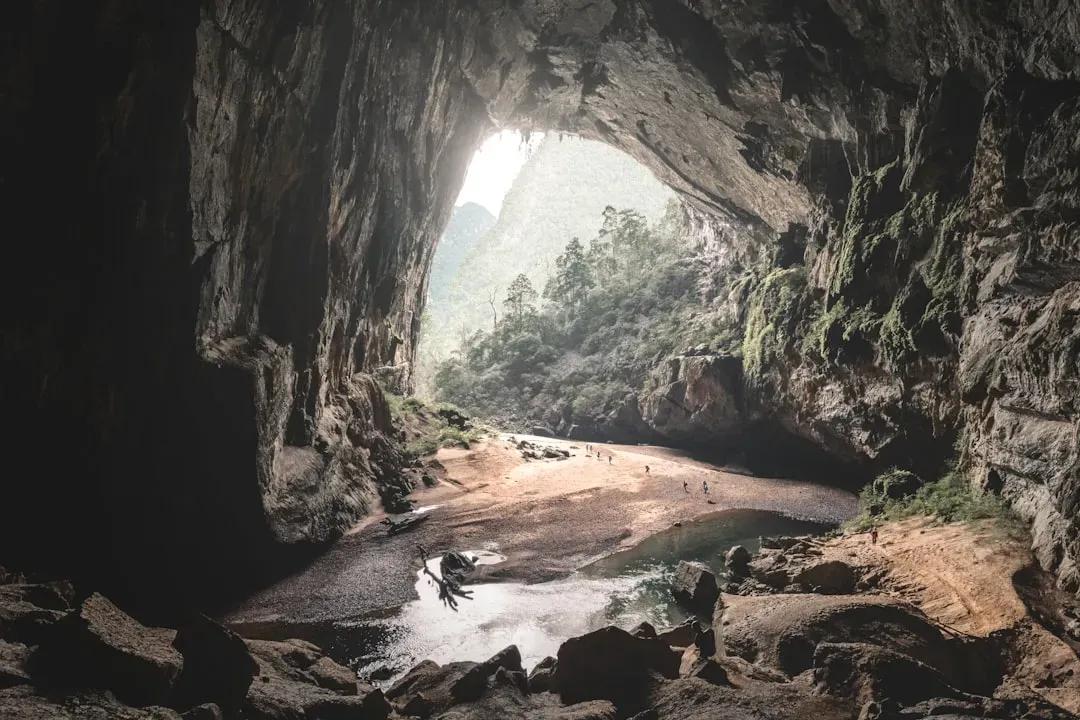
Here’s the thing about Son Doong: it isn’t just big. It is incomprehensibly big. The main cave passage is more than 5 kilometers long, 200 meters high, and 150 meters wide, making it a place where the rules of “indoors” simply stop applying. The cave’s interior is so large that it could fit an entire New York city block inside, including skyscrapers, or could have a Boeing 747 fly through it without its wings touching either side.
The world’s largest cave, Hang Son Doong, was discovered in the dense forests of Vietnam’s Phong Nha-Ke Bang National Park in 1990 by a local man, Ho Khanh, as he was seeking shelter from a storm. The huge size of the passage allows clouds to build up from the underground river, rising up through the giant passages and offering visitors an extraordinary subterranean experience. You read that correctly. You could be standing underground, watching clouds form above your head. I know it sounds crazy, but it’s completely real.
2. Cave of the Crystals, Naica, Mexico – Hell on Earth, but Beautiful
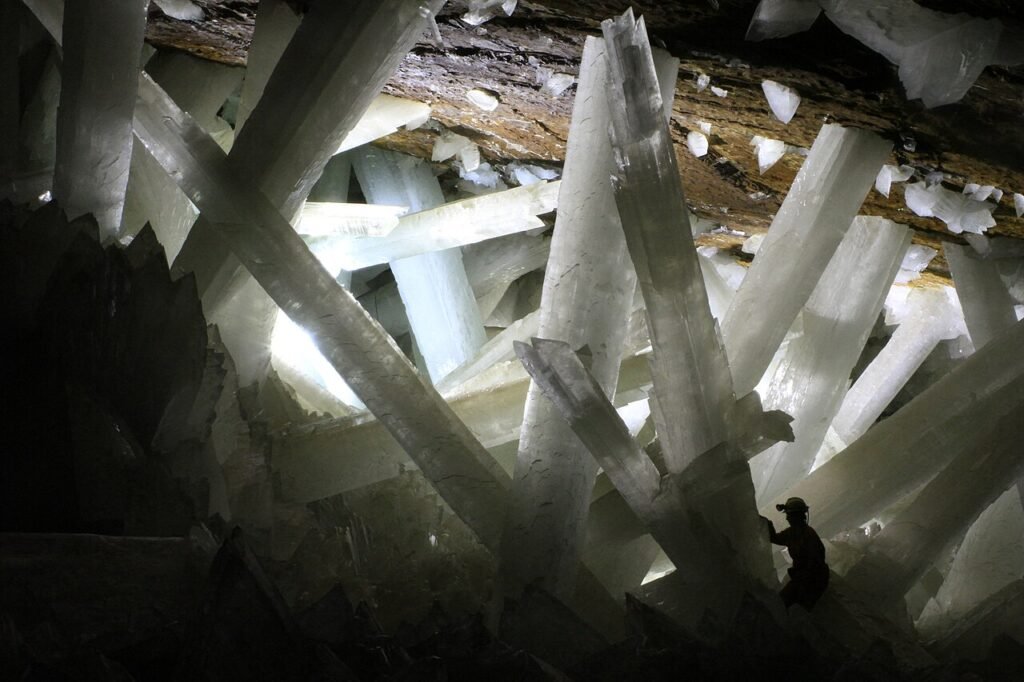
The Cave of Crystals is an underground cavern filled with tree-size gypsum crystals, including some of the largest natural crystals ever found, located around 980 feet deep and connected to a lead, zinc and silver mine in Naica. The largest crystal measures 11.40 meters in length, with an estimated mass of 12 tonnes. To put that in perspective, that single crystal is about as long as a school bus and heavier than most cars.
When not flooded, the cave is extremely hot, with air temperatures reaching up to 58 degrees Celsius with 90 to 99 percent humidity, comparable to temperature records in Death Valley but with much wetter air that prevents cooling via sweating. The cave is relatively unexplored because of these factors. Taking into account crystal growth rates, the largest crystals would have taken approximately 1 million years to reach their current size. A million years of silence, heat, and slow mineral magic. Then some miners with a drill stumbled in by accident in the year 2000.
3. Waitomo Glowworm Caves, New Zealand – A Living Planetarium
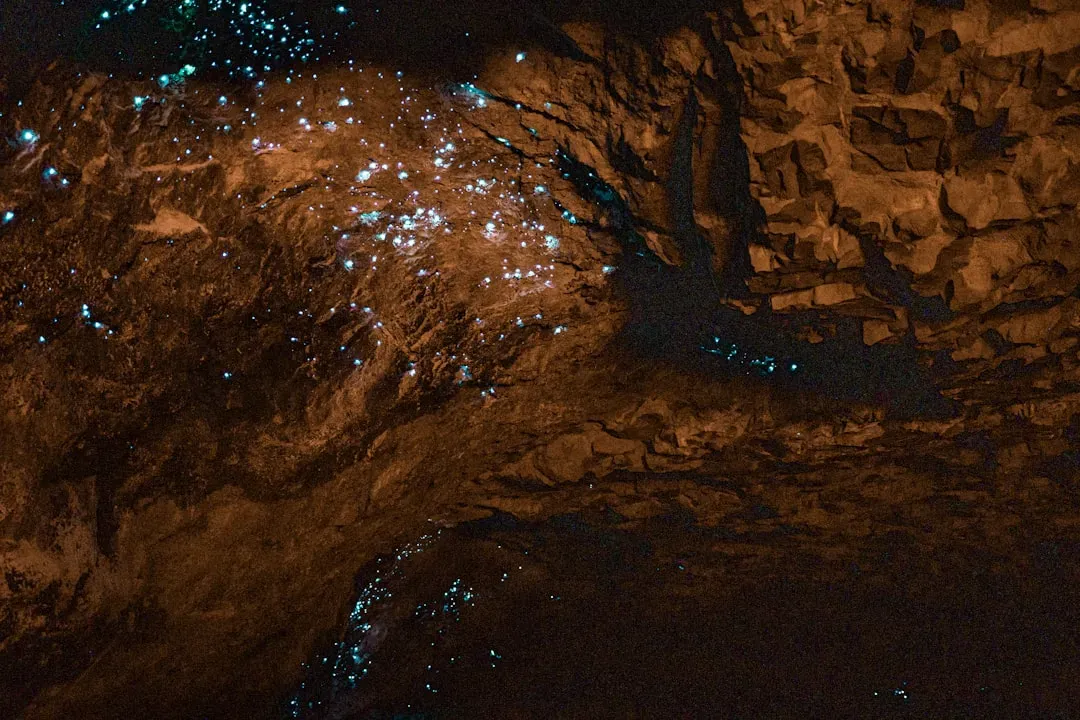
The Waitomo Glowworm Caves in New Zealand offer a magical experience where nature’s own light show takes center stage. As you glide silently through these limestone caverns, bioluminescent glowworms illuminate the dark, creating a starry sky effect on the cave ceiling, captivating visitors for decades. The worms responsible for the glowing, Arachnocampa Luminosa, are unique to New Zealand, meaning this magic offered by this subterranean world cannot be experienced anywhere else.
The cave’s ceiling is dotted with thousands of glowworms, casting an ethereal blue glow over the dark waters below. Visitors can drift through the cave on boats, witnessing the surreal light display. While the main cavern is accessible, much of the deeper passages remain unexplored, adding to the allure of this natural wonder. Think of it this way: you’re essentially floating through a galaxy, except this galaxy is alive and happens to be underground in New Zealand.
4. Lechuguilla Cave, New Mexico, USA – The Underground Jewel No One Can Visit
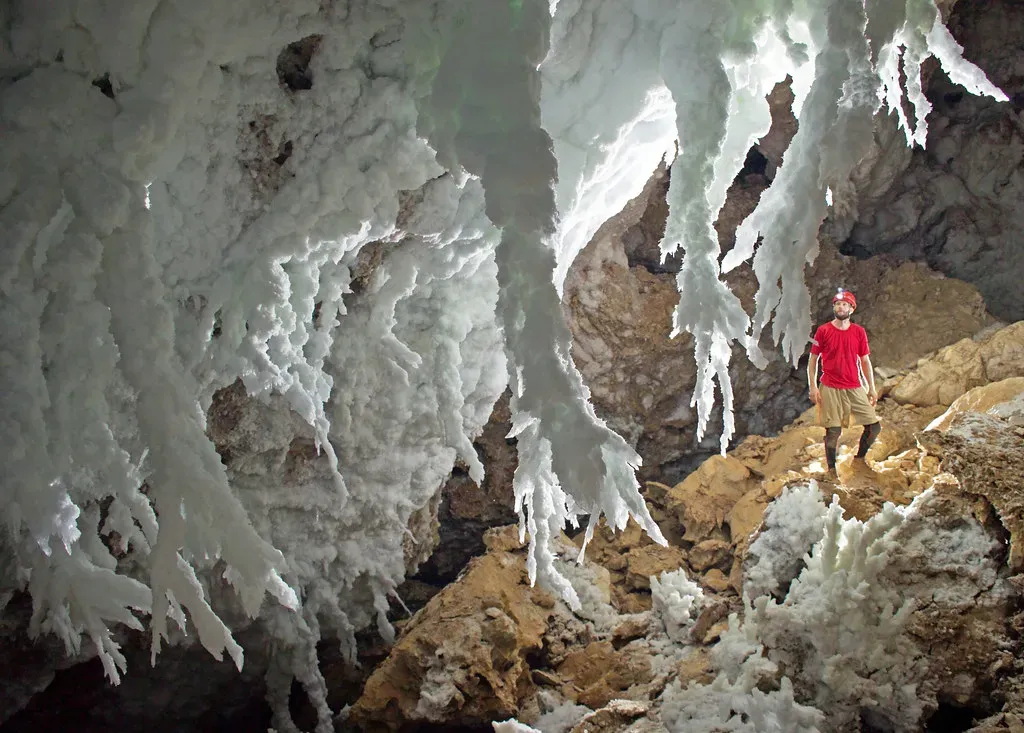
Lechuguilla Cave is a cave in Carlsbad Caverns National Park, New Mexico, known for its unusual geology, rare formations, and pristine condition. Access to the cave is limited to approved scientific researchers, survey and exploration teams, and National Park Service management-related trips. Lechuguilla Cave was known until 1986 as a small, insignificant historic site in the park’s backcountry. What changed everything was the sound of wind roaring from beneath a rubble-choked floor.
Lechuguilla Cave holds a variety of rare speleothems, including lemon-yellow sulfur deposits, 20-foot gypsum chandeliers, 20-foot gypsum hairs and beards, 15-foot soda straws, hydromagnesite balloons, cave pearls, subaqueous helictites, rusticles, U-loops, and J-loops. The cave is not just a geological wonder but also a biological treasure trove. Unique microorganisms thrive in this isolated environment, offering insights into life in extreme conditions, and microbial mats found here are studied for their potential to reveal new antibiotics and other medical breakthroughs. Honestly, calling it simply a “cave” feels like calling the Louvre a “room with some paintings.”
5. Fingal’s Cave, Scotland – The Cave That Inspired a Symphony
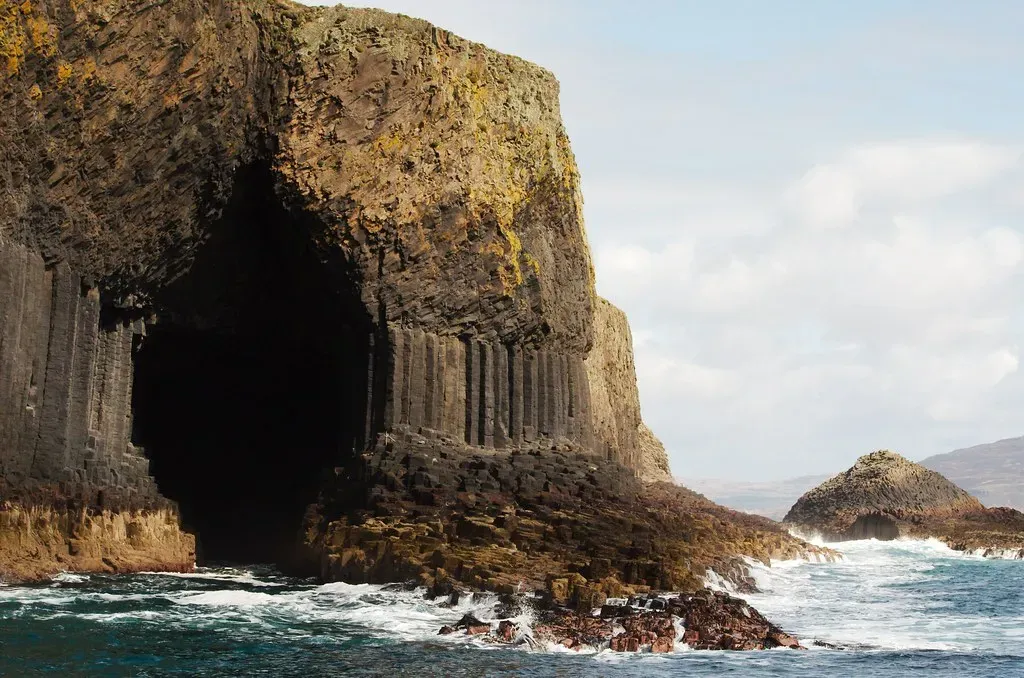
Fingal’s Cave is a sea cave on the uninhabited island of Staffa, in the Inner Hebrides of Scotland, known for its natural acoustics. At 72 feet tall and 270 feet deep, what makes this sea cave so visually astounding is the hexagonal columns of basalt, shaped in neat six-sided pillars that make up its interior walls. Nature, apparently, has a taste for geometric perfection.
Both the Giant’s Causeway and Fingal’s Cave were created by the same ancient lava flow, which may have at one time formed a “bridge” between the two sites – some 60 million years ago. After being “rediscovered” in 1772 by naturalist Sir Joseph Banks, the cave became a tourist magnet, with famous visitors including Queen Victoria as well as the poets William Wordsworth, Alfred, Lord Tennyson, and John Keats, along with novelists Jules Verne and Sir Walter Scott. Few geological formations on earth have inspired quite so many great minds.
6. Mammoth Cave, Kentucky, USA – The Longest Underground Maze on Earth
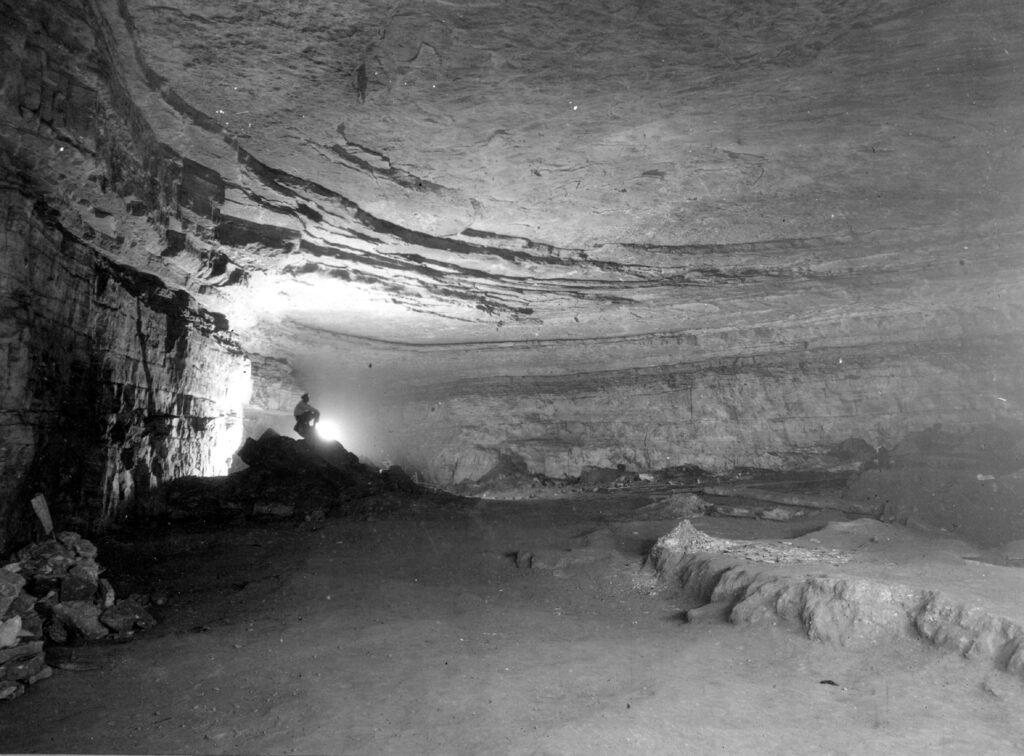
This American natural landmark has the distinction of being the longest cave system in the world, with around 420 miles of surveyed passageways. It has been the site of human activity for thousands of years before the arrival of Europeans on the North American continent, and its beauty and sheer scale have made it one of Kentucky’s most popular attractions. Still, “popular attraction” feels almost too modest a phrase for something this vast.
This vast subterranean maze, rich in stalactites, stalagmites, and underground rivers, carries an air of mystery and timelessness. Guided tours allow visitors to traverse its winding corridors while uncovering fascinating stories of exploration, natural history, and the legends that have grown around this extraordinary underground realm. From the name “mammoth,” you can probably imagine how big this cave system is – the cave system located within Mammoth Cave National Park features vast chambers, intricate passageways, underground rivers, and waterfalls. It is one of those places where the scale simply doesn’t sink in until you’re standing inside it.
7. Reed Flute Cave, Guilin, China – A Palace Carved by Time
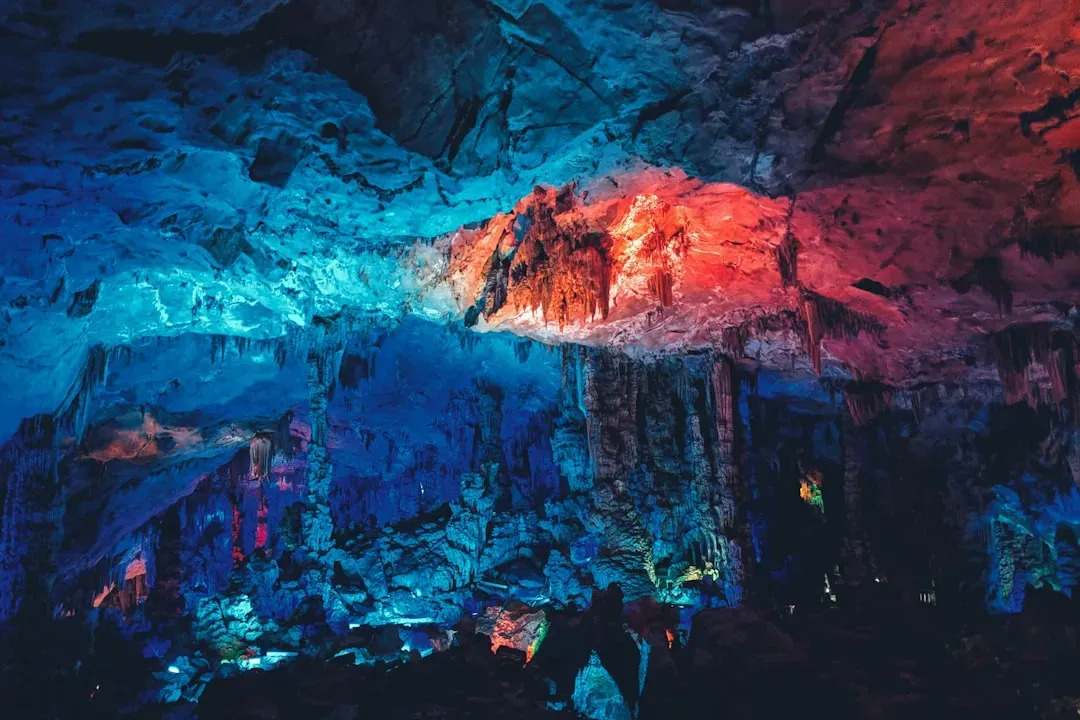
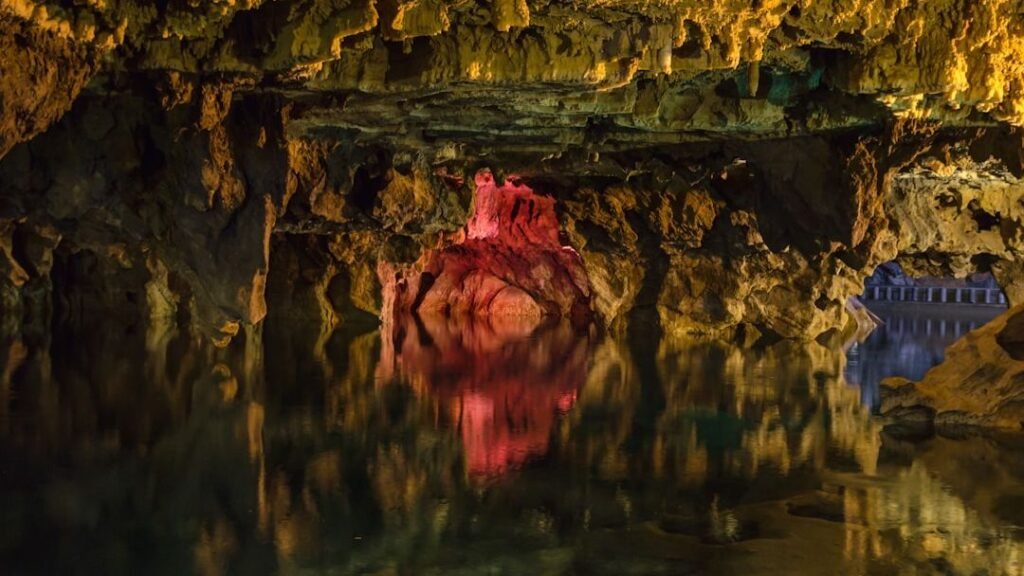
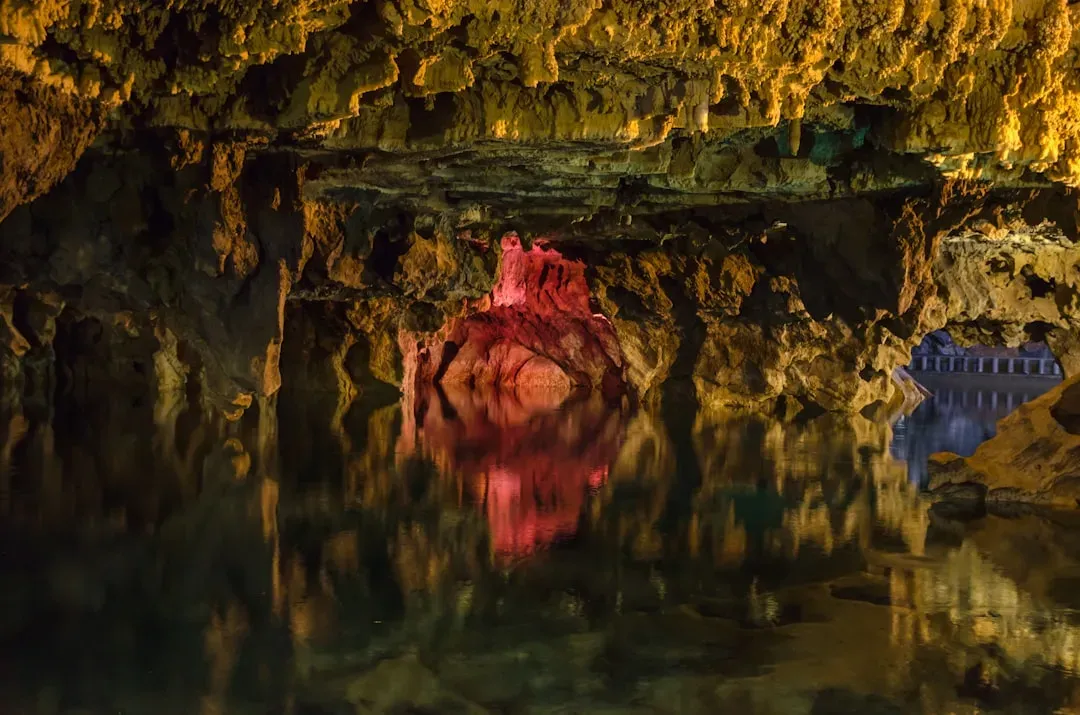
The Reed Flute Cave is a natural limestone cave located in Guilin, Guangxi, China, and is over 180 million years old. Also known as the Palace of the Natural Arts, this cave was named after the reeds growing outside, which were used to create flutes. The stone walls are covered with ancient inscriptions, with the oldest originating from the Tang Dynasty some 1,300 years ago. These days the cave is lit up in bright colors, making it feel even more otherworldly.
Reed Flute Cave is filled with a large number of stalactites, stalagmites and other rock formations. Inside, there are more than 70 inscriptions of poems and travelogues written in ink, the oldest of which can be dated to 792 AD in the Tang dynasty. You can also visit the mirror-like underground lake, Fairyland Lake, which is truly a scene from a fairy tale. Another notable attraction within the Reed Flute Cave is the Stone Forest, a towering limestone column resembling a forest of stone trees. The place is part geology lesson, part art gallery, part time machine.
8. Škocjan Caves, Slovenia – Where a River Roars Underground
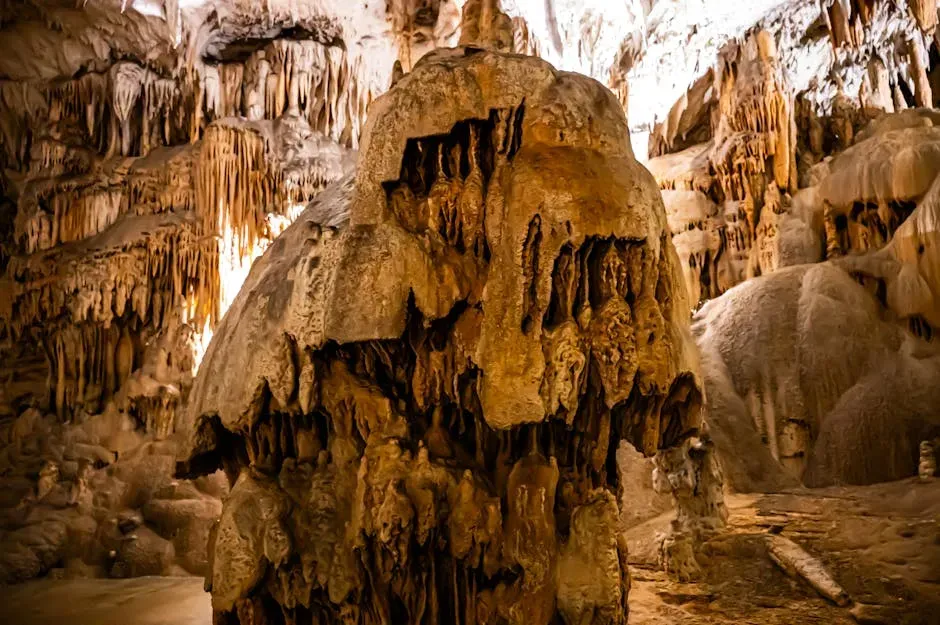
The Škocjan Caves in Slovenia form one of the largest underground canyons in the world, offering visitors a glimpse into a landscape shaped by powerful natural forces. These caves have been inhabited since prehistoric times, with archaeological finds dating back to 3000 BC. The Reka River flows through the cave system, creating dramatic waterfalls and rapids that carve out massive underground chambers, the most impressive of which is the Martel Chamber, one of the largest underground chambers ever discovered.
Another Slovenian gem, the Škocjan Caves are renowned for their enormous underground chambers and rushing river canyons. This UNESCO World Heritage site is a dramatic display of nature’s power, where cascading waterfalls and vast caverns create a setting of immense scale and beauty. The Škocjan Caves invite explorers to experience a raw, untamed environment that has remained largely unchanged for thousands of years, making it one of the most mysterious and captivating cave systems on the planet. It’s the kind of place that makes you feel very, very small.
9. Carlsbad Caverns, New Mexico, USA – Secrets Still Waiting Underground
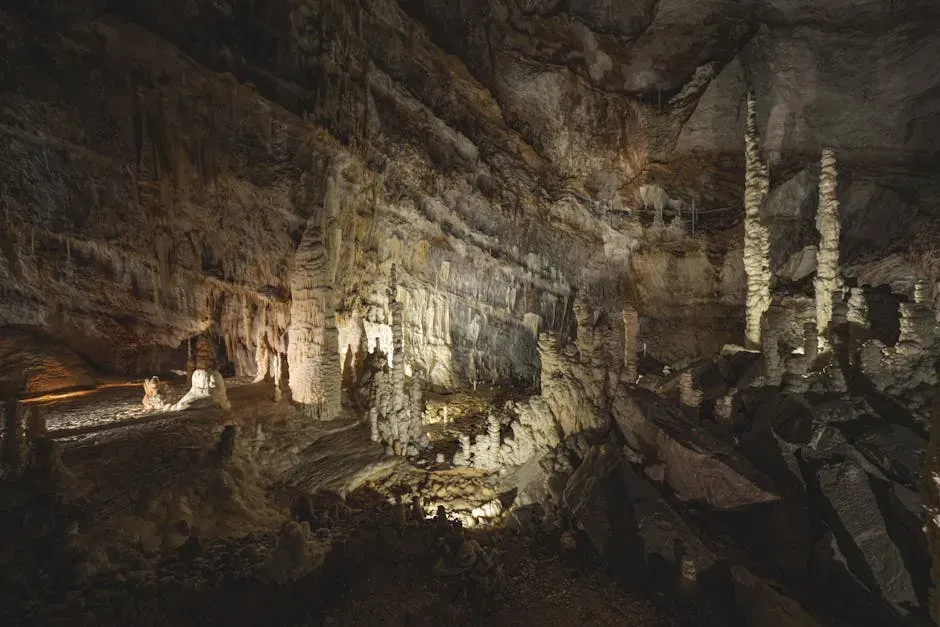
Tucked within the Chihuahuan Desert of New Mexico, Carlsbad Caverns is one of the largest cave systems in the United States. Discovered by Jim White in 1898, the caverns are famous for their massive limestone chambers, including the aptly named “Big Room,” which is as large as six football fields. A single chamber, the Big Room, measures 4,000 feet long and up to 625 feet wide and 350 feet tall – and that’s just what’s been discovered so far, as the caverns are still being explored and uncovered.
The caverns are also home to an enormous colony of Mexican free-tailed bats, whose nightly exodus from the cave is a sight to behold. What lies beyond the explored sections of the cave is still a mystery, with researchers continually discovering new tunnels and chambers. The eerie quiet and vast darkness of Carlsbad Caverns evoke a sense of wonder and the unknown, and legends of hidden treasure and lost miners only add to its mystique. Let’s be real: a cave that is still being explored in 2026 is a cave that deserves your full attention.
10. Marble Caves, Patagonia, Chile – A Cathedral of Color on the Water
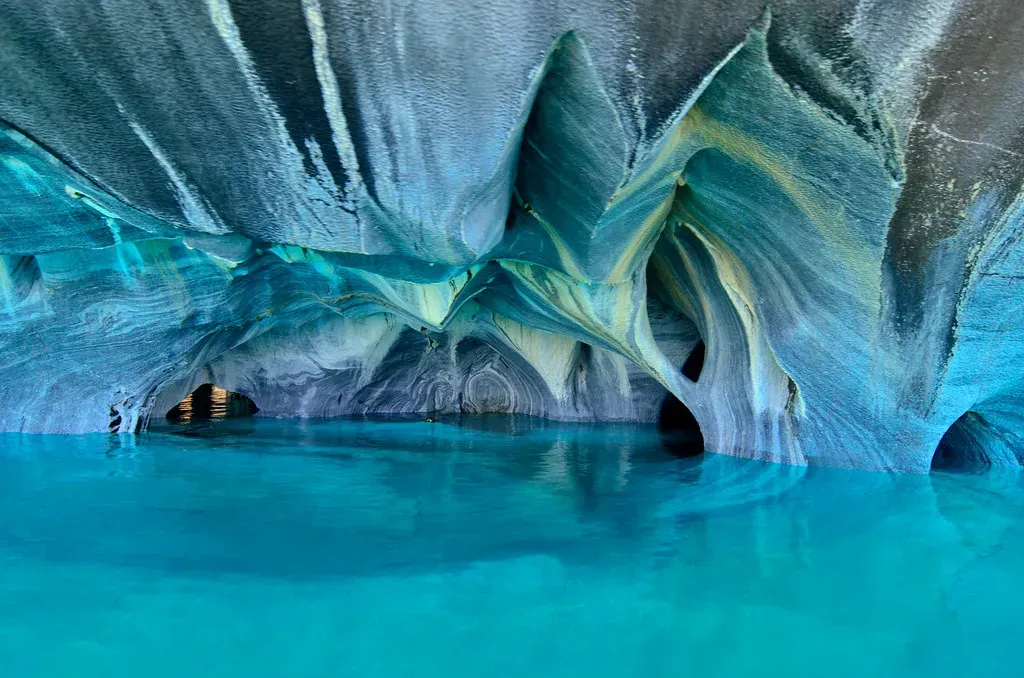
The Marble Caves, nestled in Chile’s Patagonia, are a series of stunning, naturally carved caverns surrounded by turquoise waters. The marble formations, shaped by thousands of years of erosion, reflect the blue hues of the lake, creating a surreal, shimmering effect. The caves are only accessible by boat, and their hidden, intricate passages remain largely uncharted, making them a true natural wonder.
The colors shift with the season as glacial meltwater changes the intensity of the turquoise lake, which means no two visits are ever exactly alike. It’s hard to say for sure which cave on this list is the most visually stunning, but the Marble Caves of Patagonia make a very compelling case. Remote, barely explored, and genuinely surreal, they feel like a secret the planet has been quietly keeping.
Conclusion: The Earth Still Has Secrets Worth Chasing
What’s most remarkable about all ten of these places is not just their beauty or their size, but the fact that they remind us that our planet is still largely unknown. The world’s caves keep on giving. In 2024 alone, scientists discovered the world’s oldest known cave art, new caves in Vietnam, a new stretch of an underground river, and even a cave on the Moon. That’s not ancient history. That’s almost yesterday.
There is something deeply humbling about realizing that a jungle farmer stumbling away from a storm in 1990 accidentally found the world’s largest cave, or that two miners drilling a routine tunnel in Mexico stepped into a crystal palace that had grown undisturbed for a million years. The earth beneath your feet is stranger and more spectacular than most of us ever take the time to consider.
So, which of these ten remarkable caves surprised you the most? Drop your thoughts in the comments – there’s always more to discover.