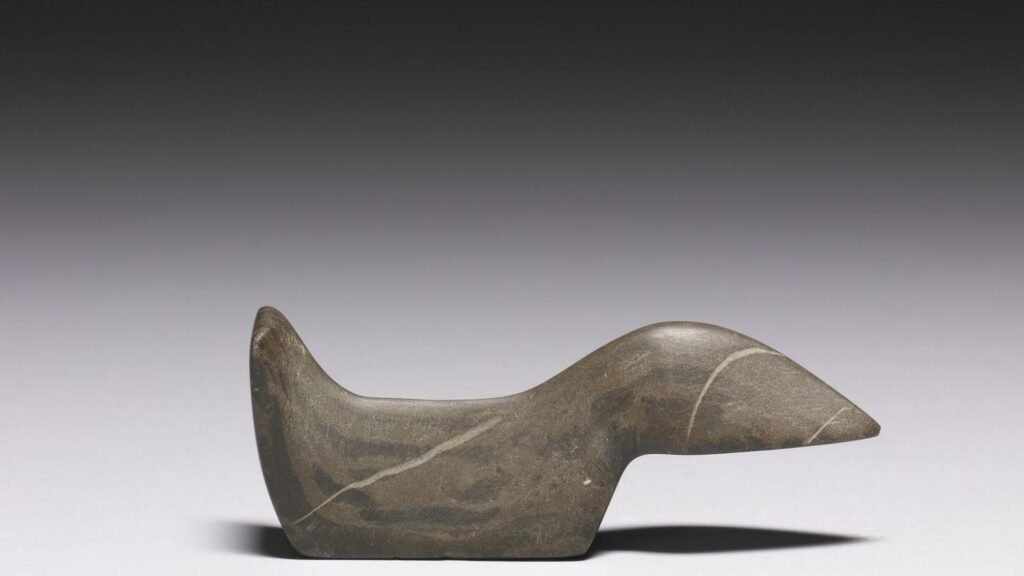

North America has a far longer, stranger, and more complicated past than most history books dare to admit. Long before the birth of nations, before the first European ships crested the horizon, this continent was already alive with civilizations, explorers, and cultures that left behind objects that continue to baffle even the sharpest scientific minds. Honestly, some of these discoveries are so unsettling in what they imply that you’d be forgiven for thinking someone made them up.
You’d expect ancient ruins and old tools. You wouldn’t expect a Norse coin buried in Maine, a Roman head unearthed in Mexico, or needles that suggest tailored fashion existed here over thirteen thousand years ago. These are not myths. These are real, tangible objects that have forced historians to rethink everything. Get ready to have your assumptions challenged, because what’s ahead might genuinely surprise you.
1. The Maine Penny: A Norse Coin on Native American Soil
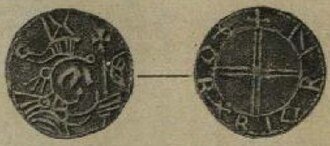
Here’s the thing about the Maine Penny – it shouldn’t exist where it was found. While excavating a Native American settlement in Maine in 1957, archaeologists found something remarkable buried in the dirt – a small coin of unknown origins, first misidentified as a 12th-century British penny, but later declared to be Norse upon further inspection. That detail alone should raise your eyebrows.
Experts at the University of Oslo determined the coin was most likely minted between 1065 and 1080 CE, making it the only pre-Columbian Norse artifact ever found in the United States. The mainstream belief is that the coin was brought to Maine from Labrador or Newfoundland via an extensive northern trade network operated by indigenous peoples, which raises its own fascinating questions. If it is indeed evidence of early Norse contact, it would change the entire timeframe of first contact between the New World and the Old World.
2. The Kensington Runestone: Vikings Deep in Minnesota?
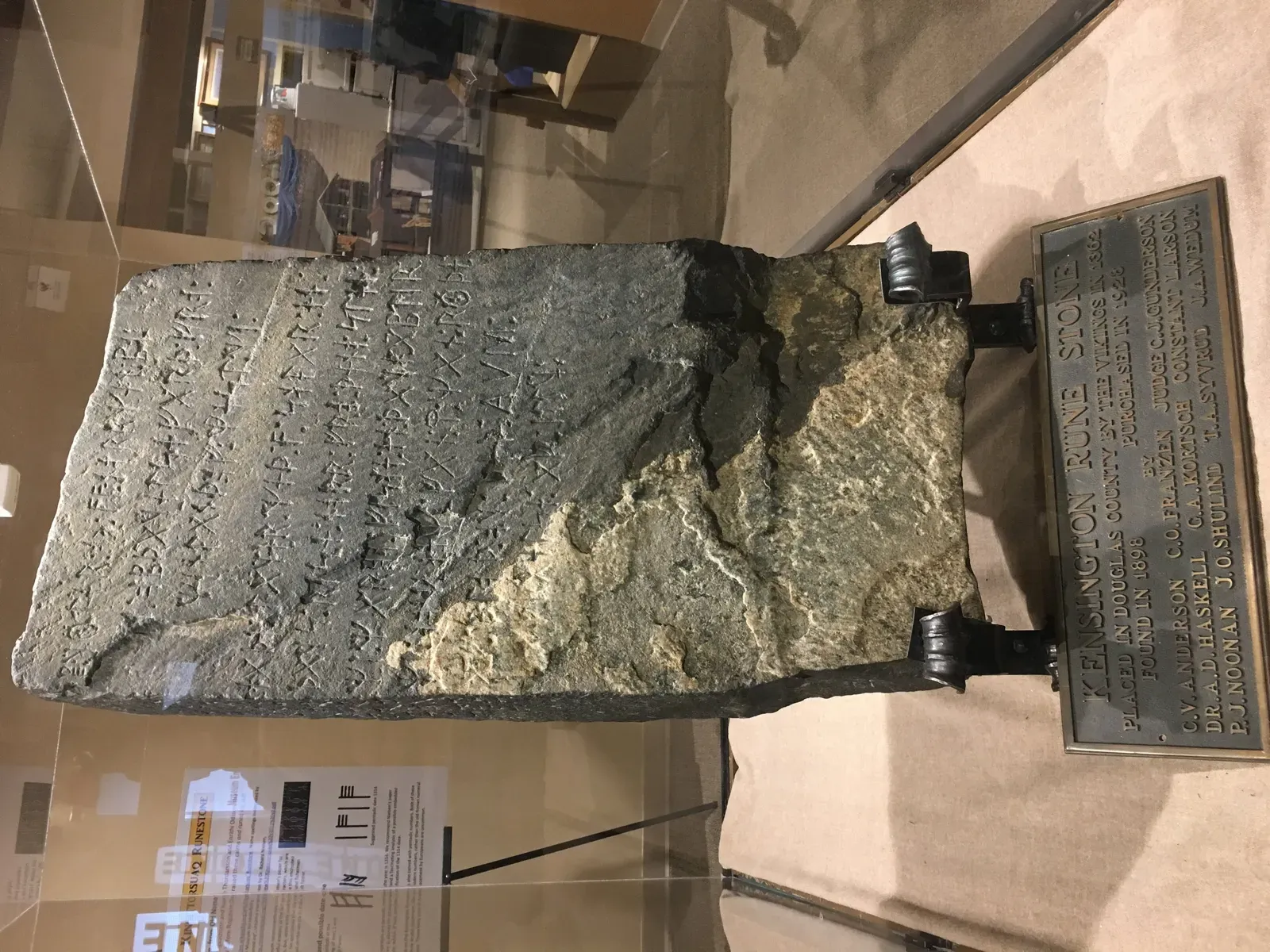
The Kensington Runestone is a slab of greywacke stone covered in runes that was discovered in western Minnesota in 1898, when a Swedish immigrant named Olof Ohman reportedly unearthed it from a field in the rural township of Solem in Douglas County. You can imagine the shock. Minnesota, of all places.
The inscription purports to be a record left behind by Scandinavian explorers, internally dated to 1362. There has been a drawn-out debate regarding the stone’s authenticity, and since the first scientific examination in 1910, the scholarly consensus has classified it as a 19th-century hoax – yet a committed community remains convinced of its authenticity. Geologist Scott F. Wolter concluded that the runic inscriptions are at least 200 years old and therefore could not be a nineteenth-century forgery, adding yet another layer to a mystery that refuses to be solved. It’s one of those artifacts that keeps flipping the table just when you think the game is over.
3. The Lake Winnipesaukee Mystery Stone: A Carved Egg Nobody Can Explain
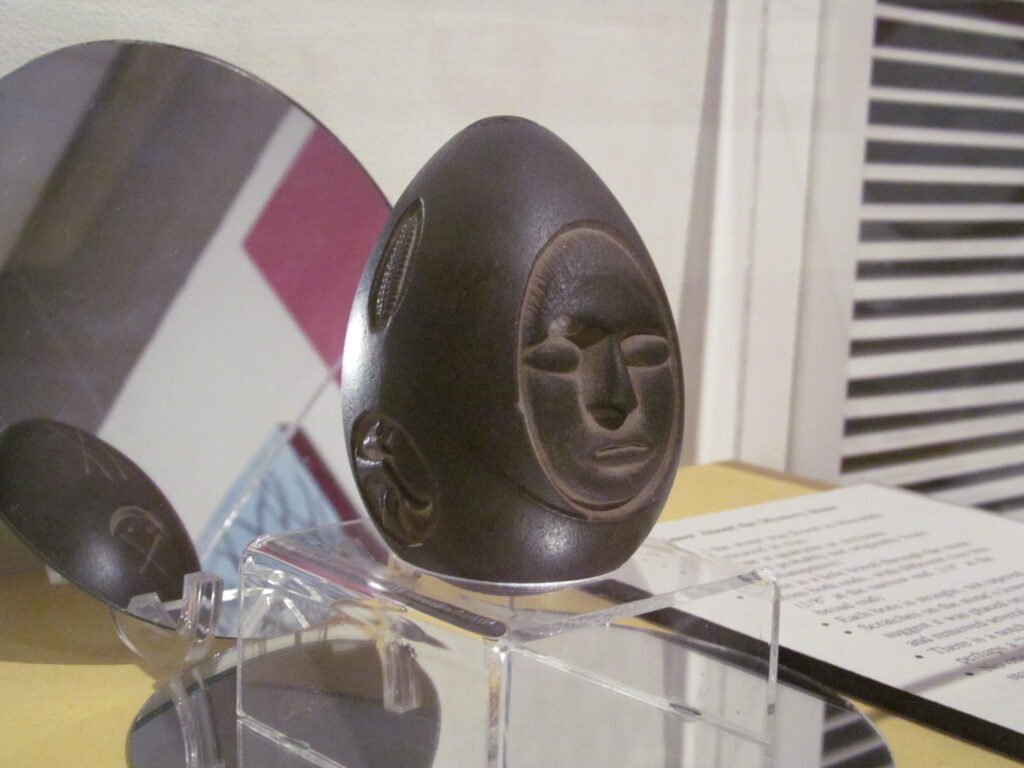
Discovered in 1872 buried close to Lake Winnipesaukee in New Hampshire, the mystery stone is dark, smooth, and egg-shaped, about 10 centimeters tall, with carved symbols and images on its surface including a face, ears of corn, and a teepee, among other unknown images. Odd enough on its own. But then you look closer.
The stone is made of quartzite, a smooth rock formed by shifting rock layers – and this type of rock is not native to New Hampshire. There are holes bored in both ends of the stone, drilled through from end to end with different-sized tools, and one researcher suggested these holes were made using power tools rather than traditional techniques used by Native Americans. No one knows for sure who made it, why, how, or when it was made. It just sits quietly in the Museum of New Hampshire History in Concord, daring you to figure it out.
4. Dighton Rock: Covered in Symbols No One Has Ever Decoded
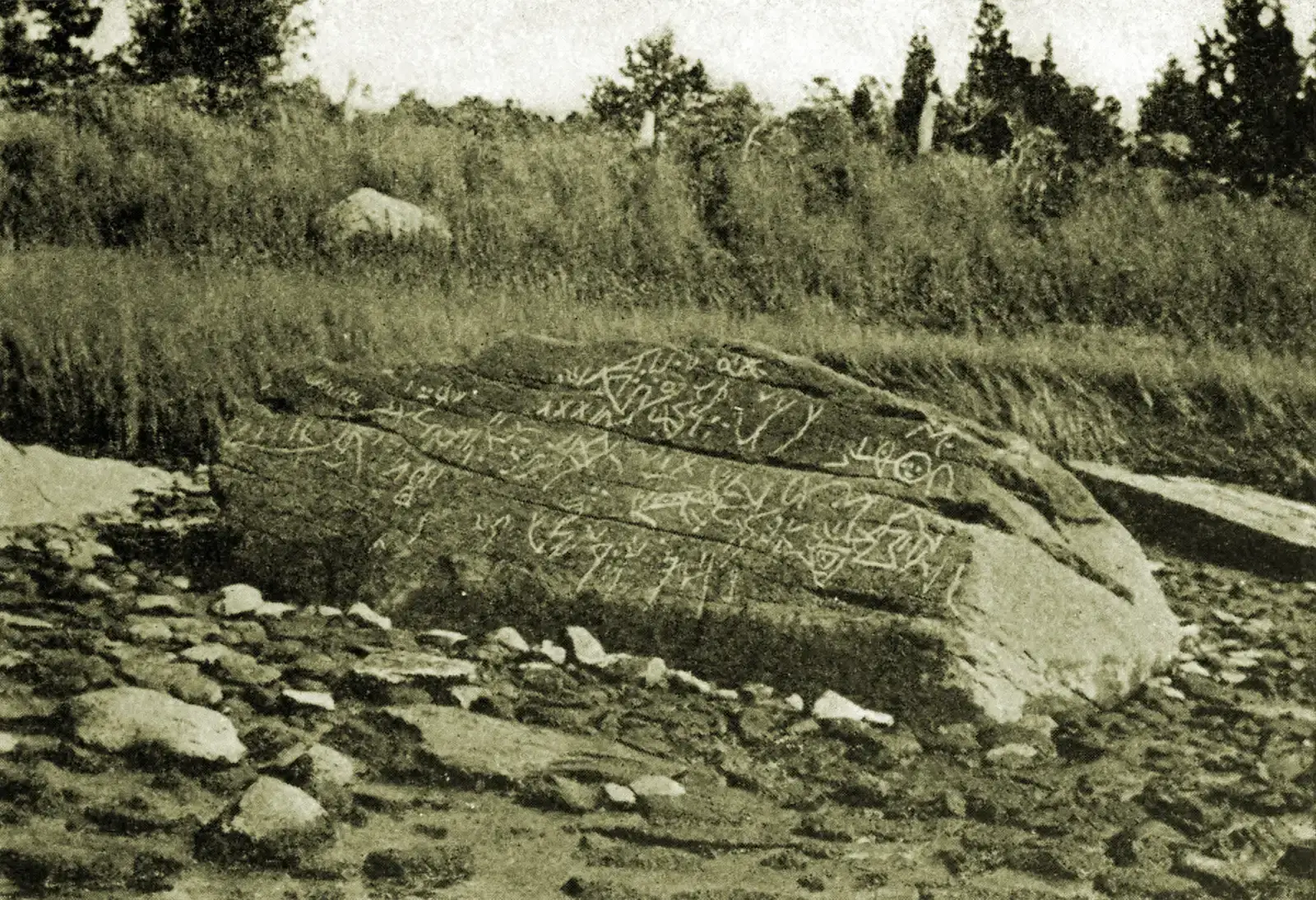
Dighton Rock has mystified people since before the colonization of America. It is an 11-foot-high boulder covered with ancient petroglyphs of unknown origin, which once rested on the shore of the Taunton River and now has its own museum in Berkley, Massachusetts. Impressive enough to have drawn serious attention across centuries.
Visitors to the strange rock have been in good company, as Cotton Mather, George Washington, and dozens of scientists have attempted to decode the meaning behind the writing on it. Theories range from messages left by Norse explorers to Native American symbols to a message from God – yet so far no consensus exists, and its meaning remains a mystery. More than twenty theories have been proposed about its origins, including the conviction of one American theologian that it was carved by ancient Phoenicians. I think it’s this ambiguity that makes it so endlessly fascinating.
5. The Miami Circle: A Perfect Geometric Mystery Beneath a Modern City

The Miami Circle, also known as the Miami River Circle or Brickell Point, is an archaeological site in Miami, Florida, consisting of a perfect circle measuring 38 feet across, made up of 600 post molds containing 24 holes or basins cut into the limestone bedrock. The sheer precision of it is what gets you. Think about drilling perfect holes into solid limestone without any modern machinery.
It is believed to have been the location of a structure built by the Tequesta Indians, in what was possibly their capital, and the site is estimated to be somewhere between 1,700 and 2,700 years old. Among the artifacts recovered from the site were three stone axes said to be made from basalt, a type of igneous stone not found naturally in Florida. That’s the detail that really makes you pause. The site was listed on the National Register of Historic Places in 2002 and declared a National Historic Landmark in 2009.
6. The Poverty Point Earthworks: Engineering That Shouldn’t Have Been Possible
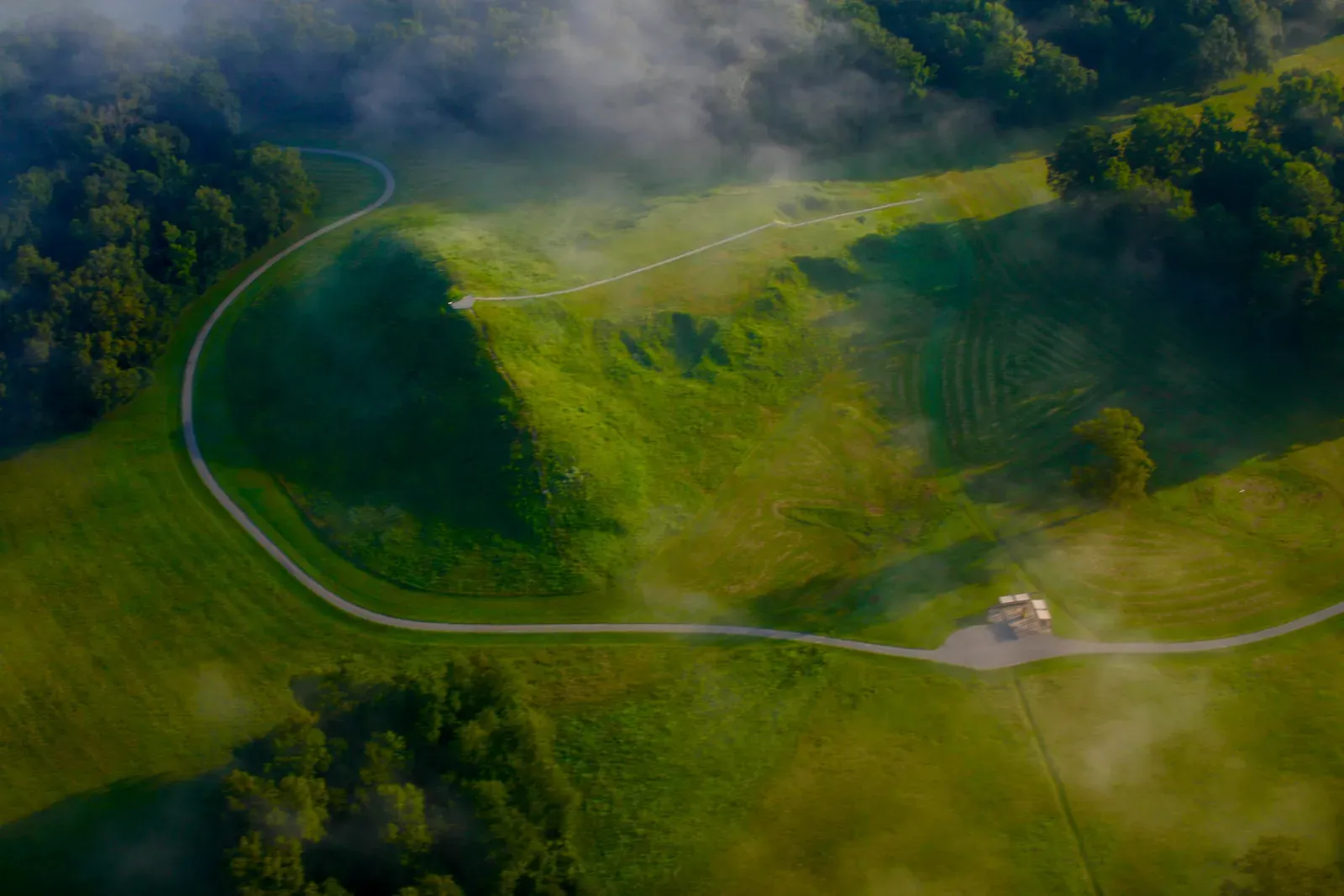
The Poverty Point site contains earthen ridges and mounds built by indigenous people between 1700 and 1100 BCE during the Late Archaic period, and archaeologists have proposed a variety of possible functions for the site, including as a settlement, a trading center, or a ceremonial religious complex. None of these theories, however, fully explains the scale of what was achieved.
What makes it even more staggering is that the trade and site design are so unusual because the people did not grow crops or raise animals for food – and no other hunting and gathering society made mounds at this scale anywhere else in the world. The mound complex is a singular achievement in earthen construction in North America: it was not surpassed for at least 2,000 years, and only then by people supported by a farming economy. Think about that. A society with no agriculture somehow managed to outbuild practically everyone else on the continent for two millennia.
7. The Cooper’s Ferry Tools: Rewriting the Timeline of Human Arrival
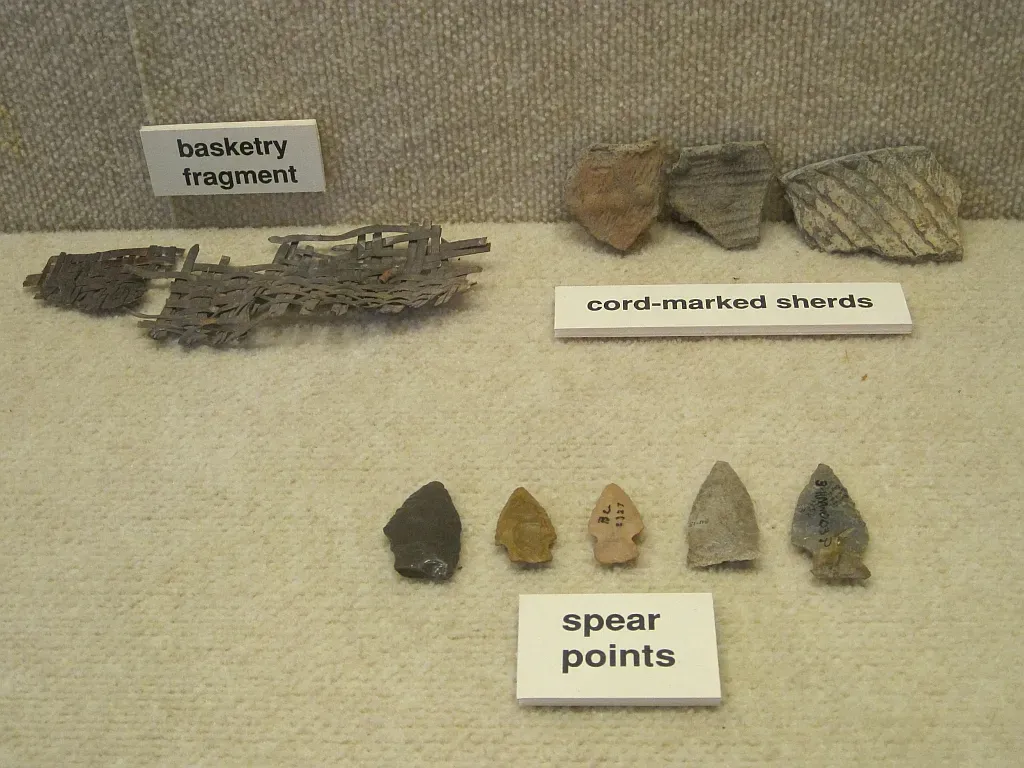
Artifacts found in Idaho have been dated as far back as 16,500 years ago, making them the oldest radiocarbon-dated evidence of humans in North America, according to research published in the journal Science. That alone would be remarkable. But the real shock is what they imply.
The findings show that people lived at Cooper’s Ferry more than a millennium before melting glaciers opened an ice-free corridor through Canada, which implies that the first people in the Americas must have come by sea, moving rapidly down the Pacific coast and up rivers. Over ten years of excavations, the Cooper’s Ferry team uncovered dozens of stone spear points, blades, and multipurpose tools called bifaces, as well as hundreds of pieces of debris from their manufacture. The story of how humans first arrived here is being rewritten, one chipped stone at a time.
8. The White Sands Footprints: The Oldest Human Traces on the Continent
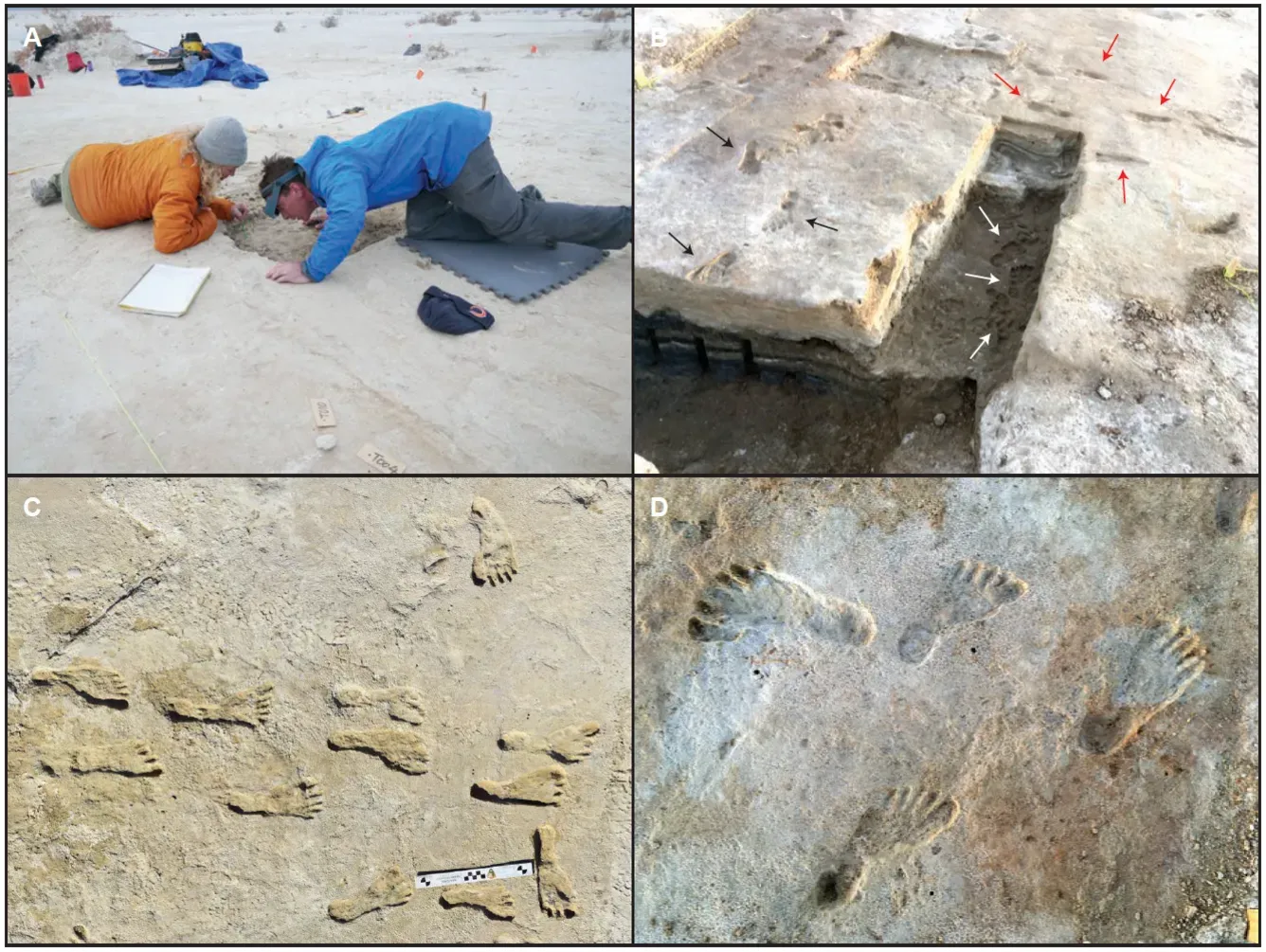
In 2021, scientists reported finding 61 fossilized footprints preserved in ancient lake sediment at White Sands National Park in New Mexico, estimated to be between 21,000 and 23,000 years old – making them the oldest known evidence of human presence in North America. The footprints, mostly belonging to teenagers and children, tell the story of how early North American inhabitants lived.
Based on the presence of more footprints from teenagers, scientists believe they were responsible for fetching supplies while adults performed more skilled tasks, and children appear to have left more footprints simply from playing. There’s something deeply human and oddly moving about that image. When their fossilized footmarks were confirmed in 2021, it pushed back the earliest known arrival of humans in the Americas by up to 10,000 years. It’s hard not to feel a little awestruck.
9. The Blythe Intaglios: California’s Answer to the Nazca Lines
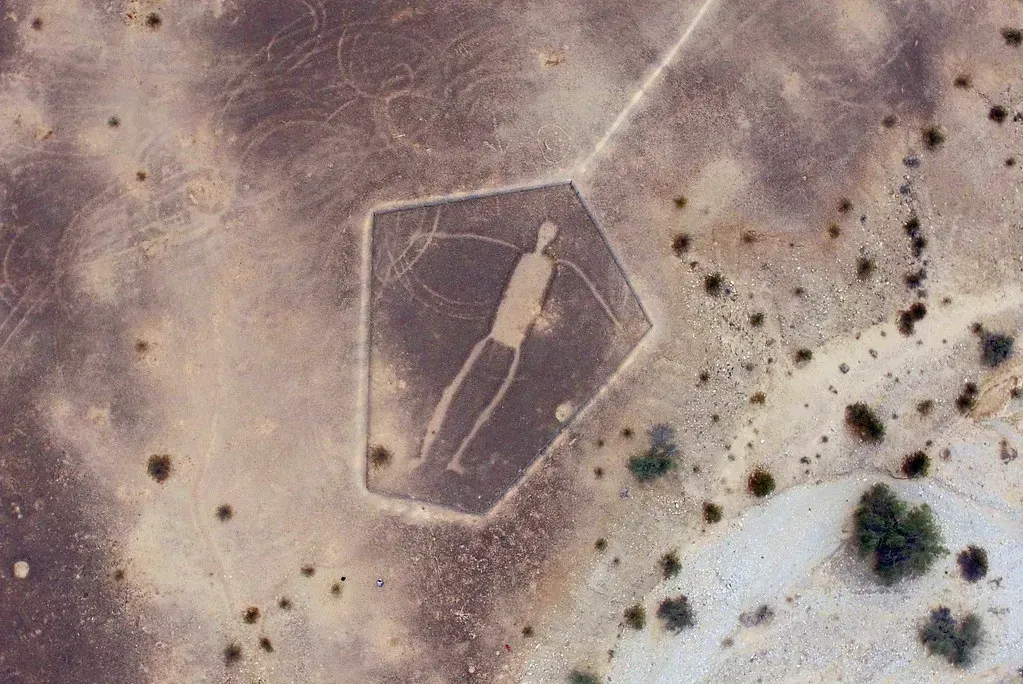
Stretching across the California desert near the Colorado River, the Blythe Intaglios show enormous ground figures depicting human forms, animals, and geometric shapes that can only be fully appreciated from the air. Created by scraping away desert pavement to reveal lighter soil underneath, these massive geoglyphs range from 95 to 171 feet in length. Most people have never even heard of them. That’s a shame, honestly.
The figures are believed to have been made by the Mohave and Quechan Indians, are somewhere between 450 and 2,000 years old, and are thought to represent Mastamho, the creator of life. Many of the intaglios are believed to date from the prehistoric period, but their exact age and the identity of their creators are still uncertain. The site was only discovered in the modern era in 1932, when pilot George Palmer spotted them while flying between Las Vegas and Blythe, California, which led to a survey of the area that same year. Imagine flying over the desert and suddenly seeing giant human figures etched into the earth below you.
10. The Wyoming Needles: 13,000-Year-Old Proof of Tailored Clothing
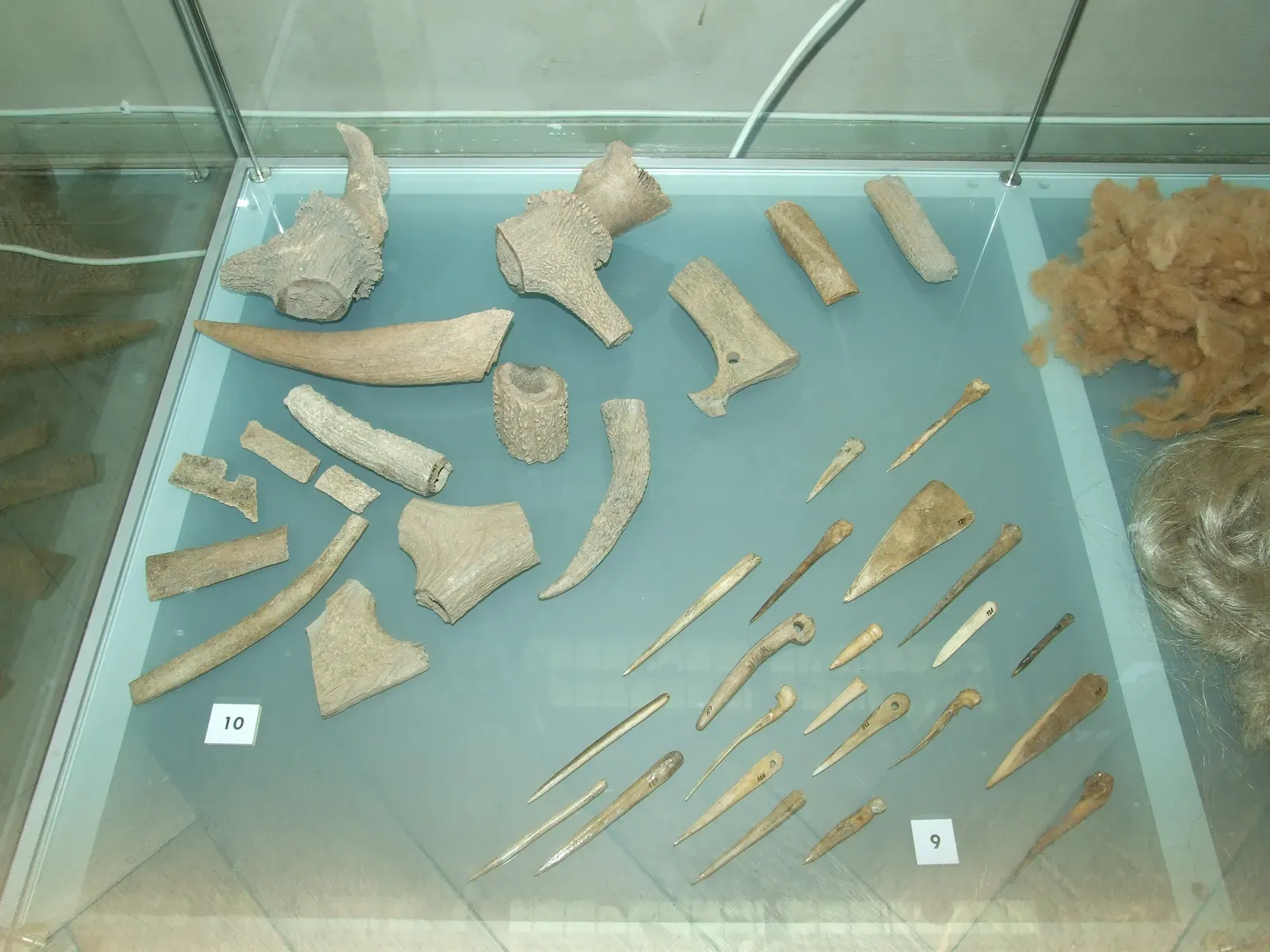
A collection of 32 prehistoric needle fragments dating back 13,000 years were unearthed in Wyoming between 2015 and 2022. The discovery of these tiny artifacts, now held at the University of Wyoming, provides strong evidence of the earliest tailored garment production, and these garments, warmer and more robust than simple draped fabrics, enabled modern humans to travel to northern latitudes and eventually colonize the Americas.
A 2024 study found that the needles were made from the limbs and paw bones of small mammals such as red foxes, bobcats, hares, rabbits, and the now-extinct American cheetah. Stop and think about the craftsmanship that implies. These weren’t crude cave-dwellers. These were skilled artisans who sewed fitted clothing from the bones of wild animals in a frozen landscape, thousands of years before anyone thought to write it down. The discovery provides strong evidence of the earliest tailored garment production, and these garments enabled modern humans to travel to northern latitudes and eventually colonize the Americas.
Conclusion: History Is Bigger Than the Books We Were Given
Every single one of these artifacts carries a quiet but powerful message: the story of North America is far older, more complex, and more connected to the wider world than we were ever taught. A Norse coin in Maine. Needles carved from the bones of an extinct cheetah. Footprints that predate everything we thought we knew. Each discovery chips away at old certainties and opens up something better – genuine wonder.
What strikes me most is that these aren’t isolated curiosities. They form a pattern. Humans have always been more capable, more mobile, and more creative than history’s official timeline tends to give them credit for. The continent we call North America holds secrets that archaeologists are still unearthing right now, in 2026, and there will undoubtedly be more to come.
The real question isn’t just what these artifacts are. It’s what other discoveries are still sitting beneath our feet, waiting for the right pair of hands to find them. Which of these ten surprised you the most? Drop your thoughts in the comments – I’d genuinely love to know.