

You’ve probably heard that we know more about space than we do about our own oceans. When you think about it, that’s both incredible and kind of unnerving. The deep ocean is one of the last true frontiers on Earth, stretching down thousands of meters below the surface into pitch-black, bone-crushing darkness. Scientists are constantly venturing into these extreme depths with submersibles and underwater robots, and what they’re finding is nothing short of astonishing.
Every year, researchers discover creatures that look like they came straight out of a science fiction movie. Some glow in the dark. Others have bizarre adaptations that help them survive in one of the harshest environments imaginable. The discoveries coming out of recent deep-sea expeditions are rewriting what we thought we knew about life on this planet. Let’s dive in and explore ten of the most mysterious animals that have been pulled from the deepest, darkest corners of the ocean.
1. The Mystery Mollusk That Glows in the Dark
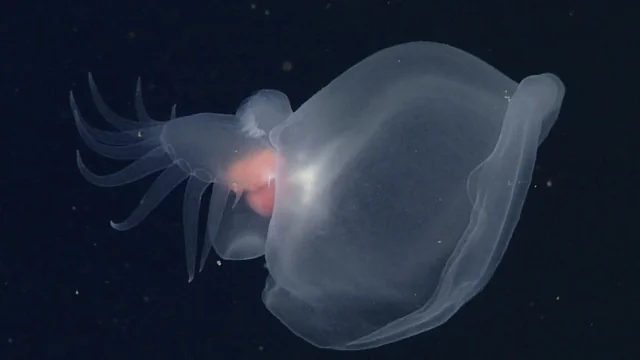
After more than two decades of observation and research, scientists finally described an unusual deep-sea creature they’ve been tracking since 2000 at depths around 8,576 feet. The animal is so strange that researchers initially couldn’t even figure out what family it belonged to. It looks like something assembled from spare parts, with a translucent body, a large hooded head, and what appears to be a crown of antennae attached to its tail end.
This creature is the first known sea slug to live in the midnight zone of the deep ocean, and it’s unusually translucent and can turn bioluminescent. When threatened, it puts on quite a light show, probably to scare off predators. Even more fascinating, it can detach one of its glowing finger-like tail appendages as a distraction, much like a lizard drops its tail. The appendage grows back over time. Scientists spent years studying this grapefruit-sized oddity, and their description is believed to be one of the most comprehensive ever written about a deep-sea creature.
2. The Death-Ball Sponge That Eats Meat
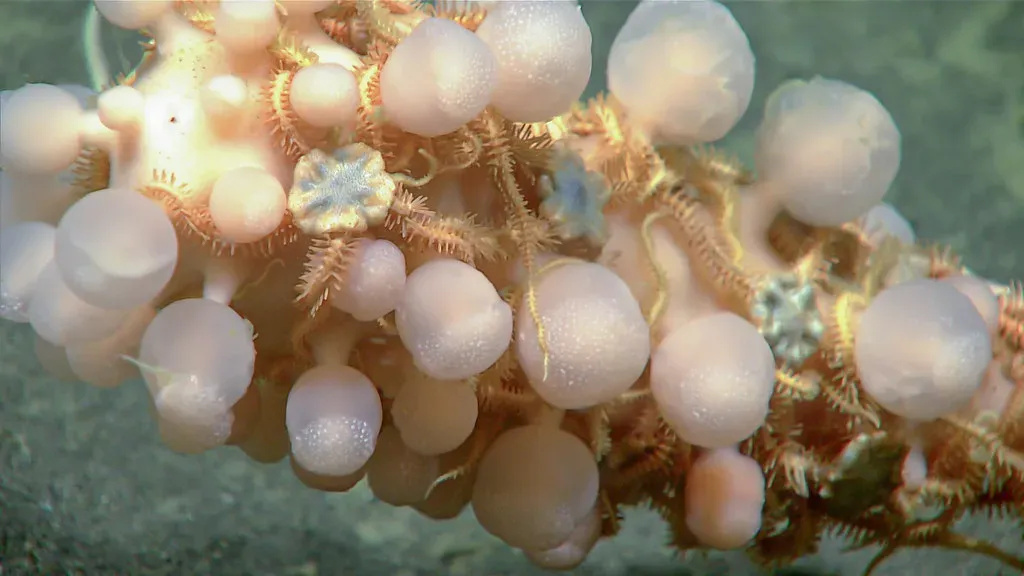
Researchers discovered a carnivorous sponge they nicknamed the death-ball sponge during expeditions through the Southern Ocean. Most people think of sponges as passive filter feeders that just sit there processing water. This one is different. These sponges have tiny hooks that help them catch other animals to eat. It’s a ball-shaped predator lurking in the depths, which honestly sounds like something from a horror movie.
The Southern Ocean expeditions have already yielded 30 new species, and this carnivorous sponge is definitely one of the standout finds. The remoteness and extreme conditions of the Southern Ocean mean that it remains one of the most under-sampled regions on the planet. There’s something unsettling yet captivating about a sponge that hunts.
3. Record-Breaking Carnivorous Bivalve
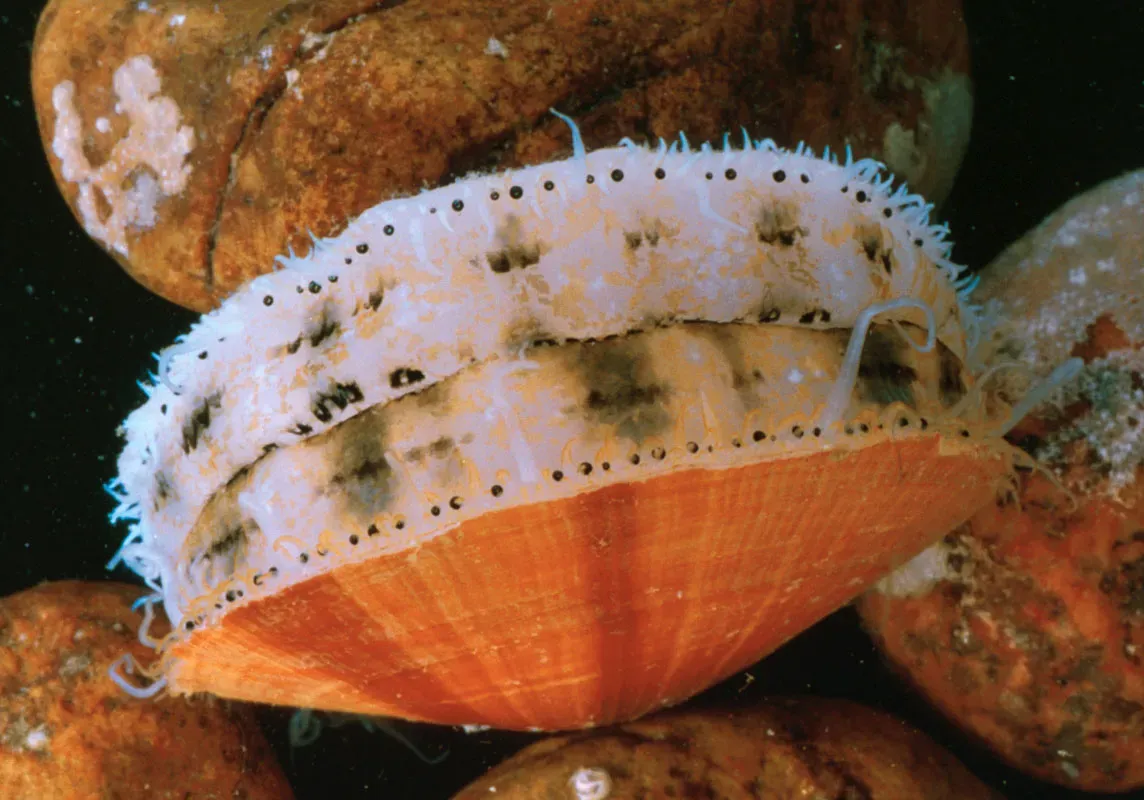
Researchers conducted a detailed anatomical study of Myonera aleutiana, a carnivorous bivalve found between 5,170 and 5,280 meters, about 800 meters deeper than any previously known specimen. Think about that for a second. We’re talking about a clam-like creature that eats other animals, and it lives nearly three and a half miles below the ocean surface. This marks only the second bivalve species ever documented entirely through non-invasive micro-CT scanning, producing more than 2,000 tomographic images.
The technology required to study these creatures is almost as impressive as the animals themselves. The incredibly detailed scans revealed the soft tissue and internal structure of this deep-dwelling predator in unprecedented detail. It’s a reminder that even familiar groups of animals, like bivalves, can evolve into something completely unexpected when you go deep enough.
4. Popcorn-Like Parasitic Isopod
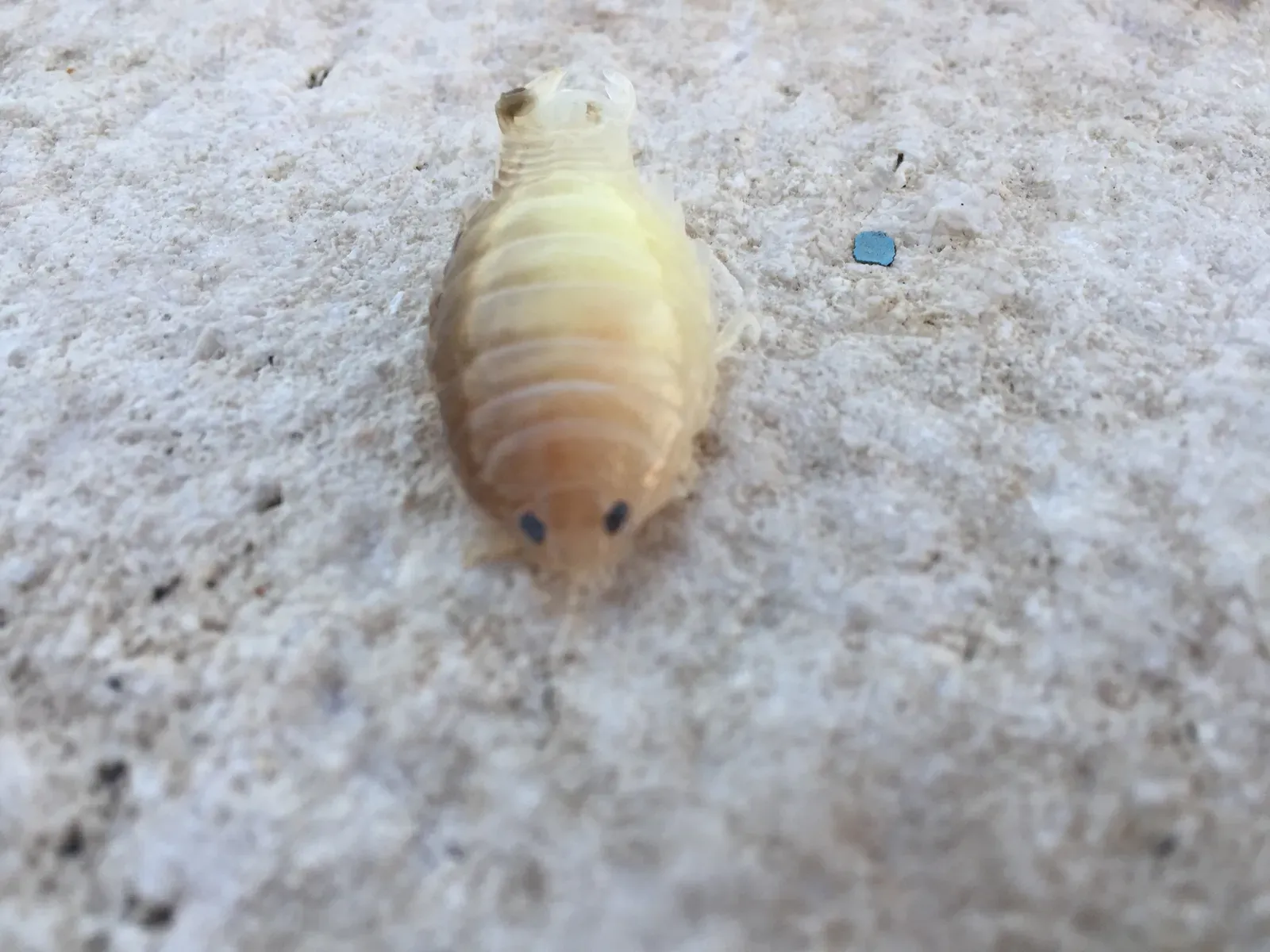
The parasitic isopod Zeaione everta has raised structures on the female’s back that resemble popped corn kernels, with its genus name derived from Zea (the corn genus) to highlight this unusual appearance, and it was found in the Australian intertidal zone. I know it sounds wild, but there’s actually a creature out there that looks like someone glued popcorn to its back. The resemblance is striking enough that scientists named it after corn.
This discovery represents a completely new genus, which means it’s not just a new species but an entirely new branch on the tree of life. Parasitic isopods are already pretty strange creatures, but this one takes weird to a whole new level. The deep ocean and its fringes continue to surprise us with forms that challenge our imagination.
5. Tusk Shell With a Hitchhiking Sea Anemone
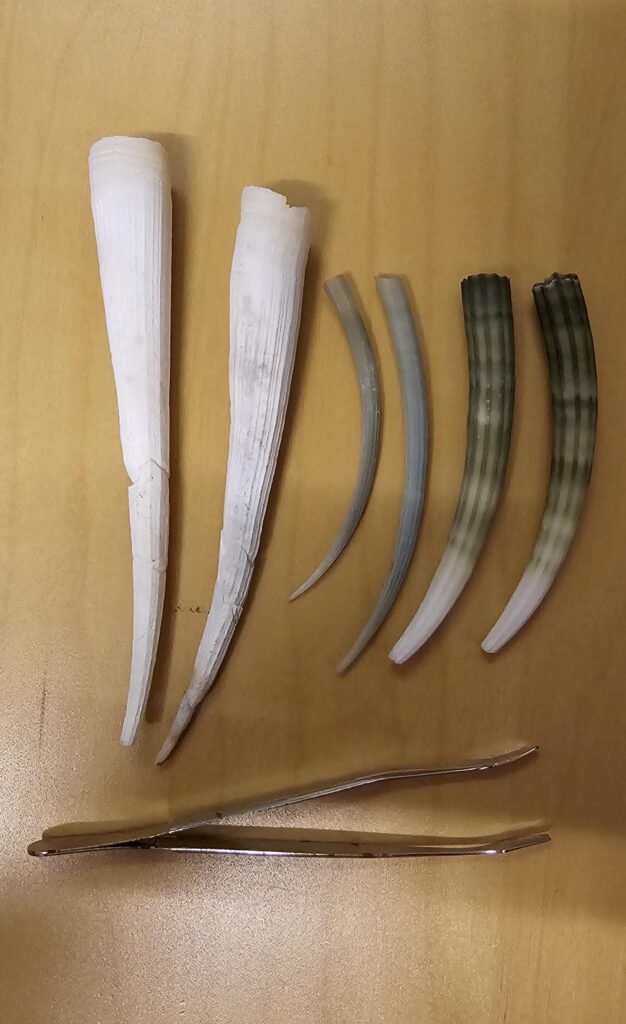
The tusk shell Laevidentalium wiesei, collected from depths exceeding 5,000 meters, was discovered with a sea anemone attached to its anterior side, a relationship never before documented within this genus. Scientists were genuinely surprised by this find. Tusk shells, or tooth shells, have long tapering structures they use for protection, but no one had ever seen one carrying a passenger like this before.
The discovery raises fascinating questions about deep-sea symbiosis and relationships we haven’t even begun to understand. Does the sea anemone benefit the tusk shell somehow, or is it just hitching a free ride? The deep ocean is full of these mysterious partnerships, and each new observation gives us a tiny glimpse into how these isolated ecosystems function.
6. Deepest Mollusk Ever Found in the Aleutian Trench
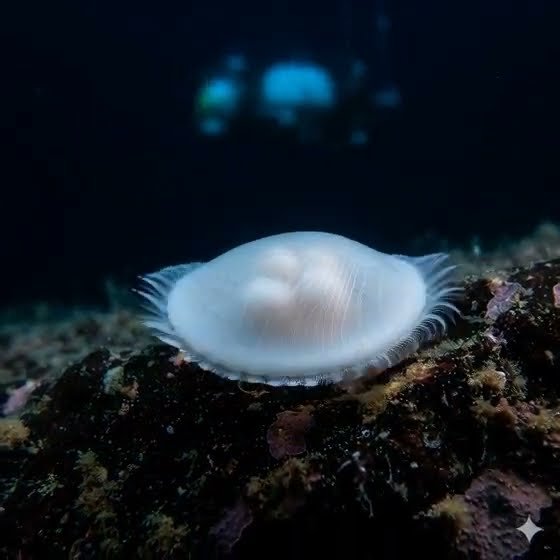
Veleropilina gretchenae, a newly identified mollusk, was recovered from the Aleutian Trench at 6,465 meters and is one of the first members of the class Monoplacophora to have a high-quality genome published directly from its holotype specimen. When you’re talking about depths over 21,000 feet, you’re entering a realm where the pressure would crush most living things instantly. Yet this mollusk thrives there.
The fact that scientists could extract and sequence its genome is remarkable. It opens up possibilities for understanding how life adapts to such extreme conditions at the genetic level. These ancient-looking creatures have been around for hundreds of millions of years, and finding them in the deepest trenches tells us that life finds a way, no matter how hostile the environment.
7. Thriving Communities at 31,000 Feet Deep
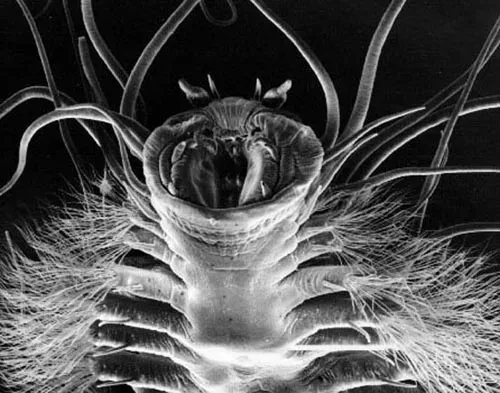
An international team of scientists reached depths of more than 31,000 feet in the northwest Pacific Ocean and discovered the deepest and most extensive communities of chemical-reaction-powered life-forms known to exist on Earth. Using a deep-sea vessel called Fendouzhe, researchers encountered abundant wildlife communities, including fields of marine tube worms peppered with white marine snails, with the worms having a symbiotic relationship with chemosynthetic bacteria that live in their bodies.
This is mind-blowing stuff. These creatures don’t rely on sunlight filtering down from above. Instead, they get their energy from chemicals seeping out of the ocean floor. These trench communities are likely sustained in part by methane produced by microbes buried under the seafloor, suggesting that wildlife communities may be more common in these extremely deep trenches than scientists once thought. We’re basically talking about entire ecosystems powered by Earth’s internal chemistry rather than the sun.
8. Zombie Worms That Feast on Bones
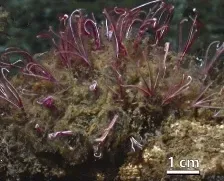
Researchers identified zombie worms, creatures with no mouth or gut whose existence was first confirmed in 2002. Let’s be real, the name alone is enough to grab your attention. These worms aren’t really zombies, but they eat the soft material inside the bones of dead whales and other big sea creatures. They lack a digestive system in the traditional sense and instead rely on symbiotic bacteria to break down the bone material.
Picture a whale carcass sinking to the ocean floor, and then these bizarre worms descending upon it to slowly consume the skeleton from the inside out. It’s both creepy and fascinating. They play an important role in recycling nutrients in the deep ocean, turning massive whale skeletons into food for the wider ecosystem.
9. Telescope Octopus and 40 Other Potential Species in Argentine Canyon
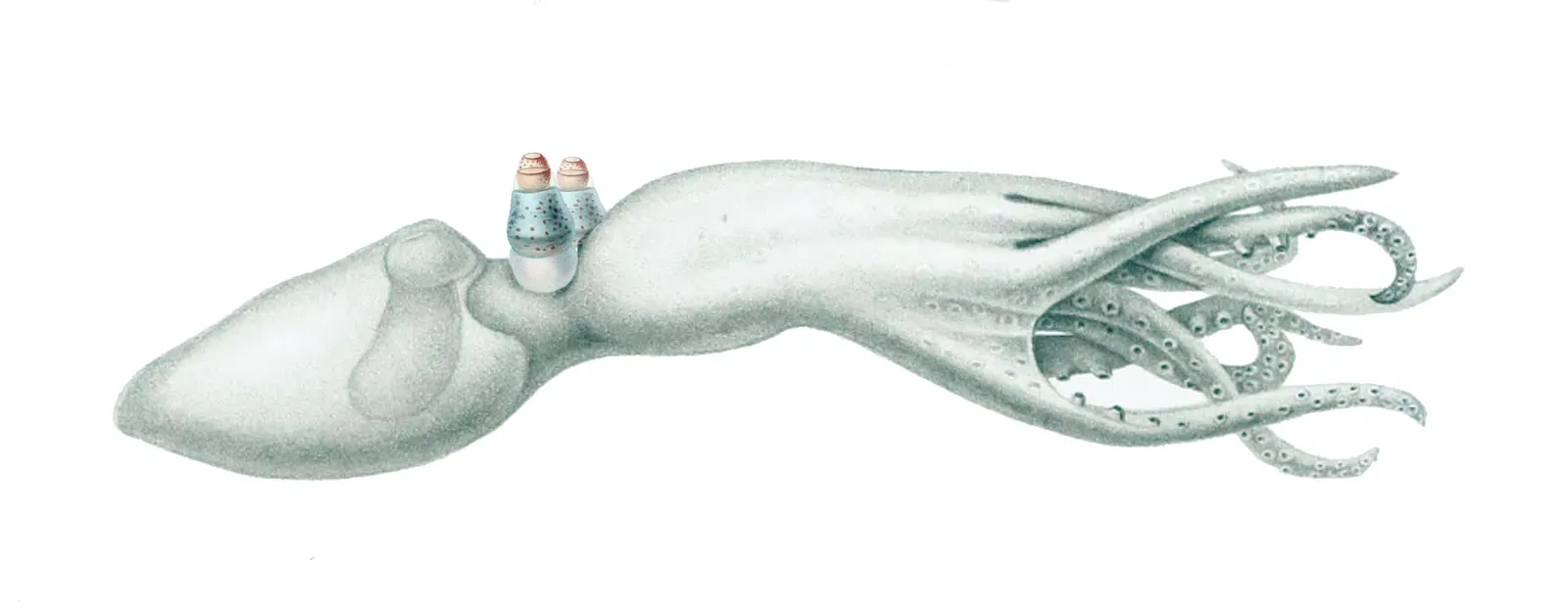
Off the coast of Argentina, scientists spotted creatures including a see-through squid with a hornlike collection of arms, pale pink lobsters, and a ghostly squid, and over three weeks the team recorded more than 40 species that may be new to science. The Mar del Plata Canyon is a gorge that plunges nearly twice as deep as the Grand Canyon, and it’s teeming with life that looks like it belongs in an alien carnival.
Though bright in the robot’s spotlight, these creatures are actually clad in stealthy camouflage, as red light doesn’t travel far in the deep sea, which means reddish animals can more easily avoid predators. The deep ocean is essentially a world without red light, so being red down there is like wearing an invisibility cloak. Evolution is endlessly clever, and these discoveries remind us that we’re still only scratching the surface of understanding deep-sea biodiversity.
10. Iridescent Scale Worms and Rare Gastropods
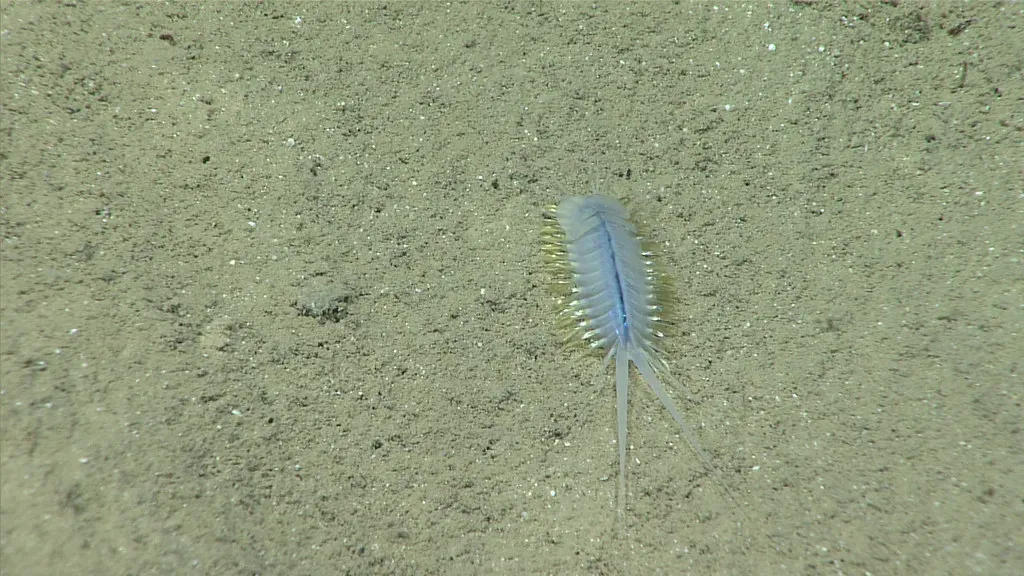
The list of finds includes new armored and iridescent scale worms, sea stars, and crustaceans, as well as rare gastropods and bivalves that evolved to live in volcanic and hydrothermal habitats. These aren’t your garden-variety worms. They shimmer with iridescent colors that seem impossible in the pitch-black depths. Some of these creatures live near hydrothermal vents, where superheated water spews from cracks in the ocean floor.
Fewer than 30 percent of the expedition’s samples have been assessed thus far, and researchers gathered nearly 2,000 specimens from 14 animal groups as well as hours of video footage and thousands of images. There’s a treasure trove of data still being analyzed, which means we can expect even more bizarre discoveries in the years to come. Every sample tells a story about survival in the most extreme conditions imaginable.
Conclusion
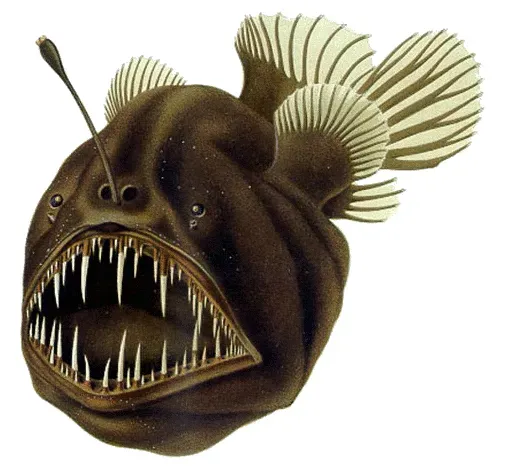
The deep ocean continues to astonish us with creatures that challenge everything we thought we knew about life on Earth. From glowing mollusks to meat-eating sponges, from bone-devouring zombie worms to shimmering scale worms that thrive near volcanic vents, the depths are full of mysteries waiting to be uncovered. These discoveries aren’t just fascinating in their own right. They also remind us how much of our own planet remains unexplored and how vulnerable these ecosystems might be to human impacts like deep-sea mining and climate change.
Every expedition brings back evidence of species that have evolved in complete isolation, developing traits and survival strategies we never imagined possible. The fact that scientists are still finding entire new genera and ecosystems shows just how little we truly understand about the ocean. What do you think is still lurking down there in the darkness? The next expedition might reveal something even more extraordinary.
Hi, I’m Andrew, and I come from India. Experienced content specialist with a passion for writing. My forte includes health and wellness, Travel, Animals, and Nature. A nature nomad, I am obsessed with mountains and love high-altitude trekking. I have been on several Himalayan treks in India including the Everest Base Camp in Nepal, a profound experience.


