


You might think caterpillars are just wiggly, unremarkable creatures crawling around your garden. Think again. These fascinating larvae are some of nature’s most spectacular creations, sporting colors more vibrant than any artist’s palette, patterns that would make fashion designers envious, and survival strategies so clever they’ll make you wonder why humans aren’t half as creative. From jewel-like translucent beauties to fierce-looking monsters that are secretly gentle giants, of caterpillars is far more captivating than most people realize.
So let’s dive into this hidden world of miniature marvels and discover the ten most stunning caterpillars our planet has to offer.
Hickory Horned Devil: The Gentle Giant
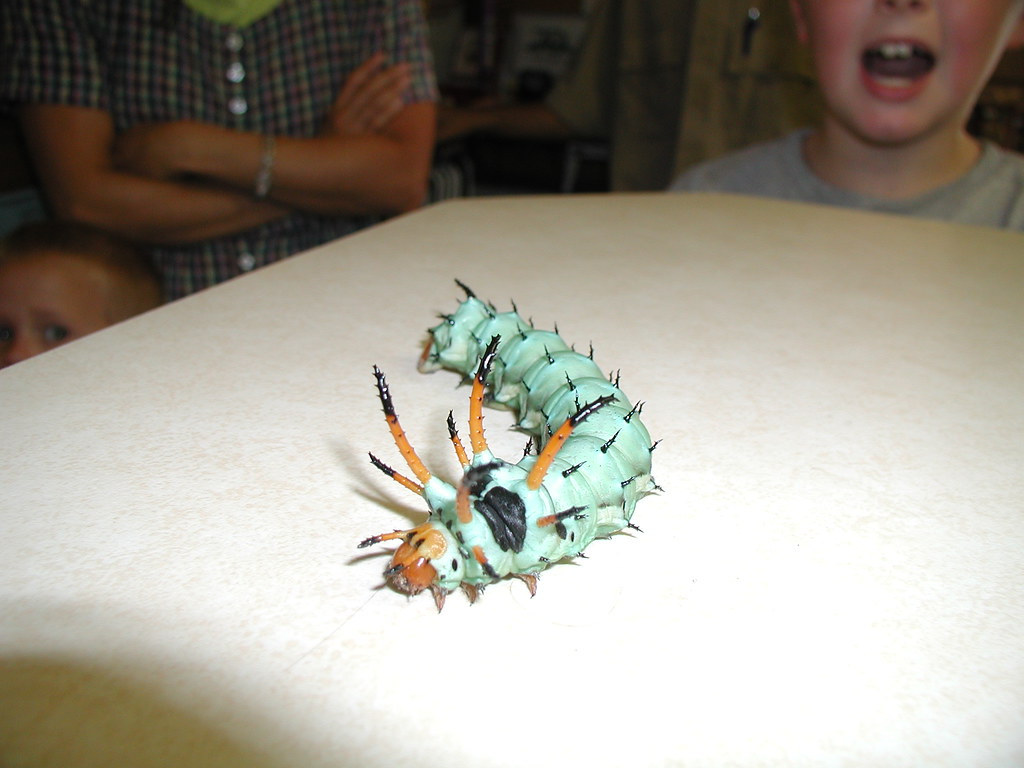
The largest caterpillar in North America is the hickory horned devil, named after it’s looks; like a small dragon. The adult moth that emerges is a regal moth or royal walnut moth, Citheronia regalis. A full-grown larva may be five inches long and as big around as your thumb. The caterpillar’s green body is armed with large, black spines along its back and four stout, black and yellow curved horns just behind its orange head.
Despite its absolutely terrifying appearance, this caterpillar is surprisingly harmless. Their frightening appearance is purely a ruse; the spines, though prickly, do not sting, and the larva is harmless and actually one of the more easily handled of the saturniidae. These magnificent creatures transform from bright green to stunning turquoise as they prepare for pupation. Adult regal moths are enormous. The forewings are overall gray, tan, or slightly olive, with orange or reddish-orange veins and pale yellow spots. Hindwings are more orange, usually with a yellow patch at the base. The body appears furry and is orange with pale yellow markings.
Jewel Caterpillar: Nature’s Living Gem
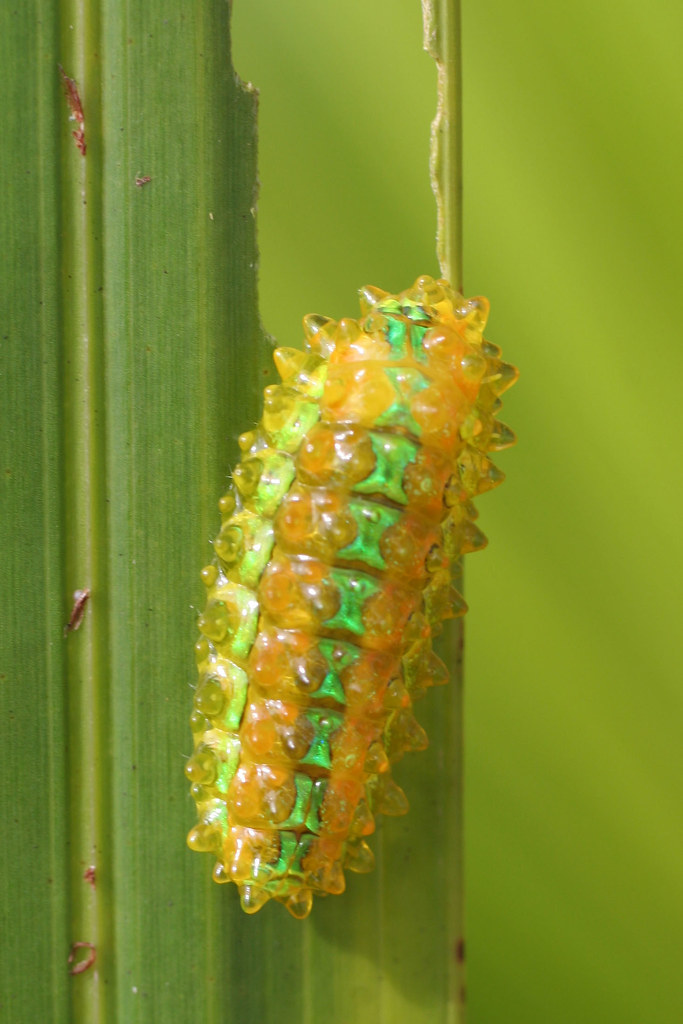
Dubbed the ‘jewel caterpillar’, this lovely, translucent larva belongs to a family of moths known as Dalceridae. Although scientists are still unsure about the exact function of the caterpillar’s translucent, gooey attributes, the leading theory is that the slimy stickiness helps to deter predators. These extraordinary creatures look like tiny works of art made from living crystal.
Picture a caterpillar that appears to be carved from green jade or emerald, with translucent spikes protruding from its body like miniature glass ornaments. The jewel caterpillar’s gelatinous coating gives it an otherworldly appearance that seems almost too fantastical to be real. According to Scientific American, the jelly-like ‘cones’ that cover the body break off easily (sort of like a lizard’s tail), helping the caterpillar. This remarkable adaptation allows them to escape predators while maintaining their stunning appearance.
Spicebush Swallowtail: Master of Disguise
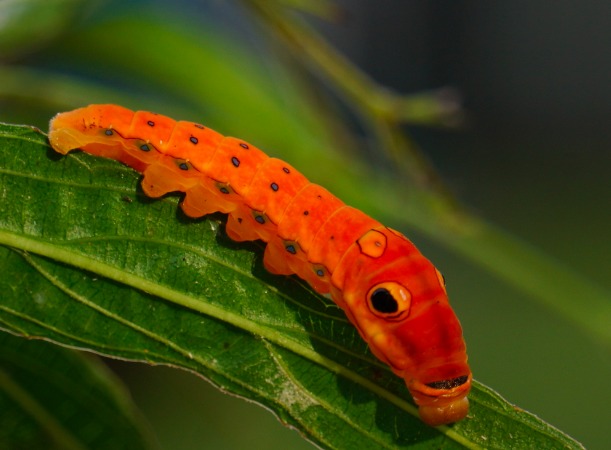
Caterpillars are bright green or sometimes yellow, smooth, with a prominent pair of black and yellow eyespots on a hump behind the actual head, and two more yellow spots behind those. Young caterpillars are shiny olive-green and white and resemble bird droppings. This clever transformation from bird poop mimic to snake impostor shows nature’s incredible ingenuity in survival strategies.
The spicebush swallowtail caterpillar undergoes one of the most dramatic makeovers in the insect world. Resembling a bird dropping, the brown first stage Spicebush Swallowtail Caterpillar goes unnoticed by predators. With brown camouflage and fake eyespots, young Spicebush Swallowtail Caterpillars look remarkably like bird poop. Later, they develop large false eyes that make them appear snake-like, complete with the ability to rear up and emit foul odors when threatened. Swallowtail caterpillars have Y-shaped, orangish, retractable organs behind their heads for protection: when disturbed, the caterpillar suddenly extends this organ, which surprises predators and emits a foul-smelling chemical.
Cecropia Moth Caterpillar: The Colorful Spike Master
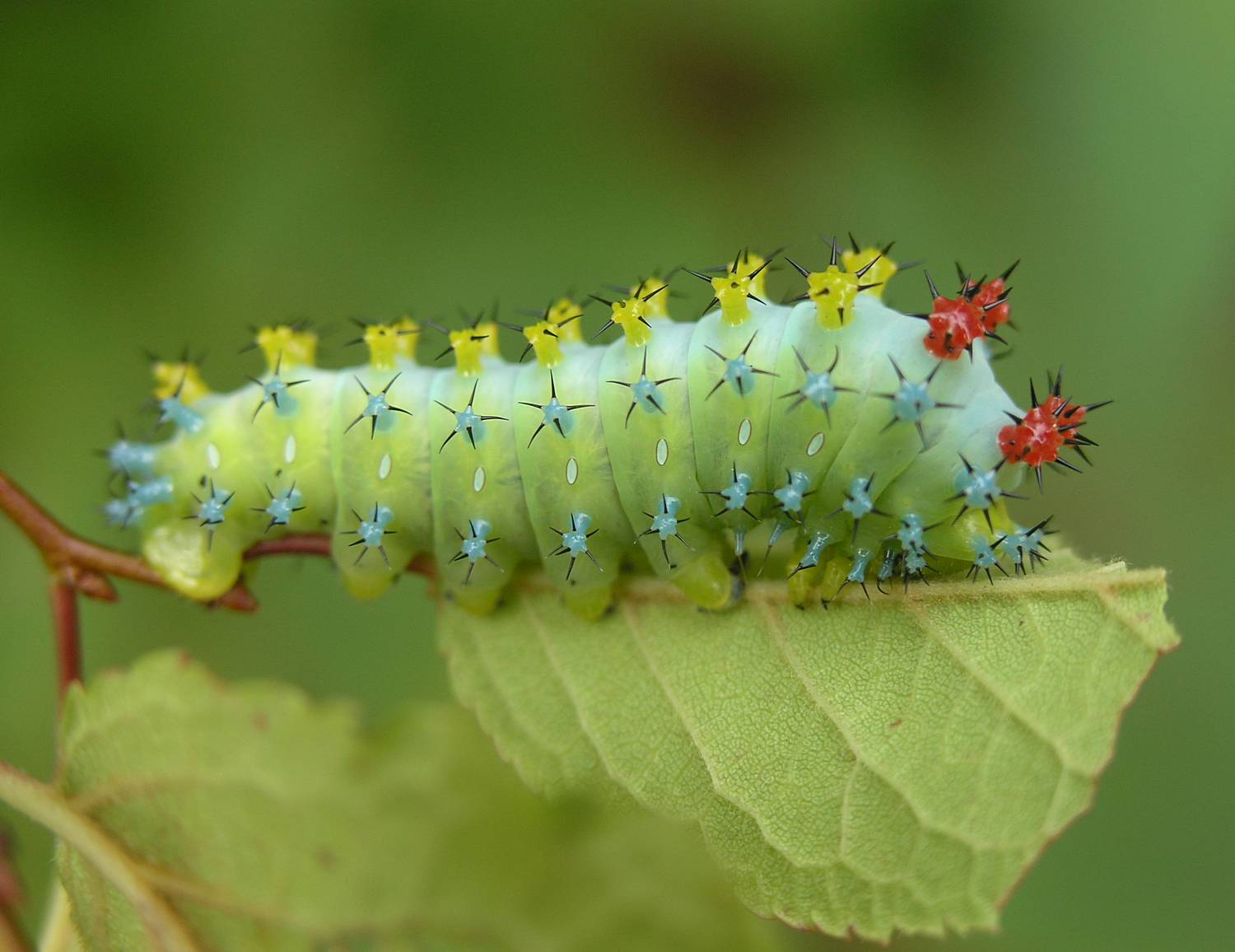
The beautiful adult Cecropia (Hyalophora cecropia) is the largest moth in North America with a wingspan from 5″ – 7″. The showy caterpillars are chunky and grow to 4″- 4.5″. These impressive larvae are nature’s punk rockers, sporting an array of colorful spikes that would make any fashion statement envious.
As they gain more mass, they transition from a dark color to bright sea green and eventually an iridescent bluish green. However, what is most striking about them are the numerous protuberances or tubercles colored blue, orange, and yellow, armed with black spines. The cecropia caterpillar’s transformation is truly remarkable, going from a small black creature to a magnificent blue-green giant adorned with rainbow-colored tubercles. The Cecropia Moth Caterpillar bristles with multicolored branching spines, especially in its early stages. Despite their intimidating appearance, these caterpillars are completely harmless to humans.
Saddleback Caterpillar: Beautiful but Dangerous
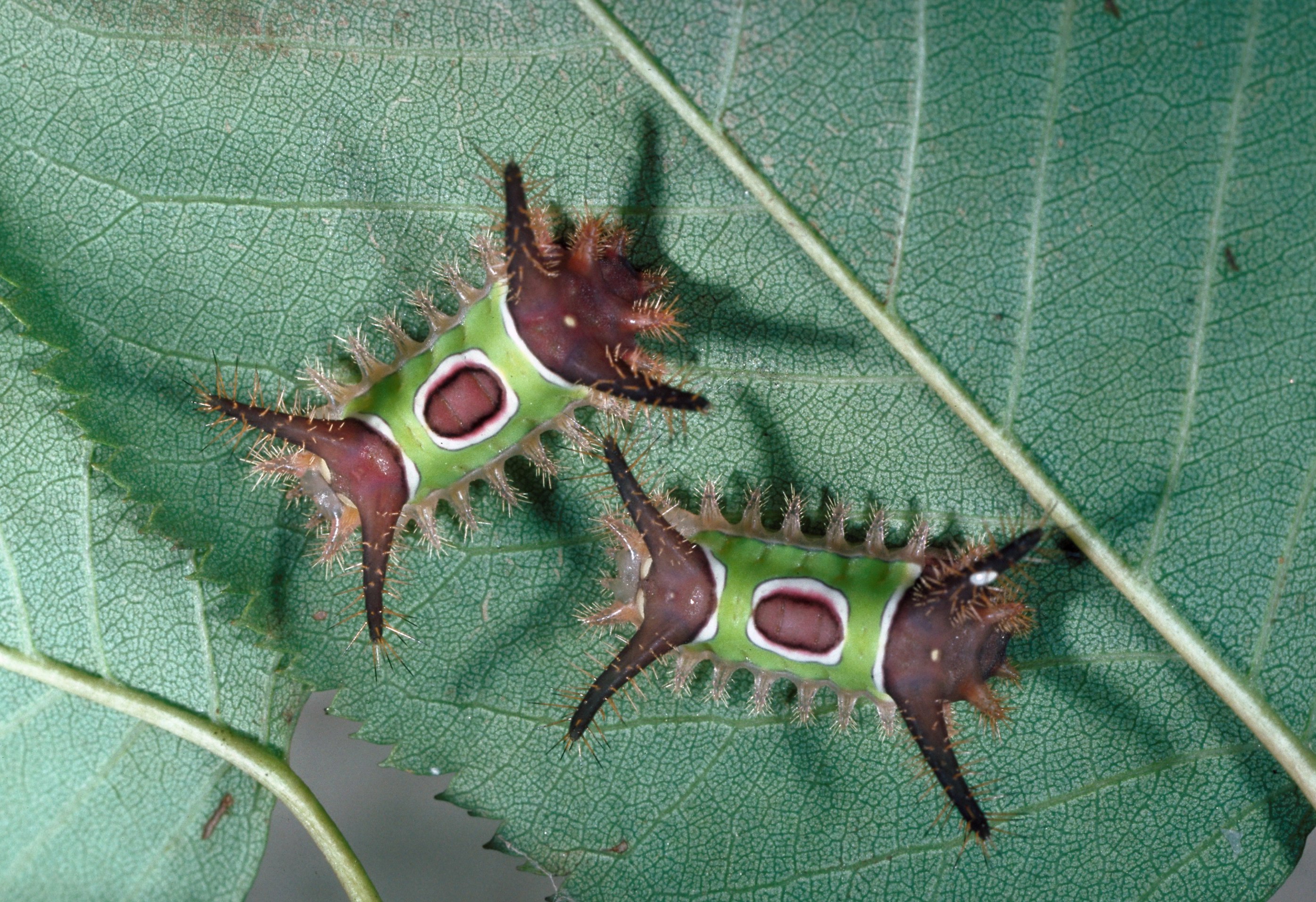
It shouldn’t be too cumbersome to figure out where this caterpillar gets its name: It’s all in the neon green “saddle” on its back, which is outlined in white and has an oval area in the center with a purplish-brown color. This striking caterpillar proves that sometimes the most beautiful things in nature can also be the most dangerous.
Contact with the stinging spines covering the Saddleback Caterpillar results in a nasty rash. The saddleback’s vibrant coloration serves as a warning to potential predators, advertising its venomous capabilities. A warning from Mother Nature can also be conveyed through vivid colors. Although only an inch long, these bizarre-looking creatures thrive in the eastern United States, Mexico, and Central America. Although only an inch long, they pack a powerful sting like puss caterpillars. Be wary of their four lobes of venomous spines and the several tiny stinging protrusions that line their sides. This small but mighty caterpillar commands respect through both its beauty and its defensive capabilities.
Puss Caterpillar: The Deceptive Fluffball
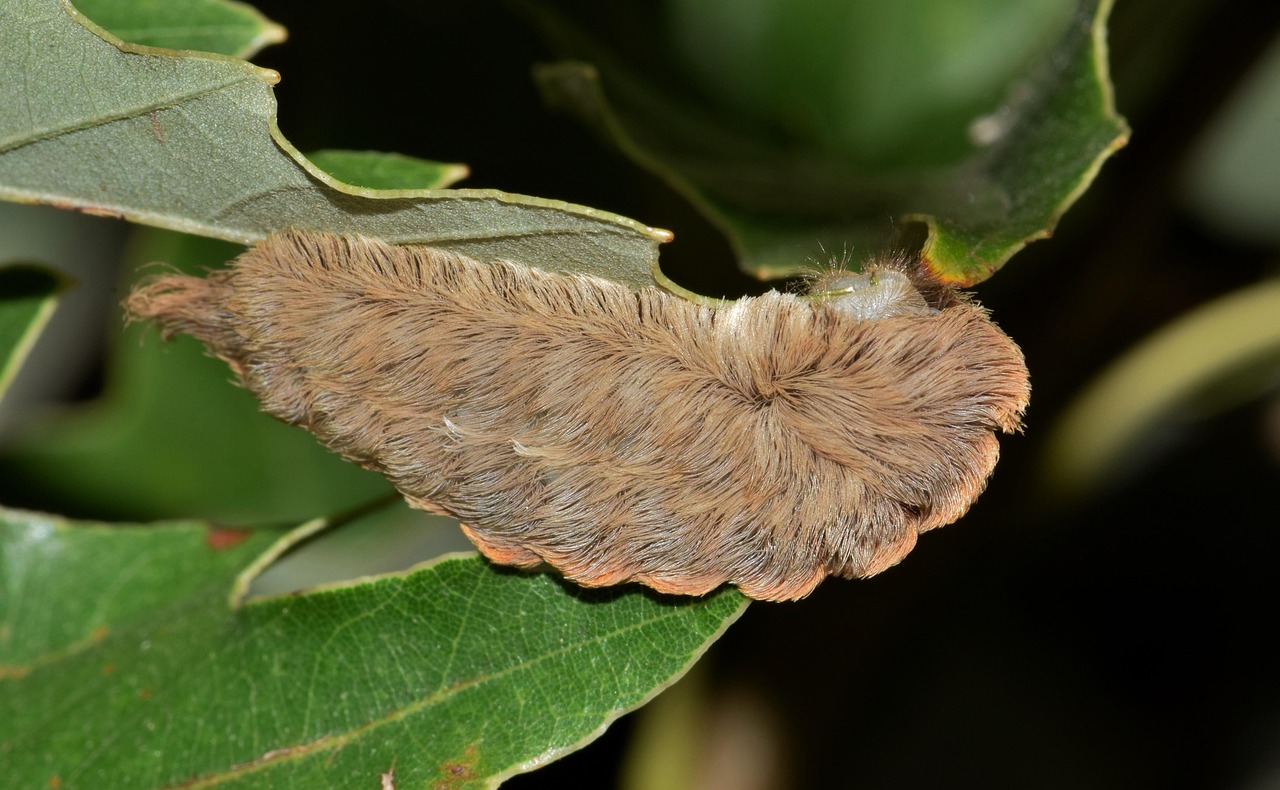
It may look like Donald Trump’s misplaced toupee (it’s actually been dubbed the ‘Donald Trump caterpillar’), but this flannel moth larva is actually not covered with hair at all. Those silky-looking threads are actually venomous spines that can cause intense, burning pain when touched, making the caterpillar one of the most venomous in the US. This caterpillar’s adorable appearance is nature’s cruelest trick.
The puss caterpillar might look like a tiny Persian cat or a soft, fluffy hairpiece, but beneath that cuddly exterior lies one of North America’s most venomous caterpillars. Even though this looks like a soft fluffy caterpillar, it is not one you want to handle. Soft-looking pale orange hairs cover rows of venomous spines that can give you a nasty sting. In some cases, an allergic reaction to the sting of this caterpillar could have serious consequences. The irony is striking that something so inviting to touch can deliver such excruciating pain. Some people say that the puss caterpillar resembles a disheveled orange toupee.
Zebra Longwing Caterpillar: The Social Spiker
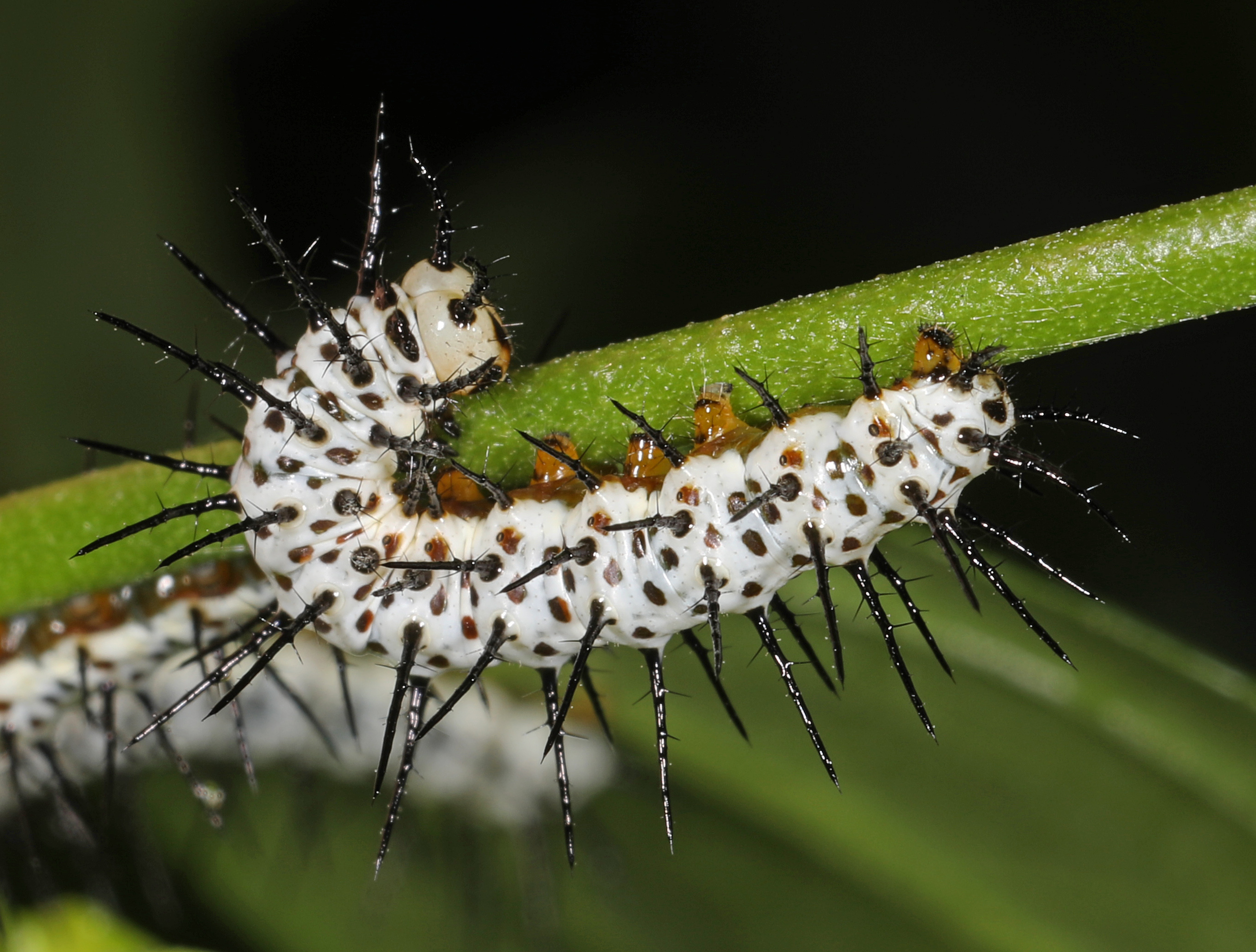
The zebra longwing caterpillar (Heliconius charithonia) is identified by its long black spikes protruding from its grayish-green or whitish-gray body. As well as these long spikes, black dots along its body adds to its scary look. These caterpillars are particularly fascinating because they display unusual social behaviors rarely seen in the caterpillar world.
These social caterpillars often feed in groups, creating distinctive feeding damage patterns on passion vine leaves. Their spines provide protection from most predators, while their gregarious behavior enhances warning signals to potential threats. The zebra longwing’s striking appearance serves multiple purposes beyond intimidation. Compounds in the passionflower plant turn into toxic compounds in the zebra longwing caterpillars. This makes them foul-tasting to any potential predators. When they transform into butterflies, they maintain this toxicity and become some of the longest-living butterflies, with lifespans measured in months rather than weeks.
Luna Moth Caterpillar: The Lime Green Beauty
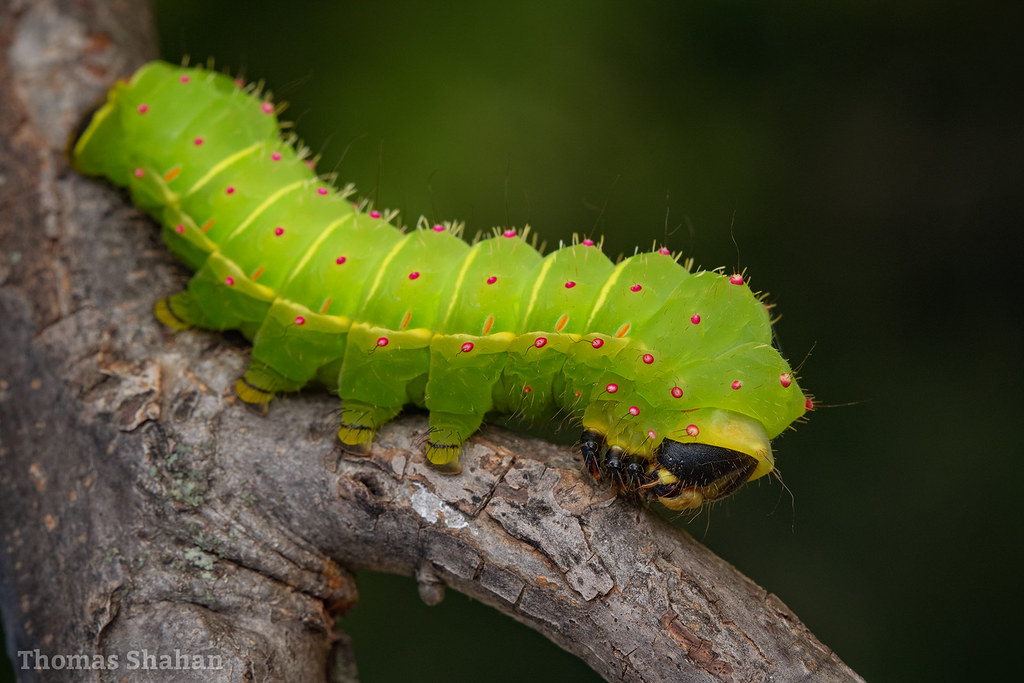
Arguably the most beautiful moth in the Ozarks, the Luna Moth caterpillar (Actias luna) is no less striking than its adult form. These big, lime green caterpillars feed primarily on the leaves of walnut, hickory, persimmon and sweet gum. The luna moth caterpillar represents nature’s commitment to elegance in its purest form.
These caterpillars are living embodiments of spring itself, with their brilliant lime-green coloration that seems to glow with inner light. When ready, they pupate on the ground among dense leaf litter. There can be up to three generations of Luna moths each year. Their smooth, plump bodies and gentle demeanor make them a favorite among caterpillar enthusiasts. The transformation from these beautiful green larvae to the ethereal, pale green moths with long tails is considered one of nature’s most magical metamorphoses. Their nocturnal adult forms, with wing spans reaching over four inches, are often called America’s most beautiful moths.
Monarch Caterpillar: The Iconic Striped Wonder
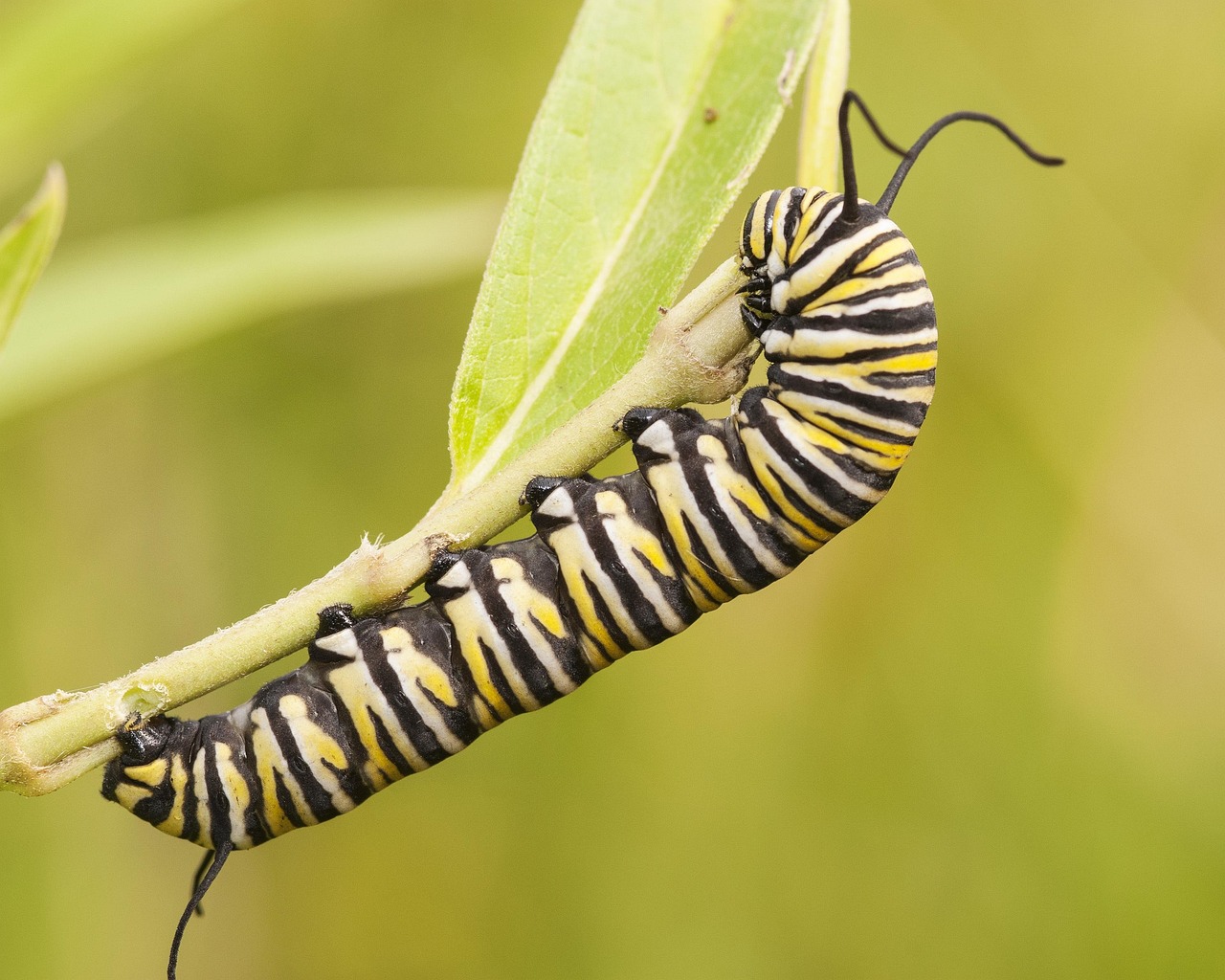
The Monarch caterpillar (Danaus plexippus) is one of the most recognized . Known for its striking stripes of black, white, and yellow, it eventually transforms into the iconic Monarch butterfly. This species is also famous for its dependence on milkweed plants, which serve as its only food source during the larval stage. The monarch caterpillar’s fame extends far beyond its beauty.
These striking caterpillars have become symbols of resilience and transformation, embodying one of nature’s most incredible migration stories. Monarch caterpillars feed voraciously on milkweed leaves. The toxins they ingest act as a defense mechanism, protecting them from birds and other predators. Their bold stripes serve as warning coloration, advertising their toxicity to potential predators. They pass through five instar stages, shedding their skin as they grow. After reaching full size, the caterpillar forms a jade-green chrysalis adorned with golden spots before emerging as a butterfly. Few caterpillars capture the human imagination quite like the monarch, representing hope and transformation across cultures.
Common Nawab Caterpillar: The Horned Mysterious One
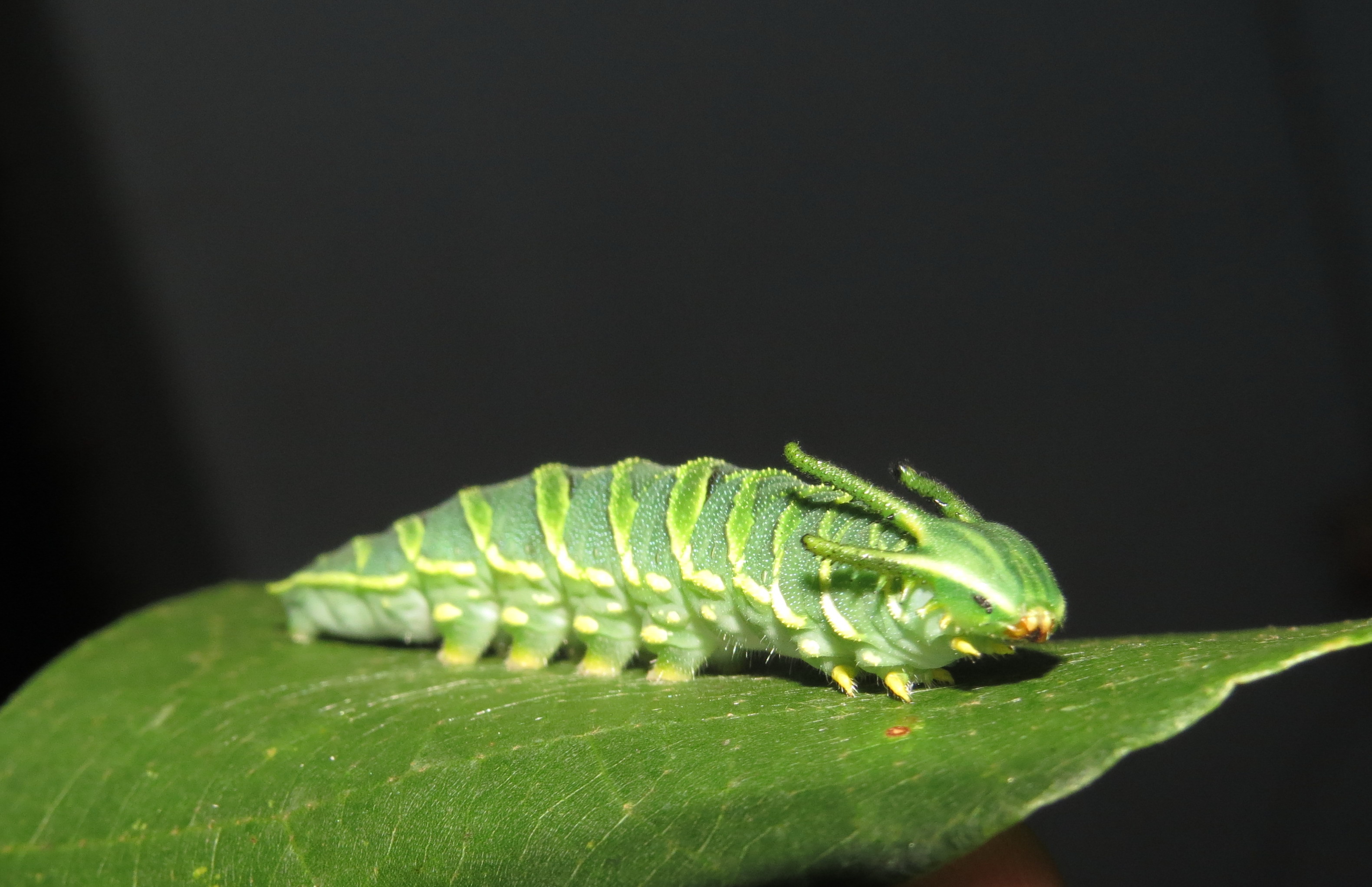
This beautiful caterpillar is another with an imposing headdress of four horns. Its segmented body and chevron markings help it to blend in seamlessly with the forest canopy it lives in. As an adult, the common nawab is especially beautiful. This Asian species showcases nature’s ability to combine intimidating features with stunning beauty.
The common nawab caterpillar looks like something from a fantasy novel, with its four prominent horns and intricate body patterns. The Common Nawab is found all over Asia and is a superb specimen with a wingspan of about ten centimeters. It’s a fast flyer – you have to really be quick off the mark to spot one and study it. As well as the speed it lives in the canopy, making it an even more difficult species to enjoy. The caterpillar’s remarkable camouflage allows it to virtually disappear among leaves and branches, while its horns provide an extra layer of defense against predators. The name “nawab” comes from rulers during the Mogul empire, reflecting the regal appearance of both the caterpillar and its adult butterfly form.
Conclusion
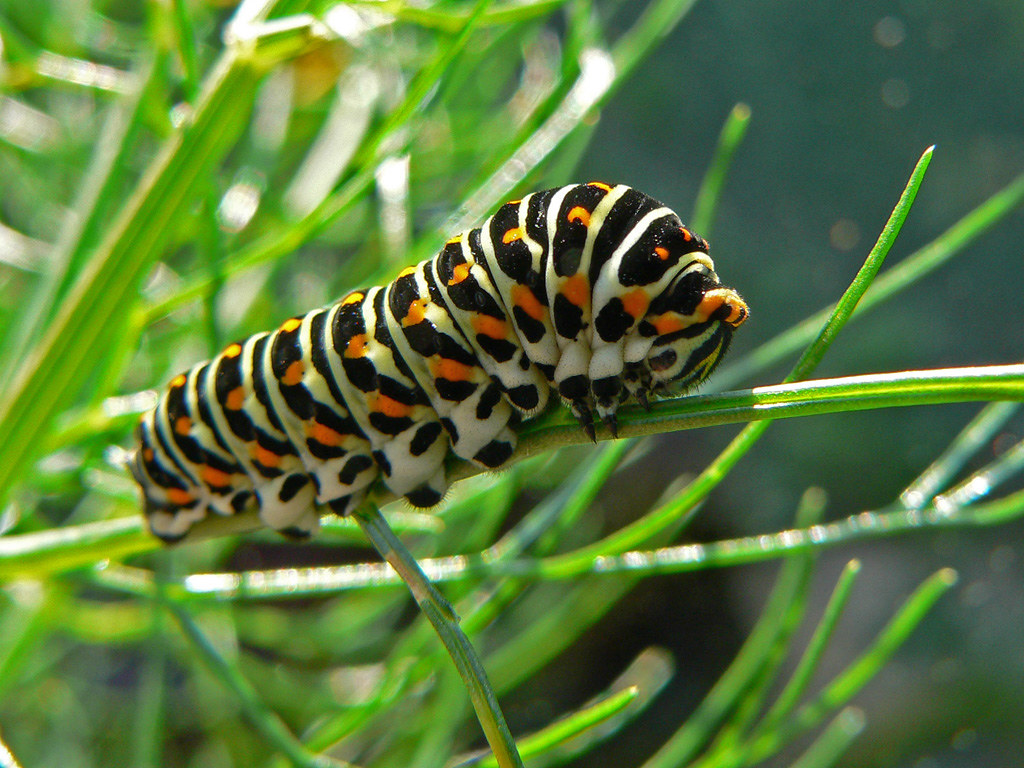
These ten magnificent caterpillars represent just a fraction of the incredible diversity found in nature’s larval kingdom. From the gentle giant hickory horned devil to the deceptively dangerous puss caterpillar, each species has evolved unique strategies for survival while creating some of the most visually stunning displays on Earth. Their transformations remind us that beauty often comes disguised in unexpected packages, and that the natural world continues to surprise us with its creativity and ingenuity.
The next time you spot a caterpillar in your garden, take a moment to appreciate the masterpiece before you. You might just be looking at a future butterfly or moth that will continue to inspire wonder for generations to come. What would you have guessed about these incredible creatures before learning their secrets?
Jan loves Wildlife and Animals and is one of the founders of Animals Around The Globe. He holds an MSc in Finance & Economics and is a passionate PADI Open Water Diver. His favorite animals are Mountain Gorillas, Tigers, and Great White Sharks. He lived in South Africa, Germany, the USA, Ireland, Italy, China, and Australia. Before AATG, Jan worked for Google, Axel Springer, BMW and others.


