
Look up at the night sky on a clear evening and you’re staring at something that feels eternal, frozen, permanent. But every single point of light you see is in the middle of an extraordinary life story spanning billions of years. Some of those stars are so ancient they carry the fingerprints of a universe that barely existed yet – a universe still figuring itself out, still cooling down from the chaos of creation.
The oldest stars aren’t just astronomically old. They’re cosmic time capsules, holding secrets about a universe that looked nothing like the one we know today. You might think stars are well-understood by now, but honestly, the deeper scientists look, the stranger and more spectacular the story gets. Buckle up, because what you’re about to read will genuinely change how you look at the night sky.
1. The Universe Itself Had to Cool Down Before a Single Star Could Form
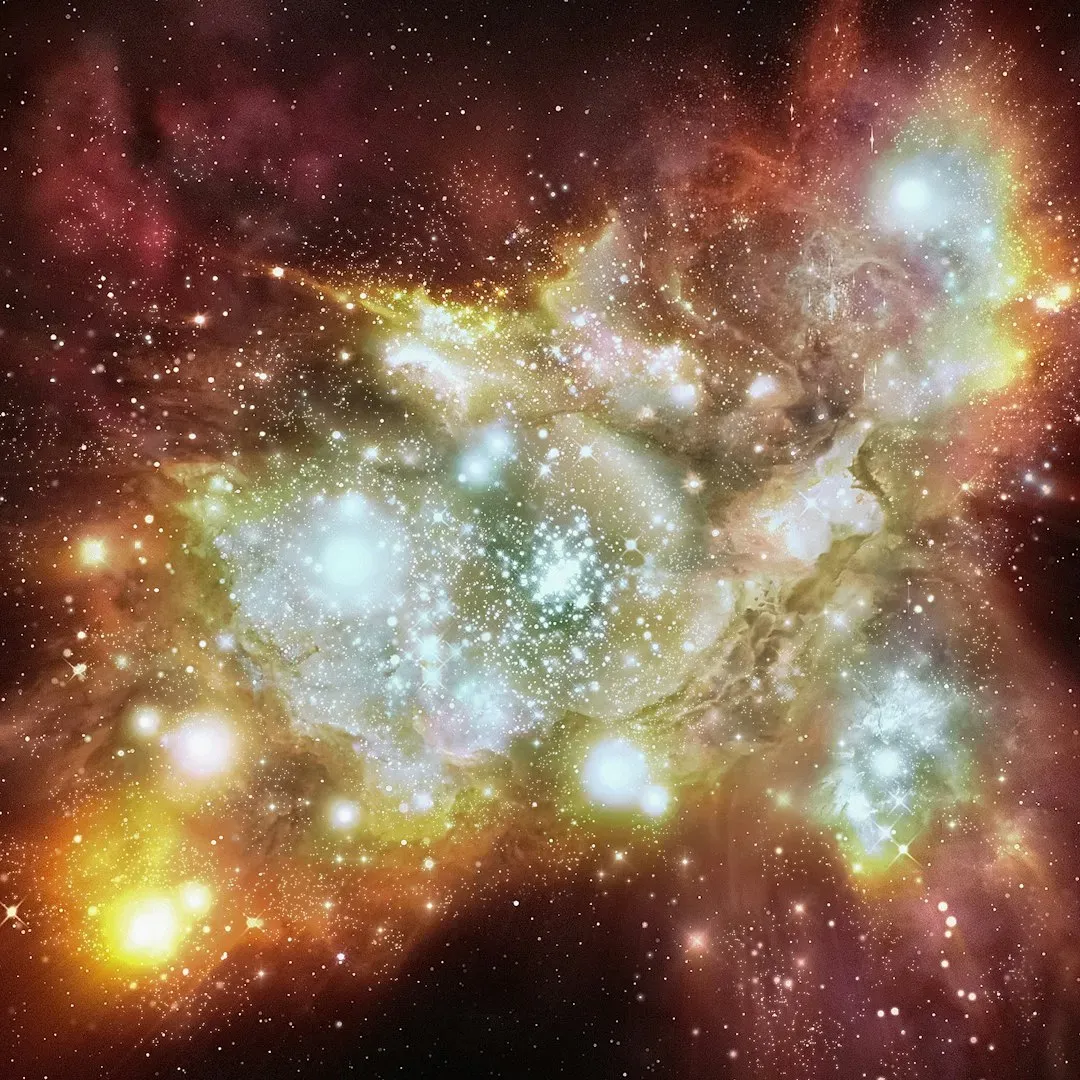
Here’s the thing – after the Big Bang, the universe didn’t immediately burst into starlight. Until around a few hundred million years after the Big Bang, the universe was a very dark place. There were no stars, and there were no galaxies. That might sound impossible to imagine, but picture a universe the size of something unfathomably vast, filled with nothing but a hot fog of hydrogen and helium. That was it.
This period, known as the Dark Ages, began at photon decoupling around 370,000 years after the Big Bang and ends over a long period of time called reionization. The CMB photons had redshifted out of visible light to infrared; from that time until the first stars, there were no visible light photons. The universe was genuinely, totally, profoundly dark – a kind of cosmic stillness that lasted hundreds of millions of years before the very first stars ignited.
2. The Very First Stars Were Unimaginably Massive – and They Lived Fast and Died Hard
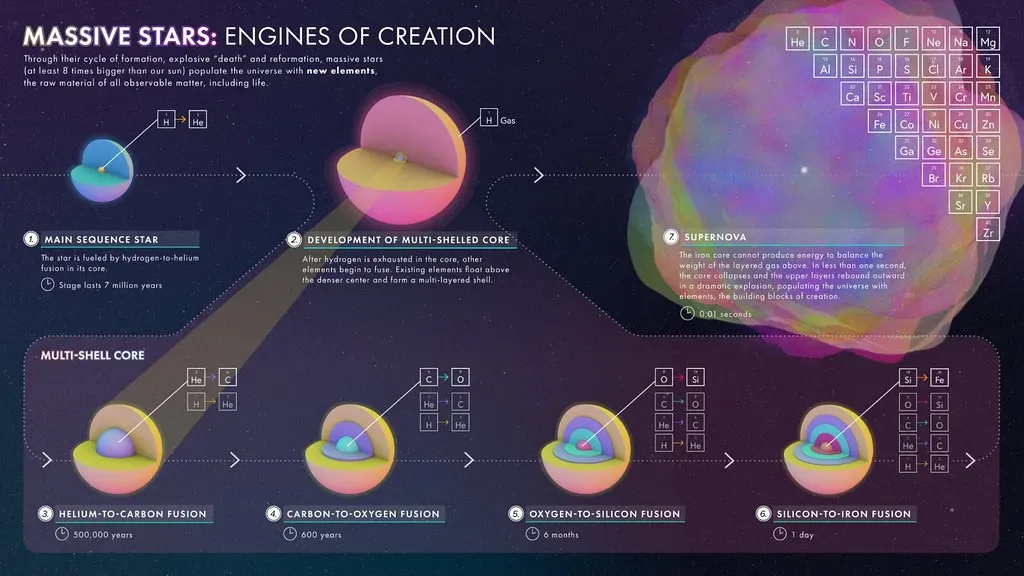
Theory predicts that the first stars were 30 to 300 times as massive as our Sun and millions of times as bright, burning for only a few million years before exploding as supernovae. Think about that. Our Sun has been quietly burning for about 4.6 billion years and has another 5 billion left. These first stars blazed through their fuel in just a few million years – cosmically speaking, a flash in the pan.
Having a large mass means they would have had a relatively short lifetime, millions instead of billions of years, like our Sun. You might think having more fuel would keep a star going longer, but small stars are the most fuel-efficient stars. It’s kind of like a sports car burning through a full tank in an hour while a hybrid sedan runs for days. More mass means more gravity pressing down on the core, meaning faster, hotter fusion – and a spectacular, violent end.
3. The First Generation of Stars Contained Absolutely No Heavy Elements
Astronomers know that the first stars, officially known as Population III stars, must have been made almost solely of hydrogen and helium – the elements that formed as a direct result of the Big Bang. They would have contained none of the heavier elements like carbon, nitrogen, oxygen, and iron that are found in stars shining today. You read that right. No carbon. No oxygen. No iron. None of the elements that make up your body, your planet, your entire world.
The only way that heavier elements like carbon, oxygen, and iron can form is by fusion of lighter elements in the cores of stars. So until the first stars began to form them, none of these elements existed in the universe. The first stars must have been metal-free. In astronomy, “metals” means everything heavier than helium – so from an astronomer’s perspective, you and everything you’ve ever touched is basically made of stellar pollution. I find that strangely beautiful.
4. Population III Stars Have Never Actually Been Observed – Until Possibly Now
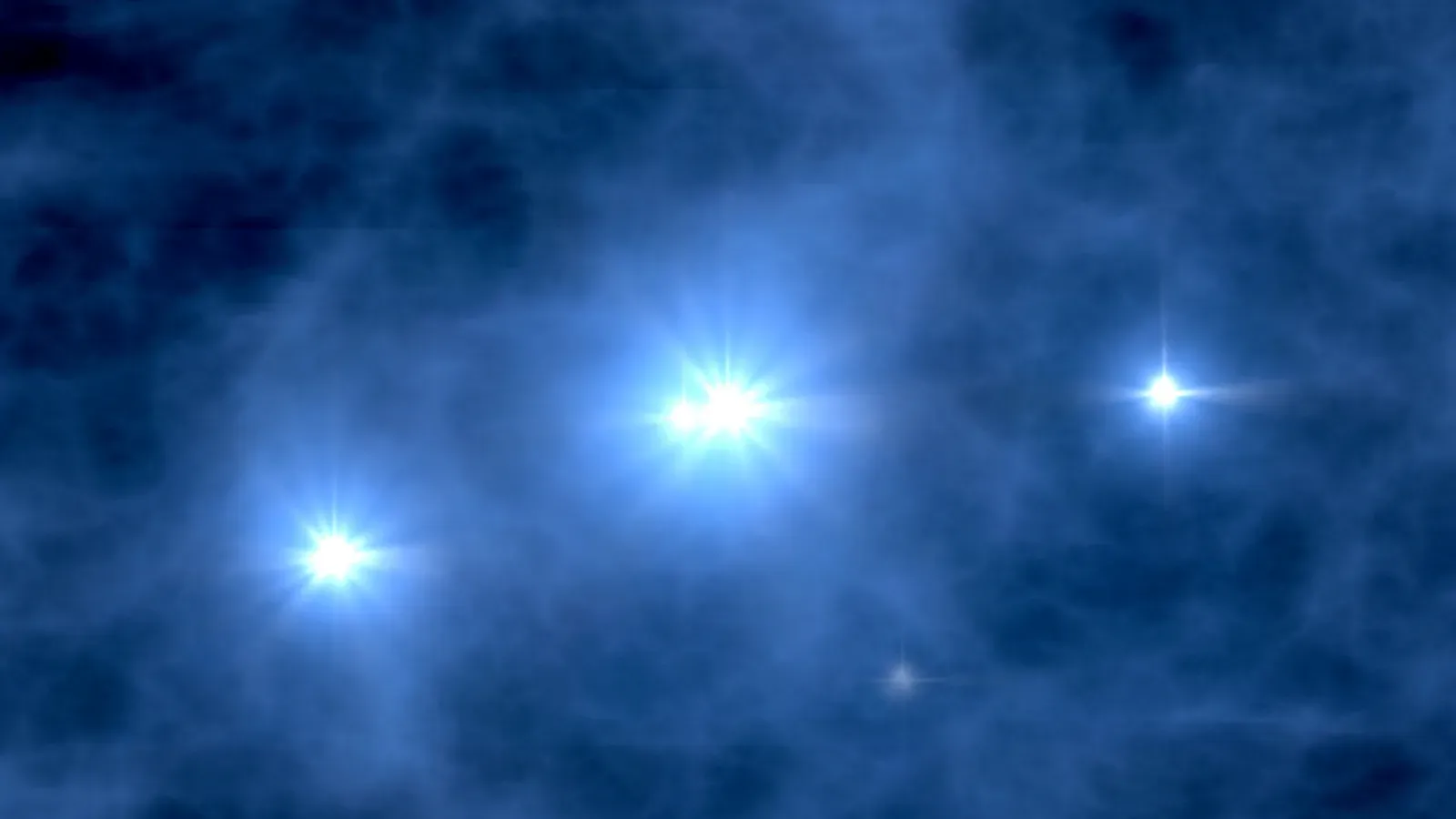
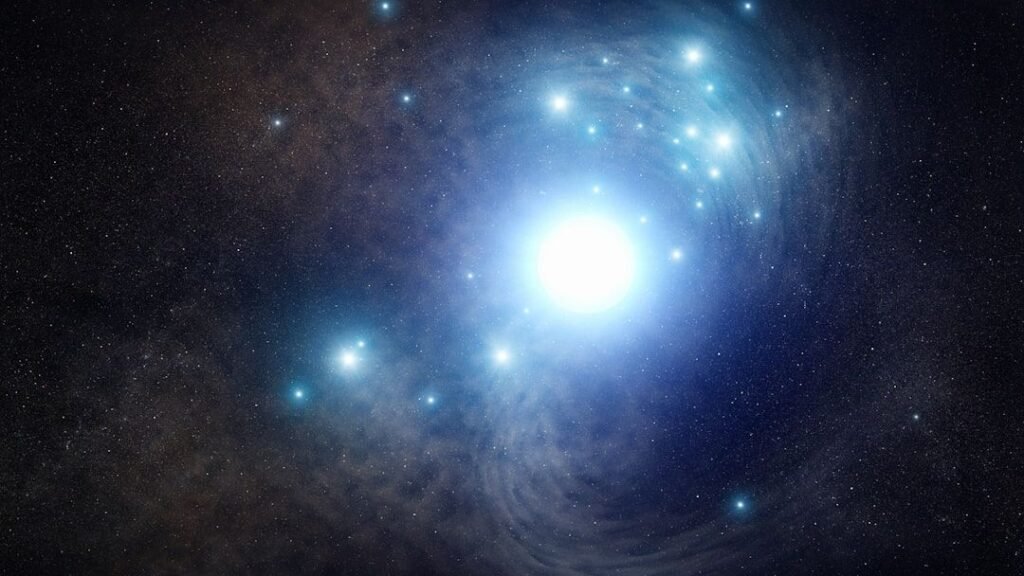
About 200 million years after the Big Bang, the very first stars (called Population III stars) began to form. While Population III stars have yet to be detected by scientists, the oldest known stars that have been observed were born after the first stars went supernova. This has been one of the most maddening puzzles in all of astronomy – we know these stars existed, our models require them, yet we’ve never seen one. Until very recently.
The University of Toledo’s Dr. Eli Visbal believes he’s identified a cluster that fits these criteria and more using the James Webb Space Telescope. He and his collaborators recently published their findings, which break ground in suggesting the first direct detection of Population III stars, in the Astrophysical Journal Letters. Population III stars are rare, and the proverbial stars had to align in order for astronomers to see them in the galaxy they identify as LAP1-B. One factor is the advanced capabilities of the James Webb Space Telescope, which launched as the latest and greatest in infrared astronomy in late 2021. The other is a phenomenon known as gravitational lensing. Sometimes the universe literally bends light just so we can catch a glimpse of its own ancient past.
5. The Methuselah Star Once Appeared Older Than the Universe Itself
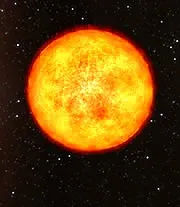
I know it sounds crazy, but there was a period when astronomers were genuinely baffled because one star appeared to be older than everything. In 2000, scientists looked to date what they thought was the oldest star in the universe. They made observations via the European Space Agency’s Hipparcos satellite and estimated that HD140283 – or Methuselah as it’s commonly known – was a staggering 16 billion years old. After all, the age of the universe – determined from observations of the cosmic microwave background – is 13.8 billion years old, so how can a star be older than the universe?
The answer, it turned out, was a measurement problem, not a physics breakdown. By placing the Methuselah Star at a distance of 190.1 light-years, astronomers were able to adjust the previous age estimates, bringing the star’s age closer in line with the age of the universe. The final revised age stood at approximately 14.5 billion years, with an uncertainty margin of about 0.8 billion years. This range made it compatible with the universe’s age, but the Methuselah Star remained the oldest star observed to date. The margin of uncertainty is just enough to keep it plausible – though barely. It’s still an uncomfortably tight fit.
6. The Oldest Observable Stars Are Almost Completely Devoid of Heavy Elements
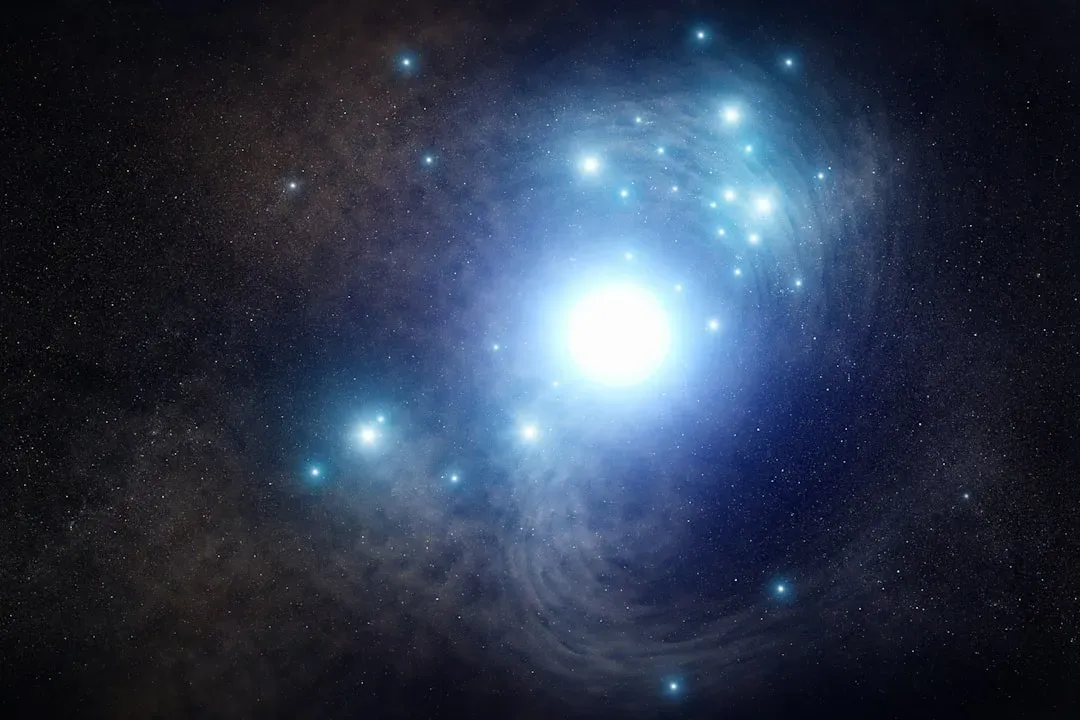
One of the most reliable ways scientists identify ancient stars is by measuring their chemical poverty. Stars with high metallicity are usually younger, formed from previous generations of stars that have gone supernova, enriching the interstellar medium with heavy elements. Conversely, low-metallicity stars are often ancient, providing clues about the early universe. It’s a bit like carbon dating for the cosmos – only instead of measuring radioactive decay, you’re measuring what a star is missing.
The Methuselah star formed at a very early time before the universe was largely “polluted” with heavier elements forged inside stars through nucleosynthesis. The Methuselah star has an anemic 1/250th as much of the heavy element content of our Sun and other stars in our solar neighborhood. One two-hundred-and-fiftieth. That’s a staggering level of chemical austerity – like comparing a fully stocked library to a single handwritten page. Some stars, known as metal-poor stars, have metallicities as low as 1/100,000th that of the Sun. It genuinely stretches the imagination.
7. Ancient Stars Ended the Universe’s Cosmic Dark Ages by Blasting It with Light
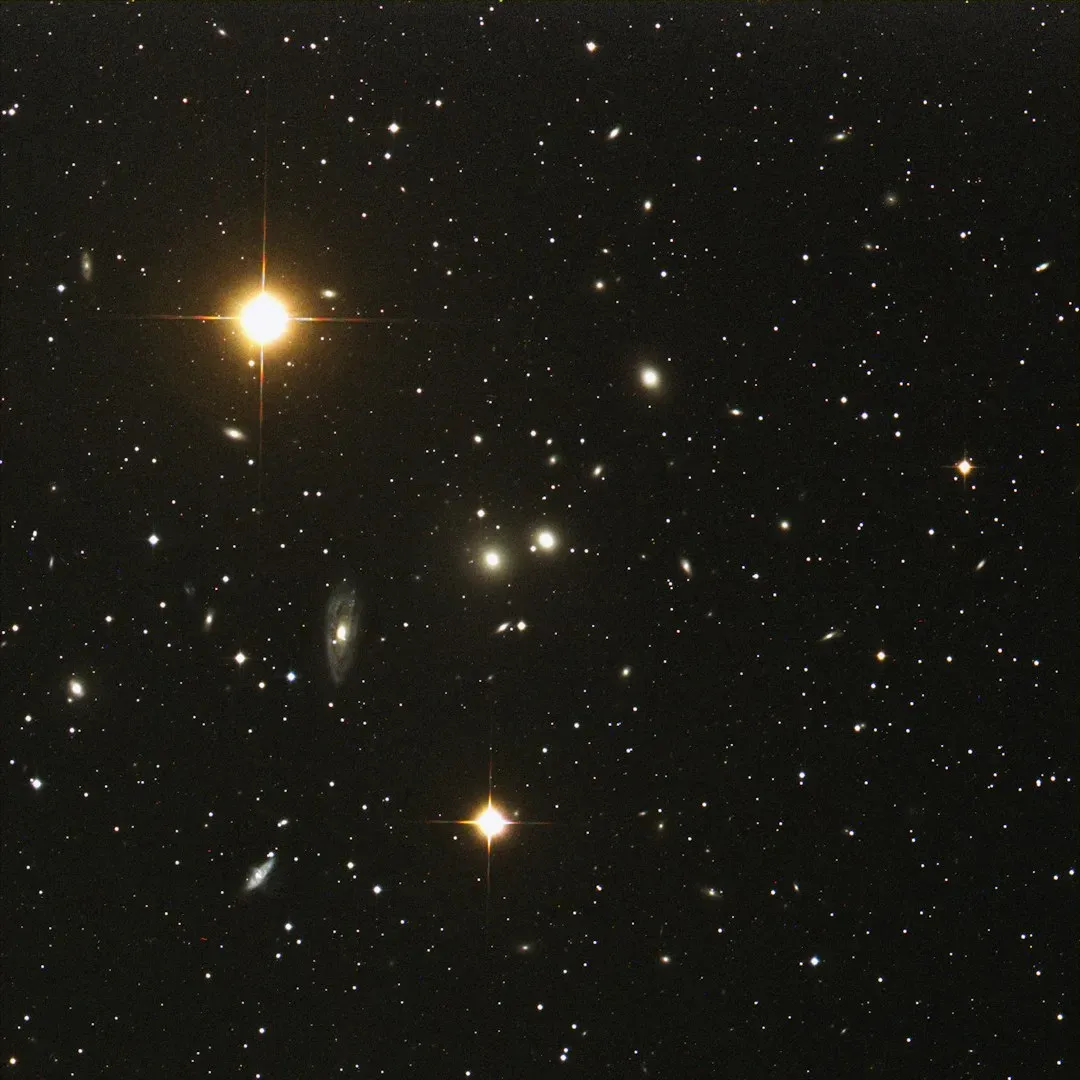
Reionization began when the first generation of stars formed after the cosmic “dark ages,” a long period when neutral gas alone filled the universe without any sources of light. When these ancient Population III stars switched on, it wasn’t just a local event – it was a universe-scale transformation. The energetic ultraviolet light from these first stars was capable of splitting hydrogen atoms back into electrons and protons. This era, from the end of the dark ages to when the universe was around a billion years old, is known as “the epoch of reionization.” It refers to the point when most of the neutral hydrogen was reionized by the increasing radiation from the first massive stars.
When galaxies grew in the first billion years, light from their hot stars spread into the surrounding intergalactic gas, producing bubbles of ionized gas around them. As galaxies continued to grow, so did the ionized bubbles – reionizing all hydrogen. This is the landmark event of the first generations of galaxies, marking the transition from the Cosmic Dawn to the later evolution of “normal” galaxies. The universe we live in today – transparent, full of light, navigable by photons across billions of light-years – exists because those first ancient stars burned hot and fast enough to reshape everything around them. Without them, there would be no light at all.
8. Some of Are Hidden Right in Our Own Galaxy
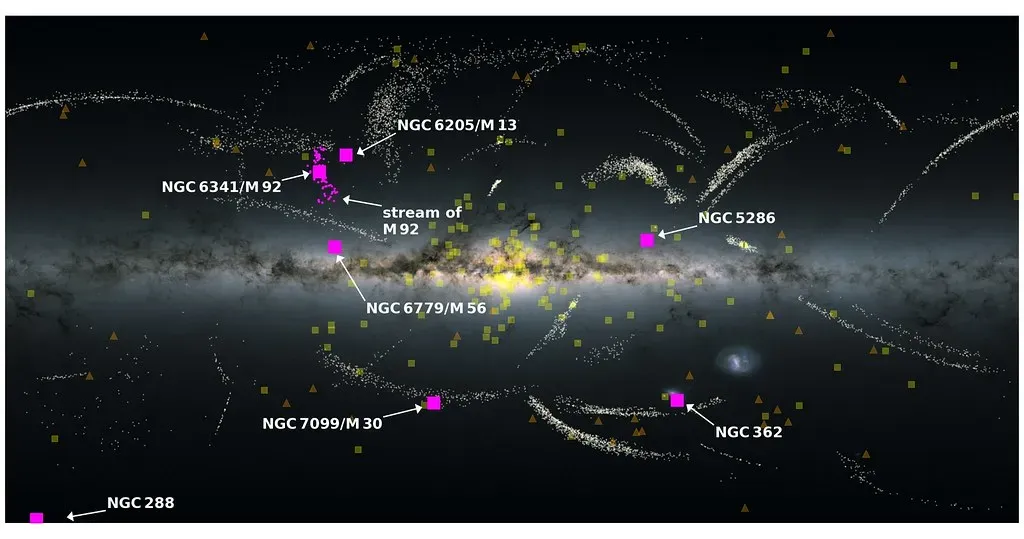
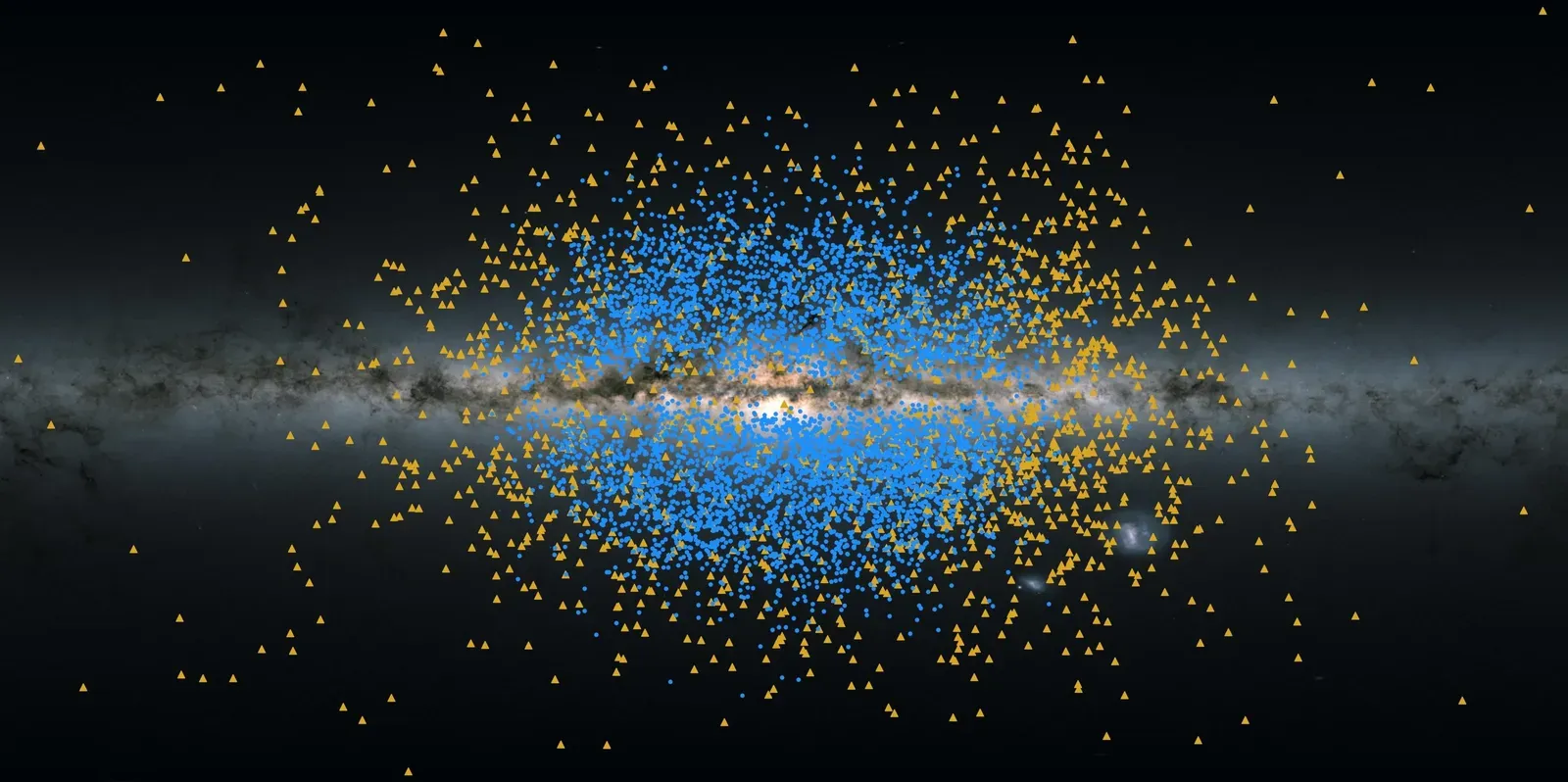
You might assume the oldest relics of the cosmos are impossibly far away, visible only through the most powerful telescopes. You’d be wrong. A group of astronomers from MIT discovered three of the oldest stars in the universe, alive and well inside of our own galaxy. The discovery was published in the Monthly Notices of the Royal Astronomical Society. The stars were found in the Milky Way’s halo, a cloud of stars that encircles the main galactic disk, but they formed elsewhere, as part of the very first galaxies at the dawn of the universe.
What makes this even wilder is how these stars ended up here. Another piece of evidence came from the way these stars move. While most stars in the Milky Way are all moving in the same direction around the galactic center, these three are cruising the wrong way. If the galaxy is a one-way roundabout, these stars are driving into oncoming traffic. That suggests they came from somewhere else and made a wrong turn getting off the onramp. Dubbed SASS stars, short for Small Accreted Stellar System stars, they are believed to be the only surviving remnants of primitive galaxies which were gobbled up by the still-growing Milky Way, billions of years ago. They are strangers from another galaxy, absorbed into ours over an unimaginable stretch of time.
9. Studying These Ancient Stars Reveals What Forged the First Globular Clusters
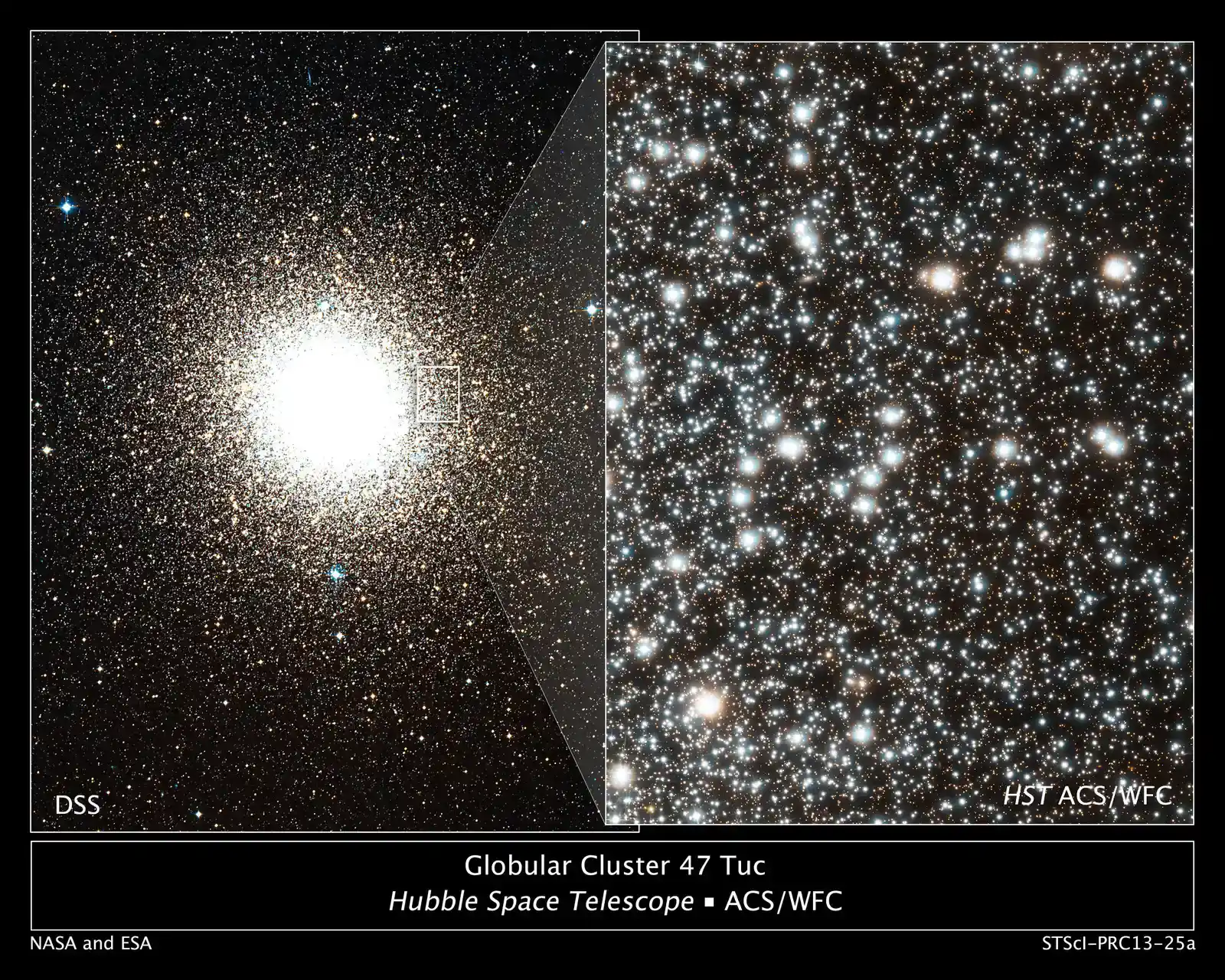
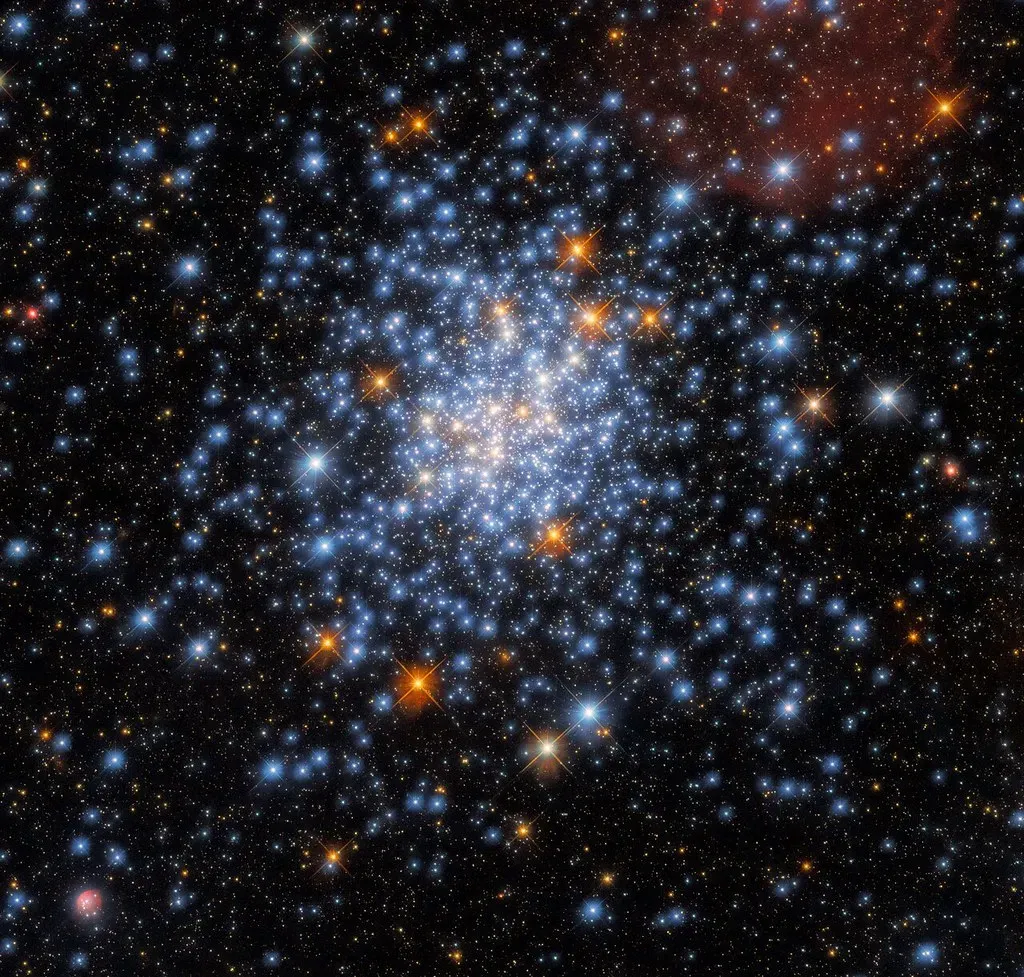
It’s not just individual ancient stars that tell cosmic history – the dense, ancient star clusters orbiting galaxies carry their own incredible story. Globular clusters are dense, spherical groups of hundreds of thousands or millions of stars found in almost all galaxies, including the Milky Way. Most are more than 10 billion years old, indicating that they formed shortly after the Big Bang. These ancient cities of stars have orbited galaxies virtually unchanged since near the beginning of cosmic time.
A new study is based on a star formation model known as the inertial-inflow model, extending it to the extreme environments of the early universe. The researchers show that, in the most massive clusters, turbulent gas naturally gives rise to extremely massive stars weighing between 1,000 and 10,000 solar masses. These stars release powerful stellar winds rich in high-temperature hydrogen combustion products, which then mix with the surrounding pristine gas and form chemically distinct stars. Ten thousand solar masses. That is a number so large it barely registers as real. It suggests that these extremely massive stars were key drivers of early galaxy formation, simultaneously enriching globular clusters and giving rise to the first black holes.
10. The Methuselah Star Was Likely Born in a Dwarf Galaxy That No Longer Exists
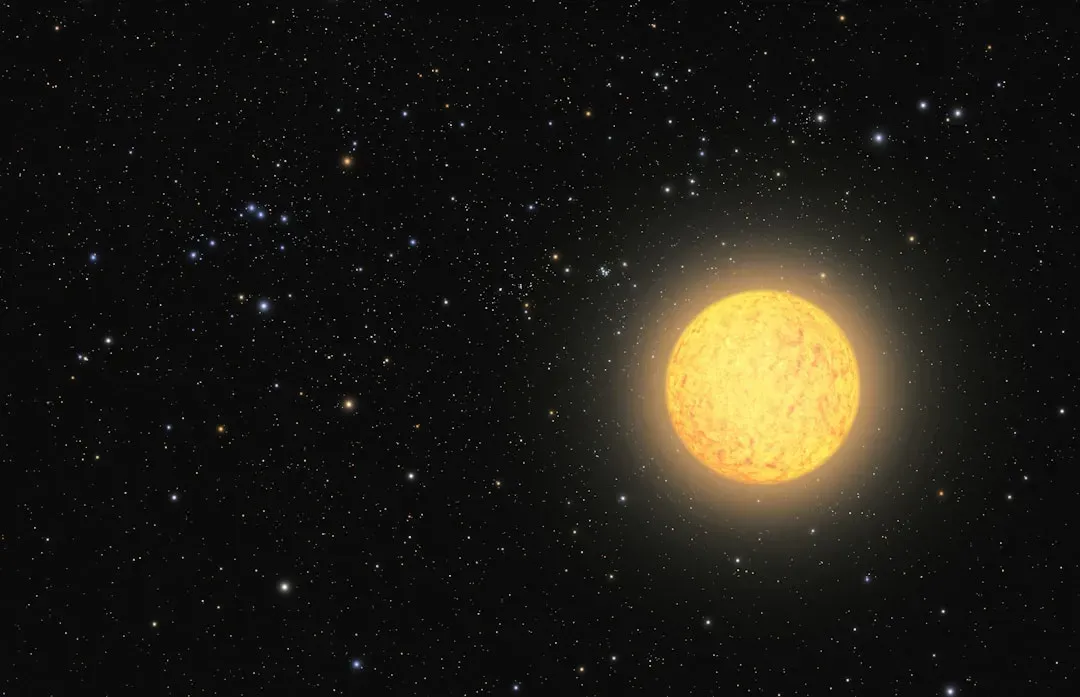
Here’s a fact that, honestly, hits differently the more you sit with it. The oldest nearby star we’ve ever found didn’t even form in the Milky Way. This Methuselah star has seen many changes over its long life. It was likely born in a primeval dwarf galaxy. The dwarf galaxy eventually was gravitationally shredded and sucked in by the emerging Milky Way over 12 billion years ago. The galaxy that gave birth to the oldest known star near us was completely destroyed – consumed – by the gravitational appetite of our own galaxy, billions of years before our Sun even existed.
Very low but non-zero metallicities of stars like HD 140283 indicate the star was formed from existing materials in the second generation of stellar creation; their heavy-element content is believed to have come from zero-metal stars (population III stars), which have never been observed. In other words, the Methuselah Star carries within it the chemical ghost of Population III stars – the very first generation – even though those original stars are gone forever. A 2025 study using asteroseismology found a more precise age of 14.2 billion years, which is still in agreement with the age of the universe within one standard deviation. This star is not just old. It is a living artifact of a universe we will never otherwise see.
Conclusion
are more than just ancient – they are witnesses to events so fundamental that without them, nothing else would exist. No galaxies. No planets. No carbon, no oxygen, no iron. No you. Every heavy element that makes life possible was forged in the hearts of stars that burned and exploded long before our solar system was even a cloud of gas. The oldest surviving stars carry the fingerprints of those original fires in their very composition.
What strikes me most is how these ancient stellar relics are still out there, still burning, still orbiting our galaxy like quiet survivors of a universe-scale catastrophe that wiped out everything else from their era. As telescopes like the James Webb Space Telescope push further back in cosmic time, the chances of finally seeing a true Population III star – a genuine first-generation star – grow more real with every passing year. We may be on the verge of looking back far enough to see the universe light up for the very first time.
Is there anything more humbling than the realization that the atoms in your body were forged in stars older than everything you’ve ever known? What does that make you think about your place in the cosmos? Drop your thoughts in the comments – we’d love to know.