
If there’s one number that quietly rules the universe, it’s . Tucked inside that simple value is a story about time freezing, rulers shrinking, and even the limits of what we can ever know. It’s wild to realize that every time you look at the night sky, you’re not seeing space as it is, but as it was, sometimes millions or even billions of years ago.
The more scientists probe this cosmic speed limit, the stranger reality becomes. What started as a basic question – “How fast does light travel?” – exploded into a complete reshaping of physics, technology, and even philosophy. Let’s walk through ten discoveries that don’t just tweak your understanding of the world; they blow it wide open.
1. The Speed of Light Used to Be Measured with Lanterns and Spinning Wheels

It’s easy to assume the speed of light was always something you’d find in a textbook, precise and unquestioned. But the early attempts to measure it were surprisingly low-tech and almost a little absurd. In the seventeen hundreds, the astronomer Ole Rømer used the motion of Jupiter’s moons as a kind of cosmic stopwatch, noticing delays in their eclipses to estimate how fast light must be traveling through space.
Later, in the eighteen hundreds, physicists like Hippolyte Fizeau tried more hands-on methods here on Earth. Fizeau pointed a beam of light at a mirror miles away and sent it through a rapidly spinning toothed wheel, watching when the returning light got blocked or passed through a gap. From the wheel’s speed and distance, he pulled out a rough measurement of light’s velocity – without lasers, electronics, or satellites, just careful timing and some clever geometry.
2. The Universe Has a Built-In Speed Limit – and Nothing Can Break It
The speed of light in a vacuum isn’t just another fast thing; it’s the fastest anything can possibly go, according to our best physics. When Albert Einstein built his theory of special relativity in the early nineteen hundreds, he treated that speed as an absolute cosmic limit, not just for light, but for information, signals, and cause and effect itself. The universe, in a way, is wired so that nothing can outrun this limit and still make physical sense.
This has some deeply weird consequences. If you tried to accelerate a spaceship close to light speed, you’d need more and more energy for each tiny increase, and it would never actually reach that final value. Push harder and harder, and nature just responds by slowing down how time passes for you and changing how your motion appears, rather than letting you smash through the barrier. It’s less like a speed bump and more like an infinite wall you can lean on forever but never pass.
3. Time Actually Slows Down When You Get Close to Light Speed

One of the most shocking is that it doesn’t bend to our expectations – instead, time does. As something moves faster and faster, getting closer to light speed, time for that moving object runs slower compared with a stationary observer. This effect, called time dilation, isn’t just theory; it’s been confirmed in experiments using fast-moving particles and even high-speed airplanes carrying atomic clocks.
There’s a famous thought experiment where one twin stays on Earth while the other zooms through space at a speed close to light and then returns. The traveling twin comes back physically younger than the one who stayed home, not because of magic, but because time literally ticked more slowly for them. This isn’t just science fiction; particles in accelerators and muons from cosmic rays live longer than they “should” because they’re zipping along at a significant fraction of light speed.
4. The Faster You Go, the Shorter You Become (From the Side)
If time slowing down wasn’t strange enough, motion near the speed of light also affects space itself. According to special relativity, objects contract in the direction they’re moving when seen by an outside observer. This effect is called length contraction, and it means that a fast-moving spacecraft would literally measure shorter from the viewpoint of someone watching it streak past.
To the people on board, nothing would feel unusual; their rulers and bodies would all seem completely normal. But a stationary observer would say the ship has shrunk in the direction of its travel. The trade-off is that for the crew, distances between stars would also appear shorter, making interstellar trips seem more manageable from their perspective, even though from Earth’s frame, the journey still looks impossibly long.
5. GPS Would Be Totally Useless Without Accounting for Light-Speed Effects
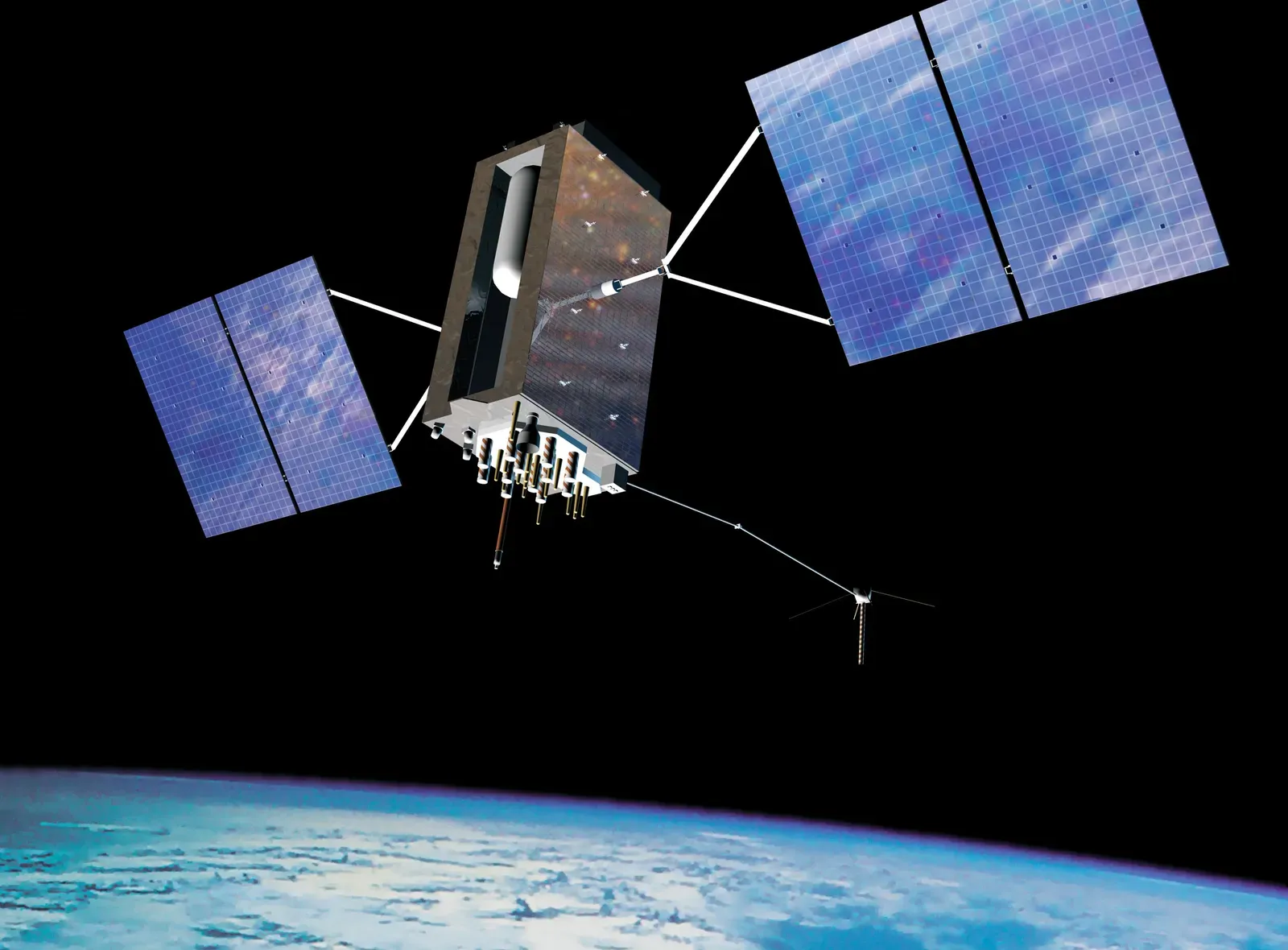
The effects of the speed of light aren’t just academic; you rely on them every time you check a map on your phone. The satellites that power GPS orbit high above the Earth and carry extremely precise atomic clocks. Because they’re moving quickly and sitting in a weaker gravitational field than we are on the ground, their sense of time drifts compared with clocks on Earth due to relativity.
If engineers ignored these relativistic effects, GPS signals would go out of sync astonishingly fast, and your location could be off by miles within a single day. Instead, the system is carefully designed to correct for both special relativity (due to the satellites’ motion) and general relativity (due to gravity’s effect on time). In a very real sense, your navigation app only works because we took the weirdness of the speed of light seriously and baked it into everyday technology.
6. Light Doesn’t Always Travel at the Same Speed in Every Material
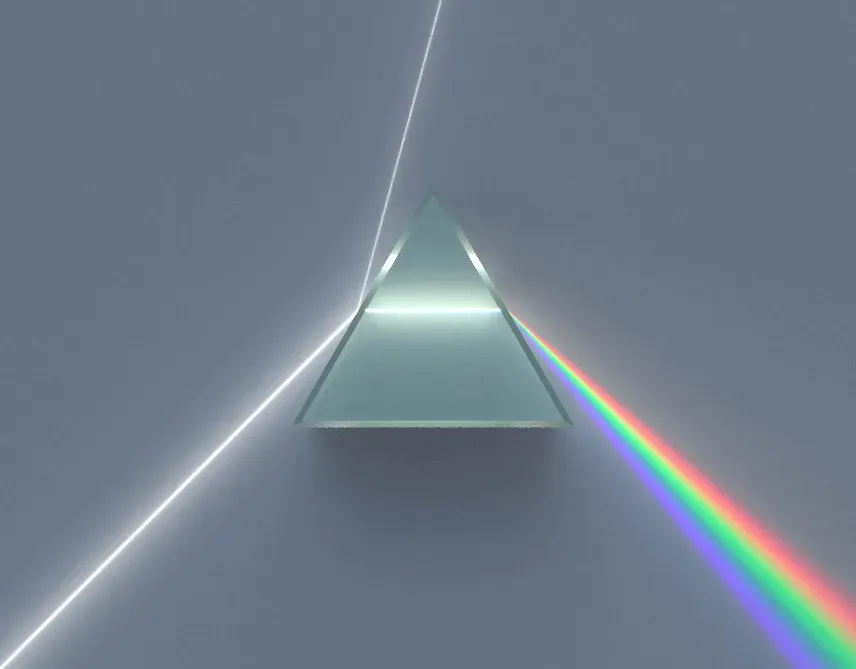
We often hear that the speed of light is a fixed value, but that’s only strictly true in a perfect vacuum. As soon as light enters a material like glass, water, or even air, it effectively slows down. The photons are still moving at their fundamental speed between interactions, but they get absorbed and re-emitted or scattered in complex ways that make the signal take longer to pass through.
This slowing down is what lets lenses bend light and why a straw in a glass of water looks “broken” at the surface. In some exotic experiments, physicists have used ultra-cold gases and carefully tuned lasers to slow light pulses to a crawl, even bringing them almost to a standstill for a brief moment. The underlying cosmic speed limit isn’t broken, but the way light threads through matter turns out to be far more flexible – and useful – than people once thought.
7. Quantum Entanglement Isn’t Really Faster Than Light (Even If It Feels That Way)
Quantum physics adds another twist to the story of light and speed. When two particles become entangled, measuring one seems to instantly affect the state of the other, no matter how far apart they are. At first glance, this looks like it’s sending information faster than light, as if the universe were secretly cheating on its own speed limit.
But when physicists dug into the details, they found that while the correlations between entangled particles are instantaneous, they can’t actually be used to send a meaningful message faster than light. You still need a regular, light-speed-limited signal to compare results and make sense of what happened. So the cosmic speed limit survives, but quantum mechanics forces us to admit that “how” the universe coordinates things at a distance is much stranger than the simple picture we started with.
8. The Speed of Light Helps Set the Shape and Size of the Observable Universe
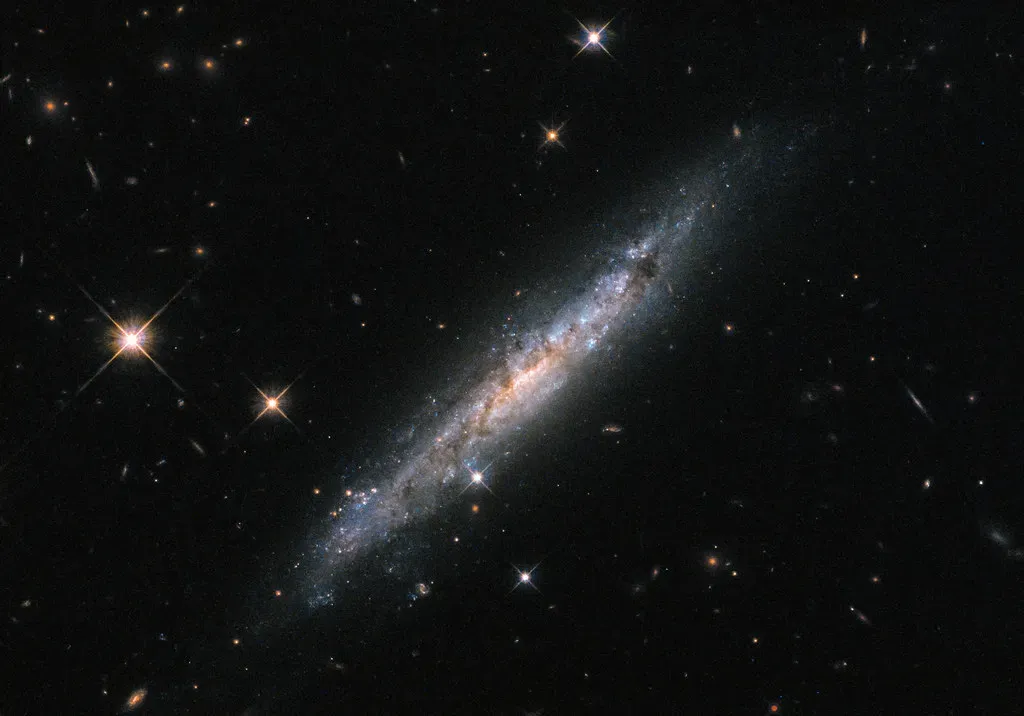
The universe has had a finite amount of time since the Big Bang, and light can only travel so far in that time. That simple fact, combined with the speed of light, defines the observable universe – the vast bubble of space from which light has had time to reach us. Anything beyond that bubble is currently invisible, not because it doesn’t exist, but because light simply hasn’t had enough time to bridge the gap.
Cosmologists use the speed of light like a tape measure stretched across billions of years. By looking at distant galaxies, they’re effectively looking back in time, seeing them as they were hundreds of millions or even billions of years ago. The glow of the cosmic microwave background is light that’s been traveling almost since the universe became transparent, giving us a kind of baby picture of everything we can ever observe.
9. We Turn the Speed of Light into a Unit of Distance: the Light-Year
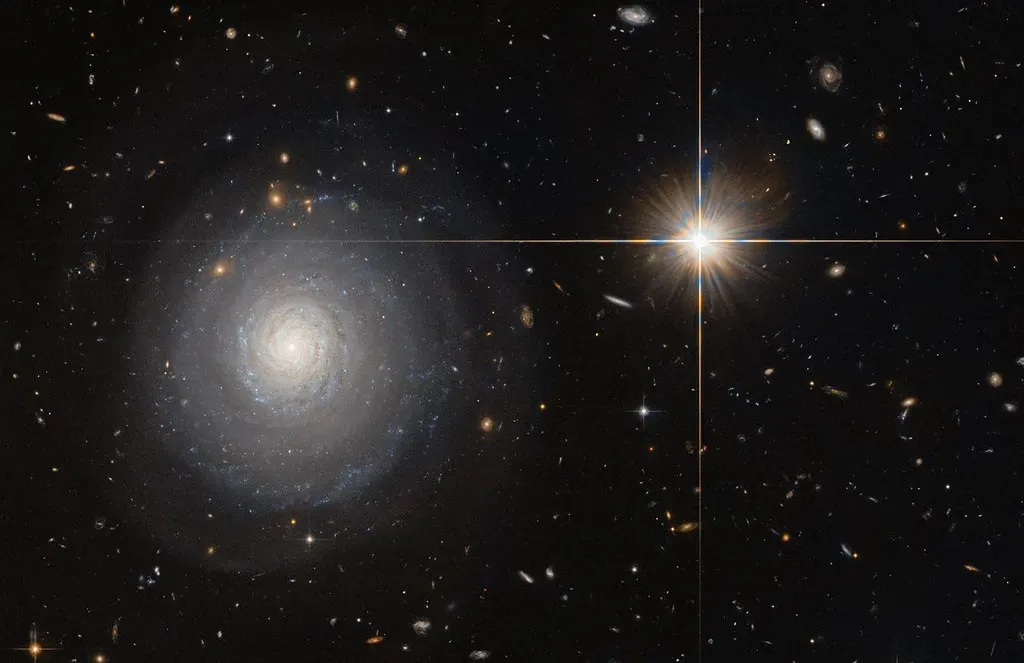
Space is so absurdly big that regular units like miles or kilometers quickly become meaningless. That’s why astronomers use the light-year, the distance light travels in one year, as their go-to measure for cosmic scales. When someone says a star is hundreds of light-years away, they’re really telling you two things at once: how far it is, and how far back in time you’re looking.
This dual meaning gives the light-year a kind of poetic power as well as a practical one. When we say a galaxy is millions of light-years away, we’re also admitting that everything we know about it is millions of years out of date. In a sense, the speed of light forces us to live with permanent delay, like watching the universe through an ancient, incredibly vast security camera feed.
10. We Use Light’s Speed to Test the Very Foundations of Physics
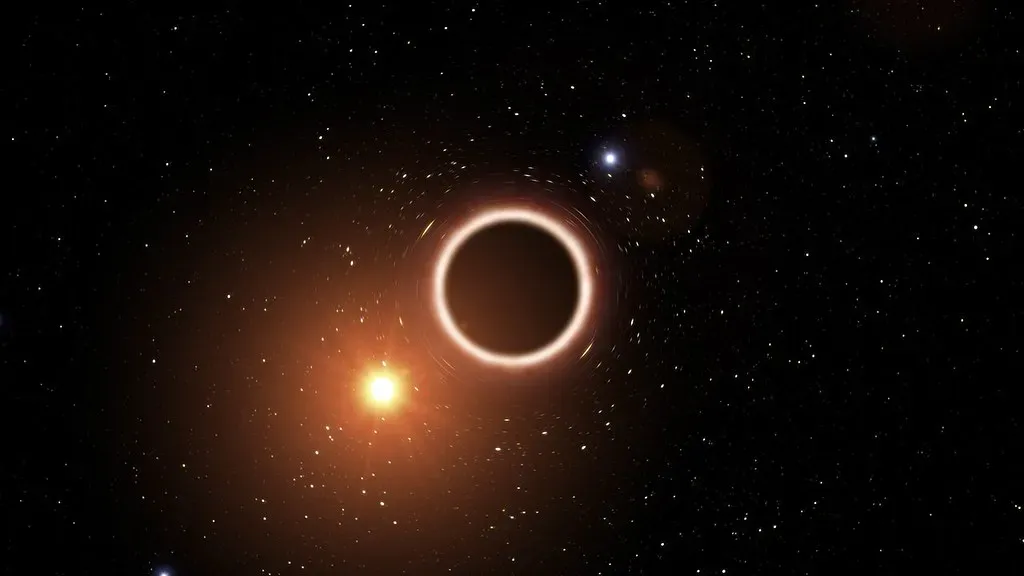
The speed of light isn’t just a number scientists stick in equations and move on from; it’s something they constantly re-check to see if the universe is playing fair. Modern experiments test whether light’s speed depends on direction, energy, or conditions in space, looking for tiny deviations that might point to new physics beyond current theories. So far, the results keep saying the same thing: within extremely tight limits, the speed of light in a vacuum appears truly constant.
Astrophysicists also watch distant explosions like gamma-ray bursts to see whether high-energy light and low-energy light arrive together or get slightly out of sync over enormous distances. The fact that they arrive nearly perfectly together, even after traveling for billions of years, keeps reinforcing the idea that light’s speed really is a universal anchor. As strange as it is, that constant value has become one of the most solid pillars we have for understanding reality.
Living in a universe with a built-in speed limit forces us to accept that some things will always be out of reach, or at least out of real-time contact. But that same limit gives structure to everything from galaxies to everyday technology, turning what looks like a restriction into a kind of cosmic blueprint. When you look up at the stars tonight and realize you’re seeing ancient light finally arriving after an impossible journey, doesn’t that number suddenly feel a lot less abstract?