
Every so often, a new study drops that makes it painfully clear: we have barely scratched the surface of what animals can do. From birds that seem to “see” Earth’s magnetic field to octopuses that solve puzzles and slip through impossibly tiny gaps, the natural world keeps serving up mysteries that make our smartest tech look clumsy. Biologists can measure, model, and simulate, yet some of these abilities still feel closer to superpowers than simple adaptations. As our tools improve, the gap between what we thought we knew and what animals actually do just keeps widening. These are not just cute trivia items; they are live research questions reshaping how we think about brains, bodies, and even physics itself.
The Quantum Compass: Birds That Navigate With Invisible Forces
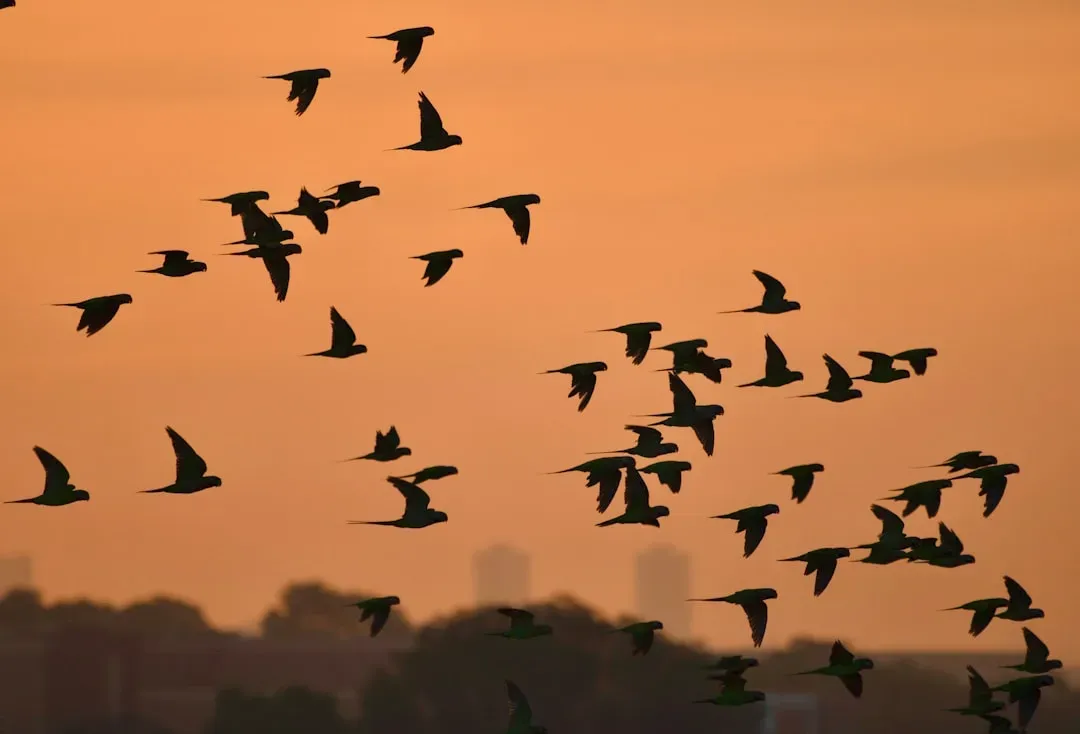
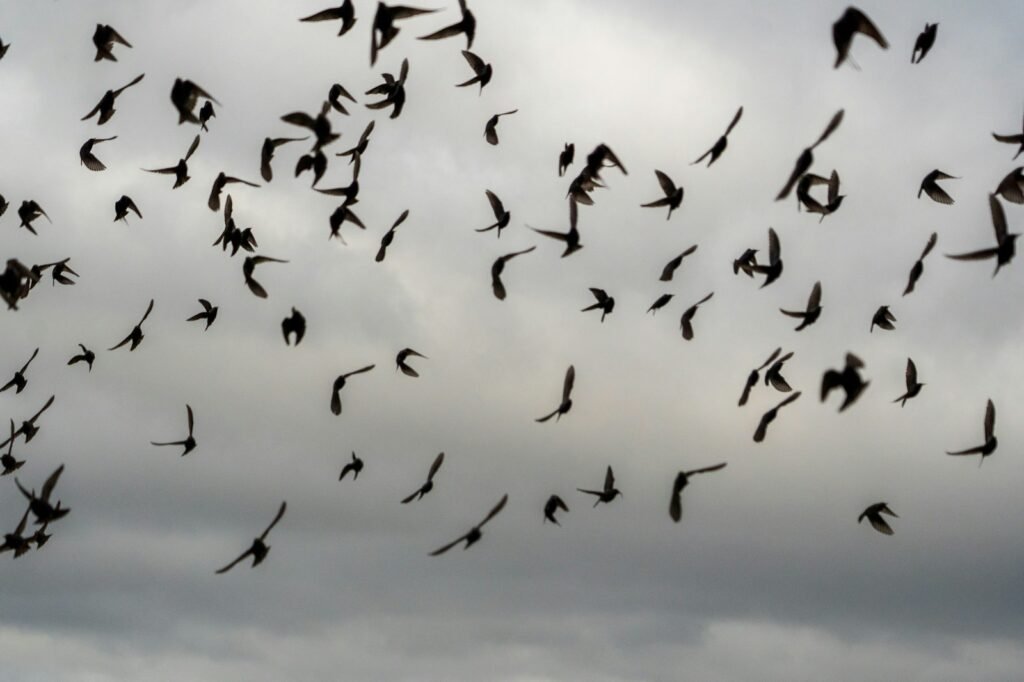
Imagine driving cross-country with your GPS switched off, no road signs, no landmarks, just an internal sense of direction that almost never fails. Migratory birds pull off a version of this feat every year, crossing oceans and continents with uncanny accuracy. Many species, from European robins to North American warblers, navigate using Earth’s magnetic field, but the real twist is how they do it. Evidence points to a quantum-level process in special light-sensitive proteins in their eyes, meaning their navigation literally depends on subatomic physics playing out inside living tissue. Researchers are still debating the exact mechanism, but the leading idea suggests birds “see” magnetic fields as a faint visual overlay on the world around them.
What makes this so bizarre is that quantum effects are famously fragile in the lab, yet birds seem to run quantum reactions at normal body temperature, day after day. When scientists expose some species to carefully tuned radio-frequency fields, their navigation goes haywire, as if someone scrambled their invisible compass. That kind of disruption hints that delicate quantum spins inside bird retinas are being disturbed. In other words, a robin’s brain may be integrating ordinary sight with a quantum-derived sense of direction that our own nervous systems completely lack. For now, we can map migratory routes and track birds by satellite, but the experience from the bird’s point of view remains a kind of sensory science fiction.
The Electric Architects: Fish That Sculpt Worlds With Fields
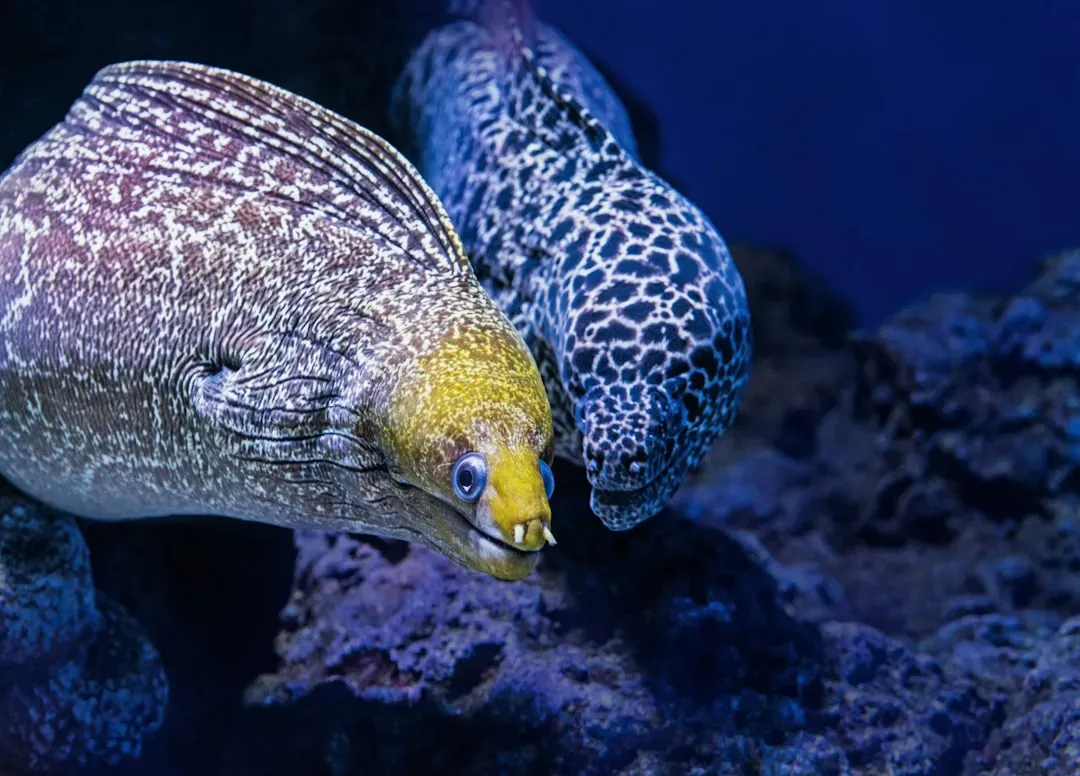
In the murky rivers and night-dark waters of the tropics, some fish build their reality out of electricity instead of light. Weakly electric fish such as elephantnose fish and South American knifefish constantly emit tiny electric fields around their bodies, then sense how those fields distort around nearby objects. It is as if they live inside a personal radar bubble, drawing a contour map of their surroundings without ever needing to see. When other fish enter this bubble, the electric field changes, letting them detect mates, rivals, or prey even in pitch-black water.
Scientists call this ability active electrolocation, and it goes far beyond a simple on–off sensor. Different species modulate the timing and shape of their pulses like a complex language, avoiding interference and possibly encoding social information. Some individuals even adjust their electric signals in crowded conditions, a bit like changing Wi‑Fi channels to reduce noise. A few key points give a sense of how radical this is for sensory biology:
- These fields are often too weak for us to notice without sensitive instruments.
- The fish can detect minuscule changes in conductivity, down to tiny insects or plants.
- Their brains devote huge processing power to interpreting electric “images,” rivaling visual centers in other animals.
Engineers now study these fish to design better underwater robots and sensors, but so far, no machine matches the subtlety of a live electric fish feeling its way through a cluttered, living maze.
The Regenerators: Axolotls That Rewrite the Rules of Healing
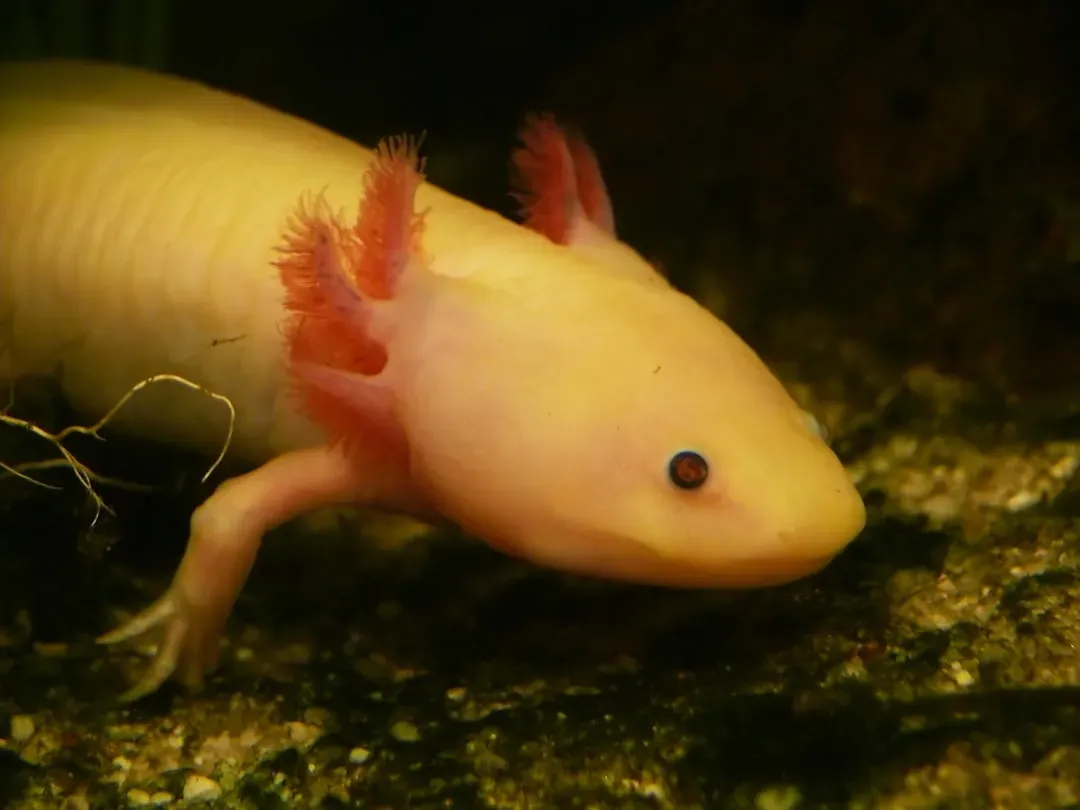
Most of us think of healing as scar tissue and compromise: you get hurt, you patch up, but you never quite go back to the way you were. Axolotls, a Mexican salamander species that looks permanently stuck in its adorable larval phase, play by entirely different rules. Lose a limb in an accident, and they do not scar over; they regrow a fully functional replacement, complete with bones, muscles, nerves, and skin, aligned almost perfectly with the original. Scientists have watched axolotls regenerate not just legs but spinal cord segments, parts of the heart, and even pieces of the brain.
Under the skin, this magic comes from cells that wake up, rewind their identity, and coordinate like a construction crew with a flawless blueprint. You can think of it as controlled cellular amnesia followed by a highly orchestrated rebuilding job, and it somehow avoids turning into uncontrolled cancer growth. Researchers in 2025 are racing to decode the gene networks and molecular signals behind this ability, hoping that one day we might coax human tissue into doing something similar on a smaller scale. The real mystery is not whether this regeneration is possible – we see it in axolotls every day – but why evolution seems to have dialed it down in mammals like us. For now, axolotls sit in labs as living proof that our assumptions about the limits of healing are far too conservative.
The Master Mimics: Octopuses That Become Anything They Need to Be
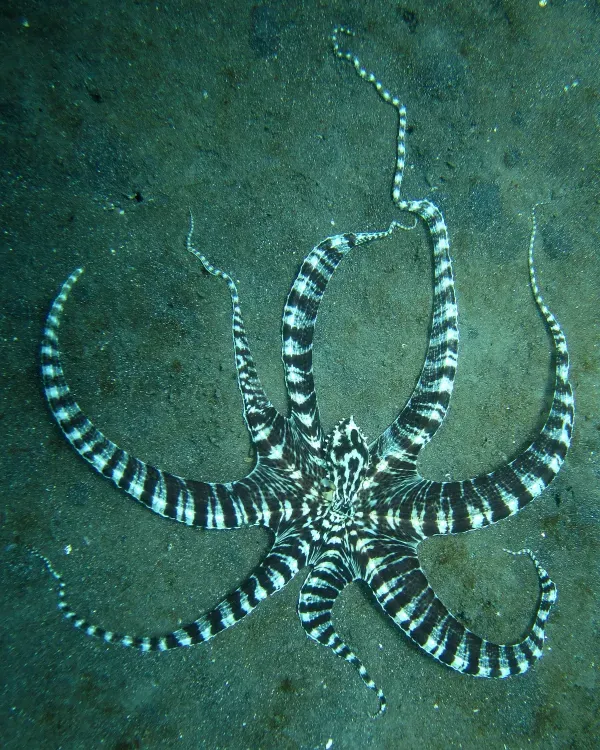
If there were an Oscar for shape-shifting, the octopus would sweep every category. With no rigid skeleton, its body is basically a bag of muscle and neurons that can flatten, elongate, or balloon at will, slipping through cracks the width of a coin one minute and looking like a jagged rock the next. Their skin is wired directly into their nervous system, packed with pigment cells and reflectors that change color and texture in milliseconds. In coral reefs and rocky shallows, this lets an octopus vanish against a background so perfectly you could stare straight at it and see nothing but sand.
The mimic octopus takes this one step further, reshaping its entire body to imitate venomous lionfish, banded sea snakes, or flatfish, apparently choosing disguises depending on the threat. That sort of on-the-fly decision-making has forced scientists to rethink what intelligence can look like in creatures without backbones. Much of an octopus’s “brain” is distributed through its arms, which can execute complex movements almost independently. When I first watched raw video of an octopus solving a puzzle box faster than most people unlock a childproof bottle, it felt less like watching a pet and more like watching an alien engineer at work. We can describe the mechanics of the color change and the neural circuits, but the seamless unity of body, brain, and environment still feels astonishingly beyond our own design abilities.
The Timekeepers: Bees That Run Solar Clocks in Their Heads
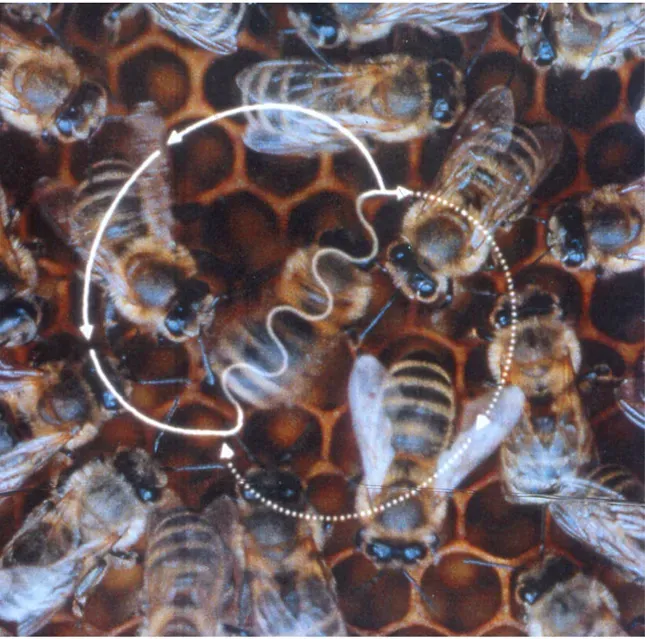
Honeybees are often celebrated for their famous waggle dance, a figure-eight performance that encodes the direction and distance to food. What often gets less attention is the mental machinery that makes that dance meaningful. To translate a stationary dance on a vertical comb into a real-world direction on the landscape, bees use the position of the sun as a reference, compensating for its movement across the sky over time. That means a bee returning from a foraging trip in late afternoon will dance differently than one coming back in the morning, even for the same flower patch.
This adjustment depends on an internal circadian clock so precise that bees can anticipate when regular food sources become available and even learn to visit at set times. Experiments where researchers artificially shift light cycles show that bees’ navigation and dances shift in lockstep, like a finely tuned celestial wristwatch. Inside a brain smaller than a sesame seed, networks of neurons track time, calibrate to the sun, and translate this into a shared spatial code the whole colony can use. Compared with traditional human navigation that once relied on bulky instruments and careful math, the bee system feels almost offensively elegant. It is a reminder that high intelligence is not just about brain size but about how cleverly a species solves the problems that matter for its survival.
The Memory Champions: Clark’s Nutcrackers and the Map in Their Minds
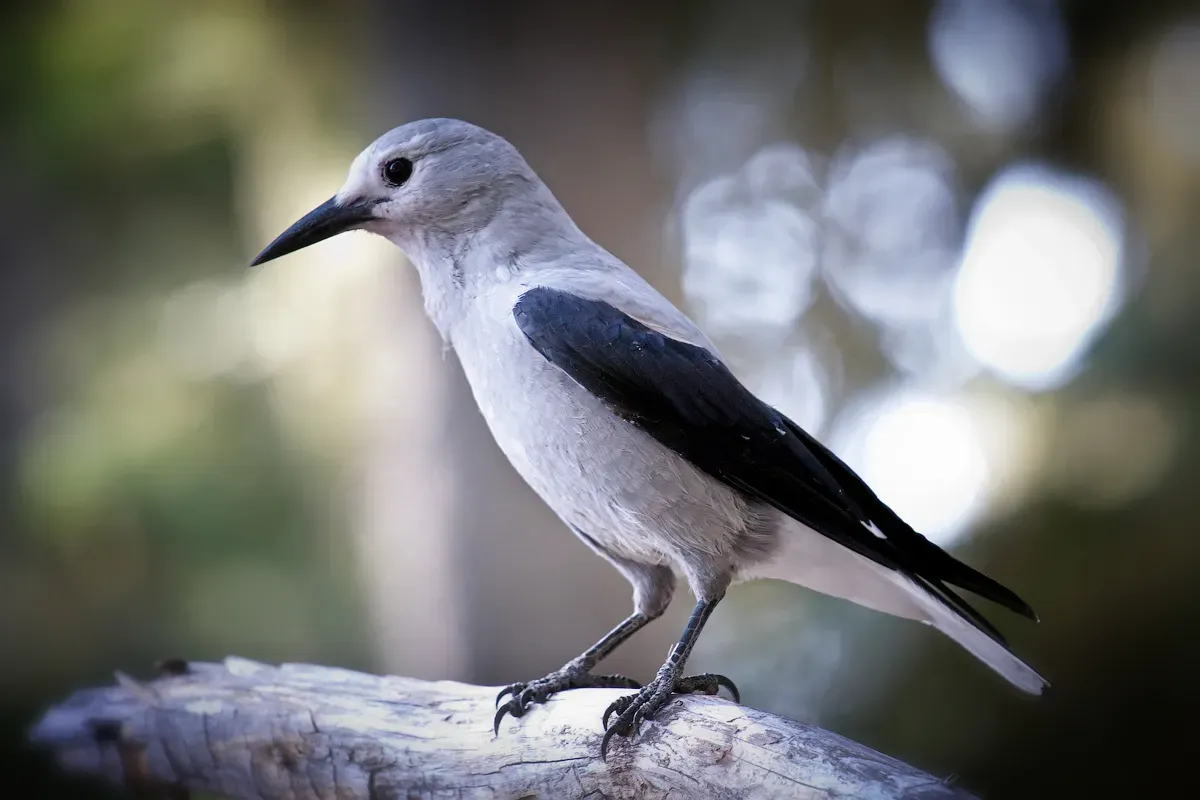
Picture trying to remember where you buried tens of thousands of small treasures across a rugged mountain landscape, then finding them months later under snow and debris. Clark’s nutcrackers, a type of crow living in North America’s high country, do exactly this each year. In late summer and fall, they cache pine seeds in scattered hiding spots, sometimes covering distances that would exhaust a serious hiker. Come winter, they revisit a huge portion of these sites, guided by a mental map calibrated with landmarks and spatial relationships rather than scent alone.
Studies suggest a single bird can remember the locations of many thousands of caches, retrieving enough of them to survive and even feed nestlings. Their hippocampus, a brain region associated with spatial memory, is comparatively enlarged and highly active during caching and retrieval seasons. When scientists move landmarks or subtly alter the landscape, the birds adjust their searches in ways that show they are not just following habits but reasoning about space. Compared with our reliance on smartphone maps that we panic without, nutcrackers carry a robust, offline navigation and storage system that never loses signal. Their performance blurs the line between “instinct” and what, in any human, we would casually call remarkable memory talent.
The Super Sensors: Snakes That See Heat and Shrimp That Punch With Light
Not all vision involves light in the way our eyes use it. Pit vipers, some pythons, and boas have special heat-sensing pits on their faces that detect infrared radiation from warm-blooded prey. In essence, they run a second, thermal camera overlaid on their normal eyesight, allowing them to strike accurately at mice in complete darkness. The nerve pathways from these pits plug straight into brain regions associated with vision, suggesting that what the snake “sees” is a fused image of shapes and heat.
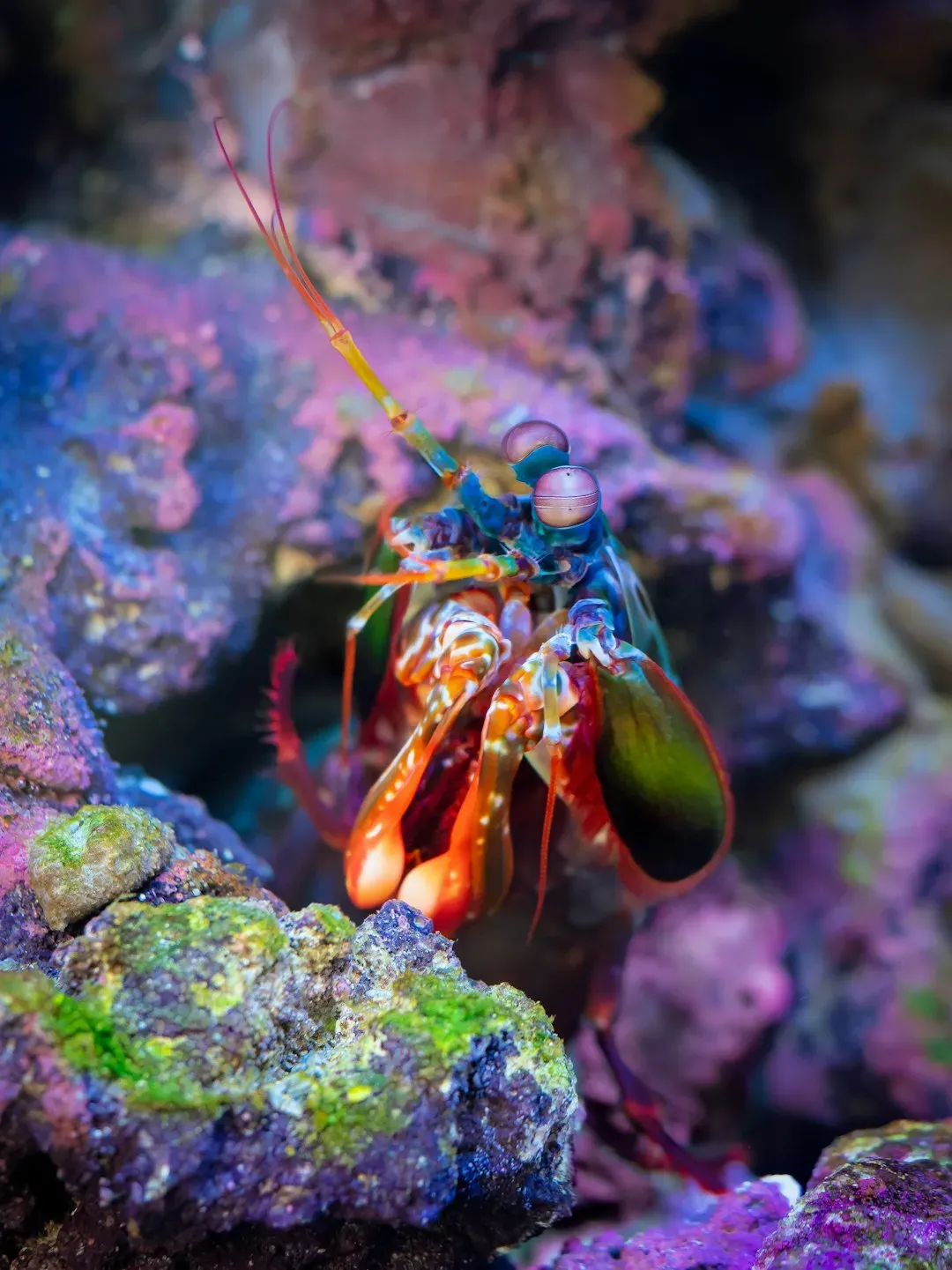
Down in tropical oceans, mantis shrimp push sensory extremes in another direction. Their compound eyes can detect a range of colors that makes our red–green–blue system look embarrassingly primitive, and some species see polarized light, adding another layer of information to their view of the world. On top of that, their front limbs accelerate so fast when they punch that they create tiny cavitation bubbles that briefly glow and generate shockwaves strong enough to crack aquarium glass. A few striking points underline how far beyond us they operate:
- Mantis shrimp visual channels number in the teens, while humans rely on just three main color receptors.
- The temperature differences snakes can detect are often smaller than what many thermal cameras can easily resolve.
- Both systems evolved without blueprints, driven purely by the selective pressure of hunting and surviving.
When you compare these super sensors with our best instruments, it is hard not to feel that we are only borrowing tricks the animal world has already perfected.
Why It Matters: Rethinking Intelligence, Technology, and Our Place in Nature
It is tempting to treat animal superpowers as quirky facts to roll out at dinner parties, but that sells them short. Each of these abilities forces us to confront old assumptions about what brains and bodies can do. For much of modern science, humans sat at the top of a mental pyramid, with other animals ranked below along a single ladder of intelligence. The reality these abilities reveal is closer to a crowded marketplace of different problem-solving strategies, many of which outclass us in specific domains. A bee’s timekeeping, an axolotl’s regeneration, or an octopus’s distributed cognition are not primitive precursors to human abilities; they are fully realized solutions to very different challenges.
Compared with traditional human-centered approaches – like building machines first and then asking what nature can learn from us – biology is increasingly flipping the script. Engineers now look to electric fish to design underwater sensors, to mantis shrimp for inspiration in impact-resistant materials, and to migratory birds for ideas about low-energy navigation. Roughly about one third of new bio-inspired robotics projects highlighted in recent conferences draw directly from animal sensory or motor capabilities. These creatures are not just subjects of curiosity; they are partners in a quiet technological revolution. Taking them seriously means acknowledging that the frontier of innovation is as likely to be found in a rainforest, reef, or alpine forest as in a clean room or coding sprint.
The Future Landscape: From Bio-Inspired Tech to Conservation Decisions
Looking ahead, the most exciting – and unsettling – possibility is that we will not just study these animal abilities but begin to replicate or even integrate aspects of them into our own systems. Quantum-inspired sensors modeled on bird navigation could lead to ultra-sensitive compasses that work where GPS fails, from deep underground to distant space missions. Regeneration research anchored in axolotl biology is already feeding experimental therapies aimed at improving wound healing, nerve repair, and organ recovery. Mantis shrimp strike physics is informing next-generation armor materials and underwater tools that harness, rather than avoid, shockwaves.
But there is a catch: many of the species that carry these abilities are under real ecological pressure. Habitat loss, pollution, and climate shifts threaten salamanders in Mexico, coral reefs that shelter octopuses and mantis shrimp, and forests that nutcrackers and their pine trees depend on. If we lose those animals, we do not just lose charismatic wildlife; we lose living research libraries of ideas our own technology may desperately need. Future conservation strategies may well prioritize species not only for their role in ecosystems, but also for their unique biological innovations. In an era where nearly half of assessed animal populations show declining trends, the choice to protect or neglect them will shape both biodiversity and the trajectory of human technology.
How You Can Engage: Small Steps With Wildly Big Consequences
For most of us, the gap between reading about animal superpowers and influencing their future can feel uncomfortably wide. Yet there are straightforward ways to close that distance, starting with how we pay attention. Supporting local conservation groups, zoos with strong research programs, or citizen science projects helps fund the fieldwork and long-term tracking these discoveries depend on. Even small actions – planting native flowers that feed pollinators, backing forest and wetland protections in local policy debates, choosing seafood from sustainable sources – feed into the global web of habitats that sustain these remarkable creatures.
Staying curious is just as important as donating or volunteering. Following reputable wildlife biologists, research institutions, and conservation organizations keeps you plugged into new findings and ways to help. Many labs now invite the public to participate in data collection through apps that log bird migrations, insect sightings, or reef health. Think of it as joining a distributed, worldwide observatory for animal abilities that still defy our explanations. The next time you see a bee dancing on a hive entrance or a bird disappearing into the sky, it might be worth pausing to wonder what hidden systems are running under the surface – and what role you want to play in keeping them alive.
Suhail Ahmed is a passionate digital professional and nature enthusiast with over 8 years of experience in content strategy, SEO, web development, and digital operations. Alongside his freelance journey, Suhail actively contributes to nature and wildlife platforms like Discover Wildlife, where he channels his curiosity for the planet into engaging, educational storytelling.
With a strong background in managing digital ecosystems — from ecommerce stores and WordPress websites to social media and automation — Suhail merges technical precision with creative insight. His content reflects a rare balance: SEO-friendly yet deeply human, data-informed yet emotionally resonant.
Driven by a love for discovery and storytelling, Suhail believes in using digital platforms to amplify causes that matter — especially those protecting Earth’s biodiversity and inspiring sustainable living. Whether he’s managing online projects or crafting wildlife content, his goal remains the same: to inform, inspire, and leave a positive digital footprint.