
Time has always felt like a one-way street. You wake up, the day moves forward, and nothing you do brings yesterday back. Yet for more than a century, physicists have been quietly building a case that this intuition might be wrong, or at least incomplete. The mathematics underlying some of our most tested theories of nature actually permit time to behave in deeply strange ways.
Time travel theory examines the possibility of moving between different points in time, much like moving through space. Unlike fictional portrayals where someone simply steps into a machine and emerges decades earlier or later, actual scientific theories provide a more complex picture rooted in the laws of physics. What follows is a look at ten of the most serious, most credible theories that keep physicists up at night.
1. Special Relativity and Time Dilation: The Theory That Actually Works

Of all the ideas on this list, time dilation is the only one you don’t have to take on faith. Einstein’s special theory of relativity, published in 1905, introduced the concept of time dilation. Time doesn’t flow at the same rate for everyone – it depends on how fast you’re moving relative to something else. If you could travel at speeds close to the speed of light, time would slow down for you relative to people who remain stationary.
This effect isn’t just theoretical. It’s been confirmed by experiments involving fast-moving particles and extremely accurate atomic clocks aboard high-speed jets. In theory, if you traveled at near-light speed for what felt like a year to you, decades or even centuries might pass back on Earth. You’d arrive in the future having barely aged. That’s not science fiction – that’s verified science.
2. General Relativity and Gravitational Time Dilation: Gravity Slows Time
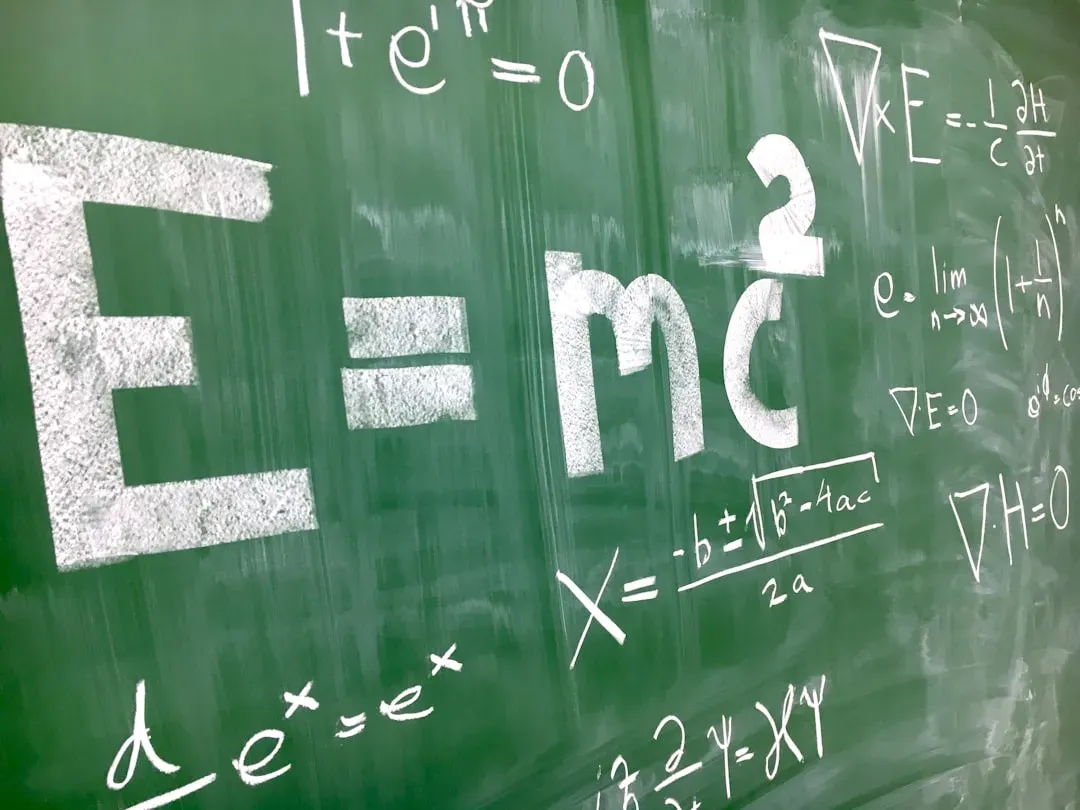
Albert Einstein’s 1915 theory of general relativity proposes an effect called gravitational time dilation. This means you would age slightly slower or faster depending on the gravitational field – an effect that can be measured with atomic clocks located at different elevations. The closer you are to a massive object, the slower time runs for you compared to someone farther away.
Travel to regions of space where extreme gravitational time dilation is taking place, such as near but not beyond the event horizon of a black hole, could yield time-shifting results analogous to those of near-lightspeed space travel. A 2022 experiment measured time dilation at the smallest scale ever, showing that two tiny clocks in the same cloud of atoms, separated by just a millimeter or the width of a sharp pencil tip, tick at different rates. The implications are genuinely staggering.
3. Wormholes: Tunnels Through the Fabric of Spacetime
Theoretical physicists explore models in which the fabric of spacetime is warped or bent enough to allow loops in time. This is where wormholes, hypothetical tunnels connecting distant points in spacetime, become central to the discussion. The idea isn’t merely a pop-science fantasy – it emerges naturally from Einstein’s field equations.
According to current theories on the nature of wormholes, construction of a traversable wormhole would require the existence of a substance with negative energy, often referred to as exotic matter. More technically, the wormhole spacetime requires a distribution of energy that violates various energy conditions. However, it is known that quantum effects can lead to small measurable violations of the null energy condition, and many physicists believe the required negative energy may actually be possible due to the Casimir effect in quantum physics.
4. Closed Timelike Curves: Loops Where the Past Meets the Future
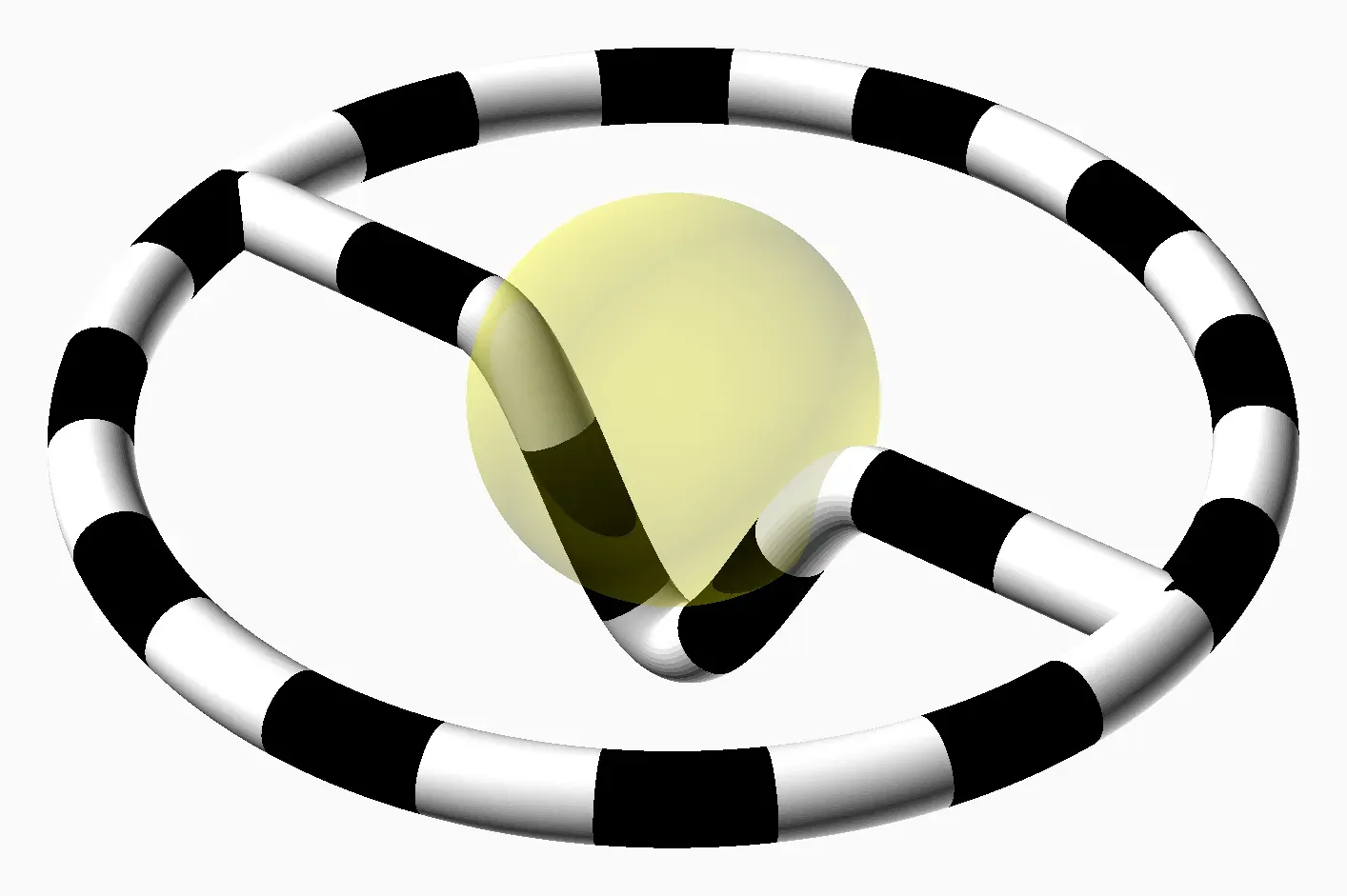
General relativity shows that spacetime can curve in unusual ways. Under certain extreme conditions, it might bend so dramatically that it loops back on itself, creating what physicists call a “closed timelike curve.” Imagine following a path through spacetime that eventually leads you to the exact point in history from which you set out. Though these loops are mathematically allowed by Einstein’s equations, they spark a series of unsettling questions.
In mathematical physics, a closed timelike curve is a world line in a Lorentzian manifold, of a material particle in spacetime, that is “closed,” returning to its starting point. This possibility was first discovered by Willem Jacob van Stockum in 1937 and later confirmed by Kurt Gödel in 1949, who discovered a solution to the equations of general relativity allowing closed timelike curves known as the Gödel metric. These aren’t fringe ideas – they sit at the heart of serious theoretical physics.
5. The Novikov Self-Consistency Principle: The Universe Prevents Paradoxes
The Novikov self-consistency principle is a principle developed by Russian physicist Igor Dmitriyevich Novikov in the mid-1980s. Novikov intended it to solve the problem of paradoxes in time travel, which is theoretically permitted in certain solutions of general relativity containing closed timelike curves. The principle asserts that if an event exists that would cause a paradox or any change to the past whatsoever, then the probability of that event is zero. It would thus be impossible to create time paradoxes.
According to the consistency conjecture, any complex interpersonal interactions must work themselves out self-consistently so that there is no paradox. That is the resolution. This means, if taken literally, that if time machines exist, there can be no free will. In the classic grandfather paradox, the principle dictates that such an action cannot succeed; either the attempt fails (e.g., the gun jams), or it inadvertently causes the events leading to the traveler’s existence. The universe, in essence, writes its own corrections.
6. The Many-Worlds Interpretation: Time Travel Into Parallel Branches
The many-worlds interpretation of quantum physics poses that all possible quantum events can occur in mutually exclusive histories. A variation of this interpretation, called interacting many-worlds, may involve time travelers arriving in a different universe than the one they came from. Under this framework, stepping back into the past doesn’t rewrite your own history – it simply places you in a branching version of reality.
The multiple-universe theory offers a solution by suggesting that time travel does not affect the original timeline. Instead, when a time traveler goes to the past, they create or enter a new, alternate universe. In this new universe, you could kill your grandfather, but the original timeline you came from would remain completely unaffected. Therefore, the grandfather paradox is resolved because you are not erasing your own existence from the timeline you originated from.
7. The Alcubierre Warp Drive: Bending Space to Outrun Time
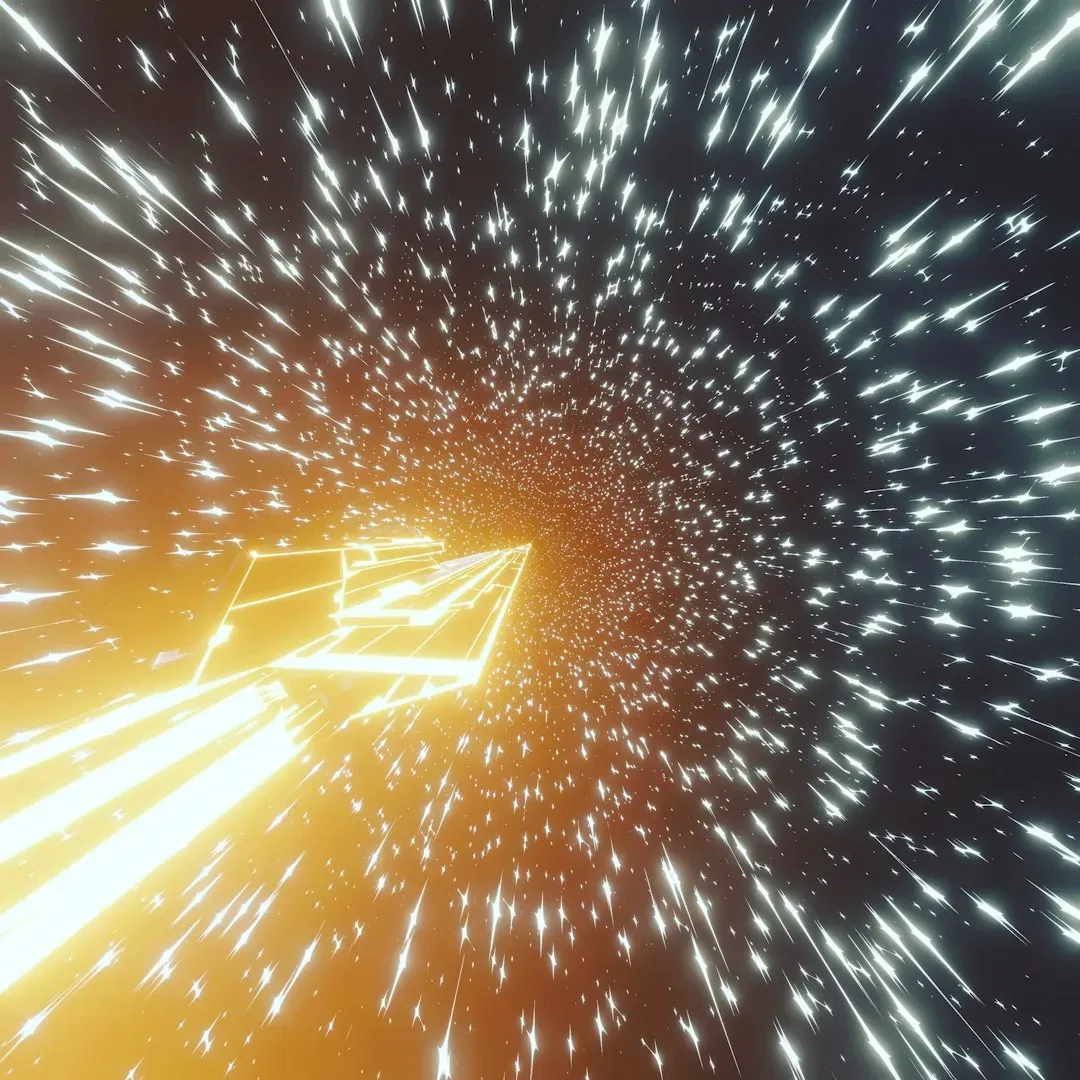
The Alcubierre warp drive, proposed by Miguel Alcubierre in 1994, theoretically allows for faster-than-light travel by creating a warp bubble in spacetime. The idea takes advantage of a loophole in general relativity: while all massive objects are constrained to move along timelike paths, space itself has no such restriction. A warp drive exploits this by having a shell of curved spacetime embedded in a flat background, which can accelerate its flat interior to arbitrarily high speeds without the passengers inside feeling any acceleration whatsoever.
The Alcubierre warp drive, while theoretically plausible, demands immense quantities of energy, possibly equivalent to the mass-energy of entire stars or galaxies. Discussions reveal that while the mathematics of the Alcubierre drive is valid, its practical realization is considered impossible due to fundamental issues such as causality violations and the nature of spacetime. Consequently, the consensus is that the Alcubierre warp drive remains a mathematical curiosity rather than a feasible technology. Still, it survives peer review – which is more than most ideas can claim.
8. Cosmic Strings: Ancient Relics That Warp Time

Time travel to the past is theoretically possible in certain general relativity spacetime geometries that permit traveling faster than the speed of light, such as cosmic strings, traversable wormholes, and Alcubierre drives. Cosmic strings are hypothetical one-dimensional topological defects that may have formed in the early universe, carrying enormous energy densities and generating intense gravitational fields around them.
Cosmic strings create closed timelike curves due to their gravitational lensing effects, as revealed in Gott’s time machine concept, which avoids traditional energy condition violations. J. Richard Gott proposed a mechanism for creating closed timelike curves using cosmic strings. The catch is that no cosmic string has ever been directly observed, so the theory rests on an object that may or may not actually exist in nature.
9. The ER=EPR Conjecture: Quantum Entanglement and Wormholes as One
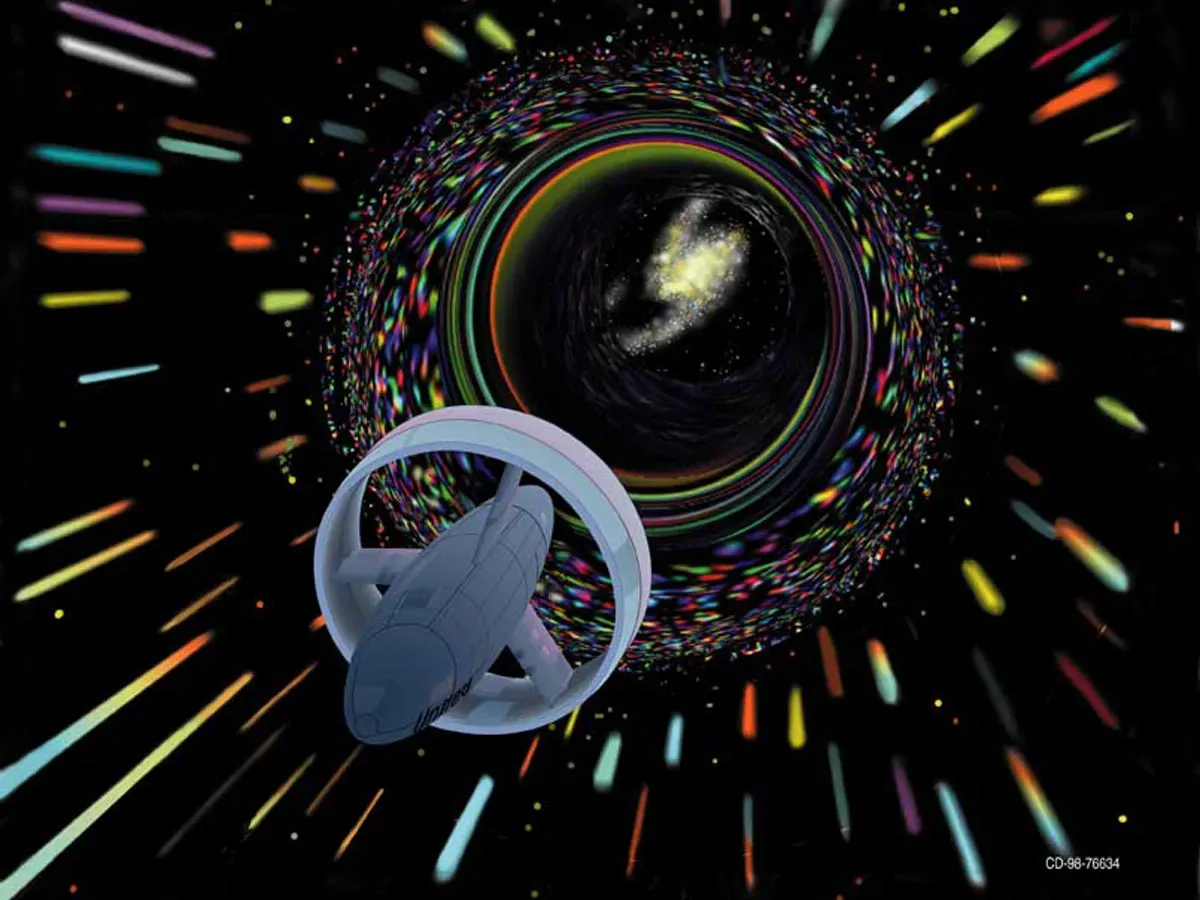
Some recent theories conjecture deep connections between quantum entanglement and spacetime geometry. The ER=EPR conjecture, for example, suggests that wormholes, known as Einstein-Rosen bridges, could be related to quantum entanglement, offering a possible microscopic mechanism linking spacetime geometry with quantum mechanics. This intersection hints at the potential for a unified theory of quantum gravity that incorporates wormholes naturally while resolving paradoxes associated with time travel.
String theory and loop quantum gravity offer frameworks that aim to unify gravity with quantum mechanics, potentially explaining the structure of spacetime at the most minute scales. Some versions of these theories predict exotic geometries resembling wormholes or suggest mechanisms where wormholes could be natural features of quantum spacetime, though these ideas remain theoretical. If the ER=EPR connection holds, the bridge between quantum weirdness and time travel could be closer than anyone expected.
10. Quantum Time Reversal and “Negative Time”: The Newest Frontier
For decades, time travel was relegated to the realm of science fiction, but recent years have seen a surge in credible scientific inquiry. In 2024 and 2025, quantum physicists made headlines by demonstrating time reversal in quantum systems and observing phenomena such as “negative time” in photon experiments. These advances have not only deepened our understanding of time’s nature but have also established foundational principles for future quantum computing and communication technologies.
Research by physicists has tackled these questions by focusing on the thermodynamic arrow of time. Entropy is the key to this arrow. Under normal, everyday conditions, entropy only goes up. But within a closed timelike curve, quantum fluctuations could disrupt this pattern. These fluctuations might act like tiny corrections to the ordinary laws of thermodynamics, allowing entropy to decrease in a localized way when traveling around the loop. The research is early, but it’s rigorously grounded.
Conclusion: Where Science and Imagination Meet
What’s remarkable about this entire field is that none of these theories require you to abandon physics. They emerge from it. The ongoing investigation into wormhole dynamics, negative energy densities, and quantum field effects reflects our desire to test the limits of relativity, quantum mechanics, and engineering. The question is not simply whether we can build such a machine, but whether the laws of physics, as we understand them, would permit it to operate without contradiction. As research continues, time travel remains a theoretical challenge that unites mathematical rigor, relativistic physics, and deep curiosity about what truly defines past, present, and future.
Time travel is a tantalizing possibility, one that challenges our understanding of physics, causality, and reality. Einstein’s theories show us that time is flexible, not absolute. Wormholes, cosmic strings, and quantum theories hint at mechanisms that might permit time travel under extraordinary conditions. The honest answer today is that we don’t yet know what the universe ultimately allows. That uncertainty isn’t a dead end – it’s an open door, and physicists are still walking toward it.