

What if everything you see, touch, and believe about the world around you is only a fraction of the real story? Not metaphorically. Literally. Some of the most brilliant minds in physics, philosophy, and neuroscience have spent their lives wrestling with one terrifying possibility: that reality, as you experience it, may be profoundly different from what it actually is.
These aren’t fringe ideas scribbled in the margins of crackpot notebooks. Some of the most astonishing and counterintuitive theories in modern physics sound like science fiction, yet they are supported by rigorous experiments, mathematical proofs, and centuries of human curiosity. And once you start pulling on these threads, it’s very hard to stop. Let’s dive in.
1. The Simulation Hypothesis: You’re Living Inside a Program

What if the life you’re living, the world you see, and even your own consciousness are not part of a base physical reality, but an incredibly advanced computer simulation? That’s the core of the simulation hypothesis, and honestly, it’s the kind of idea that keeps people up at night.
The most influential modern version of this idea comes from philosopher Nick Bostrom, who proposed that any technologically mature civilization would likely have the capacity to run vast numbers of “ancestor simulations.” If true, the sheer number of simulated conscious beings would almost certainly dwarf the number of original, biological ones. In other words, statistically speaking, you’re far more likely to be a copy than the original. Statistically, this means it’s far more probable that you are one of the countless simulated minds rather than a member of the single “base” reality. Bostrom’s argument isn’t proof, but it presents a compelling logical framework that forces you to seriously consider your potential place in this cosmic hierarchy.
2. Quantum Mechanics and the Observer Effect: You’re Creating Reality by Looking at It

Here’s the thing that most people never really sit with: one of the most famous oddities of quantum mechanics is the observer effect, the notion that the mere act of measurement alters the state of a quantum system. This was demonstrated in the double-slit experiment, where light and matter behave as waves when unobserved, but as particles when measured.
This suggests that reality isn’t solid and fixed. It responds to consciousness. In other words, you might actually shape the world around you just by observing it. Think about that for a second. The act of paying attention isn’t passive. Perhaps the most supportive evidence of the simulation hypothesis comes from quantum mechanics. This suggests nature isn’t “real”: particles in determined states don’t seem to exist unless you actually observe or measure them. Instead, they are in a mix of different states simultaneously.
3. The Holographic Universe: Your World Is a Two-Dimensional Projection
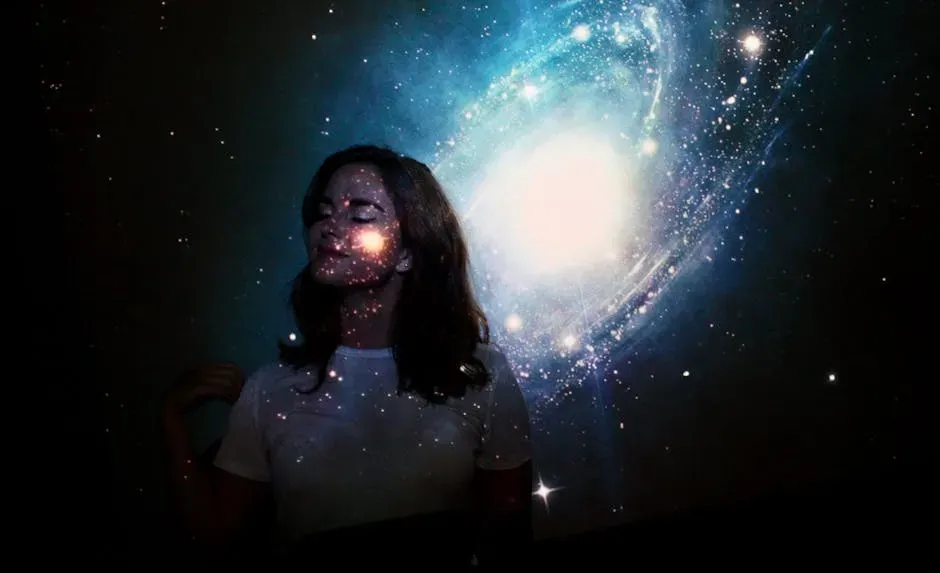
Imagine everything you know, your body, this article, the chair you’re sitting in, is actually a holographic projection. The holographic principle states that the description of a volume of space can be thought of as encoded on a lower-dimensional boundary to the region, such as a light-like boundary like a gravitational horizon.
The Holographic Universe Theory suggests that our three-dimensional reality is a projection of information stored on a distant, two-dimensional surface. The holographic principle arose from the study of black holes, where it was found that the information content of all the objects that have fallen into a black hole can be entirely represented on its two-dimensional event horizon. Extrapolating this concept, the entire universe could be a holographic projection. Even Stephen Hawking embraced this idea in his final theory. Hawking’s final theory of the Big Bang envisages the universe as a holographic projection. In a familiar hologram, a third dimension of space emerges from the lines and scribbles on a screen. In the cosmos-as-hologram idea, which has become the talk of the town among theoretical physicists, it is the dimension of time that can be holographically encoded.
4. The Many-Worlds Interpretation: Every Decision Splits Reality
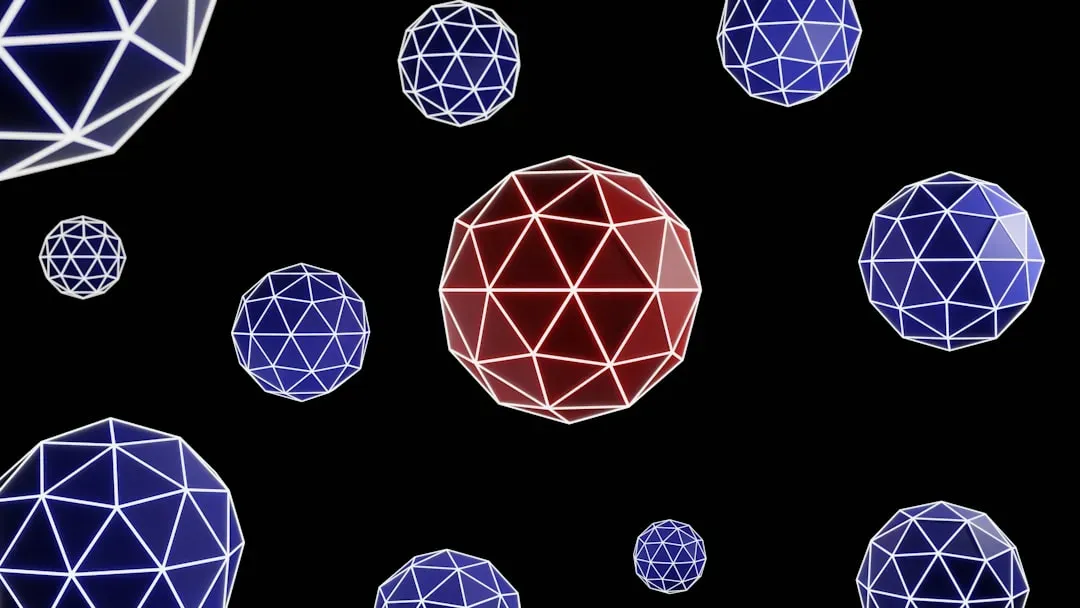
Every choice you make, every coin flip, every quantum event, creates a branching universe. The many-worlds theory states that waves don’t actually collapse into particles. It postulates that every time a decision point arises in quantum mechanics, our reality is split into a new universe. Thus, there’s a universe where the tennis ball is a wave and a universe where the tennis ball is a particle. This line of thinking means there are infinite universes, and our reality fractures infinite times a day.
I know it sounds crazy, but this isn’t just philosophical fantasy. One of the reasons this is a leading theory is that almost none of the quantum mechanical formulas work when you keep a constraint on one universe. You, by definition, need to have infinite probabilistic universes to predict the behavior of these systems. So while fracturing universes at every quantum decision point doesn’t align with our current worldview, it’s actually a backbone of computational quantum mechanics.
5. Panpsychism: Consciousness Is Woven Into the Fabric of Everything
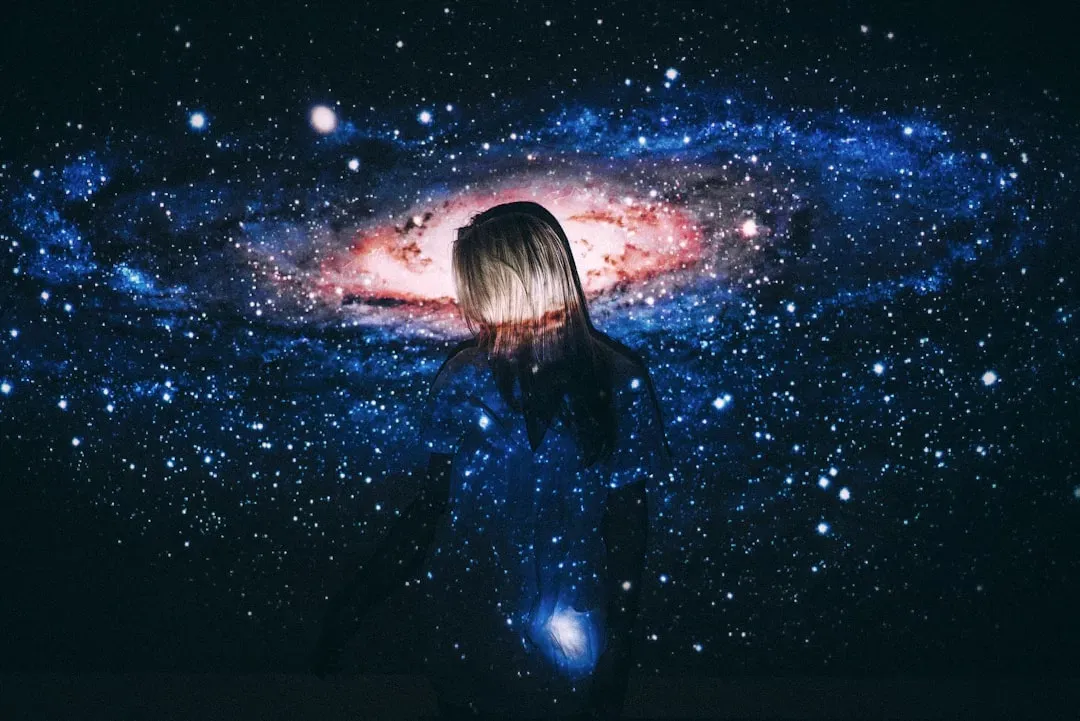
Most people assume consciousness lives in the brain. The “hard problem of consciousness” has led some scientists to propose that consciousness might be fundamental to the universe itself, as basic as space and time. This theory, known as panpsychism, suggests that even elementary particles might have some form of consciousness.
Panpsychism suggests that consciousness is a universal feature inherent in all matter, proposing a continuum of consciousness from the simplest particles to complex organisms. Think of it like this: the rock on your windowsill doesn’t “think,” but it might carry a dim, primitive flicker of experience. Panpsychism is the idea that all of reality exists within a mental substrate, where everything is thought. Physicists such as Roger Penrose discuss versions of panpsychism in relation to quantum mechanics.
6. The Multiverse Theory: You Are Just One of Infinite Yous

The multiverse isn’t just a Marvel invention. What if there were an infinite number of different realities? The Multiverse Theory proposes just this. The theory suggests that we are living in “bubbles” which pop up and out of existence, like soap bubbles. If you take the Big Bang Theory, this would mean that the infancy of our universe was just the creation of one bubble in a vast sea of inflating universes.
In the eternal inflation theory, which is a variant of the cosmic inflation theory, the multiverse or space as a whole is stretching and will continue doing so forever, but some regions of space stop stretching and form distinct bubbles. Somewhere out there, another version of you chose differently at every crossroads you’ve ever faced. The anthropic principle suggests that the existence of a multitude of universes, each with different physical laws, could explain the asserted appearance of fine-tuning of our own universe for conscious life.
7. String Theory and Hidden Dimensions: Reality Has More Layers Than You Can See
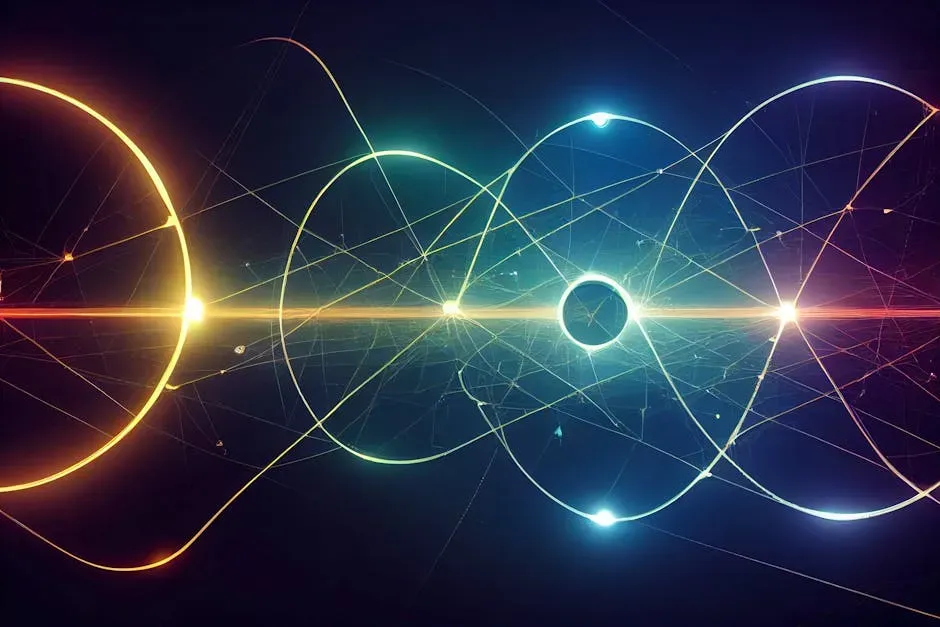
Imagine if the smallest building blocks of reality weren’t tiny balls of matter but vibrating strings of pure energy. String theory seeks to unify all the forces of nature, gravity, electromagnetism, and the nuclear forces, into a single framework. In string theory, every particle we know, electrons, quarks, photons, is actually a tiny loop or strand of string vibrating at different frequencies. Just as different notes come from vibrating guitar strings, different vibrations give rise to different particles.
String theory requires extra dimensions, possibly ten or eleven of them, far beyond the three of space and one of time we experience. These extra dimensions may be curled up so tightly we cannot see them. Although string theory is elegant, it remains unproven. No experiment has yet detected these strings or extra dimensions. Still, the mathematics behind it are undeniably compelling, and many physicists treat it as the most promising path toward a unified theory of everything.
8. The Block Universe and Eternalism: Past, Present, and Future All Exist Right Now
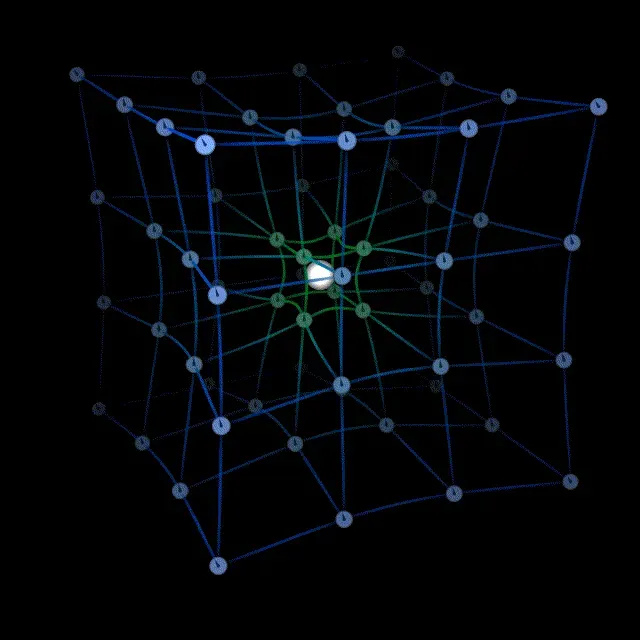
Here’s a truly unsettling one. What if time doesn’t flow at all, and instead, every moment of your past and future exists simultaneously? Eternalism is the belief that the past and future exist “out there” somewhere. The idea is that, while you are only conscious of one moment at a time, all the past yous and future yous exist already. Yet, somehow, your consciousness has left the past you and has yet to enter the future you.
This is what physicists call the “block universe.” Your birth, your death, and this exact moment you’re reading this sentence all coexist in a four-dimensional spacetime block. The flow of time and the “now-ness” of the present moment are no more explainable in physical terms than any other qualia we experience. Some argue that eternalism is true of “physical time” but presentism is true of “conscious time.” So your sense that time is moving might be the biggest illusion of all.
9. Idealism: The Physical World Is a Projection of Mind

Materialism says the physical world came first and consciousness emerged from it. Idealism flips that entirely. Idealism counters the materialistic view, holding that consciousness is primary and the physical world is a projection of the mind. Philosophers like Berkeley stated that “to be is to be perceived,” indicating that reality depends on awareness. The universe is less like a machine and more like a mental construct created by our brain.
Science describes particles, but Idealism asks science whether those particles exist without perception, or are a part of consciousness itself. That question may sound abstract, but it cuts straight to the heart of how you build a theory of everything. Some interpretations of quantum mechanics imply that the observer plays a crucial role in determining the outcome of quantum events, suggesting that consciousness is integral to the existence of the universe. These perspectives challenge materialistic notions of reality, suggesting that alternative realities might be accessible through shifts in consciousness.
10. Plato’s Cave and the Shadow World: Ancient Philosophy Meets Modern Physics

Roughly two and a half thousand years ago, Plato proposed something that sounds eerily modern. The idea that your reality might be a mere shadow of the truth stretches back to Plato’s famous Allegory of the Cave. In this thought experiment, imagine you are a prisoner who has only ever seen shadows cast on a cave wall, believing them to be the entirety of existence. If you were freed and saw the real objects creating those shadows, you would initially reject this new world, as the familiar illusion feels more real.
Plato argued that beyond our perceived reality, there lies a world of “perfect” forms. Everything that we see is just a shade, an imitation of how things truly are. This idea now resonates powerfully with information-based physics and the simulation hypothesis. The allegory serves as a powerful metaphor for questioning the nature of perception and knowledge. It suggests that what we perceive through our senses might not be the true, fundamental reality, laying the philosophical groundwork for modern theories about simulated worlds.
Conclusion: The Question That Changes Everything

Taken together, these ten theories don’t just challenge your understanding of physics or philosophy. They challenge your understanding of yourself. Of what it means to exist. Of whether the solid, tangible world you navigate every single day is something you can actually trust.
Honestly, the most remarkable thing isn’t how strange these theories are. It’s how seriously the best minds of our time take them. From quantum mechanics to philosophical paradoxes, our understanding of reality keeps getting stranger by the day. Scientists and philosophers have proposed theories that sound so outlandish they belong in movies, yet they’re backed by serious mathematical frameworks and scientific observations. The universe isn’t just a place you live in. It might be something far stranger, far more layered, and far more intimate than you ever imagined.
So here’s the question worth sitting with long after you’ve closed this tab: if every single theory on this list turned out to be true in some form, what exactly would that make you? Let us know your thoughts in the comments.