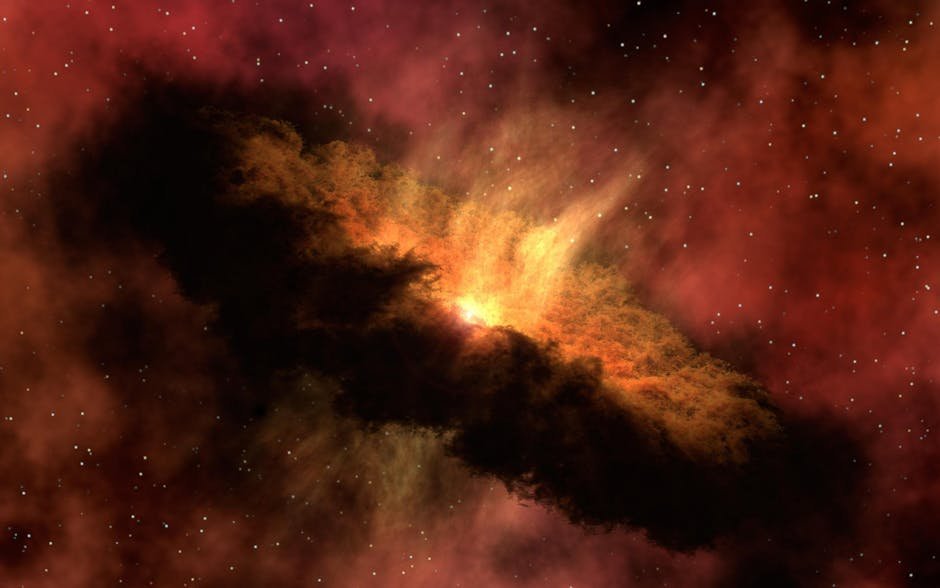
The idea that our universe might be just one of many used to sound like the stuff of late-night science fiction. Now, serious physicists, cosmologists, and philosophers are wrestling with it in research papers, sky surveys, and particle accelerators. The multiverse has shifted from a fringe thought experiment to a genuine scientific question that could rewrite what we think “reality” even means. Yet for all the math and models, the multiverse remains slippery, unsettling, and strangely personal – because if there are many universes, what does that say about our place in this one? These ten theories do more than stretch the imagination; they quietly chip away at everything we thought we knew about time, space, and even ourselves.
The Hidden Clues in the Cosmic Microwave Background
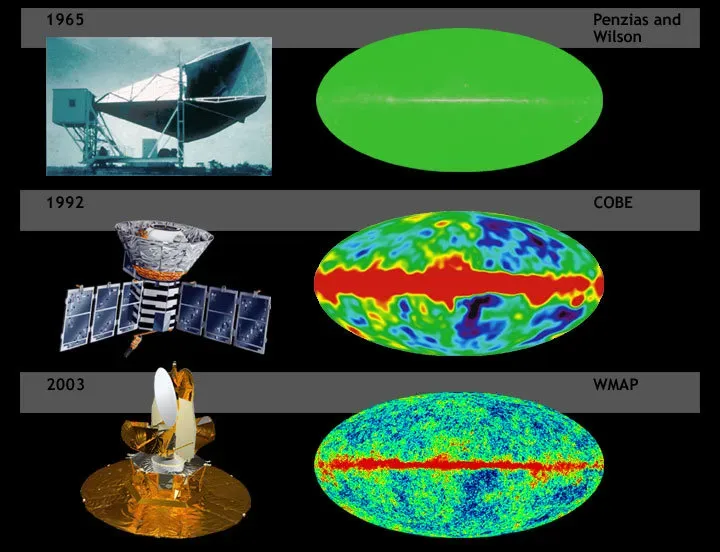
Imagine the universe as a scarred balloon, still humming with the faint afterglow of the Big Bang, and hidden in those scars might be fingerprints from other universes. The cosmic microwave background, or CMB, is the oldest light we can see, a ghostly radiation that fills all of space and acts like a fossil record of the early universe. Some physicists have suggested that subtle patterns, cold spots, or strange alignments in the CMB could be the bruises left by collisions with other bubble universes. A famous example is the so-called “Cold Spot,” an unusually large, chilly patch in the CMB sky that has inspired suggestions – from cautious to wild – that it might hint at a past encounter with another universe. Most researchers still lean toward more mundane explanations, like statistical flukes or large cosmic structures, but the possibility that our universe has literally bumped shoulders with another one refuses to fully die.
Part of the drama here is that these signals are incredibly faint, buried in noise and limited by our detectors and by cosmic variance – the fact that we have only one universe’s sky to observe. Teams have reanalyzed satellite data again and again, each time trying to separate genuine, physics-based anomalies from chance patterns or instrumental artifacts. So far, nothing has been remotely close to a smoking gun, but the search itself is reshaping how we process huge, messy data sets and how we define “evidence” for something so far beyond normal experience. In a way, the CMB is like an ancient parchment that has been smudged and folded; we may never be sure whether that peculiar mark is a deliberate signature or just a stain. Still, every new satellite and survey sharpens the picture just a bit more, keeping alive the tantalizing thought that the sky above us might be whispering about worlds we can never visit.
Inflation’s Bubble Bath: When Universes Multiply

Cosmic inflation was originally proposed to solve down-to-earth cosmological puzzles, like why the universe looks so smooth and uniform on large scales. In this theory, a fraction of a second after the Big Bang, space itself expanded faster than light, stretching tiny quantum fluctuations into the seeds of galaxies. When physicists followed that idea to its logical conclusion, though, it produced something far weirder: eternal inflation, in which the inflating space never fully stops, and bubble universes keep budding off like foam in a cosmic bubble bath. Each bubble could have different physical conditions, different constants, maybe even different laws of physics, all branching endlessly from the same underlying process. Our observable universe would then be just one bubble in an ever-expanding cosmic froth.
Eternal inflation has a strange mix of strengths and headaches. On one hand, it naturally explains why our universe looks so uniform and flat, and it emerges from well-established ideas in quantum field theory. On the other hand, it leads to the so-called “measure problem”: if there are effectively infinite universes, how do you even talk about probabilities or typical outcomes? It is like trying to say what “most” numbers are like when you have an infinite list with no natural way to rank them. Some researchers accept this mess as the price of a bigger, richer picture of reality; others see it as a hint that something about our current theories is deeply incomplete. For now, inflation remains a leading model of the early universe – with or without the infinite bubble bath – but its most dramatic implications still stir fierce debate in seminar rooms and late-night conferences alike.
Quantum Many-Worlds: Every Choice, Every Outcome, Somewhere

Among all multiverse ideas, the quantum many-worlds interpretation is the one that most directly intrudes into everyday life. At its core is a blunt claim: every time a quantum event could have multiple outcomes, reality does not choose just one, it splits, and all of them happen in different branches. In this view, there is a version of you that took the job, another that walked away, one that caught the green light, and another still waiting at the red. This is not meant as a poetic metaphor but as a literal reading of the mathematics of quantum mechanics, which never actually says that the wavefunction “collapses.” Instead, the wavefunction keeps evolving, and observers become entangled with outcomes in a branching web of realities.
Many-worlds has a strangely democratic charm: it removes the special role of measurement and observers, treating everything – atoms, detectors, people – as just parts of one giant quantum state. Still, it raises hard questions about probability, identity, and what it means to say that something “happens” if all outcomes occur. Critics argue that it multiplies realities without adding explanatory power, while supporters counter that it sticks more honestly to the equations and avoids adding ad hoc rules. The unnerving part is that this is not an optional side story; quantum theory underpins modern technologies like semiconductors, MRI scanners, and lasers. If the many-worlds picture is right, then your everyday reality might already be one branch among countless others, quietly diverging every time a particle – or a person – faces a fork in the road.
Brane Worlds and Hidden Dimensions: Universes Next Door
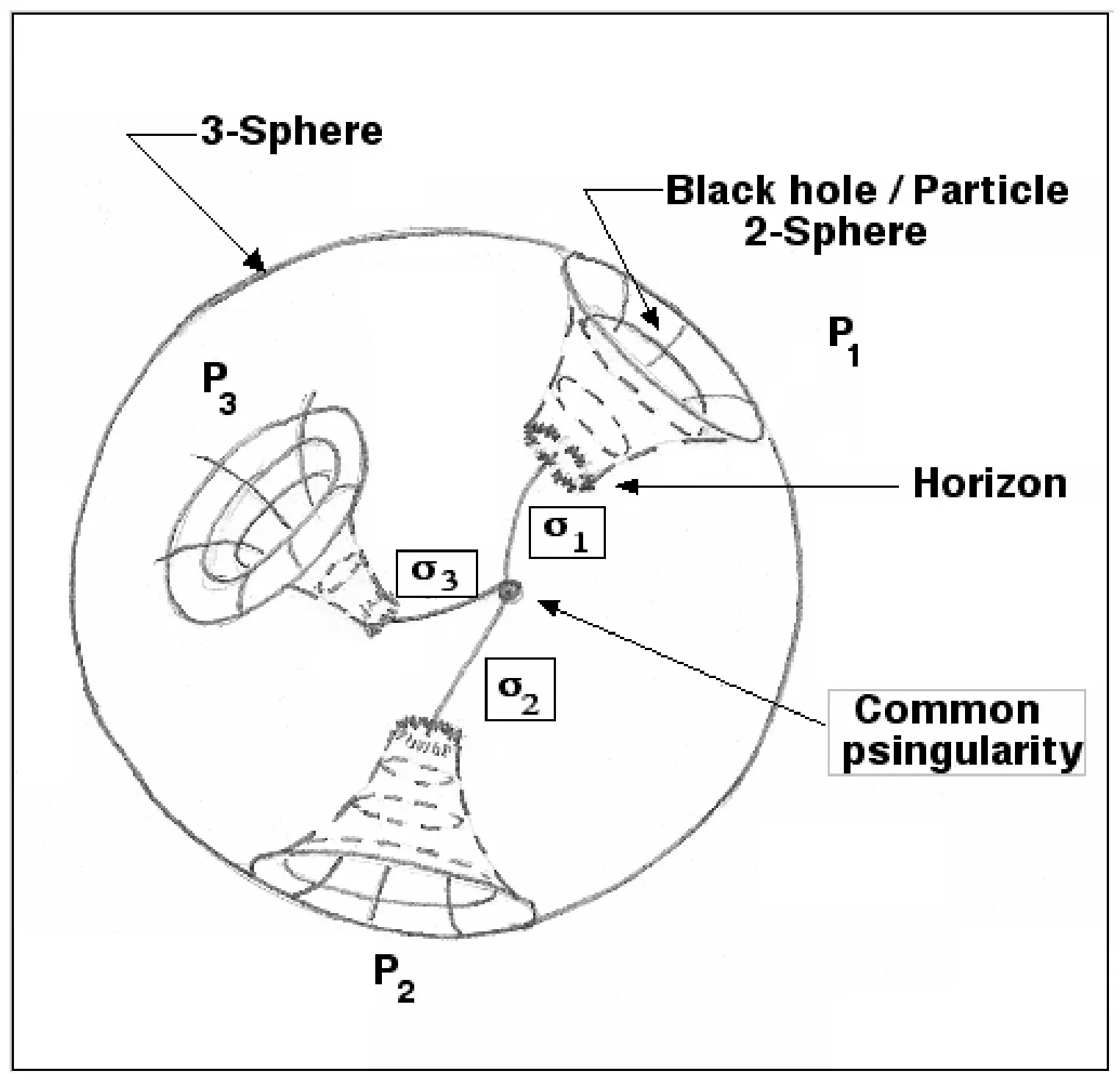
String theory was born out of the effort to unify gravity with quantum mechanics, but it brought with it a side effect: extra dimensions curled up beyond our perception. In some versions, our entire universe is a three-dimensional “brane” floating in a higher-dimensional space, like a soap film drifting in an invisible room. Other branes could be stacked or drifting nearby, carrying their own universes with their own matter and light. In principle, gravity could leak between these branes, which would mean that some of the gravitational behavior we see – like the apparent presence of dark matter or oddities at cosmic scales – might hint at interactions with neighboring universes.
The brane-world picture can sound outlandish, but it has motivated serious proposals that are testable, at least in principle. Physicists have looked for signs of extra dimensions in particle accelerators, where high-energy collisions might produce missing energy that slips into the higher-dimensional bulk. Others have searched for tiny deviations from the familiar inverse-square law of gravity at very short distances, which could hint at gravity spreading into extra dimensions. So far, no clear signal has appeared, tightening the constraints on these models but not eliminating them entirely. It is as if we are tapping gently at the walls of our universe, listening for an echo from the next brane over, and so far the silence is deep – but not yet definitive.
Anthropic Fine-Tuning: Are We in a “Just-Right” Universe by Chance?
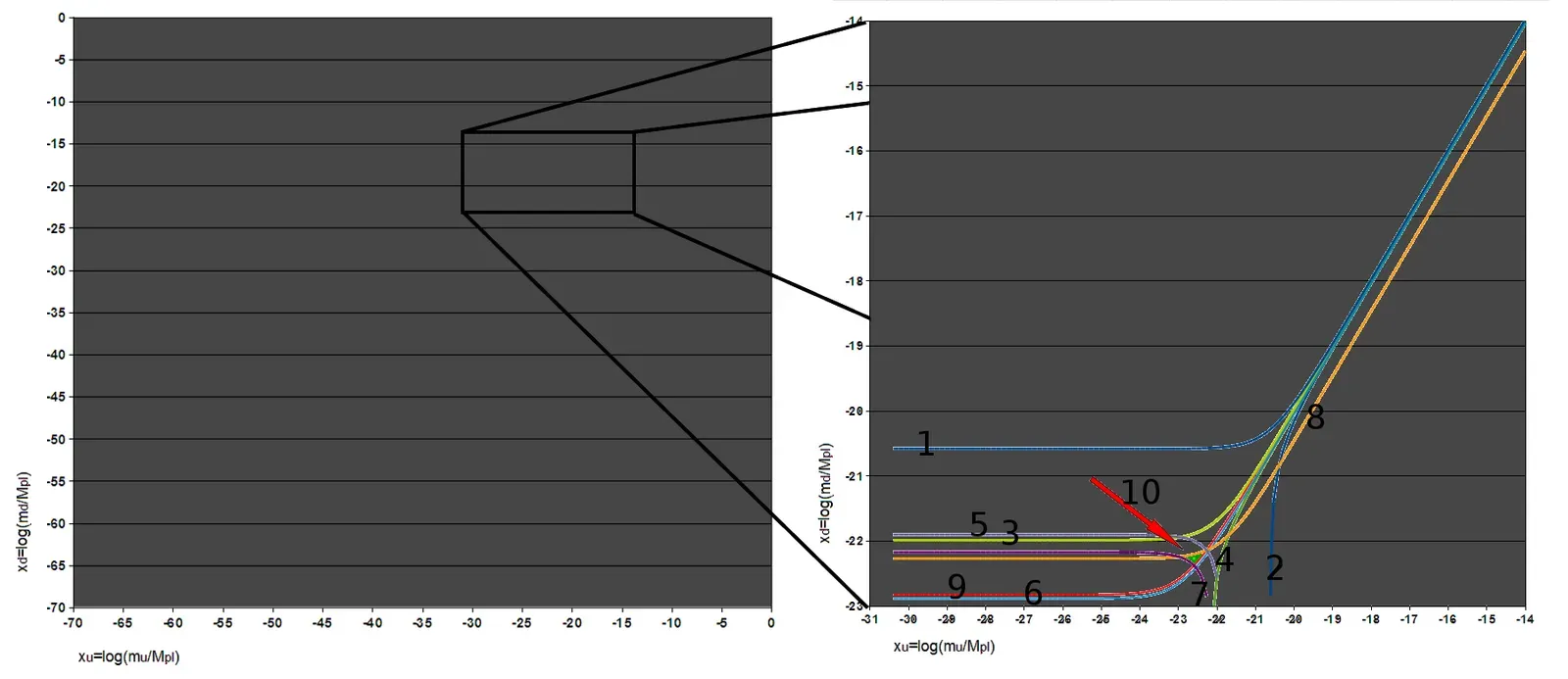
One of the most unsettling arguments for a multiverse comes not from wild theory but from quiet numbers: many of the fundamental constants of nature appear delicately tuned for life. If the strength of gravity, the charge of the electron, or the dark energy density were even slightly different, stars might not form, chemistry could be impossible, or the universe might rip apart too fast for anything complex to arise. The anthropic idea says that if there is a vast multiverse of universes with different constants, it is no surprise that we find ourselves in one of the rare “just-right” ones where observers are possible. In everyday terms, it is like waking up on a planet that seems impossibly hospitable and then realizing there may be countless barren worlds you never see because no one is there to notice them.
This line of thinking deeply divides scientists. Supporters argue that the anthropic perspective is a reasonable inference if multiverse-generating mechanisms like eternal inflation or string landscapes really exist. Critics worry it slips toward giving up, replacing predictive physics with a shrug and a selection effect. It also touches a raw philosophical nerve because it blurs the line between scientific explanation and existential storytelling. Yet the fine-tuning puzzle will not go away, and as more precise measurements confirm just how delicately balanced some cosmic parameters are, the anthropic multiverse remains a provocative, if controversial, way to make sense of our seemingly lucky cosmic address.
Why It Matters: Reality, Evidence, and Our Place in the Cosmos
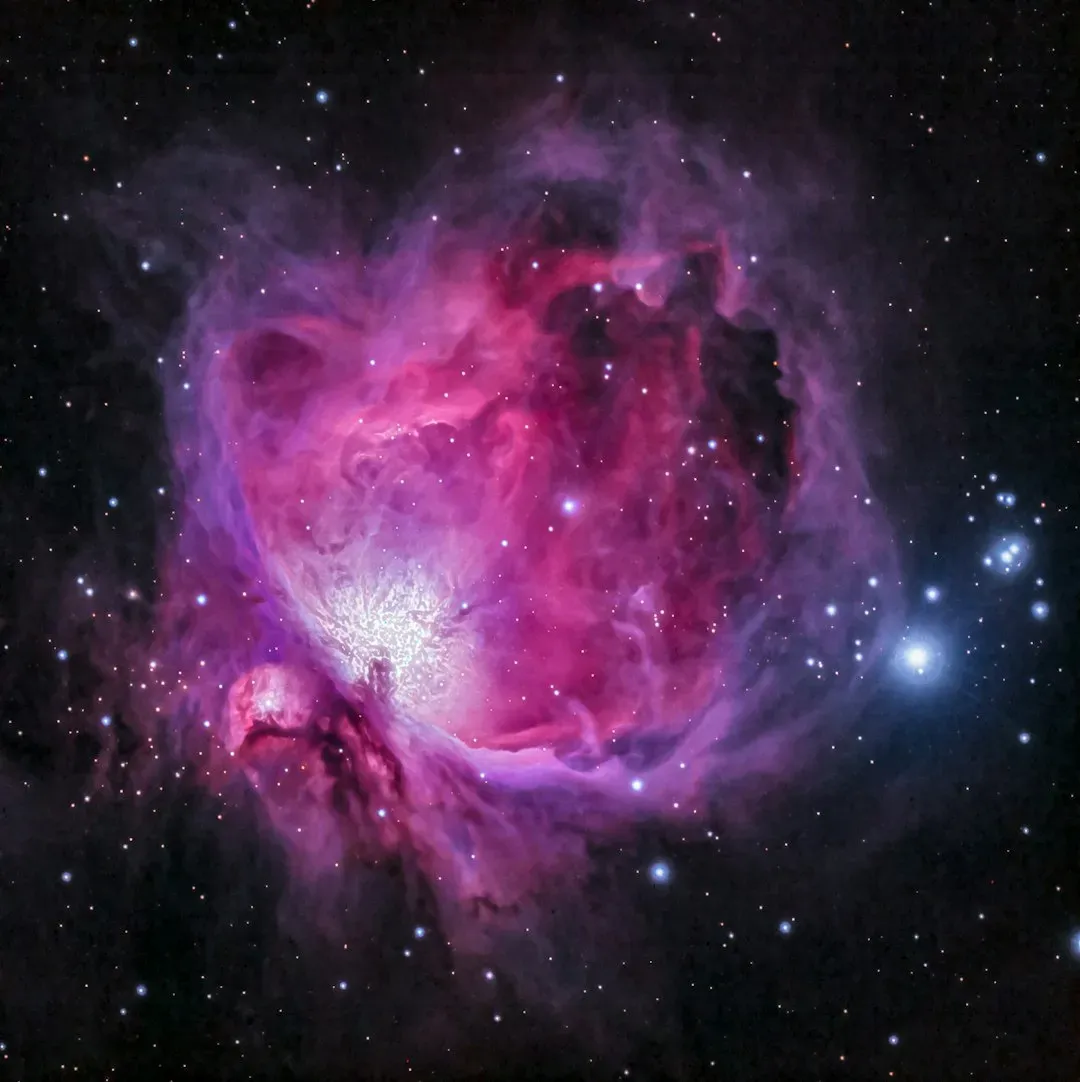
It is fair to ask why any of this matters when most of us are just trying to get through the week, not chase ghost universes. The short answer is that multiverse theories force science to confront its own boundaries: what counts as evidence, what counts as an explanation, and how far we can push our models before they stop being testable. Traditional physics thrived on concrete predictions that could be checked in the lab, like the orbit of a planet or the spectrum of a star. Multiverse ideas live at the edge of that comfort zone, where some consequences might be indirectly testable while the full picture stays forever out of reach.
At the same time, these theories reshape how we think about meaning and uniqueness. If there are countless universes, then our cosmic story is not the only one; it is one volume in a library beyond imagining. That can feel diminishing, but it can also be strangely freeing, emphasizing how remarkable it is that this particular universe produced life, consciousness, and curiosity. From a practical angle, probing the multiverse pushes technology, from more sensitive telescopes to more precise measurements of fundamental constants. In the process, even if the grandest multiverse ideas turn out to be wrong, the tools and insights we gain will deepen our understanding of this universe – which is, after all, the only one we can touch.
From Thought Experiment to Data Hunt: How Scientists Actually Test These Ideas
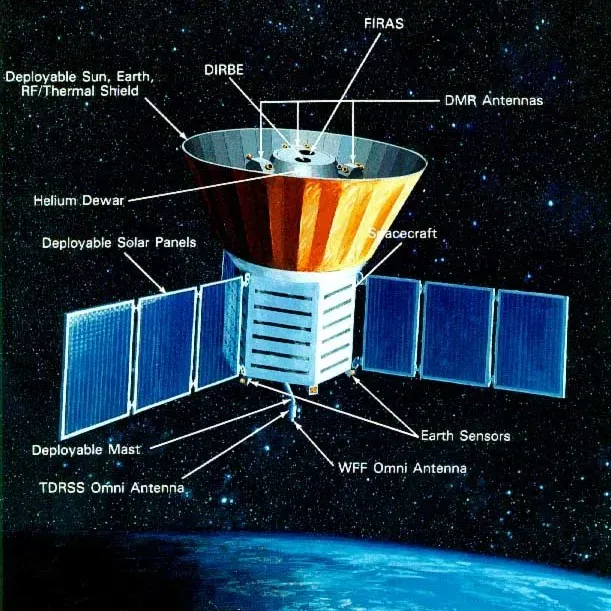
Despite their wild reputation, multiverse theories are not just armchair speculation; researchers are grinding through data sets and designing clever tests wherever they can. Cosmologists analyze the cosmic microwave background for non-random features or imprints that could signal exotic early-universe physics. Observational surveys map the distribution of galaxies across billions of light-years, looking for odd, large-scale patterns that might hint at neighboring regions with different properties. Particle physicists hunt for signs of extra dimensions or unusual particles that would only make sense in a multiverse-embedded theory. Each of these efforts focuses on the parts of multiverse ideas that do leave fingerprints in our universe, even if we cannot access the others directly.
Some of the most interesting work happens where theory and observation wrestle in uncomfortable ways. For instance, if inflation predicts certain statistical properties in the CMB, then failing to see those features can constrain not only inflation itself but also its multiverse variants. Likewise, detailed measurements of dark energy and the expansion history of the universe can help rule out or support families of models that produce a landscape of possible universes. There is a humility in this process that I find refreshing: for all the grand talk about other realities, progress comes through small, careful steps. The multiverse, if it exists, may never be fully provable, but the path toward understanding it looks a lot like any other path in science – slow, skeptical, and relentlessly tied to what we can actually measure.
Simulated Universes: Are We Just One Program Among Many?
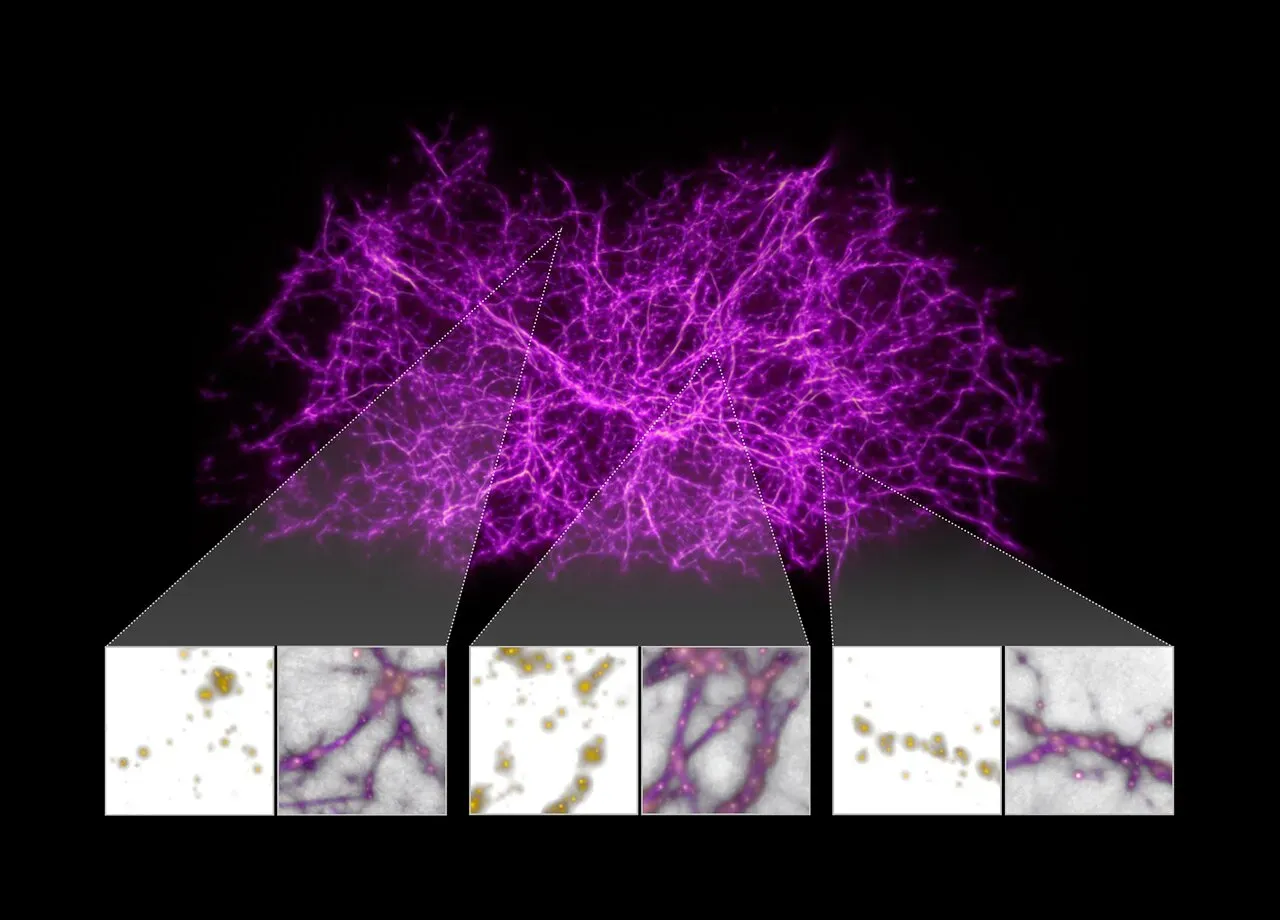
Not all multiverse ideas come from physics textbooks; some emerge from the intersection of computing, philosophy, and a nagging sense of digital déjà vu. The simulation hypothesis suggests that advanced civilizations could run detailed simulations of universes – perhaps for research, curiosity, or reasons we cannot imagine – and that our reality might be one such simulation. In this view, “other universes” might simply be other simulations running on the same unimaginable hardware, or earlier and later versions saved like files. It is a deeply unsettling possibility because it flips the usual direction of explanation: the laws of physics become rules of a program, and the deepest questions move from physics to whatever sits outside the simulation.
Most scientists regard the simulation hypothesis as speculative philosophy rather than testable science, but it has spurred real attempts to look for telltale signs. Some have wondered whether tiny irregularities in high-energy physics or cosmic rays could betray an underlying computational grid, like pixels in a cosmic screen. Others have argued that there may be no way, even in principle, to distinguish a sufficiently advanced simulation from a “base” reality. Personally, I find this one both fascinating and a bit of a mental trap; it is easy to get lost in spirals of what-ifs that do not lead to new experiments or theories. Still, the fact that serious thinkers are willing to entertain it shows how the multiverse conversation pushes us to rethink even the most basic assumptions about what it means for something to be real.
The Future Landscape: What Comes Next for Multiverse Science
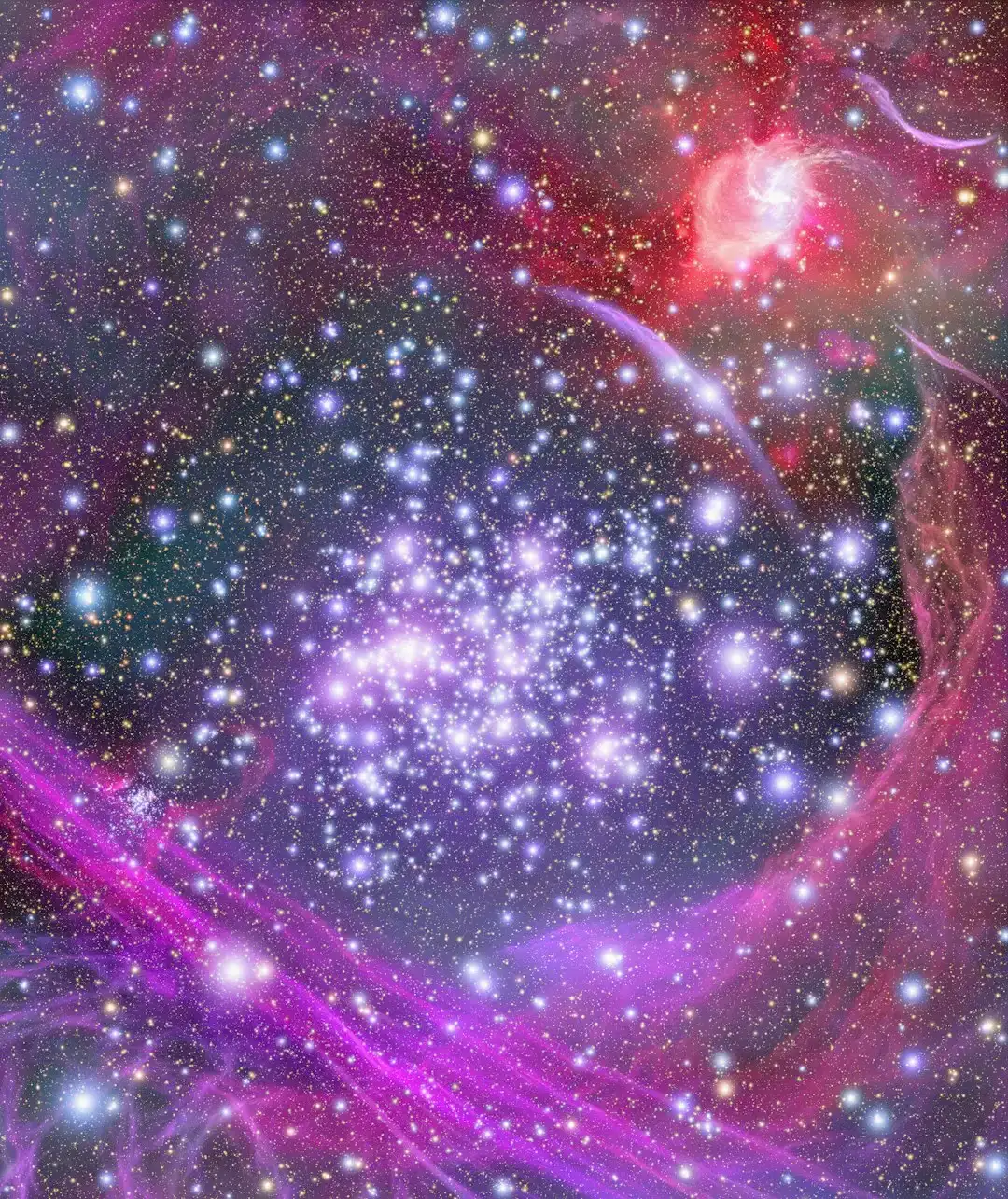
The next decade promises to be a kind of truth-stress-test for many multiverse-related ideas. New telescopes and surveys will map the sky with unprecedented precision, tracing the cosmic web of galaxies and tightening our measurements of dark matter and dark energy. Space missions designed to measure gravitational waves could, in principle, catch echoes from the very early universe, offering new windows into inflation or other exotic beginnings. On the quantum side, advances in quantum computing and quantum foundations might clarify which interpretations of quantum mechanics are most coherent and useful, indirectly affecting how seriously many-worlds and similar ideas are taken. Even small shifts in our understanding of fundamental physics can have outsized effects on multiverse models, either pruning them back or giving them new life.
At the same time, there is a growing conversation about the philosophy of science that surrounds these theories. Researchers are debating whether our traditional standards for testability and falsifiability need to evolve when dealing with phenomena that, by definition, lie beyond direct observation. That does not mean giving up rigor, but it may mean refining how we weigh indirect evidence, internal consistency, and explanatory power. We may also see more cross-pollination between cosmology, high-energy physics, information theory, and even philosophy departments as they tackle these overlapping questions. Whether the multiverse turns out to be a real feature of nature or a grand mirage, the effort to pin it down will almost certainly reshape the landscape of physics and cosmology for years to come.
Call to Action: How Curious Minds Can Engage with the Multiverse Debate

For something as vast and abstract as the multiverse, it is easy to feel like only specialists get a say, but the cultural and philosophical stakes make public engagement crucial. One simple step is to support and follow high-quality science journalism and outreach, where cosmologists and quantum physicists explain their work in accessible ways without dumbing it down. Public funding agencies and private foundations do pay attention to what citizens value, so showing interest in fundamental research – through attending talks, backing science museums, or even just clicking on in-depth articles instead of shallow headlines – helps keep ambitious projects alive. Classroom teachers and informal educators can also weave these ideas into lessons, using the multiverse as a hook to get students thinking about evidence, models, and the nature of scientific inquiry.
On a more personal level, engaging with the multiverse is an invitation to practice a kind of disciplined wonder. It means holding two thoughts at once: that these ideas are speculative and must be treated critically, and that exploring them can expand our sense of what is possible. You can read popular science books, listen to conversations with researchers, or join local astronomy clubs that often host talks about cosmology and fundamental physics. Even discussions over coffee or in online forums, when grounded in curiosity rather than conspiracy thinking, help normalize deep questions about reality as part of everyday culture. The multiverse may or may not exist, but using it as a lens to sharpen our critical thinking and sense of wonder is something everyone can do, right here in the one universe we know we share.
Suhail Ahmed is a passionate digital professional and nature enthusiast with over 8 years of experience in content strategy, SEO, web development, and digital operations. Alongside his freelance journey, Suhail actively contributes to nature and wildlife platforms like Discover Wildlife, where he channels his curiosity for the planet into engaging, educational storytelling.
With a strong background in managing digital ecosystems — from ecommerce stores and WordPress websites to social media and automation — Suhail merges technical precision with creative insight. His content reflects a rare balance: SEO-friendly yet deeply human, data-informed yet emotionally resonant.
Driven by a love for discovery and storytelling, Suhail believes in using digital platforms to amplify causes that matter — especially those protecting Earth’s biodiversity and inspiring sustainable living. Whether he’s managing online projects or crafting wildlife content, his goal remains the same: to inform, inspire, and leave a positive digital footprint.