
For more than a century, quantum physics has behaved like the stubborn detective story of science: every time researchers think they’ve solved the mystery, the plot twists again. At the smallest scales of nature, particles refuse to act like tiny billiard balls and instead follow rules that sound more like science fiction than sober laboratory work. Everyday logic buckles under phenomena like entanglement, superposition, and tunneling, yet the phones, lasers, and medical scanners we use rely on these very effects. As new experiments sharpen our view of the quantum world, the question is no longer whether reality is strange but just how far this strangeness goes. The ten ideas below do not just challenge intuition; they reshape what it means to say something is “real” at all.
The Double-Slit Experiment: When Particles Behave Like Ghosts
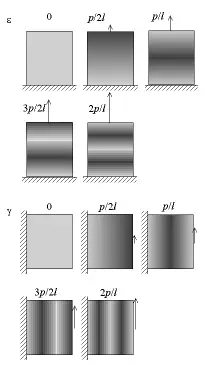
Imagine firing single electrons, one at a time, at a barrier with two narrow slits, the way you might toss pebbles at a fence. Common sense says each electron should pass through either the left slit or the right slit and land on a screen behind it in a tidy pattern. Instead, the electrons build up an interference pattern, as if each one were a spread-out wave traveling through both slits at once and interfering with itself. When scientists add detectors to check which slit each electron actually passes through, the interference vanishes and the pattern suddenly looks like ordinary particles again.
This single experiment, repeated in various forms with light, electrons, even large molecules, delivers a deeply unsettling message: the very act of measurement changes what happens. Before we look, quantum objects occupy a superposition of possibilities, not a single path. Once we ask the “which way” question, that hazy spread of options collapses into one concrete outcome. It is as if reality at the quantum level waits to decide what it will be until something forces it to choose.
Superposition: One Particle, Many Realities
In the quantum world, a particle can be here and there, spinning up and spinning down, all at the same time. This strange condition, known as superposition, is not just an abstract equation on a chalkboard; it is a real, measurable state confirmed in countless experiments with atoms, photons, and even tiny mechanical systems. Only when a measurement is made does the superposition “collapse” into a definite result, like a coin that was genuinely heads-and-tails-at-once suddenly landing as one or the other. That means the outcome we see is not predetermined in the way a hidden coin already has a face, waiting to be revealed.
Scientists have pushed superposition to ever larger scales, creating states in which a current in a superconducting loop flows clockwise and counterclockwise simultaneously. These delicate configurations are the foundation of quantum bits, or qubits, in emerging quantum computers. Unlike a classical bit that is either zero or one, a qubit can be in a blend of zero and one, allowing future machines to try many possibilities in parallel. The practical world, from cryptography to chemistry, is starting to feel the direct consequences of this many-realities-at-once behavior.
Entanglement: Spooky Connections Across the Cosmos
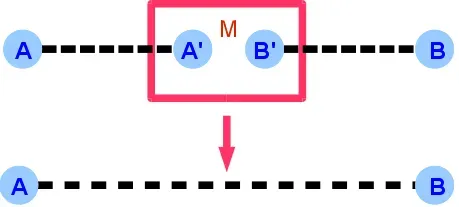
Quantum entanglement binds particles together so tightly that their properties remain linked no matter how far apart they travel. Measure the state of one entangled particle, and you instantly know the state of its twin, even if it has been flown to the other side of the planet. This correlation is not just a matter of shared history; experiments closing loophole after loophole have shown that no ordinary signal traveling at or below the speed of light can explain the results. Nature appears to be coordinating outcomes in a way that defies classical locality.
Physicists once argued bitterly over whether entanglement pointed to hidden variables, faster-than-light influences, or a deep incompleteness in quantum theory. Careful tests of Bell’s inequalities, however, have repeatedly supported the quantum view and ruled out large classes of local hidden variable models. Today, entanglement is more than a philosophical headache; it is a working resource. Researchers are already using entangled photons for ultra-secure communication schemes and are building prototypes of quantum networks that might eventually knit together distant quantum computers in an “internet of entangled things.”
Quantum Tunneling: Slipping Through Impossible Barriers
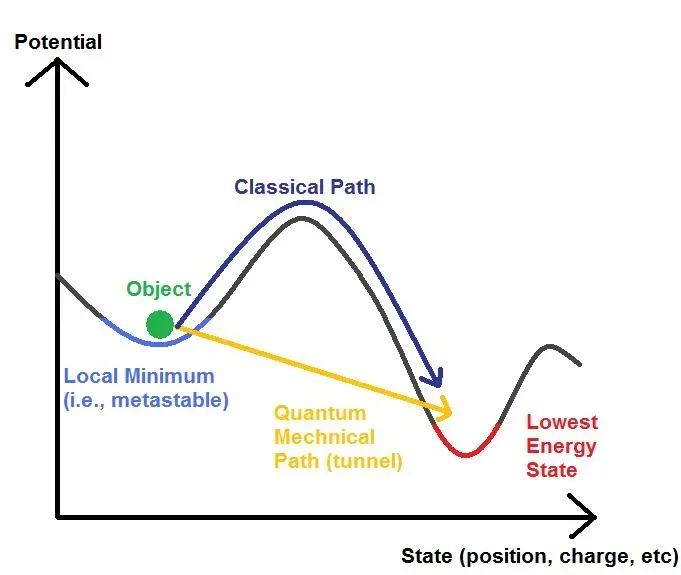
According to classical physics, a particle lacking enough energy to climb a barrier is stuck, the way a ball at the bottom of a hill cannot roll over the top without a push. Quantum particles routinely ignore this rule by “tunneling” through barriers they should not be able to cross. In quantum mechanics, a particle is described by a wave that has a chance of leaking through to the other side, and sometimes that chance becomes reality, as if the ball occasionally found itself magically on the far slope. This is not a rare curiosity but a fundamental process shaping stars and technology alike.
The Sun’s long life, for instance, depends on tunneling: protons in its core fuse because quantum tunneling lets them overcome their mutual repulsion far more often than classical physics would allow. Engineers quietly exploit the same effect in electronic components such as tunnel diodes and the flash memory that stores photos and documents. Even scanning tunneling microscopes, which image individual atoms on surfaces, rely on electrons tunneling between a sharp tip and a sample. A phenomenon that sounds like cheating the rules is, in practice, one of the main engines of the universe and modern devices.
Vacuum Fluctuations: Empty Space Is Not Empty
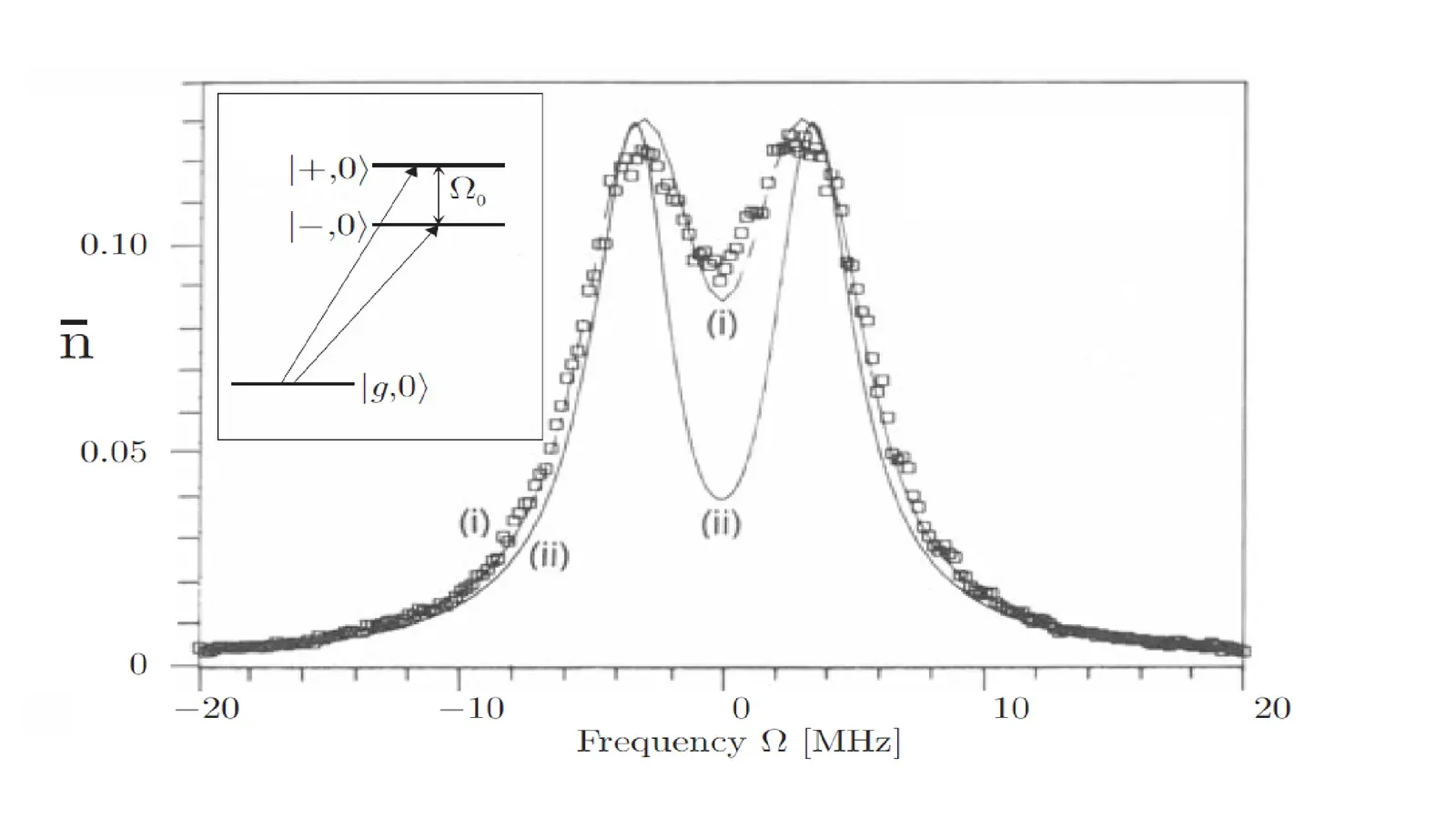
When people picture a vacuum, they tend to imagine a perfect void, an absolute nothingness between atoms and galaxies. Quantum field theory replaces that image with a far stranger one: space itself seethes with activity, with fields constantly jittering and spawning pairs of “virtual” particles that vanish almost as soon as they appear. These vacuum fluctuations are usually invisible, but their fingerprints show up in precise experiments. One famous example is the tiny force between two uncharged metal plates placed extremely close together, an effect that arises because the quantum vacuum treats the gap differently than the surrounding space.
The energy of the vacuum is not just a laboratory curiosity; it is woven into the structure of the cosmos. Observations of distant supernovae and the large-scale distribution of galaxies point toward a mysterious dark energy driving the accelerated expansion of the universe. While no one has a complete answer, some theories connect this dark energy to the vacuum energy predicted by quantum physics, although naive calculations overshoot the observed value by an absurd amount. That mismatch is one of the biggest unsolved puzzles in modern physics, a sign that our understanding of “nothing” is still profoundly incomplete.
Wave Function Collapse: Does Reality Need an Observer?
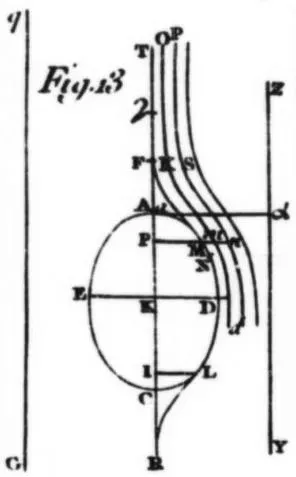
At the heart of quantum theory lies the wave function, a mathematical object that encodes all the possible outcomes of a system. Between measurements, the wave function evolves smoothly and deterministically, like a spreading ripple on a pond. When an observation is made, that spread-out wave abruptly “collapses” to a single result, and no consensus exists on what exactly causes this collapse. Some interpretations treat the wave function as a complete description of reality, while others see it as a tool for predicting probabilities, not a literal physical wave.
This debate leads to unsettling questions about the role of observers, information, and even consciousness in physics. Do measuring devices alone trigger collapse, or does the process extend all the way up to a conscious mind registering a result? Alternative interpretations, such as the many-worlds view, sidestep collapse entirely by suggesting that all outcomes occur in branching universes, but that raises its own dizzying implications. The fact that quantum theory predicts experimental results with breathtaking accuracy while leaving the nature of measurement so murky is part of what makes the field both powerful and philosophically restless.
Why It Matters: Quantum Rules Already Shape Everyday Life

For many people, quantum effects sound remote, like curious parlor tricks of subatomic particles that do not touch daily routines. In reality, modern life is saturated with technologies that only work because quantum mechanics is correct. Semiconductors in computers and phones rely on band structures and electron behavior that can only be explained with quantum theory. Lasers, which drive everything from supermarket scanners to high-speed internet links and eye surgeries, are built on the idea of stimulated emission, a quantum process inside atoms and solids.
Medical imaging, including MRI machines, depends on the quantum spins of atomic nuclei aligning and relaxing in magnetic fields. Even the color and efficiency of LED lights in homes and on city streets arise from carefully engineered quantum transitions in semiconductor materials. Without quantum mechanics, there would be no GPS-level precision, no compact digital storage, and no emerging quantum sensing devices that can detect minute magnetic or gravitational changes. The strange rules that once seemed like an abstract game now underpin the infrastructure of communication, medicine, and energy, quietly shaping what is possible in society.
Quantum vs. Classical Intuition: When Common Sense Breaks Down
Classical physics grew out of human-scale experiences with rocks, planets, and flowing water, so its laws mesh with everyday intuition. Quantum physics, by contrast, emerged from experiments on atoms and light that flatly contradicted classical expectations. In the classical world, objects have definite positions and speeds; in the quantum regime, uncertainty is baked in, and trying to pin down one quantity more precisely makes knowledge of the other fuzzier. The idea that observing a system can fundamentally change its state also clashes with the classical view of passive measurement.
These differences do not mean classical physics is wrong; it is an approximation that works brilliantly when dealing with large numbers of particles and macroscopic scales. The boundary between classical and quantum behavior, however, is not as sharp as textbooks once suggested. Experiments have coaxed larger and larger objects into displaying quantum properties like interference and entanglement, blurring the line between the microscopic and the familiar. As researchers learn to tame decoherence – the process by which quantum systems lose their strange traits when interacting with the environment – the gap between our common sense and the underlying rules of nature becomes impossible to ignore.
The Future Landscape: Quantum Technologies and New Frontiers
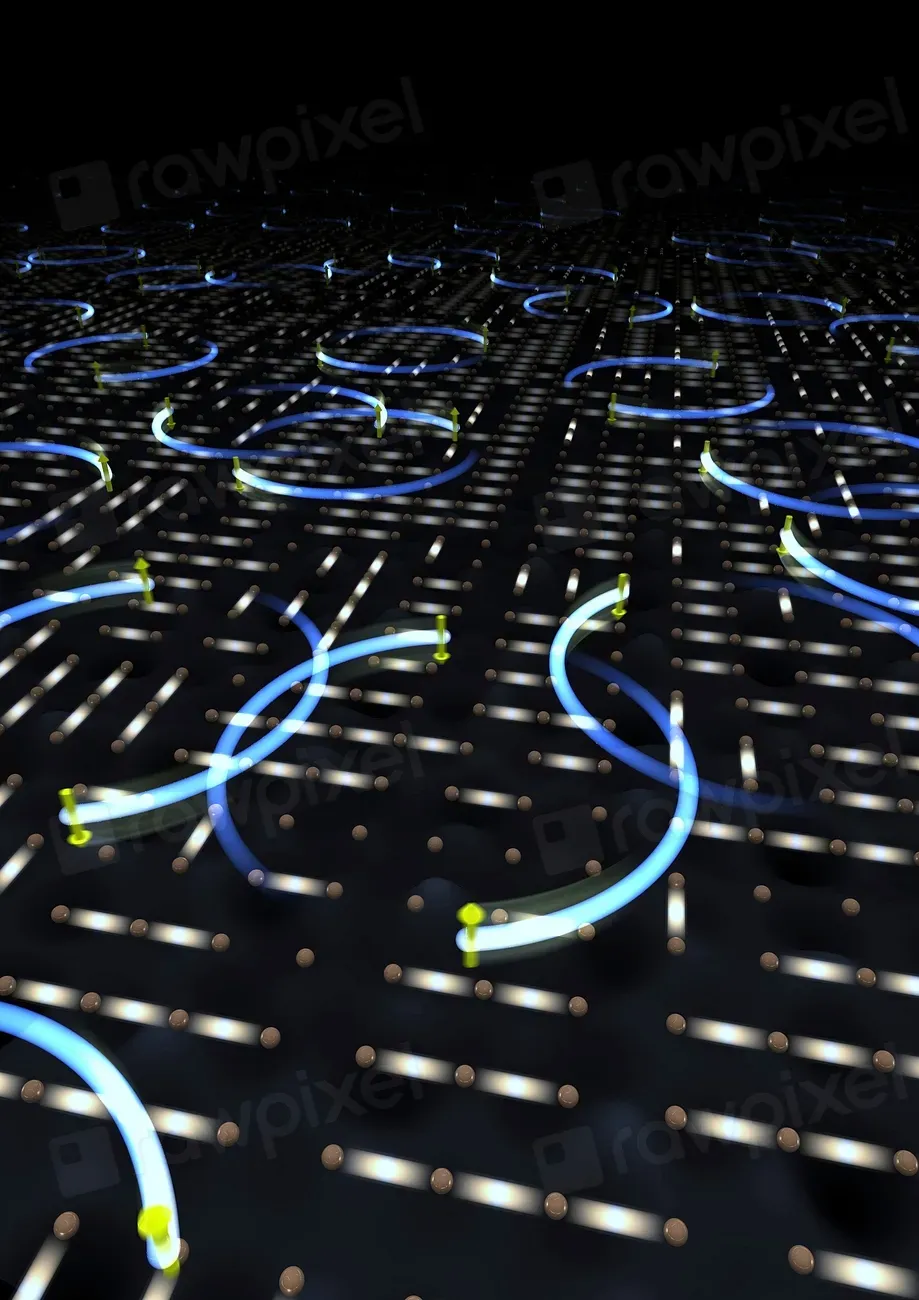
The next few decades are poised to turn quantum weirdness from a laboratory spectacle into a full-fledged technological ecosystem. Quantum computers, though still in early development, have already demonstrated that they can perform certain specialized tasks in ways that would challenge even the fastest classical supercomputers. Researchers are exploring how such machines might help design new drugs, optimize complex logistics, or simulate materials that are too intricate for current methods. Alongside computing, quantum communication systems promise encryption methods rooted in the laws of physics rather than human-made codes.
Quantum sensors are another rapidly advancing frontier, with devices being developed to map underground structures, monitor brain activity, and measure gravitational variations with unprecedented sensitivity. These tools could transform fields as diverse as archaeology, medicine, and climate science. At the same time, the race to build and control quantum hardware raises tough questions about standards, security, and global access. Just as the classical digital revolution reshaped economies and geopolitics, the quantum era could redraw the map of technological power, depending on how widely and wisely its benefits are shared.
How You Can Stay Curious in a Quantum World
Quantum physics may feel distant, but there are simple ways to engage with this strange layer of reality without needing a PhD. Popular science books, documentaries, and online lecture series can offer approachable explanations, and many universities and research institutes now share public talks that unpack new discoveries in plain language. Museums and science centers often feature exhibits on atoms, light, and the universe that quietly introduce quantum ideas through hands-on experiences. Even following reputable science outlets can help you spot when a headline about “quantum leaps” or “spooky action” reflects real progress rather than hype.
If you’re inclined to go a bit deeper, community college courses or online classes in basic physics and mathematics can provide enough background to appreciate how quantum theory fits into the broader scientific picture. Supporting science education initiatives, voting for leaders who value research funding, or encouraging younger family members to stay curious about how the world works all contribute to a culture that takes fundamental questions seriously. Quantum physics shows that reality is richer and stranger than everyday appearances suggest, and choosing to stay engaged with that mystery is a quiet but powerful act of curiosity.
Suhail Ahmed is a passionate digital professional and nature enthusiast with over 8 years of experience in content strategy, SEO, web development, and digital operations. Alongside his freelance journey, Suhail actively contributes to nature and wildlife platforms like Discover Wildlife, where he channels his curiosity for the planet into engaging, educational storytelling.
With a strong background in managing digital ecosystems — from ecommerce stores and WordPress websites to social media and automation — Suhail merges technical precision with creative insight. His content reflects a rare balance: SEO-friendly yet deeply human, data-informed yet emotionally resonant.
Driven by a love for discovery and storytelling, Suhail believes in using digital platforms to amplify causes that matter — especially those protecting Earth’s biodiversity and inspiring sustainable living. Whether he’s managing online projects or crafting wildlife content, his goal remains the same: to inform, inspire, and leave a positive digital footprint.