

There’s something oddly uncomfortable about quantum physics. It pokes holes in the neat picture of reality most of us grow up with: solid objects, clear causes, predictable effects. Then quantum theory shows up like a plot twist, whispering that particles can be waves, events can be random, and reality itself might depend on whether we look at it.
I still remember the first time I learned that a particle can be in several places at once until it’s observed. It felt less like science and more like a magic trick that no one had bothered to explain. Yet over a century of experiments keep confirming the same weird message: the universe on the smallest scales doesn’t play by our common-sense rules – and it’s that very weirdness that makes our modern world of lasers, chips, and MRI machines possible.
1. Particles Can Be In Two Places At Once (Superposition)
Imagine flipping a coin and, instead of it being either heads or tails in the air, nature actually keeps it in a strange blend of both until it lands in your hand. That’s roughly what quantum superposition is like: an electron doesn’t choose a definite state until it’s measured. In experiments with electrons, photons and even large molecules, researchers consistently find that these objects behave as if they occupy multiple states or paths simultaneously.
This isn’t just an abstract idea in a textbook; superposition is what makes quantum computers more powerful than classical ones for certain tasks. A quantum bit, or qubit, can be in a superposition of zero and one at the same time, which means a collection of qubits explores many possible solutions in parallel. It’s as if a maze runner could try every pathway at once instead of walking them one by one, then reveal the winning path when you look.
2. Measuring Something Can Change What It Is
In quantum physics, just looking can be enough to change the outcome. When scientists send particles like electrons or photons through a pair of slits, the pattern they form depends on whether anyone “checks” which slit they go through. Without measurement, they act like waves and create an interference pattern; when their paths are observed, they behave like individual particles and the interference vanishes.
This is not about clumsy instruments bumping into things; even ultra-gentle, carefully designed measurements still change the result. The act of measurement forces the system to “pick” one of the many possibilities allowed by quantum rules. It’s a bit like asking someone to state a clear opinion: the moment they commit to an answer, all the other options they might have held in mind disappear, and you’re left with a single, definite outcome.
3. Quantum Entanglement Links Particles Across Vast Distances
Quantum entanglement is often described as a kind of spooky connection, and honestly, that’s not far off emotionally from how it feels. When two particles become entangled, their properties are tied together so strongly that measuring one instantly tells you something about the other, no matter how far apart they are. Experiments have demonstrated this link over distances stretching from labs on opposite sides of cities to satellites high above Earth.
What’s wild is that this correlation shows up faster than any signal could travel between them, yet it doesn’t let us send information faster than light in any useful way. The universe somehow allows these instant correlations while still respecting the cosmic speed limit for communication. Entanglement is now being harnessed in real technologies, from quantum cryptography for ultra-secure communication to proposals for future quantum networks that could one day form the backbone of a “quantum internet.”
4. Reality Can Be Both Wave And Particle At The Same Time
For most of human history, waves and particles were two completely different things: waves were like ripples on a pond, particles were like pebbles you could hold. Quantum mechanics calmly disagrees and says that light and matter can behave as both, depending on how you test them. In some experiments, light travels in straight lines and hits detectors like tiny bullets; in others, it spreads out and interferes with itself like a wave.
This dual personality shows up not just for light, but for electrons, atoms, and even large molecules with hundreds of atoms. The exact same object can leave a particle-like mark on a screen yet also produce a wave-like interference pattern when given enough room and time. It’s as if a single person could leave one set of footprints in the sand while simultaneously creating overlapping ripples in the water with every step.
5. Quantum Tunneling Lets Particles Walk Through Walls

Classically, if you don’t have enough energy to climb over a hill, you’re stuck – no amount of wishful thinking gets you through. Quantum mechanics, however, gives particles a nonzero chance of appearing on the other side of a barrier even when they lack the energy to cross it. This is quantum tunneling: instead of slamming into the wall and bouncing back, the particle’s wave-like nature allows it to “leak” through.
This effect is not a tiny curiosity buried in obscure experiments; it’s central to how the Sun shines. Inside stars, hydrogen nuclei fuse into helium at rates that rely heavily on tunneling to overcome their mutual electric repulsion. On Earth, tunneling is the principle behind some types of microscopes that can see individual atoms and behind the components in modern electronics that rely on thin barriers only a few atoms thick.
6. The Future Can Limit What Happens In The Past (In A Way)
Some quantum experiments suggest that choices made in the present can influence how we describe what happened earlier. In delayed-choice setups, scientists decide whether to measure particles like waves or particles only after they’ve already passed through an experimental setup. Strangely, the results behave as if the system “decided” in the past to act like a wave or particle based on that later measurement choice.
This doesn’t mean we can rewrite history or send messages to the past, but it does blur the neat line we draw between cause and effect. Instead of events unfolding in a simple chain, quantum theory treats the whole experimental arrangement – past, present, and measurement – like one connected story. The idea that the universe might only “lock in” certain details when all the relevant conditions, including future choices, are known feels deeply counterintuitive, yet the math and experiments keep lining up with that view.
7. True Randomness Exists At The Quantum Level
People often say something is random when they just don’t know the cause, like a shuffled deck of cards or a roll of the dice. Underneath, though, classical physics suggests that if you knew every detail perfectly, you could in principle predict what would happen. Quantum mechanics throws a wrench into that comforting idea by saying that some outcomes really are fundamentally unpredictable, no matter how much you know.
When an unstable atom decays, for example, there’s no hidden timer counting down inside it that we just haven’t found yet. Instead, there’s only a probability that it will decay in a given interval, and the exact moment it happens is essentially drawn from nature’s own lottery. This kind of built-in randomness is now used to generate truly unpredictable numbers for cryptography, turning one of the strangest features of the quantum world into a practical tool for keeping data safe.
8. Quantum Physics Powers The Tech You Use Every Day
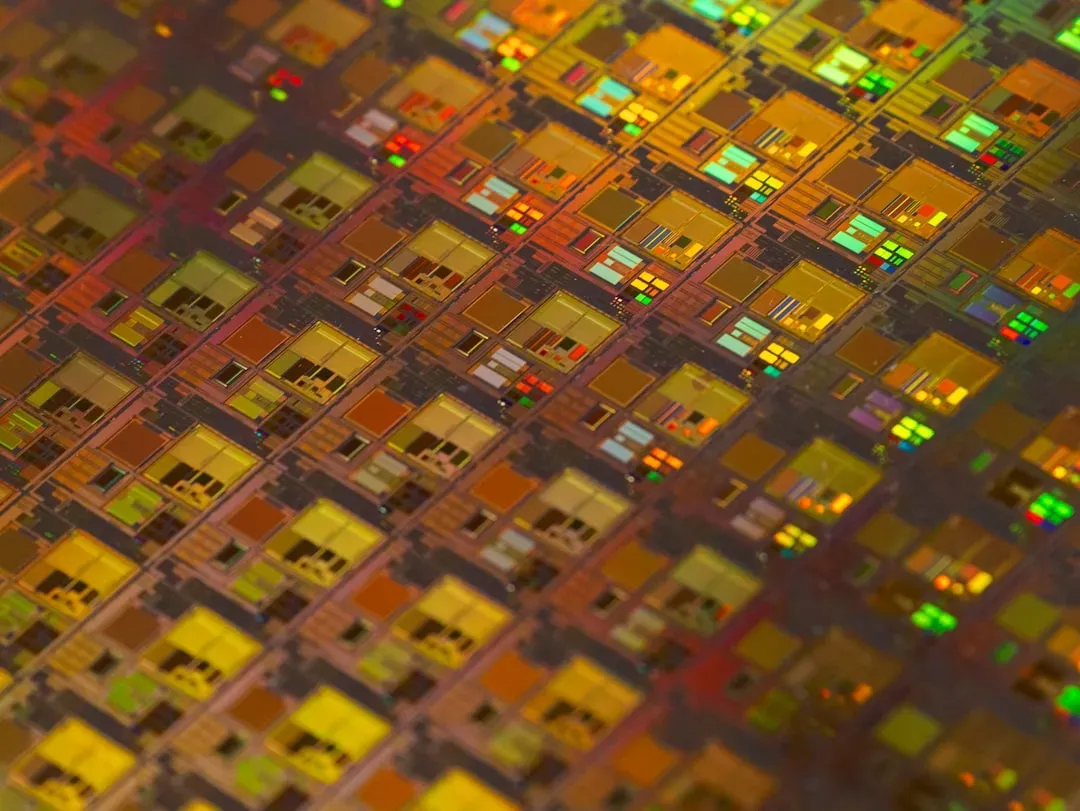
Quantum mechanics might sound like a collection of bizarre thought experiments, but it quietly runs the modern world behind the scenes. The tiny transistors that make up computer chips rely on quantum rules to control how electrons move through materials, and the laser in a barcode scanner or a fiber-optic network is a direct application of quantum ideas about how atoms emit light. Without quantum theory, we wouldn’t have LEDs, MRI machines, or the precise atomic clocks that keep GPS systems accurate.
Even though we tend to imagine quantum physics as remote and abstract, it’s more like the hidden operating system underneath our everyday devices. Engineers design semiconductors by calculating energy levels and electron behavior that only make sense if you accept that particles are also waves. Every time your phone connects, your bank encrypts a transaction, or a doctor reads a scan of your brain, you’re watching quantum theory quietly doing its job in the background.
9. Large Objects Can Show Quantum Behavior Too (At Least Briefly)
It’s easy to assume quantum weirdness lives only in the realm of tiny things, but researchers keep pushing the boundary of how big something can be and still behave quantum mechanically. Scientists have managed to place molecules made of dozens or even hundreds of atoms into superposition, sending them through interferometers where they act like waves. More recently, experiments have cooled small mechanical objects, like vibrating membranes or tiny cantilevers, down to near their quantum ground state.
In these ultra-cold, ultra-isolated setups, even objects that you can almost see with the naked eye can show behavior that needs quantum mechanics to explain. The challenge is that as things get larger, they interact more with their environment, and those interactions tend to destroy fragile quantum states quickly. Still, every step in this direction chips away at the idea that there’s a hard border between the quantum and everyday worlds, suggesting instead that classical reality might just be quantum behavior averaged out and blurred by constant interaction.
10. No One Fully Agrees What Quantum Mechanics “Really Means”
Here’s the twist that might be the most unsettling of all: despite more than a century of successful predictions, there’s no single, universally accepted answer to what quantum mechanics is telling us about reality. Different interpretations offer wildly different pictures. Some say the wave function is just a tool for calculating probabilities, others argue that the universe splits into countless branches every time a measurement happens, and still others suggest that reality is defined by information and relationships rather than solid objects.
What they all share is the same underlying math, which keeps matching experiments with uncanny precision, even as physicists debate what the math means. It’s a bit like everyone using the same GPS system to get around while fiercely disagreeing on the true shape of the map. For now, quantum theory is both the most precisely tested framework in all of science and one of the most philosophically puzzling, leaving us to live in a world built on rules we can use brilliantly but still struggle to truly picture.
Quantum mechanics doesn’t just tweak a few details of classical physics; it forces us to rethink what we mean by reality, information, and even existence itself. It’s as if we peeled back the surface of everyday life and found a surreal, shimmering machinery humming underneath, utterly alien and yet completely reliable. When you look around your room now, knowing that every object is quietly obeying these bizarre rules, does the world feel a little different?


