
If you’ve ever had the feeling that reality is a lot stranger than it looks, quantum physics is basically the universe’s way of saying: you’re absolutely right. Beneath the solid, predictable world of chairs, cars, and coffee mugs lies a realm where particles act like waves, effects show up before causes make sense, and empty space seethes with invisible energy.
What’s wild is that these ideas aren’t just late-night philosophy. Over the last decades, and especially in the years leading up to 2026, experiments have pushed quantum theory from “weird but theoretical” to “weird and very real,” with technologies like quantum computers, ultra-secure communication, and even new states of matter. Let’s walk through ten of the most mind-bending quantum discoveries that don’t just tweak our understanding of reality but completely rearrange it.
1. Wave–Particle Duality: When Light Won’t Pick a Side
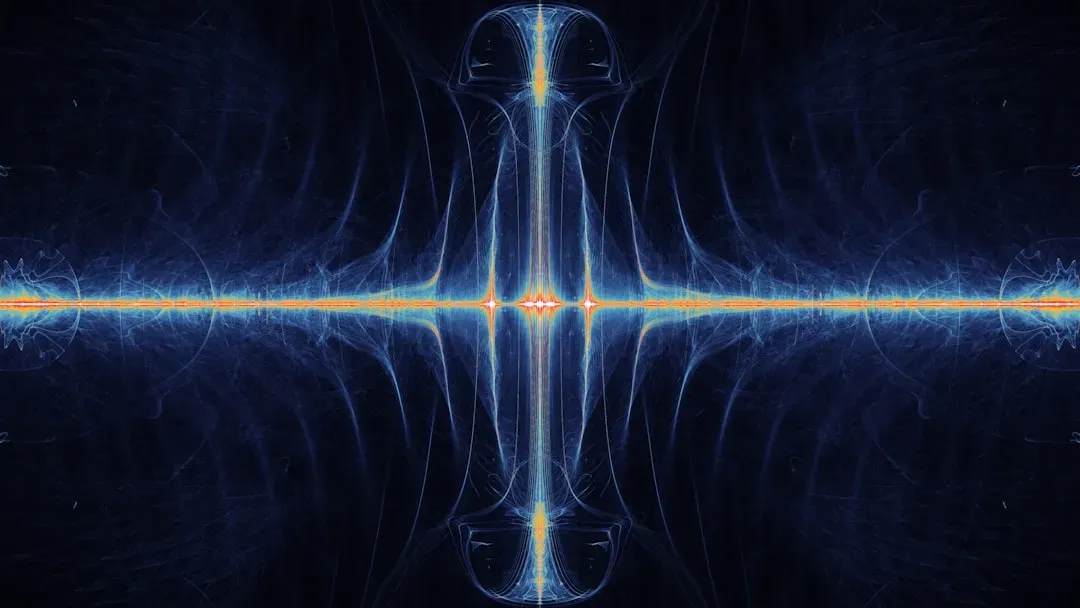
Imagine being asked whether you’re an introvert or extrovert and the honest answer is “both at the same time, depending on how you look at me.” That’s roughly what light and matter do at the quantum level. In classic experiments like the double-slit experiment, light behaves like a spread-out wave when no one checks which path it takes, yet it shows up as individual particle-like hits on a screen when measured more directly.
Later work showed that not just light, but electrons and even large molecules can show this wave–particle duality. In the past couple of decades, researchers have sent molecules made of dozens of atoms through double-slit-style setups and still seen wave-like interference. The takeaway is unsettling: the universe doesn’t seem to decide “what something is” in the classical sense until we interact with it in a specific way. Reality, at small scales, is less like rigid Lego bricks and more like a flexible cloud of possibilities that hardens only when touched.
2. Quantum Superposition: Existing in Many States at Once
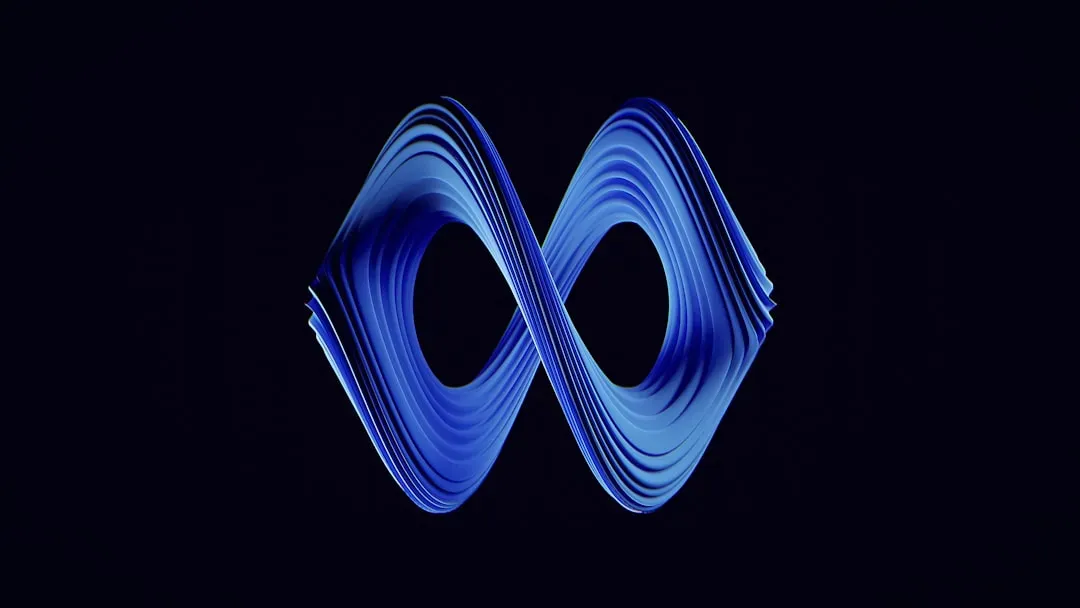
Quantum superposition is the idea that a particle can be in several states at the same time until it’s measured. It sounds like science fiction, but it’s the central working principle of every quantum computer being built today. A quantum bit, or qubit, isn’t just zero or one; it lives in a blend of zero and one simultaneously, described by a wave of probability rather than a single definite value.
Over the past years, labs have demonstrated superpositions in systems far larger than a single particle, including vibrating membranes and electrical currents in tiny circuits. Some experiments have even pushed toward objects that are microscopic but still huge compared to atoms. The eerie implication is that “being in multiple states at once” isn’t just a trick of isolated particles; it’s a general feature of nature that only collapses into a single outcome when the environment, or an observer, forces a choice.
3. Quantum Entanglement: Spooky Links Across Space
Quantum entanglement is like the universe’s version of an unbreakable secret handshake between particles. When two particles become entangled, their properties are linked so strongly that measuring one instantly determines the outcome for the other, no matter how far apart they are. It doesn’t transmit usable information faster than light, but it does smash any simple picture of particles as independent, local objects.
In 2022, the Nobel Prize in Physics recognized decades of experiments that closed loopholes and confirmed that entanglement is real and cannot be explained by hidden local variables. Since then, researchers have entangled particles over distances spanning cities, through fiber networks, and even between ground stations and satellites in orbit. Entanglement has gone from philosophical headache to engineering tool, forming the backbone of quantum communication networks and early versions of a “quantum internet” that’s slowly moving from whiteboard diagrams into prototype hardware.
4. Quantum Teleportation: Moving States, Not Stuff
Quantum teleportation sounds like Star Trek, but in reality it’s subtler and, in some ways, even stranger. Nothing material disappears from one place and reappears in another; instead, the precise quantum state of a particle is transferred from one location to another using entanglement and classical communication. The original state at the sending end is destroyed in the process, while an identical state appears at the receiving end.
Scientists have used teleportation to send quantum states across laboratory tables, along city fiber networks, and between ground stations and satellites separated by hundreds of kilometers. This is a key ingredient for scaling up quantum networks and connecting distant quantum computers. The mind-bending part is philosophical: what does it mean that the “identity” of a quantum system can be reconstructed somewhere else, while the original is erased, using nothing but correlations and a few bits of classical information?
5. The Measurement Problem: Does Reality Need an Observer?
One of the deepest quantum puzzles is painfully simple to state: what exactly counts as a “measurement”? Quantum equations predict smooth, wave-like evolution of systems in superposition, but when we measure, we only ever see one concrete outcome. Somewhere between an electron and a blinking detector light, the spread-out wave of possibilities becomes a single reality, and no one fully agrees on how or why.
Different interpretations try to explain this in radically different ways. Some say the wavefunction really collapses; others propose that all outcomes happen in parallel branches of a multiverse. Recent experiments with increasingly complex systems, including “measurements of measurements” and setups where observers themselves become part of the quantum story, keep confirming the math but not settling the interpretation debate. The upshot is brutal and fascinating: we have a theory that predicts experiments with staggering accuracy, yet we still don’t have a universally accepted story of what’s actually happening when something is observed.
6. Vacuum Fluctuations: When Empty Space Isn’t Empty
In everyday life, “nothing” means nothing. In quantum field theory, “nothing” is more like a restless ocean. Even what we call a perfect vacuum is filled with fields that constantly jitter with tiny fluctuations. Particles can briefly pop into existence and vanish again, as long as the universe “balances the books” so quickly that conservation laws aren’t broken in any measurable way.
These vacuum fluctuations have real, measurable consequences. The Casimir effect, where two uncharged metal plates placed very close together feel a tiny attractive force, is explained by the way virtual particles and vacuum energy behave between and around them. Phenomena like the Lamb shift in atomic spectra and aspects of black hole radiation are also tied to this quantum foam. The idea that empty space is an active player, rather than a passive stage, turns our intuitive picture of the universe upside down.
7. Quantum Tunneling: Walking Through Walls (Sometimes)
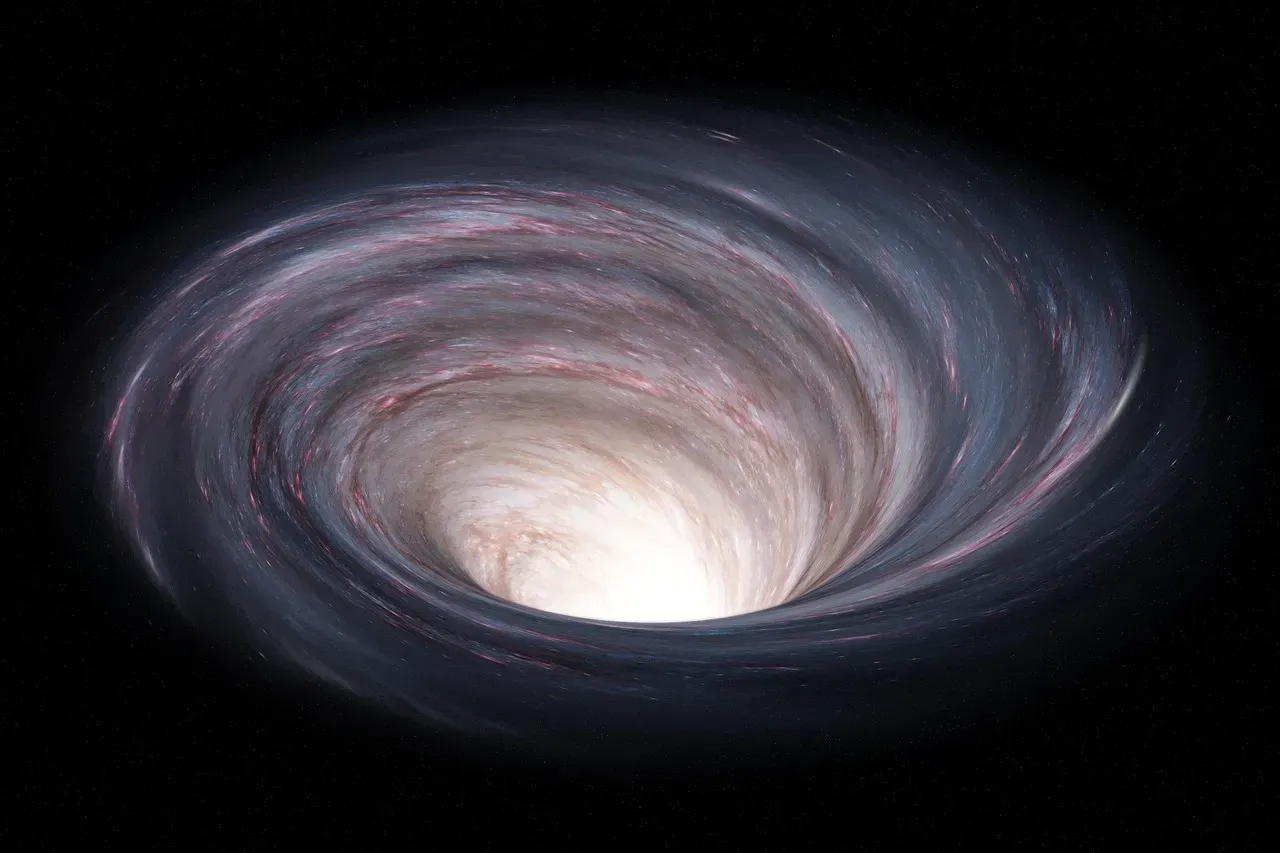
Quantum tunneling lets particles pass through barriers that, according to classical physics, they shouldn’t be able to cross. It’s as if you threw a ball at a wall and, every once in a great while, it simply appeared on the other side without breaking the wall or bouncing back. In quantum terms, the particle’s wavefunction has a small but nonzero chance of being found beyond the barrier, and occasionally reality rolls that unlikely outcome.
This isn’t just a curiosity; tunneling is woven into the fabric of the universe. The nuclear fusion that powers the Sun relies on particles tunneling through repulsive forces they don’t have enough energy to overcome directly. Modern technologies like flash memory and certain types of microscopes also lean on tunneling to function. The fact that “impossible” transitions can happen, given enough time and probability, hints that reality at small scales is more like a roulette wheel than a rigid machine.
8. Quantum Computing: Harnessing Weirdness for Power
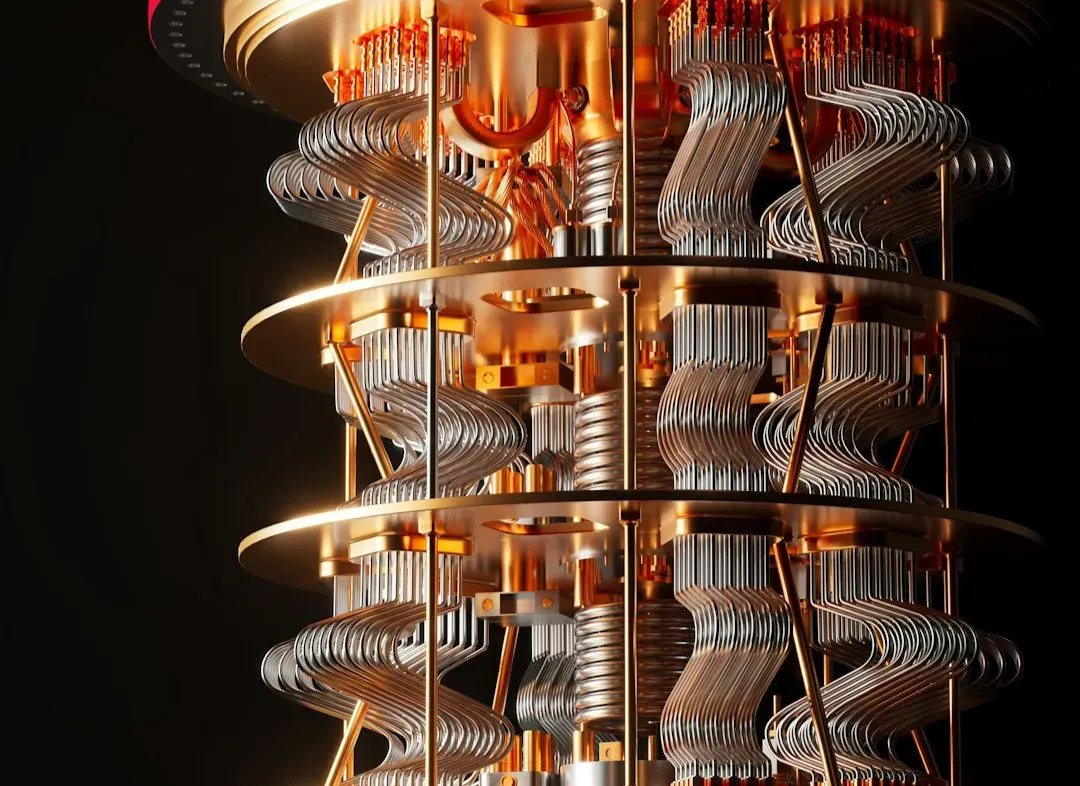
For decades, quantum strangeness felt more like a philosophical headache than a practical tool. Quantum computing flipped that narrative. By using superposition and entanglement, quantum processors can perform certain calculations in ways that scale far more efficiently than classical machines. Instead of checking one possible solution at a time, a well-designed quantum algorithm can explore a richly tangled space of possibilities in parallel.
In recent years, various companies and research groups have built quantum chips with dozens to hundreds of qubits, and early demonstrations have shown them performing niche tasks that would be extremely difficult for traditional supercomputers. The road to general-purpose, error-corrected quantum computers is still long and technically brutal, but progress has been steady, with new approaches to error correction, materials, and architectures emerging. The promise is enormous: breakthroughs in materials science, chemistry, optimization, and cryptography that are literally out of reach for classical hardware.
9. Quantum Communication and the Rise of the Quantum Internet
Quantum discoveries didn’t just rewrite physics textbooks; they’re slowly rewriting how information can move around the planet. Quantum key distribution uses the fragile nature of quantum states to detect any attempt at eavesdropping, offering a path to communication channels where interception is not just difficult but fundamentally detectable. If a spy tries to measure the photons carrying the key, they disturb the system and give themselves away.
Over the last decade, testbeds for quantum communication have appeared in major cities and between satellites and ground stations, stitching together early versions of a quantum network. Quantum repeaters, entanglement swapping, and teleportation protocols are being refined to cover longer distances and correct for noise. It’s still early, but the shift is clear: we’re moving toward an era where information security can be grounded in the laws of physics themselves, not just clever math and faster computers.
10. New Quantum Phases of Matter: Beyond Solid, Liquid, Gas
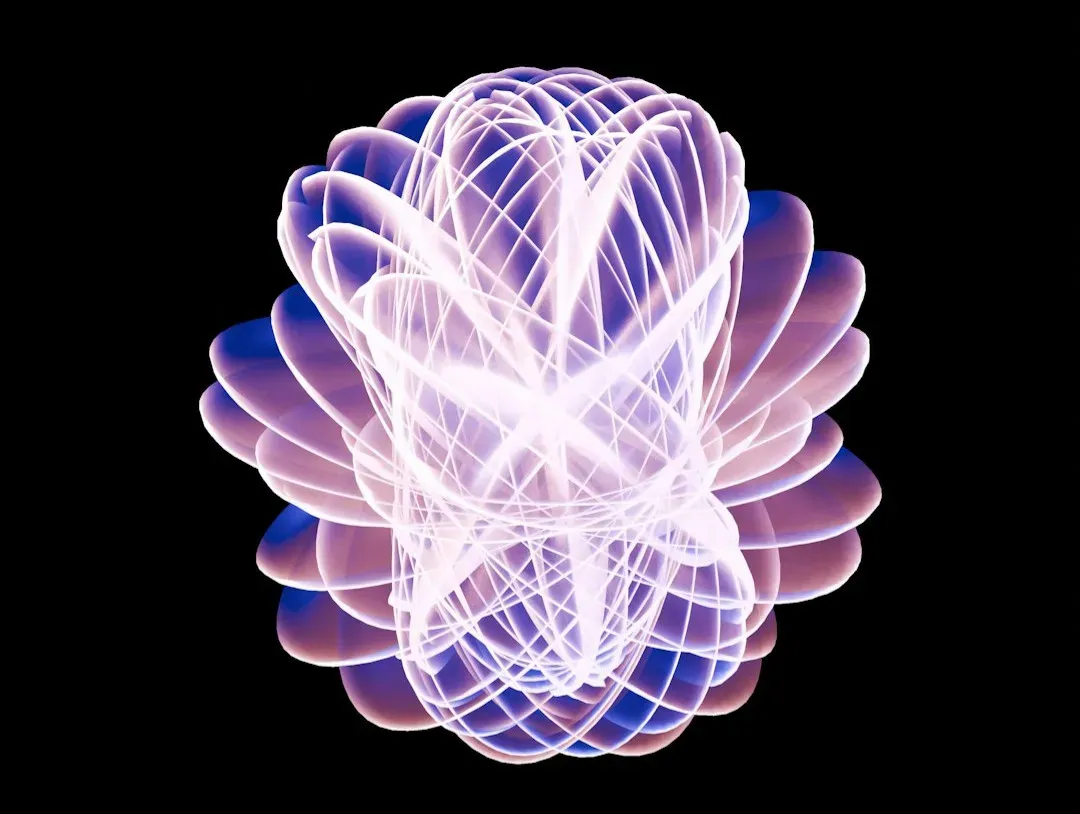
When most of us learned states of matter, the list was short: solid, liquid, gas, maybe plasma if your science teacher was enthusiastic. Quantum physics expanded that list dramatically. In ultra-cold labs, researchers have created exotic phases like Bose–Einstein condensates, where large numbers of atoms act as a single coherent wave, and topological phases, where patterns of quantum entanglement define the material’s properties more than the atoms’ positions do.
These strange phases have led to discoveries such as topological insulators, which are electrical insulators in their bulk but conduct on their surfaces in unusual, robust ways. There are also superconductors that carry electric current with essentially zero resistance and quantum spin liquids where magnetic order dissolves into a fluid of entangled spins. Beyond the technical jargon, the message is simple and stunning: by carefully tuning temperature, pressure, and interactions, matter can organize into forms that our everyday intuition never even hints at.
A Reality Stranger Than We Imagined
Stepping back from all of this, a pattern emerges that’s both humbling and exhilarating. The closer we look at the universe, the less it behaves like a tidy collection of solid objects following simple rules, and the more it looks like a shifting tapestry of probabilities, connections, and emergent patterns. Quantum discoveries have shown that particles can be waves, “nothing” can be full of energy, information can be teleported, and whole new kinds of matter can appear under the right conditions.
And yet, out of all this strangeness, our familiar world somehow arises: the coffee still pours, the bridges still stand, the phones still work. To me, that’s the part that feels almost magical, even though it’s grounded in hard math and painstaking experiments. We’re living at a time when quantum theory is moving from chalkboards into devices and networks that ordinary people might one day use without even knowing what’s under the hood. Knowing what you know now, does reality feel a little less ordinary than it did before?