
The universe has a habit of making you feel very small. You look up at the night sky, and what you see is just a thin sliver of reality – the visible, measurable, nameable part. The rest? A vast, humbling expanse of questions without answers. Scientists in 2026 have mapped galaxies billions of light years away, sent probes to the edges of our solar system, and split atoms into their tiniest constituents. Yet certain cosmic puzzles remain stubbornly, almost mockingly, unsolved.
Honestly, there is something thrilling about that. The universe does not owe us explanations. It simply exists, in all its strange and bewildering glory, daring us to figure it out. Some of the mysteries below have been studied for decades. Others are relatively new. All of them will leave you staring at the ceiling at two in the morning. Let’s dive in.
The Dark Matter Riddle: Most of the Universe Is Something We Cannot See
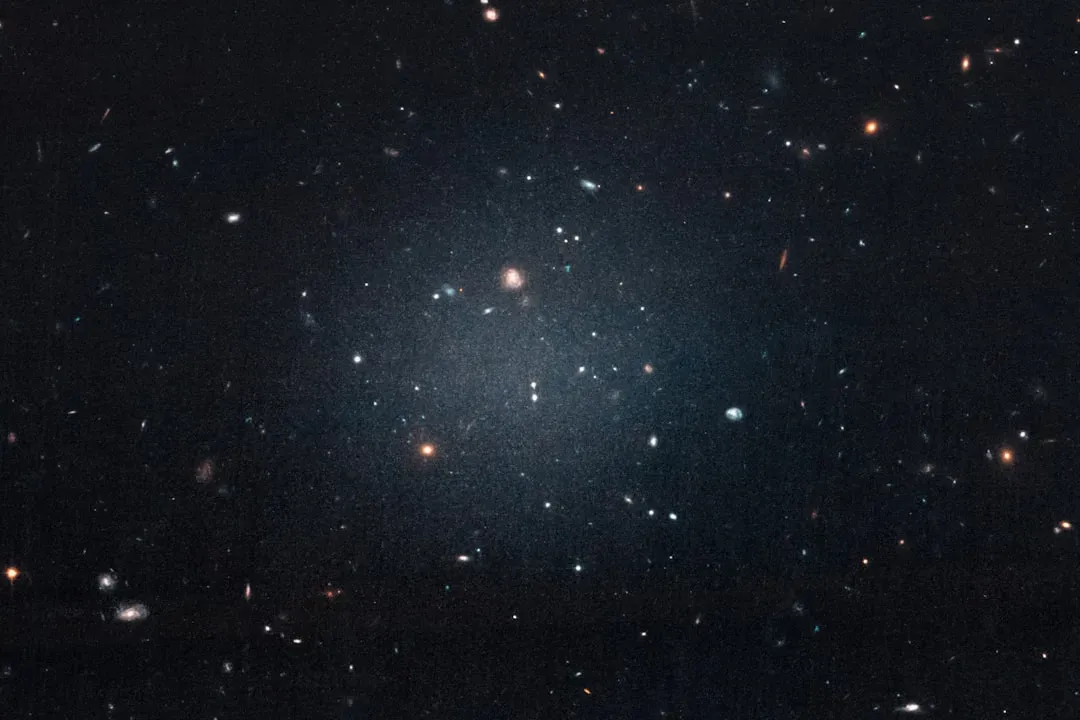
Here is a number that should stop you cold. Among the deepest unanswered scientific questions are those about the composition of the universe itself, and modern astronomy has revealed that everything we can see – planets, stars, gas, and dust – makes up less than 5% of the universe. Think about that for a second. Everything you have ever seen or touched, every planet in every solar system, every star blazing through every galaxy – it all adds up to a tiny sliver of what is actually out there.
Galaxies rotate faster than visible matter alone can explain, indicating the presence of an unseen mass exerting gravitational influence. This mysterious substance shapes galaxy clusters and cosmic structure on vast scales, yet it neither emits nor reflects light. Despite multiple detection experiments, dark matter has never been observed directly. The current leading contender for dark matter is a hypothetical particle called a Weakly Interacting Massive Particle, or WIMP, which would behave sort of like a neutron except would be between 10 and 100 times heavier than a proton. Decades of searching, and we still have nothing definitive. Not even a single confirmed particle. It’s the biggest ghost story in all of science.
Dark Energy: The Force Tearing the Universe Apart
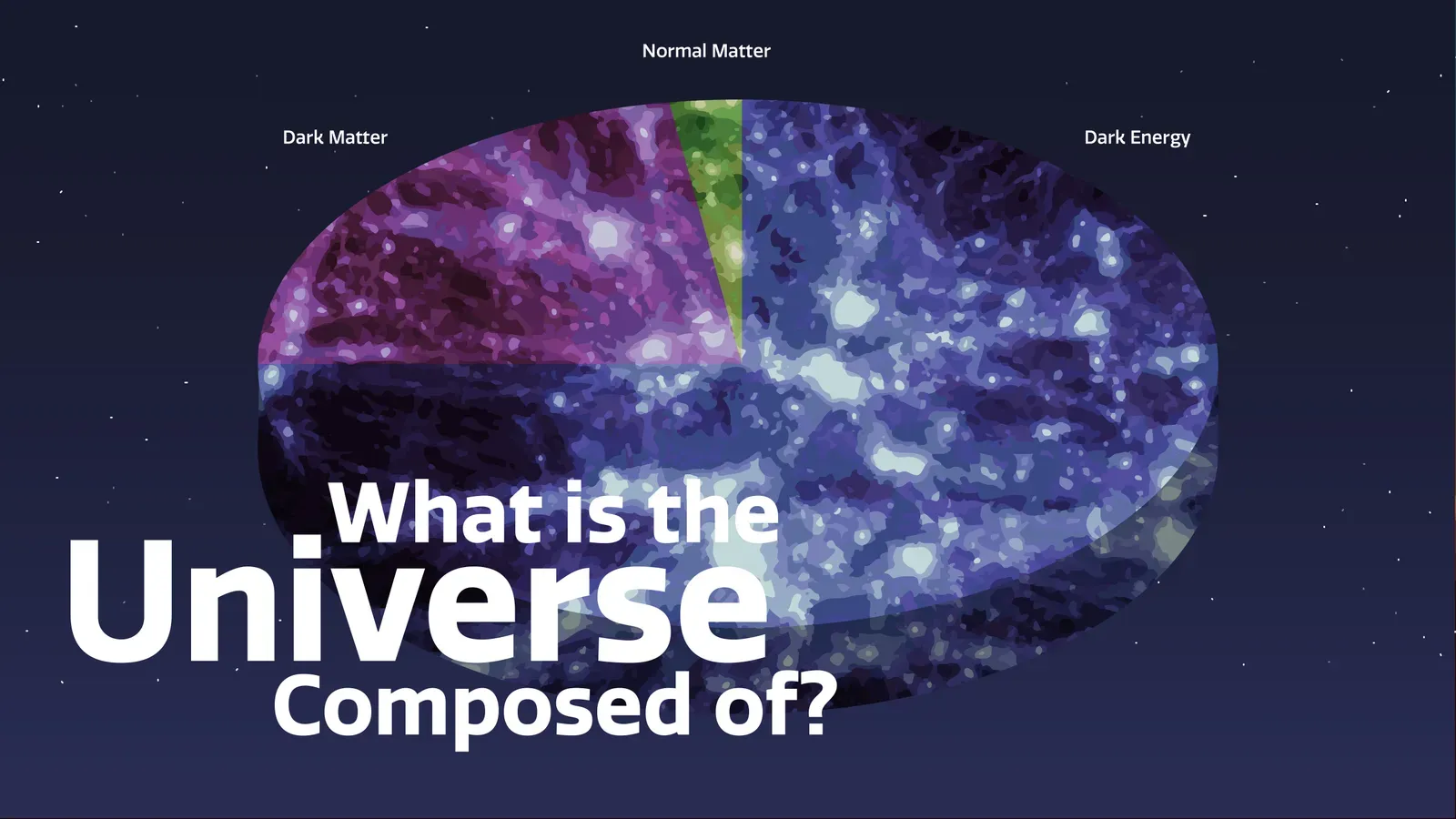
In 1998, astronomers made the shocking discovery that the universe’s expansion is accelerating – galaxies are flying apart from each other at an ever-increasing rate. This finding contradicted the expectation that gravity should gradually slow cosmic expansion. To explain this acceleration, physicists proposed the existence of dark energy, a mysterious force that pushes space itself apart. Let’s be real – that is one of the most unsettling discoveries in human history, and most people have no idea it happened.
Dark energy remains one of the most challenging topics in modern astronomy and cosmology. Since the discovery of the universe’s accelerating expansion in the late 1990s, scientists have recognized that conventional theories of gravity and ordinary matter cannot account for this phenomenon. A mysterious, unknown component of the cosmos – dark energy – must be driving the acceleration. Yet its true nature remains one of the greatest unsolved mysteries in modern physics. One possible explanation is a new kind of energy field, dubbed “quintessence,” that pervades the universe and can change over time. Whether that turns out to be true, nobody knows yet.
The Black Hole Information Paradox: What Happens to What Falls In?
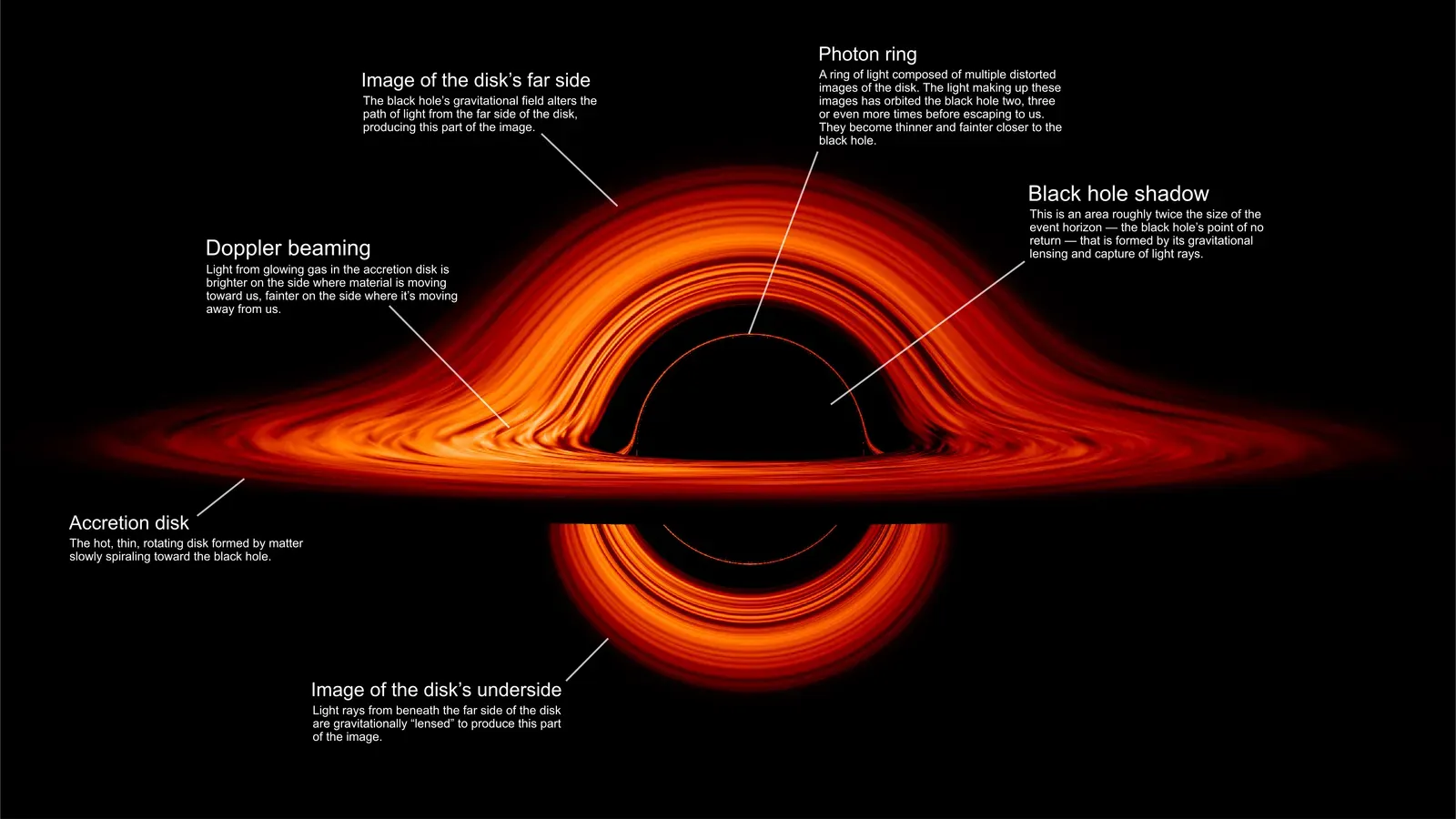
Beyond a black hole’s event horizon, current physics can no longer describe what happens to matter or spacetime. Theories predict singularities, where density becomes infinite, but such conditions break known physical laws. What truly exists inside a black hole remains one of the deepest cosmic questions. Think of it like this: you throw your diary into a black hole, and the universe’s own rulebook says it should be gone forever. That terrifies physicists, because physics also says information can never be truly destroyed.
The black hole information paradox asks whether black holes produce thermal radiation and, if black holes can eventually evaporate away, what happens to the information stored in them – since quantum mechanics does not provide for the destruction of information. Or does the radiation stop at some point, leaving black hole remnants? Another significant problem lies within the mathematical framework of the Standard Model itself, which remains inconsistent with general relativity. This incompatibility causes both theories to break down under extreme conditions, such as within spacetime gravitational singularities at the centers of black holes beyond their event horizons. Two of humanity’s greatest theories, and they flatly disagree with each other at the moment that matters most.
The Fermi Paradox: Why Is the Cosmos So Eerily Silent?
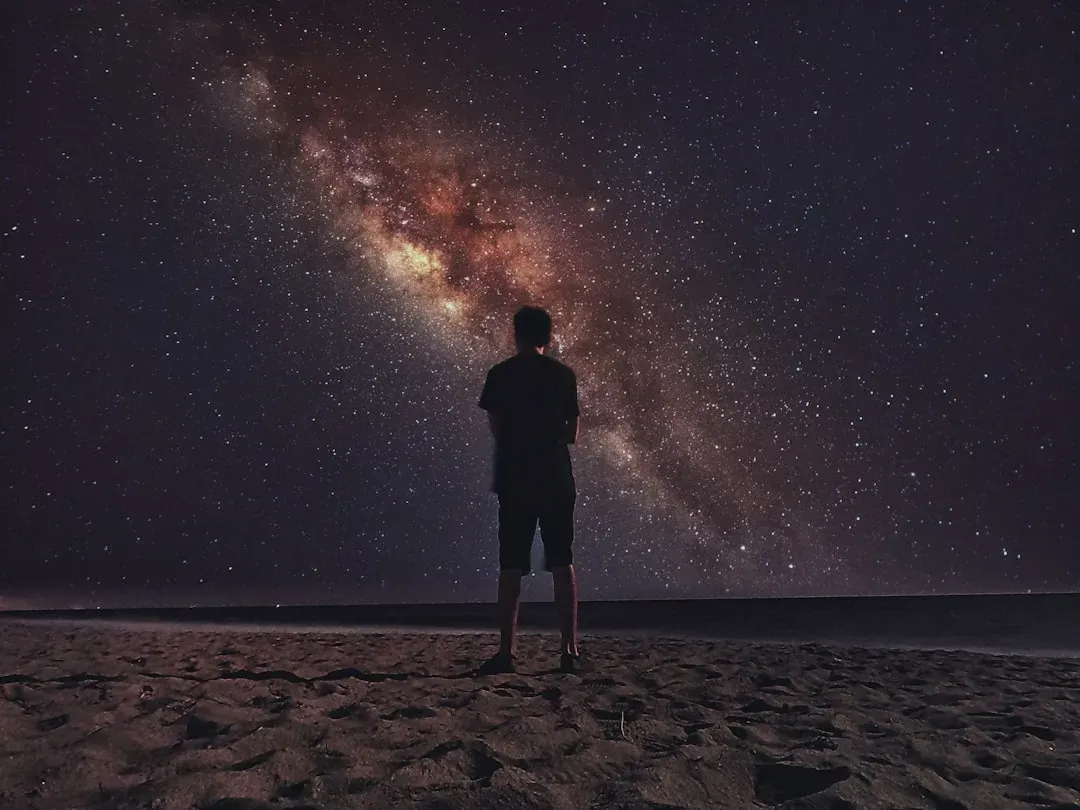
Given the vast number of potentially habitable planets, intelligent life should be common. Yet there is no clear evidence of extraterrestrial civilizations. This contradiction raises questions about whether life is rare, short-lived, or simply difficult to detect. In 1950, physicist Enrico Fermi sat down to lunch and reportedly asked his colleagues, in the most deceptively simple way imaginable: “Where is everybody?” That single question became the foundation for one of the deepest unsolved puzzles in all of science.
Understanding the Fermi Paradox is more than just an intellectual exercise – it has real implications for our future. If the so-called Great Filter lies behind us, meaning life itself is incredibly rare, then we may be one of the first intelligent civilizations. If the filter is ahead, meaning technological civilizations inevitably destroy themselves, then our survival is far from guaranteed. Aliens might not be broadcasting with radio waves, or they might be broadcasting on different frequencies than the ones we currently monitor. They might use neutrinos or lasers to communicate across the galaxy. Or maybe, the silence is the answer itself. That thought keeps many scientists up at night.
The Matter-Antimatter Asymmetry: Why Does Anything Exist at All?
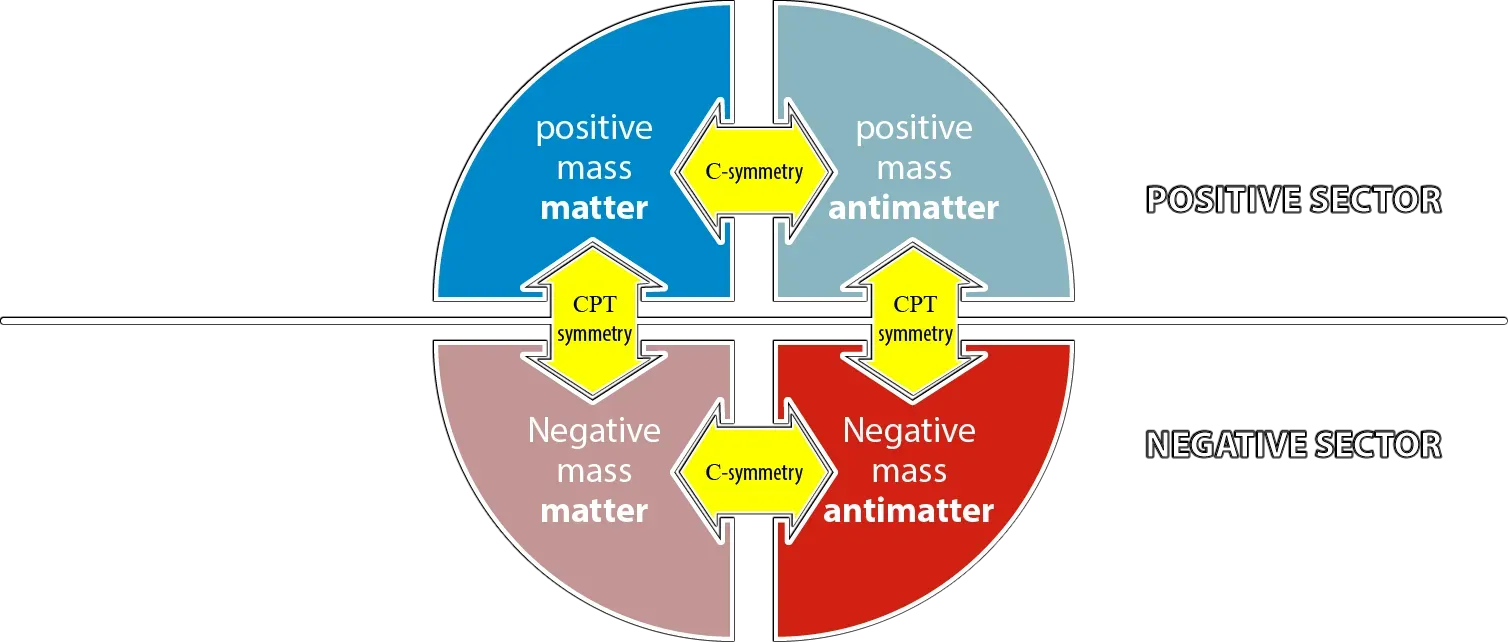
According to our best physical theories, the Big Bang should have produced equal amounts of matter and antimatter – particles with identical properties but opposite charges. When matter and antimatter meet, they annihilate each other completely, converting their mass to energy. This presents a profound puzzle: if equal amounts were created, why didn’t they completely annihilate, leaving a universe filled only with radiation? Instead, we observe a universe dominated by matter. You exist right now because of a tiny, unexplained imbalance in the early universe. That is a staggering thing to sit with.
Several competing hypotheses exist to explain the imbalance of matter and antimatter that resulted in baryogenesis. However, there is as yet no consensus theory to explain the phenomenon, which has been described as “one of the great mysteries in physics.” For matter to prevail, there must be some subtle difference between matter and antimatter beyond their opposite charges. Physicists call this difference “CP violation” and have observed small examples of it in particle physics experiments. The amounts observed so far are nowhere near enough to explain our existence. The math simply does not add up – and yet, here we are.
The Hubble Tension: The Universe Cannot Agree on How Fast It Is Expanding
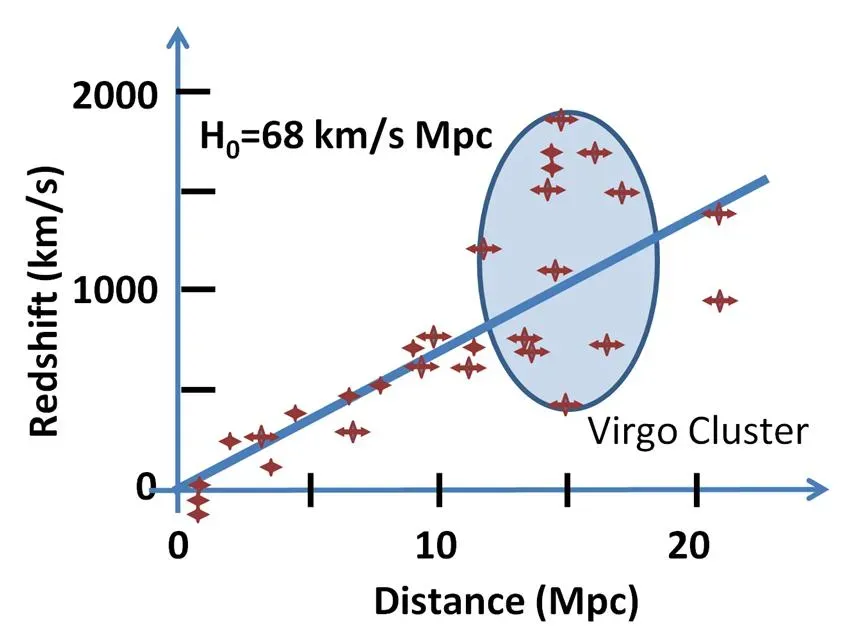
The “Hubble Tension” refers to a conflict between two mathematical constants in the universe’s current expansion rate, which arises from looking at distant stars and supernovae. Picture two equally trustworthy measuring tapes measuring the same table, and one says 6 feet, the other says 7. Both measurements are done carefully. Both teams are confident. The table cannot be two different sizes. Something in our understanding of the cosmos is fundamentally broken.
A study by MIT physicists proposed that a mysterious force known as early dark energy could solve two of the biggest puzzles in cosmology, one of which is the “Hubble tension,” which refers to a mismatch in measurements of how fast the universe is expanding. Fresh analyses in 2025 argue that the Milky Way may sit within a billion-light-year-scale underdensity, about 20% less matter than average. That placement could help explain the Hubble tension, where local expansion measurements run faster than those inferred from the early universe. By re-examining two decades of baryon acoustic oscillation data, researchers showed that a local-void model can reduce the tension dramatically. Whether that is really the answer, however, remains hotly debated among cosmologists.
Fast Radio Bursts: Millisecond Flashes That Defy Explanation
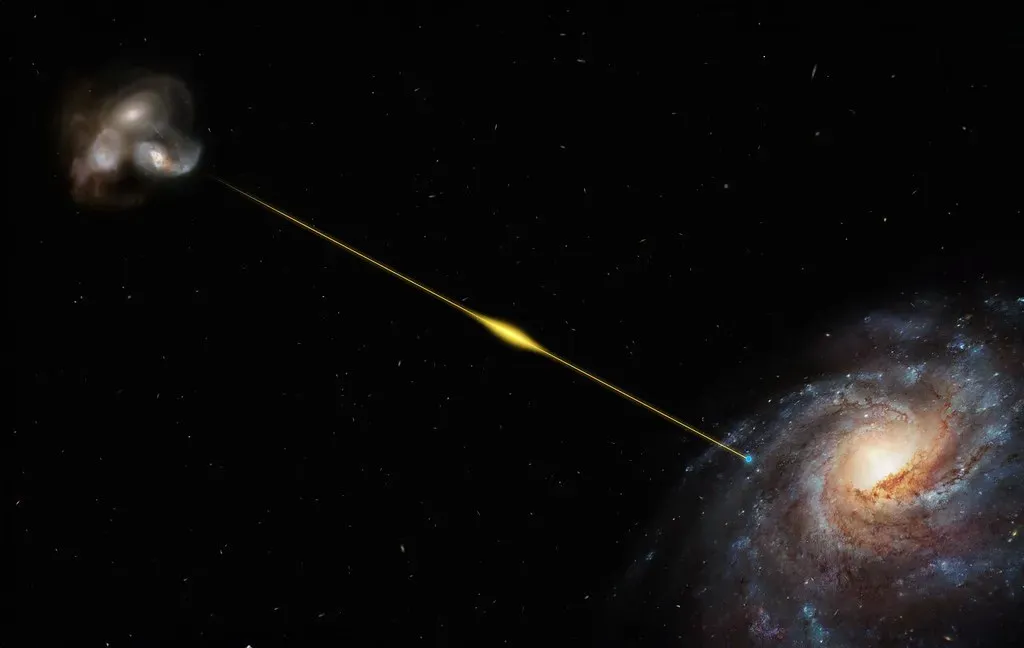
Fast radio bursts are extremely powerful radio signals that last only milliseconds but release enormous energy. Some repeat from the same locations, while others appear once and never return. Imagine receiving a text message that lasts for a fraction of a second, carries the energy output of hundreds of millions of suns, and then vanishes. You try to text back. Silence. That, stripped to its essentials, is the bewildering reality of fast radio bursts.
Fast radio bursts are transient radio pulses from distant galaxies lasting only a few milliseconds each, and the puzzle of why some FRBs repeat at unpredictable intervals while most do not remains unsolved. Dozens of models have been proposed, but none have been widely accepted. Unusual detections continue to bolster evidence that these mysterious signals can be caused by different astrophysical events. The deeper you look into fast radio bursts, the stranger they get. It’s hard to say for sure, but some researchers have even speculated – carefully – that their origin might hint at physics we have not yet discovered.
The Wow! Signal: A 72-Second Mystery That Has Never Repeated
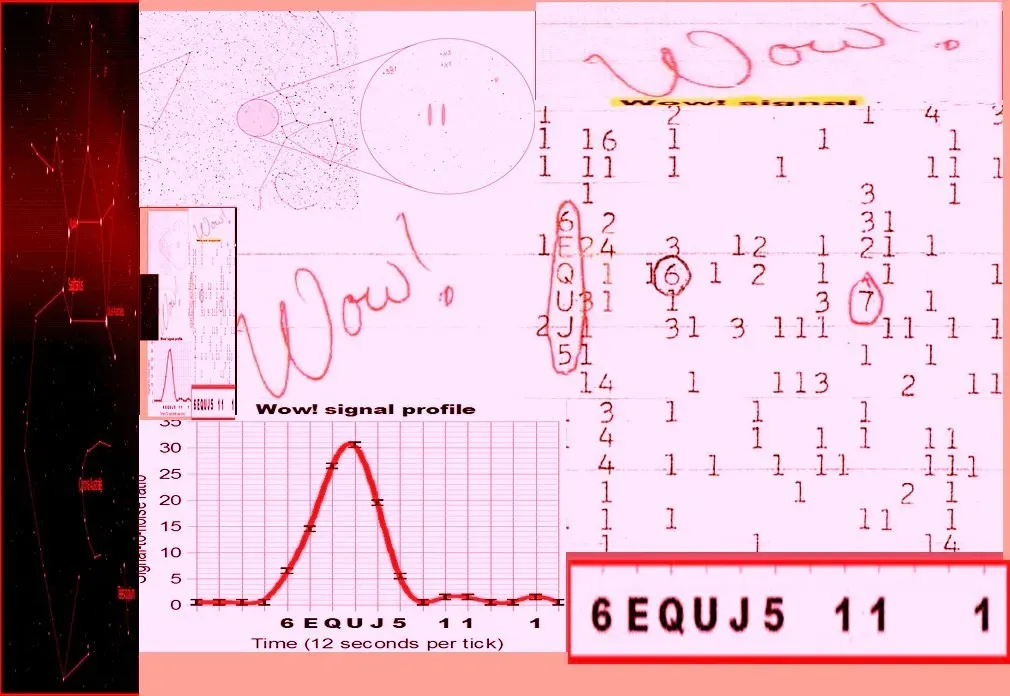
In 1977, astronomers detected a strong and unusually narrow radio signal lasting 72 seconds. It never repeated, leaving its origin unresolved. The signal remains one of the most intriguing anomalies in the search for extraterrestrial intelligence. A volunteer researcher named Jerry Ehman was so startled by the data printout that he circled it and wrote “Wow!” in the margin. That exclamation point has haunted astronomy ever since.
Several natural explanations have been proposed, such as the signal being a reflection of an Earth-based transmission from a satellite, or a signal from an undiscovered comet, but none have been fully convincing. The signal’s characteristics were a close match for what we might expect from an alien beacon. Was it a fleeting message from another civilization? Or a one-in-a-billion cosmic or terrestrial anomaly? The infamous signal recorded in 1977 might have been a laser-like beam of radiation from a hydrogen cloud energized by a powerful, magnetic star, according to preliminary research. Preliminary. Not confirmed. The mystery endures.
Tabby’s Star: The Most Bizarre Star in the Known Universe
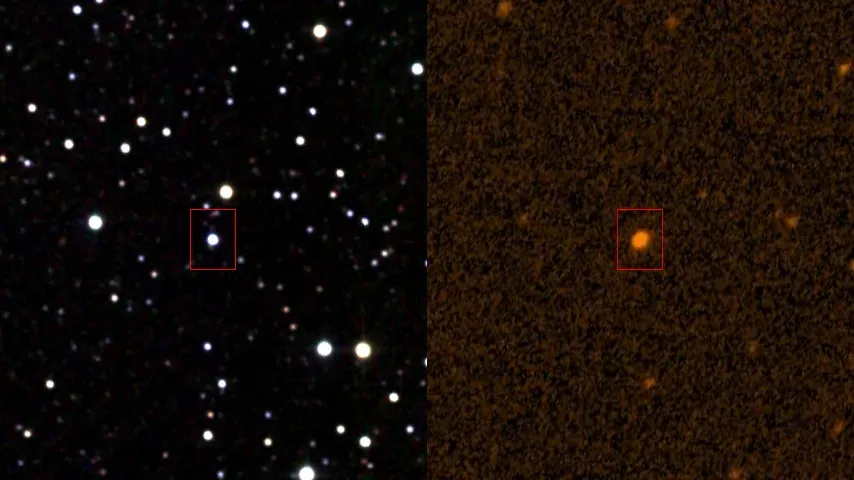
In September of 2015, citizen scientists with the Planet Hunters project noticed that the star KIC 8462852, known as Tabby’s Star, was experiencing a mysterious dip in luminosity. Located in the constellation Cygnus, roughly 1,470 light-years from Earth, this star experienced fluctuations and a drop of up to 22% in brightness. For reference, when a planet passes in front of a star, it typically dims that star by about 1%. A drop of 22% is something else entirely. Something enormous, irregular, and deeply strange.
Observatories around the world have noted further incidents of dimming, and multiple studies have been conducted to try and offer a natural explanation for this behavior. These have ranged from a circumstellar debris disk, shattered comets, and asteroids to the presence of a giant planet or a planet with rings. However, it was the proposal that the irregular dimming could be caused by alien megastructures that attracted the most attention. Dust clouds and planetary debris fail to fully account for the observed dimming patterns, and its behavior continues to puzzle astronomers studying stellar dynamics. No single explanation has won the scientific argument. Tabby’s Star remains gloriously, maddeningly unexplained.
The Shape and Fate of the Universe: Where Does It All End?
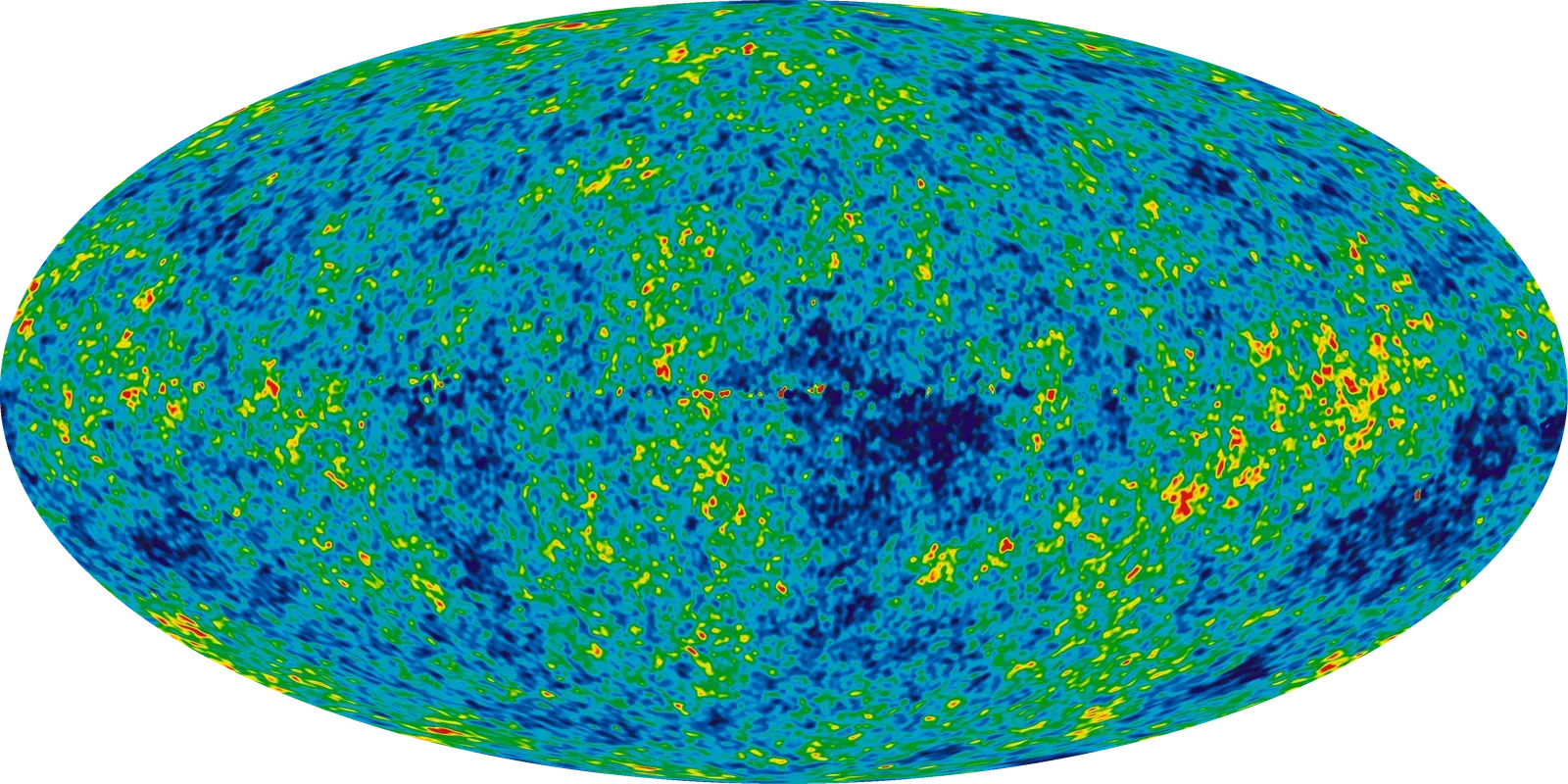
What is the overall geometry of space? According to the theory of general relativity, mass and energy curve spacetime. On a cosmic scale, the universe can have one of three possible shapes, depending on its total energy density. If the density is above a certain value, the universe would be “closed,” like the surface of a sphere. Think of it like asking what is beyond the edge of a map – except the map is everything that has ever existed, and there may not be an edge at all. That question alone is enough to make your head spin.
The universe may be heading toward a Big Freeze, a Big Rip, a Big Crunch, or a Big Bounce, or it could be part of an infinitely recurring cyclic model. Maybe all elementary particles are unstable in the very long run, and matter will completely cease to exist. Also, the mysterious dark energy that drives the acceleration of the universe might become stronger with time, leading to a “Big Rip” when space itself is torn asunder. We cannot even agree on how the universe will end. Four competing theories, each scientifically plausible, each pointing to a radically different fate for absolutely everything. That is not a footnote – that is a crisis hiding in plain sight.
Conclusion: The Answers We Don’t Have (Yet)
What is remarkable about all ten of these puzzles is that they are not fringe ideas or forgotten curiosities. They sit at the very center of modern physics and cosmology, debated by the brightest minds with the most powerful instruments humanity has ever built. The universe is filled with space mysteries that continue to challenge even the most advanced scientific tools, and despite powerful observatories and decades of research, many cosmic questions remain unanswered, revealing how limited our understanding of reality still is.
As telescopes grow more precise and missions probe deeper into space, scientists often uncover more questions than answers. Each discovery reshapes assumptions about physics, time, and matter itself. These unsolved universe enigmas are not failures of science, but signs that exploration is far from complete. I think that is the most honest and hopeful way to hold all of this. The universe is not mocking us. It is inviting us further in.
Every generation thought it was close to the final answer. Every generation was wrong in the most fascinating ways imaginable. The mysteries above are not walls – they are doors. And the fact that they remain locked is not a reason to stop knocking. Which of these ten puzzles shakes you the most? Tell us in the comments – because honestly, the right answer might come from the most unexpected place.