
If you’ve ever walked out of a science documentary feeling both smarter and more confused, you’re in the right place. Physics has this strange habit of being crystal clear on paper and completely bonkers in reality, and nowhere is that more obvious than in its paradoxes. These are the puzzles that make even world-class physicists stop, stare at a whiteboard, and quietly rethink their life choices.
What fascinates me most is that many of these paradoxes aren’t obscure thought experiments buried in old textbooks. They show up in real technologies, in the behavior of black holes, in the way time works, and even in the nature of reality itself. Some of them have partial answers, some have competing explanations, and a few are still very much open wounds in our understanding of the universe. Let’s walk straight into the confusion together.
1. The Twin Paradox: When Time Plays Favorites
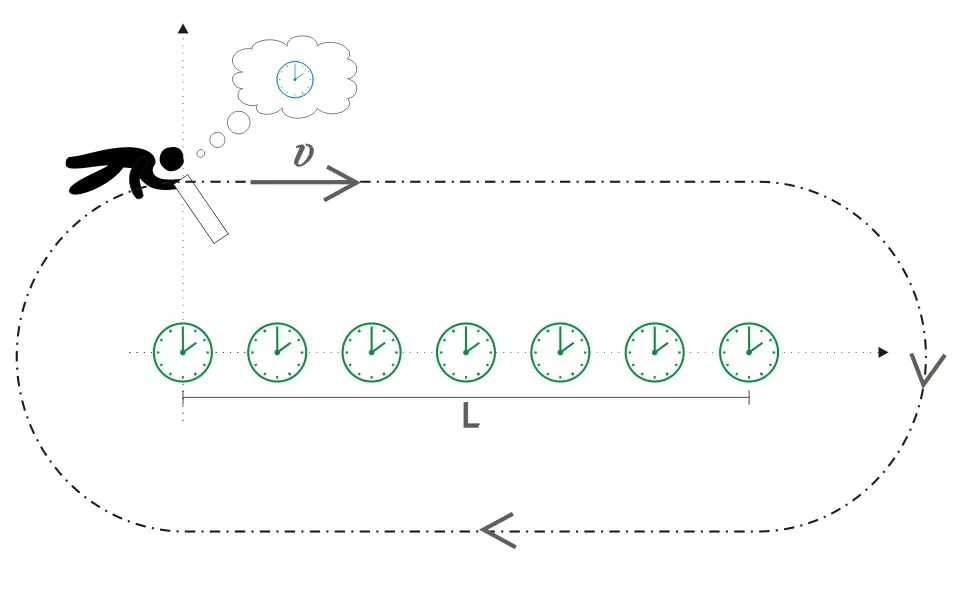
Imagine you and your twin are celebrating a birthday, and then your twin hops on a near‑light‑speed spaceship while you stay on Earth, paying bills and scrolling endlessly on your phone. According to special relativity, when your twin comes back, they’ll be younger than you. The paradox shows up when you realize that from the twin’s perspective, you were the one speeding away, so why aren’t you the younger one instead? It feels like time is cheating, playing favorites when the rules should be the same for everyone.
Physicists resolve this by pointing out that the traveling twin’s journey involves acceleration and turning around, so the situations aren’t perfectly symmetric. The math of relativity actually predicts this time dilation very precisely and has been confirmed with real clocks on fast airplanes and satellites. Still, the emotional gut-punch of the story lingers: two people share a birthday, live through different slices of spacetime, and then reunite out of sync. It turns aging into a technical issue of motion, which is equal parts fascinating and unsettling.
2. Schrödinger’s Cat: Alive, Dead, and Everything in Between

Schrödinger’s cat is the poster child of weird physics, and it’s still messing with our heads. Picture a sealed box with a cat inside, along with a device that has a roughly even chance of killing the cat based on a quantum event, like the decay of a single atom. According to standard quantum mechanics, before you open the box, the system is in a superposition: the cat is both alive and dead at the same time. That sounds less like science and more like a horror story with math.
The paradox isn’t so much about cats as it is about measurement: when does the fuzzy quantum world become the solid, definite world we experience? Some interpretations say the wavefunction collapses when we observe it, others say all outcomes happen in branching universes, and some newer approaches try to avoid collapse entirely. What’s wild is that experiments on larger and larger systems have shown superposition is very real, at least for small objects. The cat thought experiment is our way of asking an uncomfortable question: where exactly does reality draw the line?
3. The Information Paradox of Black Holes: Does Reality Lose Data?
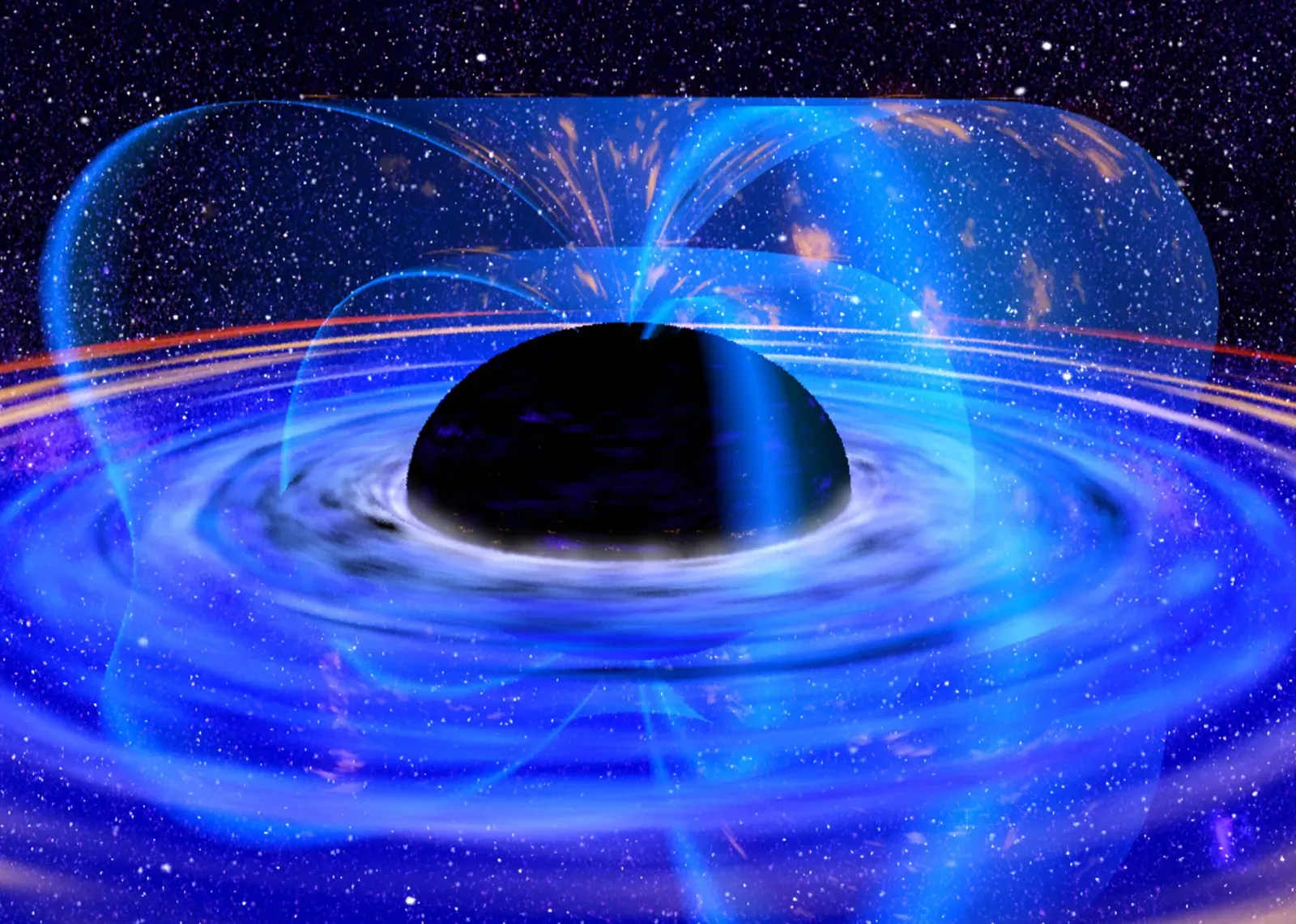
Black holes are already extreme, but their information paradox turns them into full-blown philosophical nightmares. According to quantum mechanics, information about a system’s initial state can never truly be destroyed. Yet classical black hole physics suggests that anything falling into a black hole gets wiped from the universe when the black hole eventually evaporates through Hawking radiation. If that information really vanishes, it breaks some of the most fundamental rules of quantum theory.
Over the past decades, physicists have thrown some very clever ideas at this problem. Some argue that information is subtly encoded in the Hawking radiation, just in a way we don’t yet know how to decode. Others introduce wild concepts like “firewalls” at the event horizon or holographic principles where the information lives on a lower‑dimensional surface around the black hole. The debate is still active and intense, and what’s at stake is not just black holes, but whether the universe is fundamentally logical or allows for true, irreversible cosmic erasure.
4. The EPR Paradox and Quantum Entanglement: Spooky Connections
In the nineteen‑thirties, Einstein and two colleagues challenged quantum mechanics with what’s now called the EPR paradox. They described a pair of particles that become entangled, meaning their properties are linked no matter how far apart they travel. Measure one particle here, and you instantly know the result for its partner light‑years away. Einstein hated this, calling it a kind of “spooky” influence, because it seemed to violate the speed limit set by relativity.
Today, experiments have repeatedly confirmed that entanglement is real and that measurements on one particle are correlated with its distant partner in a way that no simple hidden‑variable theory can explain. Yet, these correlations can’t be used to send usable messages faster than light, which saves relativity from outright disaster. The paradox remains not in the predictions, which match experiments beautifully, but in the story we tell ourselves about what’s really happening. Are particles “deciding” outcomes at the last second, or is reality non‑local in a way our everyday intuition simply cannot handle?
5. The Measurement Problem: When Does Reality Become Real?
At the heart of quantum mechanics lies an uncomfortable question: what exactly is a measurement? The equations say that systems evolve smoothly as a wave of possibilities until we measure them, at which point outcomes suddenly become definite. But the theory is quiet about what counts as a “measurement” or why an inanimate detector is any more special than an atom bumping into another atom. This fuzziness around such a basic idea is what’s called the measurement problem.
Over the years, several interpretations have tried to tame this paradox. Some say consciousness plays a role, others say the universe is constantly splitting into many branches, and yet others add new physical rules that cause wavefunctions to collapse. None of these options is universally accepted, and they often come with their own strange baggage. To me, this is one of the most unsettling things in physics: we have a theory that predicts experiments with incredible accuracy, yet we still argue about what it says is “really” happening when we simply look at something.
6. The Grandfather Paradox: Time Travel vs. Logic

Time travel to the past is a favorite playground for paradoxes, and the grandfather paradox is the classic. Imagine you build a time machine, go back in time, and prevent your grandfather from meeting your grandmother. If you succeed, you’re never born. But if you’re never born, you couldn’t have gone back to interfere in the first place. This circular mess of cause and effect is like tying reality into a knot and then asking it to untie itself.
Some physicists respond with the idea of self‑consistency: the universe only allows timelines where events fit together without contradictions. In that view, something would always stop you from changing crucial past events, no matter how hard you tried. Others bring in parallel timelines or branches, where changing the past simply shifts you into a different version of history. Interestingly, some modern models in relativity allow for closed time‑like curves mathematically, but whether nature actually permits such loops is still very much an open question.
7. The Fermi Paradox: Where Is Everybody?
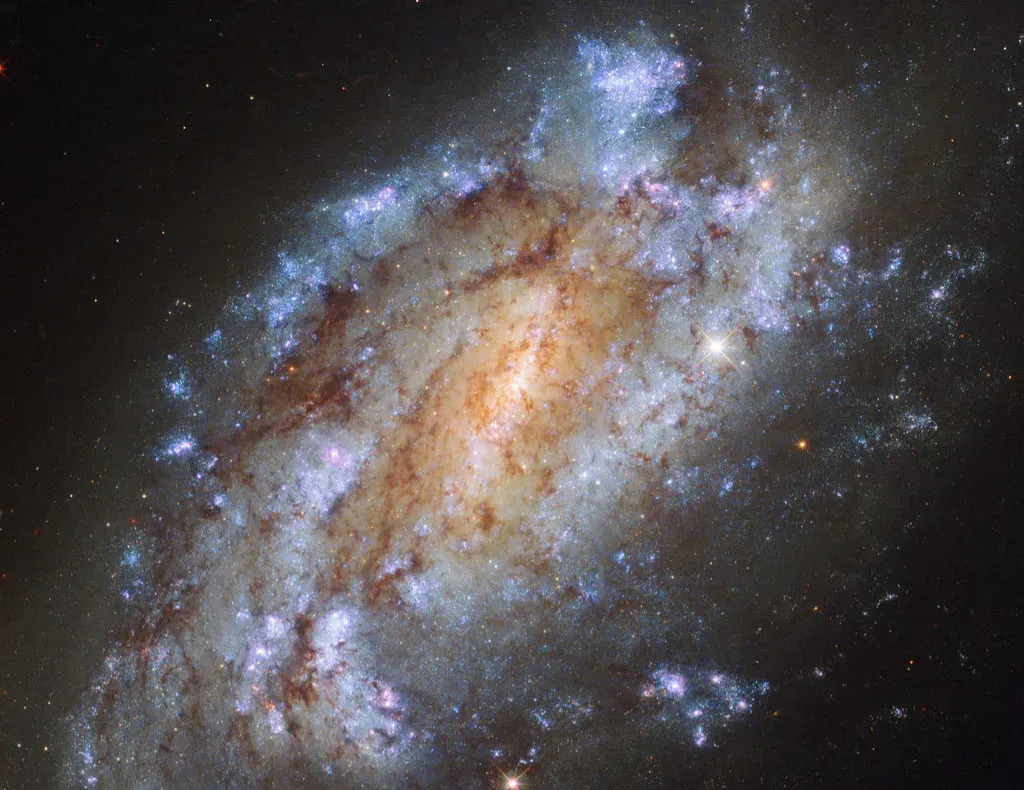
Look up at the night sky and you’re staring into billions of stars in just our galaxy, many with planets that could, in principle, host life. Given enough planets and enough time, it feels almost inevitable that intelligent civilizations should have arisen many times. The Fermi paradox asks a brutally simple follow‑up: if that’s true, why don’t we see them? No signals, no megastructures, no clear signs that anyone else has been building things on a galactic scale.
There are countless possible answers, and none are completely satisfying. Maybe life is far rarer than we think, or intelligent species self‑destruct long before reaching interstellar capability. Perhaps advanced civilizations are deliberately quiet, or their technology is so different from ours that we wouldn’t even recognize it. Modern telescopes and surveys are getting better at spotting exoplanets and odd signals, but every new null result deepens the mystery. It’s a paradox that sits right at the boundary between astrophysics, biology, and a sort of cosmic loneliness.
8. The Arrow of Time: Why Does Time Only Flow One Way?

On a microscopic level, many of the fundamental laws of physics work just as well forward as backward in time. If you watched atoms bumping around and then reversed the movie, the equations would still be happy. Yet in real life, we only ever see eggs break, not spontaneously reassemble; we see coffee cool down, not heat itself back up. This tension between time‑symmetric laws and our one‑way experience is the paradox of the arrow of time.
The usual explanation leans on entropy: the idea that systems naturally move from more ordered states to less ordered ones. The universe seems to have started in an incredibly low‑entropy, highly ordered state, and everything since has been a long, messy slide toward disorder. But that just shifts the puzzle: why was the early universe so special to begin with? Cosmology, thermodynamics, and even quantum gravity are all entangled in this question, and while we have pieces of an answer, the full story of why time “flows” still feels unfinished.
9. The Olbers’ Paradox: Why Is the Night Sky Dark?
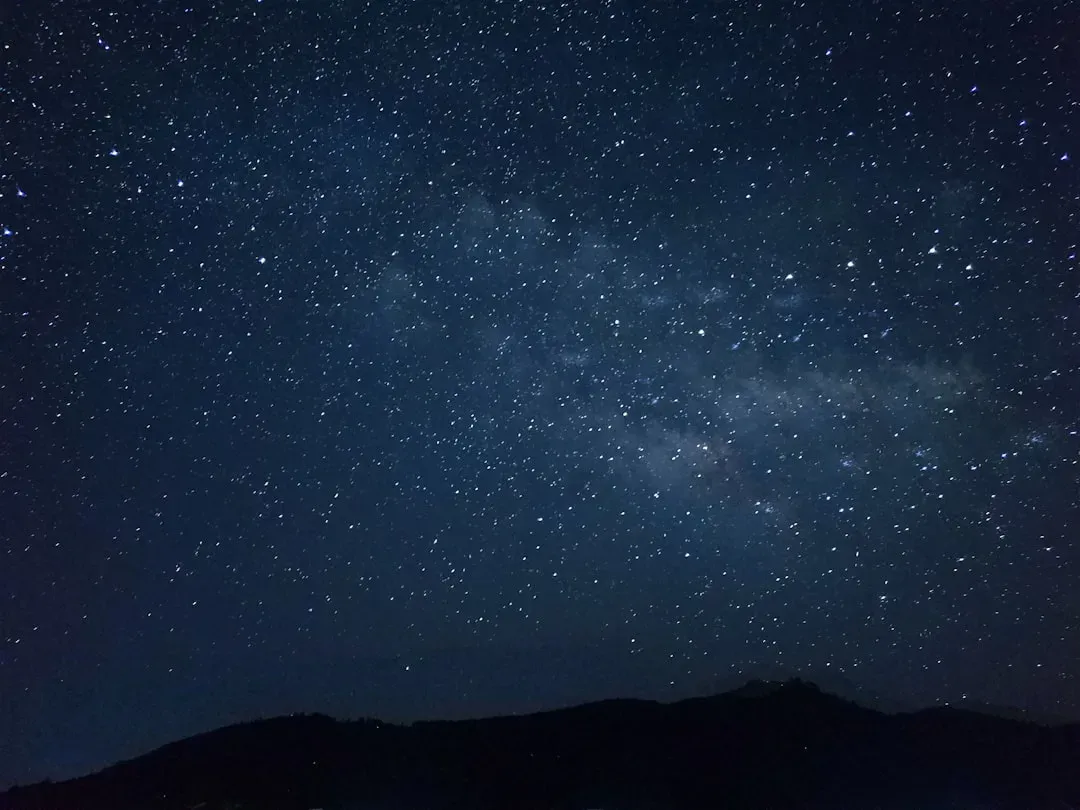
At first glance, asking why the night sky is dark sounds almost childish, but it leads straight into a deep cosmic paradox. If the universe were infinite, static, and filled uniformly with stars, then no matter where you looked, your line of sight should eventually end on a star. In that case, the entire sky would be bright, more like the surface of the Sun than a patchy mix of stars and darkness. Yet when we go outside at night, space is mostly black, dotted sparingly with light.
The resolution we have today relies on the fact that the universe is not static and eternal in the old sense. It has a finite age, it’s expanding, and distant light is stretched and dimmed by that expansion. Many stars are so far away that their light has not yet had time to reach us, and light from the earliest eras has been shifted into wavelengths our eyes can’t see. Olbers’ paradox is a nice reminder that sometimes a simple, almost naive question can push science toward a radically new picture of reality, like the modern Big Bang cosmology.
10. The Vacuum Catastrophe: When Theory and Reality Disagree Violently
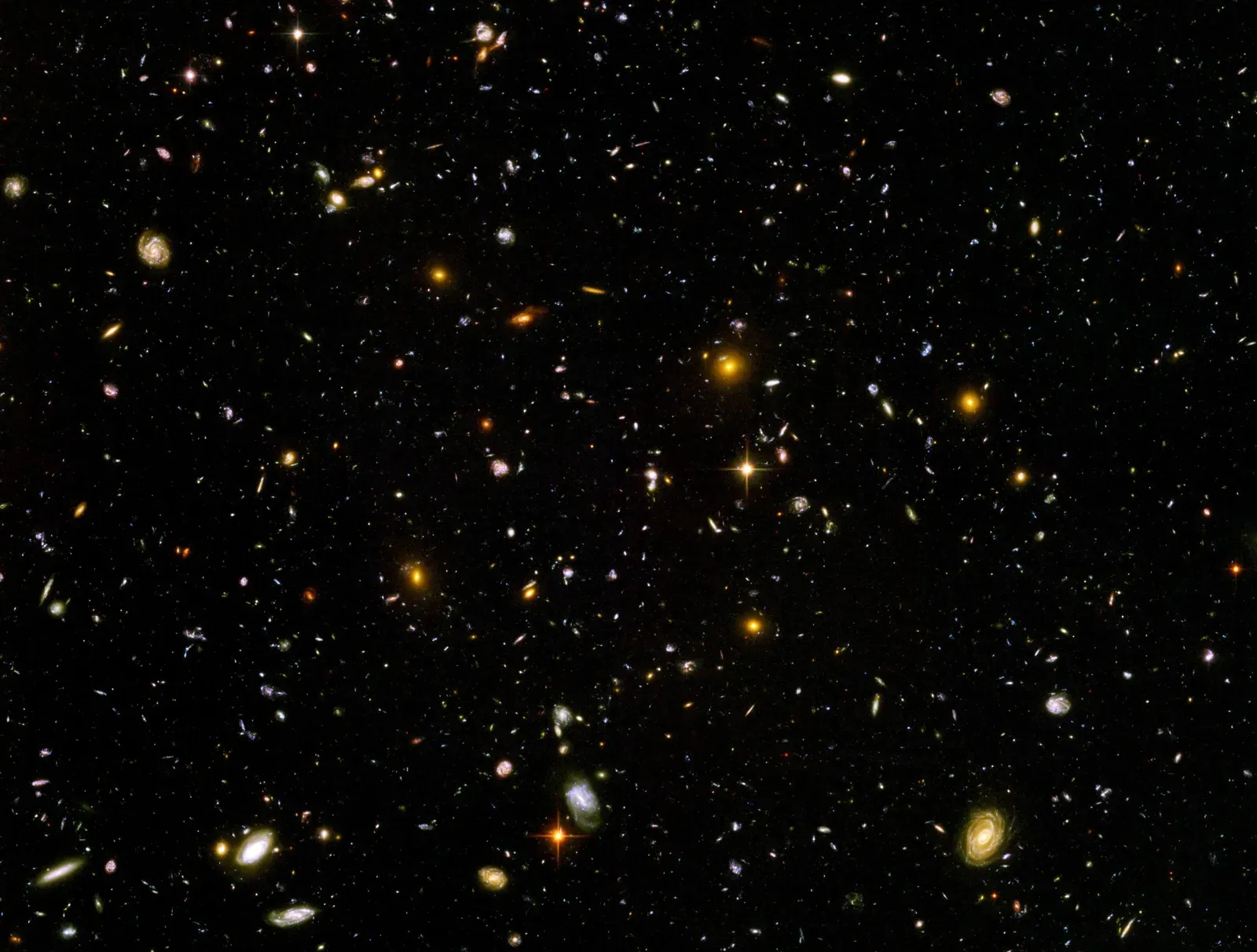
In quantum field theory, even “empty” space isn’t truly empty. It seethes with virtual particles and fluctuating fields, and when you calculate the energy of this quantum vacuum, you get a ridiculously huge value. If that vacuum energy gravitated in the straightforward way Einstein’s equations suggest, the universe would either rip itself apart almost instantly or curl up dramatically, nothing like the relatively calm, slowly expanding cosmos we actually see. This mismatch is sometimes described as one of the worst theoretical failures in physics.
Observations of the universe’s expansion point to a small but nonzero dark energy, which many think is related to vacuum energy. The catch is that naive quantum calculations overshoot that observed value by a staggering factor, far beyond any normal margin of error. This “vacuum catastrophe” or cosmological constant problem hints that we’re missing something big about how gravity and quantum fields fit together. It’s like having two beautifully crafted puzzles that simply refuse to interlock, no matter how you twist the pieces.
These paradoxes don’t just expose gaps in our knowledge; they quietly shape the next generation of theories, experiments, and wild ideas that might one day replace the ones we take for granted now. Maybe in a few decades, students will look back and wonder how we could ever have been confused by things that seem obvious to them, the same way we now look back at older models of the cosmos. Until then, we live in an oddly delightful place where even our best science comes with sharp edges and unanswered questions. Which of these paradoxes will be the first to finally crack?