
Most people think of time the way they think of gravity – invisible, constant, reliable, always doing what it’s supposed to do. You check your watch, you make your appointment, the universe keeps ticking. Simple, right? Honestly, not even close. The deeper physicists dig into the nature of time, the stranger and more unsettling the picture becomes.
What you’ll discover in this article might genuinely shake the way you experience an ordinary Tuesday afternoon. From the fact that your GPS only works because engineers account for warped time, to the possibility that the future already exists right now, the science of time is nothing short of astonishing. Buckle up. Let’s dive in.
Time Doesn’t Flow the Same Way for Everyone
Here’s the thing that flipped physics on its head over a century ago and still feels impossible to fully accept: time is not a universal constant. Time rules everything from the ticking of your kitchen clock to the aging of galaxies, but the more physicists study it, the stranger it becomes. What feels like a steady, universal flow turns out to be elastic, relative, and in some ways deeply personal.
According to Einstein, time is flexible. It bends and stretches depending on how fast you move or how close you are to a massive object. Think of it like a rubber sheet. The heavier the object you place on it, the more it sags and distorts. The same thing happens to the fabric of time itself. In classical physics, time was once treated as absolute, a universal parameter that ticked at the same rate everywhere, independent of anything else. With the advent of Einstein’s theories, modern physics instead treats time as intertwined with space, forming a four-dimensional structure called spacetime.
Speed Literally Slows Time Down for You
Imagine you and your best friend both own identical, perfectly synchronized watches. You hop on a rocket and speed away at a fraction of the light speed while your friend stays home eating pizza. When you return, your watch will show less time has passed than your friend’s. This isn’t a malfunction. It’s physics. The faster you move, the slower time passes for you compared to someone at rest. This is known as time dilation due to velocity, and it’s a key part of Einstein’s special relativity.
Time passes slower the faster you move. If you flew to the star Sirius at nearly the speed of light and flew back again, the people you left behind on Earth would have aged more than 17 years. Your journey might have felt like much less. This time effect is real and is not caused by inaccurate clocks or improper measurements. Time-interval measurements of the same event differ for observers in relative motion. The dilation of time is an intrinsic property of time itself.
Your GPS Proves Time Dilation Every Single Day
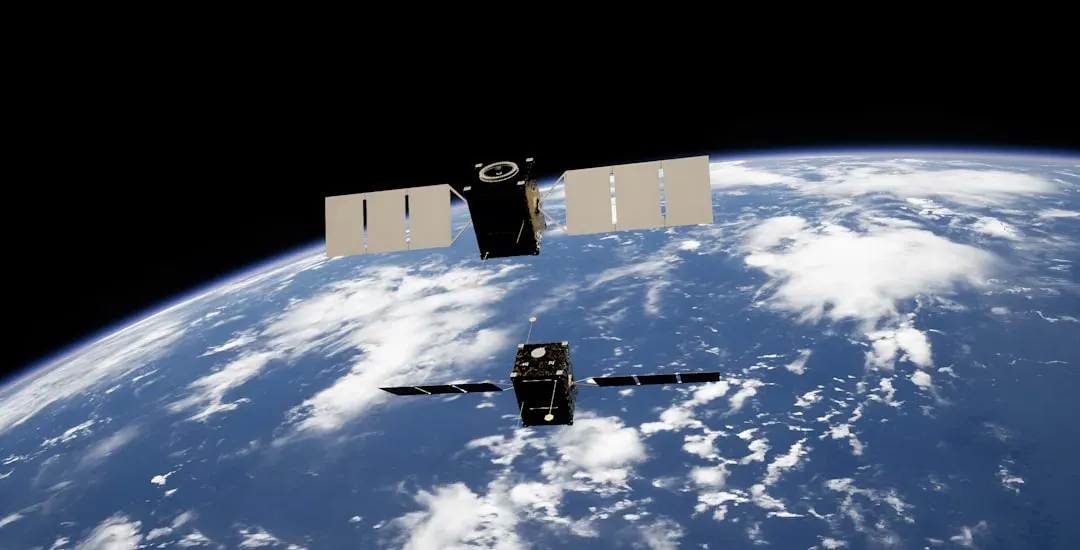
This one is my personal favorite because it’s not abstract at all. It’s happening right now, inside the device in your pocket. Time dilation isn’t just theoretical; it’s crucial for technologies like GPS, ensuring they work accurately. Without accounting for the warping of time, your navigation app would drift off by miles every single day. Let that sink in.
GPS satellites have to account for 38 microseconds per day of time dilation, made up of 45 microseconds from gravitational time dilation plus 7 microseconds from the speed-related effect. That might sound tiny, but in navigation terms, those microseconds translate into significant positional errors. Experiments involving satellites used for GPS demonstrate that time runs slightly faster in orbit than on Earth’s surface due to weaker gravitational forces. Engineers must account for this discrepancy to ensure GPS systems remain accurate.
Gravity Makes Time Run Slower Too
Speed isn’t the only thing that warps time. Gravity does it too. The closer you are to a massive object, the slower time ticks for you compared to someone farther away. One of the most striking implications of general relativity is that time runs slower in stronger gravitational fields. This phenomenon, known as gravitational time dilation, occurs because gravity affects the passage of time itself. Objects positioned in stronger gravitational fields, such as near black holes, experience a significant delay in their perception of time compared to those at a greater distance from the gravitational source.
The wild implication? Richard Feynman suggested in a lecture that, due to time dilation, the core of the Earth is actually younger than the crust. Yep, the very center of the planet you’re standing on has experienced less time than the surface. Even a climber’s time is theoretically passing slightly faster at the top of a mountain compared to people at sea level. You are literally aging at a different rate depending on your altitude. That’s not a metaphor. That’s a measurable, confirmed physical fact.
The Arrow of Time Comes From Disorder, Not Physics
Have you ever wondered why time moves forward and not backward? It seems obvious, but when you press physicists on it, things get genuinely strange. The laws of physics themselves don’t seem to care which way time flows. The fundamental equations of physics – Newton’s laws, Maxwell’s equations, Einstein’s relativity – all work just as well in reverse. If you rewound every particle in the universe, the equations wouldn’t complain.
So why does time feel so stubbornly one-directional? The answer lies in entropy. The arrow of time is the “one-way direction” or “asymmetry” of time. The thermodynamic arrow of time is provided by the second law of thermodynamics, which says that in an isolated system, entropy tends to increase with time. In a sense, the arrow of time is less about some cosmic ticking and more about the universe’s relentless slide from neatness into mess. The fact that you can tell which way time is moving by watching cream swirl into coffee is one of the most profound clues in all of physics.
The Past, Present, and Future May All Exist Simultaneously
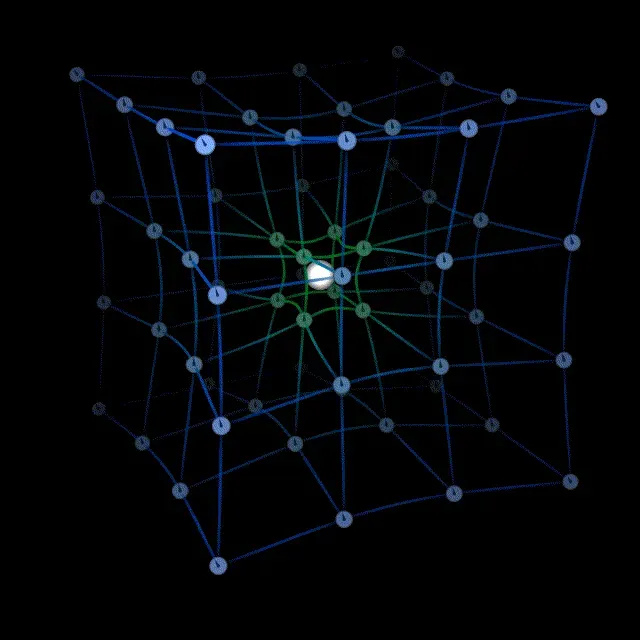
Hold on, because this one genuinely hurts the brain. Imagine a universe where every moment – past, present, and future – exists all at once. The block universe theory, also known as eternalism, proposes exactly that. In this model, time doesn’t “flow”; instead, every instant is fixed within a vast, four-dimensional spacetime block.
In our everyday experience, time flows. The past is gone, the future is unknown, and the present is all we have. The equations of physics don’t care about this flow. They work just as well backward as forward. In fact, they suggest something radically different: that all of time – past, present, and future – exists simultaneously in a four-dimensional structure called the block universe. So “now” may not be special at all. Your birth, this moment, your future, potentially all frozen together in a cosmic sculpture that simply is. Think of it like a film reel: just because you’re watching one frame doesn’t mean the others don’t exist.
Your Brain Constructs a Fake Version of “Now”
Even the present moment isn’t what it seems. Neuroscience adds a twist by revealing how the brain actually constructs our sense of time. Our perception of “now” seems to stretch over a small window, roughly a fraction of a second long, during which the brain blends incoming signals. You are not experiencing reality in real time. You’re experiencing a delayed, stitched-together version of it.
While physics treats time as a constant dimension, our minds experience it quite differently. As we grow older, time seems to accelerate; during crises, each moment can feel agonizingly slow. Altered states and emotions stretch or compress our sense of the ticking clock, highlighting the brain’s powerful influence over our perception of time’s passage. New experiences really do seem longer in memory than familiar ones. It’s called the “oddball effect,” and it seems to be why time feels like it’s going faster as you get older – because more stuff is familiar to you.
Everything You See Is Already in the Past

Right now, as you read these words, you’re not seeing the present. You’re seeing the past. Light takes time to travel, and that means every single thing your eyes register is an image from moments – or even years – ago. Because light takes time to reach us, everything we see is in the past. The sun you can see out of the window is 8 minutes and 20 seconds old. The light from our nearest star, Proxima Centauri, is 4 years old.
Let that settle in. When astronomers point their telescopes at distant galaxies, they aren’t seeing what those galaxies look like now. They’re looking back millions, sometimes billions, of years into history. The universe is around 13.8 billion years old, and this age is calculated using cosmic background radiation. In a very real sense, observing the cosmos is the same as traveling back in time. Every telescope is a time machine.
Time Crystals Are a Real, Bizarre New State of Matter

The name sounds like something out of a fantasy novel, but time crystals are very much real – and they’re rewriting the rulebook on how we understand physics. Time crystals are a mind-bending new state of matter that exhibit repeating patterns not only in space, but in time itself. Unlike ordinary crystals, their structure oscillates endlessly, defying traditional laws of equilibrium.
Time crystals were long believed to be impossible because they are made from atoms in never-ending motion. The discovery shows that not only can they be created, but they have potential to be turned into useful devices. In February 2024, a team from Dortmund University in Germany built a time crystal from indium gallium arsenide that lasted 40 minutes, nearly 10 million times longer than the previous record of around 5 milliseconds. The lack of any decay suggests the crystal could have lasted even longer. And in 2025, the research continues to accelerate. Quantum physicists at TU Wien discovered that particle correlations can create self-sustaining “time crystals,” breaking symmetry in time itself.
Time Itself May Not Even Be Fundamental
This is perhaps the deepest and most disorienting idea of all. What if time is not a basic feature of the universe? What if it’s something that emerges from deeper, more fundamental structures, the way wetness emerges from individual water molecules that aren’t wet on their own? As strange as relativity makes time, some physicists and philosophers go even further and question whether time is truly fundamental. Certain theories trying to unify quantum mechanics with gravity suggest that at the deepest level, the universe might not evolve in time the way we imagine. Instead, time could emerge from more basic, timeless relationships among quantum states.
Some physicists even argue that time doesn’t exist fundamentally. Instead, it emerges from deeper physical laws, much like temperature emerges from the motion of molecules. So maybe time doesn’t “move.” Instead, entropy gives us a sense of moving forward – because our brains, our memories, and our universe are all aligned with entropy’s direction. That idea is not settled science, but it is taken seriously enough to drive active research. If it’s correct, then everything you think of as “time passing” could be a kind of grand illusion, the universe’s most convincing trick.
Conclusion: Time Is Stranger Than You’ll Ever Fully Grasp
There’s something quietly humbling about all of this. You live your life by clocks, deadlines, and calendars, treating time as a fixed backdrop to everything you do. Yet science reveals it’s elastic, personal, emergent, and possibly not even real in the way you assume. It warps around speed and gravity. It’s constructed by your brain. It flows in one direction only because the universe happens to be getting messier. And at the very deepest level, it might not exist at all.
The more you explore these facts, the more you realize that the concept of time is one of the greatest unsolved mysteries in all of science. It’s a rare thing when cutting-edge physics can genuinely make your head spin just by describing Tuesday morning. What’s the most surprising fact here for you – the GPS one, or the idea that the present doesn’t really exist? Drop your thoughts in the comments and let the debate begin.