
Time rules everything from the ticking of your kitchen clock to the aging of galaxies, but the more physicists study it, the stranger it becomes. What feels like a steady, universal flow turns out to be elastic, relative, and in some ways deeply personal. Einstein shattered the idea of absolute time more than a century ago, yet new experiments keep revealing fresh twists that even seasoned scientists find unsettling. At the same time, philosophers and cosmologists are asking whether time itself is fundamental or just a clever illusion stitched together by our brains. The result is a quiet revolution in how we think about reality: the familiar seconds and minutes on your watch are just the surface of something far more bizarre underneath.
The Elastic Universe: Time Really Does Run at Different Speeds
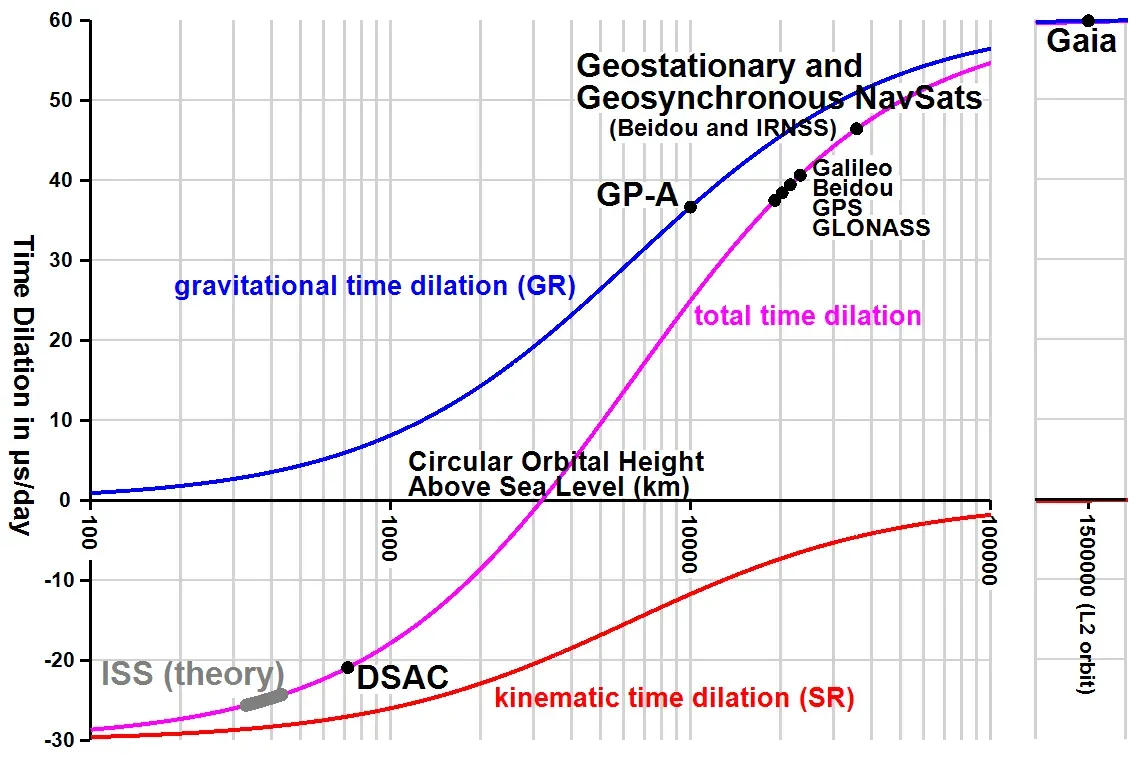
It sounds like science fiction, but time genuinely runs at different rates depending on where you are and how fast you are moving. Einstein’s theory of relativity showed that gravity and motion warp spacetime, and modern experiments have confirmed this with almost unnerving precision. In one famous test, identical atomic clocks placed at different altitudes ticked at slightly different speeds, with the clock higher up – where gravity is weaker – running just a bit faster. This is not just a tiny theoretical quirk; it means your head is literally aging a fraction faster than your feet. The difference is minuscule, but over billions of years or at extreme speeds, it becomes impossible to ignore.
We already rely on this elastic nature of time to run everyday technologies. GPS satellites orbiting Earth experience weaker gravity and higher speeds than clocks on the ground, so their onboard time drifts relative to ours. Engineers must constantly correct for this relativistic effect to keep navigation accurate; otherwise, your phone’s map could be off by kilometers. In that sense, every time you follow a route on your screen, you are implicitly trusting Einstein over your own intuition. The universe does not care what time it is on your wall clock – what matters is how spacetime is curved around you.
Time Is Not the Same Everywhere: Your “Now” Is Not Universal
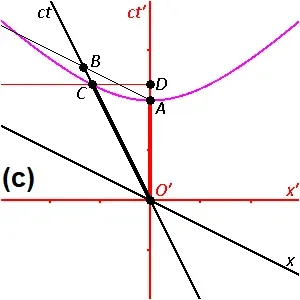
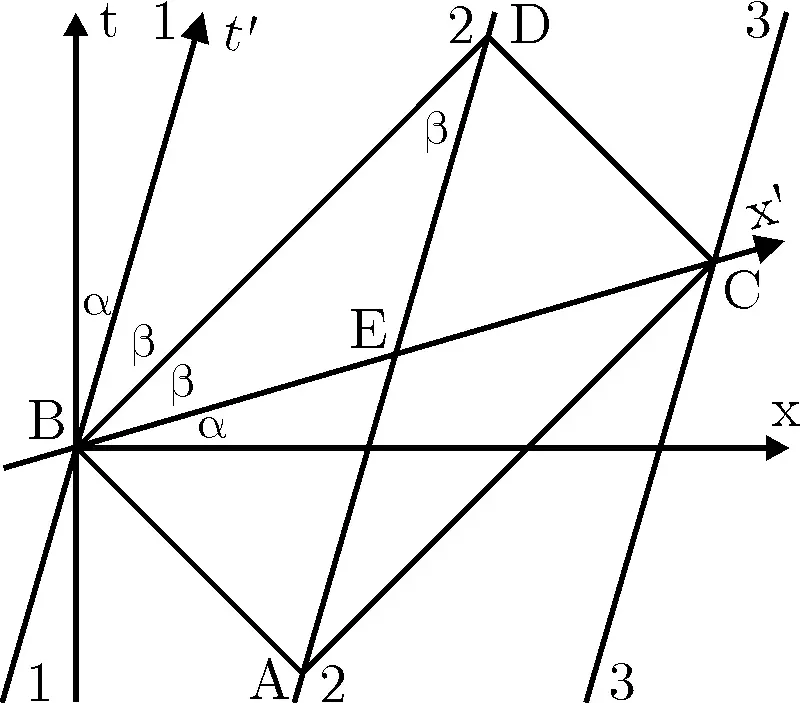
We casually talk about things happening “at the same time” all over the world, but physics quietly opposes that idea. According to special relativity, two events that seem simultaneous to you may not be simultaneous to someone moving very fast relative to you. There is no single, universal “now” stretching across the cosmos like a synchronized grid; instead, each observer slices spacetime into past, present, and future in their own way. That means your sense of a shared global present is partly a convenient fiction built on slow human speeds and limited distances. On a galactic scale, the very concept of a universal present starts to crumble.
This shattering of a universal now has unsettling philosophical consequences. If different observers disagree on whether two events are simultaneous, what does it really mean to say something is happening “right now” in a distant galaxy? For cosmologists, this complicates how we describe the evolution of the universe from the Big Bang to today, because “today” is not a simple concept once relativity kicks in. For philosophers of time, it fuels debates over whether the present is special at all, or whether past, present, and future are equally real. Our everyday language assumes a shared clock for everyone, but the fabric of spacetime stubbornly refuses to cooperate.
The Arrow of Time: Why You Remember the Past but Not the Future
One of the strangest facts about time is that the fundamental laws of physics barely care which direction it flows. If you reverse time in the equations describing gravity or electromagnetism, the math still works. Yet our lived experience is completely one-way: eggs splatter, but never un-splatter; you remember yesterday, not tomorrow. This one-directional flow is called the arrow of time, and it is deeply tied to the concept of entropy, a measure of disorder. The universe appears to have started in a state of extremely low entropy, and ever since then, disorder has been steadily increasing.
That gradual increase in entropy is what gives time its direction for us. Broken eggs, dissolved sugar, and burnt toast are all examples of systems moving from order to disorder, and that statistical trend is overwhelmingly likely. Your memories, too, are physical records laid down in your brain by irreversible processes that increase entropy. You cannot remember the future because those physical traces do not yet exist. In a sense, the arrow of time is less about some cosmic ticking and more about the universe’s relentless slide from neatness into mess, from simple configurations into complicated chaos. The fact that you can tell which way time is moving by watching cream swirl into coffee is one of the most profound clues in all of physics.
Time Dilation You Can Feel: Moving Fast Really Changes Your Age
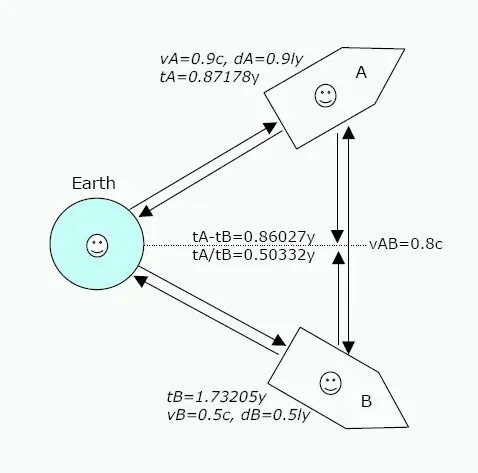
Time dilation often sounds like an abstract idea reserved for science textbooks, but it has very real, human consequences. Astronauts onboard the International Space Station orbit Earth at high speed and experience slightly different time compared with people on the ground. Over six months in orbit, an astronaut will return having aged just a tiny bit less than their twin who stayed at home, thanks to special relativity. The difference is only fractions of a second, but it is measurable and has been carefully tracked using precise clocks. In principle, if you could travel close to the speed of light, you could leap dramatically into the future relative to everyone you left behind.
This effect is sometimes called the “twin paradox,” although there is nothing paradoxical about it once you factor in relativity’s rules. Time dilation also shows up near extremely dense objects like neutron stars or black holes, where gravity becomes intense. An observer far from the gravitational well would see a clock near a black hole appear to tick more and more slowly, as if time itself were being stretched. Stories of travelers returning to a far-future Earth after a near-light-speed journey are not just narrative devices; they rest on solid physics. If humanity ever develops spacecraft capable of sustained relativistic speeds, time travel to the future will not just be a theoretical curiosity – it will be a design challenge.
Is Time Fundamental – or Just a Trick of the Mind?
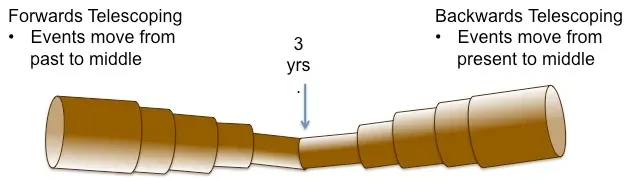
As strange as relativity makes time, some physicists and philosophers go even further and question whether time is truly fundamental. Certain theories trying to unify quantum mechanics with gravity suggest that at the deepest level, the universe might not evolve in time the way we imagine. Instead, time could emerge from more basic, timeless relationships among quantum states, a bit like how temperature emerges from trillions of jostling molecules. In these models, what we perceive as the flowing present might be more like a mental overlay on an underlying static reality. That idea is not settled science, but it is taken seriously enough to drive active research.
Neuroscience adds another twist by revealing how the brain actually constructs our sense of time. Our perception of the “now” seems to stretch over a small window, roughly a fraction of a second long, during which the brain blends incoming signals into a coherent moment. Under stress, fear, or the influence of certain drugs, that window can distort, making time feel painfully slow or shockingly fast. This suggests that at least part of what we call time is an internal narrative stitched together for survival, not a direct readout of some cosmic clock. When cutting-edge physics and brain science both hint that time might be more malleable and subjective than we think, it becomes harder to insist that the ticking you feel is the ultimate truth.
Why Time Matters: From Cosmic History to Everyday Choices
Time might sound like an abstract playground for theorists, but it quietly shapes some of the most practical aspects of modern life. Precision timing underpins global communication networks, high-frequency trading, energy grids, and even your streaming service, all of which rely on synchronized clocks spread across the planet and in orbit. Medical diagnostics use time-resolved imaging to watch blood flow, track brain activity, and analyze how tumors respond to treatment. In climate science, long time-series measurements reveal patterns that would otherwise remain invisible, from shifting rainfall cycles to accelerating glacier melt. Without a deep understanding of time, many of the tools we use to understand and manage our world would simply fail.
Comparing older and newer views of time shows how far we have come. For centuries, time was treated as absolute – a rigid backdrop against which events unfolded. Now we know that time bends, stretches, and depends on where and how you observe it. This shift has changed how scientists think about cause and effect, the origin of the universe, and even the possibility of multiverses. Grappling with time also matters for ethics and policy: decisions about nuclear waste, biodiversity, and artificial intelligence require thinking in terms of decades, centuries, or longer. Learning to see time as dynamic instead of fixed may be one of the most powerful mental tools we have for facing the twenty-first century.
From Ancient Shadows to Atomic Clocks: How We Learned to Tell Time

Our strange relationship with time started long before relativity, when early humans simply watched the sky. Ancient civilizations tracked the motion of the sun, moon, and stars, carving stone calendars and raising monuments aligned with solstices and equinoxes. Sundials translated shifting shadows into hours, though they failed on cloudy days and long winter nights. Water clocks, burning candles, and hourglasses tried to tame time indoors, but they remained rough and imprecise. For most of history, timekeeping was local and messy, more art than science.
The industrial revolution changed that, turning time into a tool of coordination and control. Railroads forced cities to adopt standardized time zones so trains could run safely, giving rise to the synchronized clocks we now take for granted. The twentieth century pushed precision further with quartz oscillators and then atomic clocks, which measure time based on the vibrations of atoms and are staggeringly accurate. Modern atomic clocks are so stable that they would drift by less than a second over millions of years. This march from shadows to atoms has done more than keep us punctual; it has opened the door to testing the deepest theories of the universe.
The Future of Time: Quantum Clocks, Deep Time, and Planet-Scale Decisions
Time research is not finished; it is entering a new, more radical phase. Physicists are building experimental quantum clocks that probe the limits of precision, potentially sensitive enough to detect tiny fluctuations in gravity across a single laboratory table. Such ultra-precise clocks could map the Earth’s gravitational field in unprecedented detail, improving everything from navigation to the study of groundwater and sea-level rise. Some proposals even suggest networks of quantum-linked clocks could test exotic theories about dark matter or the structure of spacetime itself. The idea that a humble timepiece could become a telescope for invisible physics is rapidly moving from speculation to experiment.
At the same time, humanity is being forced to think on timescales far beyond a human lifespan. Climate change, biodiversity loss, and long-lived pollutants demand planning over centuries, not election cycles. Concepts like “deep time” – once reserved for geologists studying rocks – are entering public debate as we weigh the long-term effects of our choices. Institutions such as long-term archives, future-focused foundations, and even millennium clocks are attempts to anchor our thinking beyond the urgent present. Whether we succeed in living up to these extended horizons may determine not just our technological future, but the livability of the planet itself.
What You Can Do with These Mind-Bending Facts About Time
It is easy to treat time as something imposed on you by alarms, deadlines, and schedules, but understanding its strange nature can be surprisingly empowering. On a personal level, realizing that your sense of time is elastic and partly constructed can nudge you to question how you spend your days. You might choose to prioritize experiences that create richer, more memorable “time traces” in your brain instead of letting weeks blur into routine. Learning about the arrow of time and entropy can also shift how you view aging and change – not as failures, but as inevitable parts of a larger cosmic trend. Seeing yourself as a brief, conscious flicker in a universe with an immense temporal canvas can be unsettling, but also grounding.
If you feel inspired to go further, there are simple ways to engage with the science of time. You can support public observatories, planetariums, and science museums that translate cutting-edge research into hands-on experiences. Citizen science projects sometimes invite people to help analyze time-series data, from variable stars to environmental monitoring. Reading books by physicists, philosophers, and neuroscientists who wrestle with time’s mysteries can deepen your own perspective and sharpen your questions. The next time you glance at a clock, you might remember that behind those neat numbers lies a wild, tangled story of spacetime, entropy, quantum puzzles, and human curiosity that is still being written.
Suhail Ahmed is a passionate digital professional and nature enthusiast with over 8 years of experience in content strategy, SEO, web development, and digital operations. Alongside his freelance journey, Suhail actively contributes to nature and wildlife platforms like Discover Wildlife, where he channels his curiosity for the planet into engaging, educational storytelling.
With a strong background in managing digital ecosystems — from ecommerce stores and WordPress websites to social media and automation — Suhail merges technical precision with creative insight. His content reflects a rare balance: SEO-friendly yet deeply human, data-informed yet emotionally resonant.
Driven by a love for discovery and storytelling, Suhail believes in using digital platforms to amplify causes that matter — especially those protecting Earth’s biodiversity and inspiring sustainable living. Whether he’s managing online projects or crafting wildlife content, his goal remains the same: to inform, inspire, and leave a positive digital footprint.