
Ever wondered what makes time tick? The answer might blow your mind. From quantum mechanics to black holes, from the Big Bang to the far future of our universe, time isn’t what you think it is. It’s stranger, more mysterious, and far more fundamental to reality than most of us realize.
You’re about to discover ten facts about time that challenge everything you thought you knew. These aren’t just abstract theories for physicists to ponder over coffee. They’re revelations that shake the very foundation of how we experience existence. Get ready to question your perception of reality . Let’s dive in.
Time Can Actually Flow in Three Dimensions
While you experience time as a single, relentless march forward, recent research suggests time flows in three dimensions, with researchers have proposed a mathematical framework that reproduces known properties of the Universe. This isn’t just theoretical mumbo-jumbo.
By embedding these timelines in mathematics that preserves cause and effect, it’s possible to link all three dimensions in a way that could explain everything from how fundamental particles pop up in quantum fields, to why we can’t experience quantum weirdness, with these three time dimensions being “the primary fabric of everything, like the canvas of a painting” while “space still exists with its three dimensions, but it’s more like the paint on the canvas rather than the canvas itself.”
This revolutionary approach could finally unite all of physics under one roof. Imagine time not as a river flowing in one direction, but as an ocean with currents moving in three different ways simultaneously.
Spacetime Might Not Actually Exist

Spacetime isn’t something that exists; it’s a model for describing how events happen, with treating events as objects creating philosophical confusion and fueling misconceptions, such as time-travel paradoxes. This challenges everything Einstein taught us about the fabric of reality.
Spacetime is a powerful descriptive tool, not a real entity, with believing that spacetime is a real, physical entity being no more defensible than believing in the old idea of a celestial sphere, as both are human-centered frameworks that help us describe and organize what we observe, but neither actually represents the underlying nature of reality.
Think of it like this: when you use a map to navigate, you don’t think the lines and symbols on the paper literally exist on the ground. Similarly, spacetime might just be our best map for understanding how events unfold, rather than the territory itself.
Scientists Have Observed Negative Time
While the term “negative time” might sound like a concept lifted from science fiction, researchers have demonstrated that atoms can stay in an excited state for a duration “less than zero”. This isn’t time travel, but something arguably stranger.
When light particles pass through atoms, some are absorbed by the atoms and later re-emitted, temporarily putting them in a higher-energy or “excited” state before they return to normal, with research measuring how long these atoms stayed in their excited state revealing “that time turned out to be negative”.
Imagine cars entering a tunnel where some mysteriously exit before they’ve even fully entered. That’s the quantum world for you, where cause and effect dance to a rhythm that defies common sense.
Quantum Clocks Experience Time Dilation Differently
Research shows that superposition leads to a correction in atomic clocks known as “quantum time dilation,” taking into account quantum effects beyond Einstein’s theory of relativity. This discovery bridges quantum mechanics with relativity in unprecedented ways.
An atomic clock placed in superposition could experience time dilation if one of the superposition states moves at several meters per second while the other remains stationary, with the states actually aging differently. It’s kind of like “Schrödinger’s clock”.
Picture a clock that exists in two places at once, ticking at different rates depending on which version of reality you’re observing. The implications for our understanding of are staggering.
Time Crystals Can Repeat Forever Without Energy

Physicists at the University of Colorado Boulder have used liquid crystals to create time crystals, with glass cells filled with rod-shaped molecules that behave a little like a solid and a little like a liquid, which will begin to swirl and move, following patterns that repeat over time when you shine a light on them.
Under a microscope, these liquid crystal samples resemble psychedelic tiger stripes, and they can keep moving for hours, with Smalyukh noting “Everything is born out of nothing” as “All you do is shine a light, and this whole world of time crystals emerges”.
These materials could revolutionize how we think about perpetual motion and energy conservation. They represent structures that repeat in time the same way ordinary crystals repeat in space.
The Arrow of Time Comes From Quantum Entanglement
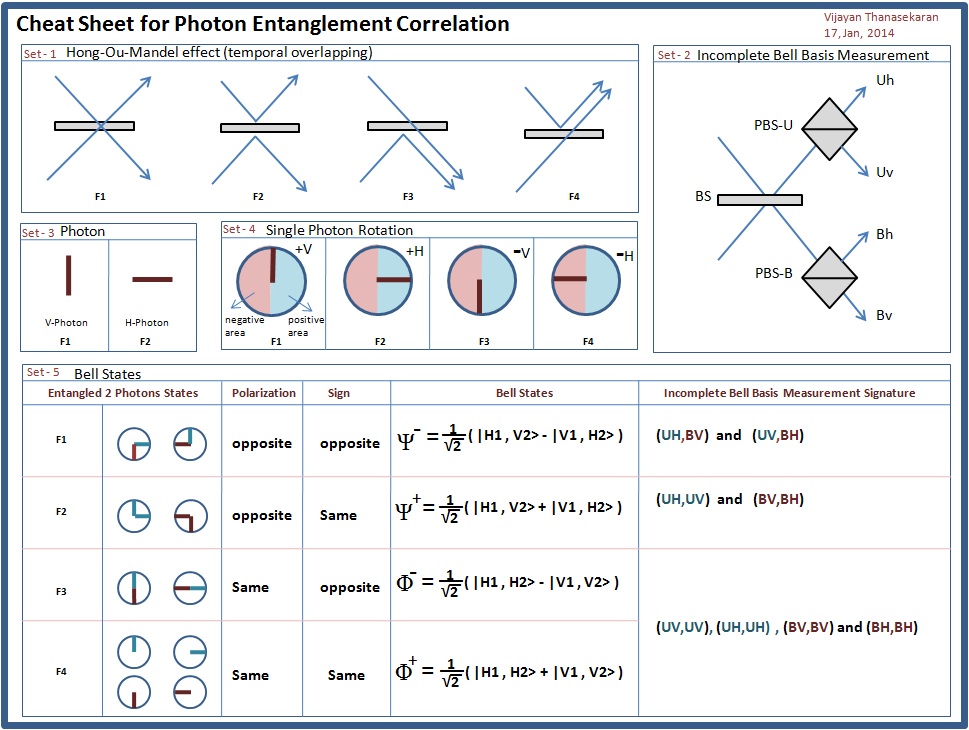
Energy disperses and objects equilibrate because of the way elementary particles become intertwined when they interact through “quantum entanglement,” with entanglement building up between the state of objects like a coffee cup and the state of the room.
It is the loss of information through quantum entanglement, rather than a subjective lack of human knowledge, that drives a cup of coffee into equilibrium with the surrounding room, with the room eventually equilibrating with the outside environment, and the environment drifting even more slowly toward equilibrium with the rest of the universe.
This means the forward march of time isn’t just about energy spreading out randomly. It’s about information getting tangled up in ways that can’t be undone, creating an irreversible cosmic web of cause and effect.
Entropy Might Not Create Time’s Arrow After All

Some scientists have questioned the traditional relationship between entropy and time’s arrow, suggesting the connection may be more complex than previously thought. This challenges one of science’s most cherished explanations.
Even if you lived in a system where local entropy decreases, time would still run forward for you, which is sufficient to draw the big conclusion: thermodynamic arrow of time does not determine our perceptive arrow of time.
Think about it: if entropy truly governed time’s direction, shouldn’t time reverse in situations where entropy decreases? Yet our experience suggests time marches on regardless, pointing to deeper mysteries we’ve yet to uncover.
Time Dilation Happens at Quantum Scales

Time dilation causes entanglement between the center of mass of a quantum particle and its internal degrees of freedom, taking place due to relativistic corrections to the dynamics of quantum systems, and having consequences for quantum interference of composite systems.
The time dilation produced by Earth’s gravity is sufficient to have a measurable influence on quantum interference in near-future experiments. The lifetime of an excited atom depends on whether it is in a quantum superposition or a classical mixture of heights in a gravitational field, leading to quantum time dilation, with the fractional frequency shift of an atom’s spectrum being sensitive to this quantum time dilation effect.
Even the tiniest quantum particles experience Einstein’s time dilation, but in ways that create bizarre entangled relationships between different parts of the same particle. Reality gets weird when you zoom in close enough.
Physics Laws Work Backwards in Time
The fundamental microscopic laws all turn out to be time symmetric, with Newton’s laws, the Schrödinger equation, the special and general theory of relativity making no distinction between the past and the future. As Brian Greene noted, “no one has ever discovered any fundamental law which might be called the Law of the Spilled Milk or the Law of the Splattered Egg,” with only secondary laws describing macroscopic objects containing many atoms explicitly containing time asymmetry.
The laws of physics are symmetric under time-reversal transformations, yet we only ever perceive time’s arrow as running in one particular forward direction, with the reason why not yet known.
This creates one of physics’ greatest paradoxes: the universe operates on rules that work equally well forwards and backwards, yet you never see broken eggs reassemble themselves or coffee spontaneously heating up.
Time Might Be Quantized Like Everything Else
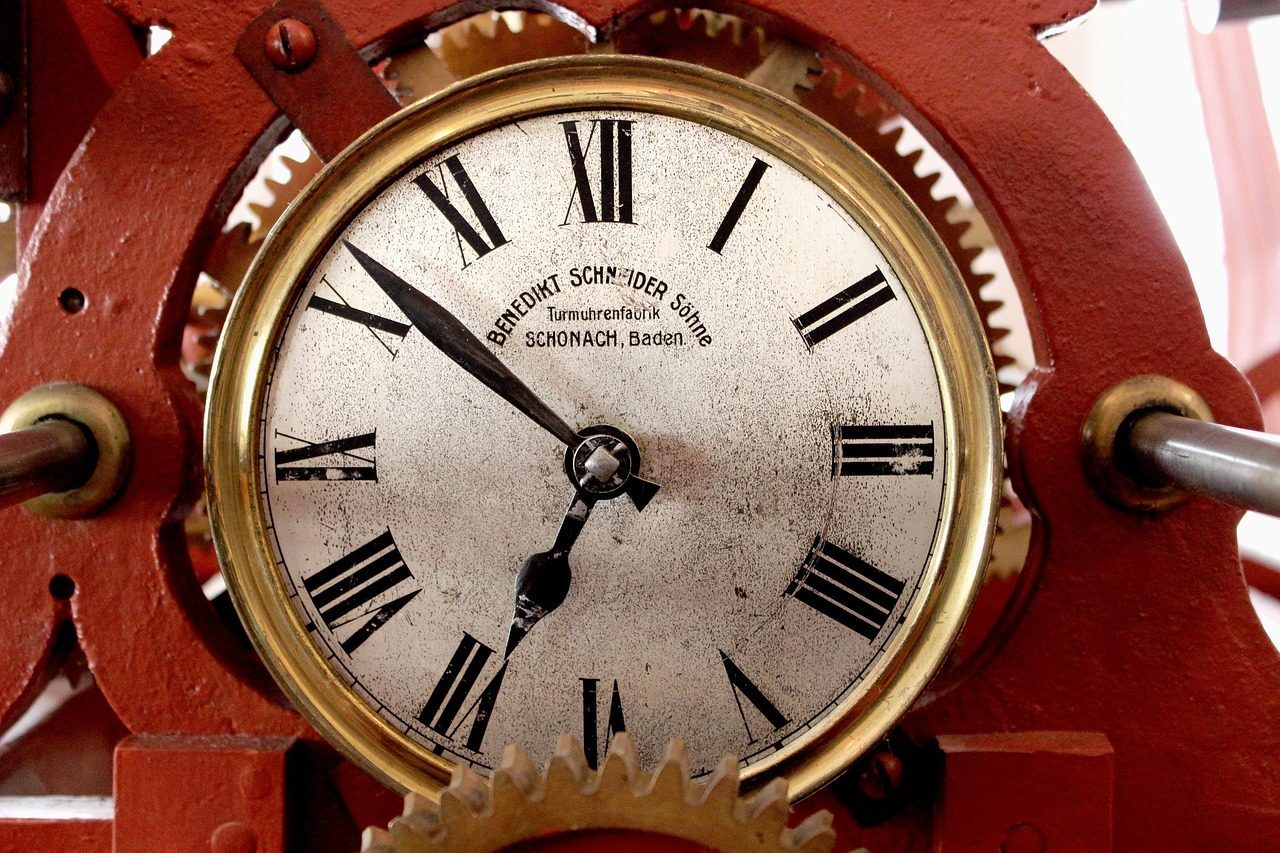
Scientists built a tiny clock from single-electron jumps to probe the true energy cost of quantum timekeeping, discovering that reading the clock’s output requires vastly more energy than the clock uses to function. This suggests might come in discrete packets.
A study led by the University of Oxford has identified a surprising source of entropy in quantum timekeeping – the act of measurement itself, demonstrating that the act of measurement creates fundamental limits to how precisely we can know time.
If time is quantized, it means there’s a smallest possible unit of time, like pixels on a screen. Below that scale, the very concept of “before” and “after” might break down completely, revealing the pixelated nature of reality itself.
Conclusion

These ten mind-bending facts reveal that time isn’t the steady, predictable backdrop to existence you thought it was. From three-dimensional time flows to quantum clocks that age differently depending on their quantum states, from negative time to time crystals that repeat forever, the nature of time challenges our deepest assumptions about reality.
Perhaps most shocking is that the fundamental laws of physics don’t even distinguish between past and future, yet here you are, experiencing a definite arrow of time. Whether this arrow emerges from quantum entanglement, from the mysterious process of measurement itself, or from something even stranger we haven’t discovered yet, one thing is certain: remains one of the universe’s greatest mysteries.
What do you think about these revelations? Does knowing that time might not be what it seems change how you experience each passing moment? Tell us in the comments.
Jan loves Wildlife and Animals and is one of the founders of Animals Around The Globe. He holds an MSc in Finance & Economics and is a passionate PADI Open Water Diver. His favorite animals are Mountain Gorillas, Tigers, and Great White Sharks. He lived in South Africa, Germany, the USA, Ireland, Italy, China, and Australia. Before AATG, Jan worked for Google, Axel Springer, BMW and others.