
You’ve probably heard the word “black hole” thrown around in science documentaries, blockbuster movies, and late-night internet rabbit holes. Most people have a rough idea of what they are. Massive. Dark. Scary. Something you definitely don’t want to fall into. But here’s the truth: even the most informed person on the planet has barely scratched the surface of how genuinely, jaw-droppingly strange these cosmic objects really are.
From bending time itself to eating entire stars like cosmic spaghetti, black holes challenge everything you think you know about reality, physics, and the universe. What you’re about to discover goes far beyond the basics. So buckle up, because space is about to get very, very weird.
1. Black Holes Are Not Actually “Holes” at All
Let’s be real – the name is a little misleading. Black holes are not really holes at all. They are huge concentrations of matter packed into very tiny spaces. Think of squeezing the entire mass of a mountain range into something smaller than a marble. That’s the kind of density we’re talking about here.
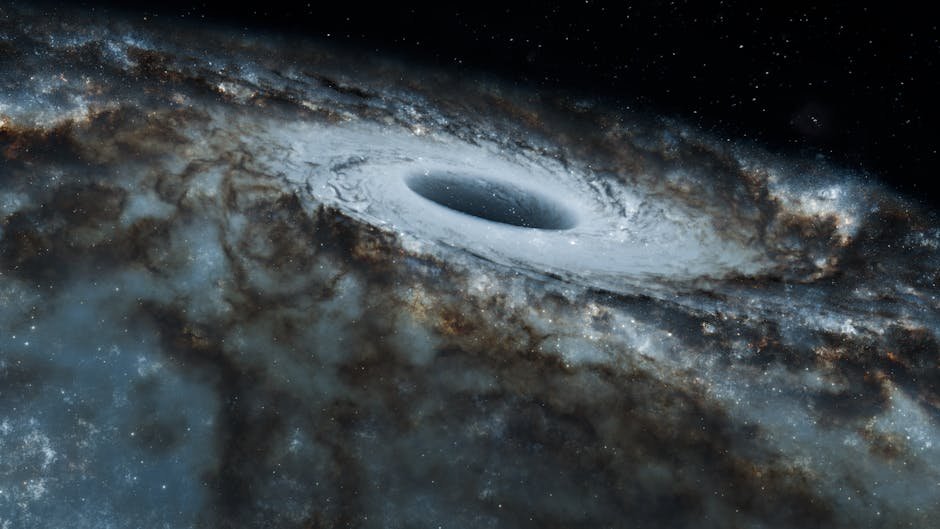
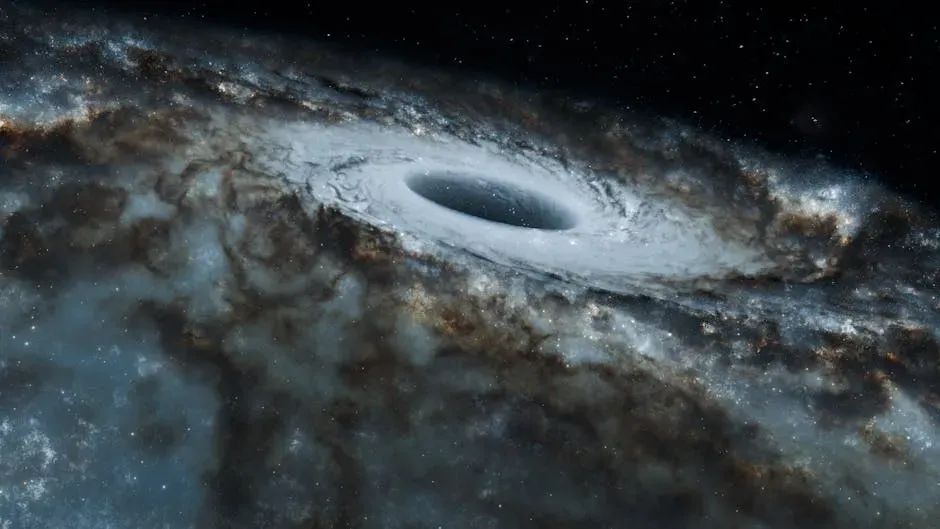
A black hole is a region in space where matter is packed so densely that its gravity becomes overwhelmingly strong. This gravitational pull is so powerful that nothing, not even light, can escape once it crosses a boundary known as the event horizon. Inside this region lies the singularity, a point where the laws of physics as we know them break down, and density becomes infinite. So it’s more like an invisible gravitational prison than a hole – one with no exits, ever.
2. Time Actually Slows Down Near a Black Hole
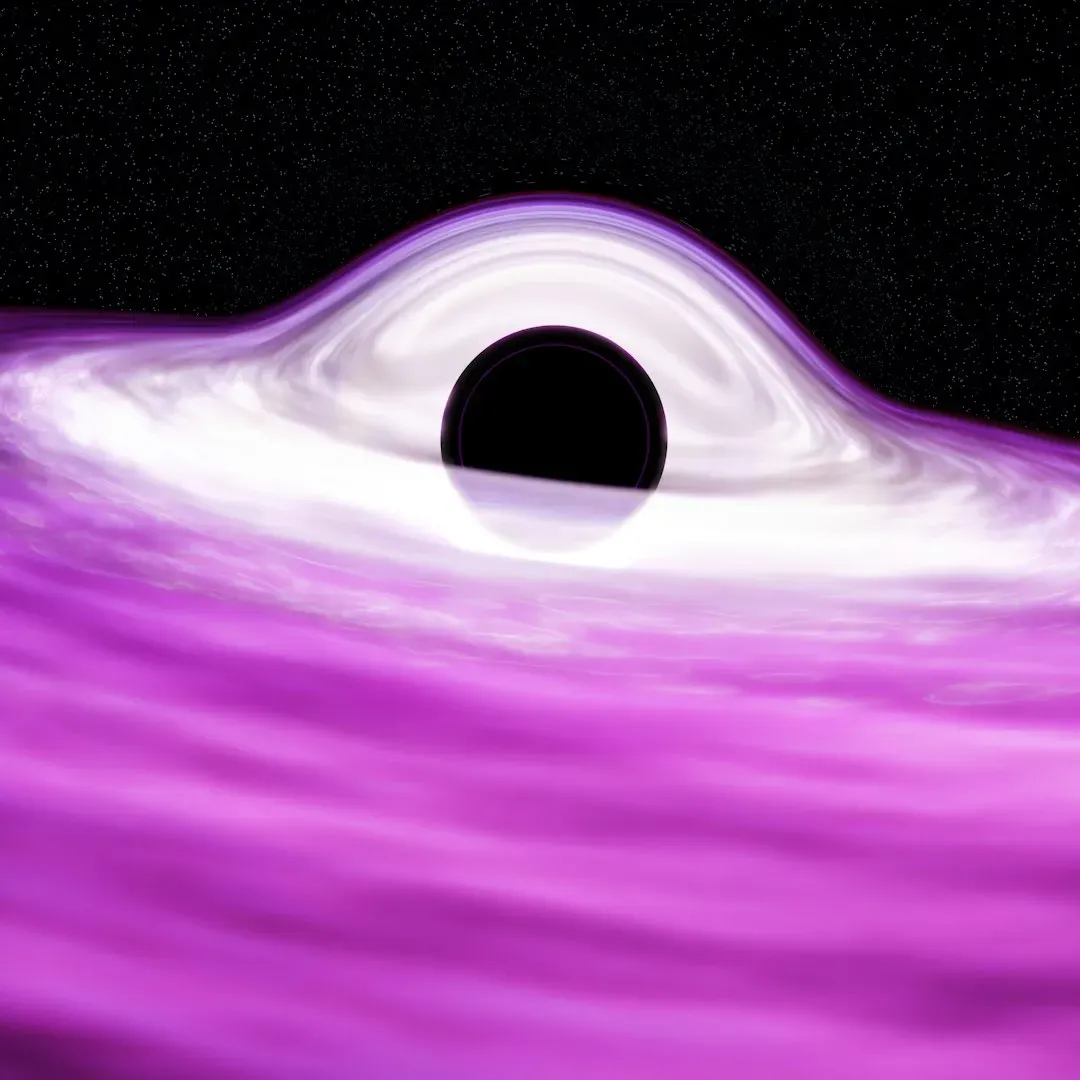
Here’s something that sounds more like science fiction than science fact. One of the most mind-bending effects of black holes is their ability to distort time. According to Einstein’s theory of general relativity, intense gravitational fields warp both space and time. This isn’t just a theory on a chalkboard – it’s a mathematically verified phenomenon with real consequences.
An observer watching a spaceship approach a black hole would see its movements slow dramatically due to gravitational time dilation. In practical terms, if an astronaut were to stay near the event horizon for a significant amount of time and then return to Earth, they would experience far less time than those who remained at home. It’s the kind of thing that makes your brain hurt when you really sit with it. You could, in theory, return home to find everyone you knew had aged decades while you barely aged at all. The movie Interstellar had it right.
3. You Would Be “Spaghettified” If You Fell In
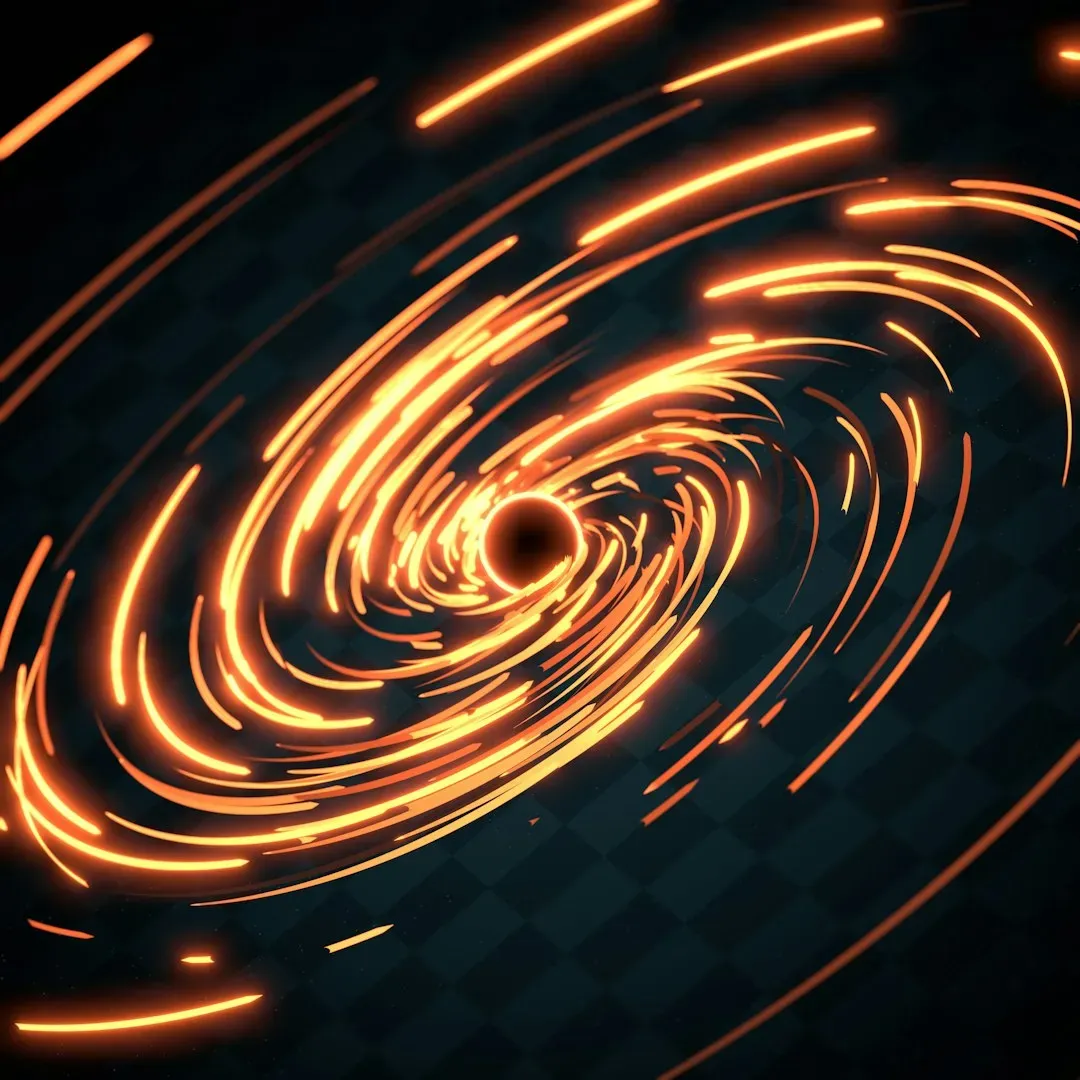
Honestly, this is one of the most bizarre and viscerally unsettling facts in all of astrophysics. A stellar-size black hole’s gravity field is extreme and can vary enormously over small distances. If you fell in, your feet would immediately get pulled way more than your head, and you would stretch – a lot. This super stretching effect is called spaghettification. Yes, it’s exactly as alarming as it sounds.
Equations crunched so far suggest that an object falling into a black hole becomes “spaghettified” or stretched out as it nears the singularity. If it was you who was falling inside the black hole, you’d be able to see distorted images as light bends around your point of view. Eventually, the ripped apart object loses dimensionality completely and disappears into the singularity. Imagine being stretched thinner and thinner, like taffy being pulled apart, until you simply cease to exist as a recognizable object. Not the way anyone wants to go.
4. Black Holes Are Invisible – Yet Also Among the Brightest Things in the Universe
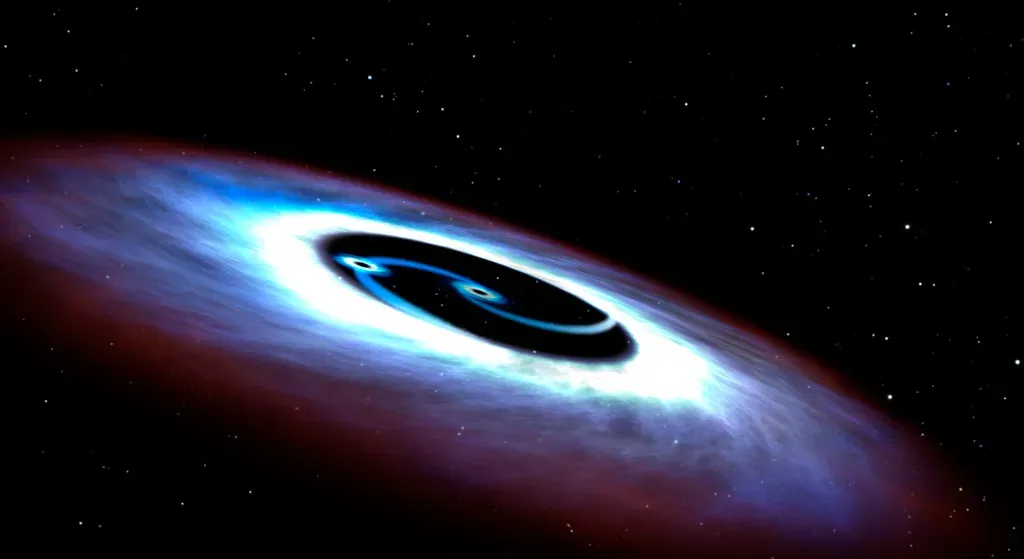
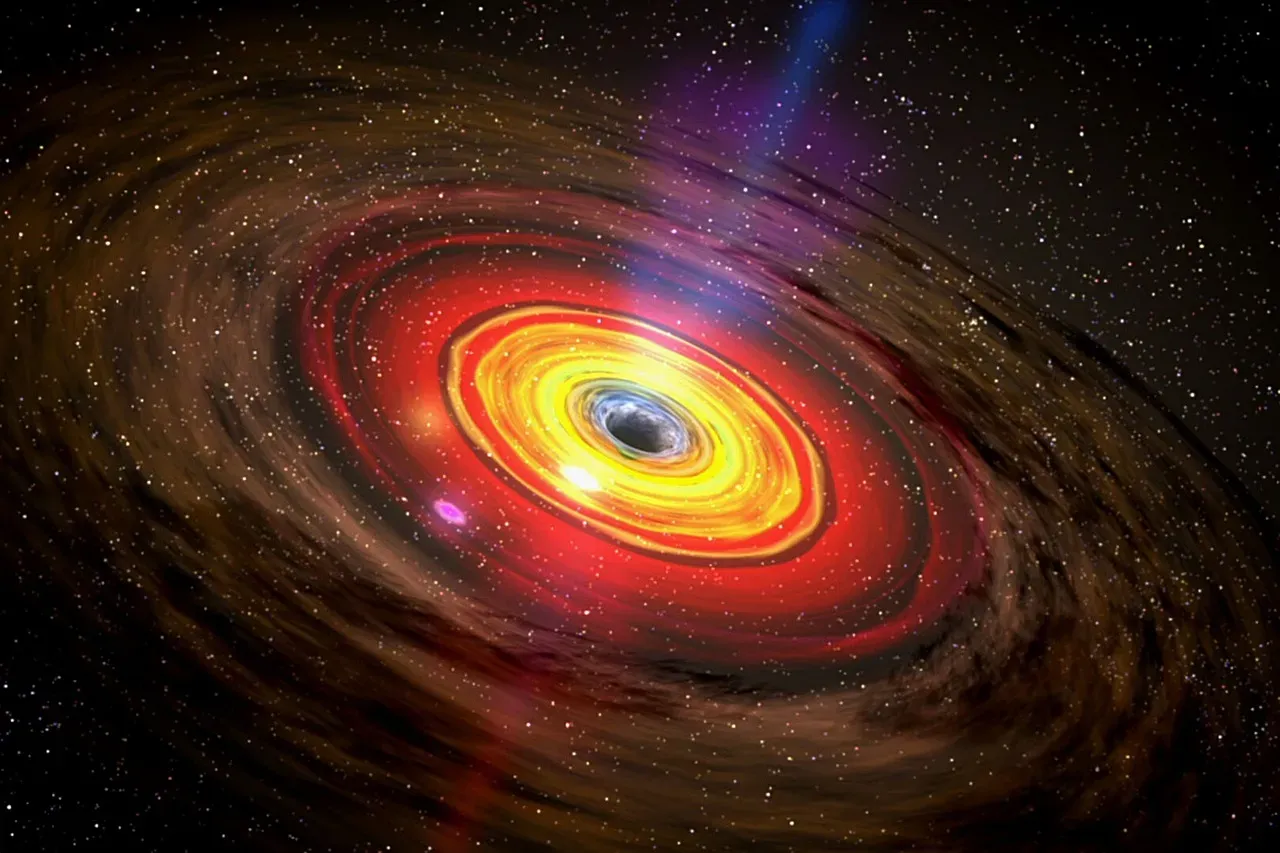
This sounds like a contradiction, but it’s one of the most fascinating paradoxes in all of astronomy. Black holes don’t emit or reflect light, making them effectively invisible to telescopes. Scientists primarily detect and study them based on how they affect their surroundings – black holes can be surrounded by rings of gas and dust, called accretion disks, that emit light across many wavelengths, including X-rays. They are dark at their core, but their neighborhood blazes with energy.
As gas flows around a black hole, it heats up, paradoxically making these invisible objects into some of the brightest things in the entire universe. As a result, we can see some black holes from billions of light-years away. Quasars are very hot, bright objects that happen when black holes pull in gas and dust. The ring of dust and gas around the black hole glows brightly, making it easy for astronomers to spot them. Some quasars shine brighter than entire galaxies, and are visible billions of light-years across the universe.
5. There Could Be Hundreds of Millions of Black Holes in Our Galaxy Alone
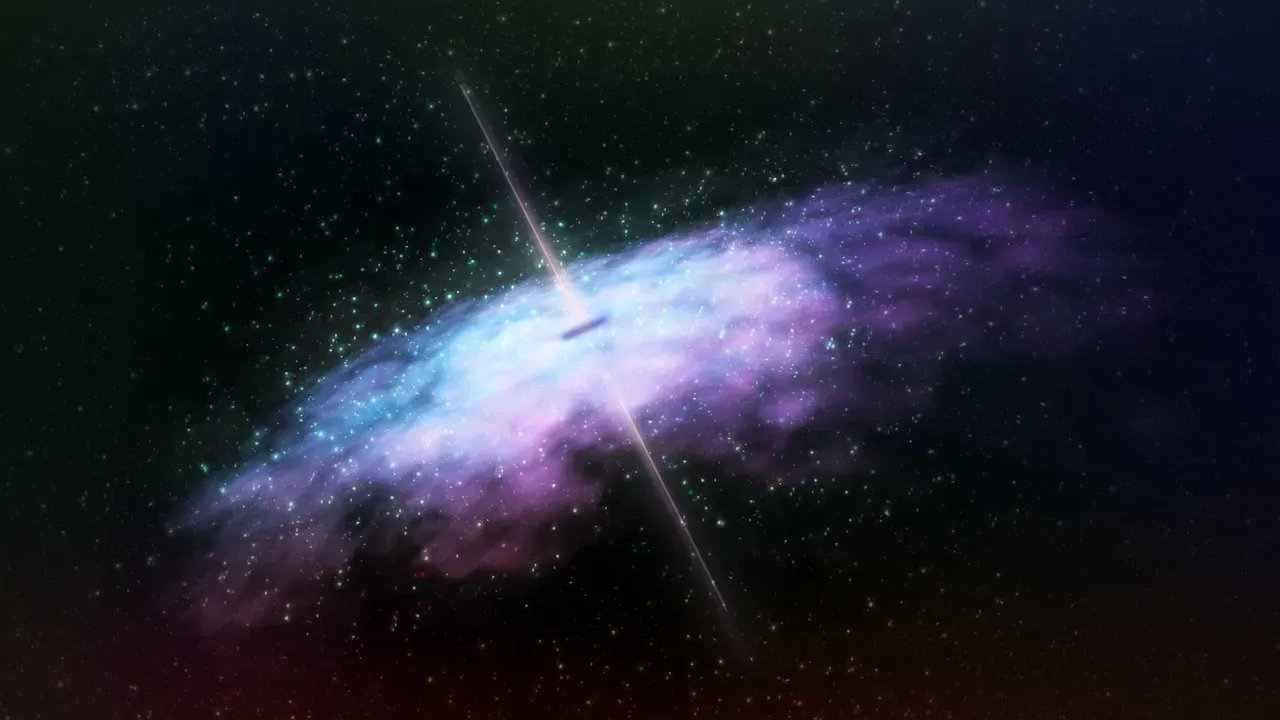
Most people think of black holes as rare cosmic curiosities, distant and exceptional. That’s far from the truth. Approximately one out of every thousand stars is massive enough to become a black hole. Since the Milky Way contains over 100 billion stars, our home galaxy must harbor some 100 million black holes. Think about that for a second – this isn’t a distant galaxy we’re talking about. This is our home.
There are probably millions of black holes in the Milky Way alone, orbiting like the stars, but we cannot see them. Black holes are extremely dense pockets of matter, objects of such incredible mass and miniscule volume that they drastically warp the fabric of space-time. They drift through space silently, invisible unless they are actively feeding on nearby matter. The thought that so many lurk in our own galactic backyard is, I think, one of the most humbling facts in all of science.
6. Black Holes Can Collide and Ripple the Fabric of Space-Time
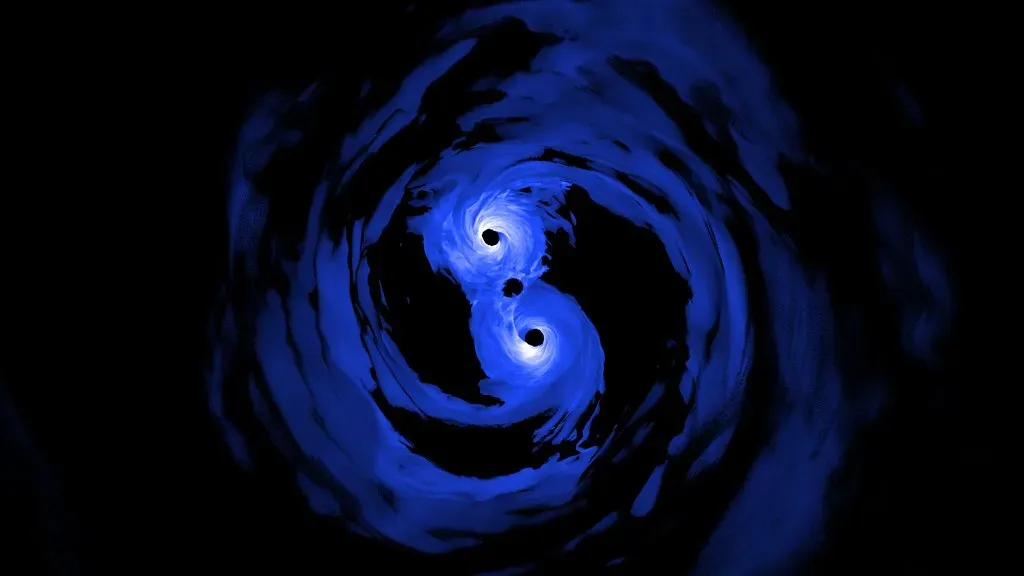
Black holes are not static – they can collide and merge, forming even larger and more powerful entities. When two black holes spiral toward each other due to gravitational attraction, their orbital motion releases vast amounts of energy in the form of gravitational waves. These waves ripple through space-time and can now be detected by observatories like LIGO and Virgo. The discovery of these waves was one of the most celebrated moments in modern science.
When very massive objects accelerate through space, they create ripples in the fabric of space-time called gravitational waves. Scientists can detect some of these by the ripples’ effect on detectors. It’s a little like dropping two bowling balls into an invisible ocean and watching the waves travel outward for billions of light-years before finally reaching our instruments. The universe itself rings like a bell when black holes collide.
7. A “Runaway” Black Hole Was Confirmed Racing Through Space at 2.2 Million Miles Per Hour
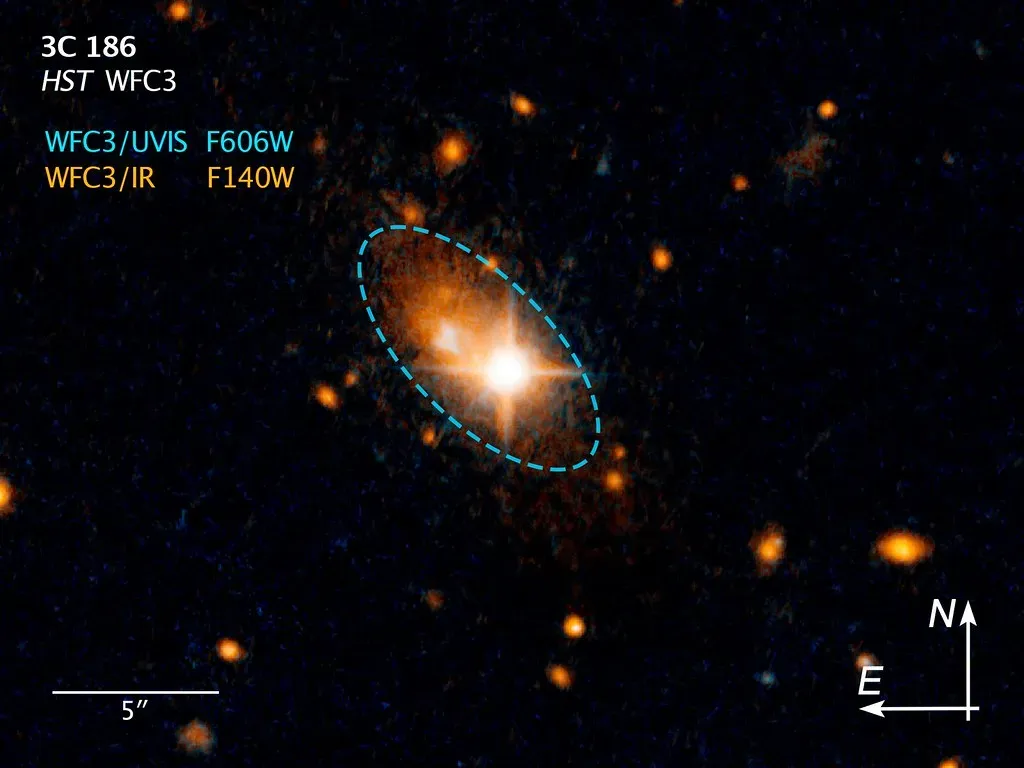
This one is still fresh, and it’s genuinely shocking. Most supermassive black holes sit quietly at the centers of their galaxies. Not this one. NASA’s James Webb Space Telescope captured a runaway black hole that measures about 10 million times larger than the sun and is moving at a speed of 2.2 million miles per hour. The supermassive black hole pulled away from its galaxy, and is now headed on a potentially endless journey through space.
That not only makes this the first confirmed runaway supermassive black hole, but this object is also one of the fastest-moving bodies ever detected, rocketing through its home, a pair of galaxies named the “Cosmic Owl,” at 3,000 times the speed of sound at sea level here on Earth. The black hole is pushing forward a literal galaxy-sized “bow-shock” of matter in front of it, while simultaneously dragging a 200,000 light-year-long tail behind it, within which gas is accumulating and triggering star formation. It’s creating stars as it flees. That’s not just astonishing – that’s almost poetic.
8. Black Holes Slowly “Evaporate” Over Unimaginably Long Timescales
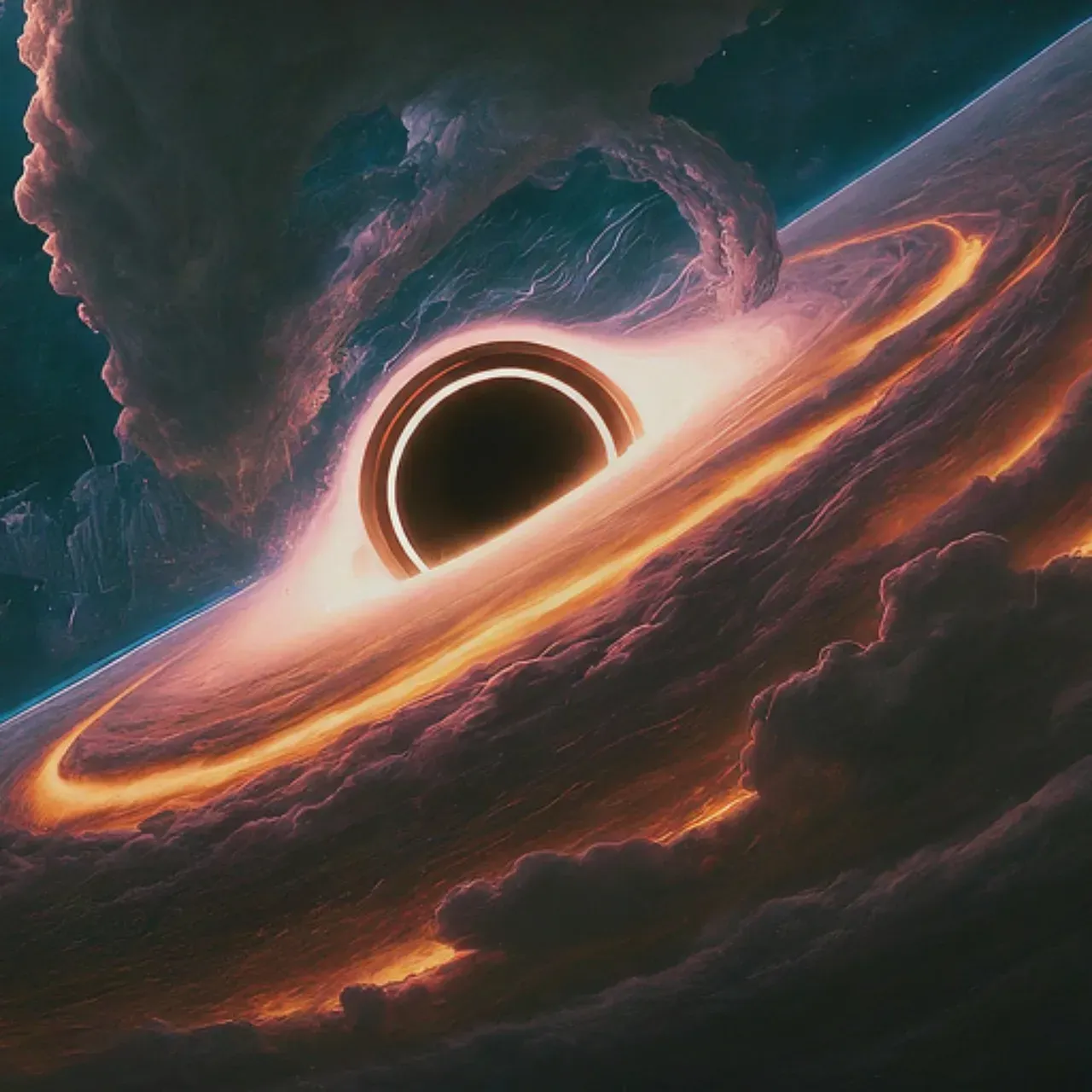
You might assume that once a black hole forms, it sticks around forever. It doesn’t. Hawking Radiation is a theoretical prediction that black holes emit radiation due to quantum effects near their event horizons. This radiation arises from quantum fluctuations where particle-antiparticle pairs are generated. One particle may fall into the black hole while the other escapes as radiation. This process implies that black holes can lose mass over time, which challenges the classical notion that nothing, not even light, can escape from a black hole.
As black holes emit Hawking Radiation, they lose mass and shrink over time. The rate of evaporation is extremely slow for large black holes, taking much longer than the current age of the universe to completely evaporate. However, smaller black holes, such as hypothetical primordial black holes, could evaporate much faster and might be detectable through the radiation they emit during this process. It’s hard to say for sure when we’ll ever directly observe this, since the radiation is almost impossibly faint – but the implication alone is mind-bending. Even the most powerful objects in the universe are mortal.
9. The Information Paradox: What Happens to Everything a Black Hole Swallows?
This is arguably the deepest unsolved problem in modern physics, and it’s one that keeps some of the world’s smartest people up at night. The black hole information paradox is a fundamental problem in theoretical physics that questions what happens to the information contained within matter that falls into a black hole, once the black hole has completely evaporated. According to the principles of quantum mechanics, information must be conserved, but if the black hole disappears, it seems as though the information could be lost forever. Hawking Radiation is central to this paradox because it is the mechanism by which black holes lose mass and potentially information.
It is now generally believed that information is preserved in black-hole evaporation. For many researchers, deriving the Page curve is synonymous with solving the black hole information puzzle. But views differ as to precisely how Hawking’s original semiclassical calculation should be corrected. In recent years, several extensions of the original paradox have been explored. The short version: we suspect information survives, but we still can’t fully explain how. The universe, it seems, is a place that refuses to make things easy for us.
10. The Most Massive Black Hole Known Has the Mass of 66 Billion Suns
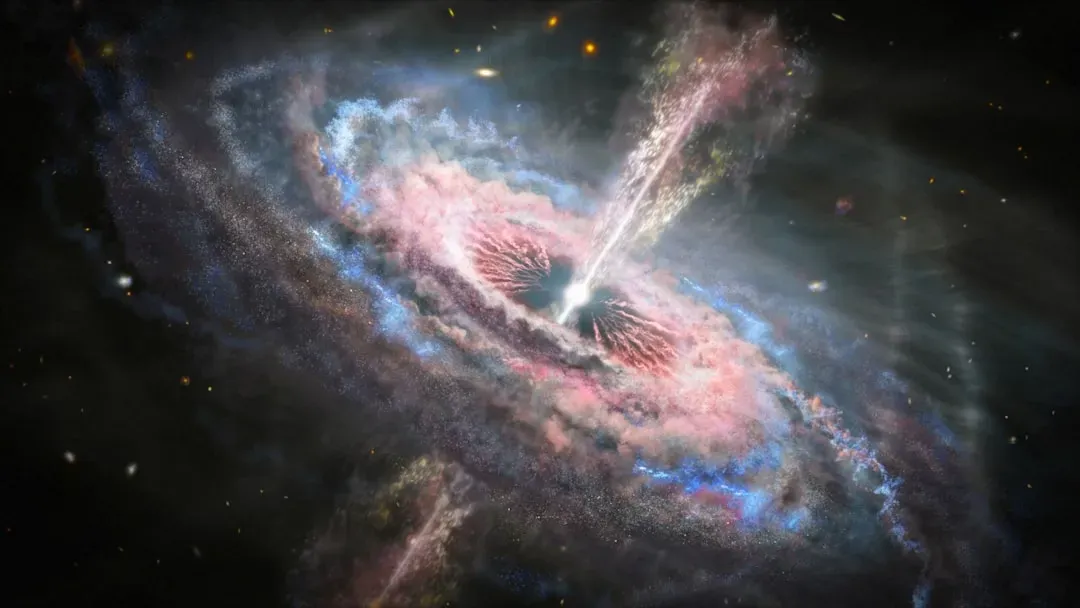
The most massive black hole observed, TON 618, tips the scales at 66 billion times the Sun’s mass. Let that number roll around in your mind for a moment. Sixty-six billion suns. Our own sun is so enormous that over a million Earths could fit inside it. Now multiply that incomprehensible size by 66 billion. It’s the kind of number that language almost fails to describe.
On the other end of the scale, the lightest-known black hole is only 3.8 times the Sun’s mass, and it’s paired up with a star. The universe, it turns out, makes black holes in wildly different sizes. One supermassive black hole is so far from Earth that it has taken 12 billion years for the light emitted by material around it to reach us. It is visible at almost the dawn of time because this monster, with a mass of between 17 billion and 19 billion times that of the sun, powers the brightest quasar ever seen by humanity. Maintaining this emission requires the black hole to consume the equivalent of the mass of the sun in gas and dust every day. A sun’s worth of material, every single day.
Conclusion: We Have Only Just Begun to Understand These Cosmic Giants
Here’s the thing about black holes – the more science uncovers, the more mysterious they become. From stretching matter into spaghetti to bending the flow of time itself, from evaporating away over cosmic eternities to rocketing through galaxies at millions of miles per hour, these objects defy nearly every instinct we have about how reality should work.
Black holes fascinate both the public and scientists – they push the limits of our understanding about matter, space and time. Scientists across the world have made many discoveries about our universe with the help of black holes, but there’s a lot we still don’t know about these extraordinary cosmic phenomena. In a very real sense, black holes are windows into the unknown, pointing toward new physics we haven’t even written yet.
The universe is under no obligation to be simple. Black holes prove that beautifully. Which of these facts surprised you the most? Drop your thoughts in the comments – we’d love to know what blew your mind.