
Physics is supposed to be the rulebook of the universe. Solid, reliable, and unshakeable. Yet, time and again, some of the most brilliant minds in human history have cracked open that rulebook, scribbled in the margins, and turned entire chapters upside down. What we thought we knew about space, time, matter, and reality itself has been challenged, revised, and sometimes completely dismantled.
From particles that seemingly “talk” to each other across impossible distances to the shocking revelation that our universe is not just expanding but accelerating into oblivion, these discoveries didn’t just add new pages to physics. They rewrote the whole story. Buckle up, because what follows is genuinely one of the most mind-twisting journeys science has ever taken us on.
1. Quantum Entanglement: Spooky Action That Einstein Couldn’t Deny
In the 1930s, scientists including Albert Einstein and Erwin Schrödinger first discovered the phenomenon of entanglement. Disturbingly, it required two separated particles to remain connected without being in direct contact. Einstein famously called it “spooky action at a distance,” since the particles seemed to be communicating faster than the speed of light. Honestly, when even Einstein is disturbed by something, you know it’s worth paying attention to.
The 2022 Nobel Prize in Physics recognized three scientists who made groundbreaking contributions in understanding quantum entanglement. In the simplest terms, quantum entanglement means that aspects of one particle of an entangled pair depend on aspects of the other particle, no matter how far apart they are or what lies between them. These particles could be, for example, electrons or photons, and an aspect could be the state it is in, such as whether it is “spinning” in one direction or another. What makes this so profound is that it didn’t just bend a rule of physics. It shattered the very concept of locality that classical science held sacred.
2. The Double-Slit Experiment: Reality Changes When You’re Watching
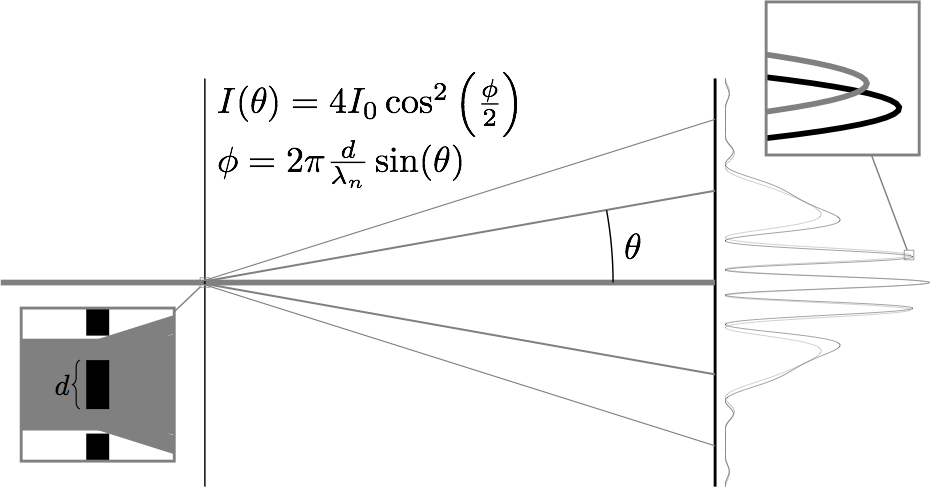
Among the most famous and mind-bending physics discoveries, the double-slit experiment stands out for the way it challenges our understanding of reality. Conducted first by Thomas Young in the early 1800s with light and later adapted for electrons and other particles, this experiment revealed something shocking – particles can behave like waves, and waves can behave like particles. Think about that for a second. The thing you’re made of doesn’t behave the same way depending on whether someone is watching it.
When both slits are open, something strange happens – the particles create an interference pattern, the kind you’d normally see with waves, like ripples in water. Even stranger, this pattern forms even if you fire the particles one at a time, as if each particle is somehow going through both slits simultaneously. In technology, this wave-particle duality forms the basis of innovations like quantum computing, which relies on particles existing in multiple states at once. Ultimately, the double-slit experiment shows us that reality isn’t as fixed or predictable as we once believed.
3. Dark Energy: The Universe Is Speeding Up and Nobody Knows Why
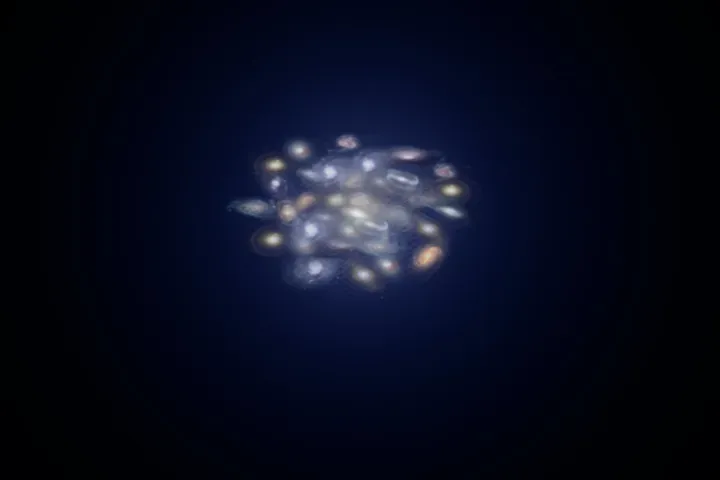
In 1998, the High-Z Supernova Search Team published observations of Type Ia supernovae. In 1999, the Supernova Cosmology Project followed by suggesting that the expansion of the universe is accelerating. The 2011 Nobel Prize in Physics was awarded to Saul Perlmutter, Brian P. Schmidt, and Adam G. Riess for their leadership in this discovery. Prior to this, scientists fully expected gravity to be slowly putting the brakes on cosmic expansion. You can imagine the collective jaw-drop in the physics community.
Assuming the lambda-CDM model of cosmology is correct, dark energy dominates the universe, contributing about 68% of the total mass-energy in the present-day observable universe, while dark matter and ordinary matter contribute 27% and 5% respectively. Let that sink in. Roughly two-thirds of everything that exists is made of something we cannot see, touch, or directly detect. Dark energy is a catch-all term that scientists coined to describe whatever seems to be pushing the bounds of the universe farther and farther apart. If gravity were the only force choreographing the interstellar ballet of stars and galaxies, every celestial body would slowly return to a central point. Instead, the universe continues to drift apart – and it’s happening at an accelerating rate.
4. Hawking Radiation: Black Holes Are Not Truly Black
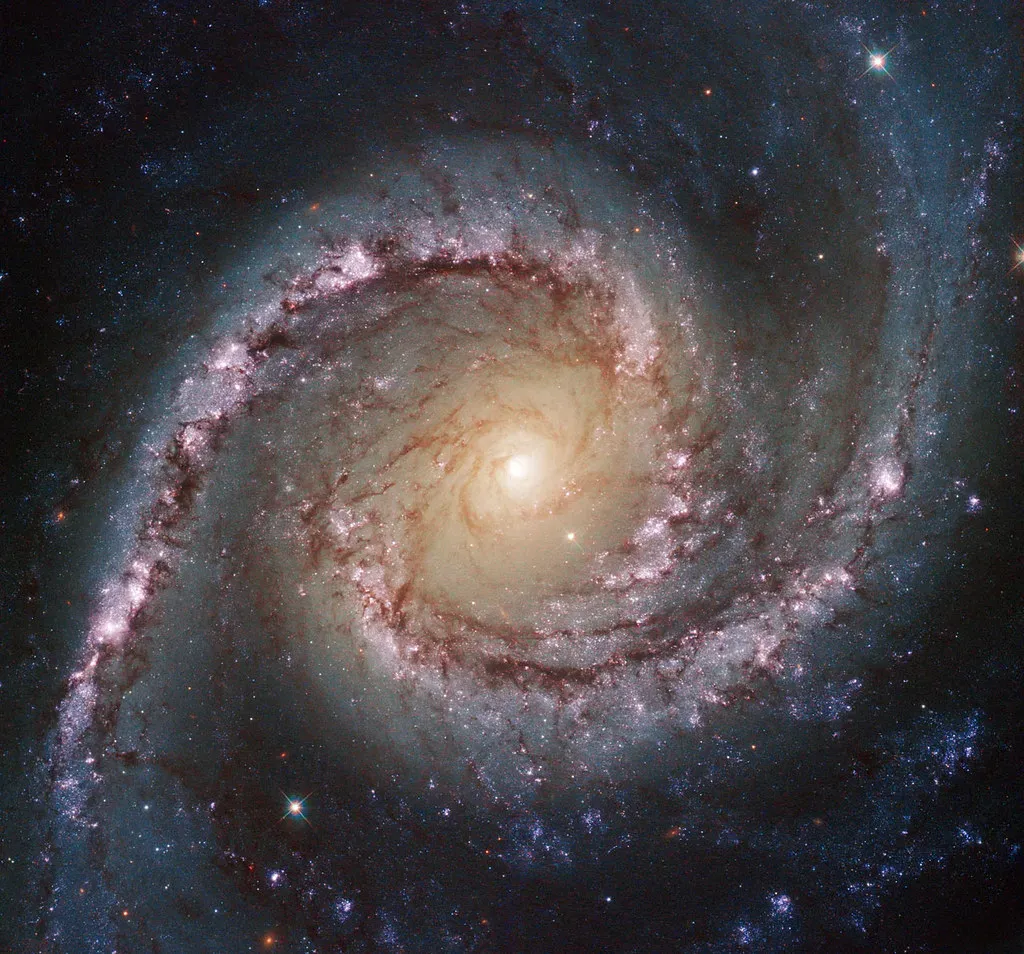
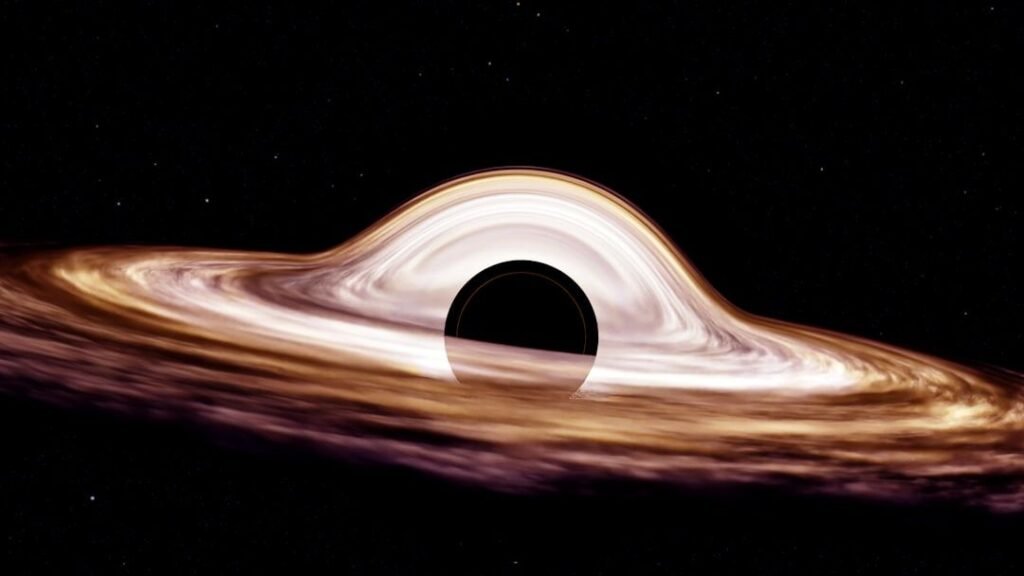
Among the most mind-bending discoveries in modern science is the Black Hole Information Paradox. At its core, it’s a clash between two of the most successful theories ever developed: Einstein’s General Relativity and Quantum Mechanics. According to General Relativity, a black hole is a region of spacetime where gravity is so intense that nothing – not even light – can escape. Anything that crosses the event horizon is thought to be lost forever.
In quantum physics, the vacuum is much more interesting, particularly when it is near a black hole. Rather than being empty, the vacuum is teeming with particle-antiparticle pairs that are created fleetingly by the vacuum’s energy, but must annihilate each other shortly thereafter and return their energy to the vacuum. Stephen Hawking brilliantly showed that near a black hole’s edge, one of these particles can escape while the other falls in, effectively causing the black hole to radiate energy and slowly evaporate. This is where the paradox arises: if matter falls into a black hole and the black hole eventually evaporates through Hawking radiation, where does the information about that matter go? Hawking initially proposed that information is lost completely, violating the laws of quantum physics. This idea unsettled scientists because it suggested a fundamental inconsistency in the fabric of reality.
5. The Higgs Boson: Cracking the Mystery of Mass Itself
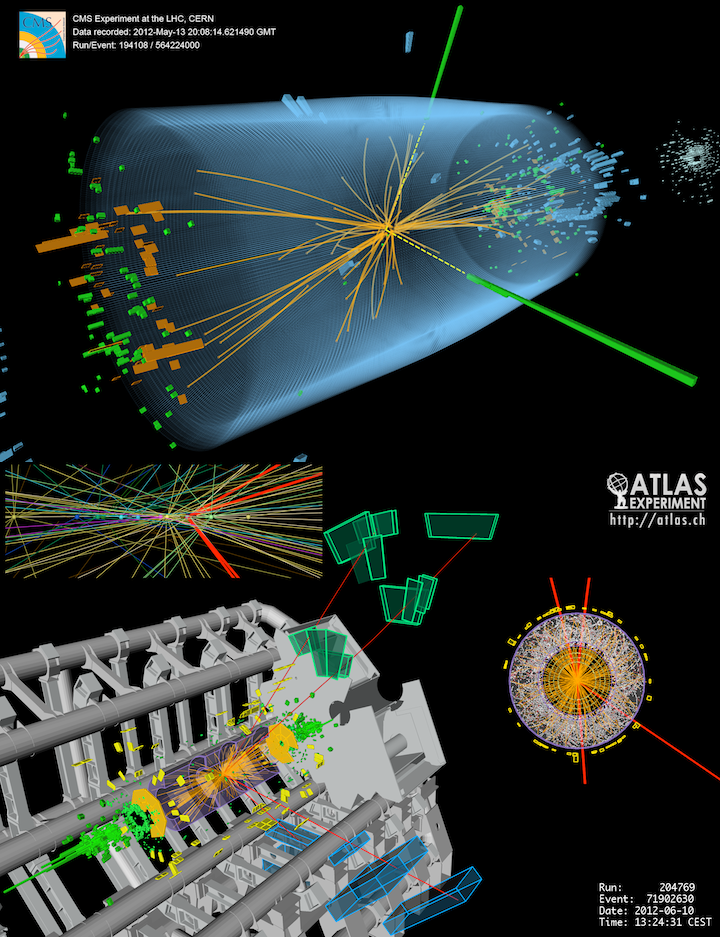
The Higgs boson, a fundamental scalar boson with mass 125 GeV, was discovered at the Large Hadron Collider at CERN in 2012. Since then, experiments at the LHC have focused on testing the Higgs boson’s couplings to other elementary particles, precision measurements of the Higgs boson’s properties, and an initial investigation of the Higgs boson’s self-interaction. Here’s the thing – before this discovery, the concept of how particles acquire mass was essentially a beautifully written theory with a gaping hole in its center.
The Higgs potential influences ideas about the cosmological constant, the dark energy that drives the accelerating expansion of the Universe, the mysterious dark matter that comprises about 80% of the matter component in the Universe, and a possible phase transition in the early Universe that might be responsible for baryogenesis. The discovery of the Higgs boson was a major milestone in particle physics, confirming the Standard Model. Direct tests of the couplings of the Higgs boson to fermions confirmed the mechanism that gives mass to the W and Z bosons, thus making the electroweak interaction short range. It’s like finally finding the piece of a puzzle that, once placed, reveals what the whole image was always supposed to look like.
6. Slowing Down and Stopping Light: Speed Is Not a Constant Prison

Danish physicist Lene Hau achieved the seemingly impossible by slowing light to 17 metres per second and later stopping it completely in 2001, working with Bose-Einstein condensates at Harvard. Light, which normally races at nearly 300 million metres per second, was essentially frozen in its tracks. If you told this to a physicist a century ago, they’d assume you were joking. Or just very confused about physics.
The breakthrough began in 1994 when Hau developed an apparatus that could cool sodium atoms to temperatures 50 billionths of a degree above absolute zero. This wasn’t merely cold – this was approaching the very limits of thermodynamic possibility, creating what physicists call a Bose-Einstein condensate, a state of matter where atoms lose their individuality and act in perfect quantum harmony. Hau’s work provides significant advances in computing, optical networks and quantum computing. Her discoveries enable both memory and processing functions for optical information while preserving quantum mechanical properties.
7. Parity Symmetry Violation: The Universe Has a Handedness
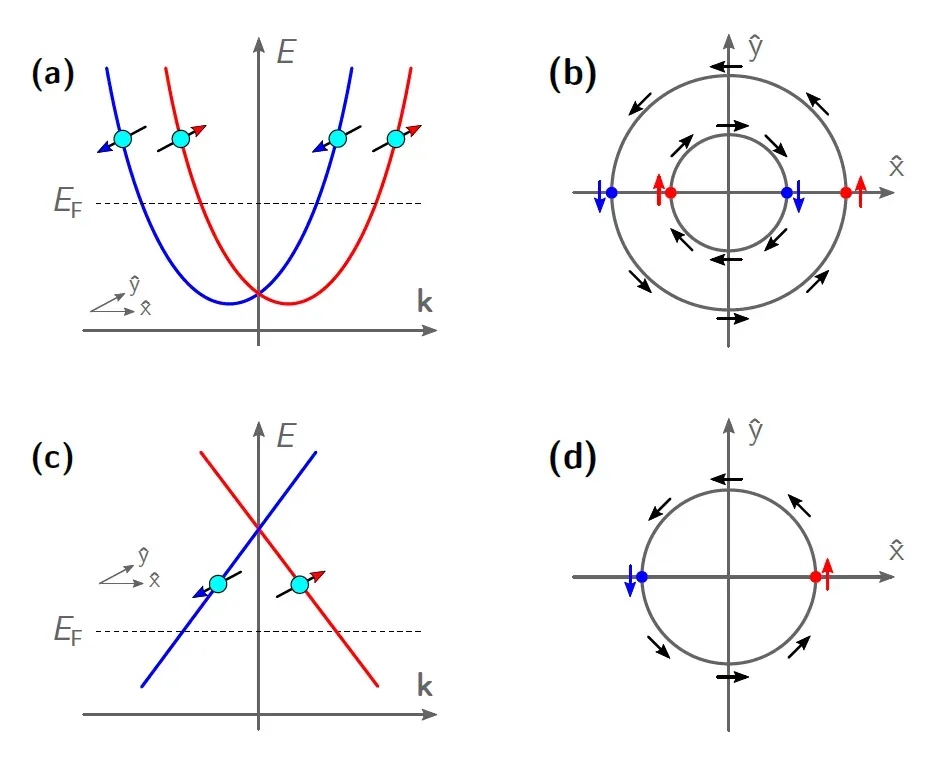
Scientists designed a study to look for violation of a concept known as “parity symmetry” in physics, which refers to mirror-image reflections akin to left- or right-handedness. Many things in physics can be said to have a handedness, like the spin of an electron. today don’t usually care if this spin is left or right-handed. That equal application of regardless of handedness is referred to as parity symmetry.
The only problem is that parity symmetry must have been broken at some point. Some ancient parity violation – some kind of preference for right-handed or left-handed stuff in the distant past – is required to explain how the universe was created. Researchers established their finding with a degree of certainty known as seven sigma, a measure of how unlikely it is to achieve the result based on chance alone. In physics, a result with a significance of five sigma or higher is typically considered reliable because the odds of a chance result at this level are vanishingly small. In other words, the universe itself appears to have picked a “side.” I think that’s one of the strangest single facts in all of science.
8. Neutrinos Have Mass: The Ghost Particles That Broke the Standard Model
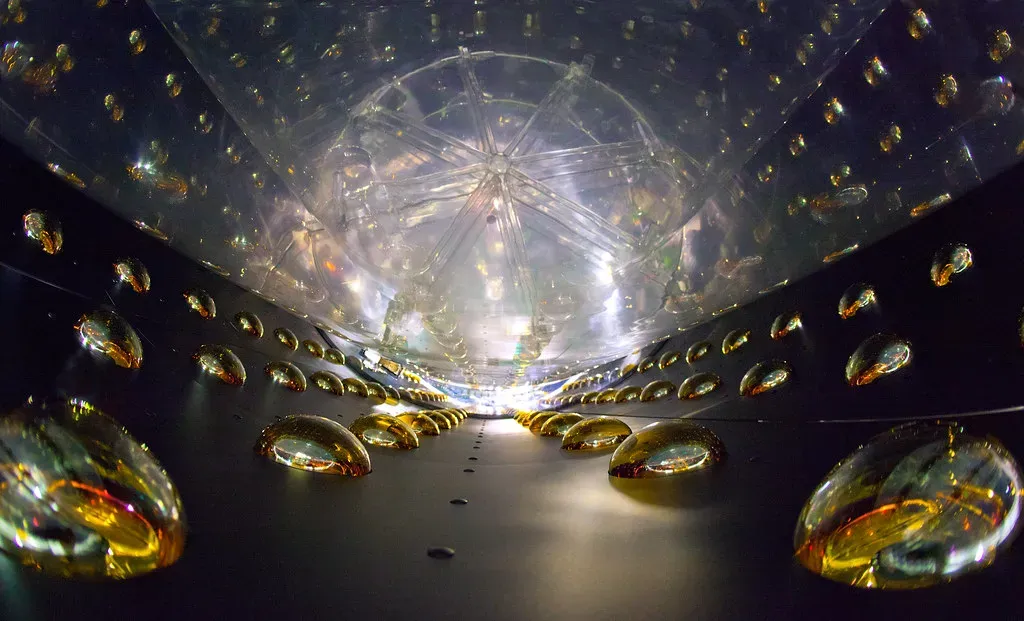
Neutrinos – often called “ghost particles” because they pass through matter almost undisturbed – have been a mainstay that continues to reshape physicists’ understanding of symmetry in the universe. From potential challenges to the Standard Model to advancements helping researchers narrow in on discoveries like dark matter, recent years have brought remarkable surprises as well as notable challenges to existing concepts of how the universe works. For years, the Standard Model of physics confidently declared that neutrinos had zero mass. Then experiments proved otherwise, and the model had to be quietly, uncomfortably revised.
In recent research, scientists revealed new evidence that these elusive particles may hold the key to explaining why the universe is dominated by matter rather than antimatter. If confirmed, these results could point to new symmetry-breaking mechanisms embedded deep within , offering clues about conditions moments after the Big Bang. It’s hard to say for sure exactly what this will ultimately mean for physics, but the implications are enormous. The neutrino may be the tiny ghost that leads us to the biggest answers.
9. Gravitational Waves: Hearing the Universe Speak for the First Time
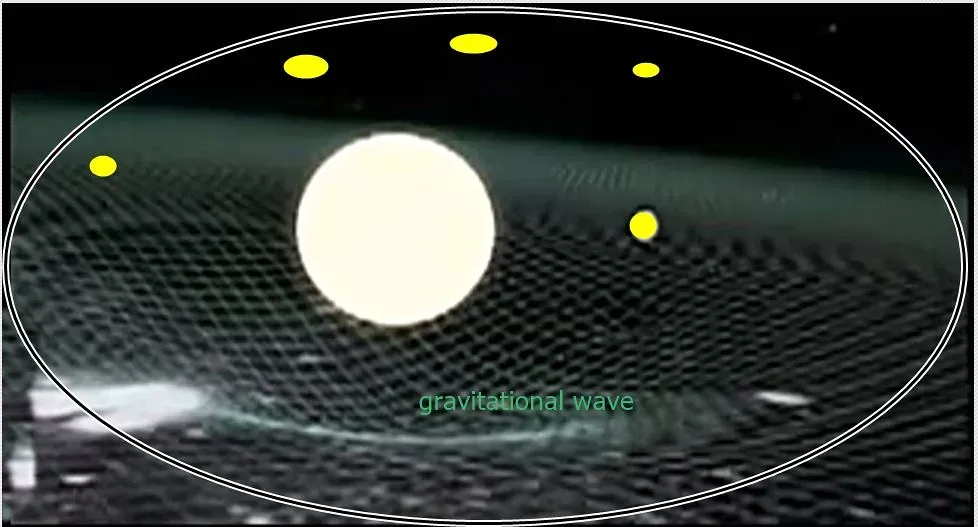
Gravitational wave astronomy is a rich area of physics that has advanced on multiple fronts, with scientists narrowing in on the sources of mysterious ultra-low-frequency signals rippling through spacetime. These waves, detected indirectly through the motions of distant pulsars, may originate from colossal mergers of supermassive black holes across the cosmos. Together, these advances are transforming gravitational waves from rare detections into a powerful new way of observing the universe.
When galaxies collide, their supermassive central black holes merge – a smashup so violent that it shakes the very fabric of space-time itself. For the first time in human history, we weren’t just looking at the universe through light. We were listening to it through the literal shaking of spacetime. It’s the difference between watching a concert on a silent screen and actually hearing the music. Because quantum sensors are so sensitive, they excel at picking up extremely weak signals such as gravitational waves. As the devices get larger, they could also test theories of gravity that extend Einstein’s general theory of relativity into the quantum realm, connecting two areas of physics that have remained stubbornly separate.
10. Quantum Foam: Empty Space Is Not Actually Empty
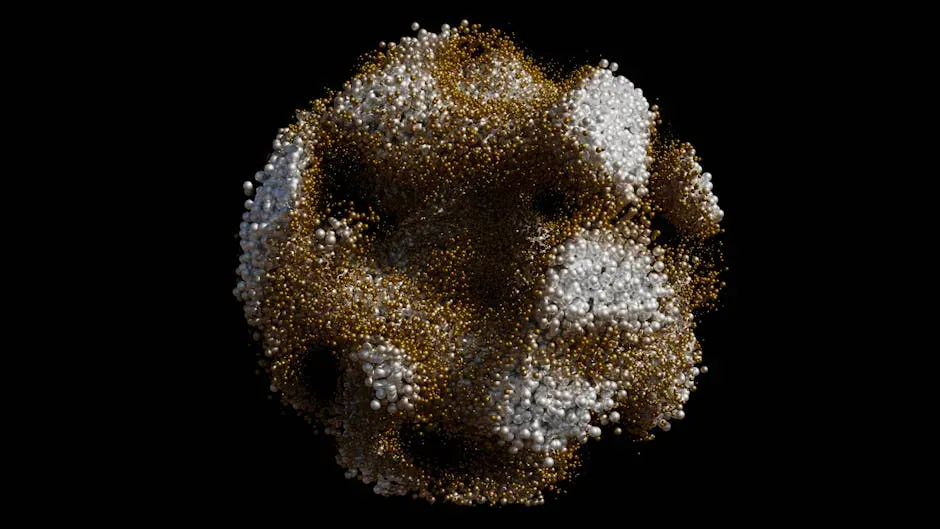
The thing about empty space, you’d think, is that it’s empty. That sounds like a pretty safe assumption – it’s in the name, after all. But the universe is too restless to put up with that, which is why particles are constantly popping into and out of existence all over the place. They’re called virtual particles, but make no mistake – they’re real, and proven. Imagine your living room suddenly producing a real chair for a fraction of a second before it vanishes. That’s essentially what’s happening throughout every single cubic millimetre of “empty” space in the universe, right now.
These particles exist for only a fraction of a second, which is long enough to break some fundamental laws of physics but quick enough that this doesn’t actually matter. Scientists have called this phenomenon “quantum foam,” because apparently it reminded them of the shifting bubbles in the head of a soft drink. Rather than conjuring something from nothing, physicists have managed to teleport energy over microscopic distances. The leap worked because the team exploited the strange properties of the quantum vacuum – a peculiar type of nothing that is actually imbued with a sort of sizzling quantum energy. Let’s be real: the idea that the vacuum of space is secretly boiling with invisible activity is perhaps the single most reality-defying fact in this entire list.
Conclusion: The Universe Will Always Have More Surprises
What ties all of these discoveries together is not just their strangeness. It’s the humbling realization that the universe consistently refuses to behave the way we expect it to. Every time physics thinks it has found a firm floor beneath its feet, a new discovery reveals a trap door. From particles that are mysteriously linked across the universe to the shocking fact that roughly two-thirds of all existence is made of something science still cannot explain, the pattern is unmistakable.
We are living in perhaps the most exciting era in the history of physics. New tools, new telescopes, and new mathematical frameworks are pushing the boundaries of what we can even ask about reality. The discoveries above didn’t just rewrite . They reminded us that those laws are still very much a work in progress.
So here is a thought to carry with you: if this much could be overturned in just the past century, what do you think the next hundred years of physics will reveal about the universe we call home?