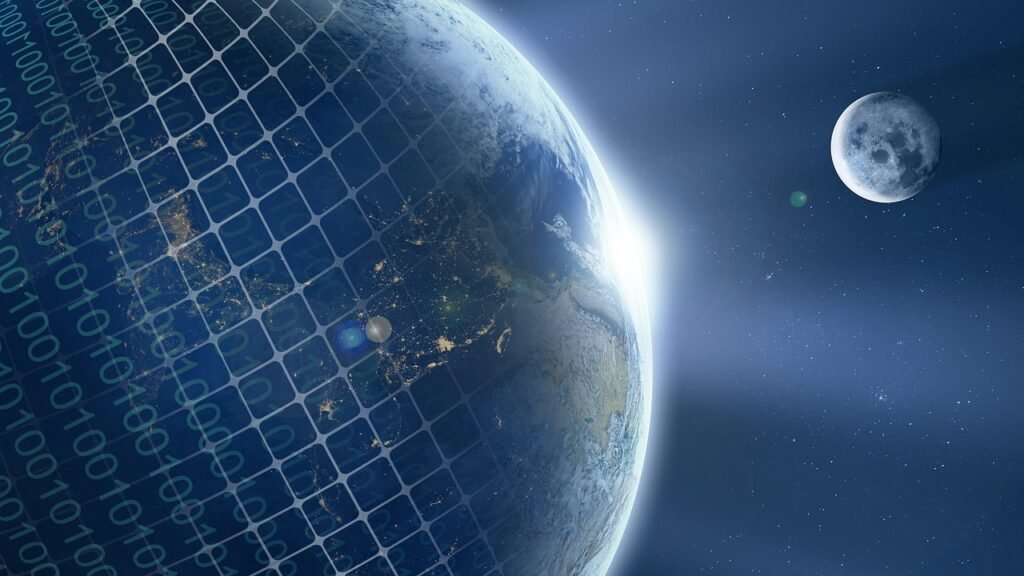

If you’ve ever had the feeling that something about everyday life just doesn’t add up, you’re not alone. The deeper science digs into the universe, the stranger and less solid reality starts to look, almost like a movie set built on shifting sand rather than concrete. What looks stable, continuous, and obvious from the outside often falls apart into probabilities, illusions, and glitches once you zoom in.
Some of the discoveries below honestly made me sit back from my screen and rethink basic things I’d always taken for granted, like time moving in one direction, or my own sense of self being a single, solid “me.” Once you see how odd the underlying rules really are, it’s hard to look at the world the same way again. Ready to have your brain stretched a bit?
The Quantum Double-Slit Experiment: Particles That Act Like Possibilities
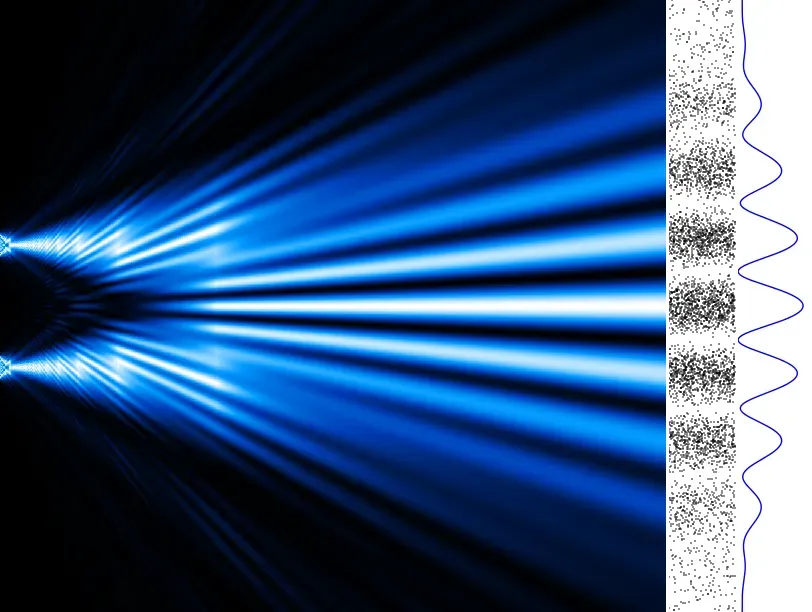
Imagine firing tiny particles, one by one, through a barrier with two narrow slits cut into it, the way you might flick grains of sand at a wall. Common sense says they should form two neat piles behind the openings, because that’s what solid little pellets ought to do. Instead, they build up in a striped pattern, like ripples of overlapping waves, as if each particle somehow went through both slits at once and interfered with itself.
It gets stranger: when scientists set up detectors to watch which slit the particle goes through, the interference pattern disappears, and the particles behave like normal little bullets again. In other words, the simple fact of measuring them seems to collapse a spread-out cloud of possibilities into one definite path. Reality at the quantum level does not exist as fixed facts until an interaction forces it to choose, leaving us with a universe where “what is” seems to depend on what’s being asked.
Quantum Entanglement: Spooky Connections Across the Universe

Take two tiny particles, let them interact in just the right way, and they become entangled, meaning their properties are mysteriously linked. Change something about one, and the other responds instantly, no matter how far apart they are, as if they share a private, faster-than-light communication channel. It’s not that a signal races between them; it’s that their combined state is one whole thing, spread out across space.
Experiments over the last decades have repeatedly confirmed this bizarre connection, closing loopholes and pushing entangled particles farther and farther apart. Nature appears to violate the idea that everything must be local and independent, as if space itself is not the hard boundary we think it is. The universe starts looking less like a set of separated objects and more like a single woven fabric where tugging one thread instantly reshapes the pattern somewhere else.
Time Dilation: Your Clock Is Not the Same as Mine

If you could fly through space at speeds close to that of light, you wouldn’t just feel faster; your entire experience of time would slow down compared to people back on Earth. This isn’t science fiction but a measured effect called time dilation, predicted by Einstein’s theory of relativity and repeatedly tested with ultra-precise atomic clocks on satellites and high-speed jets. Two clocks that start synchronized will tick at different rates if one moves faster or sits in a stronger gravitational field.
We live with a subtle version of this every day without noticing it, and systems like GPS actually have to correct for these differences to stay accurate. That means “one universal now” simply does not exist; what you call the present depends on how you’re moving and where you are. Time, which feels like the most basic and shared part of reality, turns out to be elastic, personal, and relative, more like a flexible stage set than an iron rule.
The Simulation Hypothesis: Are We Living in a Cosmic Game Engine?

As computers have become powerful enough to simulate entire worlds, from weather systems to intricate video game universes, a provocative idea has moved from late-night dorm rooms into serious philosophical and scientific discussion. The argument goes like this: if advanced civilizations can create extremely realistic simulations of conscious beings, and they have any interest in doing so, there could be an enormous number of simulated realities for every single “base” reality. Statistically, that raises the uncomfortable possibility that our own world might be one of the simulations rather than the original.
While there’s no solid proof we’re in a simulation, researchers do look for odd signatures, like potential limits in the resolution of space or anomalies in physical constants that might hint at some underlying digital grid. Even if the hypothesis never gets confirmed or disproven, it forces a wild shift in perspective. Everyday life starts to look more like a rendered scene inside an unimaginably complex program, where the rules we call physics might simply be the settings chosen by whoever (or whatever) coded the system.
Cosmic Fine-Tuning: A Universe Balanced on a Knife-Edge

When physicists calculate how the universe behaves, they find that many of the basic numbers built into nature sit in a weirdly narrow range. The strength of gravity, the charge of the electron, the amount of dark energy stretching space apart: tweak some of these just a little, and stars would never form, atoms would tear themselves apart, or the universe would race into emptiness too fast for anything stable to appear. The fact that we’re here at all suggests a kind of eerie precision in the underlying recipe.
There are several competing ideas to explain this, from an enormous multiverse where countless universes have different settings and we just happen to be in a “lucky” one, to deeper unknown principles that force these values into place. Either way, it undercuts the casual idea that reality could easily have been otherwise in a simple, random way. The cosmos looks less like a rough draft and more like a balanced sculpture perched right at the edge of collapse, inviting us to wonder why it is so delicately arranged for complexity and life.
Dark Matter and Dark Energy: The Invisible Majority of the Universe

When astronomers added up everything they could see in the cosmos – planets, stars, glowing gas clouds – they discovered a baffling mismatch between visible matter and actual gravitational behavior. Galaxies spin so fast that, by normal calculations, their stars should be flung into space like kids off a too-wild merry-go-round, yet they hold together. The best explanation so far is dark matter, some unseen form of mass that outweighs ordinary matter many times over but doesn’t emit or absorb light.
On top of that, the expansion of the universe is not slowing down under gravity as once expected but speeding up, driven by something dubbed dark energy. Add the two together, and the stuff we can directly see and touch is only a tiny fraction of what’s really out there. Most of reality, in a literal sense, is invisible and poorly understood, more like a blacked-out map than a fully charted territory, which makes our solid, everyday world feel surprisingly incomplete.
The Neuroscience of Perception: Your Brain Is Guessing Reality

We often imagine our senses as little cameras and microphones faithfully recording the outside world, but the brain actually does something far stranger. It takes messy signals from the eyes, ears, and skin and constantly guesses what they mean, building a best-guess model of reality in real time. Visual illusions reveal this trick: static images can appear to move, colors shift based on context, and you can even “hear” missing sounds in a sentence because your brain fills in what it expects to be there.
Modern neuroscience increasingly sees perception as a prediction machine, where the brain sends guesses downward and corrects them with incoming data, instead of just passively receiving information. That means what you experience as reality is more like a controlled hallucination shaped by your history, expectations, and culture. The world does exist out there, but you never see it raw; you see your brain’s best interpretation, like an augmented reality overlay that you can’t turn off.
Split-Brain Research: One Body, More Than One “You”

In rare cases where severe epilepsy could not be controlled, surgeons have cut the main bridge of nerve fibers connecting the brain’s two hemispheres to prevent seizures from spreading. Patients usually appear almost normal afterward in daily life, able to talk, walk, and interact as before. But in carefully designed experiments, a strange picture emerges: each half of the brain can process information that the other side cannot fully access, leading to conflicting responses and preferences hidden beneath the surface.
For example, one hand might try to button a shirt while the other hand unbuttons it, or a person might verbally deny seeing something presented only to the nonverbal hemisphere even as their body responds correctly. This suggests that our sense of being a single, unified self may be a kind of narrative glued together by brain systems that specialize in producing a coherent story. The “I” you feel so strongly inside your head might be more like the spokesperson of a committee than the true, sole owner of your mind.
Panpsychism and Consciousness: Mind Might Be More Fundamental Than Matter

Despite huge progress in brain science, no one has convincingly explained how electrical activity in neurons produces the vivid feeling of being you: the taste of coffee, the warmth of sunlight, the ache of heartbreak. Because of this stubborn puzzle, some philosophers and scientists have revisited an old, initially strange idea: that consciousness, in some very simple form, might be a basic feature of the universe, not something that suddenly pops out only when brains get complicated enough. This view is called panpsychism, and it treats mind as woven into matter from the start.
Under this perspective, even very simple physical systems could have tiny, primitive glimmers of experience, which combine into richer forms as complexity increases, somewhat like pixels forming a detailed image. It sounds wild, but it avoids the problem of explaining how a purely dead, mechanical universe produces subjective experience from nothing. If anything like this turns out to be true, then reality is not just a cold stage where matter dances; it’s saturated with some level of inner life, and our own awareness is just one expression of a much broader, mind-infused cosmos.
Holographic Principle: Our 3D World Might Be a Cosmic Projection
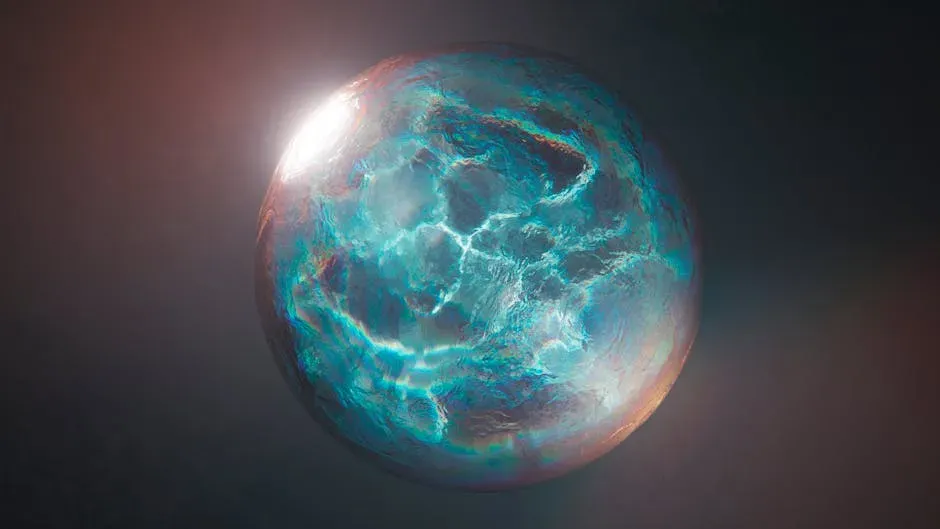
Work on black holes and quantum gravity has led some physicists to a radical idea: everything that happens in a three-dimensional region of space might be fully described by information stored on its two-dimensional boundary. This is known as the holographic principle, inspired by the way a flat hologram can encode a full 3D image. In some theoretical models, an entire universe with gravity and depth can be mathematically equivalent to a different theory living on a lower-dimensional surface without gravity.
If this principle applies broadly, then our sense of living in a solid, three-dimensional reality could be like standing inside a cosmic hologram, where what we experience is a kind of projection of information written on a distant “surface” of spacetime. It doesn’t make our lives any less real, but it completely flips the usual way we think about space, depth, and location. The idea that everything around you might be a shadow of deeper information takes the phrase “there’s more to this than meets the eye” to a whole new level.
Living Comfortably in a Strange Universe
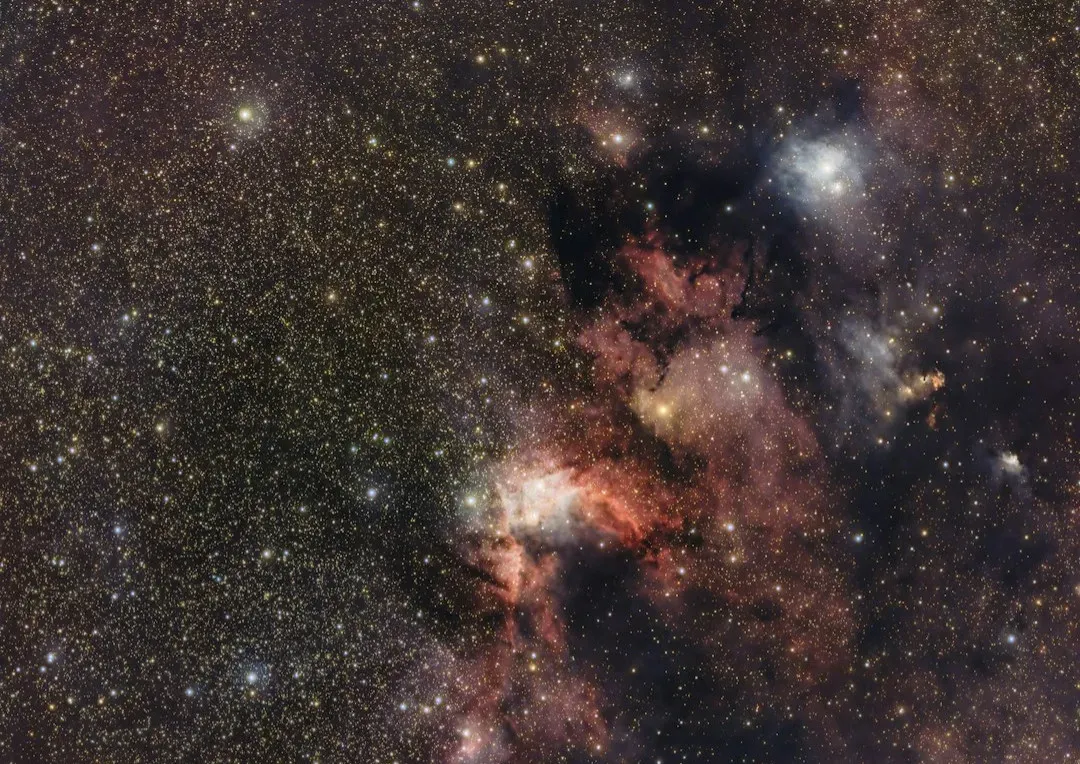
Put all of this together – quantum weirdness, flexible time, invisible matter, predictive brains, split selves, and holographic universes – and reality starts to look far less like a sturdy brick house and more like a funhouse built on fractal foundations. The everyday world still works well enough for catching buses, paying bills, and cooking dinner, but behind that surface is a deeply non-intuitive structure that keeps refusing to fit our common sense. Instead of a simple, solid stage with obedient actors, we find shifting probabilities, hidden connections, and layers of description that keep unfolding.
Oddly, there’s something comforting about admitting how strange it all is, because it gives you permission to keep asking questions instead of pretending everything is already neatly explained. The more science uncovers, the more reality feels less like a completed textbook and more like an unfinished mystery novel where we’re both characters and investigators. Knowing that the ground beneath your assumptions is this flexible can be unsettling, but it also opens up a wider sense of wonder about what might still be waiting to be discovered. What part of your everyday “obvious” reality now feels the least certain to you?