

Every single night, something extraordinary happens inside your head. You lose consciousness, your body goes still, and your brain quietly launches into one of the most complex, mysterious, and still largely unexplained experiences known to science. Dreams. They have fascinated poets, troubled philosophers, and stumped neuroscientists for centuries.
Yet right now, in the mid 2020s, researchers are cracking open doors that were sealed for decades. From communicating with sleeping dreamers in real time to planting puzzle-solving ideas directly into your REM sleep, the findings coming out of sleep labs are genuinely jaw-dropping. They challenge everything you thought you knew about what happens when you close your eyes.
So if you’ve ever woken up wondering what in the world just happened to your mind, buckle up. You’re about to find out – and some of it will absolutely blow you away. Let’s dive in.
Your Brain Never Really Goes “Offline” When You Dream

Here’s something that should immediately reshape the way you think about sleep: your brain during dreaming is not resting. Not even a little. Research has confirmed that all dreams arise from brain activity, and as one neuroscientist colorfully described it, “the sleeping-dreaming brain is burning hot. It’s sparking with electricity. We might be asleep, but the brain is on fire.” Think of it less like turning off a computer and more like switching it to a completely different operating system.
Dreams are a most remarkable experiment in psychology and neuroscience, conducted every night in every sleeping person. They show that your brain, disconnected from the environment, can generate by itself an entire world of conscious experiences. Honestly, that is one of the most stunning things about human biology. Your mind essentially builds a full-sensory alternate reality from scratch, every single night, while you’re lying perfectly still.
You Can Actually Communicate With the Outside World While Dreaming

This one sounds like science fiction, but it’s very real. Researchers at Northwestern University in Illinois, along with researchers in France, Germany and the Netherlands, have independently demonstrated two-way communication with people as they are lucidly dreaming during REM sleep. Supported by the U.S. National Science Foundation, the breakthrough was achieved by Karen Konkoly and Christopher Mazurek, one of the first people to ever engage in a real-time dialogue from within a dream. Let that sink in for a moment.
During REM sleep, your eyes move around behind your eyelids in a seemingly random fashion, which often corresponds to “looking” at various imagined things in the dream. If you dream that you’re looking at something, your closed eyes move correspondingly as if you were looking at something while awake. That phenomenon led researchers to a key insight: if eye movement were consciously controlled, the dreamer’s eyes could become a vehicle for getting a message to the waking world. In other words, you have a secret communication channel from inside your dreams – and scientists have figured out how to use it.
Scientists Can Now Plant Ideas Into Your Dreams to Boost Creativity

Sleeping on a problem might be more powerful than we ever imagined. Neuroscientists at Northwestern University have shown that dreams can actually be nudged in specific directions – and those dream tweaks may boost creativity. By playing subtle sound cues during REM sleep, researchers prompted people to dream about unsolved brain teasers they had struggled with earlier. This technique, called targeted memory reactivation, is arguably one of the most exciting tools in modern sleep science.
A stunning three quarters of participants reported dreams that included elements or ideas related to the unsolved puzzles. Puzzles that appeared in dreams were solved at a much higher rate than those that did not. Participants solved roughly four in ten of the dream-related puzzles compared to fewer than two in ten of the others. That is a staggering difference. If your brain can be quietly coached during sleep to crack problems you were stuck on while awake, the implications for learning, innovation, and therapy are almost limitless.
REM Sleep Dreamers Are Dramatically More Creative Upon Waking

You’ve probably heard the phrase “sleep on it” your whole life. Turns out, that phrase carries far more scientific weight than anyone used to give it credit for. When woken during non-REM sleep, people were not particularly creative and could solve very few puzzles. But when woken up during REM sleep, they were able to solve between fifteen and thirty-five percent more puzzles than when they were awake. Participants woken while dreaming reported that the solution just “popped” into their heads, as if it were effortless.
Dreams have produced art, music, novels, films, mathematical proofs, designs for architecture, telescopes, and computers. Dreaming is essentially your brain thinking in another neurophysiologic state, and therefore it is likely to solve some problems on which your waking mind has become stuck. This neurophysiologic state is characterized by high activity in brain areas associated with imagery, so problems requiring vivid visualization are also more likely to get help from dreaming. So that brilliant idea you had first thing in the morning? You might have your dreaming brain to thank for it.
Dreams Act as Overnight Emotional Therapy – Literally

I think this is one of the most beautiful and poignant discoveries in all of sleep science. Your dreams are not just random nonsense. They are actively working to help you feel better. A night spent dreaming can help you forget the mundane and better process the extreme, according to a University of California, Irvine study. Researchers examined how dream recall and mood affected next-day memory consolidation and emotion regulation. The findings indicate a trade-off in which emotionally charged memories are prioritized, but their severity is diminished.
Researchers discovered that people who report dreaming show greater emotional memory processing, suggesting that dreams help work through emotional experiences. This is significant because it is the first evidence that dreams play an active role in transforming responses to waking experiences by prioritizing negative memories over neutral ones – and then softening the emotional sting attached to those memories. Think of it like your brain running an overnight defrag on your emotional hard drive. You go to sleep overwhelmed, and wake up just a little less crushed. That’s your dreaming mind doing the work.
Your Dreams Are a Surprisingly Accurate Mirror of Your Waking Life

Here’s the thing: your dreams are not as random or chaotic as they feel. The patterns in long dream journals seem to support the continuity hypothesis of dreaming – that your dreams are influenced by events and concerns that are happening in your waking life. It’s a bit like how a song you heard on the radio keeps turning up in your head throughout the day. Your brain is deeply, constantly wired to your lived reality, even when you’re fast asleep.
Most dreams are made up of experiences, thoughts, emotions, places, and people you have already encountered in your life. During dreaming, bits and pieces of these memories seem to be reorganized to create a particularly bizarre scenario. This reorganization may not be so random, as the brain is processing memories by pulling together the ones that are seemingly related to each other. So the next time your dream seems totally absurd, know that there is actually a hidden thread of logic running through it. Your sleeping brain is just connecting dots in ways your waking brain would never dare.
Lucid Dreamers Have Structurally Different, More Powerful Brains
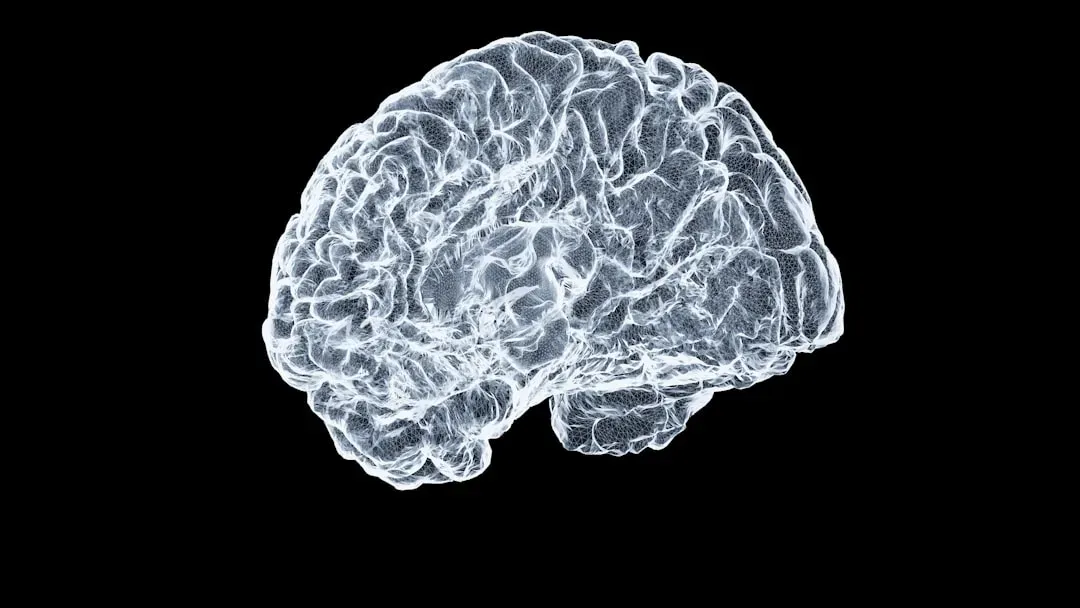
Lucid dreaming – the experience of becoming aware that you’re dreaming while still asleep – is far more than just a cool party trick. Certain brain regions that are usually relatively quiet during REM sleep, including the prefrontal cortex, precuneus, and occipito-temporal cortices, showed activation while lucid dreaming. Later, researchers used fMRI to study the brains of frequent lucid dreamers while they were awake. What they found was strikingly similar: increased communication between the brain’s metacognition center and parietal and temporal structures, which are associated with high-level cognition.
This research suggests that frequent lucid dreamers have a relatively high capacity for things like metacognition and cognitive control, or the ability to regulate thoughts, attention, and actions. In other words, if you regularly know you’re dreaming while inside a dream, your brain is wired differently even while you’re awake. Advanced lucid dreamers can alter the plot of their dreams, transform themselves into animals or other people, change their environment, and distort the laws of physics. Most people lucid dream just a few times in their lifetime, if at all. Even if they gain an awareness of their dream state, it’s even more rare to be able to actively control their dream content in real time.
Your Sleeping Brain Is Building a Model of Yourself and the World

This may be the most profound claim in all of dream science, and it comes from one of the field’s most respected voices. According to Harvard sleep researcher Robert Stickgold, in sleep and dreams, you “build a model of yourself and the world that provides clues to the course of your future and, by shaping your autobiographical memory, creates meaning within your life.” That’s not a metaphor. That’s a neurological description of what happens every single night, whether you remember your dreams or not.
From a scientific perspective, dreams are generated by coordinated brain activity rather than random imagery. Dreaming involves multiple brain regions working together, including those responsible for emotion, memory, and visual processing. This is why dreams can feel emotionally intense and visually rich, even when the scenarios themselves are unrealistic. You are not just watching a strange movie while you sleep. You are actively building, rehearsing, and revising your understanding of who you are and how the world works. Every single night. Without even realizing it.
The Way You Remember Dreams Is Itself a Scientific Marvel

Most people assume they either have good dream memory or they don’t, as if it’s some fixed trait you’re born with. Science disagrees. Some people are better at remembering their dreams than others, recalling dreams more frequently and in more detail. Researchers have tried to determine the reasons for this difference, looking into factors including personality and attitude towards dreams, general memory ability, and physiological signals during sleep. One of the most consistent predictors of more frequent dream recall has been a positive attitude towards dreaming – if you think dreams are important, you’re probably more motivated to try and remember them.
Research published in the Journal of Neuroscience provides compelling insights into the mechanisms that underlie dreaming and the strong relationship dreams have with memories. Researchers at the University of Rome succeeded, for the first time, in explaining how humans remember their dreams. The scientists predicted the likelihood of successful dream recall based on a signature pattern of brain waves. Think of it like your brain stamping an emotional ink mark on a dream just before you wake up. The deeper and more distinctive that stamp, the better your chances of pulling the memory into consciousness. Dream recall is, in fact, a learnable skill.
PTSD Nightmares and the Science of Healing Through Dreams

Not all dream research is about creativity and wonder. Some of the most urgent work happening right now sits at the intersection of dreaming and mental health. For people suffering from PTSD, the presence of norepinephrine during REM sleep disrupts the ability for dreams to reduce the emotional intensity associated with disturbing events. Because the mind still wants to work out the problem while dreaming, it will repeatedly attempt to do so, sometimes every night, resulting in recurring nightmares – one of the most common symptoms of PTSD. It’s a heartbreaking loop. The brain desperately tries to heal itself, and instead keeps re-opening the wound.
In a study published in 2024, 49 PTSD patients from nine countries who had long histories of traumatic nightmares attended a six-day virtual workshop focused on lucid dreaming. The idea is to give people enough control over their dream state to rewrite or redirect the nightmare before it spirals. Researchers are excited about the possibility that directing a dream may allow people to reduce the severity or frequency of nightmares, improve sleep quality and morning mood, and even enhance general health and well-being. This is dream science at its most human and most hopeful – and the results so far are genuinely promising.
Conclusion: The Sleeping Mind Is the Final Frontier

Every night, you slip away into a world that science is only beginning to map. You communicate math problems from inside a dream. You process the worst day of your life and wake up just a little more ready to face tomorrow. You solve puzzles you couldn’t crack while awake. You build a model of yourself, quietly and automatically, while your body lies perfectly still.
What strikes me most about all of this research is not just what scientists have discovered – it’s how much is still completely unknown. Understanding how dreams are generated and what their function might be is one of science’s biggest open questions right now. We have barely scratched the surface of what happens in those strange hours between closing your eyes and opening them again.
Dreams are not just the noise your brain makes at night. They are, apparently, among the most important things your brain does at all. The next time you wake up mid-dream and lie there for a moment trying to hold onto the fading images, maybe pause and appreciate it. Your mind just did something extraordinary. What do you think goes on in your dreams that science still hasn’t explained? Drop your thoughts in the comments.