
Quantum physics has a reputation for being the part of science where common sense goes to die, and yet, it quietly runs almost everything about our modern world. From the chips in your phone to MRI scanners in hospitals, technologies we take for granted rely on rules that seem to defy logic. For decades, these ideas lived mostly in chalk-dusted lecture halls; now they’re driving billion‑dollar quantum computing races and bold new experiments. In the middle sits a simple question: how can something so baffling be made understandable without dumbing it down? Let’s walk straight into the quantum weirdness – one concept at a time – and turn those brain-twisting ideas into something you can actually picture.
The Quantum Leap: How Electrons Skip the In‑Between
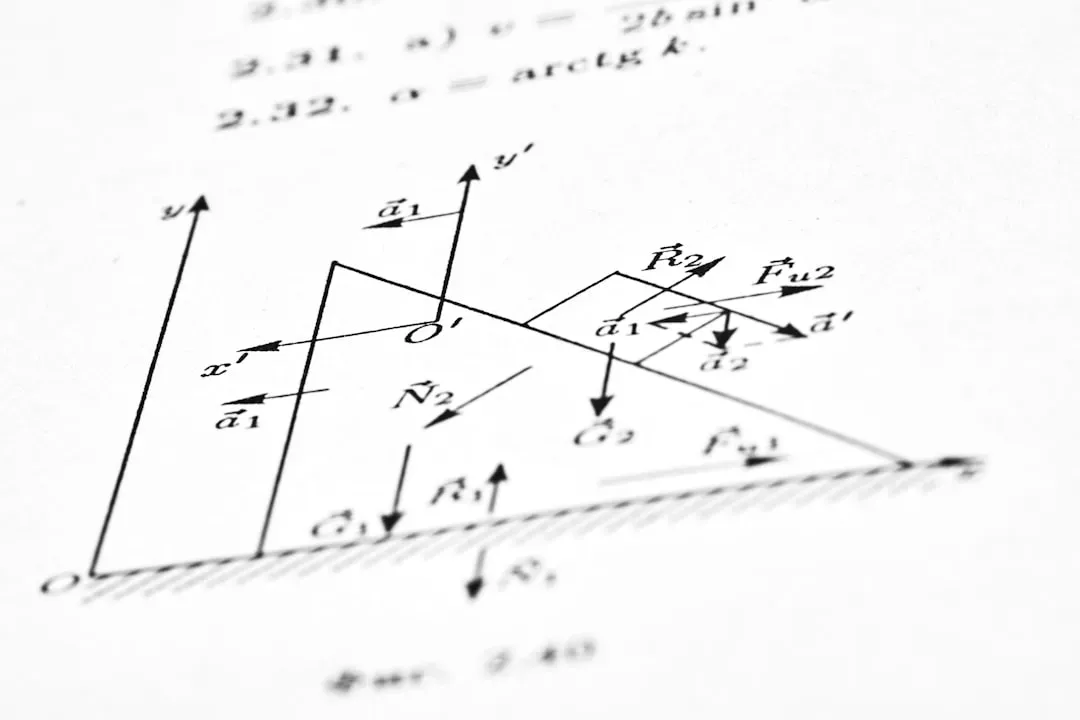
Imagine climbing a staircase where you are never allowed to stand between steps – you can only be firmly on one step or the next. That’s how electrons behave inside atoms, jumping between fixed energy levels instead of sliding smoothly like marbles on a ramp. When an electron “leaps” up a level, it has to absorb a specific packet of energy; when it falls back down, it releases that exact amount as light. This is the original quantum idea: energy comes in discrete chunks, not in a perfectly smooth flow. Early twentieth‑century physicists realized that without this strange rule, they could not explain why heated objects glow with particular colors or why atoms are stable at all.
This quantum leap is not a tiny version of a classical jump – it is an entirely different kind of change, one that happens without passing through intermediate states. In everyday life, that makes no sense, but at the atomic scale it is the only way nature behaves. If you have ever seen a neon sign, a fluorescent bulb, or the colored lines in a school lab spectrum, you have watched billions of electrons performing these jumps. Our best atomic clocks also rely on electrons switching between energy levels with exquisite regularity, keeping time with accuracy that would lose only about a second over the age of the universe. In a very real sense, our definition of time itself is now chained to this mind‑bending quantum “staircase.”
Wave–Particle Duality: When Light Refuses to Pick a Side
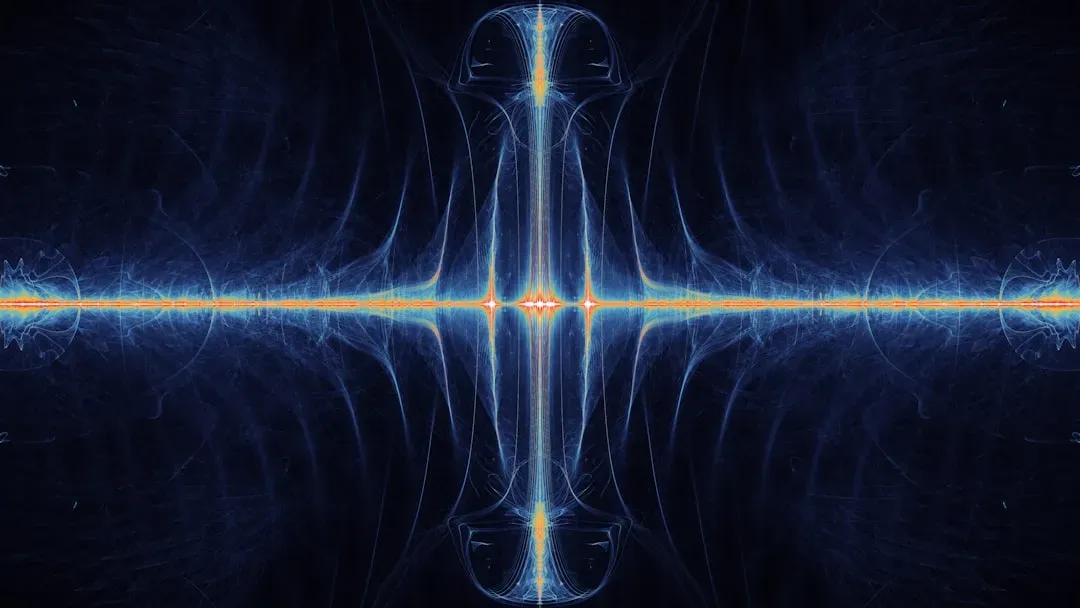
Light used to seem simple: a beam, a ray, something that travels in straight lines and makes shadows. Then experiments showed that light also behaves like a continuous wave, spreading, interfering, and creating delicate patterns, as when it passes through a narrow slit. A century ago, physicists thought they had solved that puzzle by embracing light as a wave – only to discover that, in some experiments, it behaves like a stream of individual particles called photons. In the famous double-slit experiment, single photons fired one by one can build up an interference pattern over time, as if each photon somehow travels through both slits at once as a wave. It is as though light is constantly asked: “Are you a particle or a wave?” and calmly replies, “Yes.”
What makes this so unsettling is that the answer depends on how we choose to measure it. Design an experiment tuned for particles, and you see particles; design it for waves, and you get waves. This is not a case of our instruments being clumsy but of nature resisting pigeonholes that feel obvious to us. Everyday objects around us do not show this duality in any noticeable way, because their quantum behavior is washed out by interactions with the environment. But at tiny scales, this wave–particle duality is not a fringe curiosity – it is the basic language in which the universe seems to be written, and we are only just becoming fluent.
Superposition: The Quantum “Both At Once” Trick
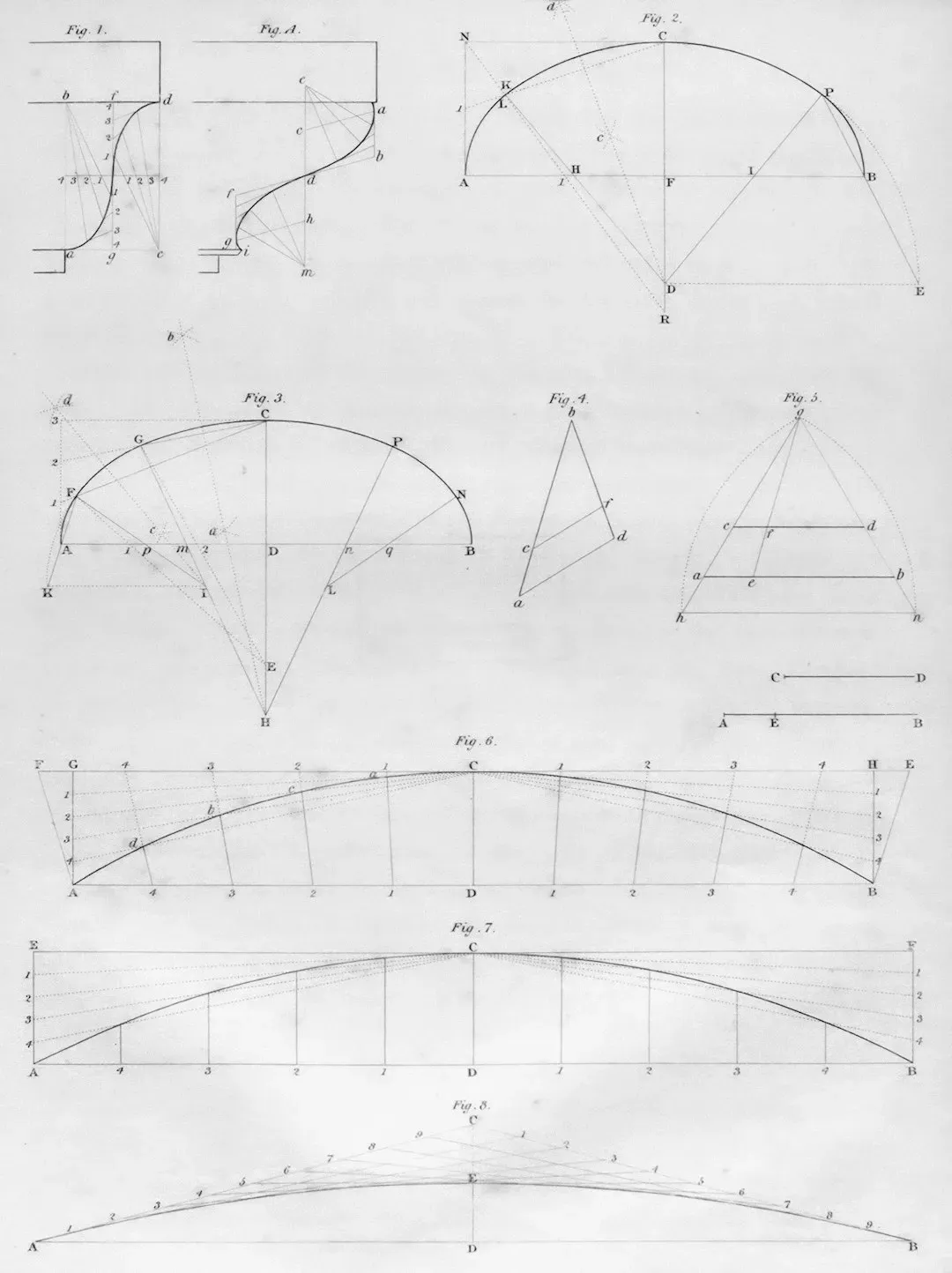
Superposition is the idea that a quantum system can exist in several possible states at the same time, like a coin being both heads and tails until you actually look. In the lab, electrons can be prepared so their spin points both “up” and “down” in a precise quantum combination. Photons can be set to have different polarizations simultaneously, their properties described by a wave-like probability pattern rather than a single value. This is not ignorance about what the particle is really doing; mathematically, the superposition is the state. Only when you measure do you obtain one definite outcome, and the superposition vanishes.
Engineers have turned this bizarre property into a powerful resource: the quantum bit, or qubit. Unlike a classical bit that is firmly a zero or a one, a qubit can be in a superposition of zero and one at the same time, allowing many computations to be explored in parallel. Current quantum processors from several major labs and companies use arrays of these superposed qubits cooled to temperatures near absolute zero. They are fragile – tiny disturbances can destroy the delicate superpositions in a process called decoherence. But when stabilized, they hint at computers capable of crushing problems that would take classical machines longer than the age of the universe to solve.
Entanglement: Spooky Links Across Space
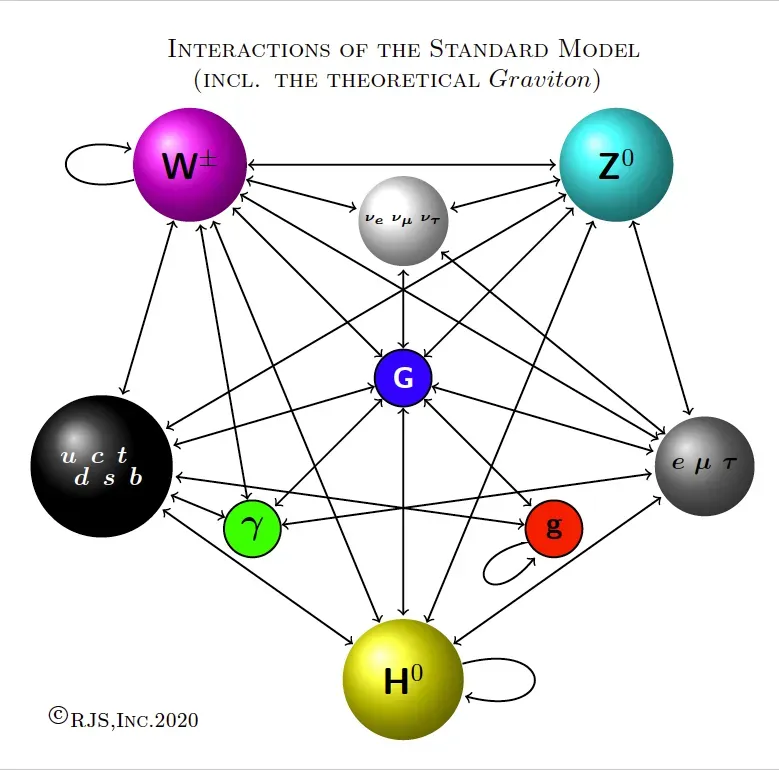
Entanglement is the quantum connection that stunned even Einstein, who dismissed it as a kind of spooky influence acting faster than light. When two particles become entangled, their properties are correlated so strongly that measuring one instantly tells you something about the other, no matter how far apart they are. For example, prepare two photons so that their polarizations are linked, send one to a lab on a mountaintop and one to a lab in a valley, and their measurement results will match in ways that defy any simple hidden-rule explanation. Decades of experiments have repeatedly closed loopholes and confirmed that entanglement is real and not just an artifact of imperfect measurements.
The surprising part is not that the particles agree, but that the strength and pattern of their agreement cannot be mimicked by any picture in which they carried pre-agreed instructions. Entanglement forces us to abandon the comforting idea that physical systems always have definite properties before we look. Modern quantum technologies now try to harness this uncanny linkage. Entangled photons are used in quantum key distribution schemes, where any attempt at eavesdropping disturbs the delicate correlations and reveals the intrusion. In fledgling quantum networks, entanglement is the invisible thread that could one day tie distant quantum computers into a new kind of internet.
Uncertainty: Why Nature Refuses Perfect Precision
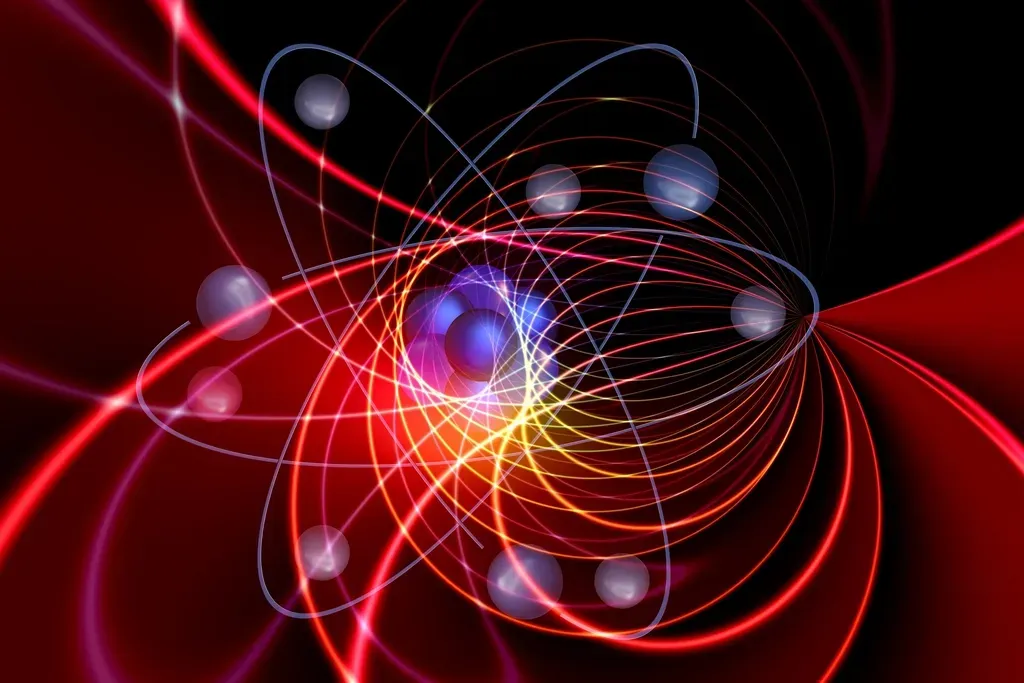
The Heisenberg uncertainty principle is often misquoted as saying “measurement disturbs things,” but the real story runs deeper. At its heart, it says that certain pairs of properties – like position and momentum – cannot both be known with unlimited precision, no matter how perfect your instruments are. Try to pin down an electron’s location more and more tightly, and the range of possible momenta spreads out. This is not a technical limitation to be overcome by better microscopes; it is built into the mathematical structure of quantum theory. The more localized a particle’s wave-like description becomes in space, the more spread out it becomes in momentum space.
Counterintuitively, this fuzziness is exactly what keeps atoms from collapsing. If electrons were confined strictly to tiny orbits right at the nucleus, the uncertainty principle would force their momenta, and thus their kinetic energy, to skyrocket. Instead, they occupy fuzzy clouds, and that spread keeps the atom stable at a certain size. In a sense, all solid matter around you depends on a rule that forbids too much certainty. High-precision experiments with cold atoms and photons have confirmed this behavior time and again. What feels like a philosophical limit is actually a practical engineering constraint that designers of nanoscale devices must respect every day.
Quantum Tunneling: Walking Through Walls (Sometimes)
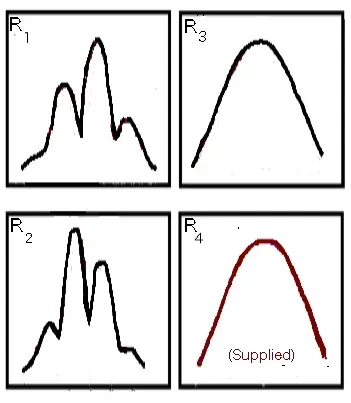
Quantum tunneling sounds like science fiction: a particle ends up on the other side of a barrier without ever having enough energy to climb over it. Classically, this should be impossible, like a ball never making it over a hill that is taller than its initial push. But in quantum mechanics, particles are described by waves that extend into regions that are classically forbidden. If the barrier is thin enough, there is a small but real chance that the particle’s wave “leaks” through, and when you check, you find it on the other side. No brick walls or human bodies are doing this in any noticeable way, but at tiny scales, tunneling is routine.
Several key technologies lean heavily on this ghostly process. The scanning tunneling microscope, for instance, measures tunneling currents between an ultra-sharp tip and a surface, mapping individual atoms with astonishing resolution. In transistors and flash memory, tunneling plays a role both as a useful effect and as a design headache, influencing how thin engineers can make insulating layers before electrons start bleeding through. Inside stars, tunneling allows nuclear reactions to occur at lower temperatures than they otherwise would, helping power the sun. Every time you swipe open a modern device that uses flash storage, you are indirectly using a phenomenon that looks, in classical terms, like matter sneaking through closed doors.
Why It Matters: Quantum Rules Behind Everyday Power
It is easy to treat quantum physics as a purely abstract arena for thought experiments with cats and philosophical debates about reality. Yet much of the global economy rests on technologies that cannot be understood or improved without quantum rules. Semiconductor physics, which underpins every modern computer chip, depends on the quantum behavior of electrons in solids, including band structures and tunneling. Lasers, used in everything from supermarket scanners to fiber‑optic communications, rely on controlled quantum transitions between energy levels. Magnetic resonance imaging exploits quantum properties of atomic nuclei in your body to generate detailed medical images.
Compare this to the early twentieth century, when engineers could still design many devices relying largely on classical intuition. Today, that approach would be like trying to fix a smartphone using only the knowledge needed to repair a steam engine. Quantum mechanics has become not just a branch of physics but the operating manual for modern technology. Roughly speaking, when devices shrink to the nanoscale or when signals need to be timed and synchronized with extreme precision, quantum effects cease to be optional details. Understanding – even at a conceptual level – what superposition, tunneling, or entanglement mean offers a clearer view of where the next technological leaps will come from. Quantum theory matters not because it is weird, but because it quietly governs the familiar world more deeply than our senses do.
The Quantum Technology Wave: From Lab Curiosity to Strategic Race

In the last decade, quantum physics has stepped out of theory-heavy textbooks and into political speeches, national strategies, and corporate roadmaps. Countries across North America, Europe, and Asia have launched multi‑billion‑dollar programs to develop quantum computers, quantum communication networks, and ultra‑precise quantum sensors. Tech giants and specialized startups are racing to build machines with enough high‑quality qubits to surpass the best classical supercomputers for certain tasks. Alongside them, university labs continue to refine the core techniques: trapping ions, controlling superconducting circuits, cooling atoms with lasers, and stitching entanglement over longer distances.
Potential applications range from simulating complex molecules for drug discovery to optimizing transport and logistics in ways that are currently out of reach. There are bold claims – some overhyped, some realistic – about revolutionizing cryptography and materials science. At the same time, this push raises new challenges, including training enough specialists, sharing standards, and managing security risks if powerful quantum computers eventually threaten today’s encryption methods. Many quantum technologies are still in the noisy, error-prone stage, far from flawless devices on store shelves. But the shift from “if” to “when” in discussions about practical quantum machines shows how far these mind‑bending concepts have already traveled from chalkboard to marketplace.
The Future Landscape: Challenges, Ethical Questions, and Global Implications

Looking ahead, the quantum story is not just about faster computers, but about who controls and understands an entirely new layer of physical reality. If large-scale quantum computers become practical, they could crack many widely used encryption schemes, forcing governments, banks, and everyone else to migrate to quantum‑safe cryptography. Quantum sensors could enable extremely precise navigation without GPS, or detection of tiny changes in gravitational fields, with both civilian and military uses. Quantum communication links promise new levels of security for transmitting sensitive information, but building a truly global network will require overcoming daunting engineering hurdles. Nations already treat quantum capability as a strategic asset, woven into discussions about economic competitiveness and national security.
There are also more subtle questions. Who benefits first from breakthroughs in quantum simulation that might accelerate drug development or advanced materials – wealthy countries, or a broader global community? How can societies balance the excitement of quantum innovation with transparency about what is realistically achievable and on what timescale? Education systems may need to adjust so that quantum thinking is not confined to a narrow band of specialists. The biggest risk is not that quantum physics is too strange, but that its power ends up concentrated in the hands of a few. The future landscape will be shaped not only by what quantum devices can do, but by how wisely we choose to use them.
How You Can Engage With the Quantum World
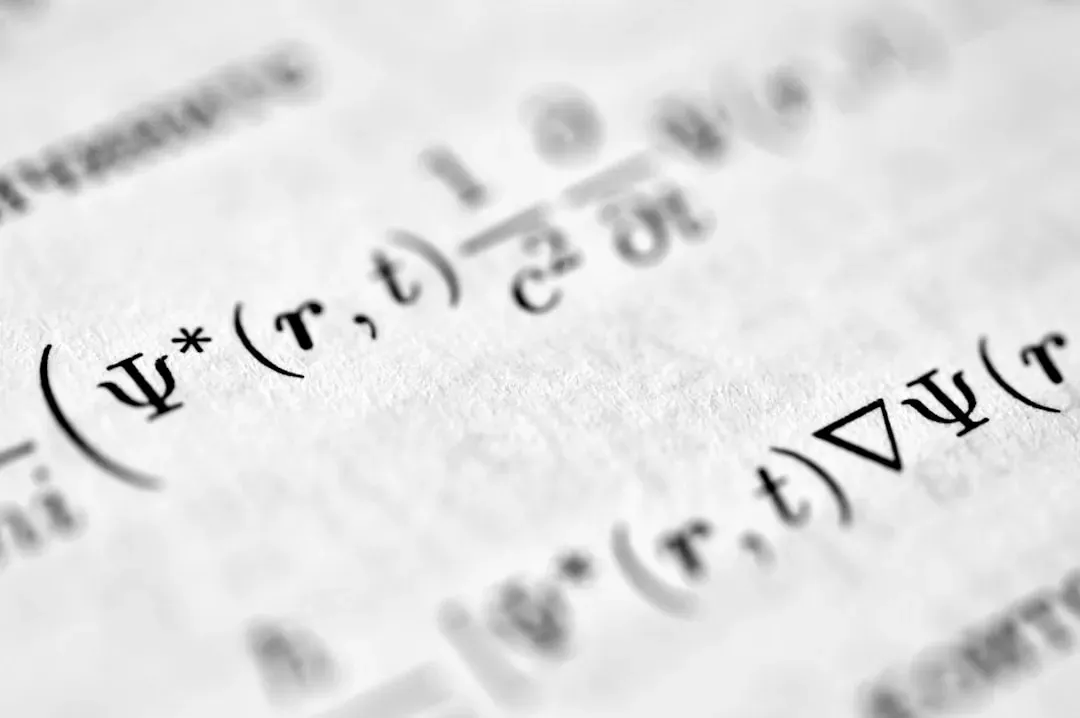
Engaging with quantum physics does not require a doctorate or a home lab full of lasers. One simple step is curiosity: seek out explanations that use clear language and everyday analogies rather than jargon, and do not be afraid to revisit concepts that seem confusing at first. Many universities, science museums, and public institutions now offer accessible online lectures and short courses that walk through ideas like superposition and entanglement using animations and live demos. Supporting science journalism, outreach programs, and educators who specialize in making quantum topics understandable helps ensure these ideas reach beyond specialist circles. Even casual conversations – asking what powers an MRI machine or how GPS timing works – can start to normalize quantum thinking in everyday life.
If you want to go a bit further, you can experiment with simple quantum tools without leaving your browser. Several research groups and companies host web interfaces where you can run small programs on real quantum processors, giving a hands‑on sense of what qubits and quantum gates do. Staying informed about policy debates around quantum funding, encryption standards, and technology sharing lets you add your voice when decisions are made about how these tools are deployed. For younger readers, following quantum-themed videos, comics, or games can make the subject less intimidating and more like a puzzle to be explored. Quantum physics is no longer an exclusive club; the more people step through the door, the more grounded and responsible its future is likely to be.
Suhail Ahmed is a passionate digital professional and nature enthusiast with over 8 years of experience in content strategy, SEO, web development, and digital operations. Alongside his freelance journey, Suhail actively contributes to nature and wildlife platforms like Discover Wildlife, where he channels his curiosity for the planet into engaging, educational storytelling.
With a strong background in managing digital ecosystems — from ecommerce stores and WordPress websites to social media and automation — Suhail merges technical precision with creative insight. His content reflects a rare balance: SEO-friendly yet deeply human, data-informed yet emotionally resonant.
Driven by a love for discovery and storytelling, Suhail believes in using digital platforms to amplify causes that matter — especially those protecting Earth’s biodiversity and inspiring sustainable living. Whether he’s managing online projects or crafting wildlife content, his goal remains the same: to inform, inspire, and leave a positive digital footprint.