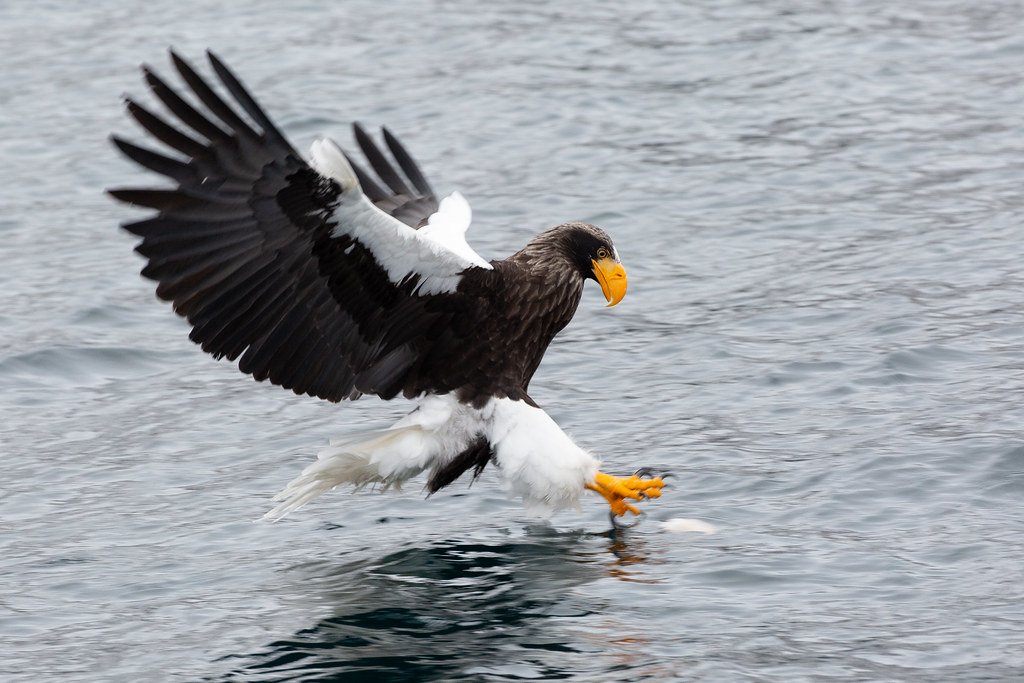

Imagine standing on a rugged Pacific coastline, watching a massive shadow glide overhead with wings spanning almost nine feet. This isn’t a scene from prehistory. The Steller’s sea eagle is often called the world’s most magnificent bird of prey, a living giant that continues to rule the northern seas with unmatched power and grace.
Typically, it is the heaviest eagle in the world, at about 5 to 10 kg (11 to 22 lb), yet surprisingly little is known about these remarkable birds. They inhabit some of the most remote and unforgiving environments on Earth, from the volcanic shores of Kamchatka to the ice-covered waters around Hokkaido. Let’s dive into the fascinating world of these aerial titans and discover what makes them truly extraordinary.
The Ultimate Heavyweight Champion of the Sky
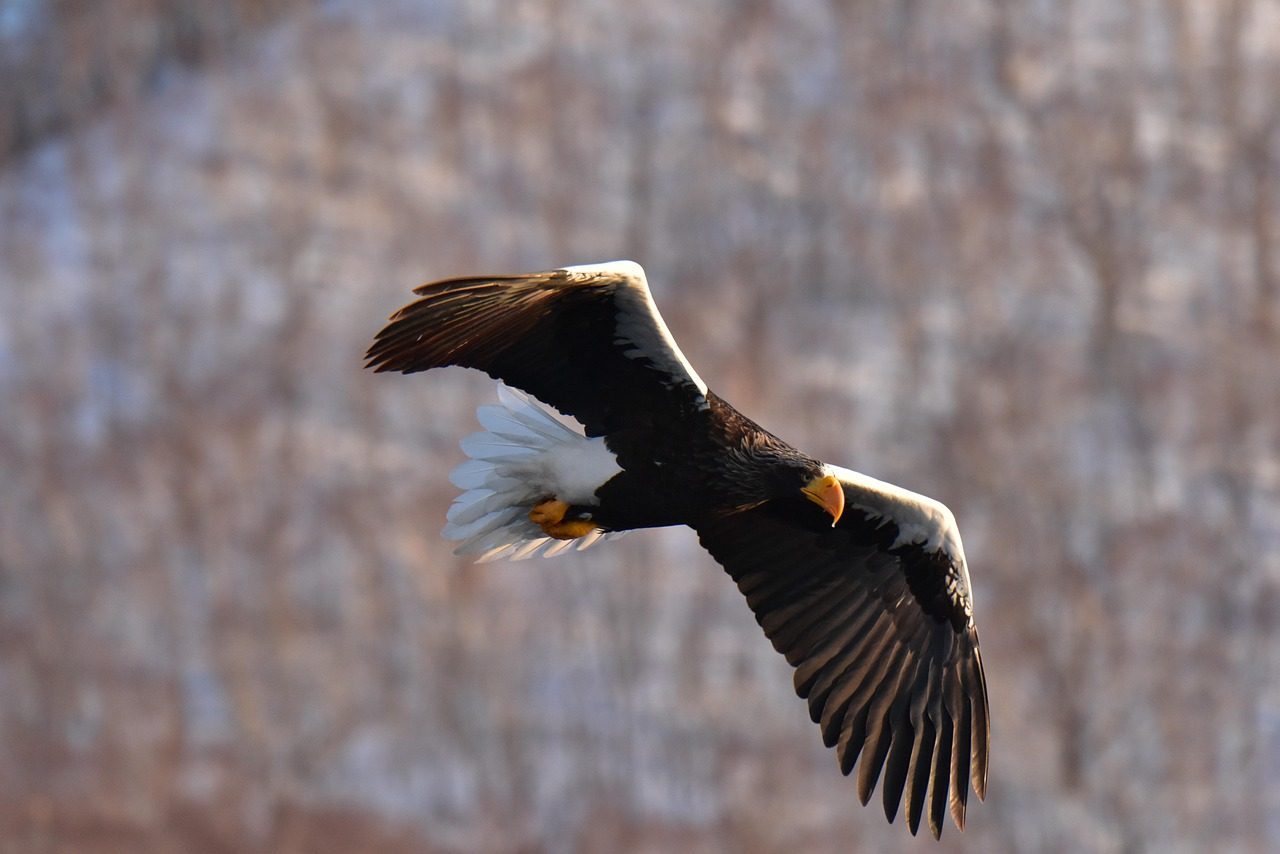
Females vary in weight from 6.2 to 9.5 kg (14 to 21 lb), while males are rather lighter with a weight range of 4.9 to 6.8 kg (11 to 15 lb). To put this in perspective, you’re looking at eagles that can weigh as much as a small dog, yet somehow manage to soar effortlessly through harsh Arctic winds.
Steller’s sea eagles typically outweigh Harpy eagles by around 500 g (1.1 lb), with the heaviest female Harpy eagles weighing 9 kg (19.8 lb). Steller’s sea eagles are also heavier than other challengers, including the Philippine eagle (8 kg/ 17.6 lb) and white-tailed eagle (6.9 kg/15.2 lb). This weight advantage isn’t just for show. Their massive build gives them the power to dominate food sources and intimidate competitors in their harsh northern environment.
Wings That Touch the Heavens
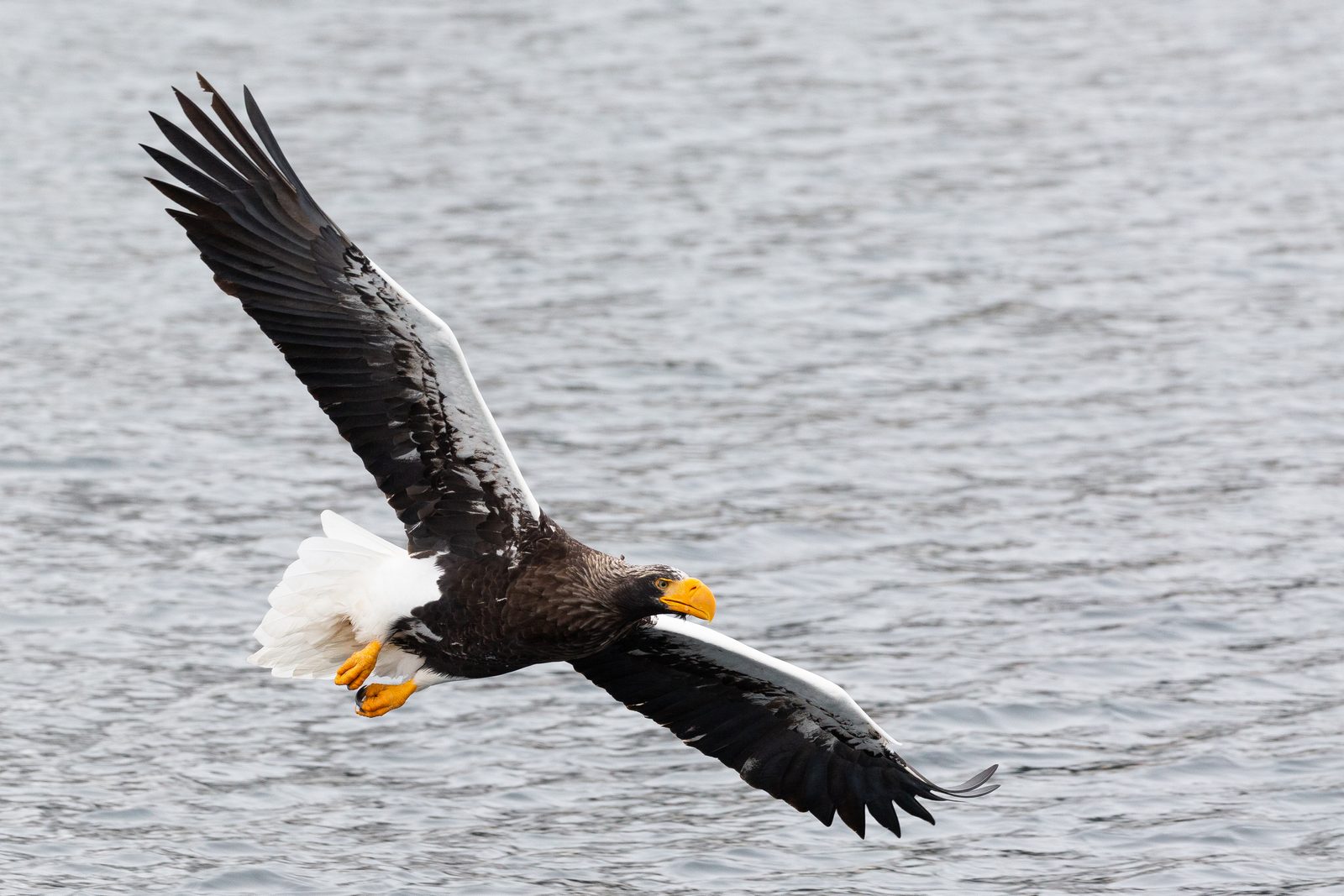
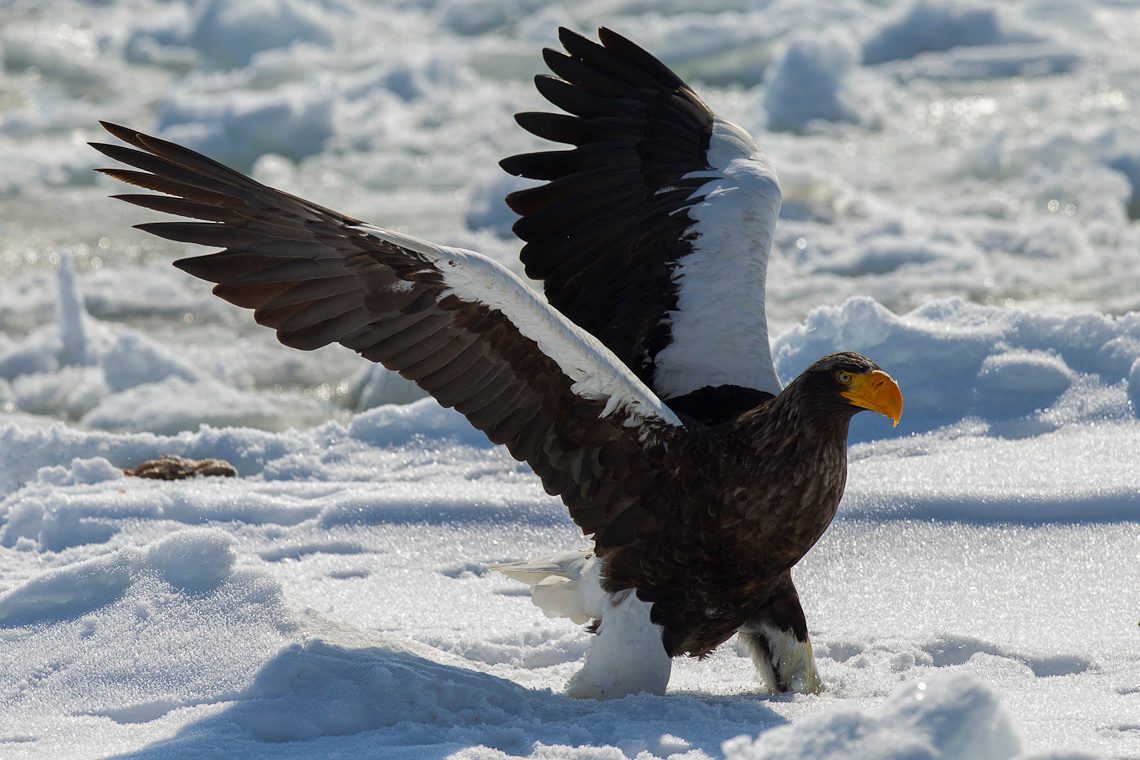
The wingspan is from 1.95 to 2.50 m (6 ft 5 in to 8 ft 2 in) and the wing chord measurement is 560 to 680 mm (22 to 27 in). The sea eagle’s wingspan is one of the largest of any living eagle, at a median of 2.13 m (7 ft 0 in). When you see one of these eagles spread its wings, it’s like watching nature unfold a massive black and white banner against the sky.
Three separate sources claim unverified Steller’s sea eagles spanning up to 2.7 m (8 ft 10 in), 2.74 m (9 ft 0 in), and 2.8 m (9 ft 2 in), respectively. If true, this would be the largest wingspan of any eagle. While these measurements remain unconfirmed, they hint at just how massive these birds can become in the wild.
A Beak Built for Business
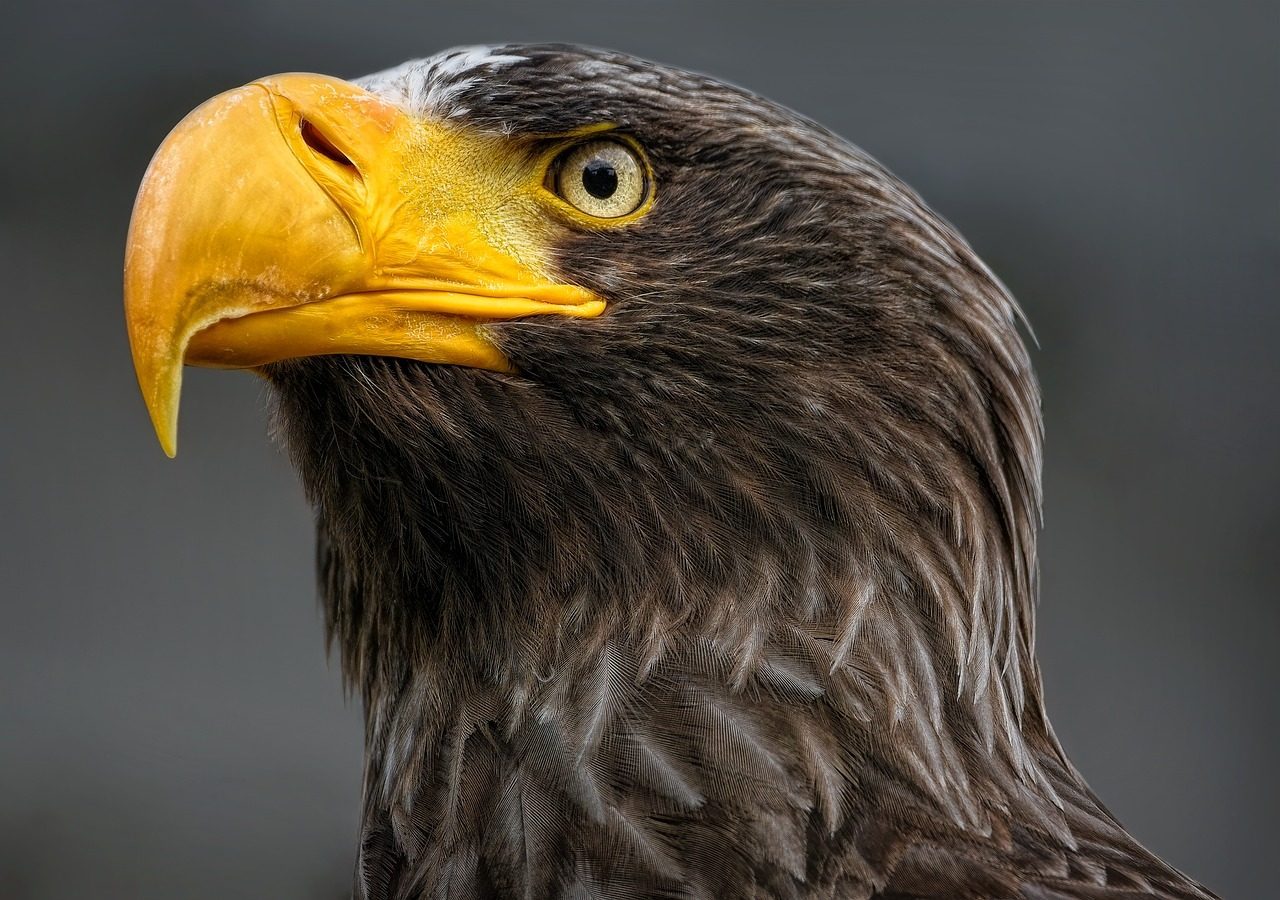
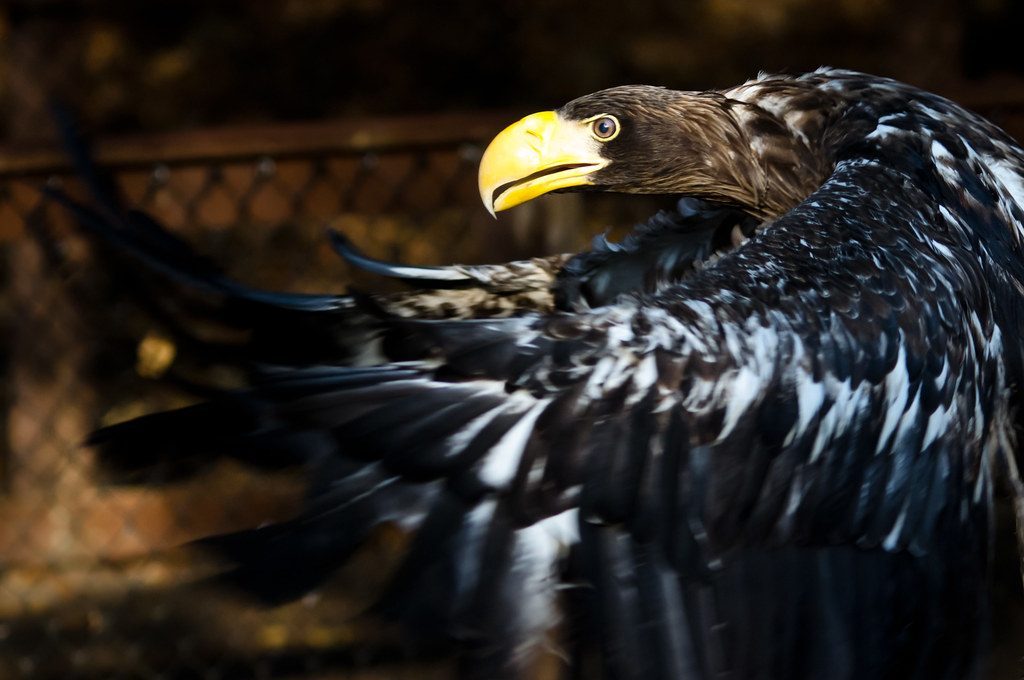
A Steller’s sea eagle’s bill is probably the largest of any living eagle, serving as both a fearsome weapon and precision tool. Their bill can measure up to 2.6 inches in length, which is the largest of any living eagle species. This isn’t just impressive size for its own sake.
Steller’s sea eagle is unique among all sea eagles in having a yellow beak even in juvenile birds. This distinctive coloration makes them easy to identify from a distance, though honestly, you’re unlikely to mistake something this massive for any other bird. The bright yellow beak serves as both a status symbol and a perfectly designed fishing implement.
Talons That Pack a Devastating Punch
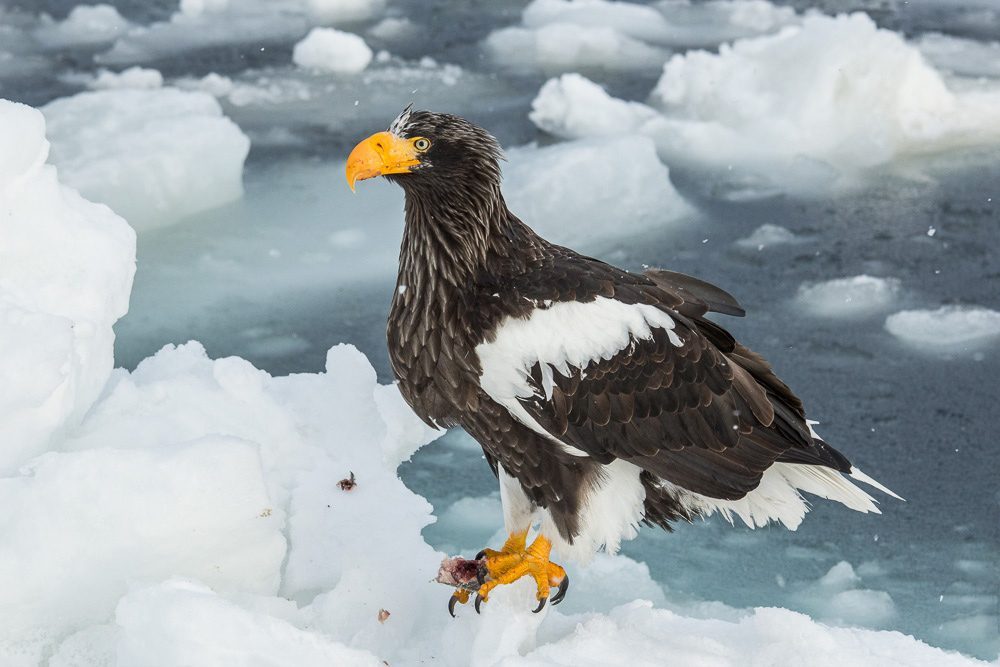
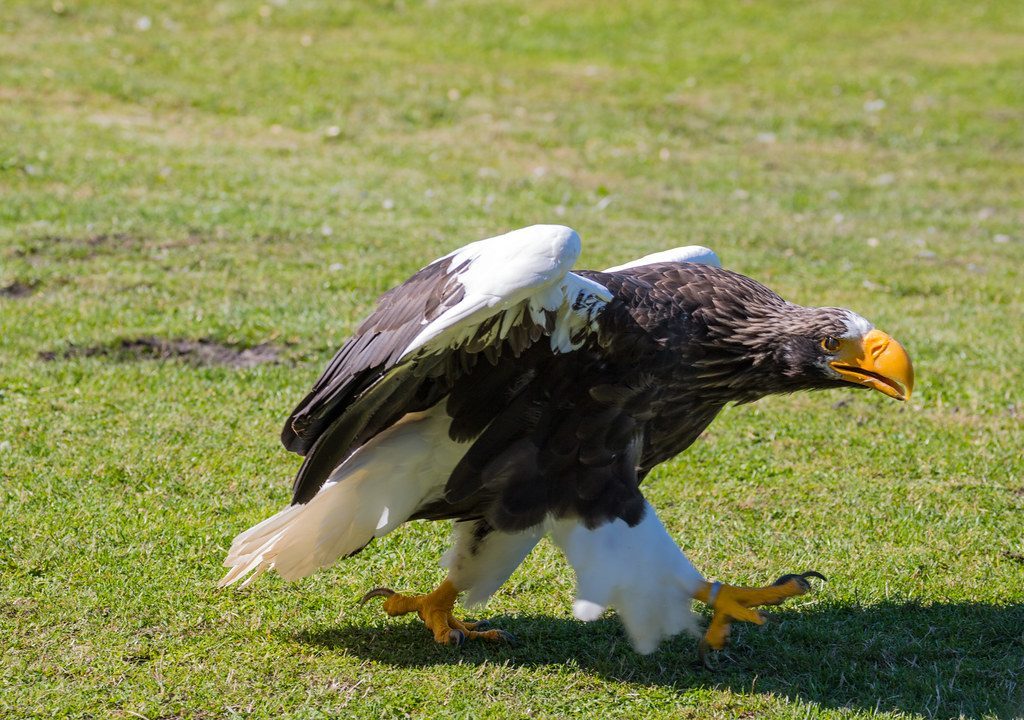
The feet are very powerful despite not bearing talons as long as those of a harpy eagle. In one case, a wildlife veterinarian was badly injured when a female eagle grabbed his arm and embedded her talons, piercing through to the other side of his arm. This incident serves as a sobering reminder of the raw power these birds possess.
While their talons are not as long as some eagles, they are extremely powerful and there is a documented cases of a talon piercing through to the other side of a wildlife vets arm. As in all fish and sea eagles, Steller’s sea eagle has spicules, which are bumpy waves all along the bottom of their feet, which allow them to hold fish that may otherwise slip out of their grasp. These specialized adaptations make them incredibly effective hunters.
Masters of the Most Extreme Real Estate
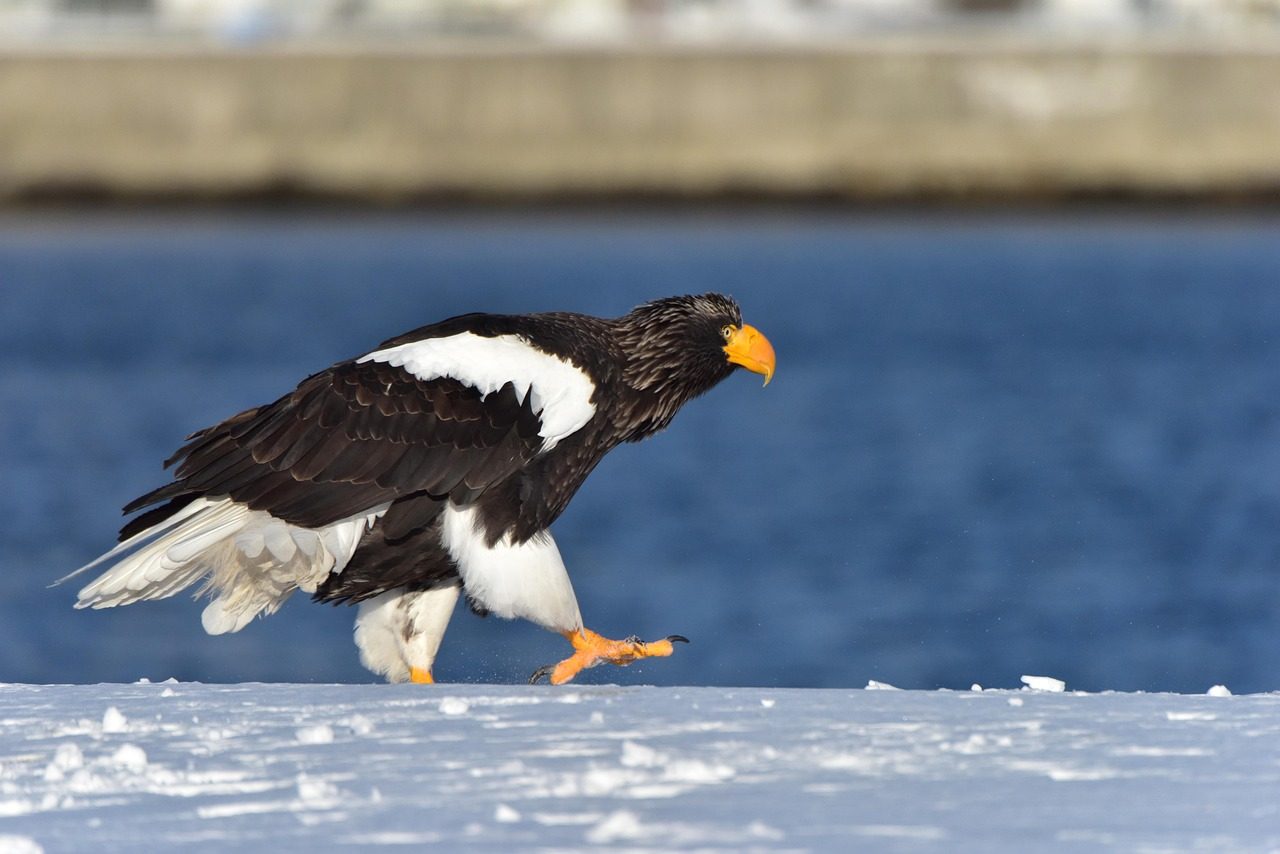
Steller’s sea eagle breeds on the Kamchatka Peninsula, the coastal area around the Sea of Okhotsk, the lower reaches of the Amur River, and on northern Sakhalin and the Shantar Islands, Russia. This breeding range represents some of the most remote and challenging terrain on Earth, where temperatures can plummet to deadly lows and storms rage for days.
Steller’s sea eagles prefer habitats with large Erman’s birches and floodplain forests of larches, alders, willows, and poplar. Many eagles migrate from breeding grounds to Korea, Japan, and China in winter. Most birds winter south of their breeding range, in the southern Kuril Islands, Russia, and Hokkaidō, Japan. They’ve essentially carved out the northern Pacific as their exclusive domain.
The Ultimate Fish Fanatic
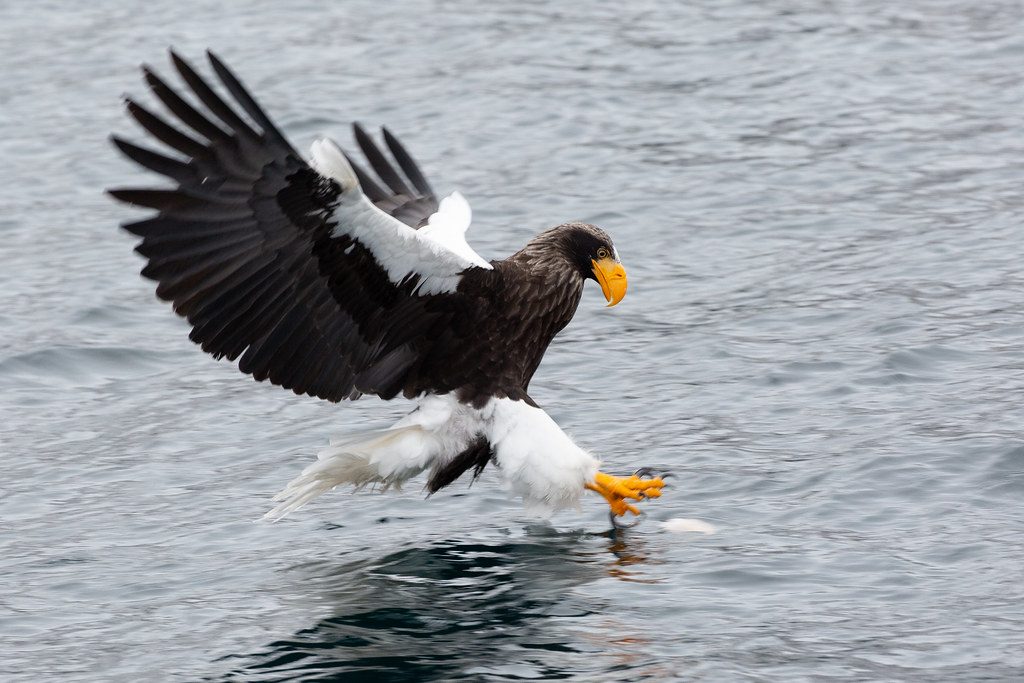
This diurnal, fish-eating raptor mainly eats salmon and trout. Yet the Steller’s sea-eagle can be flexible in its dietary habits and is an eater of all things protein – dead or alive – including puffins, fish, crabs, and even deer carcasses. When salmon runs occur, these eagles know exactly where to be.
Their favored prey are pink salmon and trout, and they have been recorded in groups of up to 700 eagles around the riverbanks when there is an abundant food supply. As well as fish, they will also take water birds such as swans, ducks, herons and cranes and even some mammals when inland. The sight of hundreds of these massive eagles congregating must be one of nature’s most impressive spectacles.
A Social Life Built on Theft and Intimidation
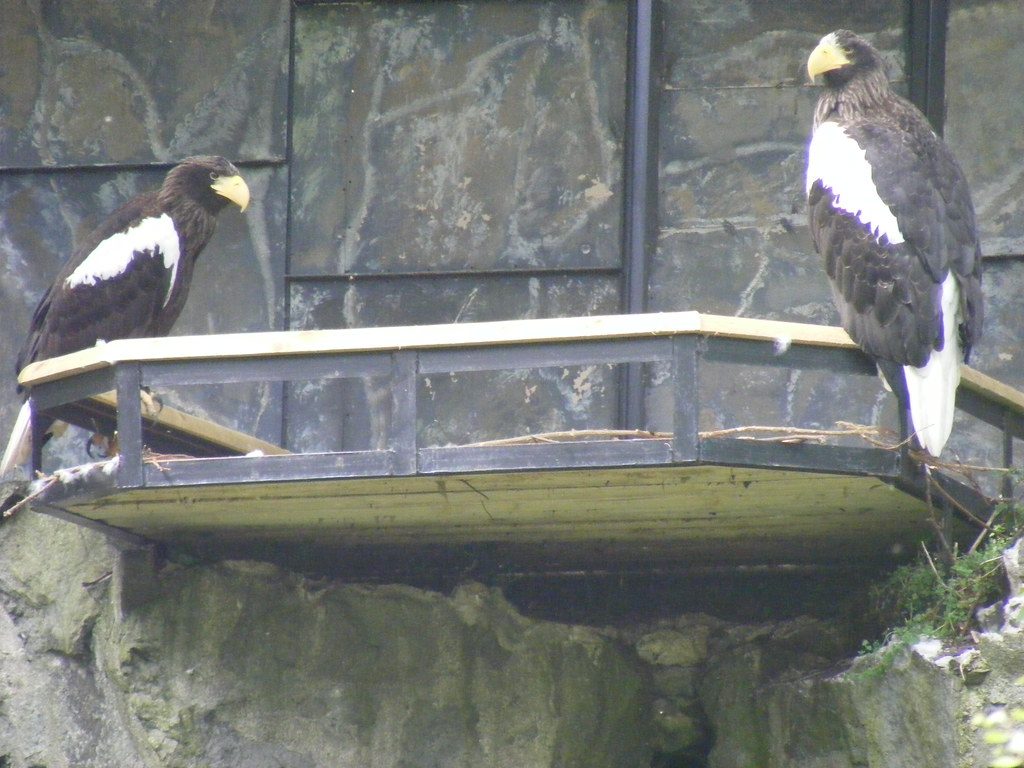
Compared with its white-tailed and bald eagle relatives, Steller’s sea eagle reportedly is a more “aggressive, powerful, and active” raptor. Where feeding occurs in groups, kleptoparasitism is common, with adults appearing to benefit most often from this behavior. Kleptoparasitism might sound fancy, but it simply means stealing food from other birds.
Though they are often seen gathered in flocks by the riversides where abundant salmons are available, this is not a group behavior, but to collect food individually. In fact, individuals are often seen messing with each other and stealing foods, a behavior which is known as ‘kleptoparasitism’. These gatherings are less like dinner parties and more like competitive eating contests where everyone cheats.
Engineers of Massive Aerial Architecture
This eagle builds several bulky aeries made of twigs and sticks at a height up to 1.5 m (59 in) and diameter up to 2.5 m (98 in). They usually place such nests high up on trees or on rocky outcrops at 15 to 20 m (49 to 66 ft) above the ground, sometimes in trees up to 45 m (148 ft). These nests are absolutely enormous structures that can weigh hundreds of pounds.
The pair will build two to four nests throughout their breeding territory and they alternate the nest they use each year. Interestingly, a pair usually returns to the same nesting area every year, adding a little more to their nest, and gets prepared for the next clutch of the season. Over time, these nests become massive monuments to eagle engineering.
Facing a Modern Threat from an Ancient Practice
Between 1994 and 2000, Dr. Saito and his colleagues encountered 72 of these eagles that were confirmed to have been poisoned by lead. In Japan, the problem arose from eagles feeding on hunter-killed Sika deer. This represents one of the most serious conservation challenges facing the species today.
Twenty-six point five % and 5.9% of the recorded deaths of Steller’s sea eagles and white-tailed sea eagles, respectively, were found to have been poisoned by Pb. In addition, Pb isotope ratio analysis showed that both Pb rifle bullets and Pb shot pellets cause Pb exposure in birds, and these endangered eagles are also exposed to Pb in Hokkaido due to the illegal use of Pb ammunition. Japan responded to this hazard by banning lead bullet use throughout the sea-eagles’ range within their country.
Racing Against Time in a Shrinking World
According to the IUCN Red list Steller’s sea eagles are classified as Vulnerable to extinction with less than 5000 individuals in the population. The current population is estimated at 5,000 and decreasing. When you consider their massive size and territorial requirements, this small population is spread dangerously thin across their vast range.
These mainly include habitat alteration, industrial pollution, and overfishing, which in turn decrease their prey source. While the species persists in key breeding and wintering areas, long-term trends indicate a declining population due to habitat degradation, lead poisoning, and reduced prey availability. Climate change may further impact its foraging grounds, particularly in regions where warming temperatures affect fish populations.
These magnificent eagles represent something truly special in our natural world. They are believed to be glacial relics that evolved in the narrow, northeast Asian coast and simply stayed there through multiple Ice Age cycles, never occurring anywhere else. They’ve survived ice ages, volcanic eruptions, and countless natural disasters, only to face their greatest challenge in the modern era.
What strikes me most about Steller’s sea eagles is their incredible resilience paired with their vulnerability. These are birds that can soar through Arctic storms and dominate every other creature in their domain, yet they’re being brought low by tiny fragments of lead in their food. It’s a sobering reminder that even the mightiest creatures on Earth depend on our choices for their survival. What do you think about the irony that such powerful predators face their greatest threat from something as small as a bullet fragment?