
Every so often, nature does something so bizarre that it feels like the universe is either glitching or showing off. Oceans glow neon blue at midnight, rocks move silently across deserts, and rivers run the wrong way. If you stumbled onto some of these scenes without warning, you’d probably think you were dreaming – or losing it.
We’re used to sunsets, rainbows, and thunderstorms, but there’s a deeper layer of weirdness most people never get to see. These rare phenomena bend light, twist physics, and mess with your sense of what’s possible. Once you know what’s really going on, the world starts to feel a lot more alive and a lot less predictable – and honestly, that’s half the fun.
1. Bioluminescent Waves: The Ocean That Glows at Night
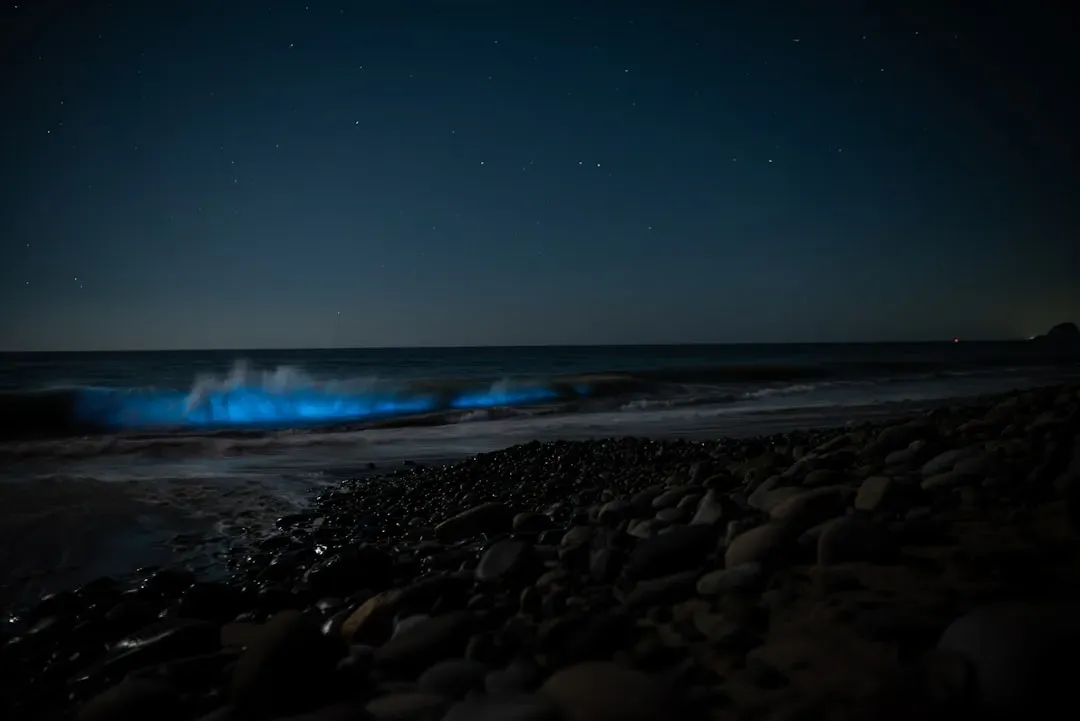
Imagine walking along a dark beach and every step you take sends blue sparks racing through the waves. It looks fake, like someone cranked up a filter in a sci‑fi movie, but it’s very real. This eerie glow is caused by microscopic plankton, often dinoflagellates, that emit light when disturbed by waves, boats, or even your hands trailing through the water.
These tiny organisms use a chemical reaction involving luciferin and an enzyme to create light as a kind of defense reaction, like an alarm system. You’ll often see this in warm, nutrient-rich coastal waters, especially in places with calm nights and gentle surf. I still remember the first time I saw it – I genuinely thought there was some sort of underwater electricity until my brain finally caught up. It’s one of those rare moments where science and pure magic feel like the same thing.
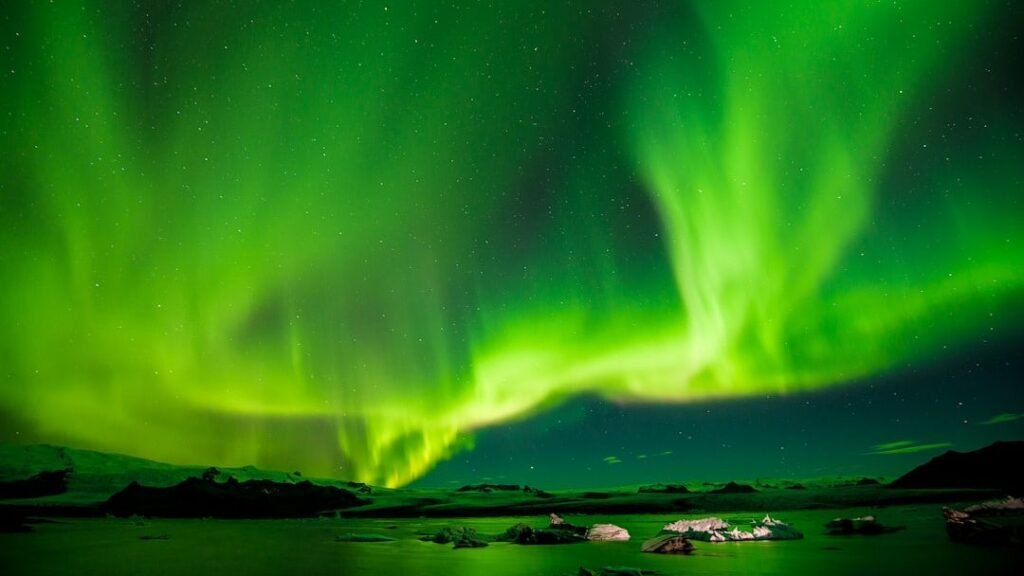
2. The Northern and Southern Lights: Curtains of Fire in the Sky
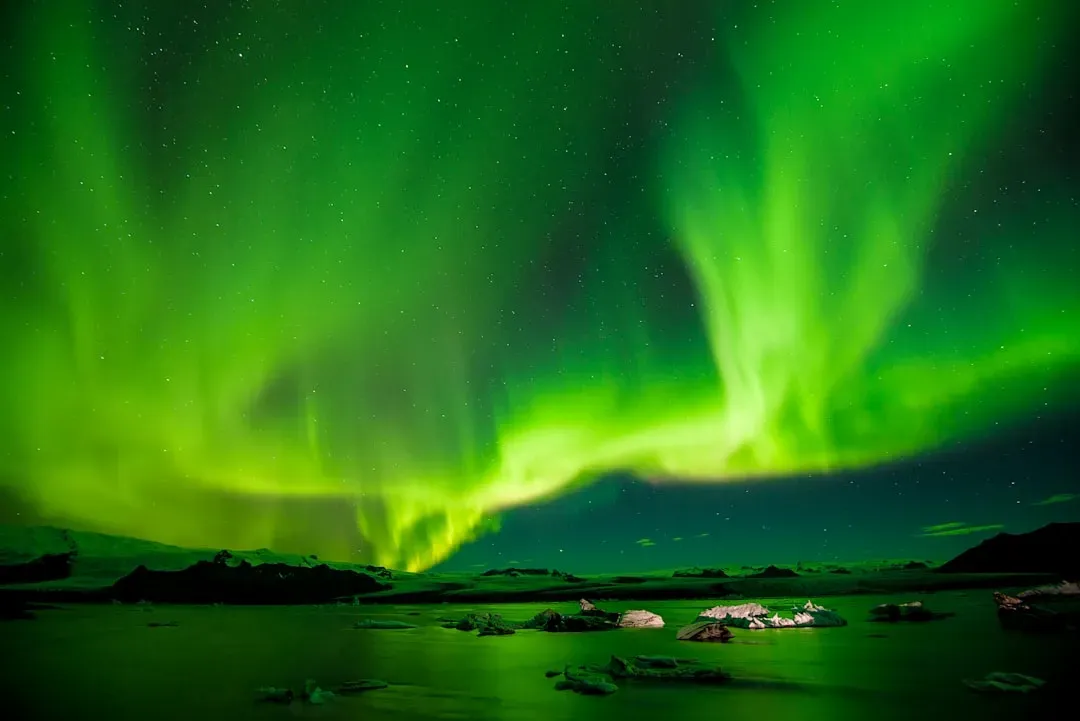
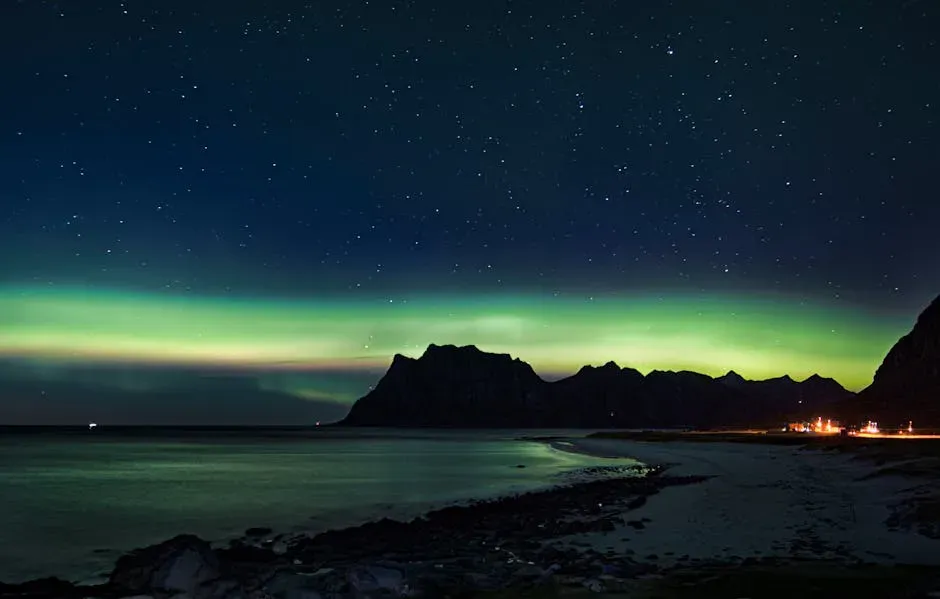
There’s a reason people travel thousands of miles just to stand in the freezing dark and stare at the sky for hours. When the aurora borealis in the north, or aurora australis in the south, kicks off properly, the night looks like it’s made of flowing, colored smoke – greens, purples, reds, sometimes all at once, sliding and pulsing across the stars. It can be so intense that it honestly feels like the sky is alive and responding to something far beyond us.
Despite how mystical it looks, this is basically a giant space-weather light show. Charged particles from the sun slam into Earth’s magnetic field, get funneled towards the poles, and collide with atoms in the upper atmosphere, which respond by releasing light. Oxygen and nitrogen glow in different colors, which is why the lights shift between green, red, and violet. On very strong solar storm nights, the aurora can stretch far from the poles, making people in unexpected places walk outside and quietly wonder whether the end of the world is starting – or just the coolest science lesson they’ll ever see.
3. Fire Rainbows and Haloes: When the Sky Turns into a Prism
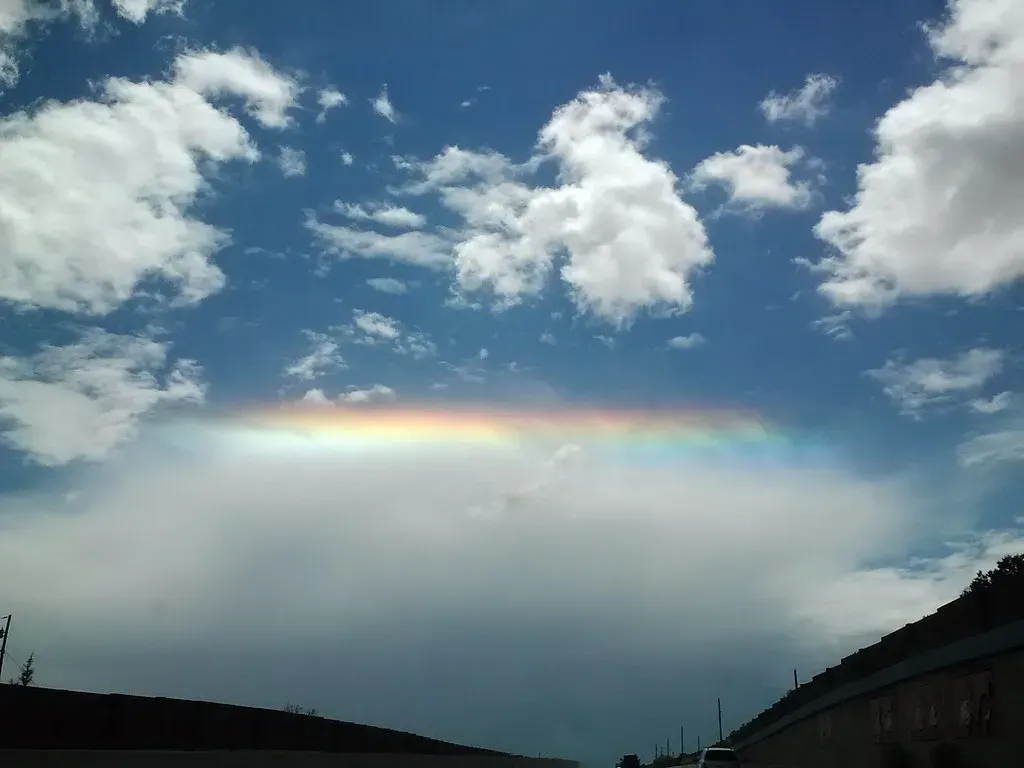
Sometimes you look up and the sky seems to be glitching: circles of light around the sun, strange arcs of rainbow color that don’t look like normal rainbows at all. Fire rainbows, officially called circumhorizontal arcs, can appear as bright smears of rainbow bands high in the sky, often under thin cirrus clouds. They look like someone took a marker to the clouds and dragged color across them.
These displays are all about ice crystals acting like tiny prisms and lenses. When sunlight passes through hexagonal ice crystals in high-altitude clouds at just the right angle, it gets bent and separated into colors, similar to what happens in a glass prism. Sun haloes, sundogs on either side of the sun, and these so‑called fire rainbows are different shapes of the same basic trick. They’re rare in day-to-day life because the angle of the sun, the type of cloud, and the structure of the ice crystals all have to line up perfectly – a bit like winning a small lottery of light and physics.
4. Catatumbo Lightning: A Storm That Almost Never Stops
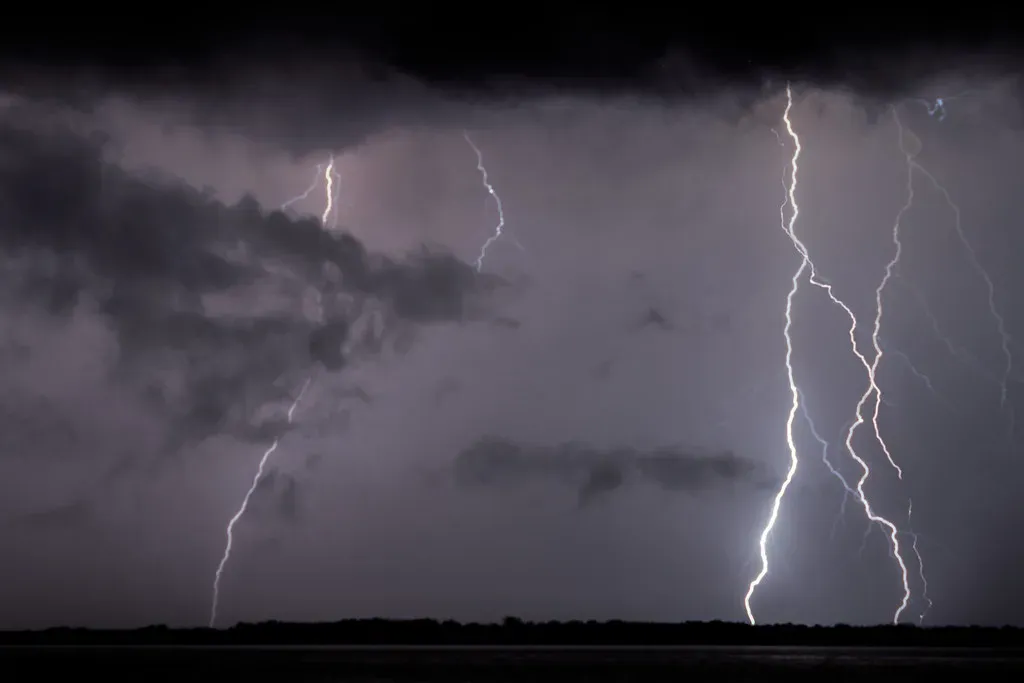
There’s a place in Venezuela, near Lake Maracaibo, where lightning storms happen so reliably that locals have used them as a natural lighthouse for centuries. On many nights each year, lightning flashes again and again from the same general area, sometimes for hours on end. It’s called Catatumbo lightning, and depending on the season, it can roll on for dozens of nights in a row, turning the clouds into a nonstop strobe show.
This freakishly persistent storm system is thought to be driven by a special mix of geography and weather: warm, moist air from the lake clashing with cooler air from the nearby mountains, plus a steady stream of winds that help reset the atmosphere like an endless loop. The result is a kind of thunderstorm factory that keeps rebuilding and firing off lightning. Standing under a sky like that must feel both hypnotic and slightly terrifying – you’re watching one of the most intense expressions of Earth’s energy, repeating over and over as if the planet is stuck on replay.
5. Sailing Stones: Rocks That Mysteriously Move Across the Desert
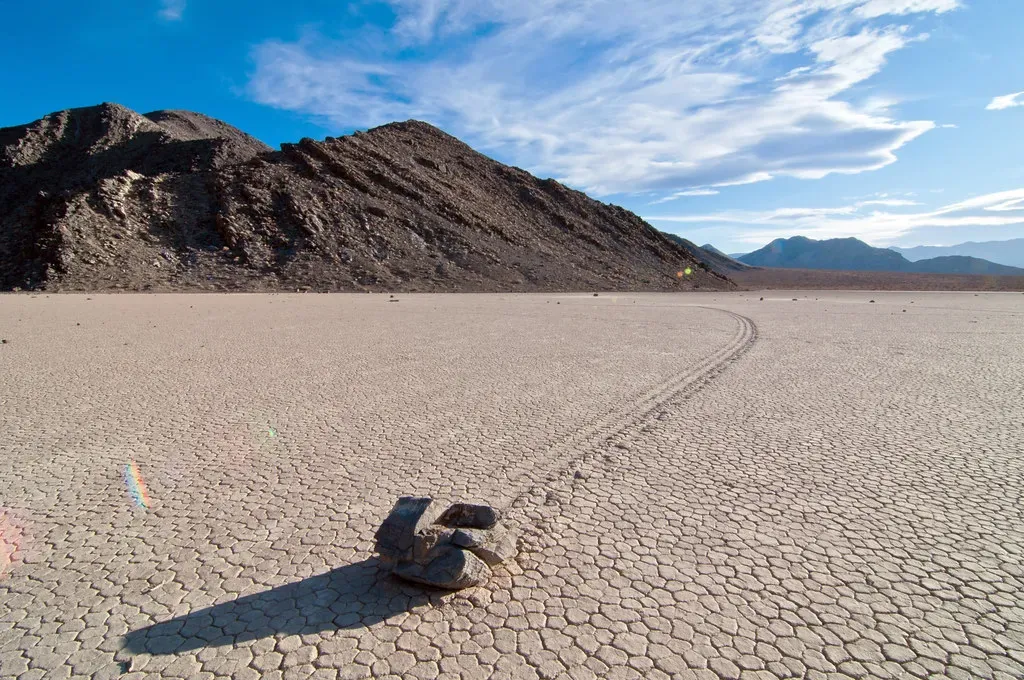
In California’s Racetrack Playa and a few other dry lake beds around the world, you can find heavy rocks sitting on flat, cracked mud with long trails etched behind them. No footprints, no tire marks, no animals – just clear evidence that the stones have slid across the ground. For decades, people blamed everything from magnetic fields to pranksters to secret government experiments, because honestly, it looks like the desert itself is playing tricks.
The real answer turned out to be both simple and weirdly beautiful. In winter, thin sheets of ice can form around the rocks when shallow water partially freezes. As the sun warms things up, the ice breaks into floating plates that, pushed by light winds, gently nudge the rocks along the slick, muddy surface beneath. The stones move so slowly you’d never notice by standing there, but over days and weeks, the trails grow longer. It’s a quiet reminder that even the most solid-looking things in nature might not be as fixed as they seem.
6. Red Tides and Blood‑Red Water: When the Ocean Looks Like It’s Bleeding
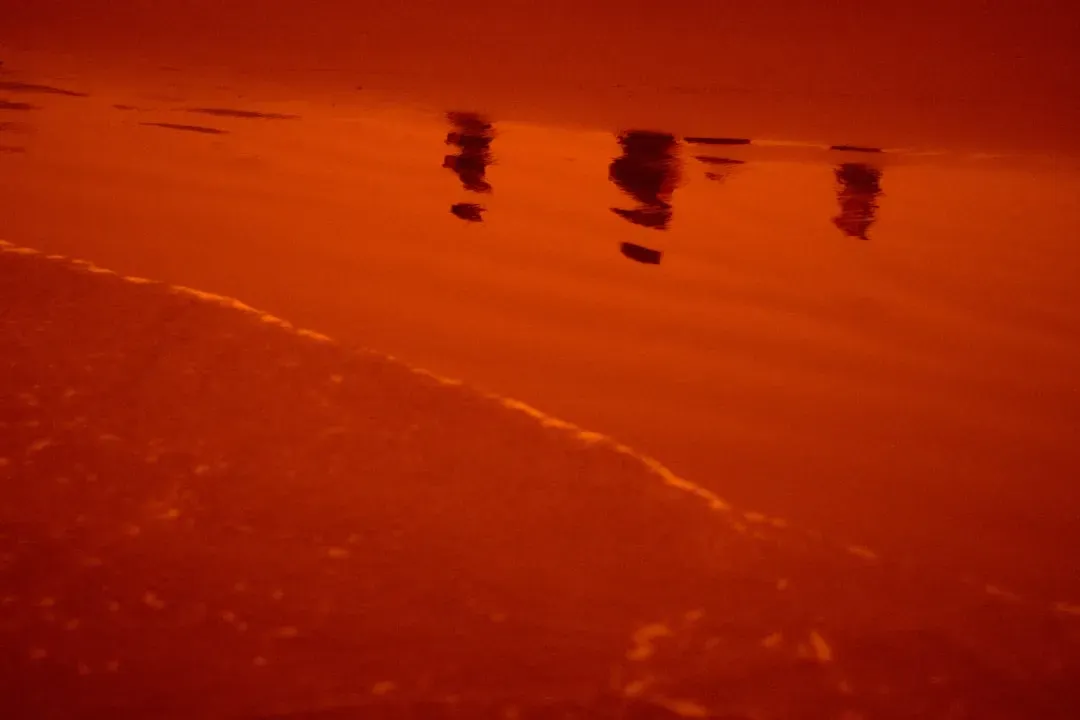
Finding yourself staring at a shoreline where the water has turned a rusty red or almost wine-colored is deeply unsettling. It looks like something out of a horror movie, and to be honest, your instincts are not entirely wrong – these events, often called red tides, can be dangerous. They’re usually caused by huge blooms of certain algae or plankton species that produce pigments and sometimes potent toxins.
Not every discolored bloom is harmful, but many of the best-known red tides can kill fish, shellfish, and even seabirds by choking oxygen or releasing chemicals. When toxins accumulate in shellfish, people who eat them can become very sick, which is why coastal communities keep a close eye on these events. What feels so eerie about red tides is how fast they can transform a familiar blue bay into something that looks toxic and alien. It’s a blunt reminder that the ocean is both generous and unforgiving, and that microscopic life can reshape entire ecosystems almost overnight.
7. Ball Lightning: Glowing Orbs That Drift Through Storms
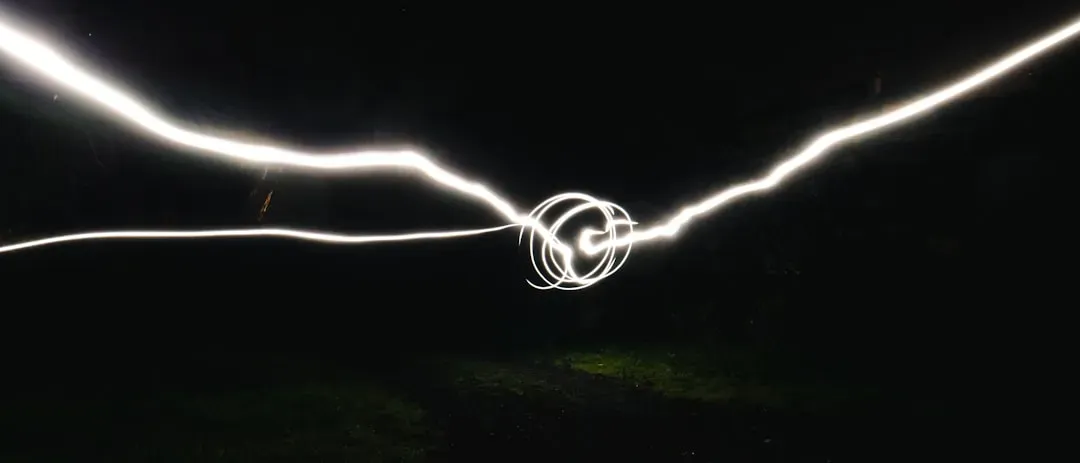
Ask people about the weirdest weather they’ve ever heard of, and ball lightning will pop up like a myth that refuses to die. Witnesses describe glowing spheres the size of a grapefruit or even larger, drifting or bouncing during thunderstorms, sometimes even appearing indoors. Then, after a few seconds, they vanish silently or explode with a sharp sound and burnt smell. For a long time, scientists were skeptical, but the sheer number of consistent descriptions over decades has made it difficult to ignore.
Despite modern research and a few possible lab reproductions, ball lightning is still not fully understood, which only adds to its eerie reputation. Some theories suggest it’s a kind of plasma sustained by electromagnetic fields, while others suggest chemical reactions in the air. Whatever the mechanism, it’s clearly rare and fleeting, which is probably why solid data is hard to get. If you ever saw a glowing orb drift across your living room in the middle of a storm, you’d probably question your sanity first and only later start Googling frantically for answers.
8. Morning Glory Clouds: Rolling Tubes in the Sky
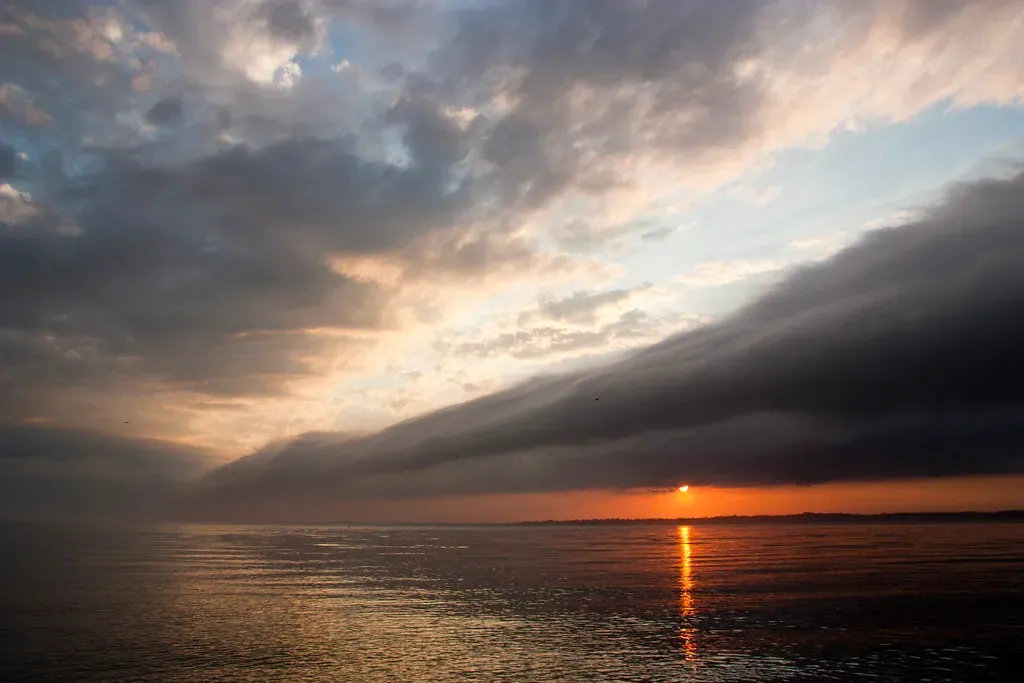
Now and then, the atmosphere pulls off a party trick so strange it looks like someone Photoshopped the sky. Morning Glory clouds are enormous, rolling, tube-shaped clouds that can stretch for hundreds of kilometers and move across the sky like a slowly rolling cylinder. Pilots who love gliding actually travel to remote parts of northern Australia just to ride these things like airborne surfers.
These clouds form when very specific atmospheric conditions line up: moisture, temperature inversions, and gentle winds arranged just so. Essentially, the air starts behaving like a wave on water, only the wave is horizontal and made of cloud. To most people on the ground, a Morning Glory seems to appear out of nowhere at dawn and then slowly glide overhead, silent and surreal. It’s the kind of sight that makes you realize the air above you is not empty at all, but a restless, shifting ocean you just don’t usually get to see this clearly.
9. Brinicles: Underwater “Icicles of Death”
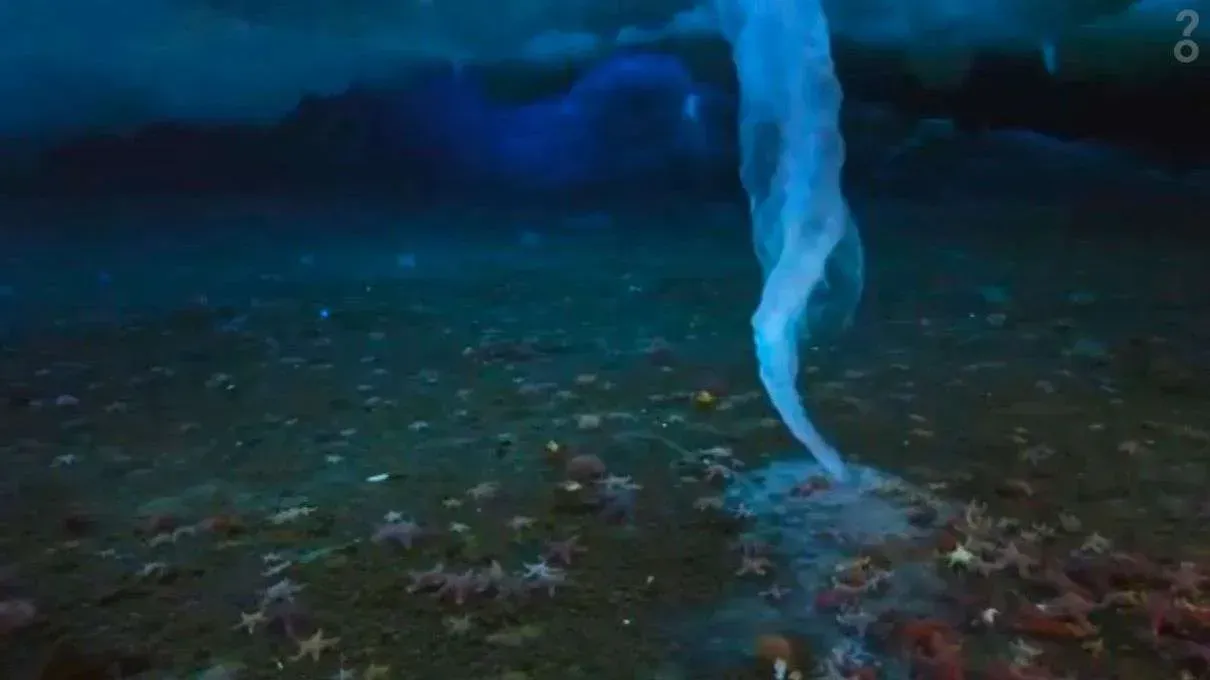
In the Antarctic seas, there’s a phenomenon so strange it feels like a villain’s weapon in a science fiction movie. When very cold, salty water sinks from forming sea ice into the ocean, it can freeze the surrounding water into a downward-growing tube of ice called a brinicle. This icy finger snakes slowly toward the seafloor, and anything living and slow-moving in its path, like starfish, can become trapped and frozen.
Brinicles form because the saltier water left behind as sea ice forms is heavier and extremely cold, so it sinks in narrow streams. As it moves down through the relatively warmer seawater, it freezes the water around it, building this delicate hollow tube. Time-lapse footage of brinicles is both mesmerizing and unsettling, watching an ice spear reach down like a slow-motion threat. It’s a clear reminder that the cold is not just an absence of heat – it’s an active, reshaping force in the polar oceans.
10. The Green Flash at Sunset: A Blink‑and‑You‑Miss‑It Emerald Spark
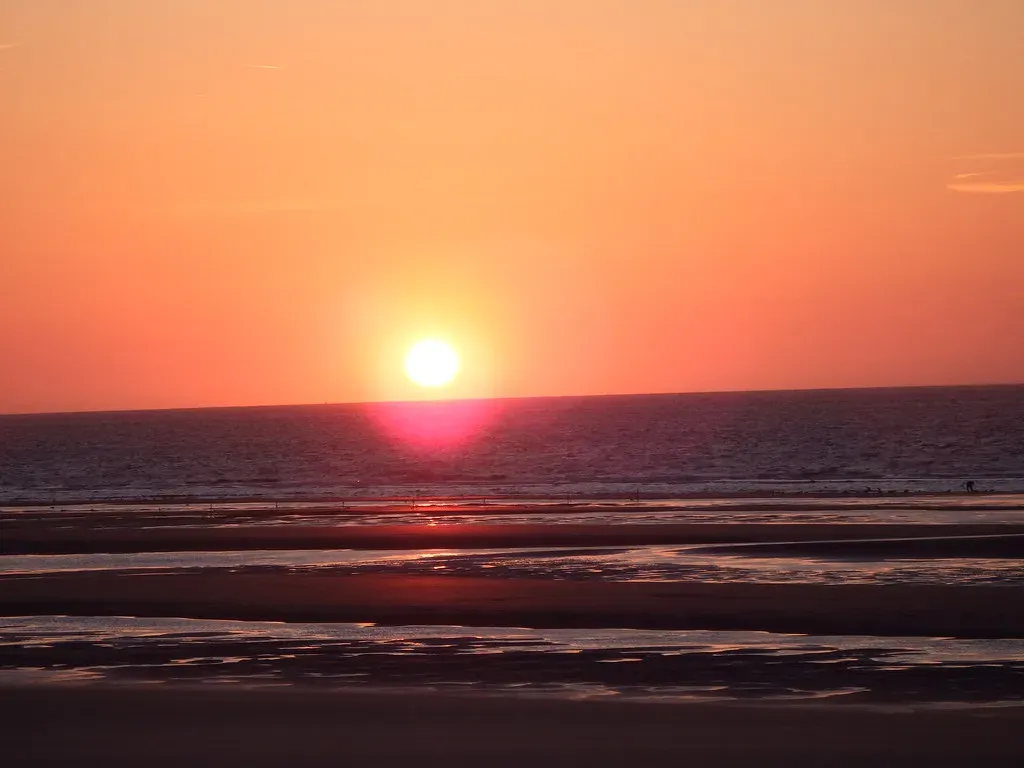
Every so often, someone will swear they saw the sun flash green just as it dipped below the horizon, and it sounds like the kind of story you’d chalk up to wishful thinking. But the green flash is real, even if it’s ridiculously easy to miss. For a brief moment – usually just a second or two – the top edge of the setting or rising sun can appear emerald green before it disappears.
This happens because Earth’s atmosphere bends and splits sunlight into different colors, a bit like a prism. Red and orange light get scattered differently than blue and green, and under the right conditions – clear air, a distant flat horizon, often over the ocean – the last visible sliver of the sun can show up as green. Most of the time, people blink or glance away and never know it was there. It’s one of those tiny, precise wonders that rewards patience and a bit of luck, like nature’s version of an Easter egg hidden in plain sight.
Conclusion: A Strange, Restless, Brilliant Planet
When you put all of these phenomena side by side – glowing seas, endless lightning, rolling clouds, wandering rocks – the world starts to feel far less ordinary. What looks calm and familiar on the surface is actually full of invisible forces constantly shifting, colliding, and occasionally putting on shows that look too strange to be real. Most of us go our whole lives without seeing more than one or two of these in person, but just knowing they exist changes how you look at a quiet sky or still water.
In a way, these bizarre events are like cracks in the illusion of normalcy, tiny openings where you can glimpse how wild the planet really is. The comforting part is that none of it is magic – it’s physics, chemistry, and atmosphere doing exactly what the laws of nature allow, just in rare and dramatic ways. The unsettling part is realizing how much is happening around us that we simply never notice. Next time you step outside, will you see a normal day – or will you wonder what strange thing might be unfolding just beyond your view?