

There is something deeply humbling about standing in front of a structure built thousands of years ago and thinking: how on earth did they do that? No cranes. No computers. No GPS. No power tools. Just human muscle, ingenuity, and a stubborn refusal to accept limits. The ancient world was, in a very real sense, a laboratory for engineering genius, and the results are still standing today.
Contrary to popular belief, some ancient civilizations were highly advanced and capable of spectacular engineering accomplishments, building architectural wonders using construction expertise that stumped civil engineers and historians until recent years. What you are about to read will make you rethink everything you thought you knew about “primitive” societies. Let’s dive in.
1. The Great Pyramid of Giza: The Last Ancient Wonder Standing
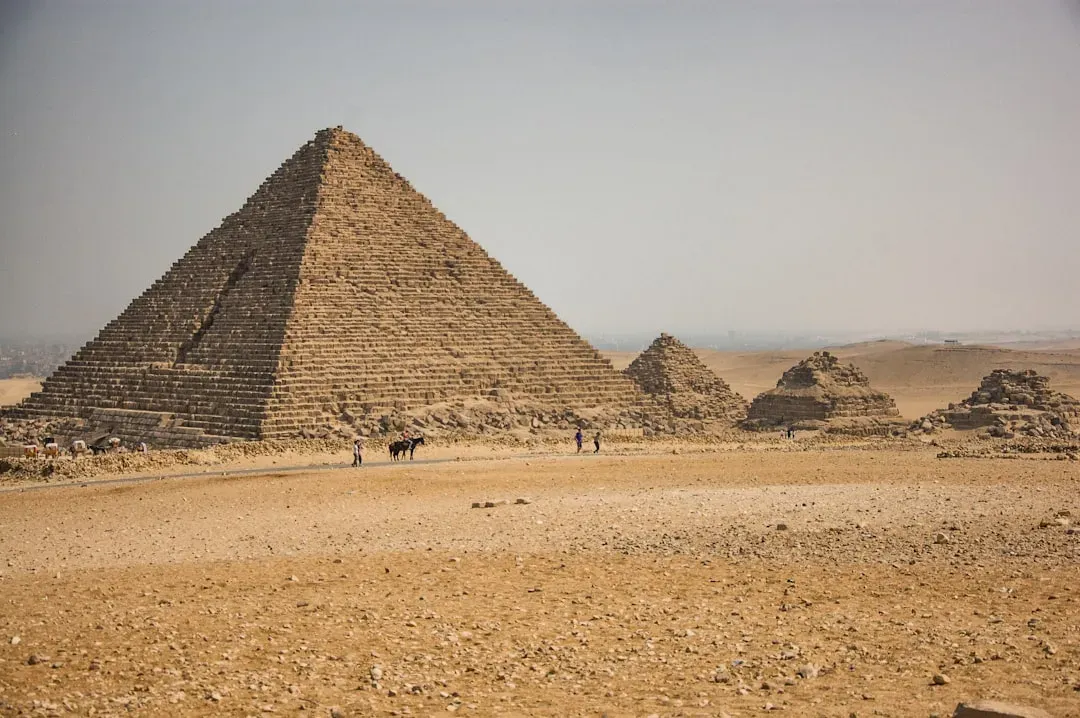
If you had to point to a single structure that defines what ancient engineering could achieve, it would be this. The Great Pyramid of Giza is the largest Egyptian pyramid, built as the tomb of pharaoh Khufu during the Fourth Dynasty of the Old Kingdom, around 2600 BC, and is the oldest of the Seven Wonders of the Ancient World as well as the only one that has remained largely intact. Think about that for a moment. Nearly 4,600 years of storms, wars, and earthquakes, and it is still there.
Approximately 2.3 million blocks of stone were cut, transported, and assembled to create the 5.75-million-ton structure, which is a masterpiece of technical skill and engineering ability. Even more jaw-dropping is the precision involved. The Egyptians leveled the massive base to a tolerance of 2 centimeters, and it is also square within 11 centimeters on every corner. That kind of accuracy rivals what we can achieve today with laser technology.
The logistics of construction at the Giza site are staggering when you think that the ancient Egyptians had no pulleys, no wheels, and no iron tools. Yet somehow, they pulled it off. Forget the slave myths – these monuments were built by skilled workers, engineers, and artisans who lived in nearby workers’ villages, organized, trained, and well-fed to ensure such an extraordinary achievement.
2. The Roman Aqueducts: Engineering Water Across an Empire
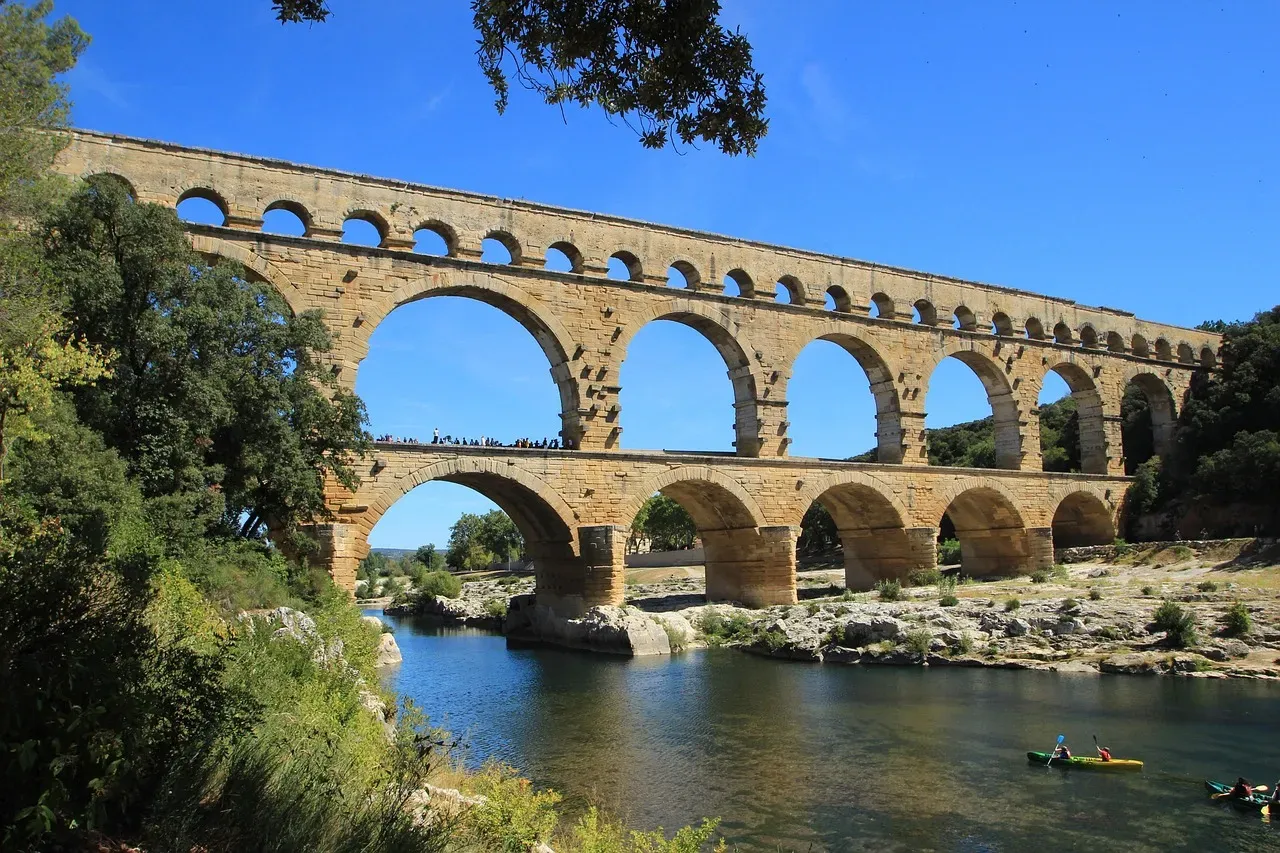
You might take clean running water for granted today, but you would not have had that luxury in the ancient world without one of the most audacious infrastructure projects ever conceived. The Romans constructed aqueducts throughout their Republic and later Empire to bring water from outside sources into cities and towns, supplying public baths, latrines, fountains, and private households, while also supporting mining operations, milling, farms, and gardens. The scale of this system was staggering.
The elaborate system that served the capital of the Roman Empire remains a major engineering achievement: over a period of 500 years, from 312 BCE to 226 CE, eleven aqueducts were built to bring water to Rome from as far away as 92 kilometers. Here is the thing that really gets me: aqueducts moved water through gravity alone, along a slight overall downward gradient within conduits of stone, brick, concrete, or lead. No pumps. No electricity. Just physics.
Roman engineers used precise surveying techniques to ensure that the aqueducts followed a gentle slope, using gravity to create a constant flow of water over long distances, and developed new instruments including the groma and dioptra for accurate measurements. Incredibly, despite their age, some aqueducts still function and provide modern-day Rome with water. The Aqua Virgo, constructed in 19 BCE, still supplies water to Rome’s famous Trevi Fountain.
3. The Great Wall of China: A Fortress Stretching Across Centuries
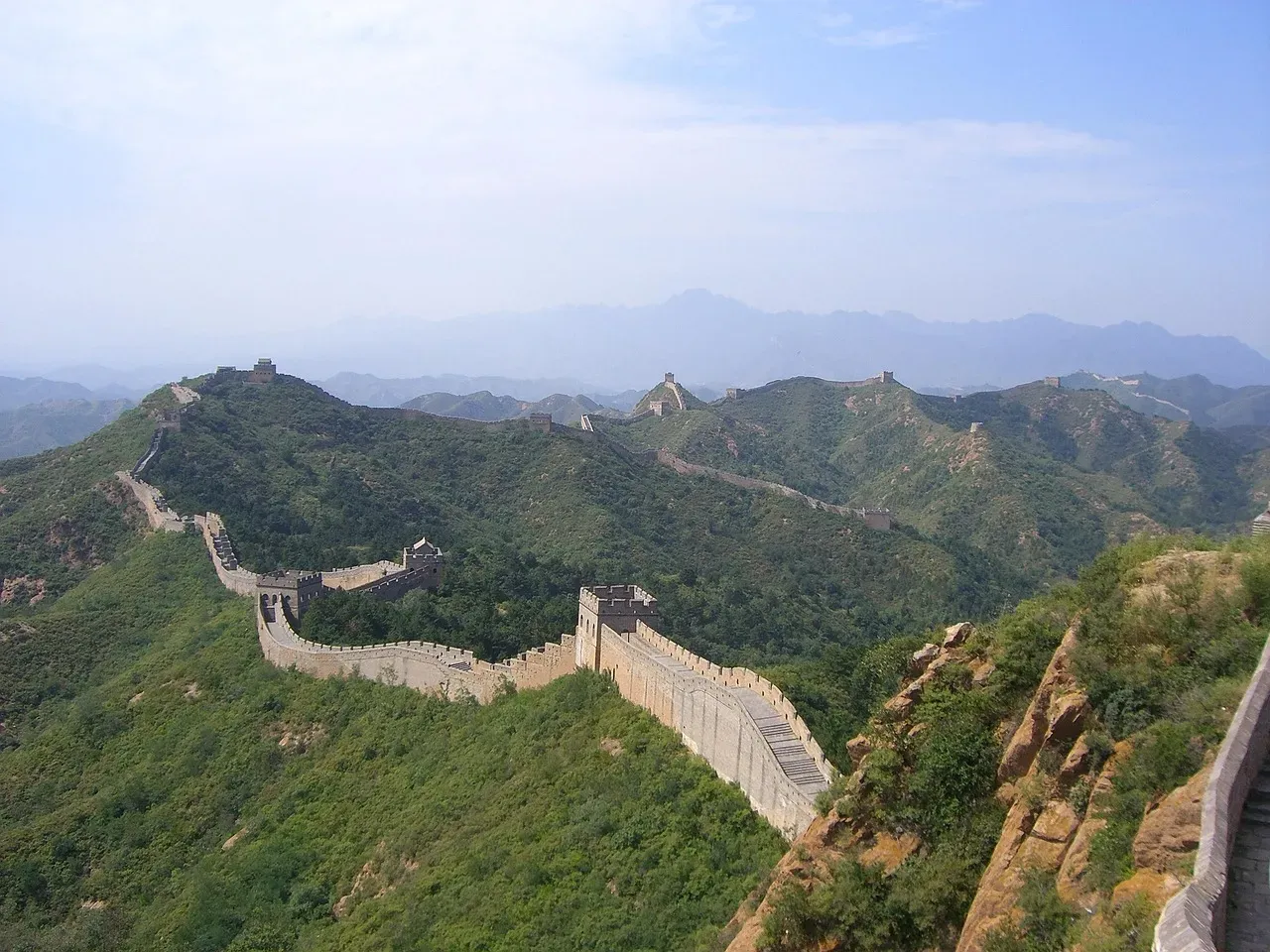
Let’s be real: when you hear “the longest structure ever built by humans,” your imagination struggles to process it. The Great Wall of China is one of the largest building-construction projects ever undertaken, and it actually consists of numerous walls, many of them parallel to each other, built over some two millennia across northern China and southern Mongolia. Two millennia. That is longer than the entire history of most countries.
The first walls date to the 7th century BC, and successive dynasties expanded the wall system, with the best-known sections built by the Ming dynasty between 1368 and 1644. It is estimated that the Great Wall of China reached a total length of 13,170 miles. For context, that is roughly the distance from New York to Sydney and back again. To aid in defense, the Great Wall utilized watchtowers, troop barracks, garrison stations, and signaling capabilities through smoke or fire, and even served as a transportation corridor.
4. Machu Picchu: A City in the Clouds
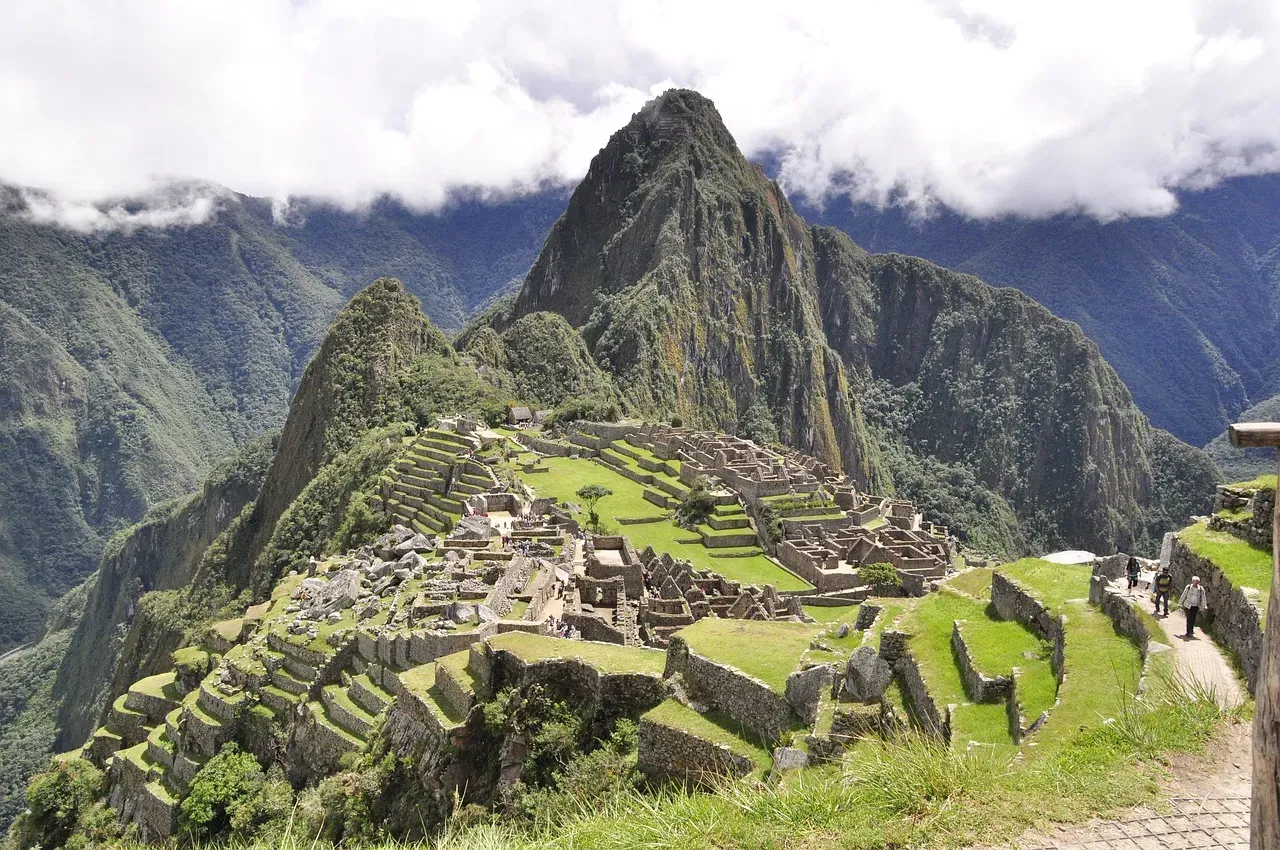
Imagine building an entire city on top of a mountain, in the middle of an earthquake zone, without the wheel or mortar. That is exactly what the Inca did. The ancient stones of the Inca citadel Machu Picchu, in the heart of the Peruvian Andes, are among the remaining wonders of a vanished world, and its colossal walls are held together not by mortar, but by gravity.
Machu Picchu’s builders used a type of “dry stone” masonry to join massive blocks of stone almost perfectly, beside and on top of each other, and the walls consist of thousands of interlocking blocks with irregular shapes, suggested to make them more resistant to earthquakes because the stones can move freely in place. This is a critical point. Peru lies on the Pacific Ring of Fire, which makes the entire country prone to earthquakes. Yet while many Spanish colonial buildings in Cusco collapsed during a massive earthquake in 1650, the Inca walls at Machu Picchu were unharmed by the tremors.
Research into the dates of burials at Machu Picchu suggests the structures were built in the middle of the 15th century, probably for the powerful Inca emperor Pachacuti, who ruled from about 1438 until 1471, and the construction of Machu Picchu seems to have been part of a rapid expansion of the Inca Empire throughout the Andes.
5. Stonehenge: Britain’s Most Enduring Mystery
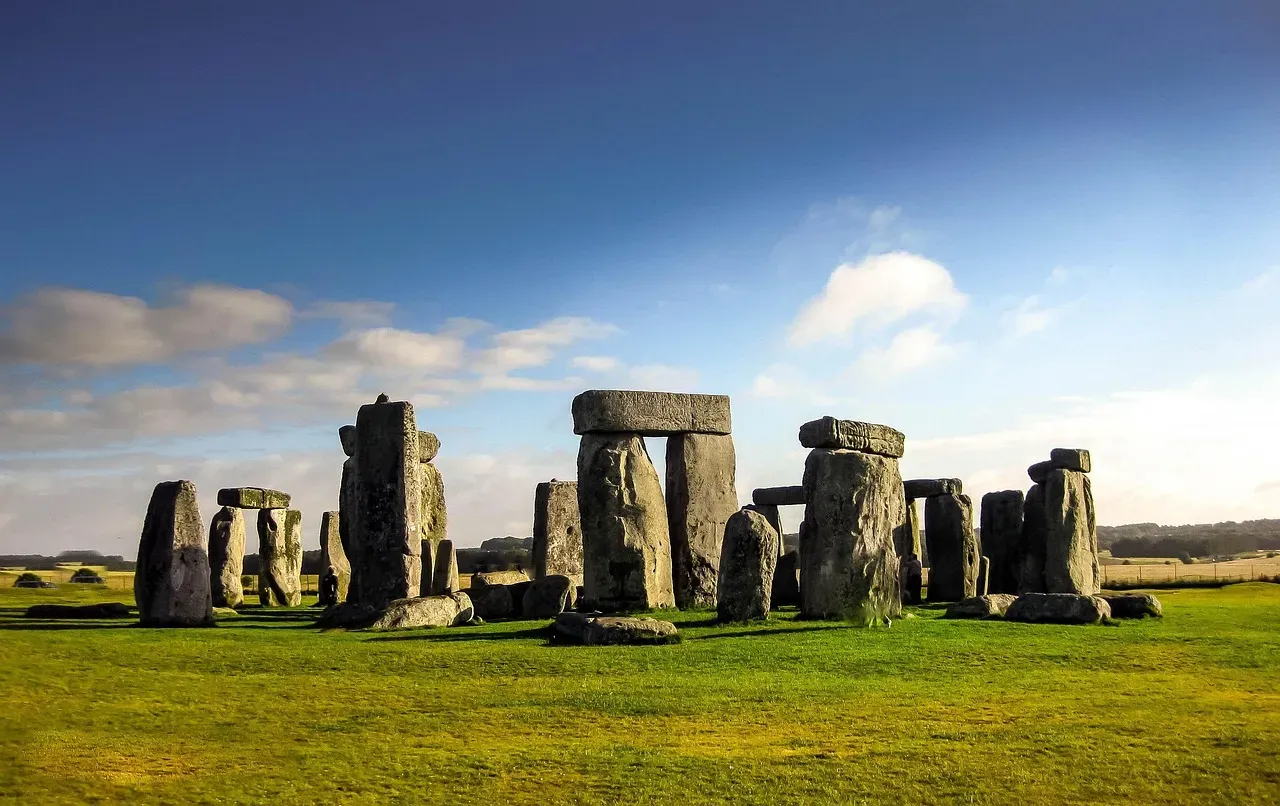
Stonehenge is one of those places where the more you learn, the more confused you get. This mighty circle of stones rising from Salisbury Plain still baffles experts, and the mystery of how and why the enormous sarsen stones and smaller bluestones were transported all the way from Pembrokeshire has fascinated people for centuries. The transportation problem alone is enough to make modern engineers break a sweat.
Evidence suggests that part of the famous stone circle was first built near the Pembrokeshire coast before being dismantled and rebuilt in Wiltshire. Honestly, that fact alone reads like something from a fantasy novel. The ramp theory suggests they shifted stones with ropes, sleds, and wet sand to reduce friction up spiraling ramps, while the water shaft theory describes how specially created canals helped transport the materials. It’s hard to say for sure which method was used, but what is certain is that this required extraordinary planning and collective effort from a Neolithic society.
6. The Saksaywaman Fortress: Puzzle Stones That Defy Explanation
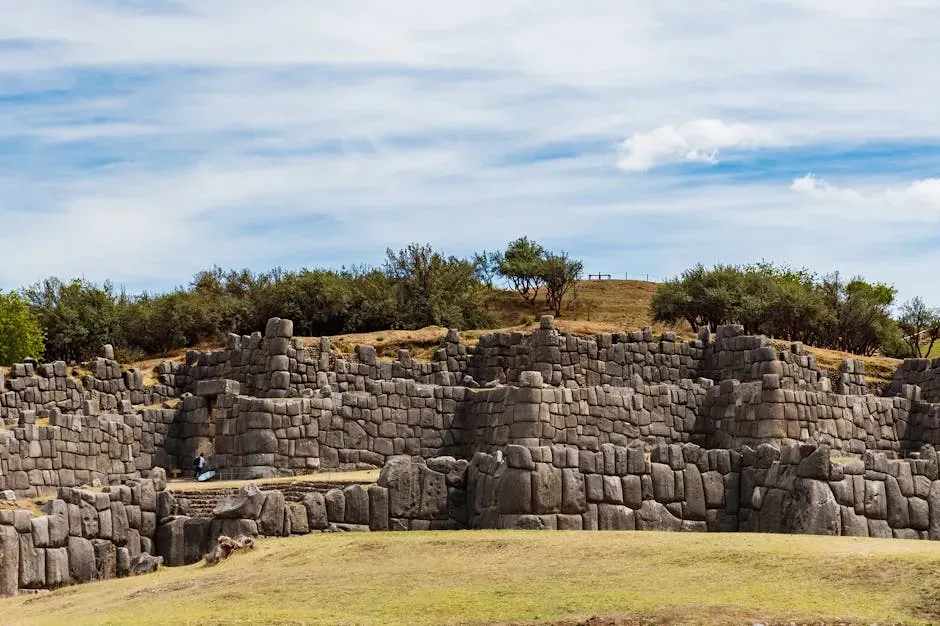
Here is an ancient engineering feat that still has no fully satisfying explanation in 2026. The skill required to build Saksaywaman is impressive even by today’s standards because the stone boulders are so precisely interconnected that it is virtually impossible to push even something as thin as a piece of paper between them, and the stone boulders were excavated from a quarry located three kilometers away and moved to their current location using an unknown transportation system.
What makes this even more mind-bending is that the boulders are huge and heavy, with the largest tipping the scales at about 120 tons. Think of it this way: that is roughly the weight of 60 large cars stacked together, moved across uneven terrain without modern machinery. At the nearby site of Ollantaytambo, megalithic blocks were hauled down from a quarry across a river and up a steep incline, something modern engineers would hesitate to replicate even with cranes.
7. Mohenjo-Daro: The Ancient City With Indoor Plumbing
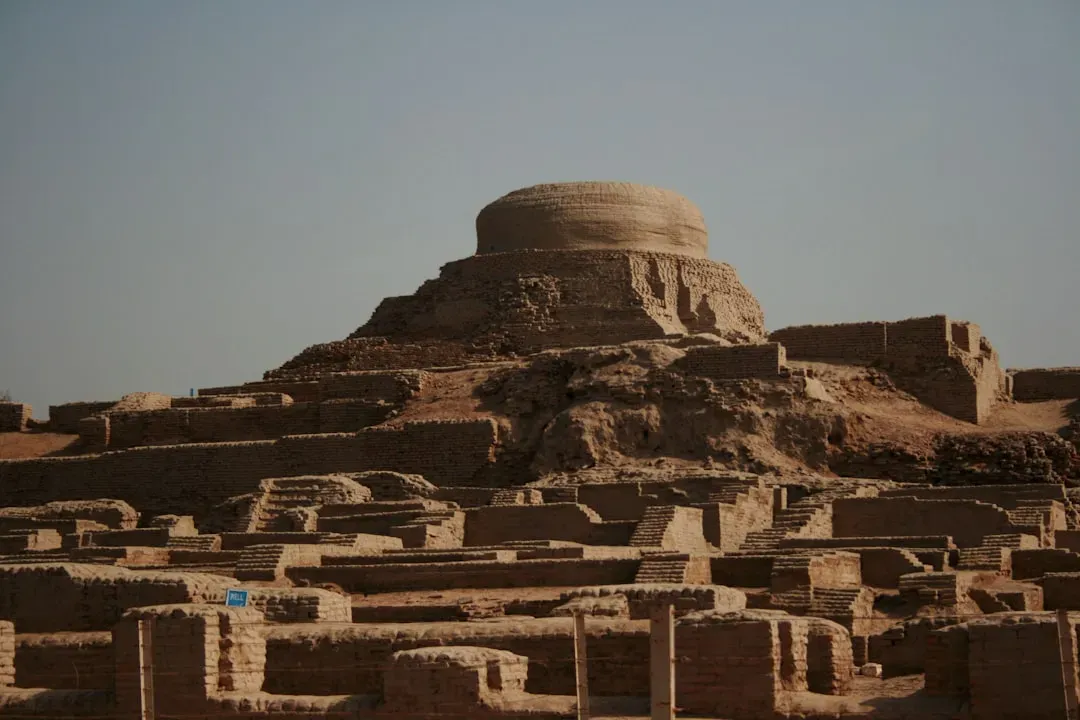
Most people have never heard of Mohenjo-Daro, and that is a genuine shame. This city is over 4,500 years old, and it was unknown to modern people until 1921. It housed up to 35,000 people and contained a complex water and sewage system laid out on a grid plan. A grid plan. In 2500 BCE. That is more organized urban planning than some modern cities can claim.
The city’s population had access to cutting-edge sewage and water facilities, with water wells drilled around the city supporting drainage systems in almost every home. That last detail is extraordinary. Individual home drainage in a Bronze Age city is not something you would expect. Mohenjo-Daro is regarded today as one of the most important archaeological finds, unveiling details on the Indus Valley people, one of the most widespread and mysterious civilizations of the early ancient era.
8. The Leshan Giant Buddha: A Statue with a Hidden Engineering Secret
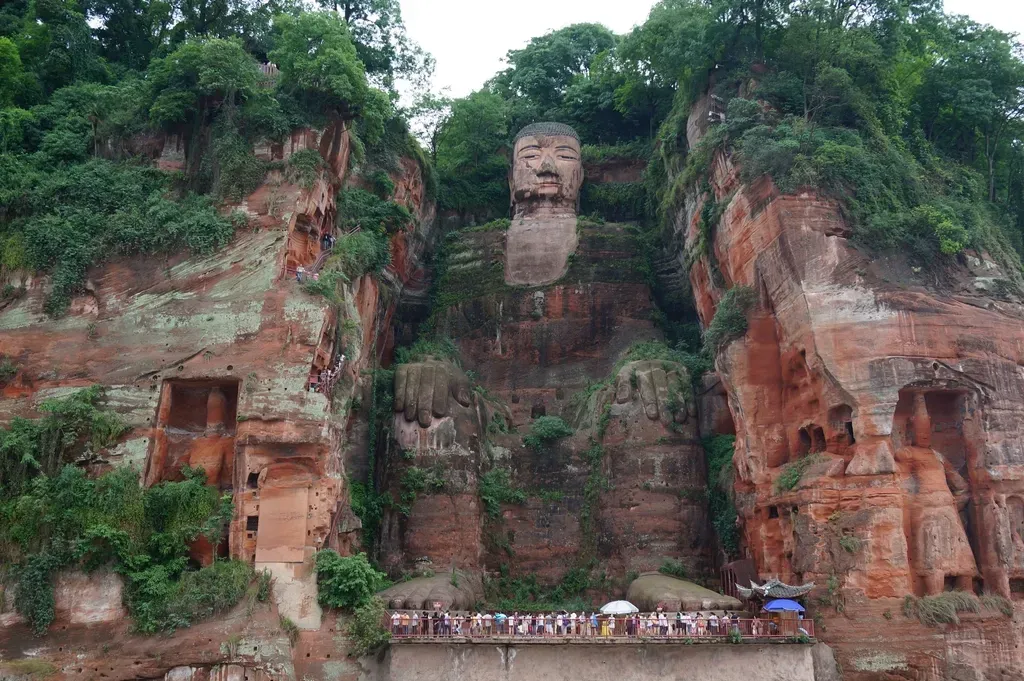
You might look at the Leshan Giant Buddha and see breathtaking religious sculpture. But look closer and you will find something surprisingly practical hiding inside it. Carved entirely out of stone, the Leshan Buddha is the largest Buddha statue in the world. It is located east of Leshan City in the Chinese province of Sichuan, and measuring 232 feet tall with 92-foot wide shoulders, this statue was completed in 803 CE.
The statue features 1,021 intricately coiled buns integrated into its head that act as a hidden drainage system, allowing rainwater to flow to the ground without damaging the statue. The drainage system also runs through other parts of the statue, including its ears and arms. This is, I think, one of the most elegant and underappreciated examples of ancient engineering thinking. Form and function, beauty and practicality, built into the same stone structure over 1,200 years ago.
9. The Chand Baori Stepwell: Going Down to Find Water
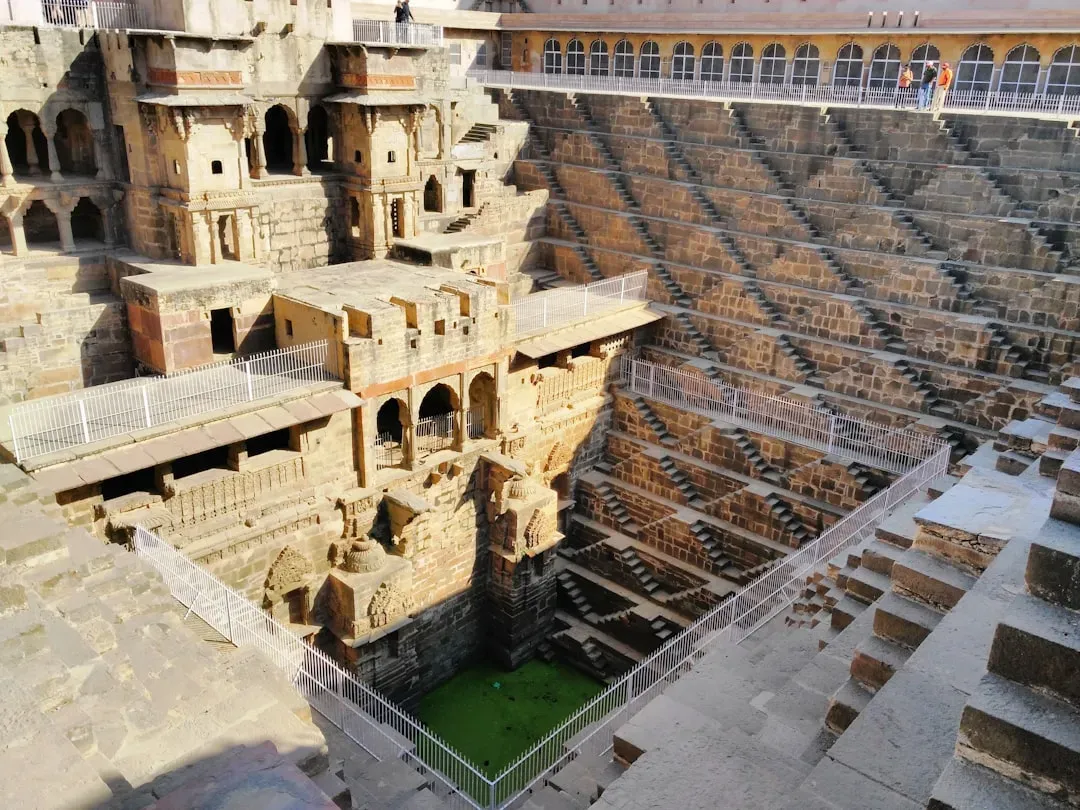
When the land around you turns dry and the desert closes in, you go deep. The builders of Chand Baori understood this perfectly. Built in the 10th century BC to supply water to the Abhaneri village in eastern Rajasthan, its 3,500 steps descend some 64 feet into the earth, forming one of the largest and deepest stepwells in the world, and its symmetrical geometry is incredible, especially when you consider it was built with simple tools.
The ancient site also features an enclosed rectangular courtyard with windows, a three-storied pavilion, pillar-supported galleries, and sculpture-clad balconies. This is far more than just a hole in the ground with stairs. It is a functional civic structure, a work of geometry, and a social gathering place all in one. Chand Baori was built by King Chanda of the Nikumbha Dynasty in the 9th century AD, and remains one of the deepest stepwells in the world. The symmetry alone is enough to make a modern architect envious.
10. The Easter Island Moai: Moving Giants Across a Remote Pacific Island
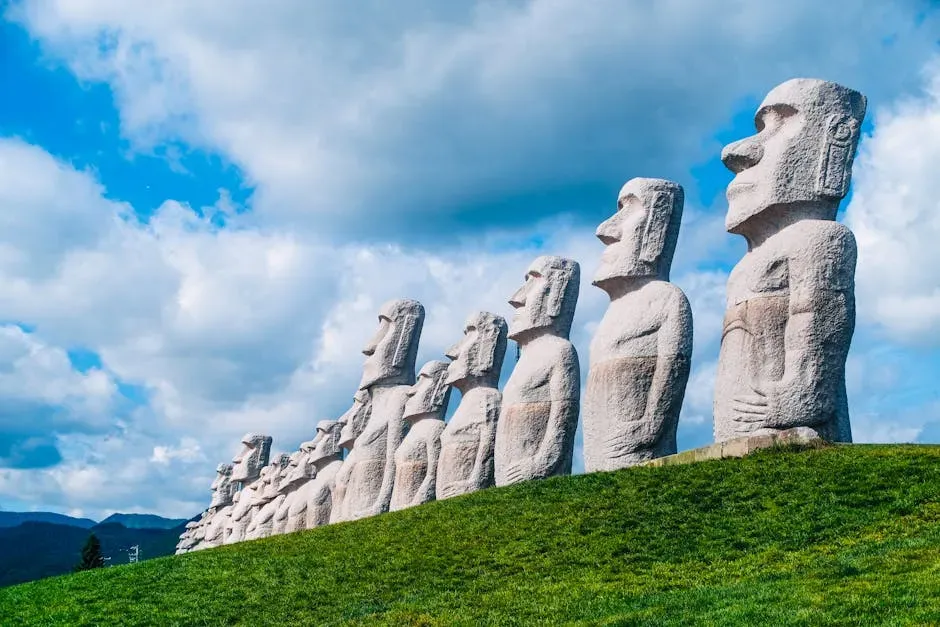
Easter Island sits in the middle of the Pacific Ocean, as remote as a place can be. Yet somehow, the people who lived there created something that still sparks fierce debate among engineers and archaeologists. The Moai statues of Easter Island are among the most baffling ancient monuments of all. It took a year to create each of these 800-plus monolithic statues using basic stone picks called “toki.”
The statues were then placed atop chieftains’ tombs, and moving them into position was another impressive feat, as they each weigh up to 80 tonnes. Many believe they were rolled on logs, some think they were transported upright, and a few even think they were rocked from side to side to imitate walking. The “walking” theory, as wild as it sounds, has actually been demonstrated experimentally by modern researchers. A civilization on a small island, with no outside contact, managed to carve, move, and erect nearly a thousand giant stone figures. That is the kind of human determination that should honestly give all of us a boost of inspiration.
A Final Word: Respect What Came Before

There is a tendency, even today, to think of ancient civilizations as somehow simpler, less capable, or less intelligent than we are. What we often call “primitive” cultures were capable of architectural feats that remain unmatched in precision and durability. The structures you have just read about are not accidents or lucky coincidences. They are the result of deep knowledge, careful planning, and extraordinary collective effort.
The structures and buildings in the eastern and western parts of the ancient world had diverse engineering concepts and aesthetics because there was little to no connection between them, and people used their technical knowledge to construct palaces, sites, and buildings with such sophisticated abilities that it is sometimes difficult to believe the actual dates when these things were built. That is perhaps the most astonishing thing of all: these civilizations, separated by oceans and centuries, arrived at equally brilliant solutions to the same fundamental human challenges.
The ancient world did not need modern technology to create things that still humble modern technology. Next time you feel frustrated that something is too difficult or too ambitious, maybe think about the person who decided to build a 232-foot stone Buddha with a working drainage system in 800 AD. If they could do that, what is your excuse? What would you have attempted, if you had lived then?