
You’ve probably looked at a skyscraper and thought, “Wow, humans are brilliant.” Then you discover that a small, furry rodent has been quietly building flood-control infrastructure for millions of years. No blueprints. No project managers. No budget meetings. Just raw instinct and evolutionary genius at work.
The natural world is absolutely packed with architectural wonders that make some of our most celebrated human constructions look modest by comparison. From deep-sea sculptors to sky-high apartment blocks, animals across every corner of the planet are solving complex engineering problems with precision that genuinely baffles scientists. You’re about to discover ten of them, and I promise, a few will leave you completely speechless. Let’s dive in.
1. Beavers: The Original Dam Builders
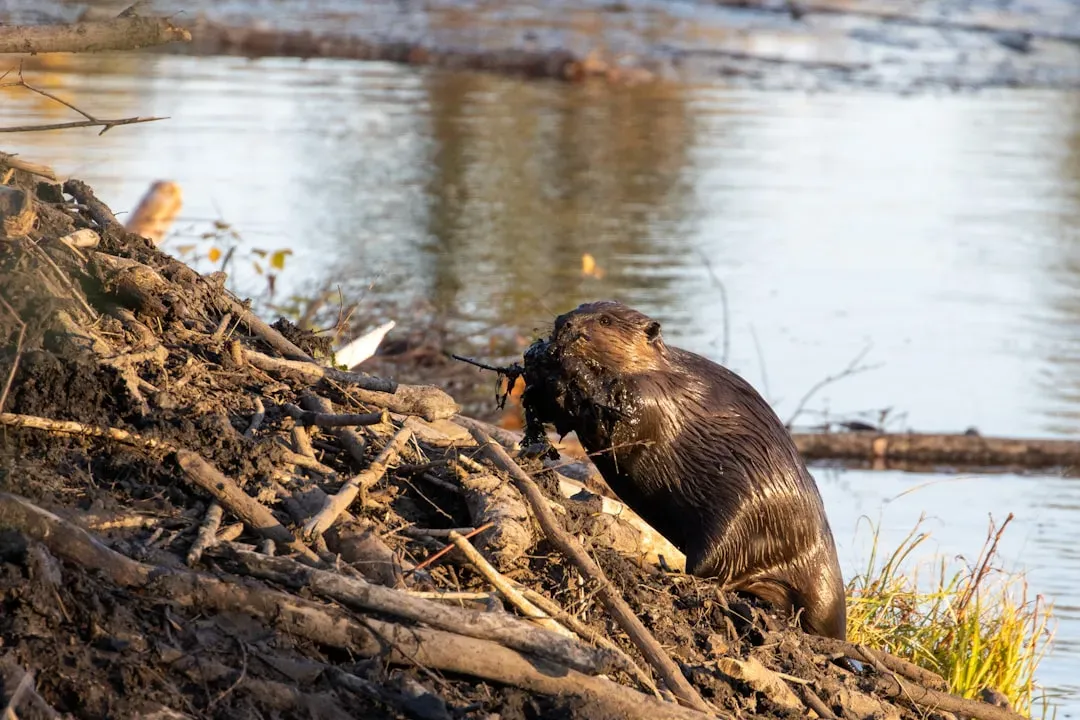
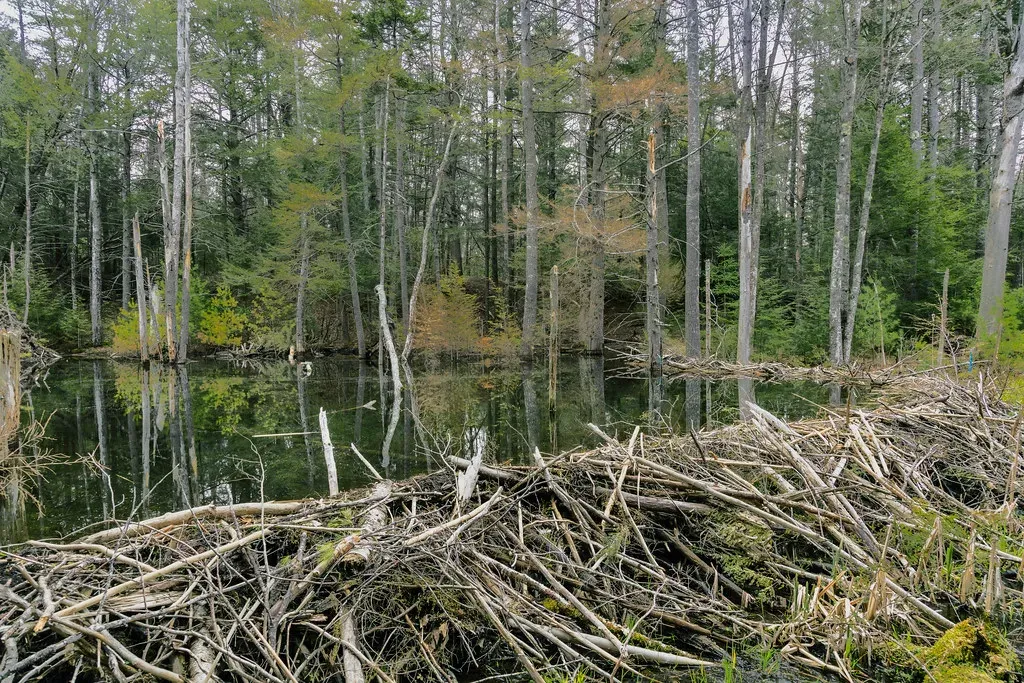
Here’s a fact that stops most people in their tracks. The longest beaver dam in the world stretches a staggering 2,788 feet and is located in Wood Buffalo National Park, Alberta, Canada. Think about that for a moment. That’s a structure longer than most city blocks, built entirely by animals using their teeth, paws, mud, and branches. No hard hats required.
These furry construction workers use their powerful teeth to fell trees, then weave branches together with mud, rocks, and vegetation to create watertight barriers. Beaver dams create moat-like ponds filled with still water, which beavers use to develop conical lodges made from mud, rocks, and timber. The body of water surrounding their lodge protects them from predators, and they use hidden, water-filled tunnels as secret entry and exit points. It’s like living in a fortress with a moat. Honestly, it’s the medieval castle of the animal world.
2. Termites: Master Architects of the Insect World
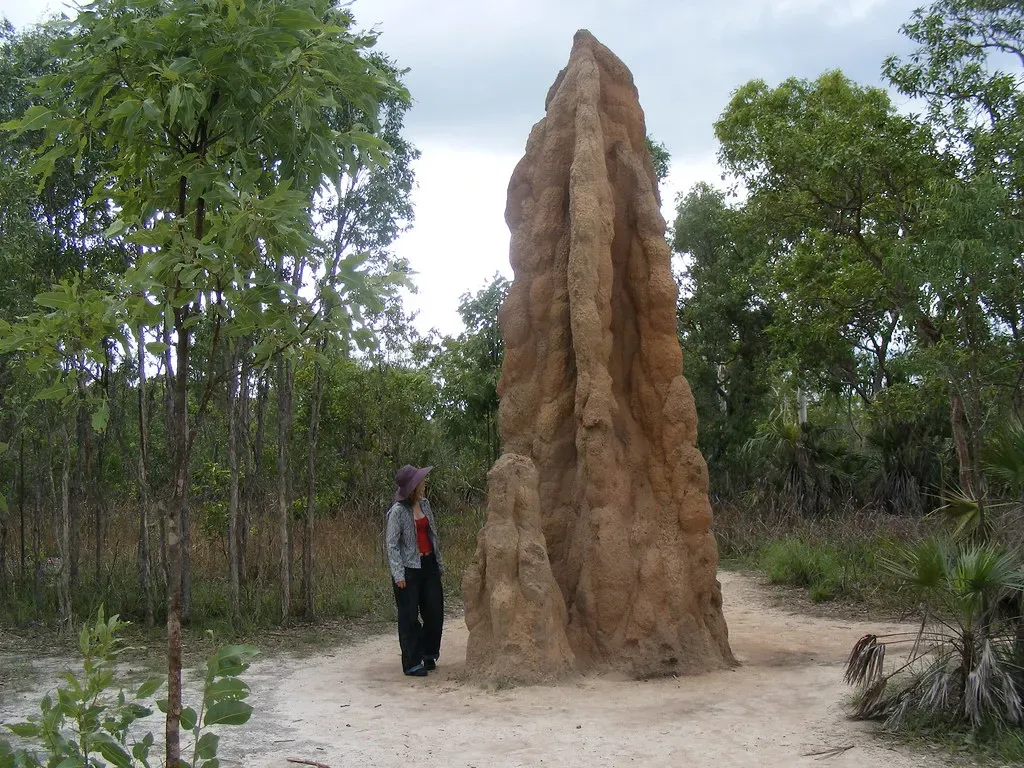
Termites are master builders, particularly in the savannas of Africa and Australia, where they construct monumental mounds that can reach heights of up to 8 meters. These towering structures, made from soil, saliva, and feces, house vast colonies and feature intricate ventilation systems that regulate temperature and humidity. Let that sink in: tiny creatures are building multi-story towers that maintain their own internal climate.
Instead of relying on wind blowing over the mound, termites manage airflow within the nest using something even simpler: sunlight. In a real sense, these insects run a solar-powered climate control system. Daily temperature oscillations drive convective flow, which reverses twice a day and ventilates the mound. The Eastgate Centre in Zimbabwe was inspired by the way termite mounds maintain internal temperature, proving that human architects are essentially still catching up with what termites figured out eons ago.
3. The White-Spotted Pufferfish: Underwater Crop Circles
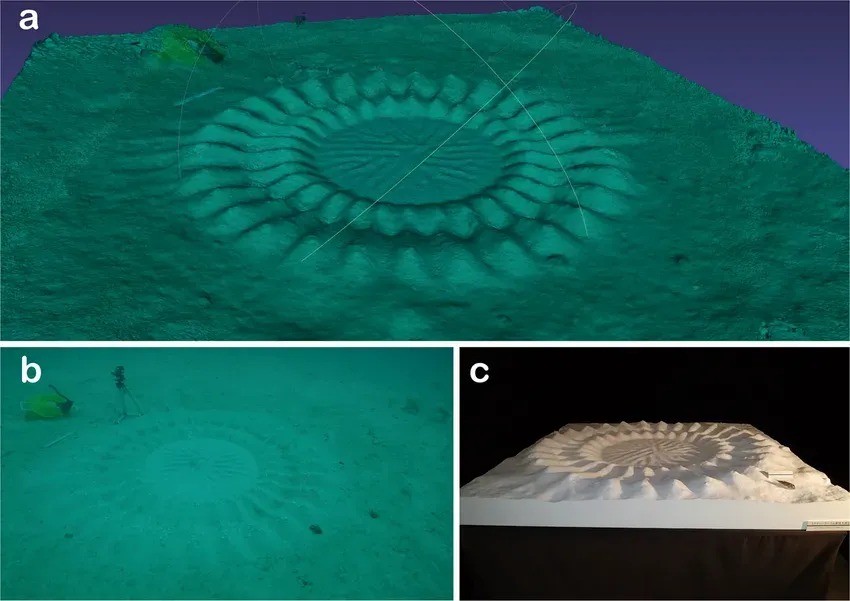
In 1995, divers noticed a beautiful, strange circular pattern on the seafloor off Japan, and more circles were discovered nearby. Some likened these formations to “underwater crop circles.” The geometric formations mysteriously came and went, and for more than a decade, nobody knew what made them. Eventually, the creator was found: a newly discovered species of pufferfish. You really couldn’t make this stuff up.
Males laboriously flap their fins as they swim along the seafloor, resulting in disrupted sediment and stunning circular patterns. Although the fish are only about 12 centimeters long, the formations they make measure about 2 meters in diameter. A fluid dynamics test using a half-size model of one of these circles found that the upstream portion funnels water and fine sediments toward the center, while the downstream peaks and valleys channel water outward. The speed of water was slowed by nearly 25 percent in the center, where the eggs are laid. Pure hydrodynamic engineering from a fish the size of your hand.
4. Prairie Dogs: Underground Cities with Built-In Ventilation
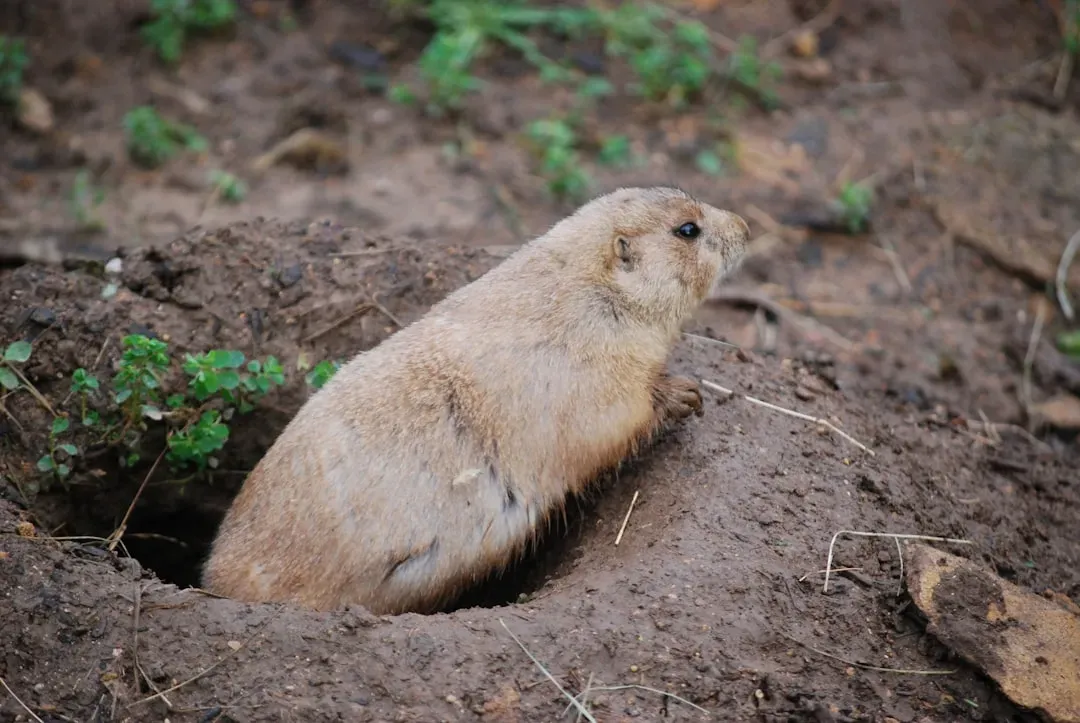
A bustling prairie dog town reveals a network of intricate underground burrows that include multiple entrances, specialized chambers, and strategic escape routes. These underground “towns” can support thousands of individuals, reflecting both remarkable engineering and sophisticated social structures. You’re essentially looking at a fully planned city, built beneath the earth without a single surveying tool.
The ventilation system these animals use is where things get really clever. To solve the problem of stale air, prairie dogs build one entrance upwind and another downwind. Wind flowing past the upwind entrance pushes air all the way through the tunnels and out the downwind exit, bringing fresh oxygen throughout the tunnel system even in a light breeze. Huge prairie dog towns might have kilometers of tunnels with dozens of different entrances and ventilation tubes to keep air flowing through all the time. That’s passive HVAC design, and it works brilliantly.
5. Spiders: Engineers of the Strongest Material on Earth
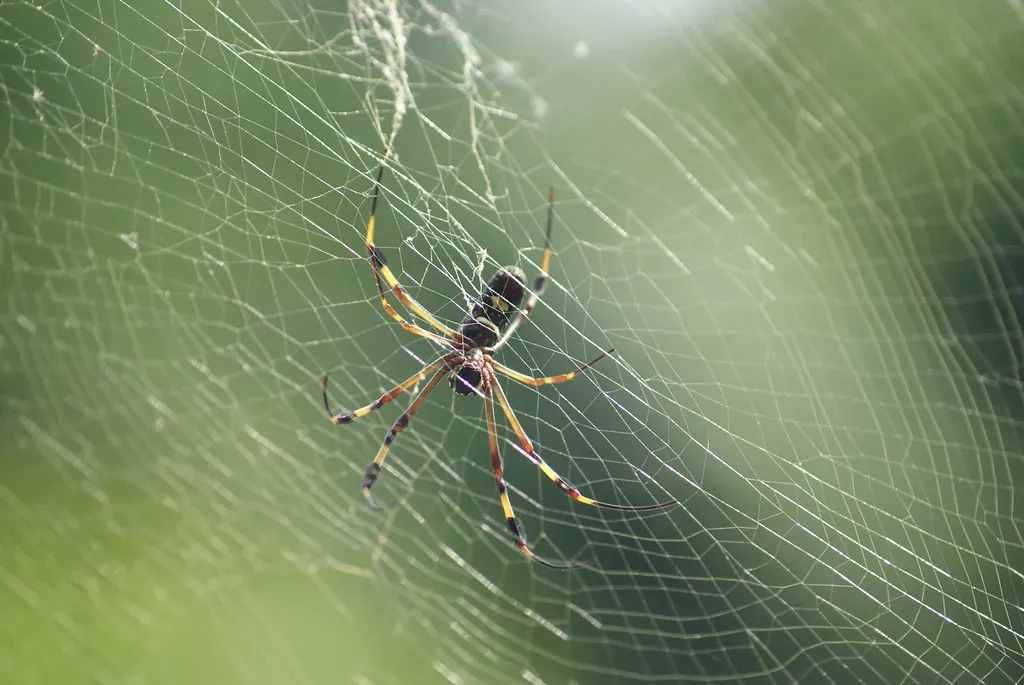
Spiders engineer webs with tensile strength that rivals steel, using different silk types for various structural components like support beams, capture spirals, and anchor lines. Think of spider silk as a material with the flexibility of rubber and the strength of Kevlar. It’s an engineering marvel that we’ve been trying to replicate in laboratories for decades, with only partial success.
Orb weaver spiders create perfectly symmetrical webs with mathematical precision, calculating the exact spacing and tension needed for maximum prey capture efficiency. Some species even add decorative elements called stabilimenta, which may help camouflage the web or make it more visible to prevent larger animals from accidentally destroying it. Spiders use their silk for multiple purposes, including building webs to trap prey, constructing egg sacs for protection, and creating lifelines for safe navigation. Some species even use their silk to parachute through the air, traveling long distances. One material, countless applications. That’s versatile engineering.
6. Bowerbirds: The Interior Designers of the Wild
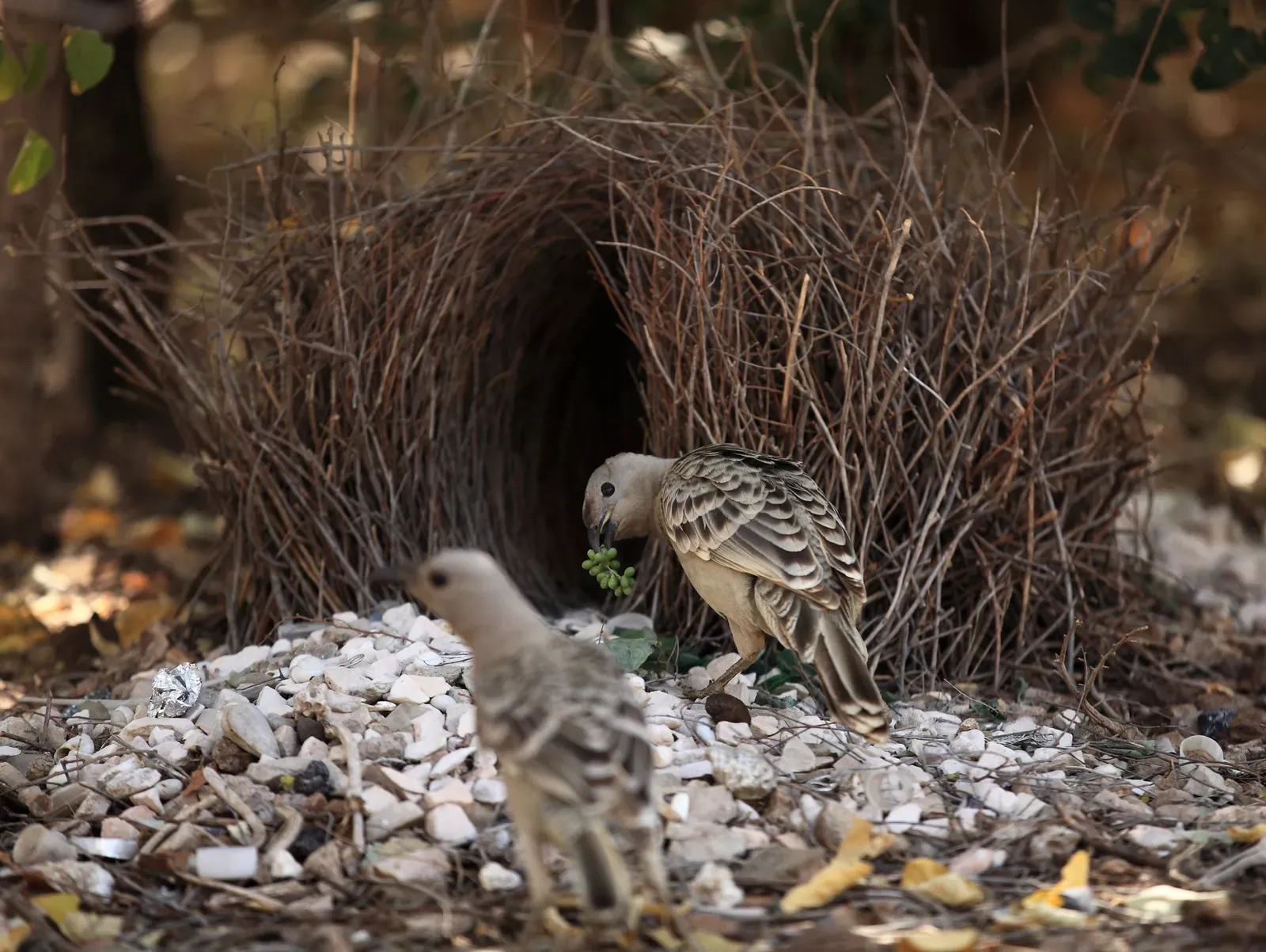
Bowerbirds, native to Australia and New Guinea, are famed for the complex structures known as bowers built by males to attract mates. These bowers, made of twigs and decorated with brightly colored objects, represent an amazing display of courtship behavior. Each bower is meticulously crafted, with particular care taken to ensure visual appeal and symmetry. Honestly, some of these structures look like they were put together by a very enthusiastic interior designer with a color preference and too much free time.
Male bowerbirds construct elaborate courtship theaters decorated with colorful objects, creating artistic displays that would make interior designers jealous. These feathered architects arrange flowers, berries, shells, and even human-made objects in specific patterns around their bower structures. Some species prefer blue objects, while others favor yellow or red, and they’ll actually steal decorations from neighboring males to improve their own displays. That last part, competitive decoration theft, feels uncomfortably relatable.
7. Army Ants: Living Architecture on the Move
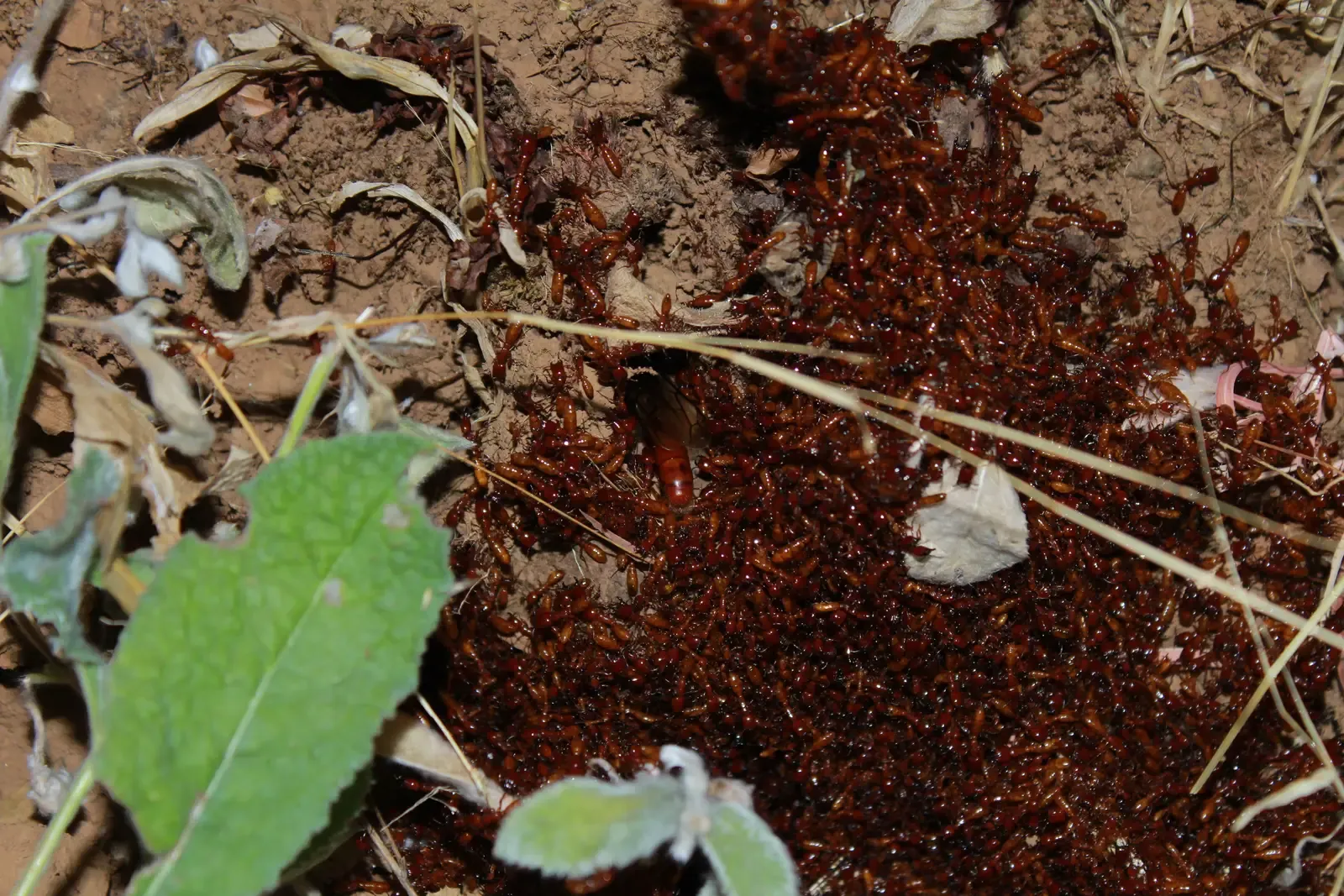
Army ants showcase incredible adaptability by forming living nests called “bivouacs” out of their own bodies. These temporary structures can be rapidly assembled and dismantled as the colony migrates, allowing for remarkable flexibility and protection in ever-changing environments. Their ability to create functional shelters through coordinated teamwork highlights some of the most impressive collective engineering in the animal kingdom. You read that correctly. These ants become the building material themselves.
Imagine a skyscraper where the bricks could decide to walk to a new location overnight. That’s essentially what army ants do. The colony can number in the hundreds of thousands, and each individual plays a structural role, locking together to form chambers, walls, and tunnels using nothing but their own bodies. Animals display remarkable creativity in the way they design their homes, using available resources to build structures that protect and sustain them, and this animal architecture varies widely among species, influenced by their environment, survival needs, and social behaviors. Army ants take this principle to its most literal extreme.
8. Sociable Weavers: The Bird Apartment Block
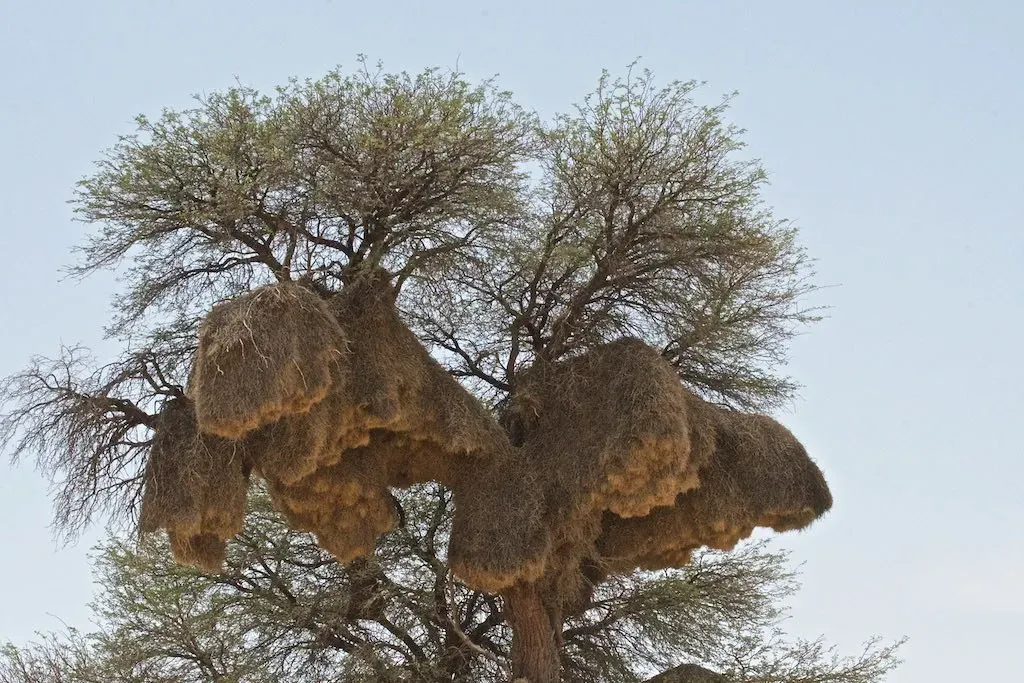
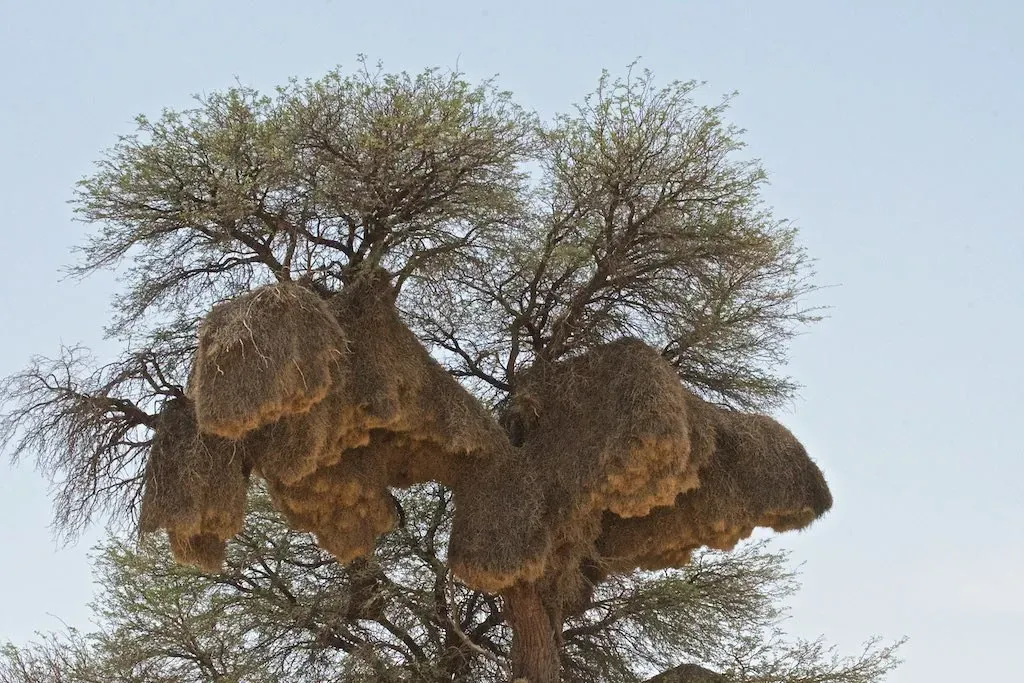
Sociable weavers build dense nest colonies, with hundreds of woven nests sometimes hanging from a single tree. Each nest is hand-woven, forming temperature-controlled and weather-resistant housing. Despite the birds’ relatively small size, sociable weaver nests are among the largest built by any bird, with entire trees becoming bird apartment blocks. Picture an entire community living in a single structure that would take you years to build by hand. These birds do it with just their beaks.
What makes this particularly remarkable is the engineering behind the climate control. The layered thatch structure of the outer shell provides insulation against the extreme heat of the African savanna during the day, while trapping warmth at night when temperatures drop sharply. It’s hard to say for sure whether this was “designed” in any conscious sense, but the result is a communal dwelling with natural thermal regulation that human architects actively study. From termite mounds influencing sustainable building designs to the intricate geometry of beehives inspiring efficient engineering structures, these species showcase solutions that balance functionality, efficiency, and environmental harmony.
9. Honeybees: Mathematicians of the Hive
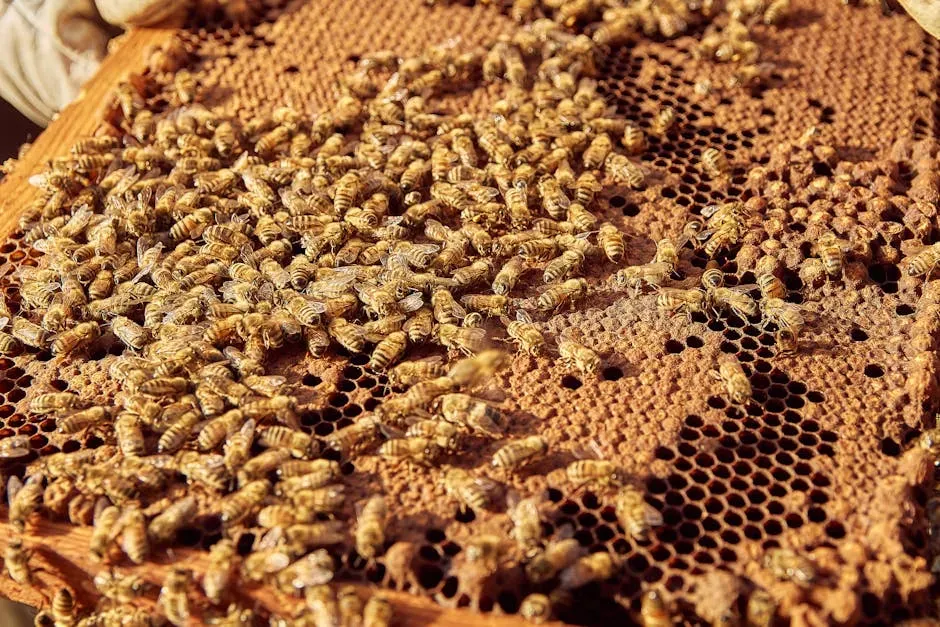
From the mathematical precision of honeybee combs to the massive scale of coral reefs, creatures across the animal kingdom prove that some of the most sophisticated construction projects happen without blueprints, tools, or formal education. Nowhere is this more obvious than in a beehive. The hexagonal cells bees construct are a perfect example of solving a math problem they were never taught to solve. Hexagons are the most efficient shape for packing the greatest number of cells into the smallest space using the least amount of wax. Mathematicians proved this only in 1999. Bees have been doing it for millions of years.
The cells are also not perfectly vertical. They’re tilted at a precise angle so that honey doesn’t spill before it’s capped with wax. Temperature regulation inside the hive is equally impressive. Worker bees vibrate their flight muscles to generate heat and fan their wings to cool the interior, maintaining the temperature near a constant 35 degrees Celsius regardless of the weather outside. That’s a living thermostat made from thousands of tiny, buzzing engineers working in unison.
10. Weaver Ants: Leaf-Stitching Architects of the Treetops
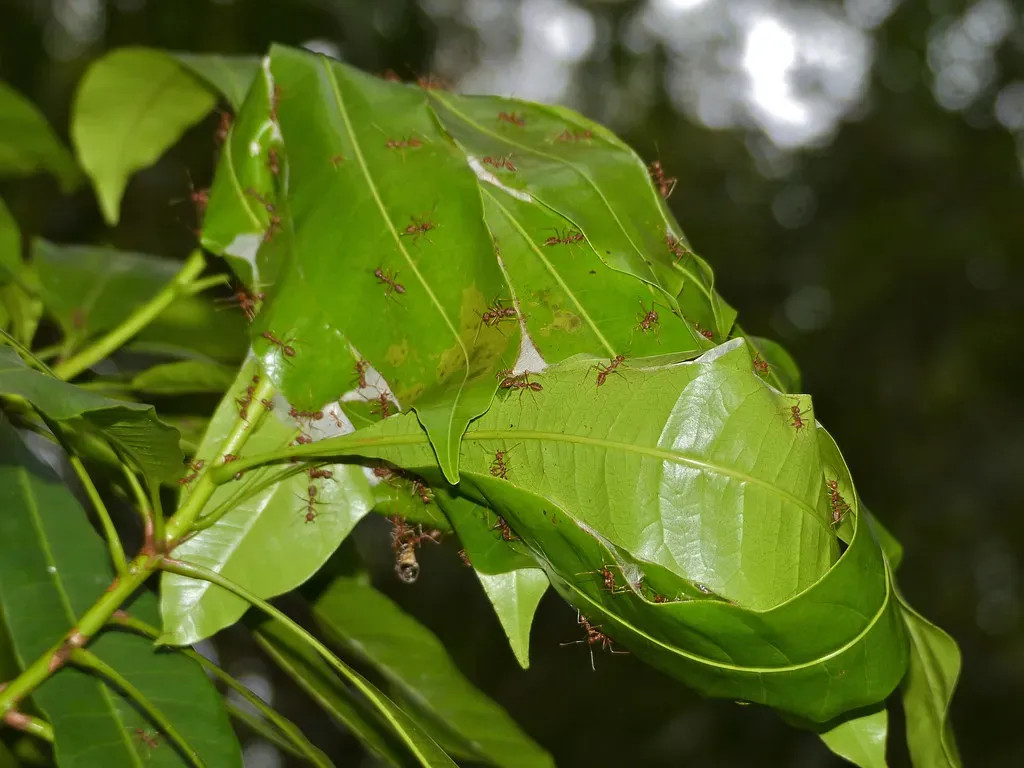
Weaver ants also deserve a distinguished spot among nature’s greatest builders. By stitching leaves with larval silk, essentially using the larvae as living tubes of glue, they form suspended tree villages. A single colony of weaver ants can spread its nest across multiple trees, creating “living” bridges in the process. This allows colonies to contain as many as 100,000 ants. You’re looking at a species that figured out how to use its own young as construction tools. Remarkable and slightly unsettling in equal measure.
Animal-built structures are amazing examples of nature’s creativity and intelligence. From the underground tunnels of mammals to the complex mounds of termites, these constructions support diverse ecosystems and benefit many species, including humans. Weaver ant nests are a perfect encapsulation of this. Their leaf structures protect the colony from rain and sun, regulate humidity, and can be expanded or relocated as the colony grows. The architectural wonders created by these animals reflect the incredible ingenuity and adaptability of the natural world, with each species demonstrating a unique approach to solving ecological challenges through building and construction.
Conclusion: Nature Was Always the Better Engineer
If you walk away from this with one thought, let it be this: the natural world has been solving complex engineering problems long before humans put pen to paper, and in most cases, with far fewer resources. Studying these natural architects not only deepens our appreciation for the animal kingdom but also inspires human innovation in fields like architecture and engineering. That inspiration is not just poetic. It is practical and increasingly urgent as we search for more sustainable ways to build and live.
Nature has long been a source of inspiration for human innovation, and the ingenious creations of animal architects are no exception. From termite mounds influencing sustainable building designs to the intricate geometry of beehives inspiring efficient engineering structures, these species showcase solutions that balance functionality, efficiency, and environmental harmony. By studying these natural designs, engineers and architects can develop technologies that are more sustainable, adaptive, and resilient.
The beaver had no engineering degree. The pufferfish had no design software. The termite had no project deadline. Yet somehow, they all got it spectacularly right. Which of these ten feats surprised you the most? Drop your thoughts in the comments below.