
If you think outer space is the final frontier of discovery, think again. Right here on Earth, beneath the surface of every ocean, lies a world so alien, so impossibly strange, that scientists openly compare it to exploring another planet. We’ve mapped the surface of Mars in greater detail than we have the ocean floor. That fact alone should stop you in your tracks.
The ocean covers roughly seventy-one percent of our planet, yet it is believed that only about ten percent of marine life has been discovered so far, leaving an estimated one to two million species still undocumented. Every time a submersible dives into the abyss, it seems to return with something that rewrites the textbooks. Some of what’s down there is breathtaking. Some of it is genuinely terrifying. All of it is astonishing. So let’s dive in.
1. The Anglerfish: Nature’s Most Deceptive Predator
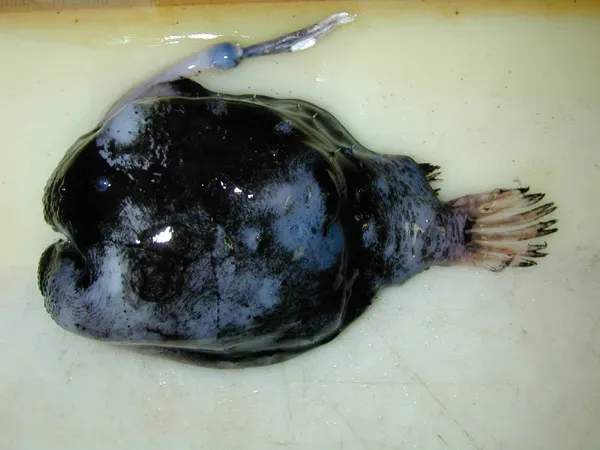
Honestly, few creatures in the natural world feel quite as nightmarish as the anglerfish, and I say that with the deepest respect. With over 200 species found worldwide, anglerfish are perhaps best known for their iconic “lure,” found only on the females. This specialized, bioluminescent apparatus protrudes from the female’s head, resembling a fishing pole with a glowing light at its tip. This clever lure attracts unsuspecting small animals in the pitch-black depths while the rest of the anglerfish remains hidden in the darkness.
Male anglerfish fuse their bodies to the females, essentially becoming living sperm banks. Think about that for a moment. The male literally merges into the female’s body, surrendering his entire existence to ensure reproduction. The lure itself contains bioluminescent bacteria that help it glow, and some species can swallow prey up to twice their size. It’s brutal, bizarre, and oddly brilliant all at once.
2. The Dumbo Octopus: The Abyss’s Most Adorable Resident
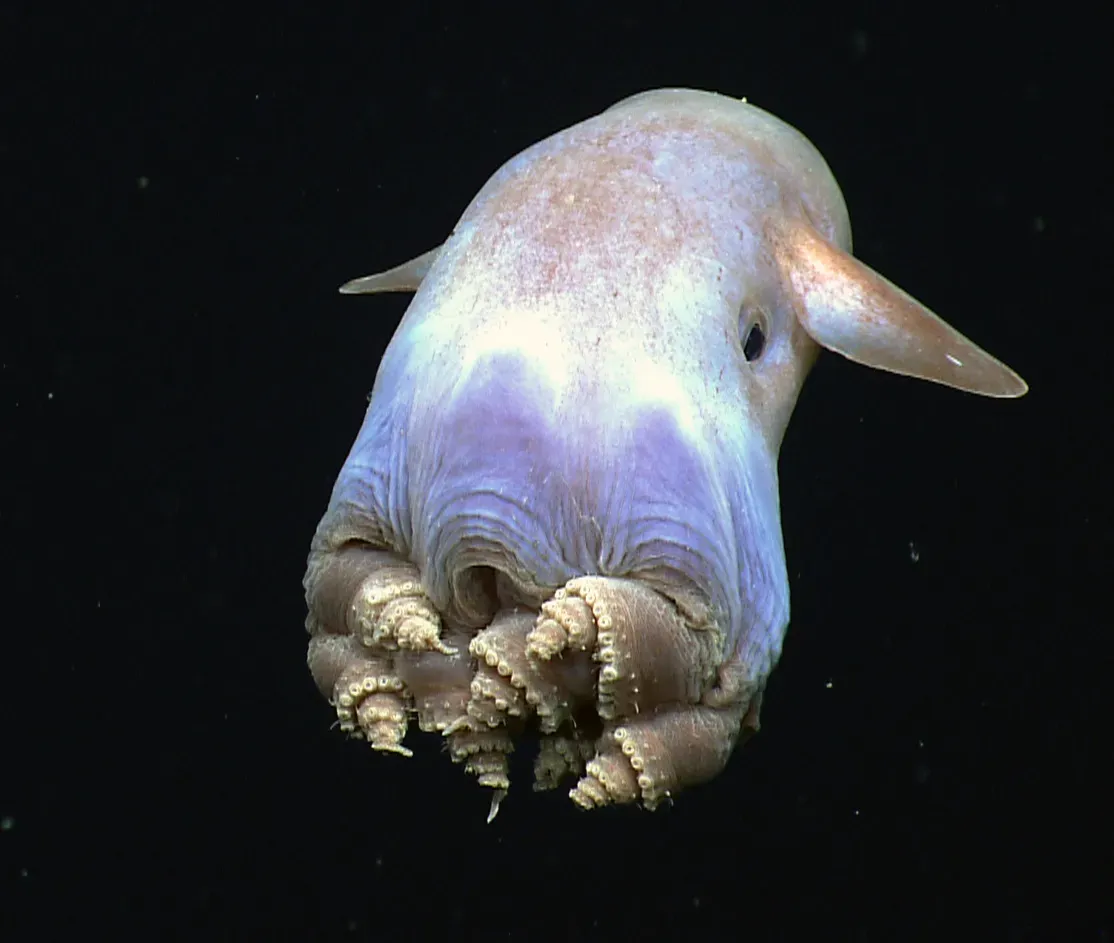
You might not expect the deepest corners of the ocean to produce something genuinely cute. Yet here we are. The Dumbo octopus is a soft-bodied deep sea animal named after its ear-like fins that resemble the Disney character Dumbo, and it is known for its adorable appearance and calm, slow-floating movement in the pitch-black ocean depths. Dumbo octopuses live between roughly 9,800 and 13,000 feet below the surface, in conditions that would crush most other animals.
Female Dumbo octopuses have a clever reproductive trick: they carry eggs at different developmental stages everywhere they go. This means that when a rare encounter with a male does happen, she can fertilize the most mature eggs she is carrying at that moment. They use their fins to swim gently, unlike other octopuses that rely on jet propulsion, and their cute, slow-floating behavior makes them a favorite among deep sea explorers. Even in one of Earth’s most hostile environments, life found a way to be charming.
3. The Vampire Squid: The Creature from Hell That Isn’t What You Think
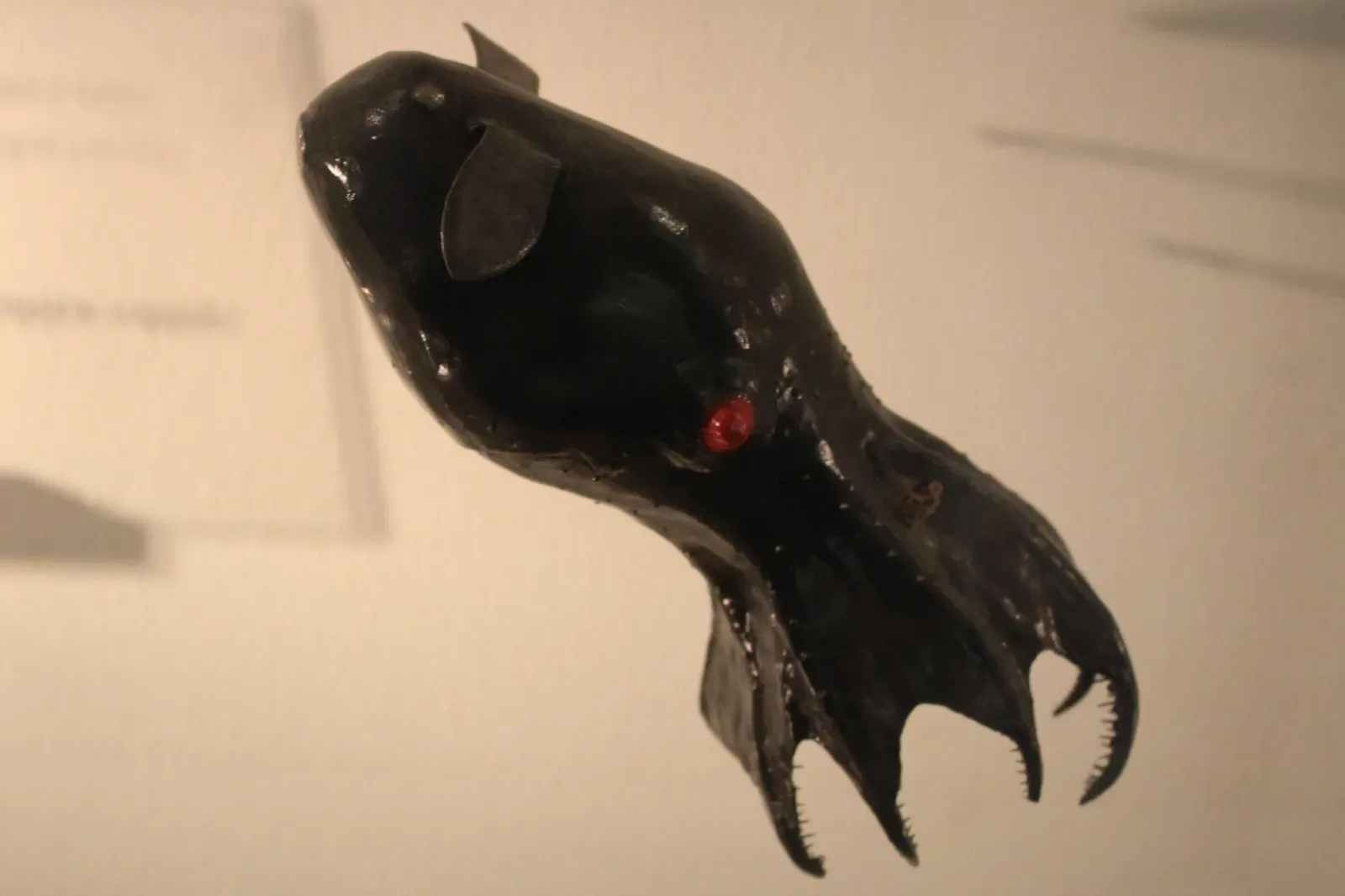
Its name is literally translated from Latin as “vampire squid from hell,” and that should set the tone. The literal translation of its Latin species name is “vampire squid from hell,” a name inspired by its velvety jet-black to pale reddish cloak-like webbing and red eyes. It sounds terrifying. The reality? It’s actually quite gentle. Vampire squid feed on marine snow, a mix of dead plankton, fecal pellets, and organic particles. They use minimal energy and can turn themselves inside-out as a defense mechanism, and their glowing body and floating cloak-like arms give them a ghostly presence in the deep.
Vampire squid live way down in the ocean, between 1,500 and 2,500 meters deep, where it is super dark. The webbing helps them move around in the low-oxygen water. When threatened, vampire squid wrap their webbed arms around their body like a cloak, making them look bigger and scarier to predators. It’s like a tiny underwater superhero wrapping a cape around itself for protection. Nature really has no limits.
4. The Barreleye Fish: The Fish That Sees Through Its Own Head
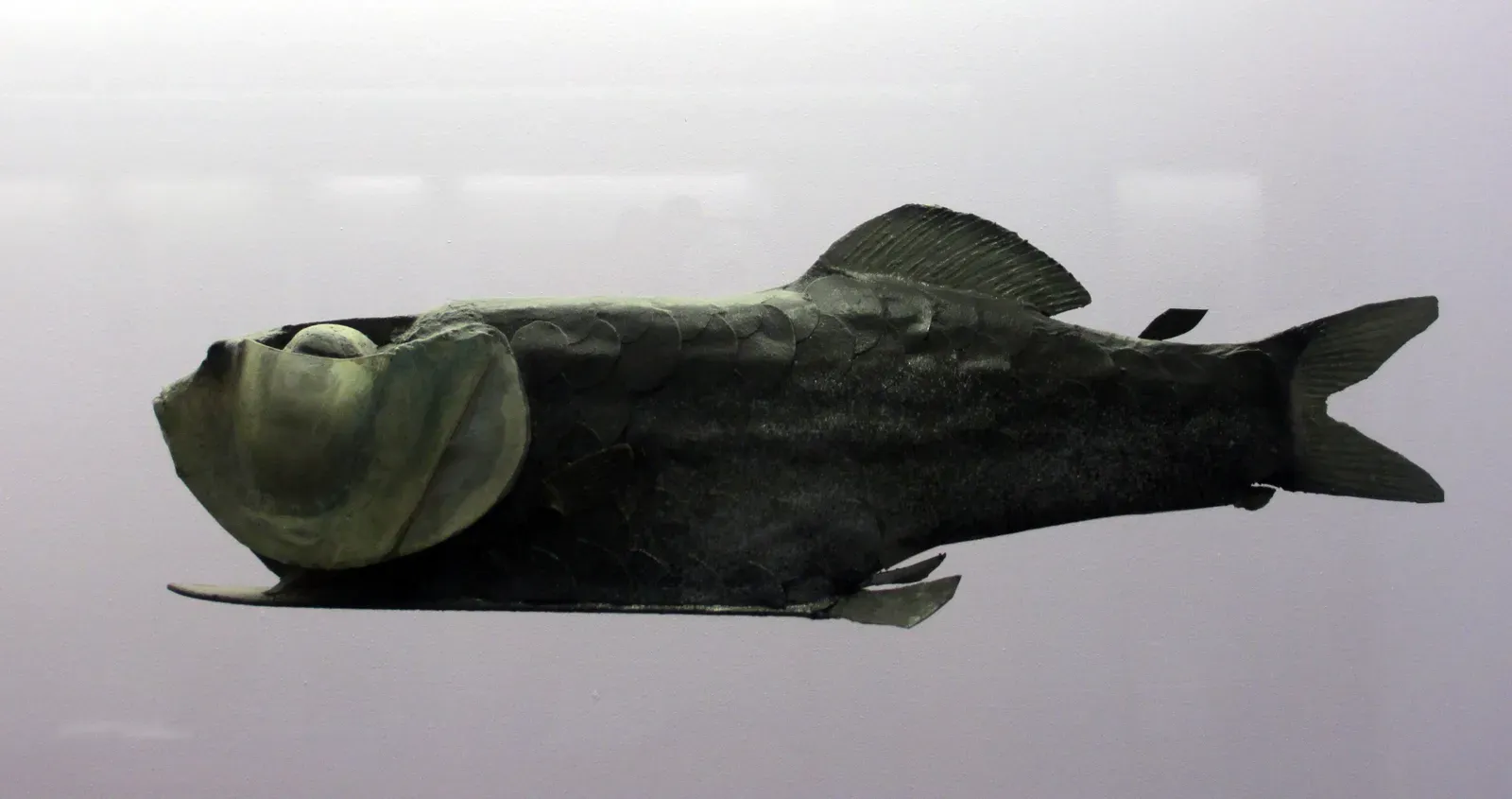
If you haven’t seen footage of the barreleye fish, stop what you’re doing and look it up. Your brain will not know what to do with it. The Barreleye Fish seems like a creature from science fiction. Its head is transparent, revealing a pair of green, tubular eyes that rotate inside its skull. This adaptation allows it to stare upward through the darkness, watching for prey silhouetted against the faint light from above.
Barreleye fish grow to about 6 inches long and are found in the northeastern Pacific Ocean, living at depths of 2,000 to 2,600 feet below the surface. The yellow pigment in their eyes helps them distinguish between the faint bioluminescent light produced by living organisms and sunlight, making it easier to spot the siphonophores and zooplankton that they eat. The barreleye was first identified in 1939 but remained strange to researchers until 2009 when they found that its wide eyes could spin inside of its head. Decades passed before anyone understood what they were truly looking at.
5. The Giant Isopod: The Deep Sea’s Armored Scavenger
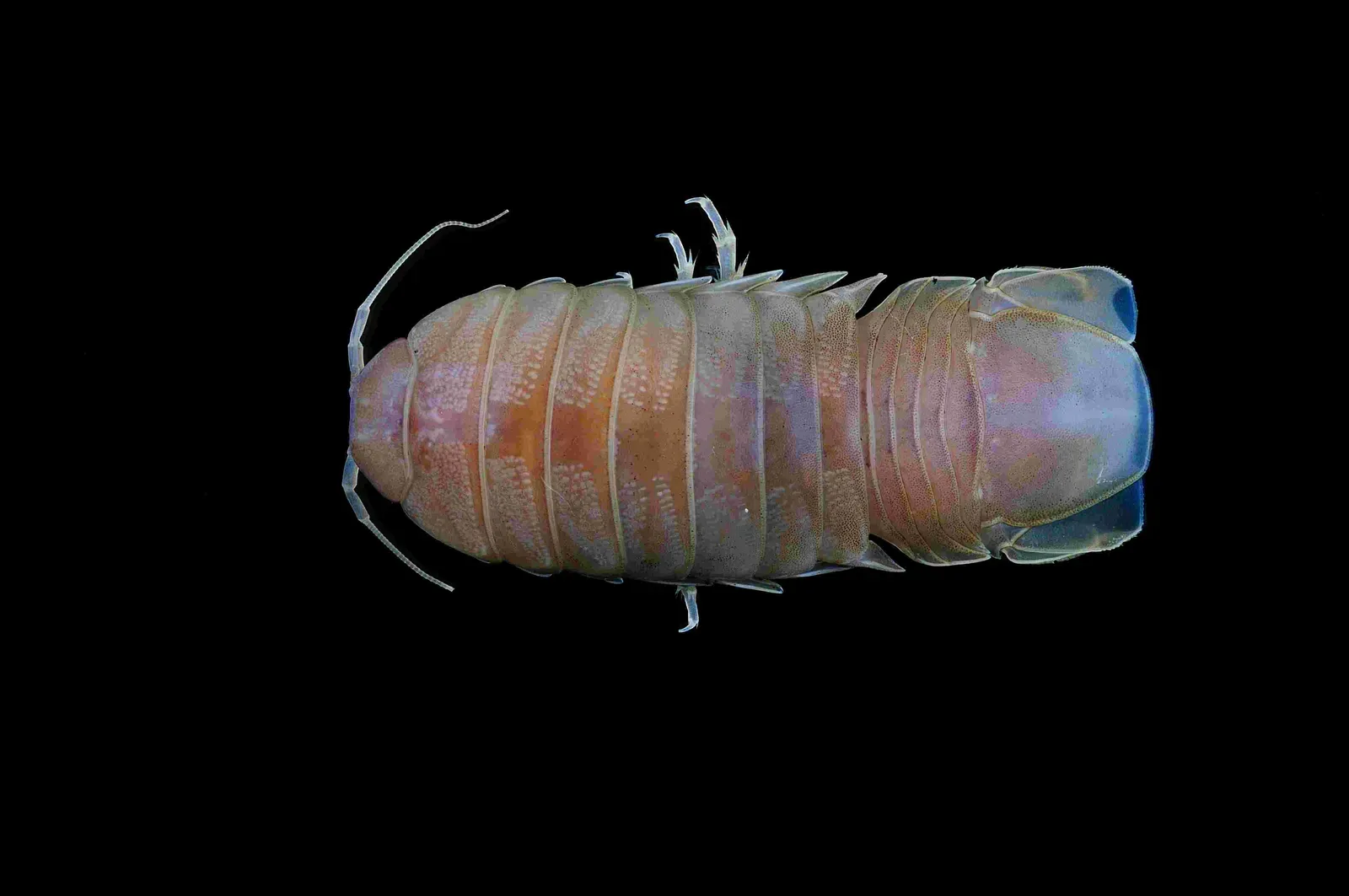
Imagine a pill bug. Now imagine it grew to the size of a large house cat and developed a taste for whale carcasses. That’s essentially the giant isopod, and it’s very real. Giant isopods are an example of deep-sea gigantism, which is an evolutionary pattern in which deep-dwelling creatures grow much larger than their relatives in other habitats. This may result from a lack of predators in the ocean’s deepest corners, meaning animals can safely grow bigger, and from the need for organisms to carry more oxygen at great depths.
Giant isopods survive by scavenging the remains of dead whales, fish, and squid that sink to the bottom. They can go years without food, entering a state of near hibernation. In fact, one giant isopod in captivity went five years without eating. Five years. Let that sink in. These creatures are practically built for endurance, quietly waiting in the dark for their next opportunity to feast.
6. The Goblin Shark: A Living Fossil with a Terrifying Jaw
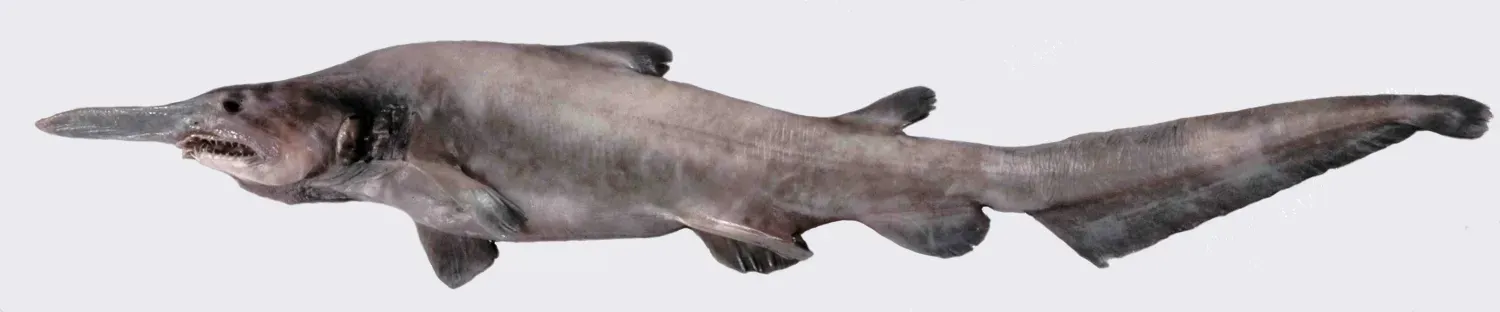
There are moments when the deep ocean feels like it’s trolling us, and the goblin shark is one of those moments. With an appearance that looks like it swam right out of a terrifying sci-fi movie, the goblin shark is a living fossil found on the ocean floor. This crazy-looking shark has a long, pointed snout that extends out like a fleshy blade above its mouth. It looks like something a film director invented for a horror movie, not something evolution produced over millions of years.
Goblin sharks are found at depths of roughly 3,000 to 4,300 feet, but can be recorded as deep as 4,600 feet. They inhabit continental slopes and submarine canyons in oceans worldwide. These deep sea animals hunt by lurking in the dark, detecting electric signals from prey, then quickly snapping their jaws forward to catch it. Their eerie look and slow movement help them remain hidden in the deep ocean environment. The jaw actually projects forward when it strikes. It’s the kind of thing you watch and then immediately regret watching.
7. The Frilled Shark: Prehistoric Terror in the Flesh
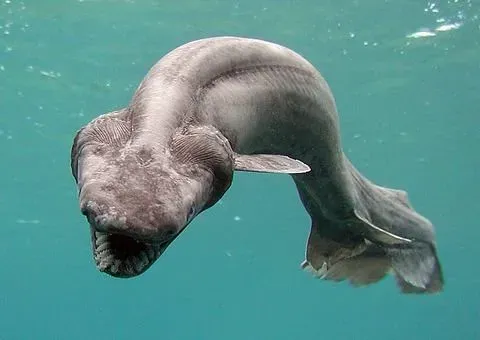
Here’s a creature that genuinely looks like it belongs in the age of the dinosaurs, not in 2026. When the Frilled Shark was first discovered, scientists thought it was a sea serpent. With its eel-like body and prehistoric features, it is easy to see why. This ancient predator dates back 80 million years and looks like it swam straight out of the fossil record. In other words, it has barely changed since long before humans existed.
Its six pairs of frilled gills give it its name and a haunting beauty. The frilled shark hunts by lunging forward and swallowing prey whole, using over 300 backward-facing teeth arranged in rows. It can strike with incredible speed despite its sluggish appearance, capturing fish and squid that drift too close. Those 300 teeth are arranged in a way that ensures nothing escapes once it’s been caught. It is not the flashiest predator in the deep sea, but it might be one of the most efficient.
8. The Fangtooth Fish: Small Body, Maximum Nightmare
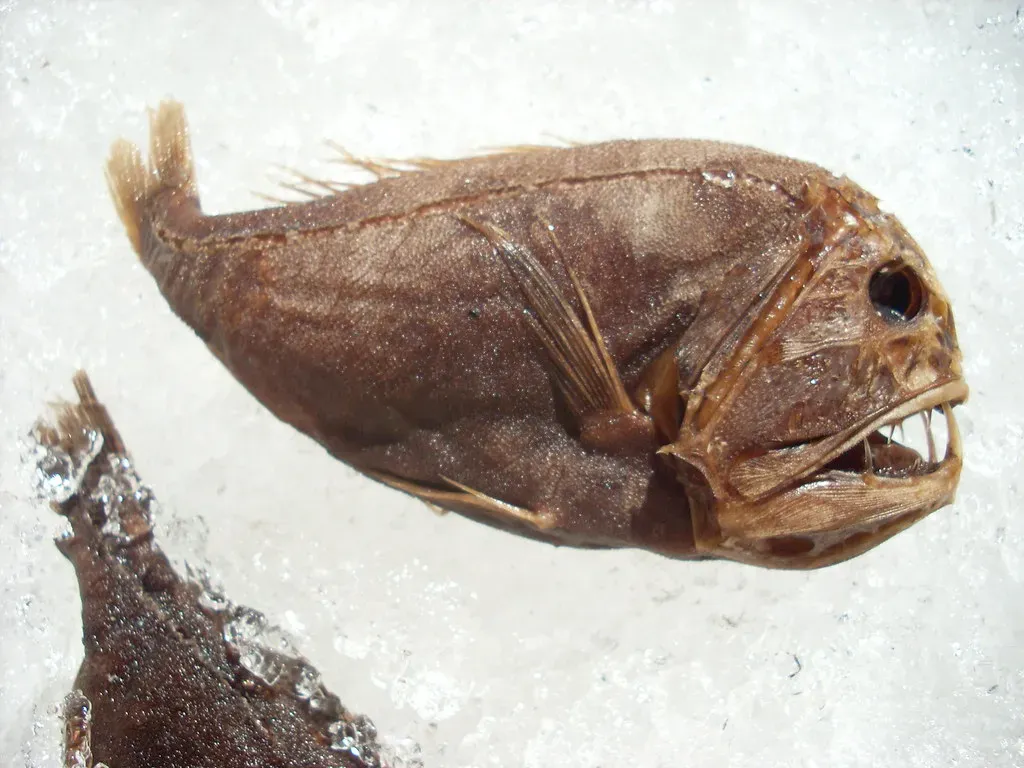
Let’s be real, the fangtooth fish has absolutely no business looking the way it does. The most noticeable thing about the fangtooth fish is its mouth full of needle-sharp teeth, including its huge front fangs. The fangs on the lower jaw are so large that the fangtooth cannot close its mouth in the normal way. The fangs actually slide into specially formed pockets in the roof of the mouth when the jaw is closed. Those pockets extend right beside the brain.
Even though fangtooth fish are only about 7 inches long, their mouths are full of terrifying, needle-sharp teeth. These long, fang-like teeth make it easy for them to catch and trap prey. You can find them in temperate and tropical waters all over the world, living between 1,650 and 7,000 feet below the surface. Fangtooth fish are voracious predators and are thought to use contact chemoreception to find prey in the deep, dark ocean, relying on luck to bump into something edible. It’s a teeth-first approach to survival, and it’s worked perfectly for millions of years.
9. The Gulper Eel: The Ocean Floor’s Most Bizarre Mouth
![9. The Gulper Eel: The Ocean Floor's Most Bizarre Mouth ([1], CC BY 3.0)](https://nvmwebsites-budwg5g9avh3epea.z03.azurefd.net/dws/5e14cad9110ac3571a055ccafd36eb92.webp)
Imagine if someone stretched a mouth into a massive sack and attached a wispy, glowing tail to the other end. That’s the gulper eel, and it’s one of the strangest animals ever to have been documented. The gulper eel, also called the pelican eel, is a deep sea creature with a massive, expandable mouth and glowing tail. Its unusual appearance and ability to swallow large prey make it one of the deep’s most impressive predators.
Also called the pelican eel, this fish has an enormous mouth and expandable stomach. It can swallow prey larger than itself and often feeds on shrimp, squid, and small fish drifting through the deep ocean. Think of it like a deep sea shopping bag that actively hunts for groceries. Its glowing tail tip is thought to serve as a lure, drawing prey directly toward the one thing you’d least want to swim near. It’s a hunting strategy that is almost absurdly effective.
10. The Mariana Snailfish: The Deepest Fish on Earth
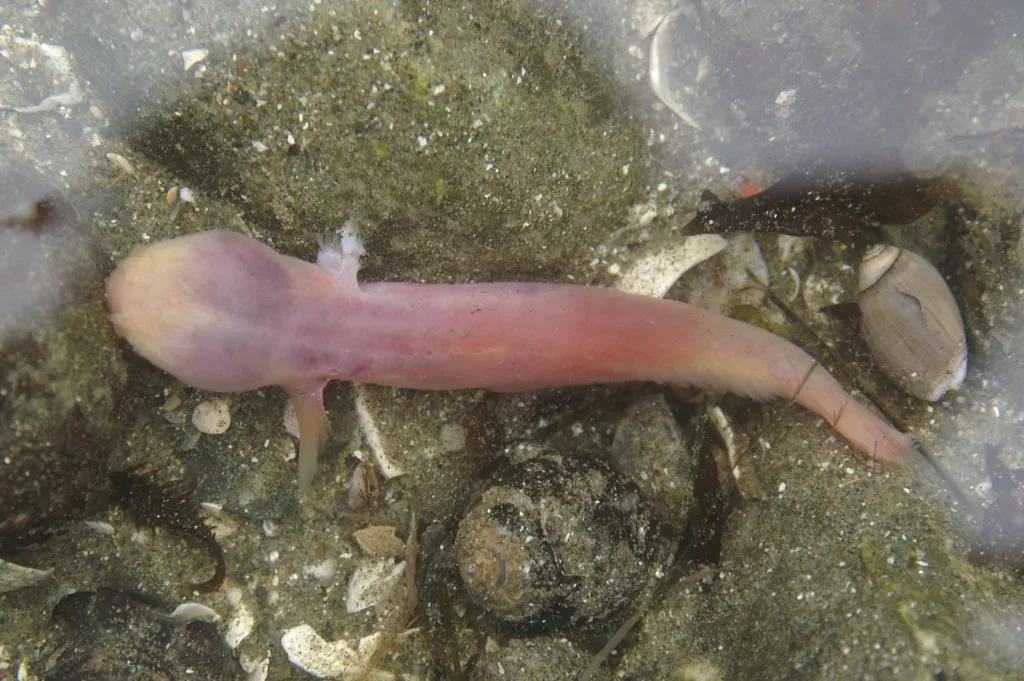
You would think that the deepest fish ever recorded would look powerful, perhaps intimidating, maybe ancient. What scientists actually found was something that looked almost fragile. Nearly 11,000 feet into the deep sea, scientists discovered a new species that caught the attention and affection of viewers from around the world. The bumpy snailfish was captured on video by researchers at the Monterey Bay Aquarium Research Institute during their expedition off the shores of Central California, and with its big eyes, feathery fins and a mouth bearing the suggestion of a smile, it was an instant hit.
The Mariana snailfish lives and has a see-through body that is mostly water. This helps it survive pressures that would crush a submarine. The Mariana Trench has snailfish in high densities at 7,000 to 7,500 meters, filmed down to 8,075 meters. It is critical to know who is in these ecosystems, so that scientists can understand how they work and protect habitats like the deep sea that play hugely important roles, including the deep sea’s ability to store enormous amounts of carbon, which is especially important given the threat of climate change.
Conclusion: The Ocean’s Deepest Secrets Are Still Waiting
What we have explored here barely scratches the surface. Literally. The ocean remains one of the least explored places on Earth, and every year, scientists uncover new species that remind us just how much there is still to learn. Each of these ten creatures represents not just a biological wonder, but a reminder that our understanding of life on this planet is still deeply, beautifully incomplete.
Discoveries using submersibles at depths of around 31,000 feet represent the deepest and most extensive communities of life known to exist on Earth. The deeper we go, the more we realize how little we know. These creatures have spent millions of years adapting in total darkness, under crushing pressure, in near-freezing temperatures, and they are thriving. If that doesn’t inspire a sense of wonder, I don’t know what will.
Every submersible dive has the potential to rewrite biology. Every deep-sea expedition uncovers a world that humbles even the most seasoned scientists. So the next time you stare at the ocean and feel like you understand it, remember: beneath you, in the pitch-black depths, there are creatures that have never seen sunlight, never needed it, and are doing just fine without it. What do you think is still waiting to be found down there? Drop your thoughts in the comments.