The quest to understand the universe has driven humanity to explore beyond the confines of our planet. Each discovery contributes to our understanding of the cosmos’ complexities. Join us as we delve into ten groundbreaking space discoveries that have not only expanded our knowledge but also changed our perception of the universe.
The Cosmic Microwave Background Radiation

In 1965, Arno Penzias and Robert Wilson stumbled upon the Cosmic Microwave Background Radiation (CMB), a milestone discovery often regarded as the afterglow of the Big Bang. This faint radiation permeates the entire universe and provides a snapshot of the nascent universe mere moments after its birth. The CMB has offered astronomers a wealth of information, confirming theories about the universe’s origins and fueling new research into cosmology.
Dark Matter and Dark Energy

One of the most perplexing revelations in modern astrophysics is the existence of dark matter and dark energy. Combined, they make up about 95% of the universe. Dark matter, first postulated by Fritz Zwicky in the 1930s, explains gravitational forces that traditional matter cannot account for. Dark energy, discovered in the late 1990s, is believed to be the driving force behind the accelerated expansion of the universe, reshaping our understanding of space and time.
Exoplanets
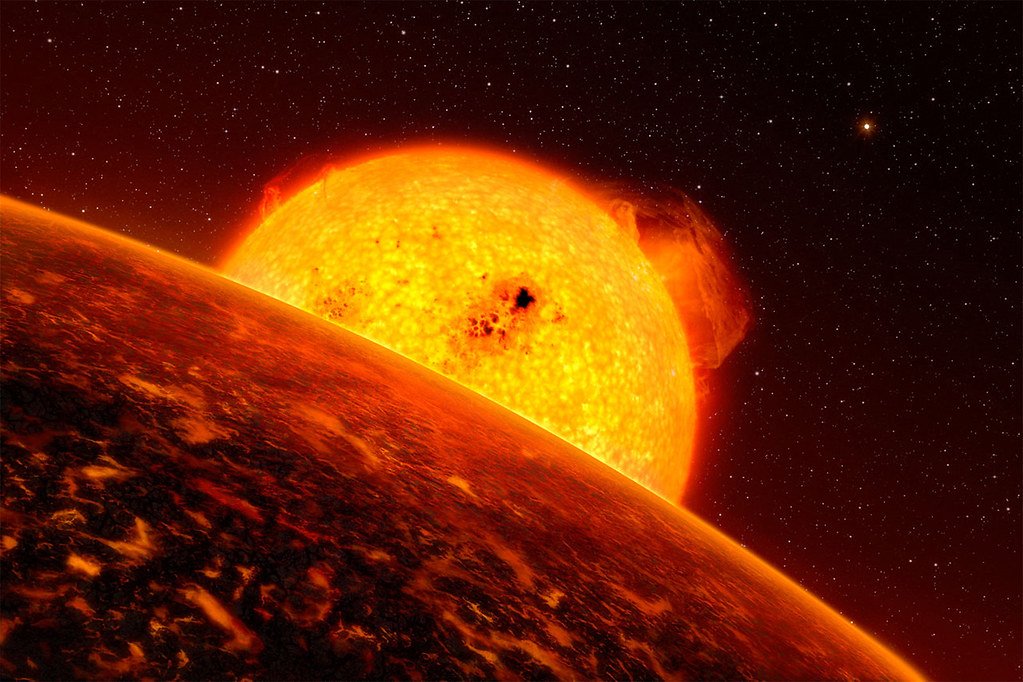
The discovery of exoplanets or planets outside our solar system has transformed our understanding of the universe. In 1992, astronomers Aleksander Wolszczan and Dale Frail confirmed the first exoplanet, orbiting the pulsar PSR B1257+12. Since then, thousands of exoplanets have been identified, revealing a vast diversity of worlds. This discovery raises new possibilities in the quest for potentially habitable planets and the search for extraterrestrial life.
Gravitational Waves

Predicted by Albert Einstein’s general theory of relativity, gravitational waves are ripples in spacetime caused by massive cosmic events. Their detection in 2015 by LIGO (Laser Interferometer Gravitational-Wave Observatory) opened a new era in astronomy. By observing these ripples, scientists can glean information about phenomena like colliding black holes and neutron stars, offering insights into the universe’s most violent occurrences.
The Expanding Universe

In the 1920s, Edwin Hubble’s observations led to the realization that the universe is expanding, forever altering our cosmic perspective. By measuring the redshift of galaxies, Hubble demonstrated that distant galaxies are moving away from us, implying that the universe itself is constantly stretching. This discovery laid the foundation for the Big Bang theory and continues to shape our scientific narratives about the cosmos.
Black Holes

Black holes, regions of space where gravity is so intense that nothing can escape, were once theoretical constructs. However, in 2019, the Event Horizon Telescope captured the first-ever image of a black hole, located in the galaxy M87. This image confirmed several theoretical predictions of general relativity and provided visual proof of these enigmatic cosmic giants, deepening our understanding of gravitational forces and spacetime.
The Structure of the Milky Way

Understanding our own galaxy, the Milky Way, has evolved dramatically over the years. Once believed to be a simple spiral, advancements in telescope technology and satellite data have revealed a more complex landscape. The discovery of our galaxy’s bar structure and several new arms have refined our map of the Milky Way, helping astronomers to better understand the formation and evolution of spiral galaxies.
The Age of the Universe
Determining the age of the universe has been a fundamental question for astronomers. The current age, estimated to be 13.8 billion years, was calculated using information from several discoveries, including the expansion rate of the universe, the oldest known star clusters, and the CMB. This age estimate provides a timeline for cosmic events, supporting theories about the universe’s evolution and enabling predictions about its future.
Galactic Collisions
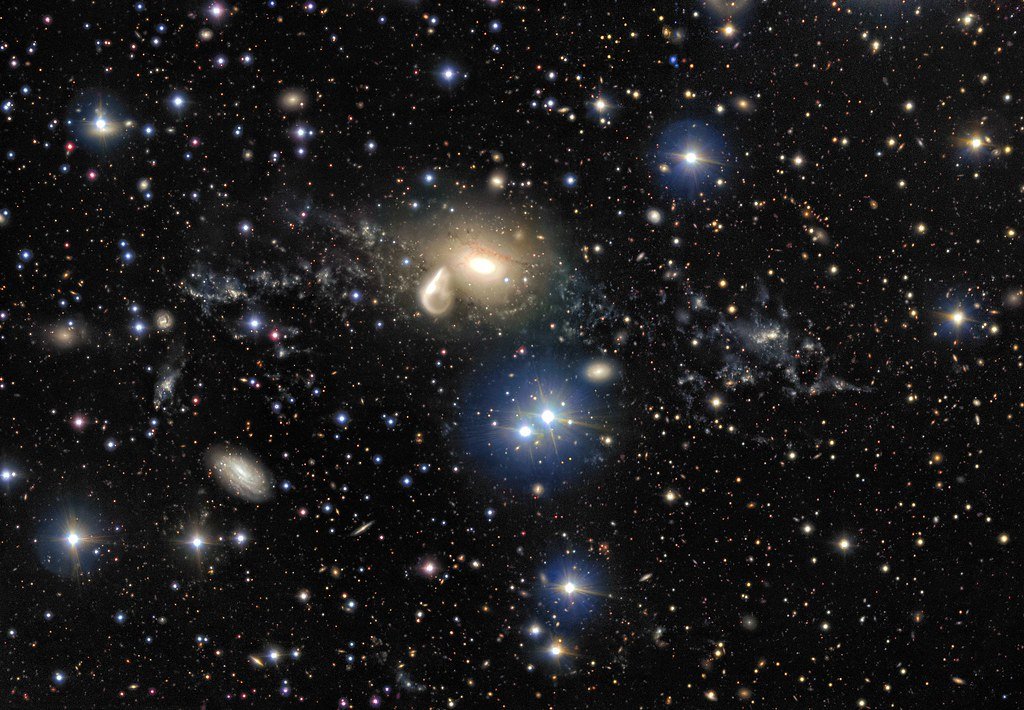
Observations of galactic collisions have provided unexpected insights into cosmic evolution. Such events, where galaxies pass through each other or merge, trigger star formation and can transform galactic structures. Studies of these interactions have revealed that galactic mergers have played a significant role in shaping the universe, highlighting the dynamic and ever-changing nature of cosmic structures.
The Existence of Neutron Stars
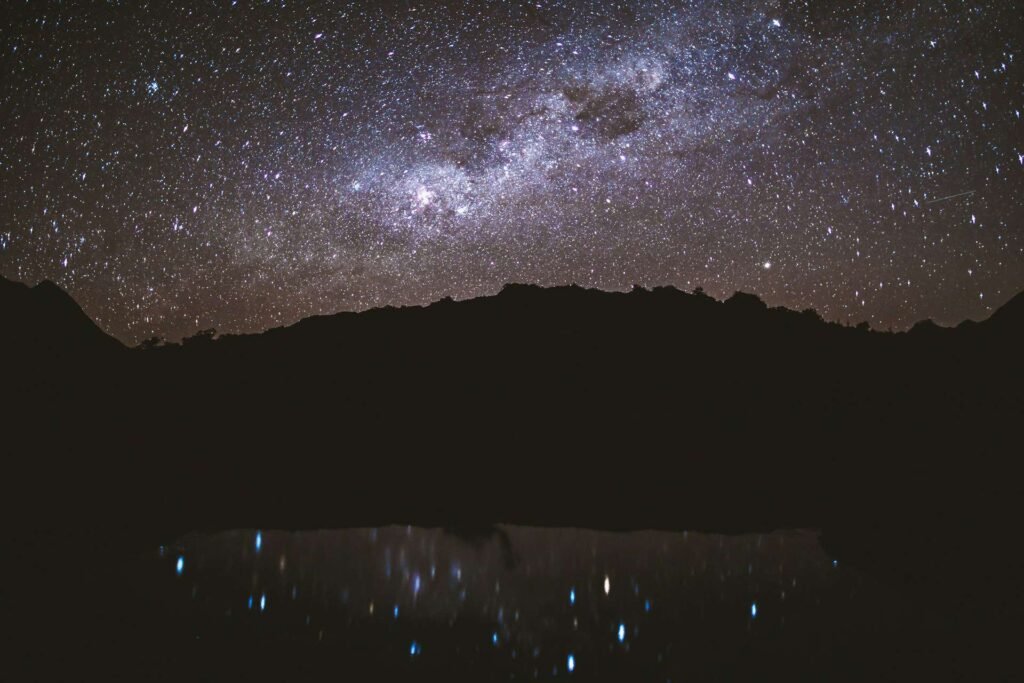
Neutron stars are stellar remnants left after supernova explosions. These incredibly dense objects were first confirmed by the discovery of pulsars in the 1960s. Observations of neutron stars have illuminated extreme states of matter and offered a glimpse into the life cycles of stars, pushing the boundaries of our understanding of both matter and the forces acting within these compact cosmic objects.
Conclusion
These ten discoveries epitomize the spirit of scientific inquiry, revealing the universe’s mysteries and reshaping our perceptions of space and time. As technology advances, so too does our capacity for discovery, promising that the future of space exploration will continue to expand our cosmic understanding and ignite our imaginations.