You’ve likely heard whispers about the “unbreakable code” that helped win World War II in the Pacific, yet the true story of the Navajo Code Talkers remains one of history’s most remarkable chapters. These young Marines created something unprecedented: a communication system that stumped the brilliant Japanese cryptographers while saving countless American lives. Their journey from government boarding schools that punished them for speaking their native language to becoming America’s secret weapon reveals a fascinating paradox of wartime necessity.
The irony runs deeper than most people realize. The same military that had tried to erase Native American languages suddenly needed those languages to survive.
The Original 29 Changed Everything
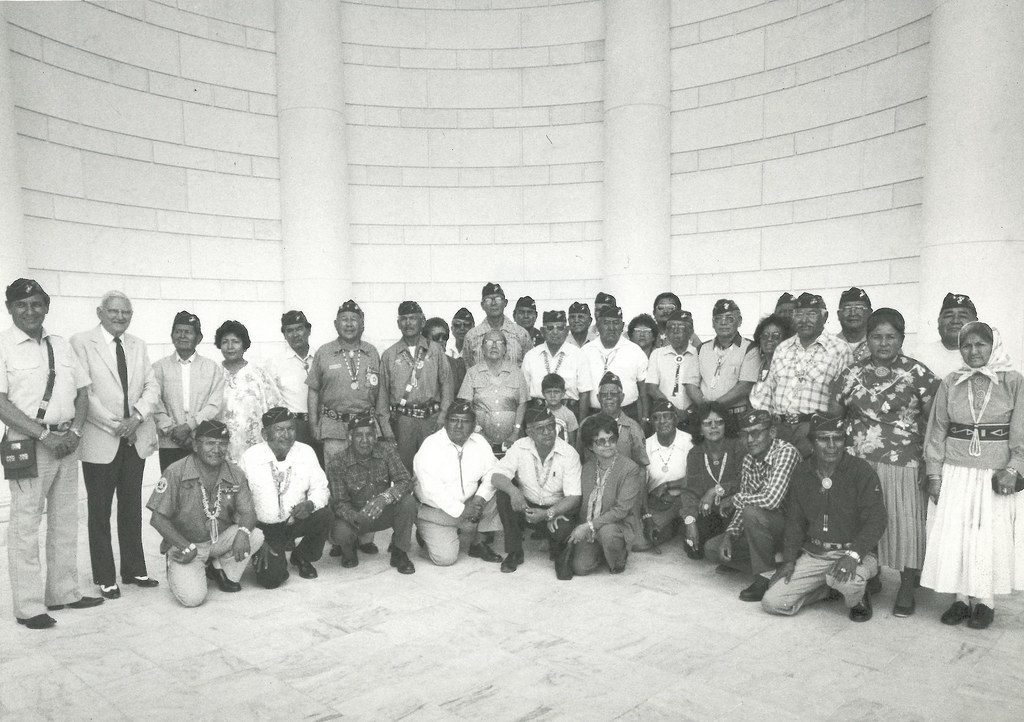
In May 1942, the first 29 Navajo recruits attended boot camp. Then, at Camp Pendleton, Oceanside, California, this first group created the Navajo code. These men, now known as the “First Twenty-Nine,” faced an extraordinary challenge. Though Johnston may have had the initial idea to create a Navajo code, the Code itself was designed and implemented by the first cadre of 29 Code Talkers. These “First Twenty-Nine” – with little formal cryptographic training – devised a code built on word substitution – common military terms were assigned a Navajo code word, and each letter of the English alphabet was also assigned at least one code word so that other terms could be spelled out using the Code.
What’s remarkable is how quickly they accomplished this feat. They developed a dictionary and numerous words for military terms. The dictionary and all code words had to be memorized during training. These young men essentially created an entirely new form of military communication in just weeks, working in secrecy with little guidance beyond basic cryptographic principles.
Their Code Was Lightning Fast
Johnston staged tests under simulated combat conditions, demonstrating that Navajos could encode, transmit, and decode a three-line English message in 20 seconds. Machines of the time required 30 minutes to perform the same job. This dramatic speed advantage caught the attention of military commanders immediately. The traditional encryption methods were not just slow, they were dangerous in fast-moving combat situations.
A three-line message that would have taken 30 minutes to send using the old encryption methods could be encoded, transmitted, and decoded by Navajo Code Talkers in 20 seconds. Imagine the battlefield implications. While enemy forces waited half an hour for encrypted orders, American units could coordinate lightning-fast responses that often meant the difference between victory and catastrophe.
The Man Who Started It All
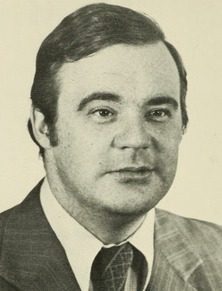
The idea to use Navajo for secure communications came from Philip Johnston, the son of a missionary to the Navajos and one of the few non-Navajos who spoke their language fluently. On the reservation, young Philip learned to speak Navajo while playing with Navajo children. In 1901, Philip traveled to Washington, D.C., with his father and local Navajo leaders when they spoke to the newly appointed President Theodore Roosevelt to persuade him to add more land to the Navajo Reservation via an Executive Order. Philip was the Navajo/English translator between the local Navajo leaders and President Roosevelt.
Johnston’s unique background made him the perfect advocate for this revolutionary idea. In 1942, Philip Johnston was reading a newspaper article about an armored division in Louisiana that was attempting to come up with another code using Native American languages. This sparked his realization that the Navajo language could serve as an unbreakable military code. After the USMC officially instituted the “talker” program, Johnston asked the USMC for a special dispensation to serve in the Navajo Code Talking Program as a Staff Sergeant. His request was granted on September 22, 1942, and he served as a school administrator for the “confidential” program.
They Used Animal Names for Weapons
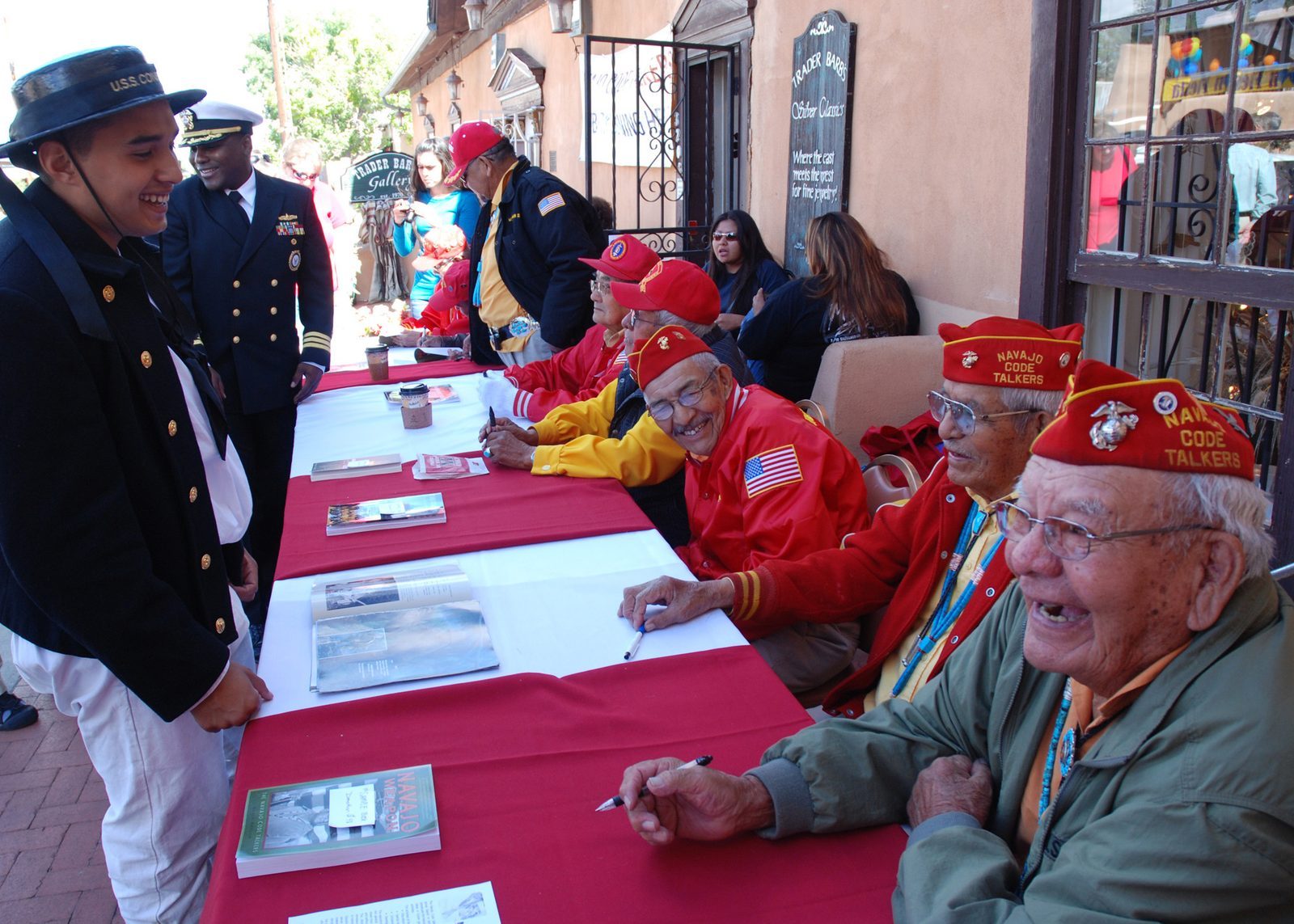
For example, “fighter plane” was called “da-he-tih-hi,” which means “hummingbird” in Navajo, and “dive bomber” was called “gini,” which means “chicken hawk.” For example, since there was no existing Navajo word for “submarine,” the code talkers agreed to use the term besh-lo, which translates to “iron fish.” For example, the Navajo did not have a word for submarine, so they translated it as iron fish.
This creative approach wasn’t random – it was brilliant military strategy. In cases where no names for artillery existed in the Navajo language, they created shortcut words based on the behavior of animals. The metaphors were both memorable and logical. A hummingbird’s quick, darting movements perfectly described a fighter plane, while a submarine’s sleek underwater movement resembled an iron fish swimming through the ocean depths.
The Japanese Never Broke Their Code
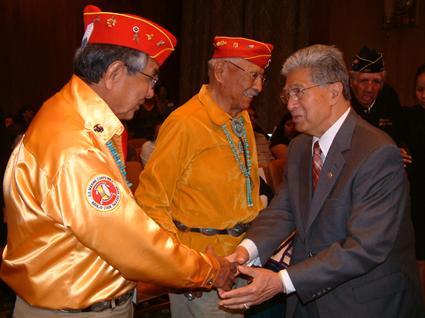
The Japanese, who were skilled code breakers, remained baffled by the Navajo language. The Japanese chief of intelligence, Lieutenant General Seizo Arisue, said that while they were able to decipher the codes used by the U.S. Army and Army Air Corps, they never cracked the code used by the Marines. This admission from Japan’s own intelligence chief speaks volumes about the code’s effectiveness.
Despite the thousands of messages that Code Talkers sent during WWII, their code was never broken by the Japanese or the Germans, who were very good at decryption. Additionally, their code was so good that Navajos who were not part of the Code Talker Program, but served in the U.S. military, could not understand the code. Even fellow Navajo speakers couldn’t decipher what the Code Talkers were saying – that’s how sophisticated their system became.
They Transmitted Over 800 Perfect Messages at Iwo Jima
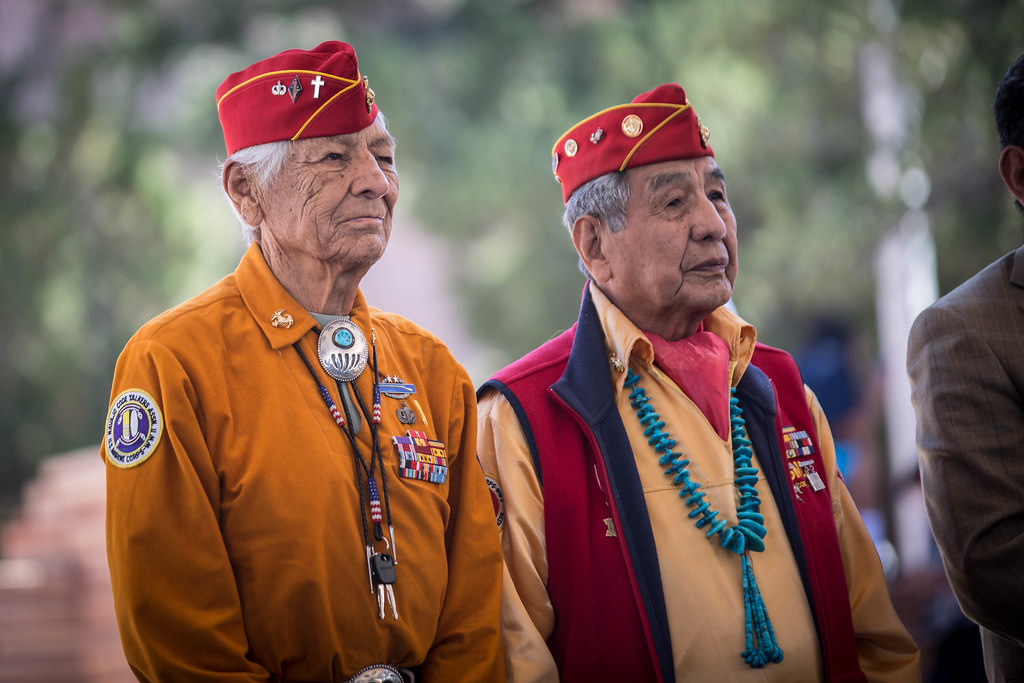
At Iwo Jima, Major Howard Connor, 5th Marine Division signal officer, declared, “Were it not for the Navajos, the Marines would never have taken Iwo Jima.” Connor had six Navajo code talkers working around the clock during the first two days of the battle. Those six sent and received over 800 messages, all without error. This level of accuracy under extreme combat conditions was unprecedented in military communications.
For example, during Iwo Jima, six Navajo Code talkers sent over 800 encrypted messages across front lines. All of the messages were transmitted and received without error. Consider the pressure these men faced – incoming artillery, sniper fire, and the chaos of one of the war’s bloodiest battles. Yet they maintained perfect accuracy while coordinating critical military operations that saved countless lives.
Most Were Teenagers When They Enlisted
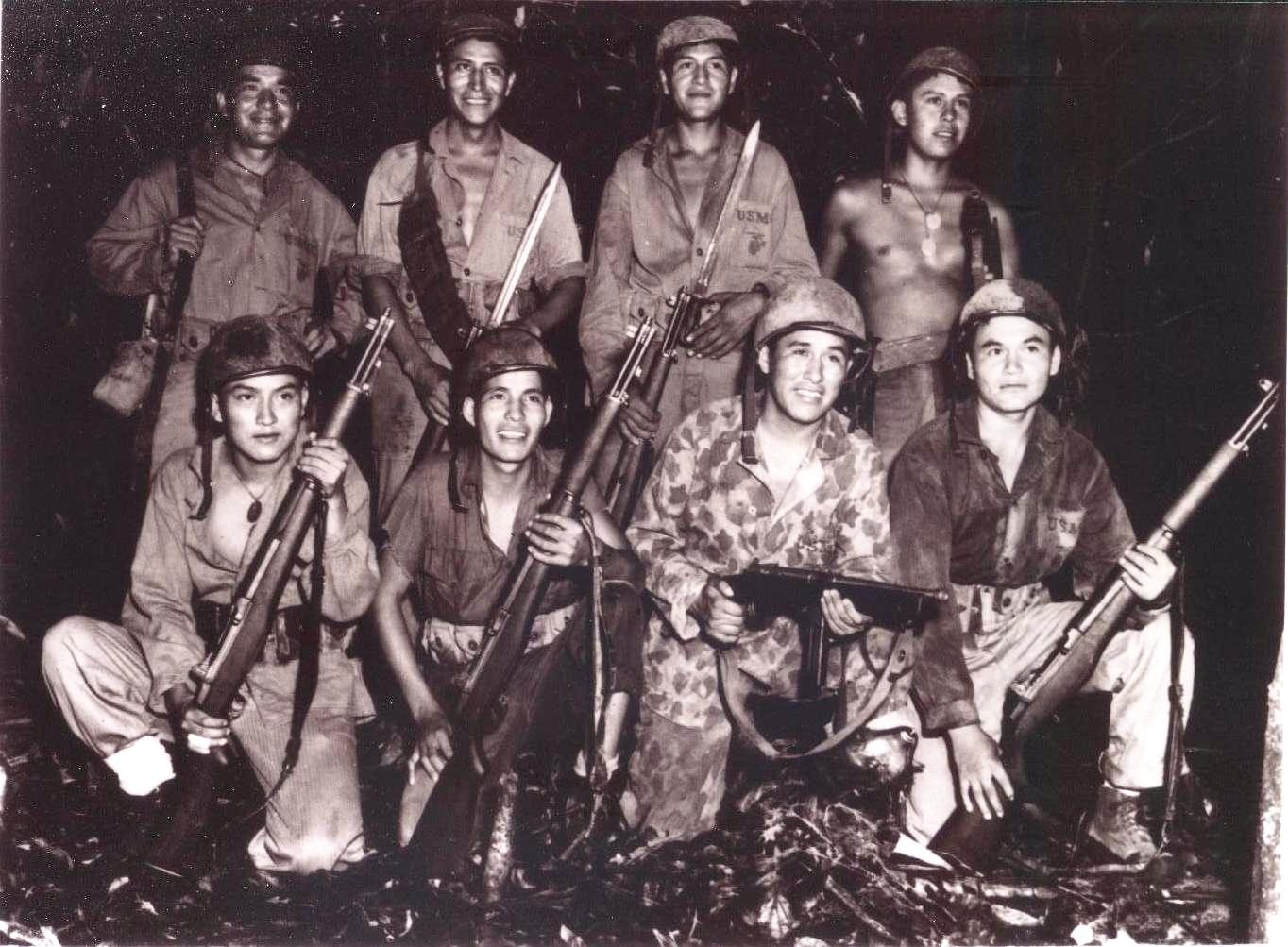
Most of the code talkers were teenagers when they voluntarily joined the Marine Corps. MacDonald was 15, and Begay was around 17. These weren’t seasoned warriors – they were kids who felt compelled to serve their country despite facing discrimination at home. Begay grew up speaking only Diné Bizaad with his parents. At 13 years old he was sent to Fort Defiance, a government-run boarding school in the western part of the Navajo Nation, which borders Arizona, where he first learned English.
Moved by a sense of duty to protect Nihimá (Navajo for “Our Mother,” the code word used for “America”), he signed up to serve. The irony is staggering – young men from a marginalized community stepping forward to defend a nation that had systematically tried to erase their culture and language.
They Faced a Cruel Historical Irony
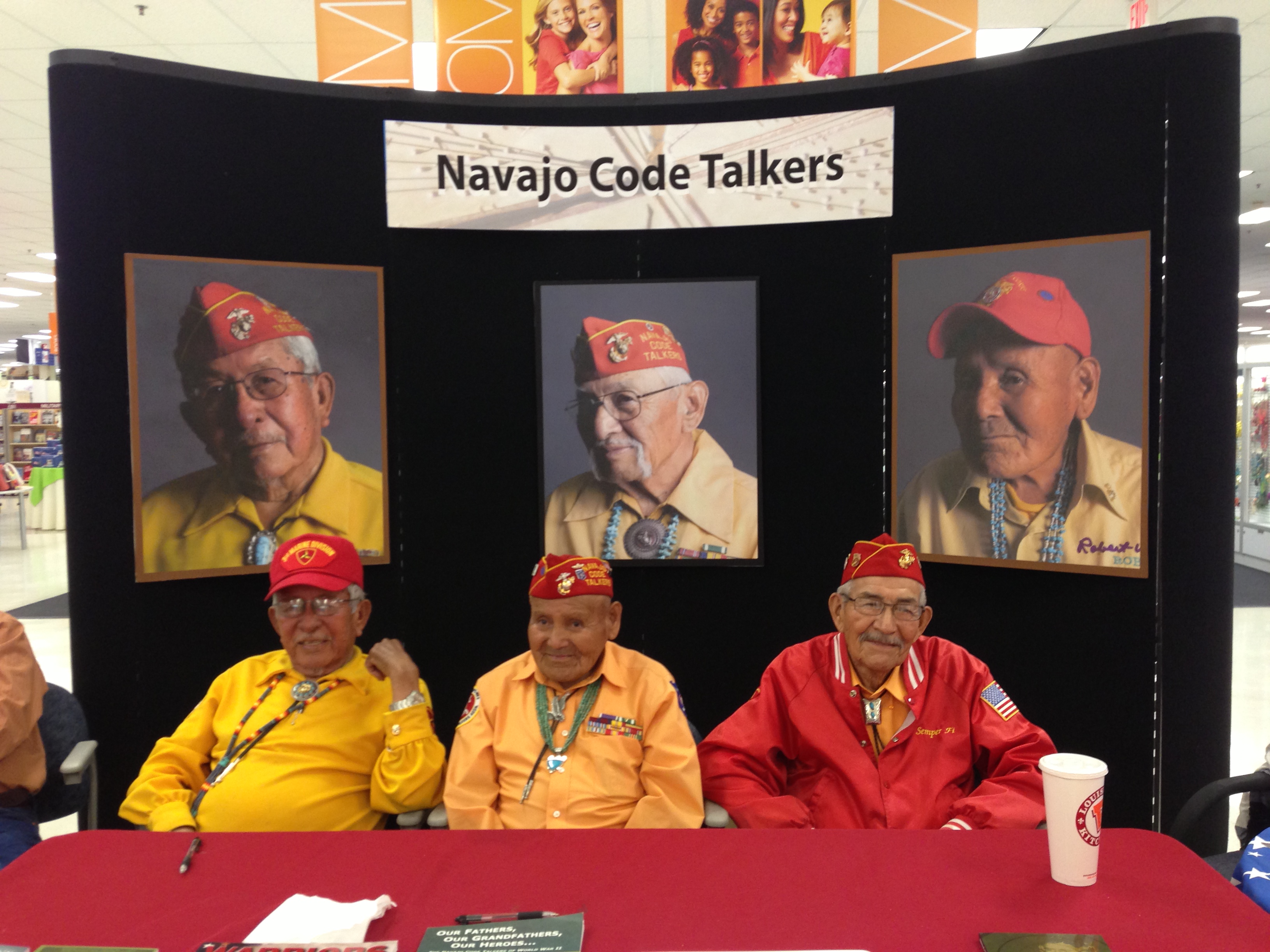
They came, ironically, from government and parochial schools that forbade them to speak their mother tongue and where they were expected to become Americanized through severe forms of assimilation and punishment meant to erase Indigenous identity and languages. Navajo code talker Keith Little said about the schools, “They had the real strong disciplinary rule that we don’t talk our native language… to be converted to Christianity, and to take us away from our cultural religions and our beliefs.” Astonished that they were now asked to develop the Navajo language to aid the war effort, the Navajo soldiers created the code in only a few months.
The same government that had punished these men for speaking their native language as children now desperately needed that language to survive. Many of them were forced to attend government boarding schools as children, where they were required to speak only in English. Navajos were denied the right to vote in Arizona until 1948, in New Mexico until 1953, and in Utah until 1957 – a form of discrimination which persisted despite the fact that the Snyder Act of 1924 granted U.S. citizenship to all Native Americans born in the U.S.
They Memorized Everything Without Writing Anything Down
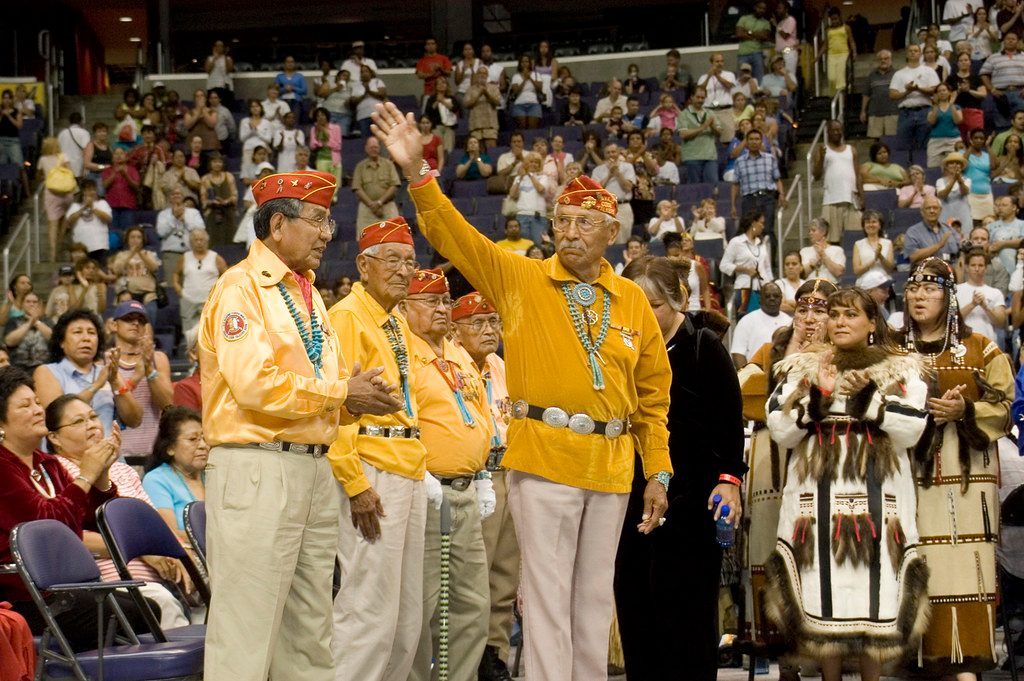
Becoming a Code Talker meant memorizing more than 400 terms, and trainees could not take notes or write anything down. Many of the Code Talkers would later reflect that the traditions of oral history and storytelling that they grew up with helped them with this massive memorization challenge. This requirement wasn’t just for security – it was essential for the code’s effectiveness in combat situations.
As if that wasn’t impressive enough, it’s important to note that all Navajo Code Talkers, who sent and received messages via radio, completed their mission without writing down any of their co Their cultural background in oral tradition became a crucial military advantage. While other soldiers struggled with written encryption methods, these men could process complex coded information entirely in their heads.
Their Secret Remained Hidden for Decades
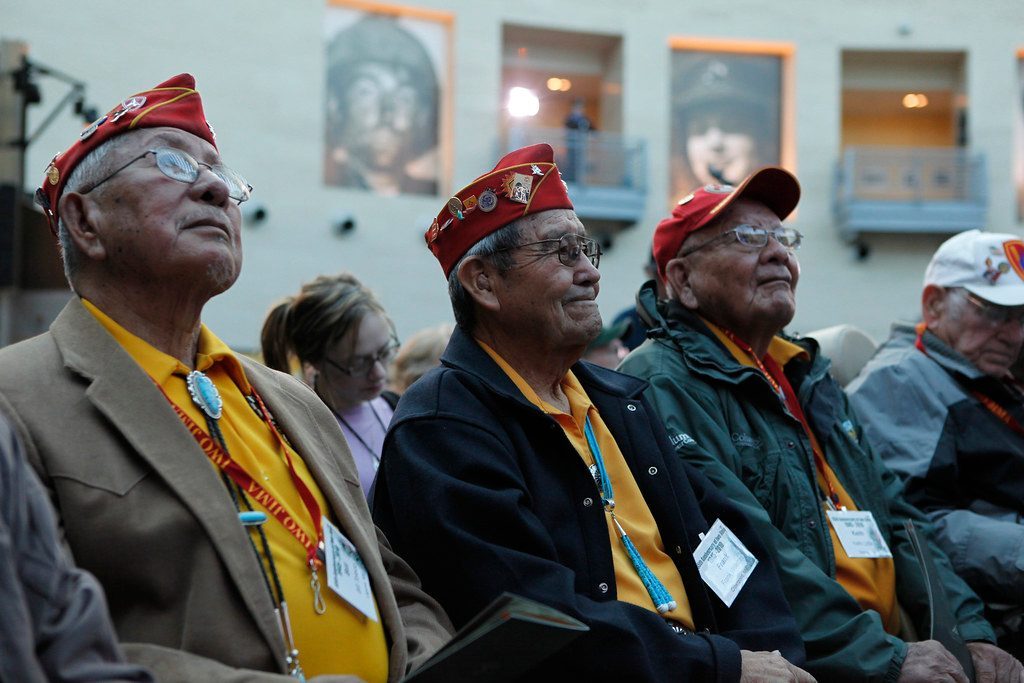
Until 1968, they and their code remained secret. The program was highly classified throughout the war and remained so until 1968. Despite their heroic contributions during the war, American Indian code talkers were told that they had to keep their work secret. They couldn’t even tell their family members about their communications work. Since the codes that they developed remained unbroken, the US military wanted to keep the program classified in case the code talkers were needed again in future wars.
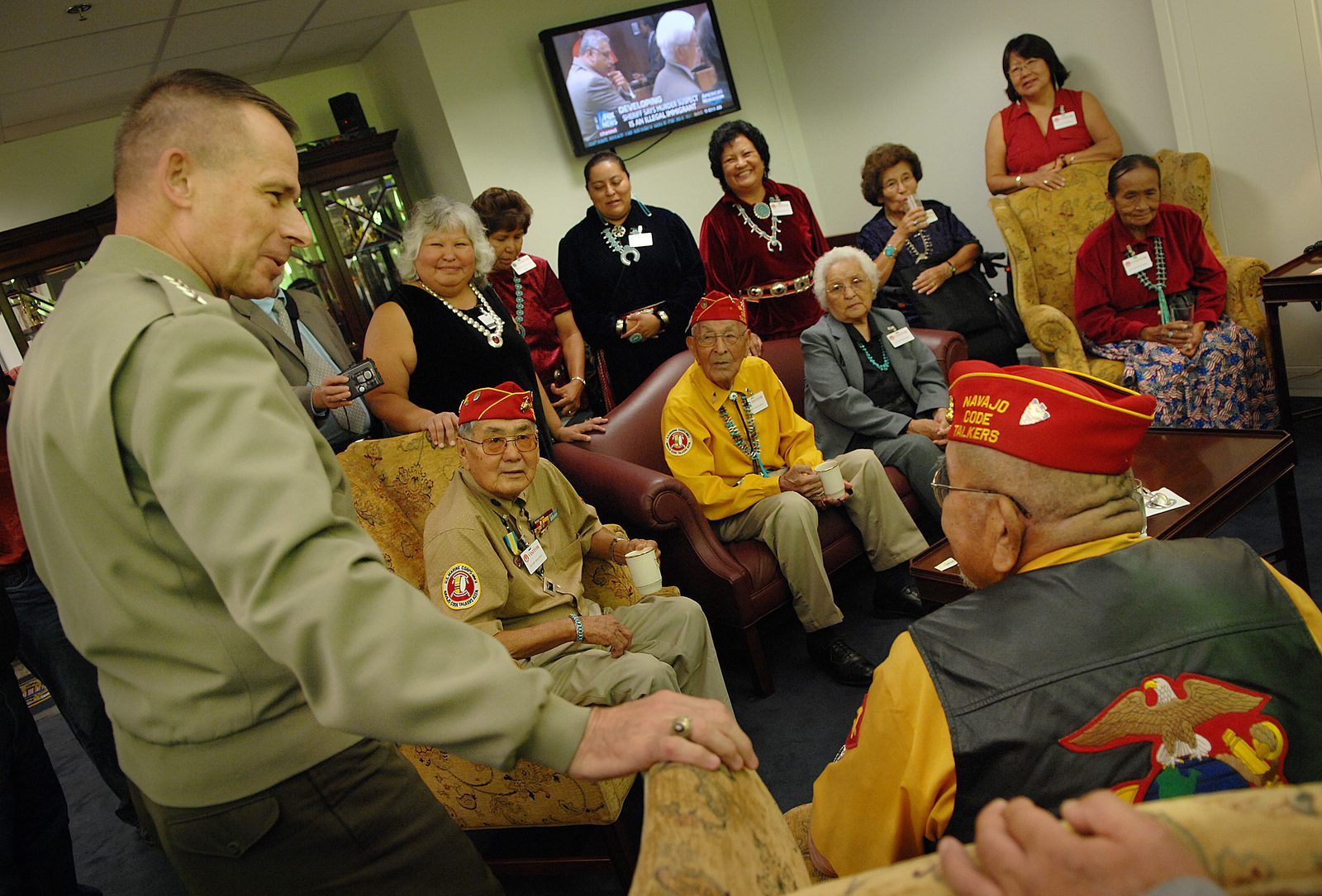
Even when the WWII code talker program was declassified in 1968, national recognition of code talkers was slow. While there was some recognition in the 1970s and 1980s, it wasn’t until 2001 that Congressional Gold Medals were given to the Navajo and other code talkers. These men returned home as unsung heroes, carrying the weight of their extraordinary service in silence for more than two decades. In a ceremony in the Capitol on July 26, the original twenty-nine Navajo “code talkers” received the Congressional Gold Medal, and subsequent code talkers received the Congressional Silver Medal. Their unbreakable code helped the U.S. Marine Corps battle across the Pacific from 1942 to 1945.
Conclusion
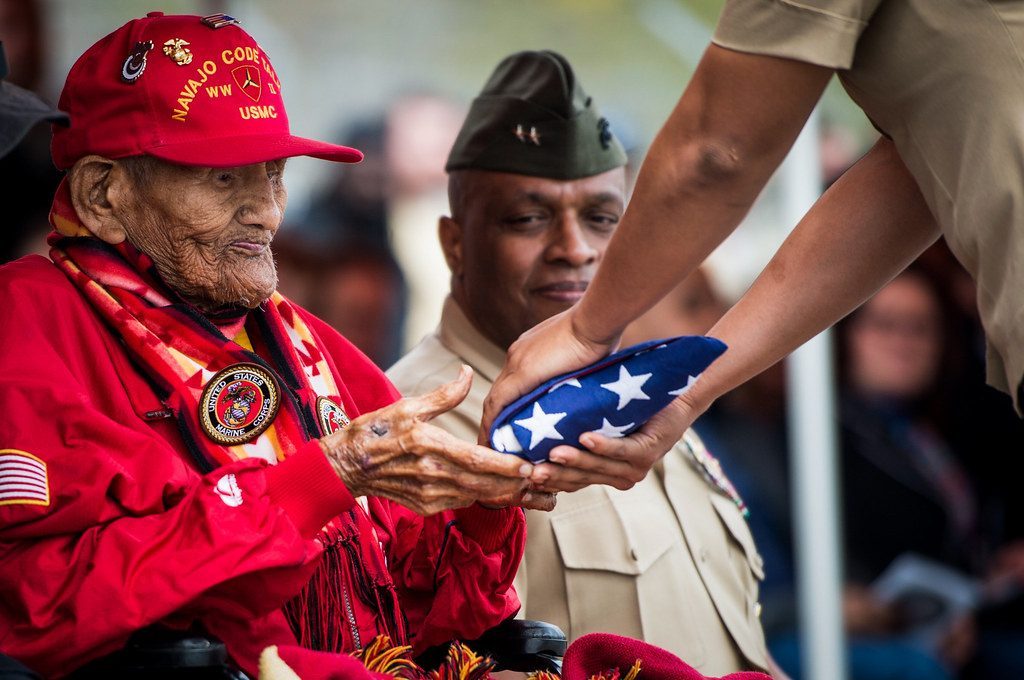
The story of the Navajo Code Talkers represents more than military strategy – it’s a testament to the power of cultural resilience and the unexpected ways marginalized communities can become essential to their nation’s survival. They returned home without fanfare to continued poverty, lack of economic opportunity, and nonexistent voting rights yet persevered and overcame obstacles that helped change the Navajo Nation and their communities. Approximately 461 Navajo Marines served as code talkers, with 13 killed in action.
These young men transformed their oppression into liberation, their silenced language into America’s loudest voice for freedom. What do you think about this incredible chapter of hidden history? Tell us in the comments.