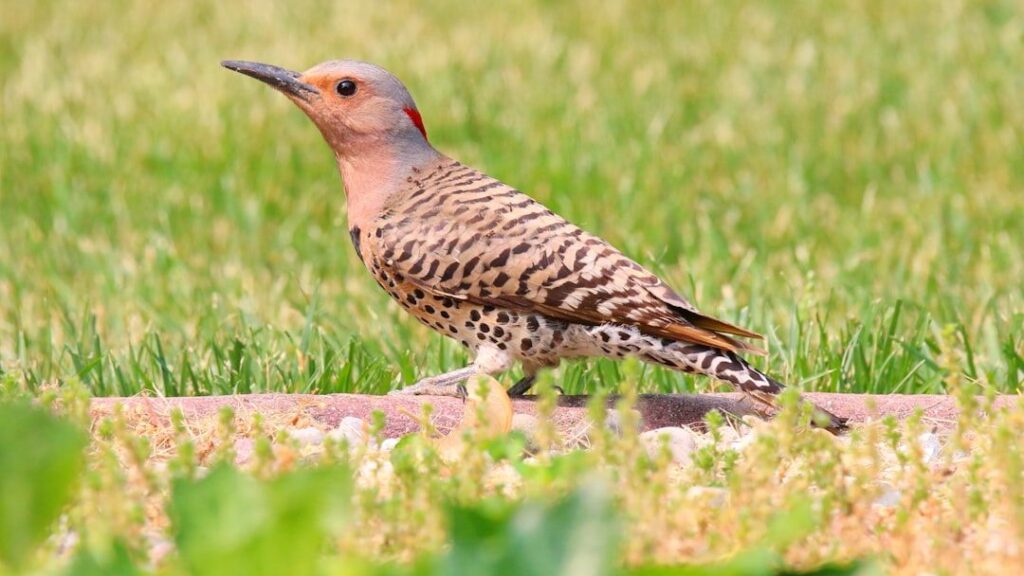

You don’t usually expect a woodpecker to be strolling across your lawn like a tiny dinosaur, calling with a wild laugh and flashing neon underwings when it takes off. Yet that’s exactly what a Northern Flicker does. It breaks so many “normal woodpecker” rules that birders often remember their first close encounter with one the way people remember their first time seeing a hummingbird up close: surprised, a bit confused, and instantly hooked.
Once you start paying attention to flickers, they feel like the oddballs of the woodpecker world – in the best possible way. They hammer trees, yes, but they also dig into ant hills, sunbathe on the ground, and migrate long distances like songbirds. I still remember the first time I saw one flip a leaf aside, stab the soil, and come up with a beak full of ants; it instantly re-wired what I thought “woodpecker” meant. Let’s dive into what makes these birds so strikingly different from the rest of their drumming relatives.
1. A Ground-Foraging Woodpecker That Loves Ants More Than Bark
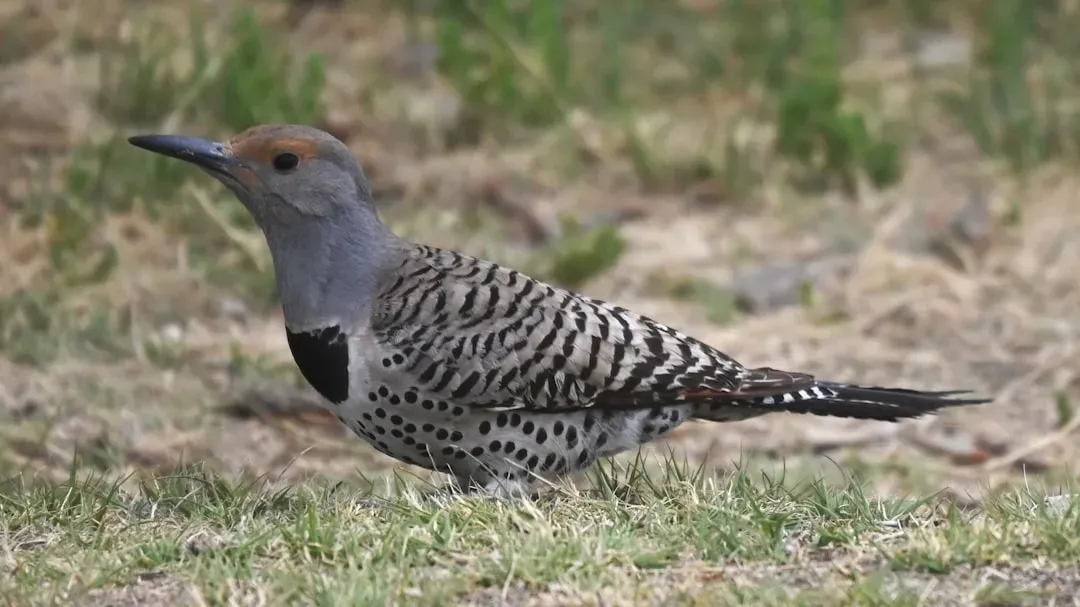
Most people imagine woodpeckers clinging vertically to tree trunks, chiseling bark in search of beetles. Northern Flickers flip that expectation completely, spending a surprising amount of their time on the ground. Instead of obsessing over wood-boring insects, they probe into soil, lawns, and forest clearings for ants, their top menu item. If you see a long, slightly curved bill jabbing rhythmically into a patch of dirt, there’s a good chance you’ve found a flicker rather than some mystery thrush.
This ground-feeding habit shapes everything from their posture to their behavior. They walk with a confident, slightly bouncy gait, using that strong bill like a pickaxe in miniature to dig up ant nests and soft invertebrates. To me, watching a flicker at work looks almost like a tiny jackhammer crossed with a curious chicken, methodically mining the earth instead of bark. Among woodpeckers, that heavy reliance on ground-foraging is truly unusual, and it’s a big reason flickers often feel more like in-between birds bridging forest and open field.
2. Red, Yellow, and Even Gilded: Their Wild Geographic Color Palette
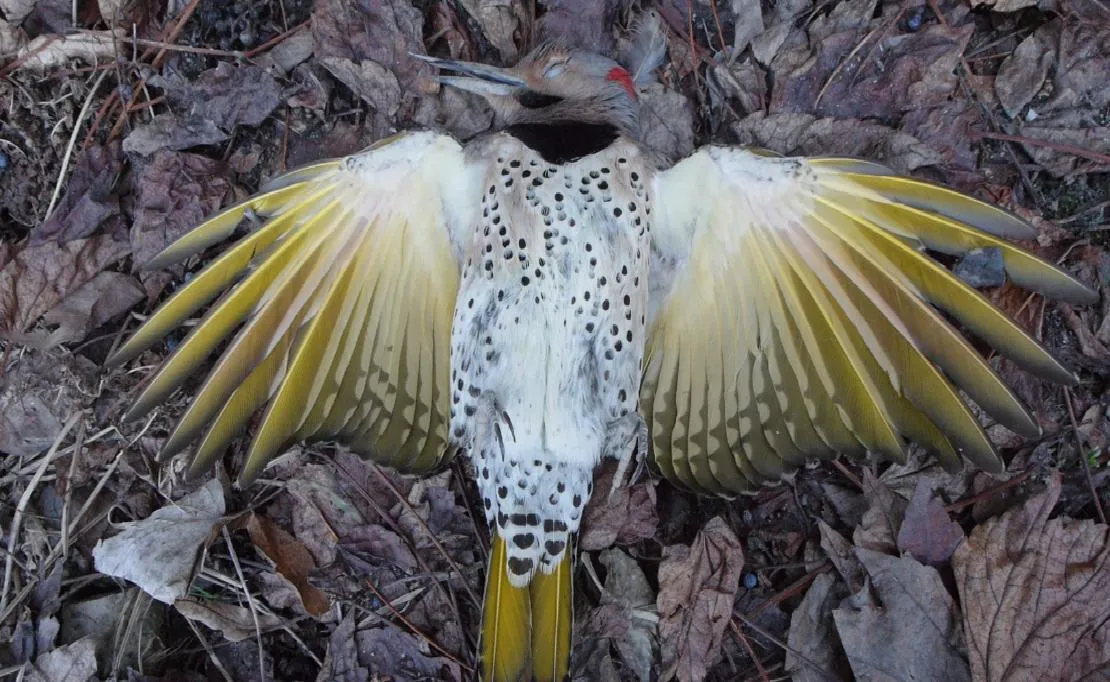
One of the most jaw-dropping things about Northern Flickers is that they come in different color “flavors” depending on where you are in North America. In the western parts of the continent, birds show brilliantly reddish underwings and tail shafts when they fly. In the east, those same feathers blaze yellow instead, giving the impression of two sister birds wearing different sports jerseys. In the far southwest and parts of Mexico, you’ll even find populations with subtler, more blended tones sometimes called “gilded,” like a hybrid between sun and earth.
These color differences are not just cosmetic quirks; they mark distinct regional forms that meet and interbreed where their ranges overlap. In those contact zones, you can spot flickers sporting a mix of red and yellow in their feathers, a literal gradient painted across the continent. I love that a bird this common still holds such a dramatic visual secret in plain sight – most folks just see “a flicker,” not realizing that a few hundred miles in one direction could turn their red flashes into golden ones. Among woodpeckers, that sort of large-scale, easily visible color variation is almost show-off level.
3. A Laughing, Ringing Voice Rather Than Just Drumming
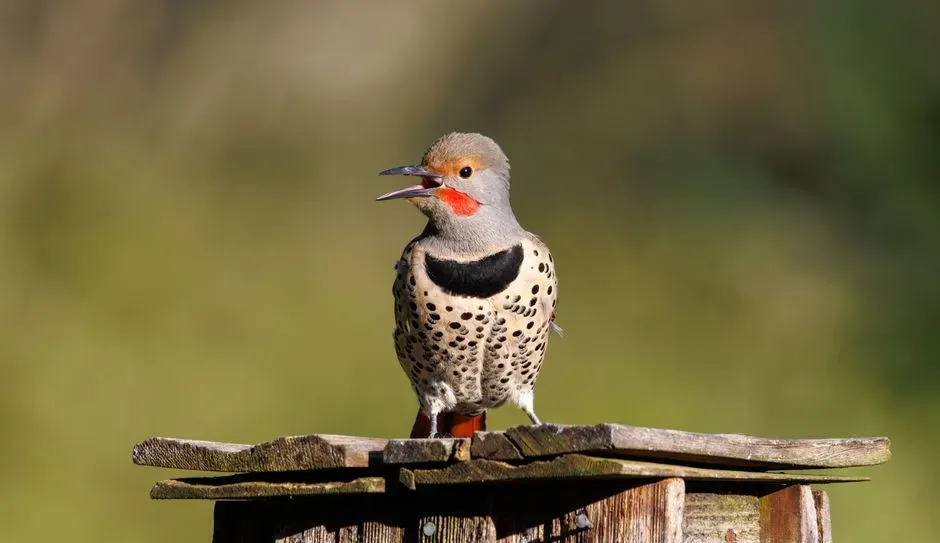
When you hear many woodpeckers, you often notice the drumming first – sharp, mechanical rolls on hollow trunks and metal chimneys. Flickers drum too, but what really stands out is their voice: loud, rolling calls that sound like a mix between a laugh and a long ringing note. On a quiet morning, a series of clear upslurred “kleeer” calls from a treetop can carry across a neighborhood, turning an ordinary street into a tiny slice of wild forest. It’s the kind of sound that makes you stop mid-coffee and look up, even if you have no idea which bird made it.
Compared to other woodpeckers that rely more on short, sharp calls or soft contact notes, flickers feel downright vocal and expressive. They toss out their calls during flight, from perches, and during courtship chases, almost like they’re narrating their own movements. To my ears, that laughing quality makes them sound playful, even if what they’re really doing is announcing territory or attracting a mate. If you ever catch a flicker perched on a telephone pole, head tilted back, calling over and over, it’s hard not to feel like you’re overhearing a drama that most people walking past never notice.
4. A Woodpecker That Migrates Like a Songbird
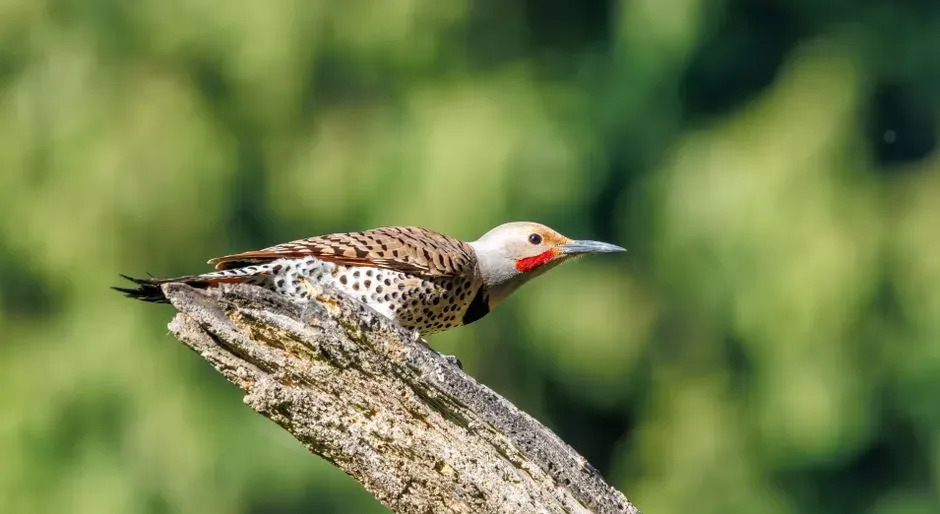
Many woodpecker species stay put all year, defending the same patches of woods and relying on stored food or year-round insects. Northern Flickers break that pattern in a big way, with huge portions of their population migrating seasonally. In northern regions, flickers head south for the winter, sometimes traveling impressive distances to find snow-free ground and accessible insect prey. That means your “local” flicker in summer might be spending the colder months hundreds or even thousands of miles away.
This migratory lifestyle makes flickers feel more like thrushes or blackbirds than typical tree-clinging drummers. You can often see loose groups moving during migration seasons, flying with an undulating pattern and flashing those colored underwings as they go. I always notice how sudden their appearances can be – one week in early spring the yard is quiet, and the next, flickers are laughing from rooftops and working over the lawn. That ebb and flow through the seasons adds another layer of personality that most resident woodpeckers just don’t have.
5. Polka Dots, Bars, and a Mustache: Their High-Fashion Plumage
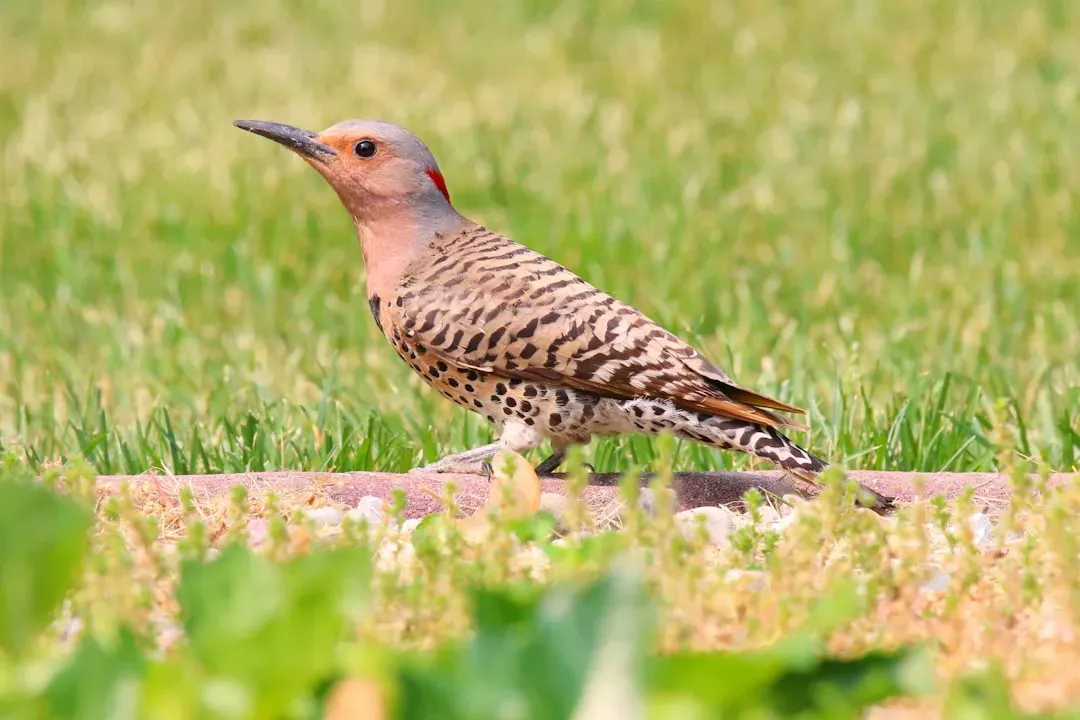
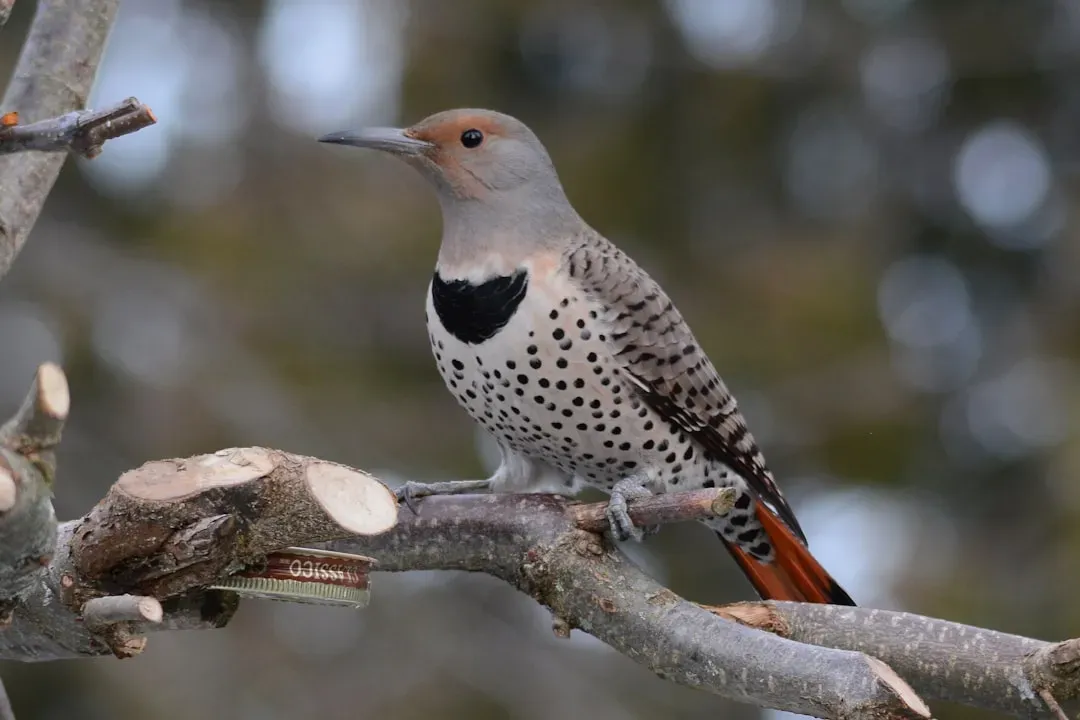
Even when they’re sitting still, Northern Flickers look like they walked out of an avant-garde fashion show. Their breast is dotted with rounded dark spots like someone splattered ink across a pale tan vest. Their back and wings are covered with crosswise bars that break up their outline, a perfect pattern for blending into trunks and branches. Then you notice the bold black crescent across the chest, almost like a necklace, and in many birds a dark stripe at the corner of the mouth that looks exactly like a tiny painted mustache.
Compared to many plainer woodpeckers that rely more on simple black and white or subtle mottling, flickers are astonishingly ornate once you really look. That combination of clean geometric shapes – spots, bars, crescent, and face markings – gives them a sort of graphic-design aesthetic. I remember the first time I zoomed in on a photo of one and was honestly shocked at how intricate the patterning was; what looked “brownish” at a distance turned into a carefully layered work of art. It’s one of those birds that rewards you for slowing down and really seeing it, not just glancing and moving on.
6. Tongue Tricks and Ant Acids: Built to Eat What Most Birds Avoid
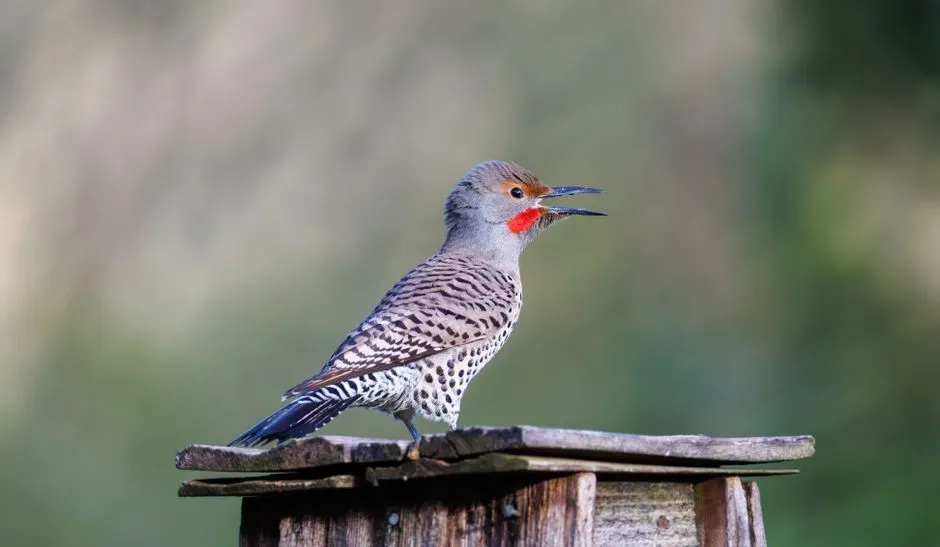
All woodpeckers have specialized tongues, but flickers use theirs in a particularly unusual way because of their ant-heavy diet. Their tongues are long, sticky, and able to probe deep into ant nests and soil tunnels, snagging multiple insects in a single quick flick. That alone would be impressive, but flickers also consume ants that can spray or secrete defensive chemicals, including formic acid that most animals avoid. In a sense, they are voluntarily eating tiny chemical factories and still thriving.
Inside their digestive system, flickers have adaptations that help neutralize and handle those acids and toxins, turning a risky food source into a reliable buffet. Over time, this has allowed them to tap into an insect resource that many other birds leave mostly untouched. For me, that feels like the ecological version of eating the one dish on the menu everyone else is afraid of, and then building your entire identity around it. Among woodpeckers, it is this combination of tongue design and digestive toughness that cements flickers as true ant specialists, not just opportunists poking at whatever they find.
7. Tree Cavity Architects That Still Love Open Spaces
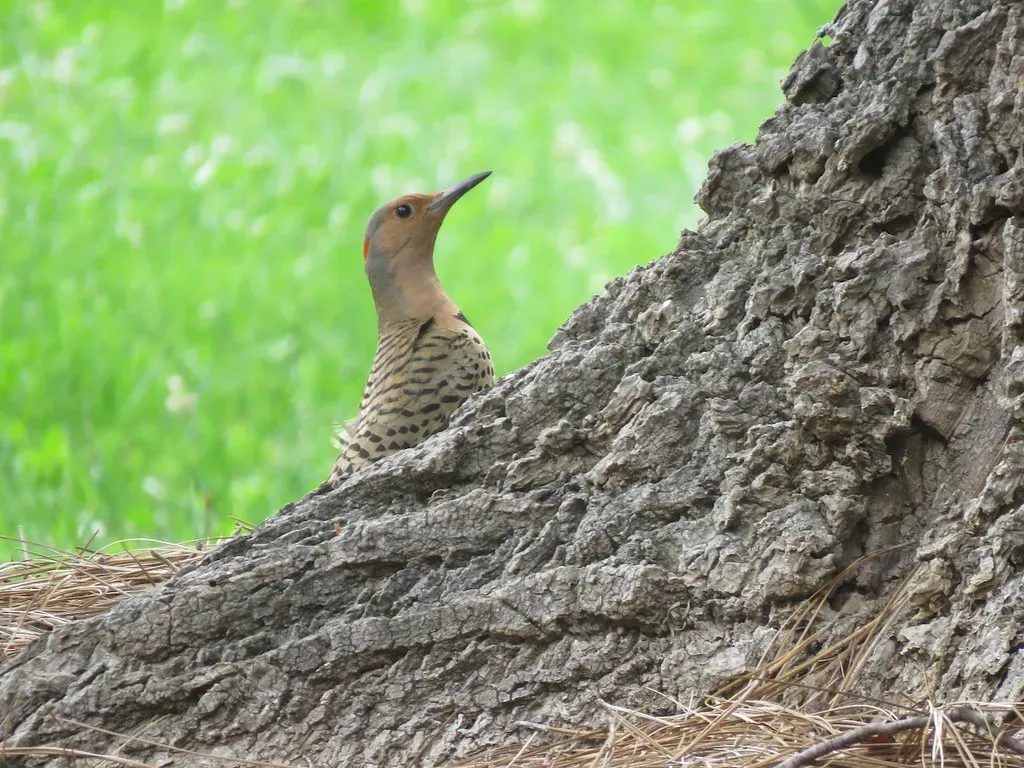
Like other woodpeckers, Northern Flickers are skilled excavators, chiseling out nest cavities in dead or decaying trees and occasionally in wooden structures. Their nesting behavior fits the woodpecker mold: a male and female team up, take turns hammering, and gradually hollow out a snug chamber where they’ll raise their young. These cavities are not just homes for the flickers themselves; once abandoned, they provide housing for a long list of other species, from small owls to bluebirds and squirrels. In that sense, flickers are quiet but important landlords in the forest and even in city parks.
What really sets them apart is the type of habitat they often choose around those trees. Flickers are remarkably fond of open spaces – edges of forests, meadows, yards, golf courses, and even urban green strips. You’ll see them using a big dead tree at the edge of a field rather than disappearing into dark, dense woods. To me, that combination of classic woodpecker nesting with a love of open, sunlit areas makes them feel like bridge-builders between wild forest and human landscapes. They seem oddly comfortable living right beside us without fully giving up their wild ways.
8. A Surprisingly Social Side, With Displays and Chases
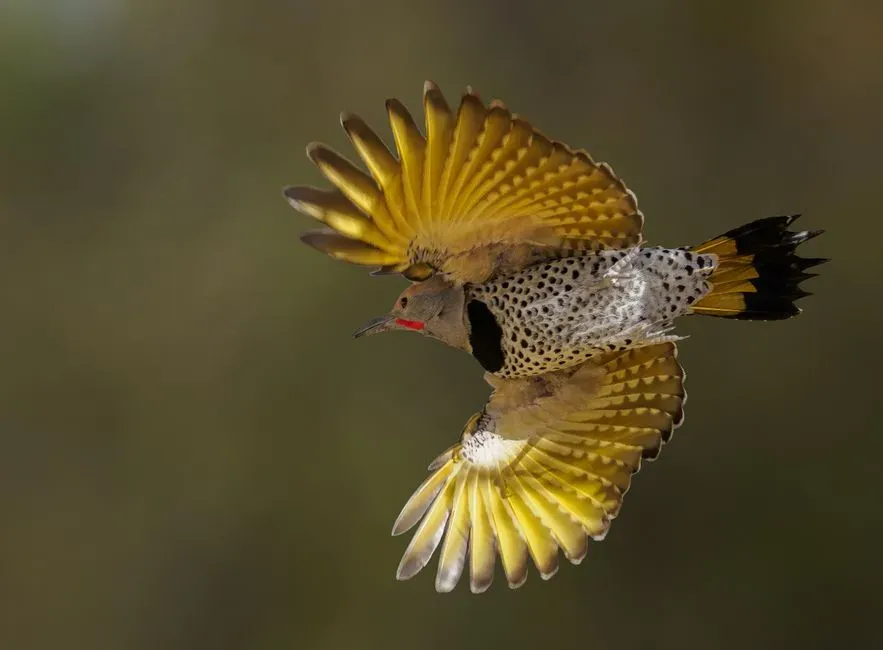
Many woodpeckers can seem a bit solitary and businesslike, hammering in silence and vanishing behind trunks. Flickers, by contrast, often reveal a social side that’s surprisingly dramatic. During the breeding season, you can spot pairs engaging in face-to-face displays, bobbing their heads, fanning their tails, and calling back and forth in what looks like a choreographed dance. Sometimes rival males will even chase each other in looping flights around trees and across yards, with wings flashing and voices ringing out.
This behavior gives flickers a touch of theatrical flair that you might not expect from a bird family associated with silent, secretive forest life. Watching two of them circle a tree, pausing to posture on opposite sides of a trunk, feels a bit like watching an old rivalry play out on a tiny stage. While other woodpeckers certainly have displays, flickers seem happy to act them out where people can easily see: along fence lines, on open trunks, even atop utility poles. It’s one reason they’re such a fun species for newer birdwatchers – these birds make their own drama very public.
9. Comfortable in Suburbs Yet Still Wild at Heart
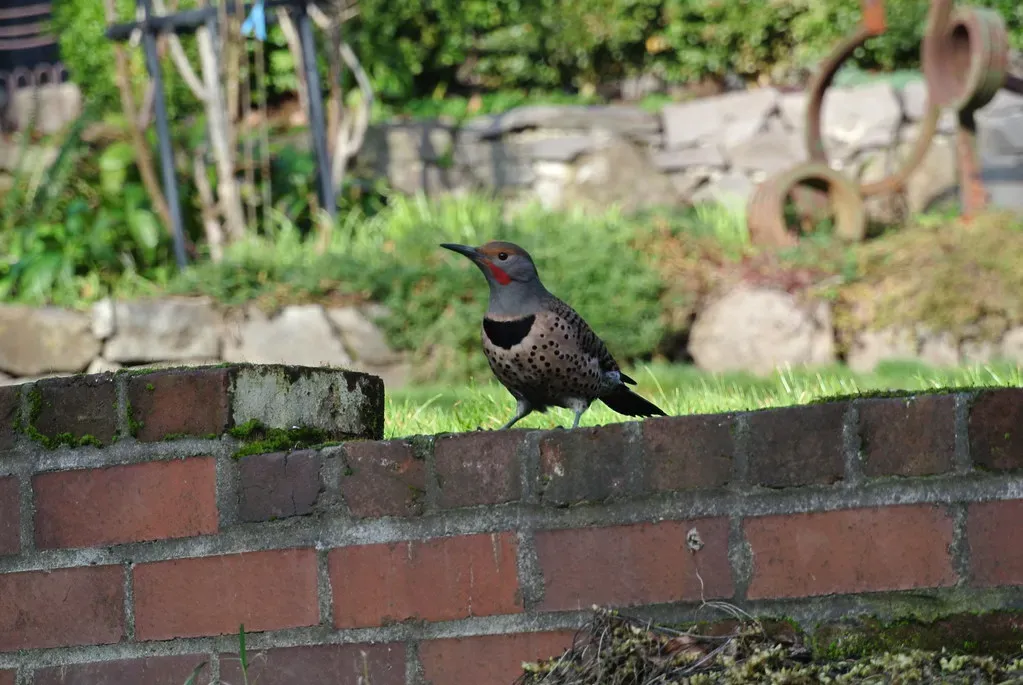
Northern Flickers have adapted to human-altered environments in a way that many more specialized woodpeckers have not. You’ll find them in suburbs, city parks, and agricultural edges, taking advantage of lawns for ant hunting and scattered trees for nesting and perching. They may drum on metal chimneys, power poles, or even rooftop vents, which can be annoying to light sleepers but is really just a bird using the loudest “billboard” it can find to announce itself. That ability to mix forest instincts with suburban improvisation has helped them stay fairly widespread.
At the same time, flickers never feel entirely domesticated or tame; they flush quickly when approached and often stay just out of comfortable binocular range. Standing in a backyard, you might watch one work quietly on the grass, then explode into flight at the slightest movement, flashing its colored underwings as it heads to a taller perch. To me, that tension – perfectly at home near humans yet clearly still wild – captures a lot of what modern nature feels like. Among woodpeckers, flickers may be one of the best symbols of how wildlife can bend but not fully break in the face of our expanding footprints.
10. A Gateway Bird That Changes How People See Woodpeckers
Ask casual birdwatchers which woodpecker they notice most often, and Northern Flicker frequently tops the list. Its size, color, unusual behavior, and loud calls combine into something that is hard to ignore even if you’re not paying much attention. For many people, the first time they learn that the speckled, laughing bird on their lawn is actually a woodpecker is genuinely surprising. It breaks the stereotype that woodpeckers are always vertical, always in deep woods, and always hammering away at bark.
In that sense, flickers become gateway birds: once you see how different a woodpecker can be, you start to wonder what else you’ve been missing. I think that matters more than we usually admit. When an everyday encounter with a bird nudges someone to look up, to ask a question, or to care about a nearby patch of trees, that’s a quiet victory for curiosity and conservation. Northern Flickers, with all their oddities and contradictions, are uniquely good at creating those moments.
Opinionated Conclusion: The Rebel Woodpecker We Should Pay More Attention To
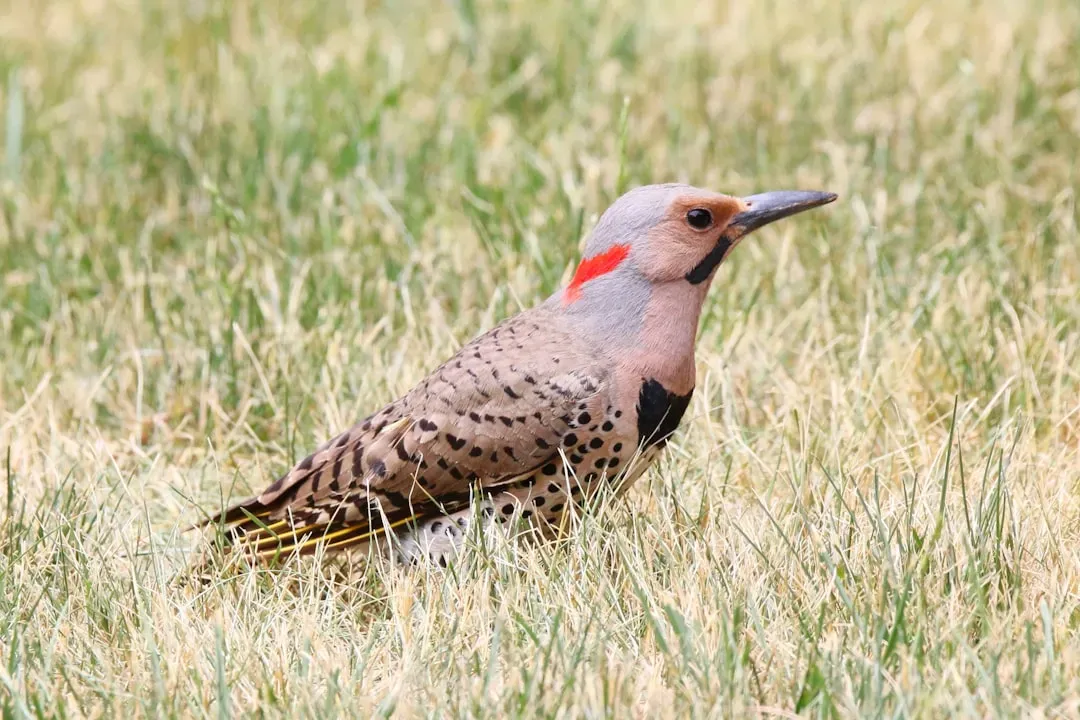
If you lined up all the woodpeckers of North America and had to pick the one that best captures the messy, changing world we live in, I’d argue the Northern Flicker wins easily. It is not the rarest, not the flashiest in a single bold color, and not the loudest drummer, but it is the most unexpectedly versatile. It hunts ants on lawns yet chisels tree cavities, migrates like a songbird yet behaves like a classic woodpecker, and thrives in suburbs while still feeling thoroughly wild. To me, it embodies the idea that being different – breaking your family’s rules – is not a weakness but a quiet superpower.
We tend to celebrate birds that are extreme specialists or impossibly exotic, but the flicker’s success story is more nuanced and, honestly, more relevant to our future. It shows that adaptability, curiosity, and a willingness to exploit new opportunities can keep a species not just hanging on, but actively shaping the ecosystems around it. Next time you see that speckled bird laughing from a rooftop or marching across your yard, it might be worth pausing and giving it more credit. After all, how often do you get to watch a rebel, a pioneer, and a neighborhood regular all rolled into one bird – and did you ever expect that role to be played by a woodpecker?