
If you could step into an animal’s mind for just five minutes, the world around you would probably feel like an alien planet. Colors you’ve never seen, sounds you’ve never heard, invisible forces suddenly blazing into view – the familiar would become utterly strange in a heartbeat.
When I first started reading seriously about animal senses, I thought I had a decent grasp of how other creatures experience reality. I was wrong. The more I learned, the more it felt like peeling back layers of a secret universe hiding in plain sight. Here are ten of the most mind‑bending sensory superpowers that are shaping the world around you right now – whether you notice them or not.
1. Mantis shrimp see colors that don’t even have names

The mantis shrimp is often called a “rainbow-seeing monster” of the ocean, and that’s not far off. While humans typically have three types of color receptors in their eyes, mantis shrimp can have a dozen or more, tuned to ranges of light we simply can’t experience. To them, a coral reef might look like a neon city at night, with layers of color stacked on top of each other in ways that would probably give us a headache.
Scientists once assumed this meant mantis shrimp could distinguish incredibly subtle color differences, but it turns out their brains take a shortcut instead. Rather than blending colors like we do, they seem to read wavelengths almost like a barcode scanner: quick, direct recognition instead of careful analysis. It’s a good reminder that having “more” of something biologically doesn’t always mean “better” in a way we’d expect; it can mean optimized for a totally different kind of visual world.
2. Elephants can hear with their feet

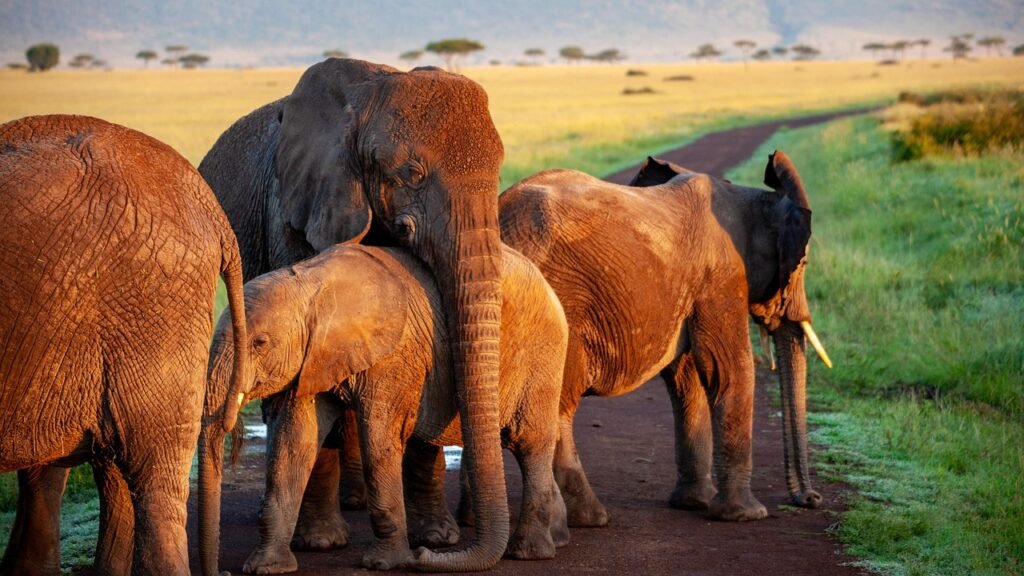
Imagine feeling a distant thunder through the soles of your feet and instantly knowing not just that a storm is coming, but which direction it’s moving and how far away it is. Elephants do something similar, but with vibrations made by other elephants walking, calling, or even stamping miles away. They pick up these low-frequency rumbles not only through their ears, but also through sensitive receptors in their feet and trunk.
Those ground-borne vibrations travel through soil and rock far more efficiently than sound in air over long distances. Elephants seem to interpret them as part of a larger sensory picture of their landscape, almost like an underground messaging network. When you see a group of elephants suddenly pause, go quiet, and gently press their feet more firmly into the earth, there’s a good chance they’re literally “listening” to something you can’t feel at all.
3. Sharks and rays can sense electricity in the water

Sharks don’t just rely on smell and movement; they also have a built-in electrical sense that gives them a serious advantage. Tiny jelly-filled pores on their snouts, called ampullae of Lorenzini, let them detect incredibly weak electric fields in the water. Every muscle twitch in a fish’s body produces a small electrical signal, and sharks can essentially home in on that signal like a living metal detector.
This sense becomes especially powerful when visibility is terrible – murky water, darkness, or prey hiding under sand. Some rays can detect the faint electrical field of buried animals and dig them out as if they knew exactly where to search. If you’ve ever felt like the ocean is stacked in favor of predators, this is one of those moments where you’re absolutely right: in the dark, a shark’s world is lit up with hidden electrical outlines we never see.
4. Birds navigate using Earth’s magnetic field

Many migratory birds travel thousands of miles twice a year with a precision that makes our sense of direction look embarrassing. Part of their secret is that they can sense Earth’s magnetic field, effectively giving them an internal compass. What’s wild is that some evidence suggests they may “see” magnetism as a visual pattern overlain on their normal view of the world, possibly linked to molecules in their eyes.
To a bird, a cloudy day with no clear sun might still present a clear directional cue baked into the sky itself, like a subtle gradient or ghostly line pointing north–south. When researchers temporarily disrupt this magnetic sense, birds sometimes become disoriented and fly in the wrong direction, as if their entire mental map has been scrambled. It’s hard not to wonder how different your own decisions would feel if you literally saw the planet’s magnetic skeleton every time you looked around.
5. Snakes can “see” heat from warm bodies

Some snakes, like pit vipers and certain boas and pythons, have small pits on their faces that act like heat-detecting sensors. These organs allow them to sense the infrared radiation given off by warm animals, essentially forming a low-resolution thermal image of their surroundings. To them, a mouse in total darkness might glow like a live ember against a cooler background.
This heat vision combines with their normal eyesight and sense of smell, creating a layered perception of the world that’s completely foreign to us. When a snake strikes at prey with stunning accuracy in pitch-black conditions, it’s not a mysterious instinct; it’s the result of a highly tuned sensory system doing its job. The idea that a predator can “see” your body heat taps into something primal in us, probably because it strips away the illusion that darkness keeps us hidden.
6. Bats build 3D maps with sound alone
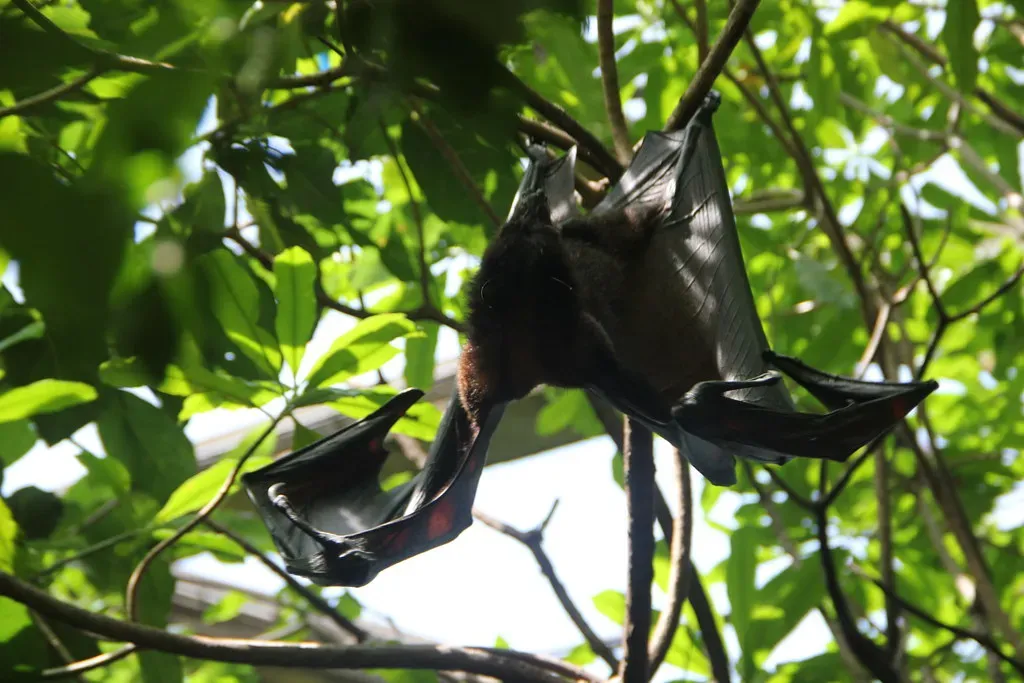
Bats navigate and hunt in near-total darkness using echolocation, sending out high-pitched calls and listening to the echoes that bounce back. Their brains turn those echoes into a detailed 3D model of their surroundings, letting them detect tiny insects mid-flight and avoid obstacles smaller than a pencil. What looks like chaotic nighttime swarming to us is, for them, an organized, information-rich world sculpted out of sound.
The timing is insanely precise: they can detect differences in echo return time on the scale of tiny fractions of a millisecond. Some species even adjust the shape of their ears in real time, like moving satellite dishes, to refine the incoming information. Next time you walk through a dark room fumbling for the light switch, just remember there are mammals casually flying at full speed through cave systems using nothing but sound reflections as their guide.
7. Dogs smell not just objects, but stories

In practical terms, that means a dog can track a person’s path hours later, follow the scent of a specific illness, or distinguish identical twins by smell alone. To them, a city sidewalk is like a constantly updating social media feed, full of overlapping scent posts and status updates. If you’ve ever felt annoyed when a dog insists on sniffing the same tree for what feels like forever, it’s worth remembering: they’re not being slow, they’re reading an entire neighborhood history book in one spot.
8. Bees see hidden patterns in flowers using ultraviolet light

When you look at a flower, you might notice bright petals and a dark center. When a bee looks at the same flower, it may see ultraviolet patterns that act like landing strips, guiding it straight to the nectar and pollen. Many flowers have evolved markings visible in ultraviolet light that are completely invisible to human eyes, but obvious to pollinators.
Researchers who photograph flowers in ultraviolet often reveal dramatic contrasts and bullseye patterns that make our normal view look plain and incomplete. From a bee’s perspective, a garden is full of glowing signals and coded invitations that turn feeding into a visually guided mission. It’s a surprisingly humbling thought: some of the “plain” flowers we pass every day are actually lit up with secret signage we’ll never see without special cameras.
9. Fish can feel invisible water currents with a built-in sensor line
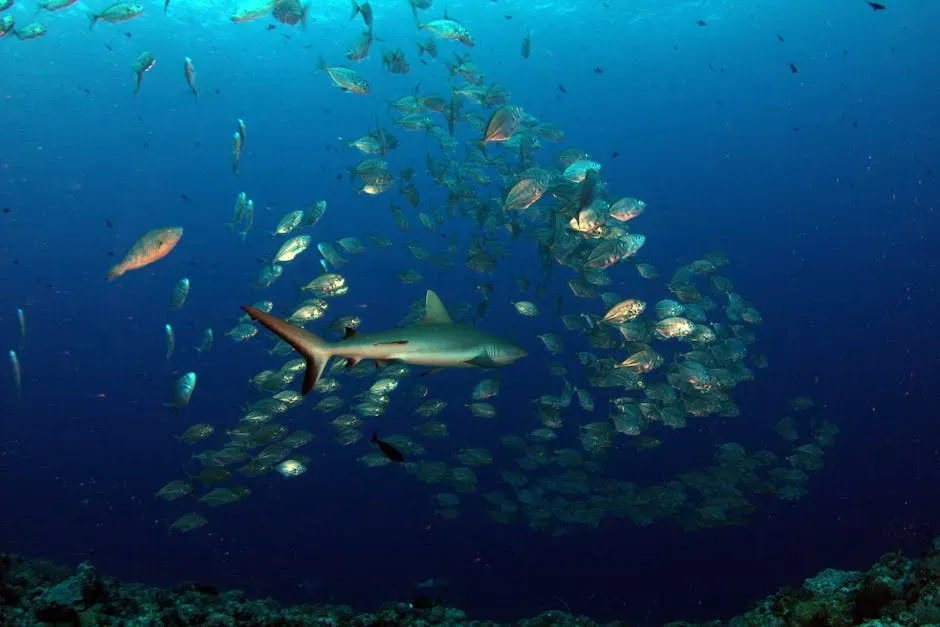
Many fish have a lateral line system – a row of tiny sensory organs running along their sides that let them feel minute water movements. This sense helps them detect predators, prey, and obstacles, even when visibility is terrible. If you’ve ever watched a school of fish twist and turn almost as one body, the lateral line is a big part of how they pull off that breathtaking coordination.
To a fish, the water is not just something to swim through; it’s a constantly shifting map of pressure waves and micro-currents. A disturbance behind them, a subtle flow change near a rock, or the flick of another fish’s tail is all encoded in this sensory stream. It’s a bit like living inside a perpetual breeze you can actually “see” with your skin, turning motion into information in a way we can only experience dimly when we feel a sudden gust of wind on our faces.
10. Horses can literally taste the air

For many animals, smell and taste are not as separate as they are for us. Snakes famously flick their tongues to collect tiny scent particles from the air or ground, then deliver them to a special organ in the roof of the mouth called the Jacobson’s organ for analysis. In a sense, they’re sampling the air the way we might sip soup, turning invisible chemicals into a kind of flavor map of their surroundings.
Cats, horses, and many other mammals also use this organ, sometimes making that odd “grimace” face when they draw in a particularly interesting scent. To them, the world isn’t just seen and heard; it’s constantly tasted in layers we barely notice. Once you realize this, a forest, a field, or even a city street starts to feel like less of a flat backdrop and more like a dense chemical landscape that other animals are quietly decoding every second.
Conclusion: Living in a world of overlapping invisible realities

When you put all these senses side by side, it becomes clear that humans inhabit just one narrow slice of a much bigger sensory universe. Animals around us are moving through overlapping realities of magnetism, vibration, ultraviolet patterns, pressure waves, heat signatures, and intricate chemical trails. What feels to us like the whole picture is, in many ways, just the visible tip of a very strange iceberg.
I find that thought oddly comforting and a little unsettling at the same time. It suggests that our planet is far richer, louder, brighter, and more complex than our senses let on, and that every species is tuned to its own version of “reality.” Next time you see a dog sniffing, a bird circling, or a snake pausing with its tongue in the air, it might be worth asking yourself: what are they sensing that you’ll never quite be able to imagine?