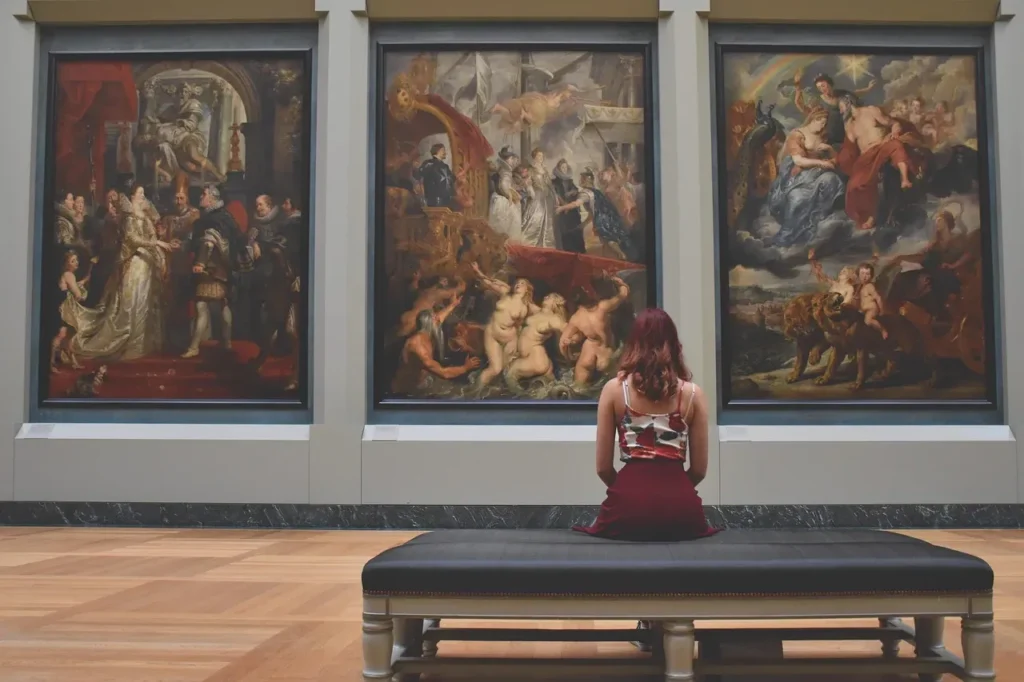

Some paintings feel haunted before you even know why. You look at them, and there’s a heaviness you can’t quite name, like walking into a room where an argument just ended. Only later do you discover the real stories: the illnesses, the betrayals, the obsessions, the violent deaths hiding behind those beautiful surfaces.
This list dives into ten famous historical paintings that carry a surprising amount of pain in their shadows. You probably know several of these works already from museums, textbooks, or endless social media posts. But once you learn what was happening in the artist’s life, or in the world around them, the images change. They stop being just masterpieces and start feeling like confessions, warnings, or final goodbyes.
The Starry Night – Vincent van Gogh’s Vision from a Sanitarium
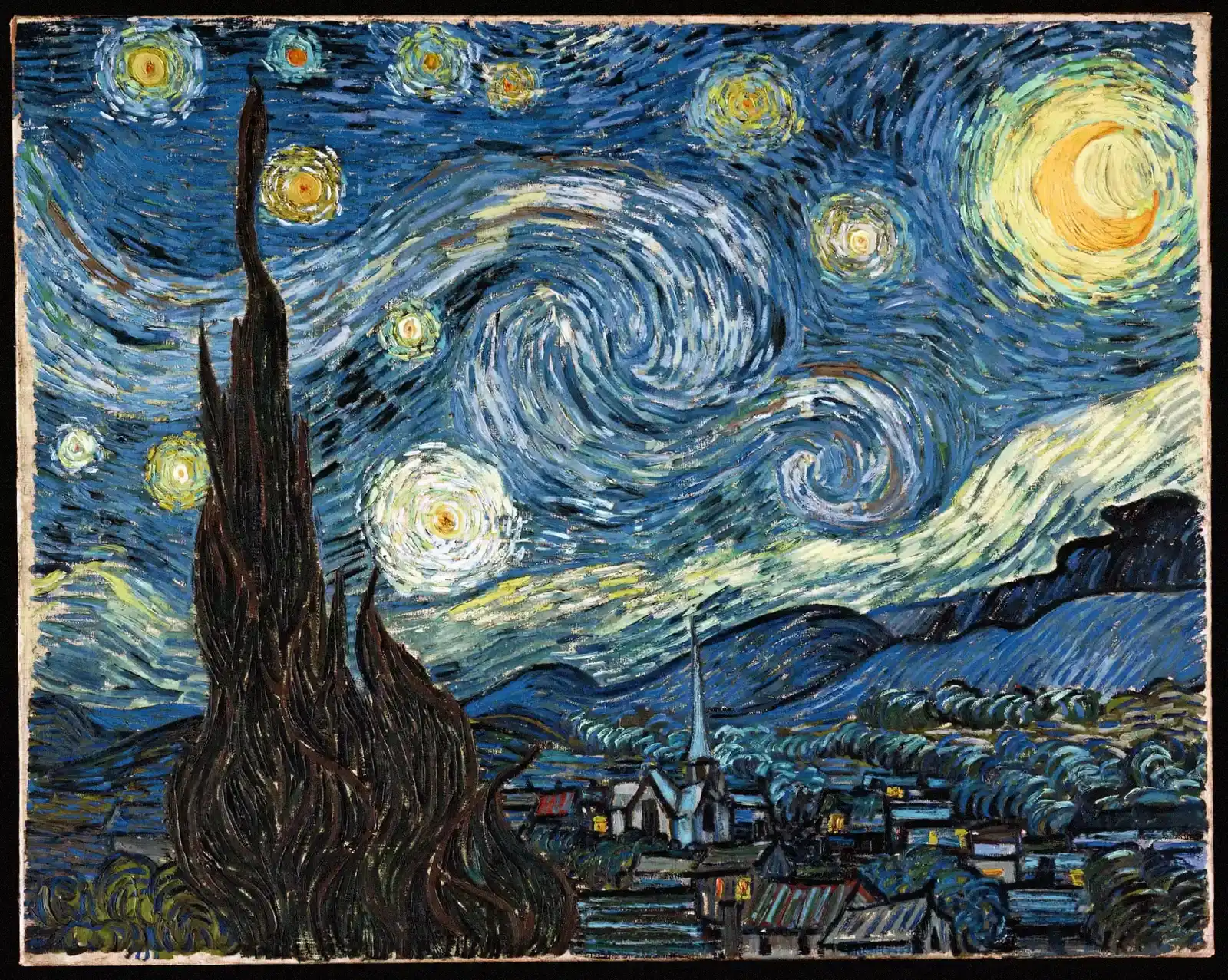
At first glance, The Starry Night looks almost comforting: a swirling night sky, a sleeping village, those hypnotic stars that seem to vibrate. What most people forget is that van Gogh painted this while confined to a psychiatric hospital in Saint-Rémy, after a severe mental breakdown and the infamous incident in which he mutilated his own ear. The view is not actually a peaceful countryside he could stroll through, but the landscape seen from his window in a place where he was effectively cut off from the world.
Knowing that, the canvas starts to feel less like a pretty night and more like a desperate attempt to find order inside chaos. The sky spirals and churns like an overactive mind that won’t quiet down, while the tiny village lies still and unreachable below. Van Gogh struggled with recurring mental illness, isolation, and a sense of failure; within a little more than a year of finishing this painting, he died from a gunshot wound often regarded as self-inflicted. That bright, trembling sky suddenly looks a lot like someone trying to paint themselves a universe worth staying in – and not quite making it.
Guernica – Picasso’s Scream Against War and Civilian Suffering
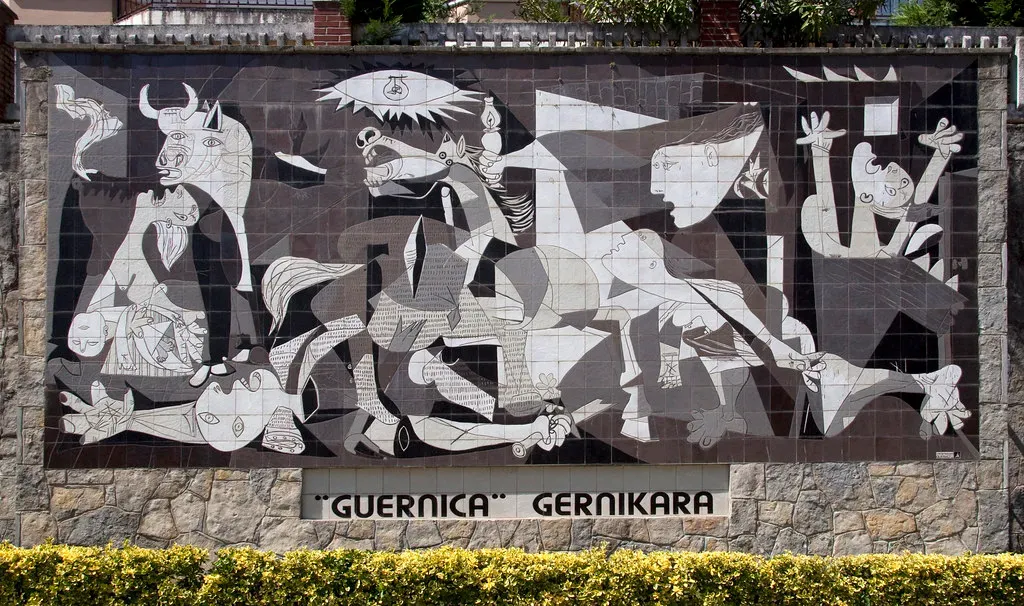
Guernica hits you like a punch: a huge black, white, and gray tangle of screaming figures, a dying horse, a broken warrior, a mother clutching her dead child. It is not chaos for the sake of style; it’s rooted in a specific horror. Picasso created this painting in response to the bombing of the Basque town of Guernica during the Spanish Civil War, when civilians were deliberately attacked from the air. For people at the time, this was a deeply shocking escalation – evidence that modern war would not spare homes, children, or churches.
Picasso himself watched his home country being torn apart by political hatred, repression, and brutality. Guernica became not just about one town, but about the anguish of an entire nation as dictatorship rose from the ruins. For decades, the painting was in exile from Spain, tied up with the artist’s refusal to let it return under authoritarian rule. When you stand in front of it today, the tragedy is twofold: it is about the people who died under those bombs, and about how quickly humans figured out how to mechanize terror. The painting is a permanent reminder that the victims are almost always the ones who never signed up for the fight.
The Raft of the Medusa – Shipwreck, Cannibalism, and Political Scandal
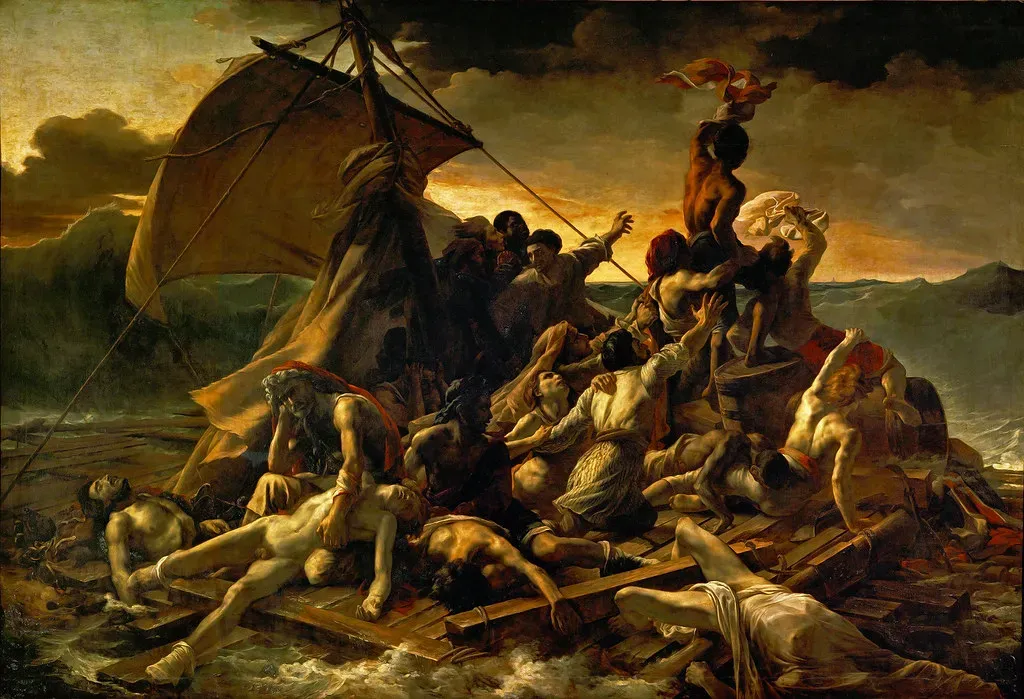
The Raft of the Medusa looks like some feverish, theatrical shipwreck fantasy, but it is based on a very real disaster. In 1816, a French naval frigate called Méduse ran aground off the coast of West Africa due to negligence and incompetence from politically appointed officers. The aftermath was nightmarish: over a hundred people were set adrift on a makeshift raft with almost no supplies. Over days of exposure, starvation, violence, and reports of cannibalism, only a small handful survived.
Painter Théodore Géricault became obsessed with this event. He interviewed survivors, studied corpses, and rehearsed different arrangements of bodies to capture both horror and fragile hope. The tragedy here is not a freak accident; it was widely seen as a symbol of corruption and arrogance in the restored French monarchy. When the painting was unveiled, it was like hanging a giant accusation on the museum wall. The broken bodies on the raft are not anonymous; they stand in for everyone who pays the price when leaders treat human lives as expendable.
Ophelia – Beauty, Madness, and the Romanticizing of Death
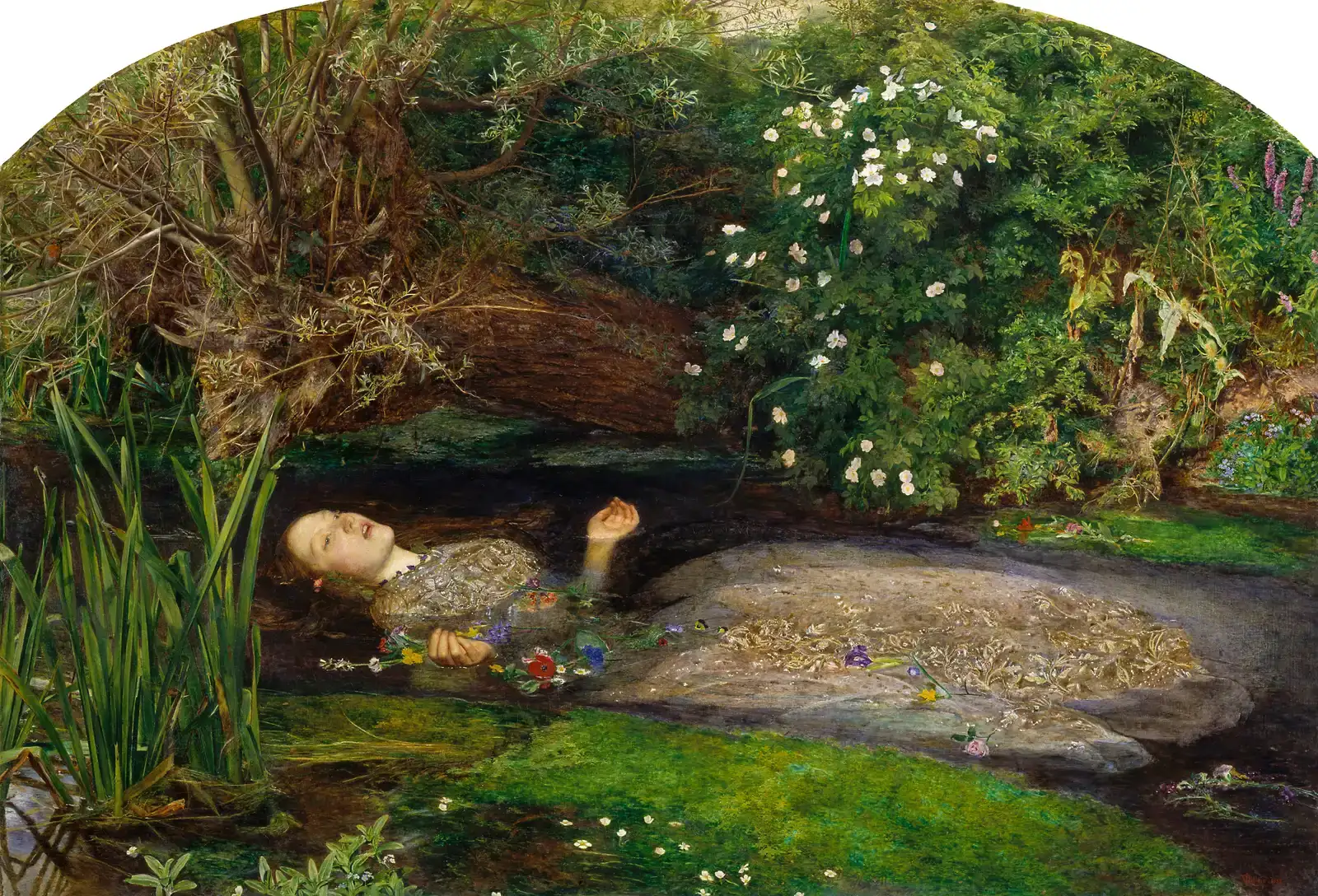
John Everett Millais’ Ophelia is one of those paintings that’s so lush and beautiful that you almost forget you’re looking at a drowning woman. Inspired by Shakespeare’s tragic character in Hamlet, it shows Ophelia floating in a river, palms up, surrounded by flowers and shimmering water. The surface is poetic and dreamy, but the subject is a young woman driven to madness and death after emotional manipulation, grief, and betrayal. That soft, serene face is masking a brutal emotional collapse.
The backstory of the model adds another layer of discomfort. The artist had his model pose for hours in a bathtub to get the details of the floating figure right; a mishap with the heating left her in cold water for too long, and she reportedly became quite ill afterward. So the painting’s elegance was literally paid for with someone else’s suffering. There is a strange cruelty hiding in the romantic haze: a world that admires the aesthetic of a tragic woman instead of asking why she had to be destroyed in the first place.
The Third of May 1808 – Executions in the Harsh Light of Reality
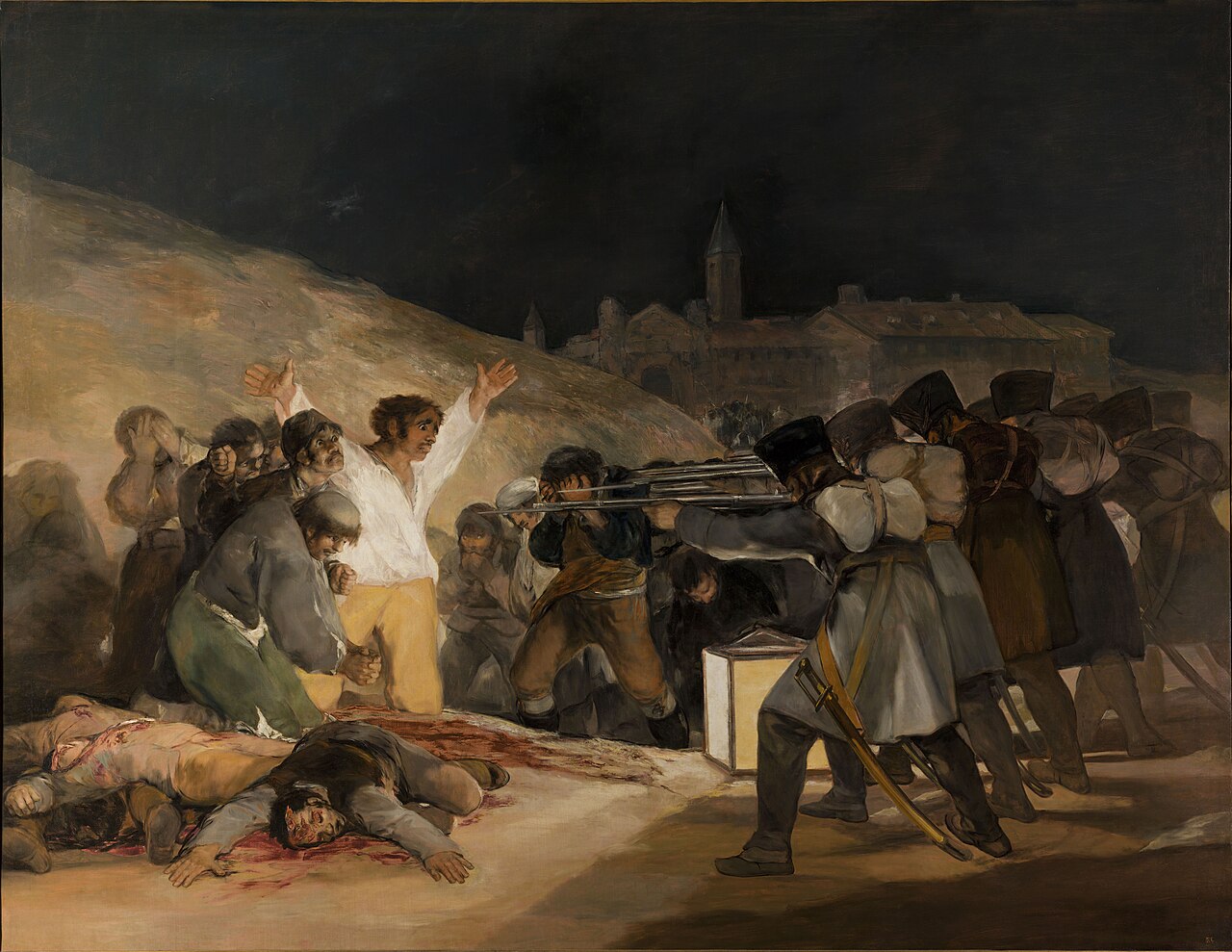
Francisco Goya’s The Third of May 1808 is one of the rawest depictions of execution in art history. On the left you see terrified Spanish civilians, one man throwing his arms wide in a pose that echoes religious martyrdom; on the right, a faceless row of French soldiers, rifles leveled, more like a machine than individuals. The scene is based on the real reprisals that followed an uprising in Madrid during the Napoleonic occupation, when civilians were rounded up and shot through the night.
What makes this painting especially tragic is Goya’s own position. He was living in a country crushed between patriotic resistance and the brutality of imperial power, watching neighbors and possibly acquaintances suffer in ways he could not prevent. The harsh, almost theatrical lighting doesn’t glorify anyone; it exposes the horror with nowhere to look away. This is not just a history lesson; it’s a visual record of what happens when people become targets simply for being in the wrong place at the wrong time.
Saturn Devouring His Son – A Myth Turned into a Personal Nightmare
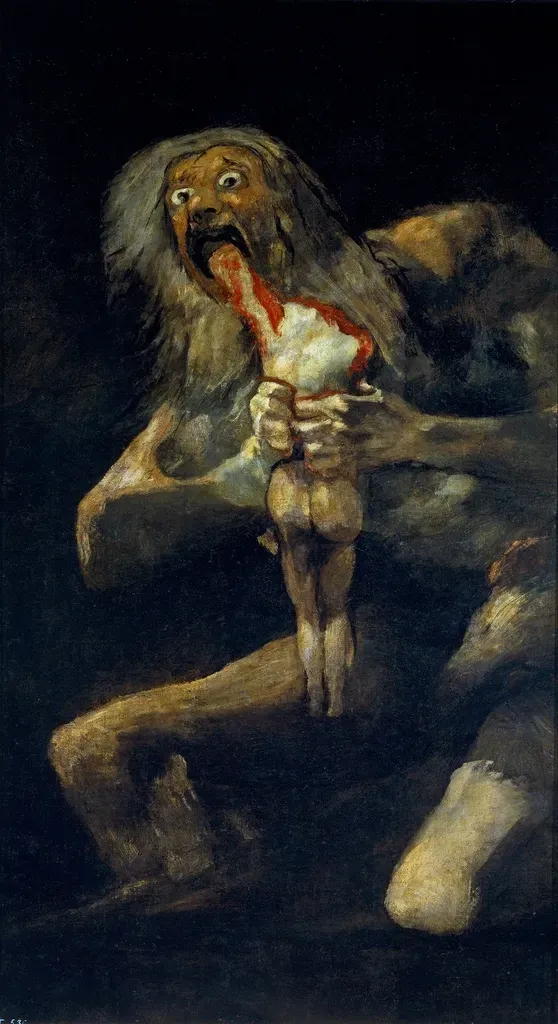
At first you might think Saturn Devouring His Son is just a wild, grotesque mythological scene. The ancient story tells of the god Saturn, terrified that one of his children would overthrow him, eating them as soon as they were born. In Francisco Goya’s version, painted on the wall of his own house among his so-called Black Paintings, the figure is crazed, wide-eyed, half-swallowed body gripped in bloody hands. It feels less like ancient legend and more like pure psychological terror.
The tragic backstory here lies in Goya’s late life. He had suffered illness, deafness, disillusionment with politics, and a deepening pessimism about humanity. These works were not meant for public display; they were private images surrounding him in his home. Saturn’s horror becomes a metaphor for a world that devours its own future out of paranoia and cruelty. The tragedy is that this painting seems to show what it felt like inside Goya’s mind: a place where hope had eroded into something feral and monstrous.
The Death of Marat – A Murder Turned into a Chilly Icon
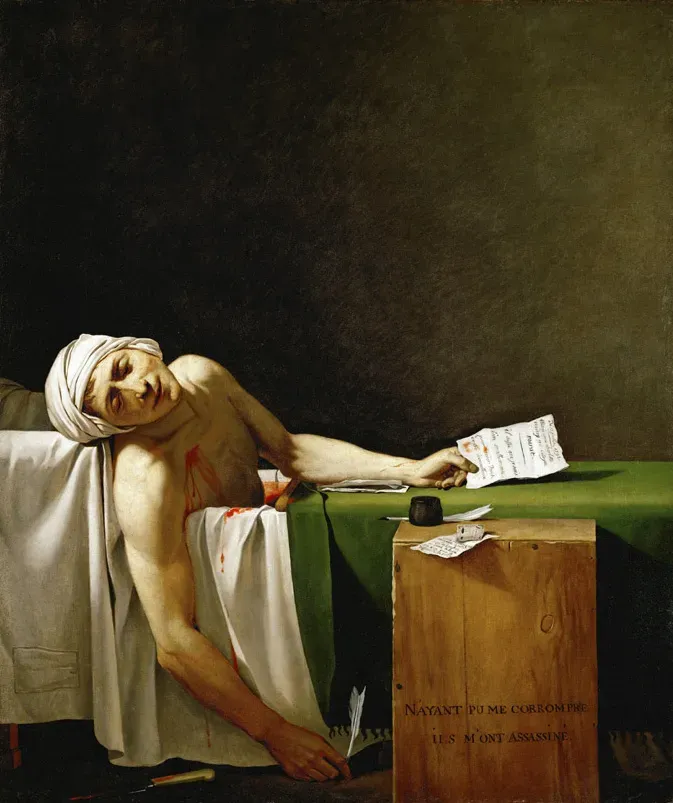
In The Death of Marat, Jacques-Louis David turns the assassination of revolutionary leader Jean-Paul Marat into a strangely calm and polished scene. Marat lies in his bath, letter in hand, a wound in his chest, as if gently sleeping instead of freshly murdered. The reality behind this image is much uglier. Marat suffered from a painful skin condition that forced him to work from medicinal baths, and he was stabbed there by Charlotte Corday, who blamed him for helping drive political violence during the French Revolution.
David, a committed supporter of the revolutionary cause, essentially turned his friend into a secular saint. That stylized serenity hides the blood, the noise, and the bitter political feuds that led to his death. The tragic side is not just the killing itself, but the way a human life – full of flaws, pain, and controversial decisions – gets flattened into a cold, almost religious icon. The painting is beautiful and moving, but it also signals how quickly death can be used as a political tool, polishing away everything messy and human.
Frida Kahlo’s The Broken Column – Pain Without Anesthesia
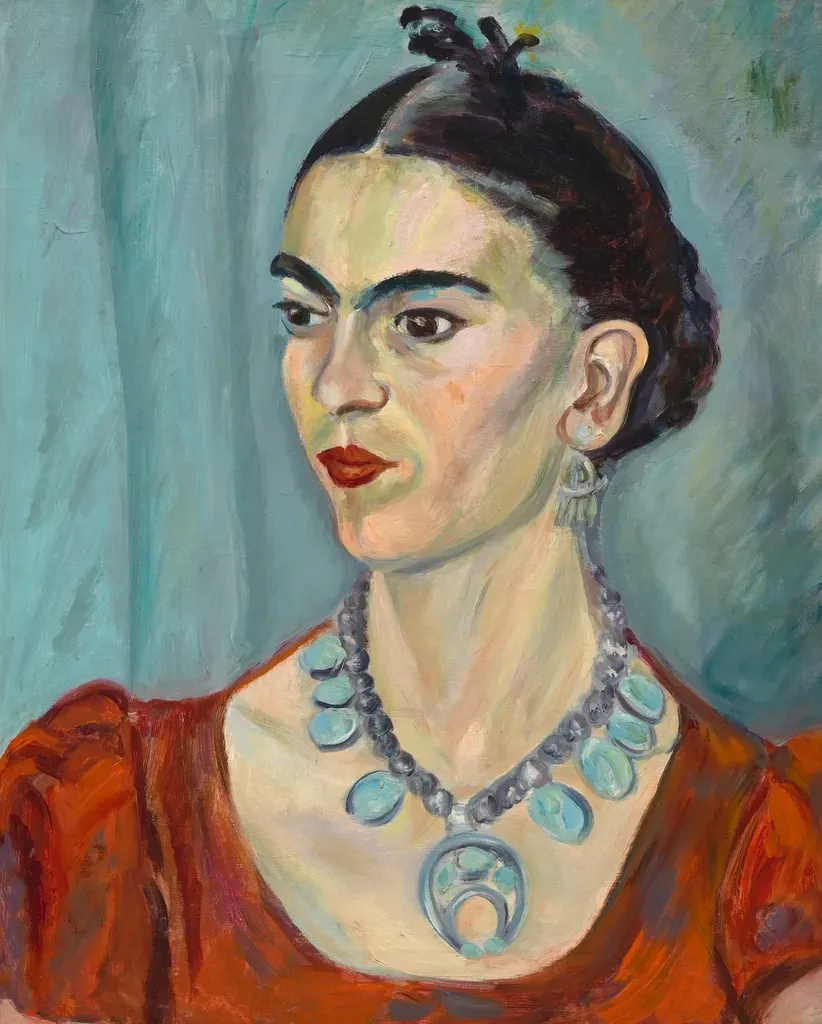
Frida Kahlo’s The Broken Column is almost impossible to look at without wincing. She paints herself with her torso split open, a cracked architectural column replacing her spine, nails piercing her skin like tiny daggers. This is not metaphor in the abstract; it is a painfully honest record of her own medical history. After a devastating bus accident in her youth and multiple surgeries, Kahlo lived with chronic, intense pain that shaped nearly every part of her daily existence.
What makes the painting so tragic is that, despite the tears running down her face, she stares straight at the viewer with unnerving steadiness. The restraints around her body and the barren landscape behind her reinforce a sense of isolation, as if no one can truly enter into what she’s experiencing. There is a bravery here, but also a heartbreaking resignation. The painting refuses to romanticize suffering, even as it transforms it into art. It feels like someone standing alone in a storm, daring you to look away first.
American Gothic – A Misread Icon of Hardship and Quiet Despair
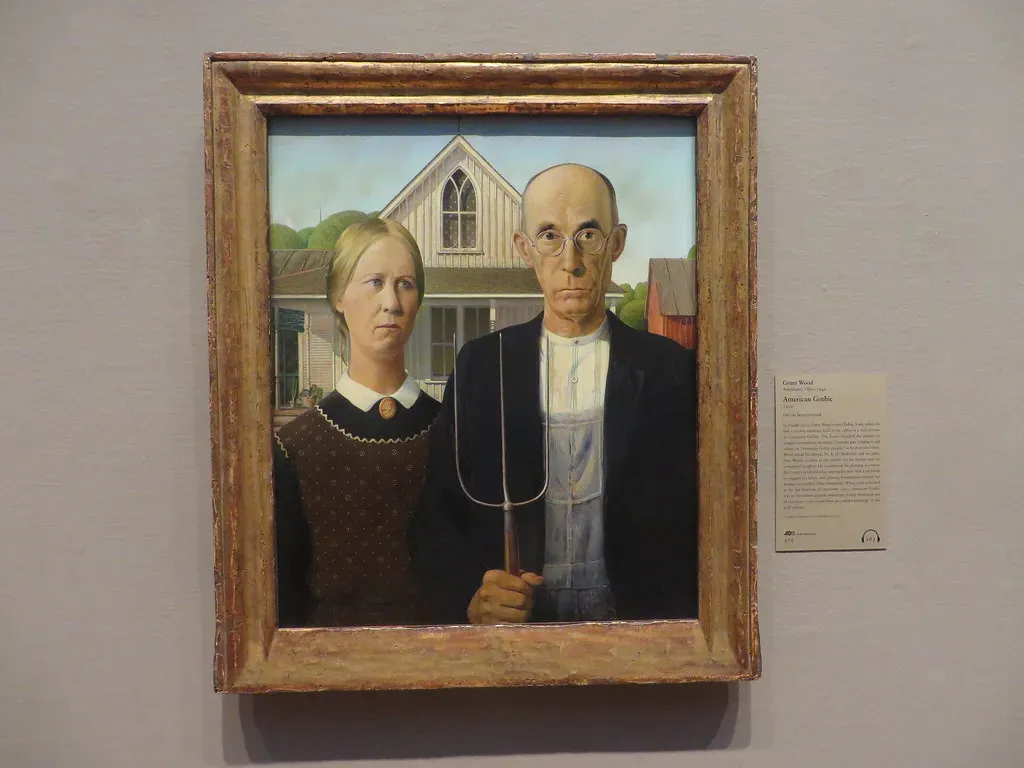
American Gothic is often treated like a meme now: a stern farmer and his daughter (or, as sometimes believed, his wife) in front of a neat farmhouse, pitchfork in hand, expressions stiff as a wooden fence. On the surface, it looks almost cartoonishly serious. But Grant Wood painted it during a period when rural life in the United States was under extreme pressure, with economic hardship and social changes shaking old certainties. The house itself is based on a real building whose oddly Gothic window struck him as both charming and unsettling.
There’s a subtle tragedy in how easily the painting gets misunderstood. Instead of being a flat joke about uptight country people, the figures can be read as tired, defensive, and quietly worried – a pair of individuals clinging to duty in a world that may be moving past them. Their rigid posture and tight mouths suggest a life where emotions are swallowed and endurance is the only acceptable response. The sadness here is not spectacular like a battlefield; it’s the more familiar tragedy of people who keep standing because they have no other option, even when the weight is slowly grinding them down.
The Massacre of the Innocents – Horror Amplified by Real-World Echoes
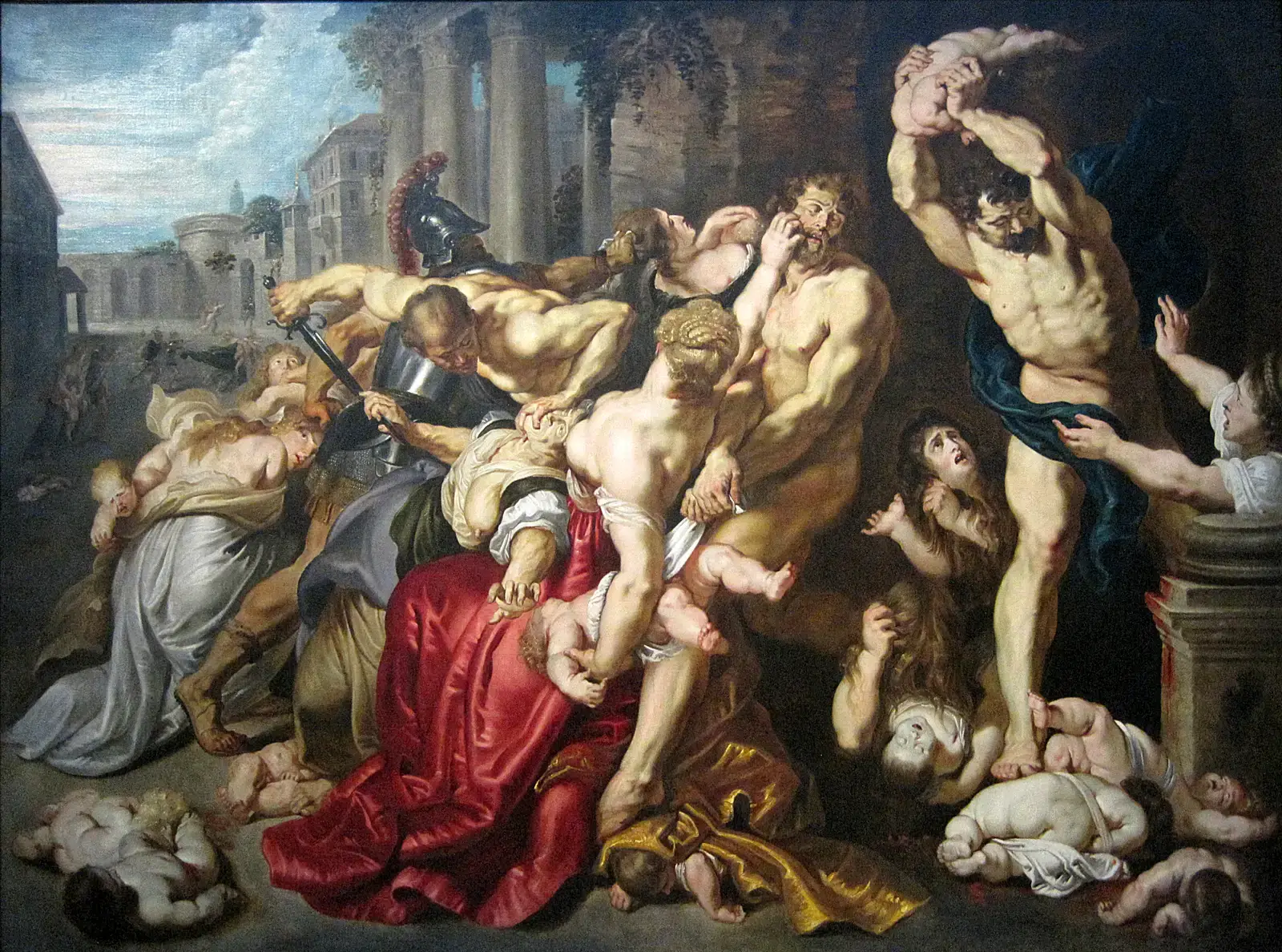
The Massacre of the Innocents, famously painted by Peter Paul Rubens and later by other artists, takes a biblical episode – the slaughter of infants ordered by King Herod – and renders it with brutal immediacy. In Rubens’ version, muscular soldiers grip screaming mothers, tiny bodies are pulled and crushed, and the scene teeters on the edge of chaos. It is easy, in a gallery context, to detach and treat it as just another dramatic Baroque image. But the story it shows is the calculated killing of children to protect power.
The tragic backstory deepens when you consider the historical climate in which such scenes were painted. Europe was no stranger to war, religious conflict, and civilian casualties; the trauma of families torn apart by violence was not distant imagination. The painting folds that lived reality into a biblical frame, turning sacred history into a mirror of contemporary brutality. The real horror is that the scene does not feel like ancient myth at all – just another repetition of the same old pattern where the most vulnerable pay for the fears of the powerful.
Conclusion: Beauty That Refuses to Let Us Off the Hook
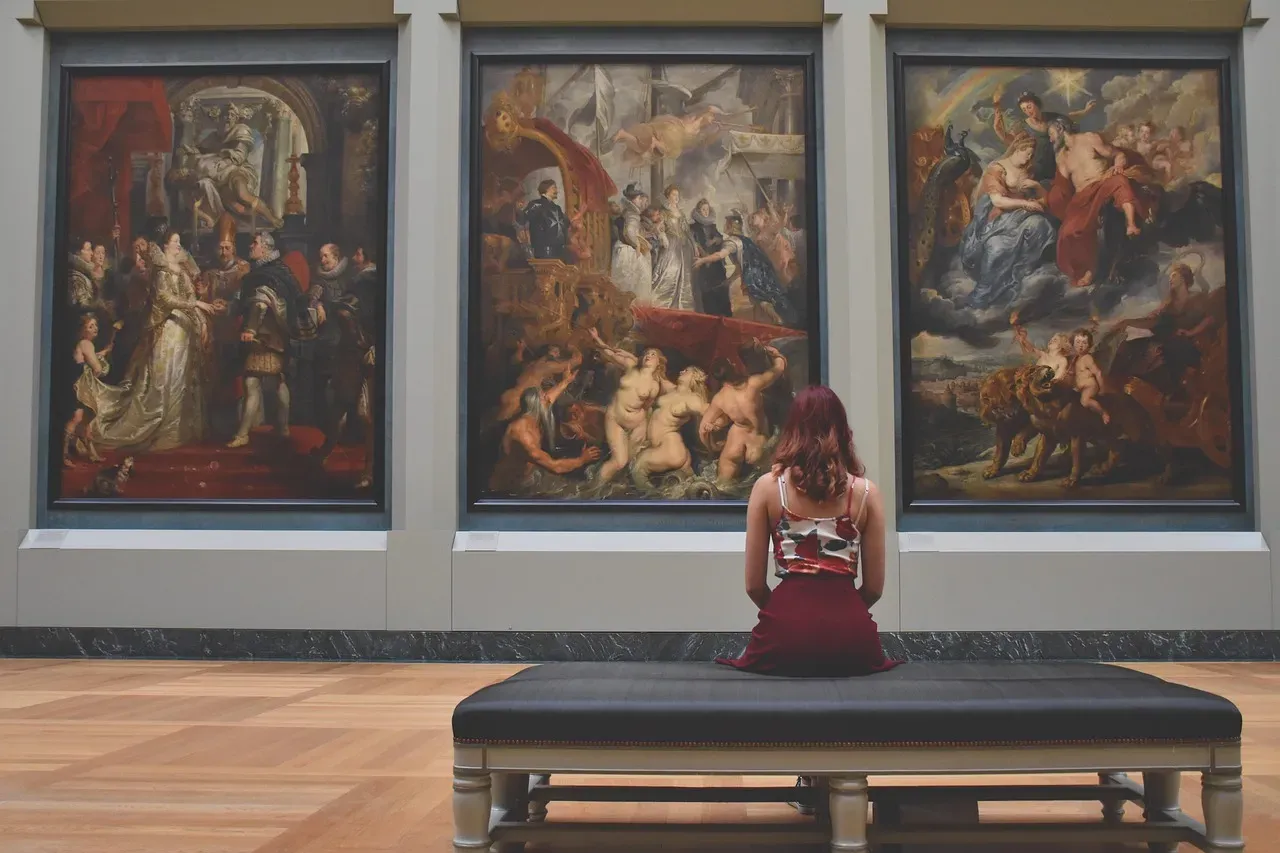
Once you know these backstories, it becomes much harder to treat these paintings as harmless decorations or cultural trophies. They are, in one way or another, records of suffering: of people executed, bombed, drowned, betrayed, or simply worn down by illness and disappointment. The tragedy is not a side note; it is baked into the brushstrokes, the compositions, and the choices of subject. These works do not just show us what happened; they reveal how it felt to live through it, or to carry the scars afterward.
Personally, I find that knowing the pain behind these images makes them more powerful, not less enjoyable. It feels dishonest to separate the beauty from the cost, as if the price paid in blood, sanity, or dignity were just an interesting trivia fact. Maybe the real value of these paintings is that they refuse to let us forget that even the masterpieces hanging in quiet museums were born in a world that was anything but peaceful. The next time you stand in front of one of them, will you see just the surface – or will you let the story underneath trouble you a little?