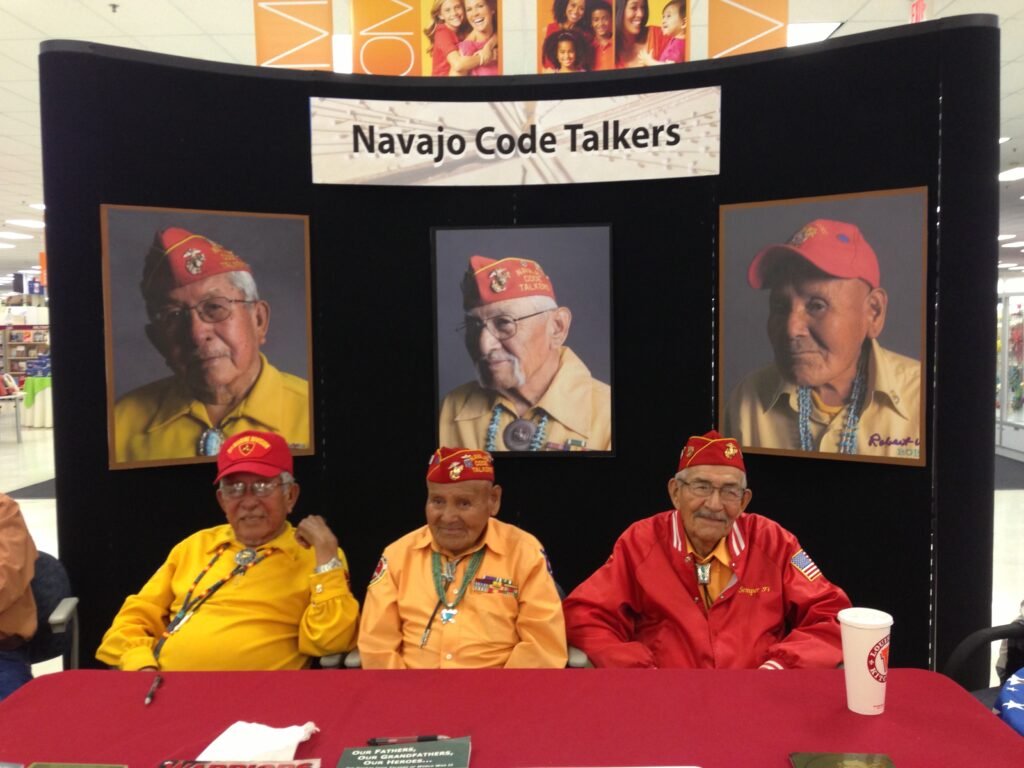

World War II brought countless stories of courage and ingenuity, but few tales are as remarkable as that of the Navajo Code Talkers. You might know bits and pieces about these Native American Marines who used their language to confuse enemy forces, yet their complete story remains one of the most fascinating chapters in military history.
These weren’t just translators or communications specialists. They were warriors who transformed their cultural heritage into America’s most unbreakable secret weapon. Their story challenges everything you think you know about codes, sacrifice, and the hidden heroes who shaped history. Let’s dive into ten extraordinary facts that reveal the true depth of their contribution.
Philip Johnston’s Revolutionary Idea Changed Everything
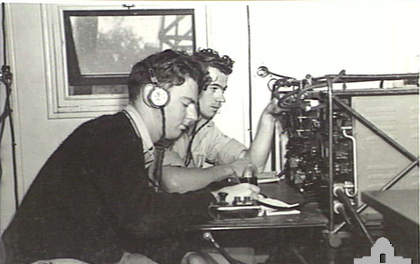
The idea to use Navajo for secure communications came from Philip Johnston, the son of a missionary to the Navajos and one of the few non-Navajos who spoke their language fluently. Johnston, reared on the Navajo reservation, was a World War I veteran who knew of the military’s search for a code that would withstand all attempts to decipher it. Johnston staged tests under simulated combat conditions, demonstrating that Navajos could encode, transmit, and decode a three-line English message in 20 seconds. Machines of the time required 30 minutes to perform the same job.
The existing encryption methods the Americans relied on were also painfully slow and tedious. The idea to use the Navajo language as the basis of a secure radio code was proposed to the Marine Corps by Philip Johnston, a veteran of World War I who had spent much of his childhood on the Navajo Reservation where his parents worked as missionaries. Johnston understood something crucial that military leaders had missed: speed could be just as valuable as secrecy in battlefield communications.
Only Twenty-Nine Original Code Talkers Created the Unbreakable System
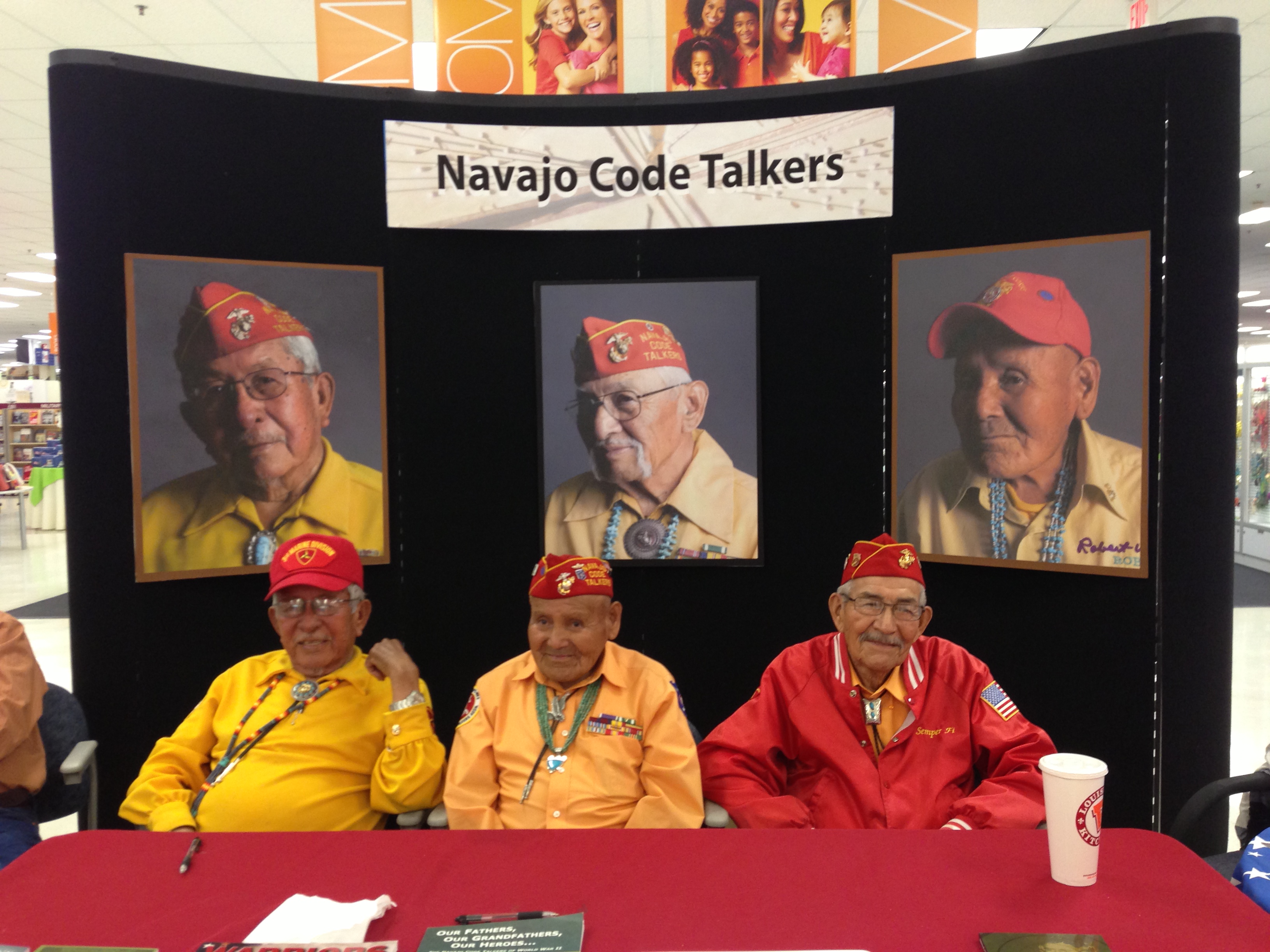
In May 1942, the first 29 Navajo recruits attended boot camp. Then, at Camp Pendleton, Oceanside, California, this first group created the Navajo code. Though Johnston may have had the initial idea to create a Navajo code, the Code itself was designed and implemented by the first cadre of 29 Code Talkers. These “First Twenty-Nine” – with little formal cryptographic training – devised a code built on word substitution – common military terms were assigned a Navajo code word, and each letter of the English alphabet was also assigned at least one code word so that other terms could be spelled out using the Code.
Think about that for a moment. Without extensive training in cryptography or military communication systems, these young Navajo men developed what would become the most effective code system of the entire war. The last of the original 29 Navajo code talkers who developed the code, Chester Nez, died on June 4, 2014.
The Navajo Language Was Practically Impossible for Outsiders to Learn
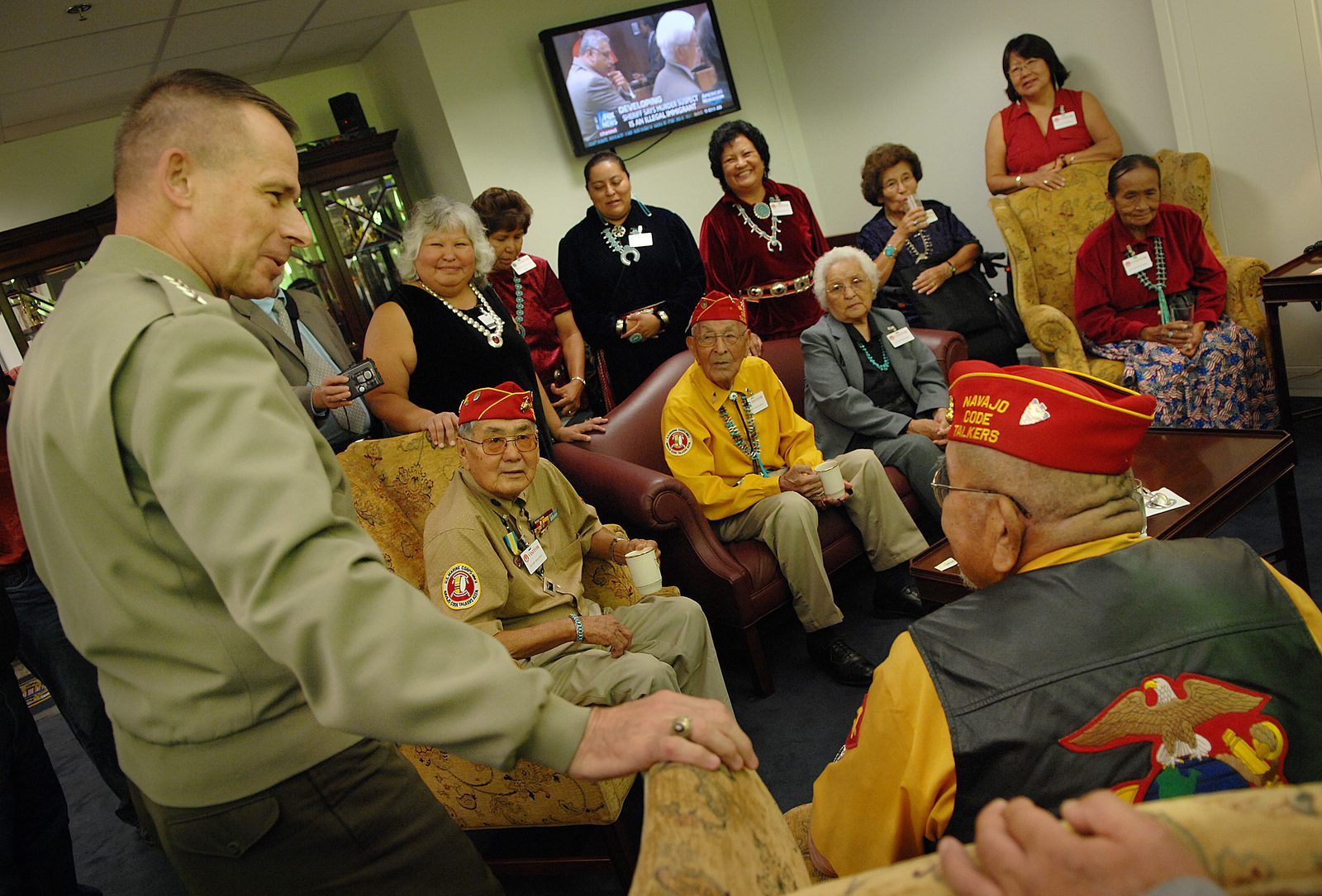
Johnston believed Navajo answered the military requirement for an undecipherable code because Navajo is an unwritten language of extreme complexity. One estimate indicates that less than 30 non-Navajos, none of them Japanese, could understand the language at the outbreak of World War II. Its complex syntax, phonology, and numerous dialects made it unintelligible to anyone without extensive exposure and training. One estimate indicates that fewer than 30 non-Navajo could understand the language during World War II.
This wasn’t just about speaking a different language. Navajo’s linguistic structure was so different from Japanese or German that enemy code breakers had no foundation to build upon. German authorities knew about the use of code talkers during World War I. Germans sent a team of thirty anthropologists to the United States to learn Native American languages before the outbreak of World War II. However, the task proved too difficult because of the large array of Indigenous languages and dialects.
Code Talkers Had to Memorize Over Four Hundred Terms
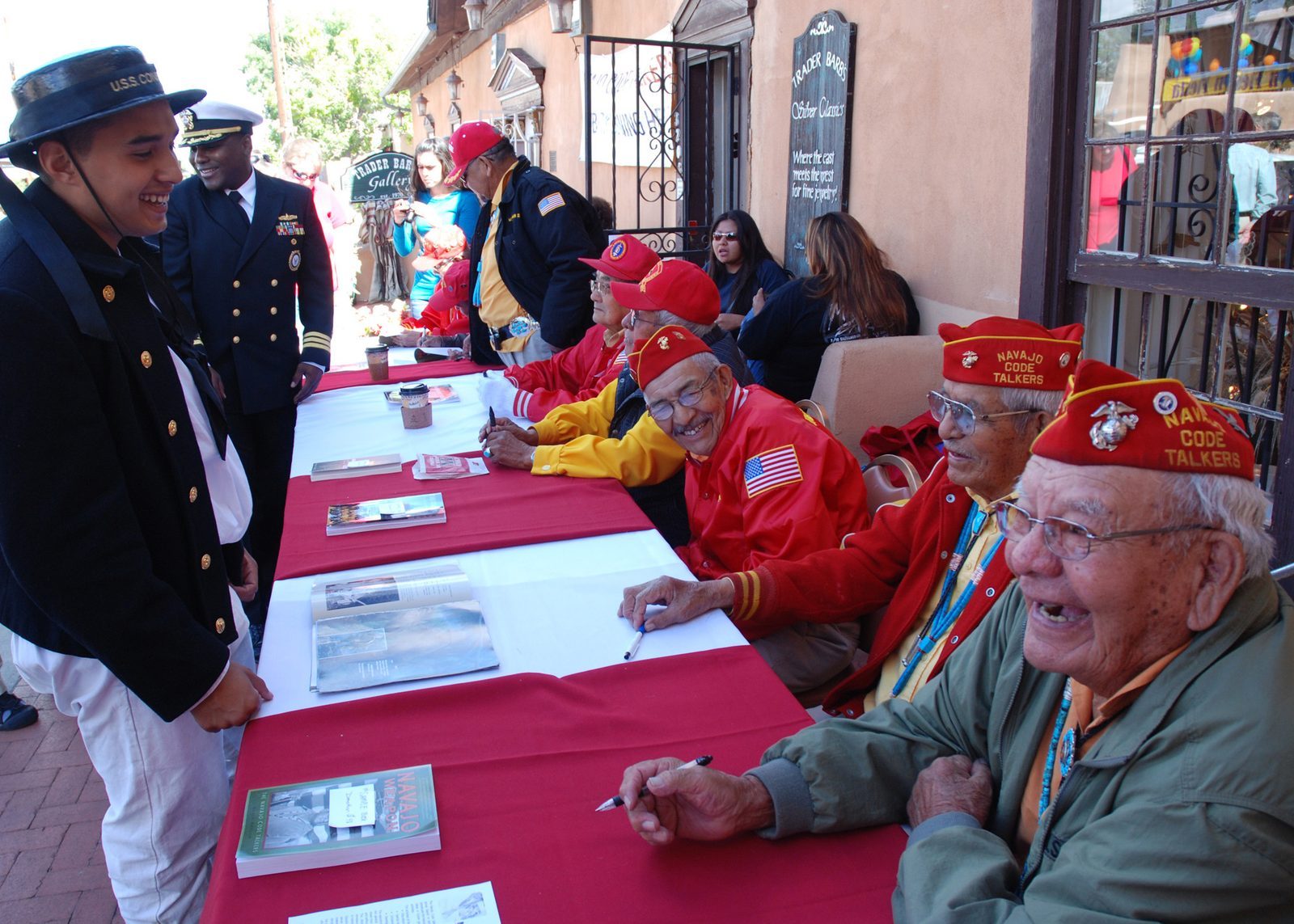
Becoming a Code Talker meant memorizing more than 400 terms, and trainees could not take notes or write anything down. Many of the Code Talkers would later reflect that the traditions of oral history and storytelling that they grew up with helped them with this massive memorization challenge. The code talkers had to memorize more than 400 terms in order to use the code.
Imagine having to remember hundreds of code words while under enemy fire, knowing that one mistake could cost lives. In the field, they were not allowed to write any part of the code down as a reference. They became living codes, and even under harried battle conditions, had to rapidly recall every word with utmost precision or risk hundreds or thousands of lives. Their cultural background in oral tradition became their greatest asset in this seemingly impossible task.
Creative Word Associations Made Military Terms Memorable
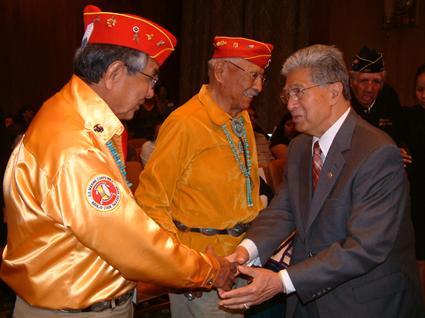
Their code book used one to three Navajo words for each alphabet letter, which consisted of animal names and short words used to spell vital information about the locations of the Japanese military and U.S. soldiers, to say where to position artillery, and to relay wartime communication. In cases where no names for artillery existed in the Navajo language, they created shortcut words based on the behavior of animals.
The developers of the original code assigned Navajo words to represent about 450 frequently used military terms that did not exist in the Navajo language. Several examples: “besh- lo” (iron fish) meant “submarine,” “dah-he- tih-hi” (hummingbird) meant “fighter plane” and “debeh-li-zine” (black street) meant “squad.” These weren’t random assignments but thoughtful connections that helped code talkers remember complex military vocabulary through familiar cultural concepts.
They Served in Every Major Pacific Campaign
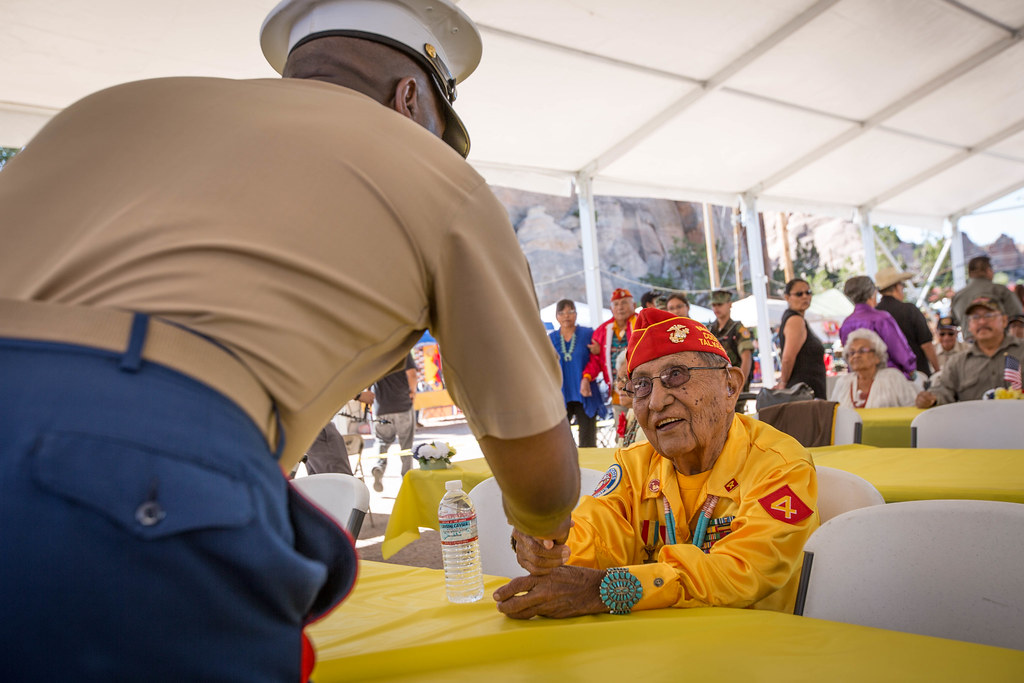
Guadalcanal, Tarawa, Peleliu, Iwo Jima: the Navajo code talkers took part in every assault the U.S. Marines conducted in the Pacific from 1942 to 1945. They served in all six Marine divisions, Marine Raider battalions and Marine parachute units, transmitting messages by telephone and radio in their native language a code that the Japanese never broke.
The work of hundreds of code talkers was essential to Allied victory in World War II, and they were present at many important battles, including at Utah Beach during the D-Day invasion in France, and at Iwo Jima in the Pacific. Their presence wasn’t limited to communication duties either. Code Talkers were usually assigned to the communications sections at the battalion, regimental, and division headquarters levels, and were employed to coordinate operations between friendly units and to call for fire support from artillery or aircraft. The Code Talkers were all trained as Marines and as general service communications specialists, so when not sending coded messages they often performed general communications work or served as riflemen.
At Iwo Jima They Transmitted Over Eight Hundred Perfect Messages
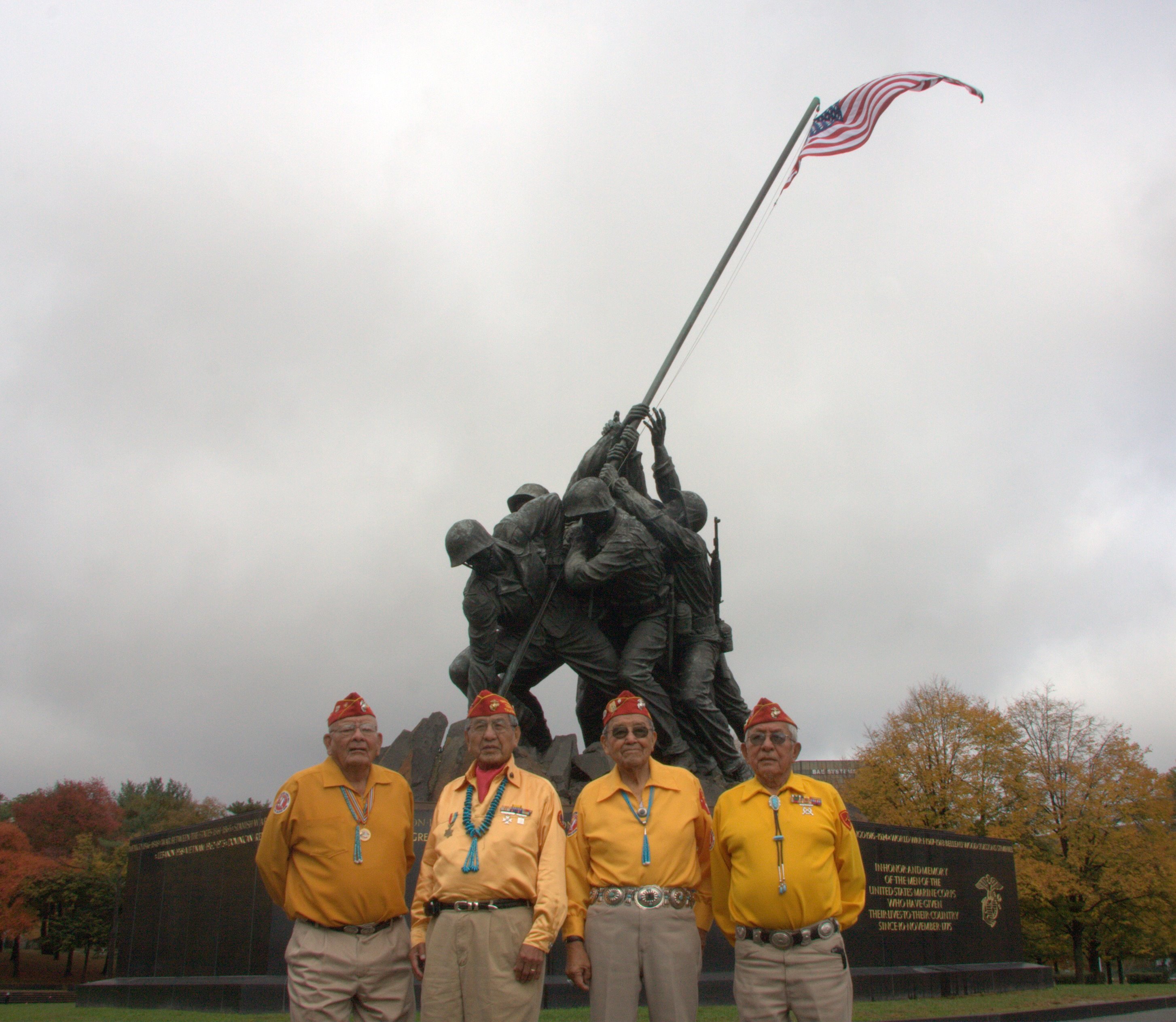
At Iwo Jima, Major Howard Connor, 5th Marine Division signal officer, declared, “Were it not for the Navajos, the Marines would never have taken Iwo Jima.” Connor had six Navajo code talkers working around the clock during the first two days of the battle. Those six sent and received over 800 messages, all without error.
During the first two days of the Battle of Iwo Jima, early in 1945, six code talkers sent and received more than 800 messages without making any errors. Think about the pressure these men faced during one of the war’s bloodiest battles. Every message could mean the difference between life and death for countless Marines, and they delivered flawless communication when it mattered most.
Japanese Code Breakers Never Cracked Their System
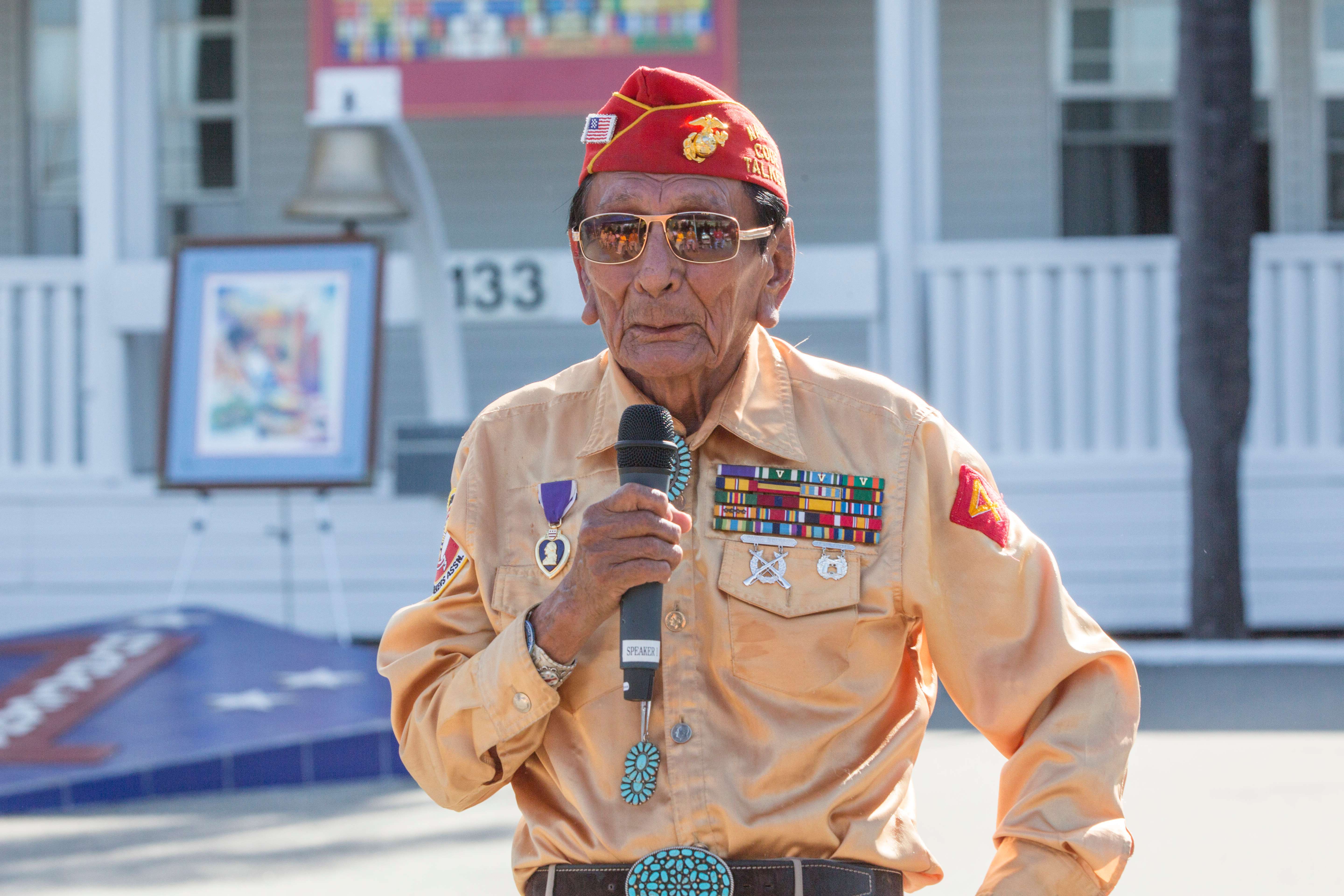
The Japanese, who were skilled code breakers, remained baffled by the Navajo language. The Japanese chief of intelligence, Lieutenant General Seizo Arisue, said that while they were able to decipher the codes used by the U.S. Army and Army Air Corps, they never cracked the code used by the Marines. Despite the thousands of messages that Code Talkers sent during WWII, their code was never broken by the Japanese or the Germans, who were very good at decryption.
Even more remarkable was what happened when Japanese forces captured a Navajo soldier who wasn’t a code talker. The Navajo code talkers even stymied a Navajo soldier taken prisoner at Bataan. The Navajo soldier, forced to listen to the jumbled words of talker transmissions, said to a code talker after the war, “I never figured out what you guys who got me into all that trouble were saying.” This proves the code wasn’t just using the Navajo language directly, but a sophisticated system within that language.
Their Service Remained Secret for Twenty-Six Years
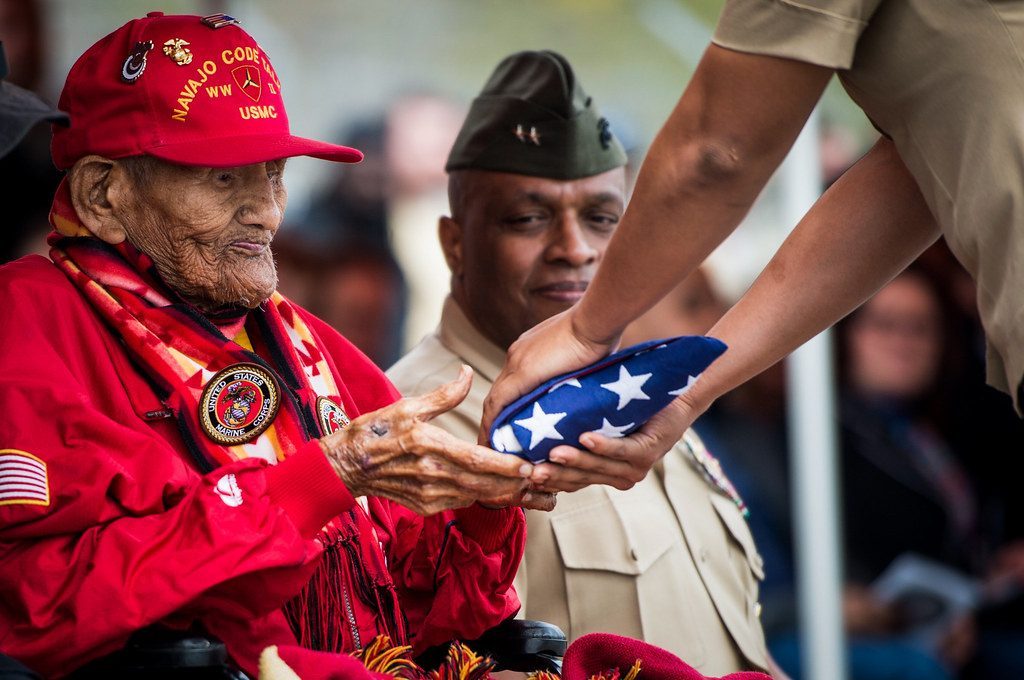
Despite their heroic contributions during the war, American Indian code talkers were told that they had to keep their work secret. They couldn’t even tell their family members about their communications work. Since the codes that they developed remained unbroken, the US military wanted to keep the program classified in case the code talkers were needed again in future wars.
Until 1968, they and their code remained secret. Even when the WWII code talker program was declassified in 1968, national recognition of code talkers was slow. Can you imagine carrying such an incredible secret for decades, unable to share your wartime experiences even with your closest family members? The code was such a success that the Department of Defense kept the Code secret for 23 years after World War II. It was finally declassified in 1968. The Code Talkers had been sworn to secrecy, an oath they kept and honored.
Congressional Recognition Finally Came in 2001
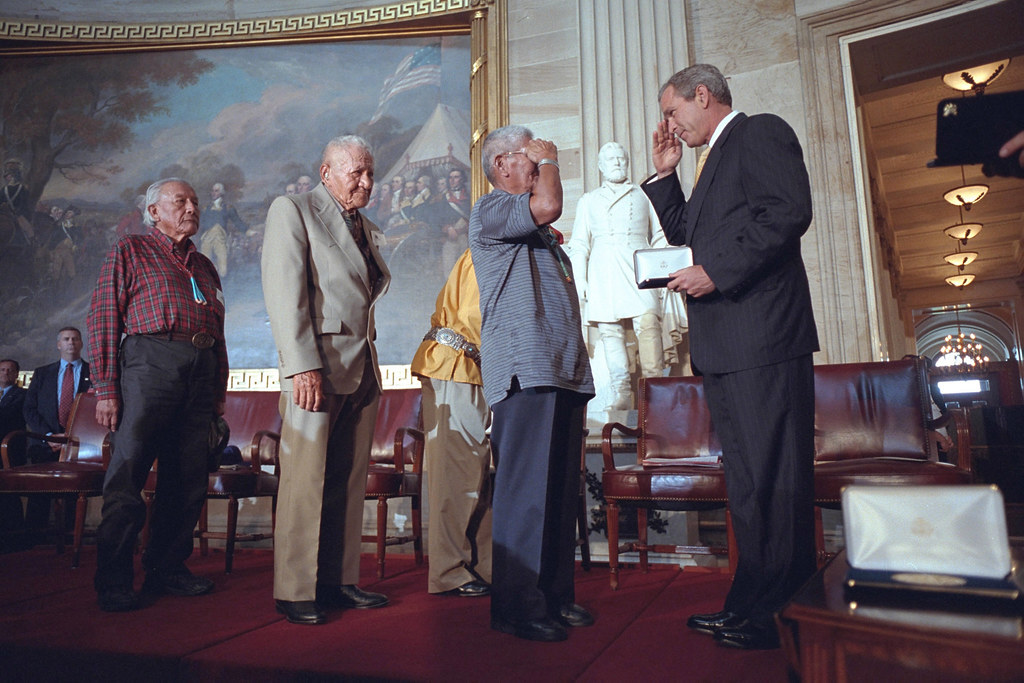
On July 26, 2001, the original 29 Navajo Code Talkers received the Congressional Gold Medal in ceremony at the Nation’s Capitol. Today, America honors 21 Native Americans who, in a desperate hour, gave their country a service only they could give. Today, we give these exceptional Marines the recognition they earned so long ago.
The act authorized the President of the United States to award a gold medal, on behalf of the Congress, to each of the original twenty-nine Navajo code talkers as well as a silver medal to each man who later qualified as a code talker. Finally, in 2000, the United States Congress passed legislation to honor the Navajo Code Talkers and provided them with special gold and silver Congressional Medals. The gold medals were for the original twenty-nine Navajos that developed the code, and the silver medals for those that served later in the program. It was recognition that should have come decades earlier, but the ceremony brought long-overdue honor to these extraordinary warriors.
Conclusion
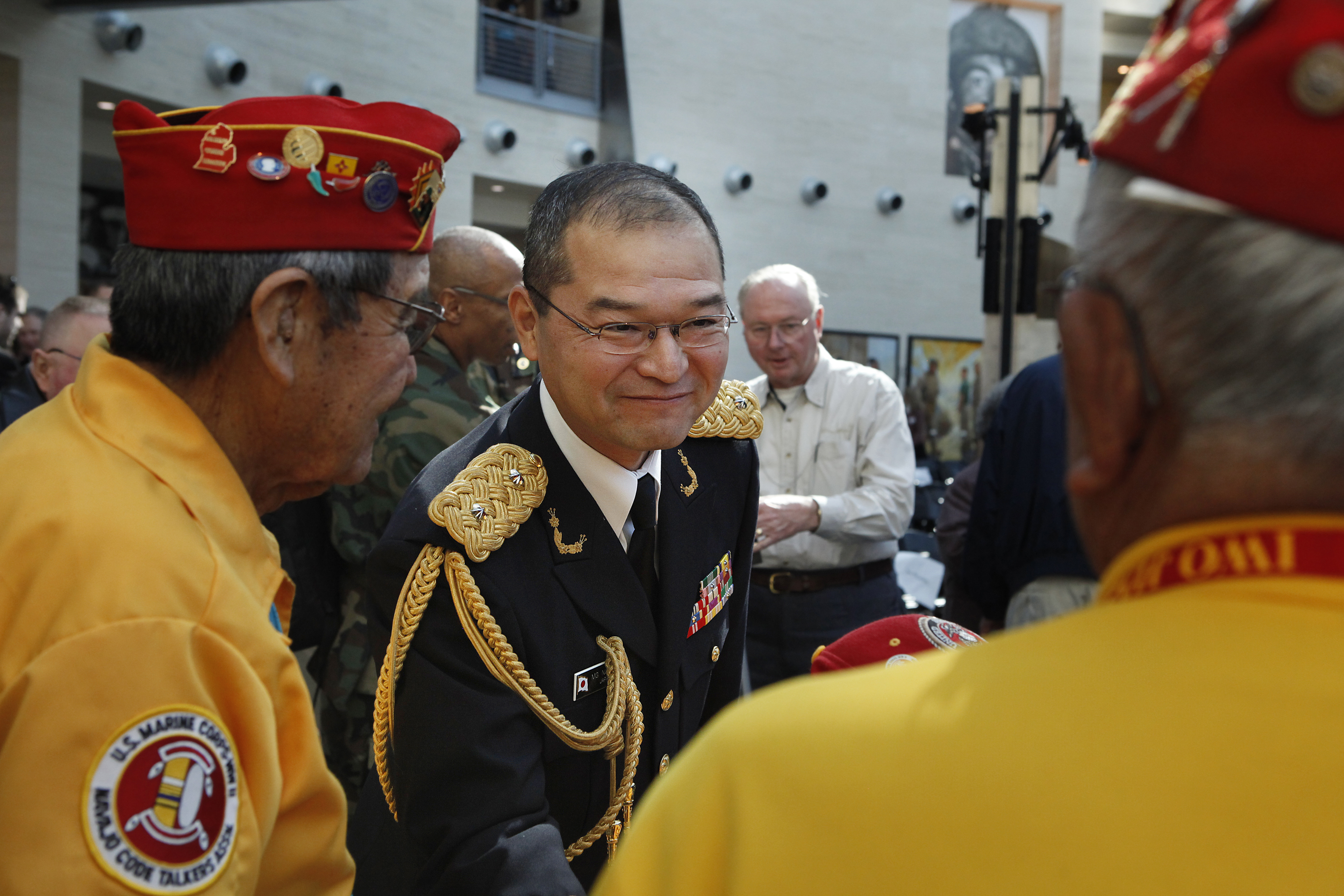
The Navajo Code Talkers represent one of World War II’s most brilliant innovations, born from the intersection of cultural heritage and military necessity. Their unbreakable code helped secure victory in the Pacific, yet they carried their secret in silence for over two decades. From the original twenty-nine Marines who developed the system to the hundreds who served throughout the war, these men proved that sometimes the most powerful weapons come from the most unexpected places.
Their story reminds us that true heroism often goes unrecognized for far too long. What do you think about the decades of silence these heroes endured? Share your thoughts in the comments below.