
Somewhere out there, across hundreds of billions of galaxies, each filled with hundreds of billions of stars, there should be someone else. Statistically, logically, and almost intuitively, the universe should be teeming with life. So why is it so breathtakingly, hauntingly quiet?
That question has been gnawing at scientists, philosophers, and curious minds ever since physicist Enrico Fermi casually tossed it out over lunch in 1950. His deceptively simple question, “Where is everybody?” still has no definitive answer. The explanations range from the deeply scientific to the almost unsettling, and some of them will genuinely make you reconsider your place in the cosmos. Let’s dive in.
1. The Fermi Paradox: The Question That Started It All

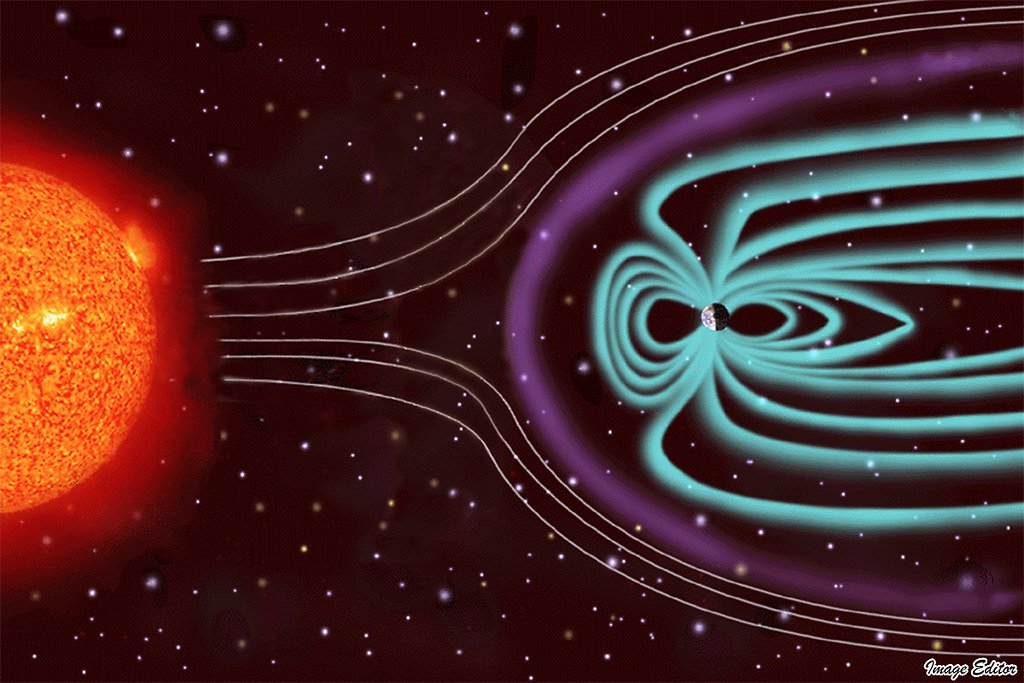
The original uploader was SnoopY at English Wikipedia., Public domain)
Picture this: you walk into a party where everything is perfectly set up. Music playing, food on the table, lights just right. But you are the only one there. You sit. You wait. Nobody shows. That, in a cosmic sense, is exactly the situation humanity finds itself in. The universe should be buzzing with activity, but we have been searching for signals for decades and haven’t heard zip.
The Milky Way is around 10 billion years old and is home to more than 100 billion stars, suggesting there is likely a mind-boggling number of potentially habitable planets in our home galaxy alone. Given those numbers, the silence feels less like an absence and more like a mystery. If interstellar travel is possible, even the “slow” kind nearly within reach of Earth technology, it would only take from 5 million to 50 million years to colonize the galaxy. So where is everyone?
2. The Great Filter: An Invisible Wall Most Civilizations Cannot Cross

Here is one of the most sobering ideas in all of science. The Great Filter says that intelligent interstellar lifeforms must first take many critical steps, and at least one of these steps must be highly improbable. There is at least one hurdle so high that virtually no species can clear it and move on to the next. Economist Robin Hanson proposed this concept in the late 1990s, and it has been haunting astrobiologists ever since.
The truly chilling part is not whether the filter exists. It is whether we have already passed it or whether it still lies ahead of us. Some scientists think that the silence is the product of something they call the Great Filter, an evolutionary wall impermeable to most life. There are two basic possibilities: it is either behind us or in front of us. If it is behind us, it may have occurred at the creation of life itself or at the jump from single-cell prokaryotes to multicell eukaryotes. If the filter is still ahead of us, well, that is where it gets really uncomfortable.
3. The Rare Earth Hypothesis: Earth Might Be a Cosmic Miracle
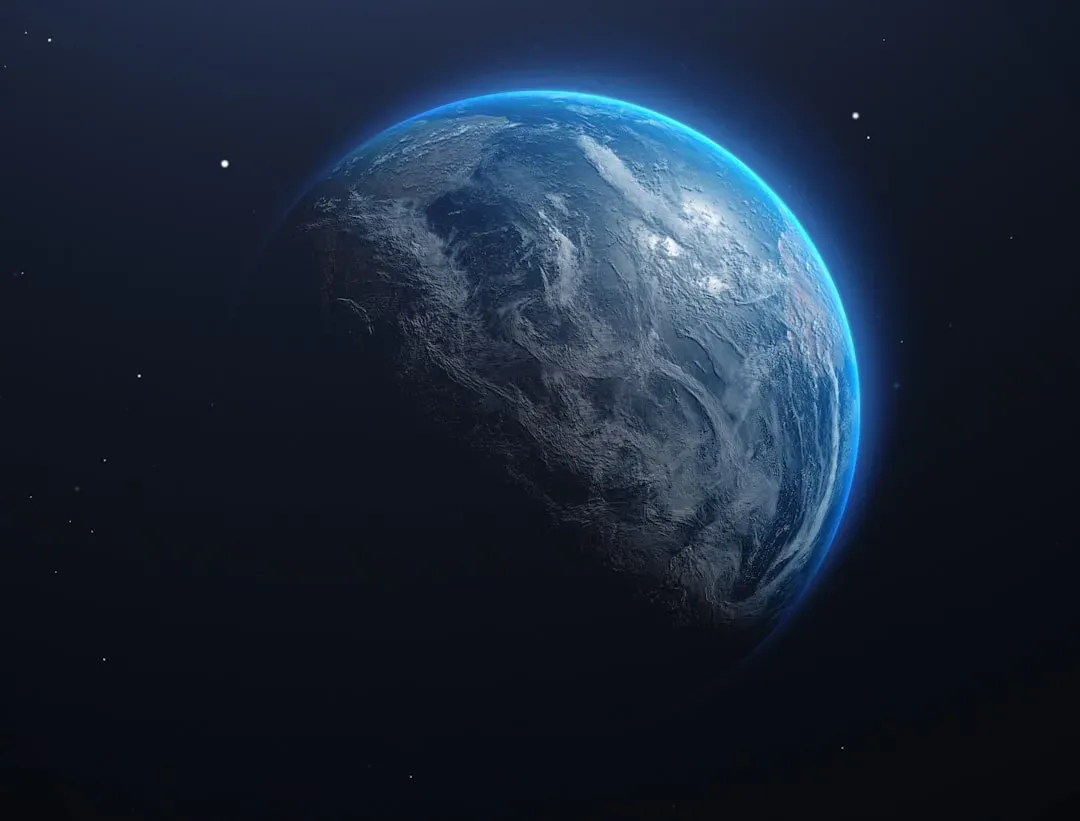
Most of us grew up assuming Earth was pretty ordinary. A rock orbiting a medium star in a fairly average galaxy. Nothing special. The Rare Earth hypothesis posits that the emergence of complex life on planets outside Earth is highly unlikely due to a unique combination of specific conditions required for such life to thrive. Proposed by paleontologist Peter Ward and astronomer Donald Brownlee in 2000, the hypothesis suggests that while microbial life may be abundant throughout the universe, the prerequisites for complex organisms are exceedingly rare.
Think of it like a recipe with a hundred ingredients, where every single one must be exactly right. Key factors influencing the probability of complex life include the planet’s location within its galaxy, the type and distance of its star, geological characteristics like size and tectonic activity, and the presence of a large moon. You also need plate tectonics, a protective magnetic field, and gas giants playing cosmic goalkeeper. Earth is, to the best of our knowledge, the only body in the solar system with active plate tectonics, and there are many other features of our life-friendly planet that we haven’t seen replicated anywhere else in the universe. Maybe we really are the jackpot.
4. We Are Simply Not Listening the Right Way
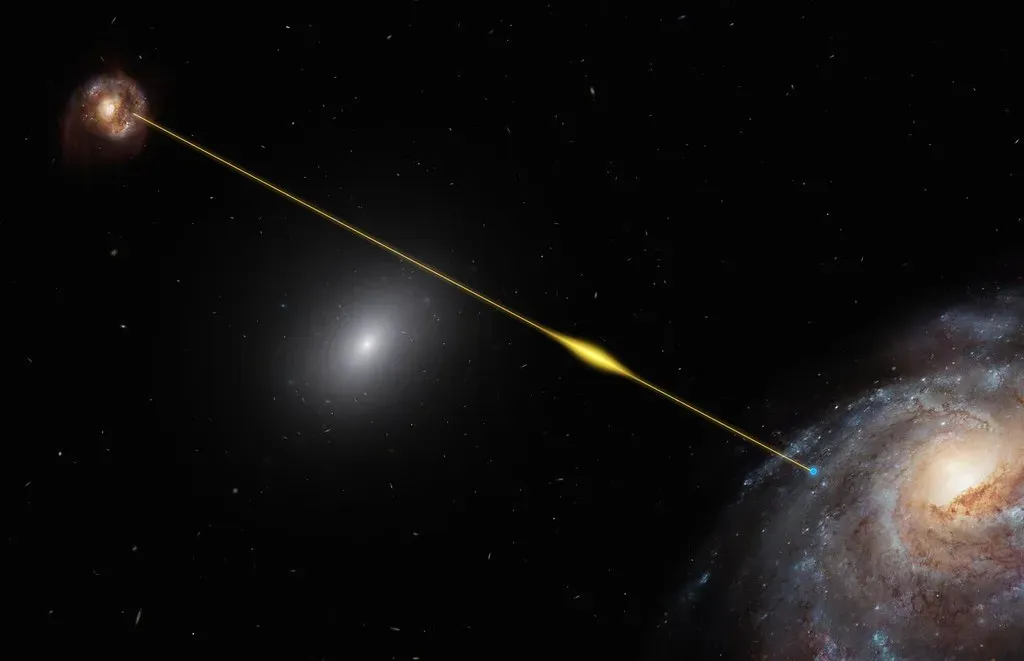
Honestly, this one might be the most embarrassing possibility. Imagine trying to find a radio station by pressing your ear against a brick wall. There are some assumptions underlying SETI programs that may cause searchers to miss signals that exist. Extraterrestrials might transmit signals with a very high or low data rate, or employ unconventional frequencies, which would make them hard to distinguish from background noise.
American astronomer Jill Tarter and collaborators have said that when considering the vast number of stars, radio frequencies, and other signal parameters, deducing if extraterrestrial intelligence exists from the results of small-scale SETI projects is like deducing if fish exist by dipping a glass into the ocean. Furthermore, more hypothetically, advanced alien civilizations may evolve beyond broadcasting in the electromagnetic spectrum entirely and communicate by technologies not yet developed or used by humankind, with some scientists hypothesizing that advanced civilizations may send neutrino signals. We might literally be tuned to the wrong channel.
5. The Zoo Hypothesis: We Are Somebody’s Nature Reserve

This one is as humbling as it is fascinating. The Zoo hypothesis states that extraterrestrial life intentionally avoids communication with Earth to allow for natural evolution and sociocultural development, and to avoid interplanetary contamination, similar to people observing animals at a zoo. In other words, we might already be observed, studied, and deliberately left alone to develop at our own pace.
In 1973, MIT radio astronomer John Ball published a paper in which he suggested that the lack of success in uncovering cosmic company was not due to a lack of aliens. It was because these otherworldly sentients have agreed to a hands-off policy. They have kept their distance not because we are imperfect, but because of our right to pursue our own destiny. Diversity is something that everyone in the cosmos is assumed to value, so life-bearing worlds should be left to their own evolutionary development. Still, critics point out that it would take an almost impossibly coordinated galactic consensus to maintain this pact across millions of years without a single breach.
6. The Dark Forest Theory: Everyone Is Hiding Out of Fear
This is probably the most spine-tingling explanation on this list, and I think it deserves serious attention. The dark forest hypothesis is the idea that extraterrestrial civilizations may exist in abundance across the universe, but remain silent and hidden out of fear that revealing themselves would lead to destruction by a more technologically advanced and hostile civilization. Think of a forest at night. Every creature holds its breath.
The Dark Forest theory resolves the contradiction between the high probability of alien life and the observed silence of the cosmos by positing that the universe is a hostile arena where survival depends on remaining undetected. Based on axioms of finite resources and the exponential growth of civilizations combined with the inability to know another’s intentions, the theory concludes that rational civilizations will preemptively destroy any emerging technological society they detect. That is a terrifying logic, and it makes you look at our own radio transmissions in an entirely different light.
7. Civilizations Destroy Themselves Before Making Contact

Let’s be real. You don’t need to look far for evidence that intelligent species are also remarkably good at self-destruction. Existential risks or self-destruction might prevent advanced civilizations from persisting long enough to make contact. Known as part of the Great Filter theory, this explanation posits that there is a near-universal hurdle that most civilizations fail to overcome. This obstacle might involve planetary or galaxy-wide catastrophes such as asteroid impacts, supernovae, or ecological collapse that extinguish intelligent life before it advances to interstellar travel or communication.
There is also the unsettling possibility that technology itself becomes the trigger. Researcher Michael A. Garrett has suggested that biological civilizations may universally underestimate the speed that AI systems progress and not react to it in time, thus making it a possible great filter, and that this could make the longevity of advanced technological civilizations less than 200 years, thus explaining the great silence observed by SETI. When you frame it that way, the silence of the cosmos starts to feel less like mystery and more like a warning.
8. The Cosmic Timescale Problem: We Simply Have Not Overlapped
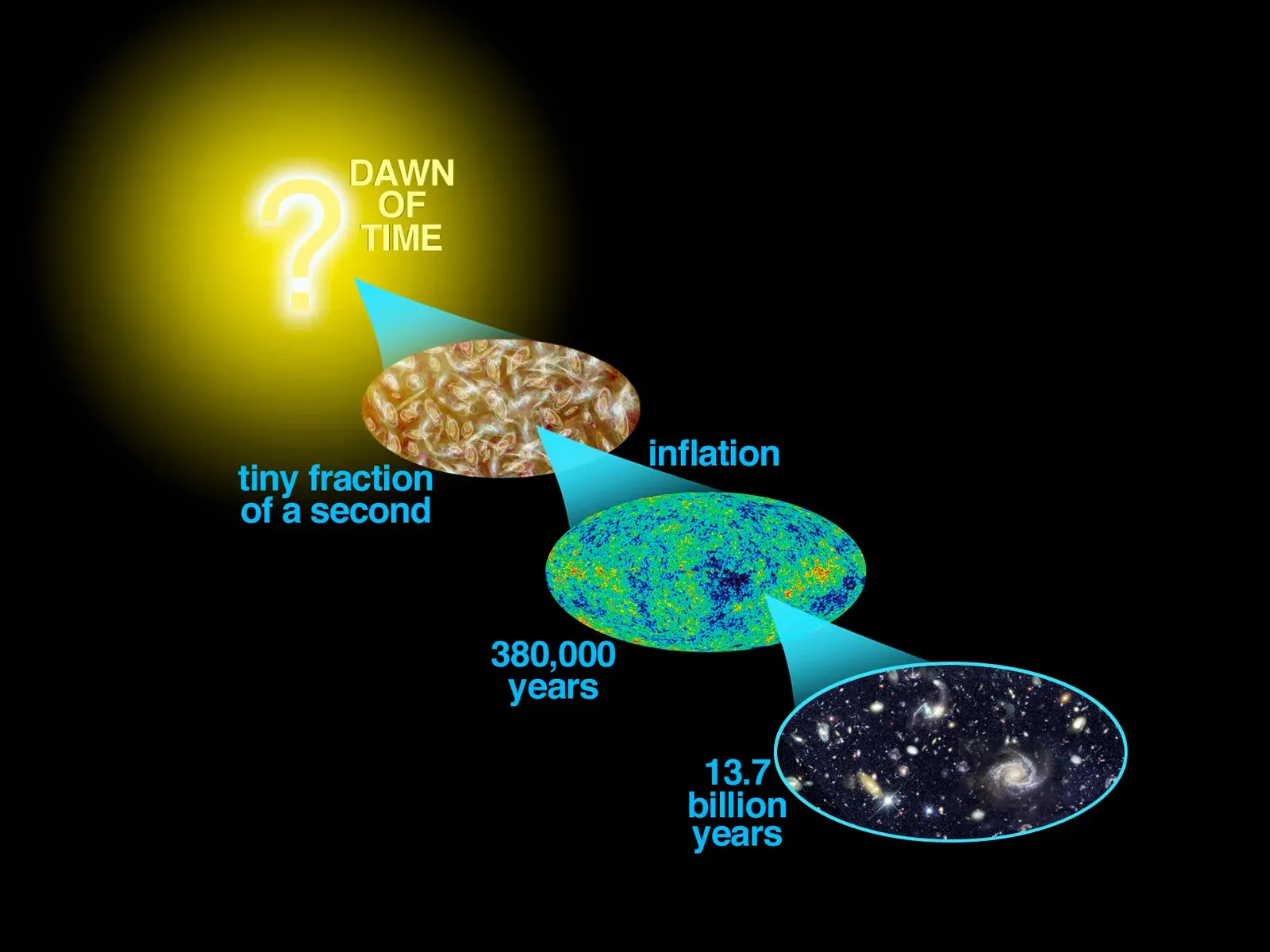
Here is a thought experiment. Imagine scattering thousands of fireflies across a football field in total darkness, but each one only blinks for a single second before going dark forever. The chances of two fireflies blinking at exactly the same moment, and in sight of each other, are remarkably small. That is roughly our situation in the universe. Humanity has been around for just 200,000 years, and we have been listening for possible radio signals from alien life just since 1960. So the odds that we will overlap in time and space with a detectable alien civilization don’t seem great.
The cosmic timescale problem means humanity has only been scanning the skies for a few decades, an eye blink in cosmic history. Advanced civilizations could rise and fall in cycles, missing each other in time. It is entirely possible that a great civilization flourished on a distant planet a billion years ago, built wonders we cannot imagine, and then quietly vanished long before our Sun even formed. We are not looking for each other in the same place. We are looking for each other at the same moment in a 14-billion-year story.
9. Interstellar Distances Are Simply Too Vast to Bridge
Even if a civilization existed right now and wanted desperately to reach us, the universe itself might make that contact nearly impossible. Even under ideal circumstances, if our nearest interstellar neighbor Proxima Centauri hosted intelligent life with radio technology, sending a single message back and forth once would take the better part of a decade. That is just the nearest star. Scale that challenge to galaxies thousands of light-years away, and communication becomes almost unthinkably difficult.
It is hard to say for sure, but this explanation might actually be underappreciated. The “universal limit to technological development” hypothesis proposes that there is a limit to the potential growth of a civilization, and that this limit may be placed well below the point required for space exploration. Such limits may be based on the enormous strain spaceflight may put on a planet’s resources, physical limitations such as faster-than-light travel being impossible, and even limitations based on the species’ own biology. In short, the universe might not be refusing to talk. It may simply be too wide to shout across.
10. Intelligent Life May Be Extraordinarily Rare to Begin With

This is the one that most people quietly hope is wrong. One possible explanation is that intelligent life may be exceedingly rare. While microbial life might arise relatively easily under favorable conditions, the evolution of advanced civilizations capable of communication could be far less common. Factors such as planetary conditions, chemical compositions, and catastrophic events might limit the emergence of intelligent species.
Consider that our kind of intelligence emerged only once in the history of life on Earth and it took billions of years to show up. From this one solitary data point, it seems that simple life may be common, but intelligence is rare. So maybe that is the filter: it is just hard to evolve intelligent beings. We like to imagine that consciousness is some inevitable endpoint of evolution, but Earth’s own history suggests it might actually be an extraordinarily lucky accident, one that took nearly the entire lifetime of our planet to produce.
Conclusion: The Silence Speaks Volumes
As of 2026, after decades of scanning the skies, analyzing signals, and debating theories, we still have no confirmed contact with extraterrestrial intelligence. The paradox has expanded since Fermi’s original question to encompass not only that Earth has not been visited by aliens but also that there is no communication from or evidence of extraterrestrial intelligence. The negative results of SETI searches since 1960 have been dramatically called the Great Silence.
Yet the search is far from over, and the explanations above remind us that absence of evidence is not the same as evidence of absence. Discoveries have shown that at least roughly one quarter of stars host Earth-sized, potentially habitable planets. However, detecting biosignatures remains technologically challenging, and the frequency of life, especially intelligent life, on such planets is still unknown. The universe is ancient, enormous, and largely unexplored. We have barely dipped that glass into the ocean.
Each of the ten explanations explored here carries a different emotional weight, from inspiring to sobering to outright terrifying. The truth, when it comes, may be a combination of several. Or it may be something no one has yet imagined. So here is a question worth sitting with: if we discovered tomorrow that the cosmos had been watching us all along, what do you think that would say about us? Tell us in the comments what you believe.