


You’ve probably seen movies where scientists push boundaries too far, unleashing chaos and destruction. Here’s the thing. Some of the most horrifying experiments didn’t happen in science fiction. They occurred in real laboratories, conducted by actual researchers who ventured into ethical territory we now recognize as absolutely forbidden.
Science is a very powerful tool that can become dangerous in some situations. Throughout history, researchers have exposed human subjects to unthinkable risks, often without their knowledge or consent, pursuing answers that seemed vital at the time. These studies don’t just represent scientific curiosity gone wrong. They reveal profound questions about consciousness, reality, and the very nature of human existence.
The Stanford Prison Experiment: When Power Corrupts Instantly
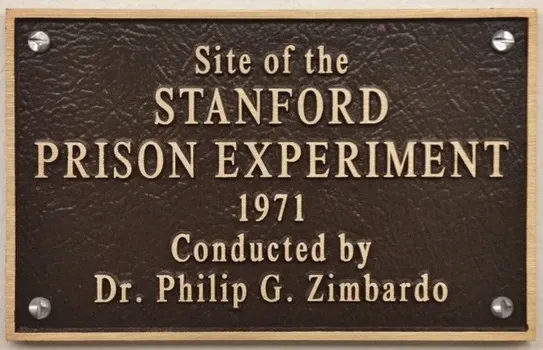
The Stanford prison experiment, conducted by psychologist Philip Zimbardo in 1971, is a notable investigation into the psychological effects of perceived power and authority. Set in a simulated prison environment constructed in the basement of Stanford University, the study involved undergraduate participants who were randomly assigned roles of either guards or prisoners. The experiment aimed to explore how situational factors could lead to abusive behavior among individuals who were psychologically healthy and without prior tendencies toward violence.
The guards quickly became abusive, and the prisoners showed signs of distress, leading the study to end early. It revealed how easily ordinary people can conform to social roles and how situations can strongly shape behavior. What started as a two-week study collapsed after just six days. The cruelty exhibited by the guards was not spontaneous. On the contrary; the guards were coached beforehand by Zimbardo. The experiment showed that your identity can dissolve frighteningly fast when placed in certain environments, raising questions about whether free will truly exists or if we’re merely responding to situational programming.
Milgram’s Obedience Study: The Terrifying Truth About Authority
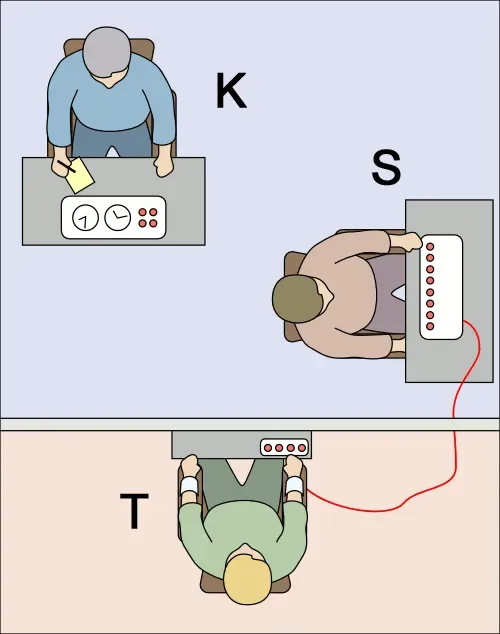
You might think you’d never harm an innocent person just because someone told you to. The Milgram Shock Experiment, conducted by Stanley Milgram in the 1960s, tested obedience to authority. Participants were instructed to administer increasingly severe electric shocks to another person, who was actually an actor, as they answered questions incorrectly. Despite hearing the actor’s screams, most participants continued administering shocks, demonstrating the powerful influence of authority figures on behavior.
In 1961, Milgram began his studies on obedience to authority by directing participants to administer increasing levels of electric shock to another person (a confederate). To Milgram’s surprise, more than 65% of the participants delivered the full voltage of shock (which unbeknownst to them was fake), even though many were distressed about doing so. The study forces you to confront an uncomfortable possibility. Perhaps consciousness itself doesn’t create your moral choices. Maybe authority and social context override what you believe to be your authentic self. This touches on deeper theories about whether your sense of agency is real or an elaborate illusion your brain constructs.
Human Radiation Injection Experiments: Atomic Age Horror

Between April 1945 and July 1947, eighteen subjects were injected with plutonium, six with uranium, five with polonium, and at least one with americium in order to better understand the effects of radioactive materials on the human body. Let that sink in for a moment. Government scientists deliberately injected deadly radioactive materials into unsuspecting Americans.
In 1946 and 1947, in experiments conducted at the University of California at San Francisco, the University of Rochester, the University of Chicago, and Oak Ridge National Laboratory, 18 patients, most of them terminally ill, were injected with plutonium in an effort to determine how the radioactive chemical would spread through the body. In some cases, plutonium was injected into limbs which were amputated post-mortem for study. One of the subjects was a four-year-old boy. In all, there were over 4,000 federally sponsored radiation experiments conducted between 1944 and 1974. These experiments connect to theories about reality itself. If the universe operates on fundamental physical laws, did these researchers believe they could manipulate matter without ethical consequences? The atomic experiments reveal humanity’s hubris in thinking we can control the cosmos without respecting consciousness within it.
Project MKUltra: CIA Mind Control Gone Wrong

From 1953 to 1973, the United States government conducted a series of unethical experiments meant to figure out the best ways to manipulate the mental states of citizens, and then to “develop chemical materials capable of employment in clandestine operations.” Collectively, the experiments were called Project MKUltra and were officially sponsored by the CIA. Each experiment involved subjecting unknowing Americans to things like mind-altering drugs, sensory deprivation, verbal and sexual abuse, extreme isolation, hypnosis, and other forms of torture.
All of the records were destroyed. Honestly, that fact alone should terrify you. The CIA wanted to understand consciousness so badly they tried to break it apart and rebuild it. The project was officially sanctioned in 1953, reduced in scope in 1964, further curtailed in 1967, and officially halted in 1973. The information about MK-Ultra came to public light in 1975. This speaks to cutting-edge theories about consciousness. If your subjective experience can be chemically manipulated or erased, what does that mean about the nature of reality? Are you simply patterns of electrical signals that external forces can reprogram?
The Tuskegee Syphilis Study: Medical Ethics Destroyed

A government-funded “study” from 1932-1972 denied treatment for syphilis to 399 African American patients in rural Alabama, even as penicillin was found to be effective against the disease in 1947. The patients were actually not told they had syphilis, with doctors blaming their “bad blood” instead and given placebos.
For forty years, medical professionals watched men suffer and die from a completely treatable disease. In 1997, a formal public apology was issued to victims of the Tuskegee Syphilis Study. The experiment raises profound questions about human value and consciousness. If some people’s suffering matters less than scientific knowledge, where does that calculation come from? This connects to theories about whether moral truths exist objectively in the universe or whether ethics are merely social constructions we’ve agreed upon.
The Monster Study: Creating Trauma in Children

The Monster Study was a stuttering experiment on 22 orphan children in Davenport, Iowa, in 1939 conducted by Wendell Johnson at the University of Iowa. Johnson chose one of his graduate students, Mary Tudor, to conduct the experiment. After placing the children in control and experimental groups, Tudor gave positive speech therapy to half of the children, praising the fluency of their speech, and negative speech therapy to the other half, belittling the children for every speech imperfection and telling them they were stutterers.
Many of the normal speaking orphan children who received negative therapy in the experiment suffered negative psychological effects and some retained speech problems during the course of their life. Think about it. Researchers deliberately damaged children’s psyches to test a hypothesis. The study continued for six months and caused lasting, chronic psychological issues for some of the children. The study caused so much harm that some of the former subjects secured a monetary award from the University of Iowa in 2007. This experiment reveals how fragile human consciousness really is, especially during development. Your sense of self, your voice, your confidence can all be shattered by words alone.
Unit 731: Japan’s Biological Warfare Atrocities
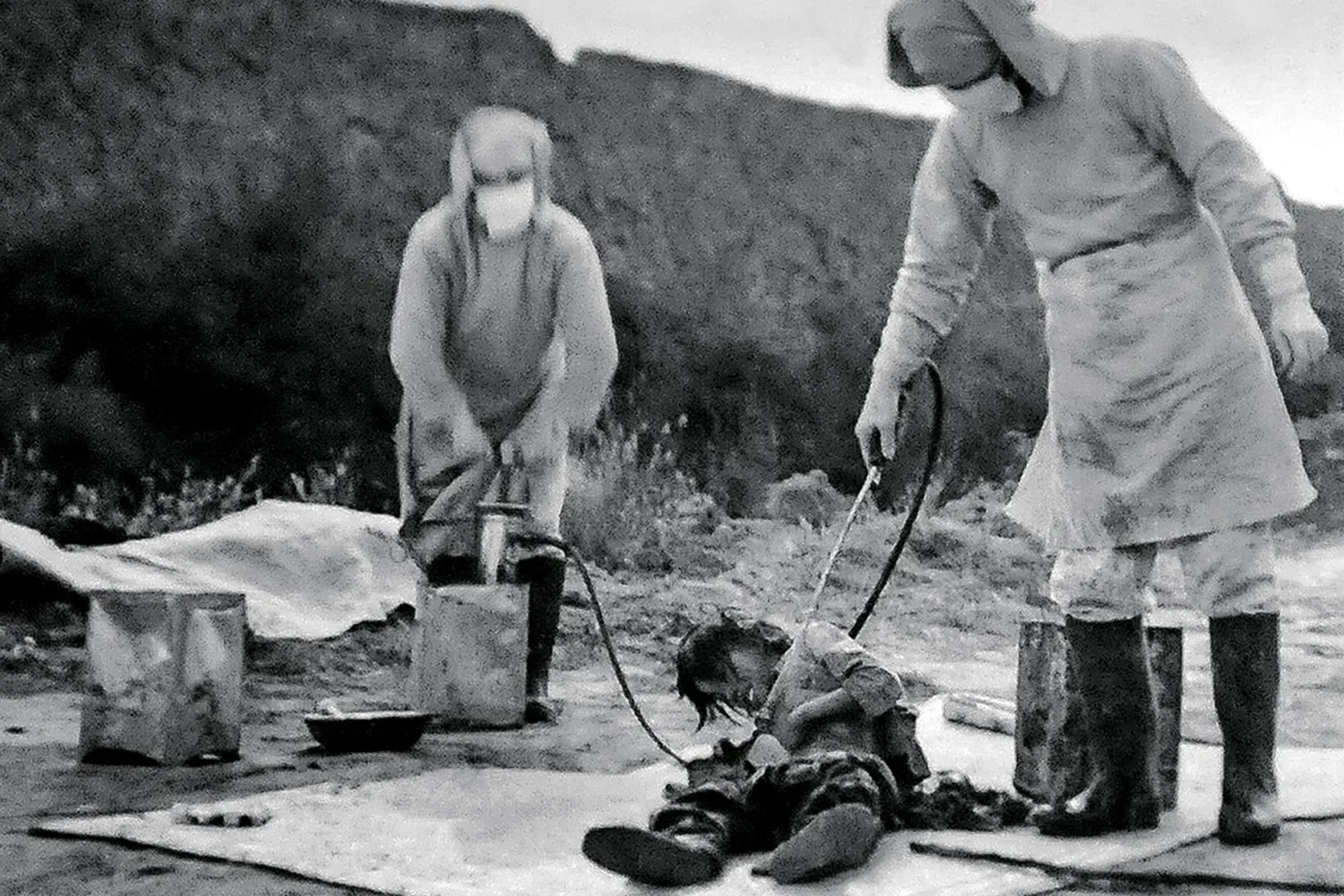
Unit 731 was a secretive R&D unit of the Japanese Army that carried out horrendous experiments on humans during World War 2. Commanded by General Shiro Ishii, the unit experimented on an estimated 250,000 men, women and children. Most of the victims were Chinese, along with some prisoners of war from Russia and the Allies. The forced medical procedures involved vivisections – cutting open subjects usually without anesthesia, unnecessary limb amputations, and removal of body organs like parts of brain, liver, lung and others.
These experiments weren’t just cruel. They were systematic attempts to understand human biological limits by destroying actual humans. The horror here connects to questions about consciousness and suffering. Can we truly understand life by dissecting it? Or does the act of observation fundamentally change what we’re observing? This echoes quantum mechanics principles where measuring particles alters their behavior.
The Large Hadron Collider: Could We Destroy Reality Itself?

CERN claimed the LHC is not dangerous, but also acknowledged that some type of black hole could be created. “However, some theories suggest that the formation of tiny ‘quantum’ black holes may be possible. The observation of such an event would be thrilling in terms of our understanding of the Universe; and would be perfectly safe,” said CERN’s statement.
Let’s be real. When scientists admit they might create microscopic black holes, you have to wonder what consciousness even means in that context. Because of this and cutting edge research, it was added that, The Large Hadron Supercollider has prompted more than its share of fears from the public. The LHC has been blamed for pulling asteroids towards Earth and for happening earthquakes. While these theories have been proven wrong the LHC has also been accused of creating black holes that may swallow the earth. This connects directly to theories about the nature of reality. “Any simulation is inherently algorithmic – it must follow programmed rules. But since the fundamental level of reality is based on non-algorithmic understanding, the universe cannot be, and could never be, a simulation.” The LHC represents humanity attempting to peer behind the curtain of existence itself.
Operation Plumbbob: Nuclear Testing on American Citizens

In 1957, atmospheric nuclear explosions in Nevada, which were part of Operation Plumbbob were later determined to have released enough radiation to have caused from 11,000 to 212,000 excess cases of thyroid cancer among U.S. citizens who were exposed to fallout from the explosions, leading to between 1,100 and 21,000 deaths.
Wind and rain carried the fallout from the atmospheric tests variable distances. Residents of Gem County, ID – located about 500 miles north of the Nevada Test Site – remembered waking up to dustings of “frost” during the heyday of nuclear weapons testing. Imagine waking up to radioactive snow and having no idea you’re being poisoned. It has been estimated that by 2020 between 200,000 to 460,000 people had died as a result of nuclear weapons testing, while the total number of deaths may rise up to 2.4 million people. These experiments reveal something about how we conceptualize reality. We thought we could split atoms without splitting communities, manipulate matter without consequences to consciousness.
The Guatemala Syphilis Experiments: Colonial Medical Horror

From 1945 until 1956, around 1500 Guatemalans were deliberately infected with sexually transmitted diseases, including syphilis and gonorrhoea. The subjects included orphans, prisoners, prostitutes and military conscripts. You’re reading that correctly. American researchers traveled to Guatemala and deliberately infected vulnerable people with deadly diseases to study transmission and treatment.
This wasn’t some rogue operation either. It was government funded and sanctioned. The experiments illustrate how consciousness can be valued differently based on nationality, class, and power. From a cosmic perspective, if we’re all made of the same fundamental particles, experiencing consciousness through biological vessels, what justifies treating some vessels as expendable? “Eugene Wigner, one of the 20th century’s greatest physicists, called it impossible to formulate the laws of physics in a fully consistent way without reference to the consciousness of the observer.” Perhaps these experiments were ultimately about power denying this fundamental unity of conscious experience.
Conclusion: What These Experiments Teach Us About Reality

Since the time of the SPE, ethical guidelines for experiments involving human subjects have become more strict. The Stanford prison experiment resulted in the implementation of rules to preclude any harmful treatment of participants. Before they are implemented, human studies must now be reviewed by an institutional review board (US) or ethics committee (UK) and found to be in accordance with ethical guidelines set by the American Psychological Association or British Psychological Society.
These ten experiments can never be repeated, not just because they’re ethically forbidden, but because they fundamentally changed how we understand consciousness, authority, and the nature of reality itself. They revealed uncomfortable truths. Your sense of self is more fragile than you imagine. Authority can override your moral programming. Physical reality and conscious experience are inextricably linked in ways we’re only beginning to understand.
Under quantum mechanics, nature is not locally real: particles may lack properties such as spin up or spin down prior to measurement, and they seem to talk to one another no matter the distance. Just as observing particles changes them, observing humans through these horrific experiments changed us all. The experiments are closed chapters we can’t reopen, yet they remain disturbingly relevant to understanding who we are in this strange, quantum, consciousness-infused universe.
What do you think defines the boundary between acceptable scientific inquiry and unforgivable violation? Share your thoughts in the comments.


