

If you could see the world the way a physicist or materials scientist does, your kitchen drawer and junk basket would suddenly look like a superhero team. That boring roll of tape? It can produce X-rays. The dusty pencil on your desk? It holds the secret to ultra-fast electronics and space-age lubricants. Everyday stuff quietly bends the rules of electricity, light, and even heat, and most of us never notice.
Once you start to understand what’s really going on inside these materials, it’s hard to look at them the same way again. You realize that the line between “ordinary” and “extraordinary” is often just a matter of knowing the right story. Let’s pull back the curtain on ten familiar materials that are secretly doing wild and wonderful things in the background of your daily life.
1. Clear Tape: The X‑Ray Machine in Your Junk Drawer
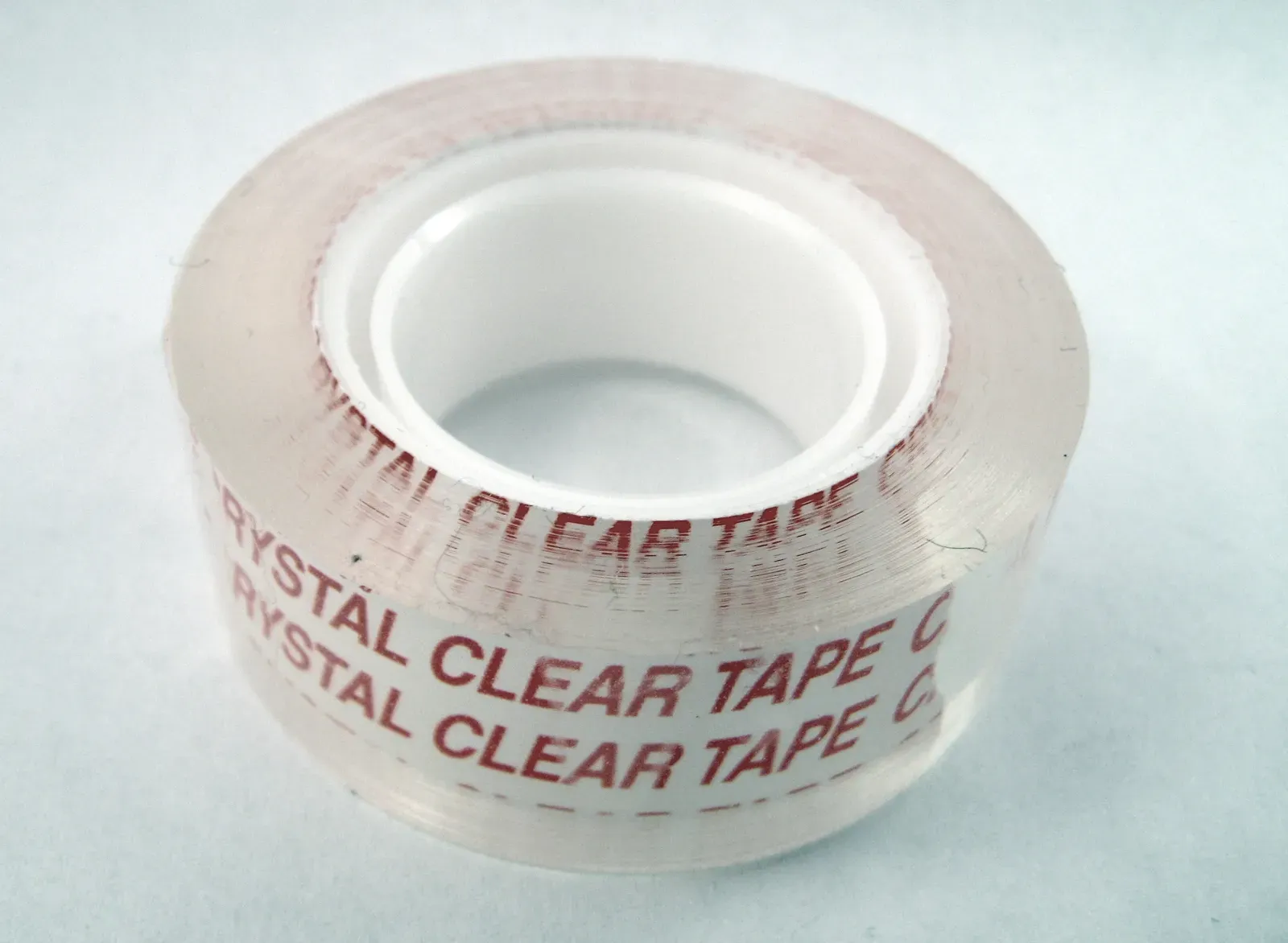
It sounds like a prank, but peeling ordinary transparent tape can generate X-rays strong enough to take an image of a finger bone under the right conditions. When you slowly peel tape from a surface in a vacuum, electric charge builds up and then suddenly discharges, creating tiny lightning-like events called triboluminescent flashes. These flashes are so powerful at the microscopic level that they emit high-energy photons in the X‑ray range.
Scientists have literally placed tape in a vacuum chamber with a simple peeling mechanism and measured bursts of X‑rays coming out. You won’t build a hospital scanner from a roll of office tape, but this effect shows how much raw electrical energy is hidden in everyday friction. Next time you rip off a strip to wrap a gift, remember that you’re casually playing with the same physics that powers particle accelerators – just at a much smaller and safer scale.
2. Pencil Graphite: The Gateway to Graphene Superpowers

The humble pencil is basically a container for a layered wonder material. The “lead” in your pencil is actually graphite: stacks of carbon atoms arranged in thin sheets. When you write, those ultra-thin layers slide off onto the paper, and that same sliding behavior is why graphite makes such an effective dry lubricant in locks, hinges, and even some high-temperature machinery. It reduces friction in a way that oil can’t always match.
But peel away just one of those layers and you get graphene, a single-atom-thick sheet of carbon that’s stronger than steel by weight, conducts electricity better than copper, and is almost transparent. Graphene has sparked research into flexible screens, ultra-fast electronics, and advanced batteries. So that scribble on the notepad in front of you is made from a close cousin of some of the most hyped, futuristic materials in modern physics – the difference is just how many layers are stacked together.
3. Aluminum Foil: A Reactive Metal Hiding in Plain Sight
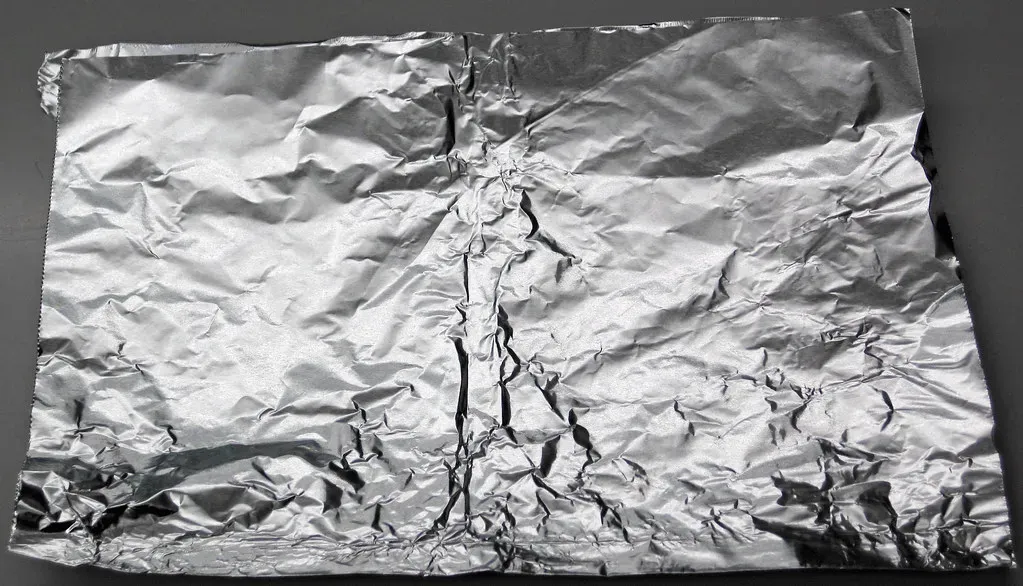
Aluminum foil feels almost boring: you wrap leftovers, make a tent over a roast, maybe fashion a makeshift tray for the oven. Underneath that shiny, crinkly surface, though, aluminum is far from tame. In its raw form, aluminum is so reactive that it basically never occurs as pure metal in nature. It wants to bond with oxygen instantly, releasing energy in the process. The only reason your foil doesn’t burst into sparks is that it’s already coated with an ultra-thin, invisible oxide layer that forms almost immediately in air.
That oxide layer is only a few atoms thick, but it’s incredibly tough and tightly sealed, acting like armor that protects the metal underneath. This self-protecting behavior is why aluminum is used in airplanes, spacecraft, and high-voltage power lines. It’s light, strong, and knows how to defend itself chemically. The same material keeping your lasagna fresh is a close cousin to the metal skin that helps planes survive lightning strikes and brutal high-altitude conditions.
4. Rubber Bands: Tiny Heat Engines on Your Desk

Stretch a rubber band a few times between your fingers and press it quickly to your lips or cheek. It actually feels warmer when you stretch it and cooler when you let it relax. That’s not your imagination; rubber behaves in a strangely opposite way to what we expect from most solids. When you stretch it, the tangled polymer chains inside snap into a straighter, more ordered state, and that reorganization kicks heat out into the surroundings.
When the band relaxes, the chains go back to a more chaotic, coiled state and absorb a bit of heat, so the rubber cools down. This odd thermodynamic effect means rubber bands can act like tiny heat engines, converting random thermal motion into mechanical motion and back again. On a bigger scale, similar elastic principles show up in artificial muscles, soft robots, and flexible sensors. That messy tangle of hair ties in a drawer is quietly demonstrating some of the weirdest and most useful physics of everyday materials.
5. Table Salt: An Ionic Powerhouse for Electricity and Ice
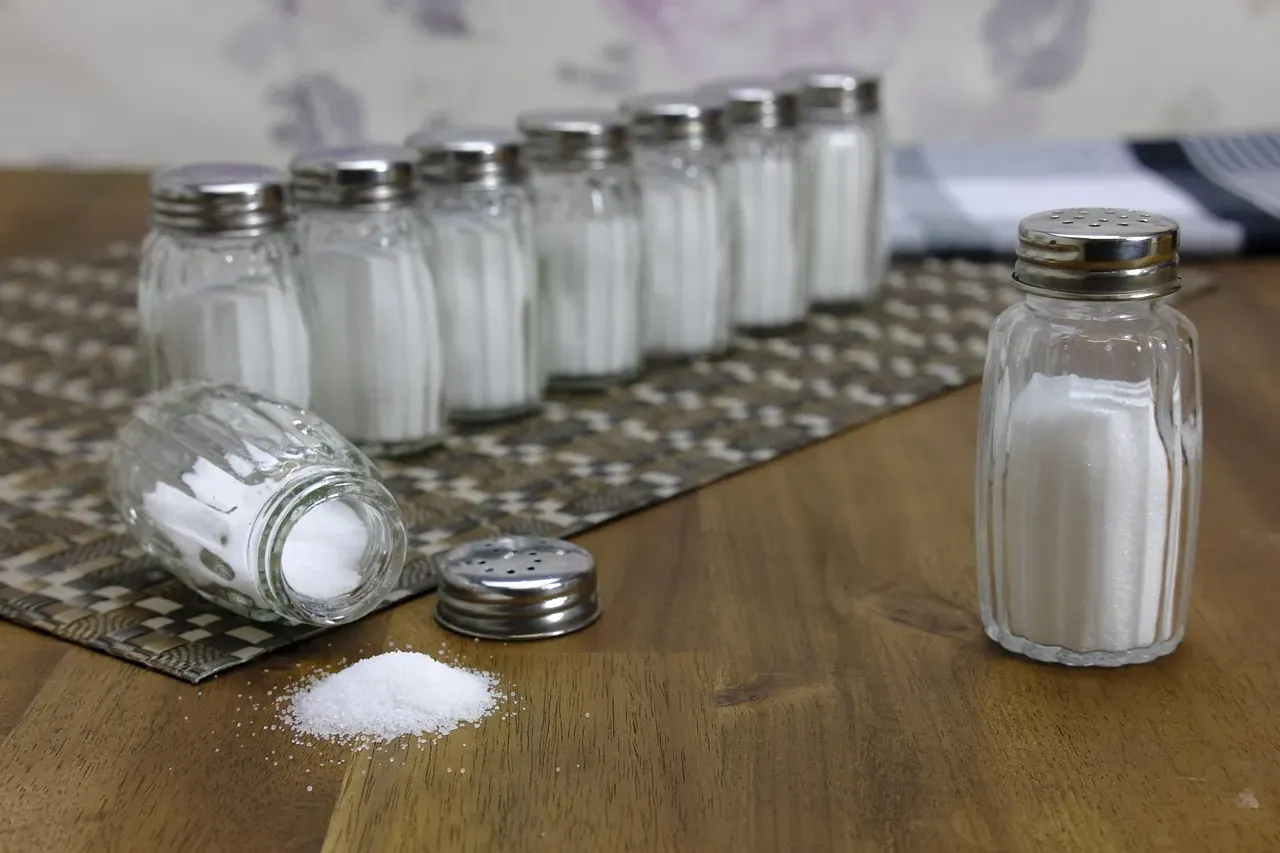
Sprinkling salt on your fries feels like the most ordinary act in the world, but sodium chloride is an incredibly elegant crystal on the atomic level. Each grain is made from a repeating lattice of positively charged sodium ions and negatively charged chloride ions. When you dissolve salt in water, those ions separate and move freely, carrying electric charge through the liquid. This is why salty water conducts electricity so much better than pure water, which is actually a pretty poor conductor on its own.
Those mobile ions do more than just carry current. When you scatter salt on ice in winter, the ions interfere with the structured bonds in the ice lattice, lowering the freezing point and helping the ice melt even when air temperatures are below normal melting temperature. Your kitchen shaker is filled with a simple-looking substance that shows up everywhere from road safety in snowstorms to industrial electrochemistry and battery science. Salt is chemistry’s version of a multi-tool: small, unassuming, and surprisingly powerful.
6. Plastic Wrap: A Master of Cling, Barriers, and Static Tricks
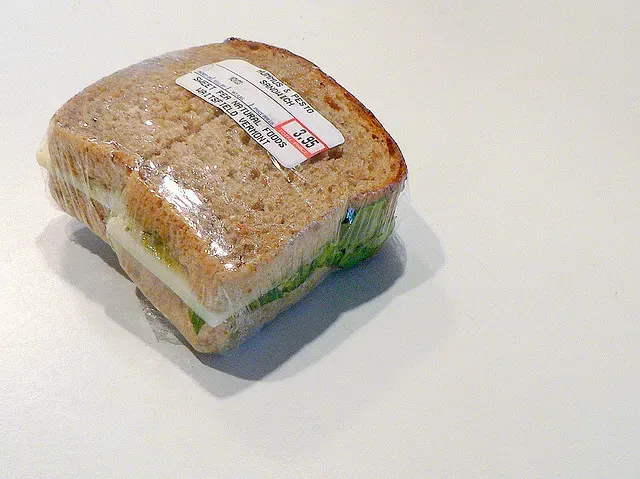
Plastic wrap feels flimsy and a bit annoying when it folds onto itself, but it’s a finely tuned piece of polymer engineering. Many common wraps are made from very long-chain molecules that can stretch and then relax back into place, creating a tight, conforming seal around containers. Those molecular chains pack closely together, forming a barrier that slows down the movement of water vapor and gases like oxygen, which is why wrapped foods stay moist and fresh longer than uncovered ones.
Then there’s the cling itself, which comes from a combination of slight surface stickiness, static electricity, and the ability of the thin film to deform and fit into microscopic bumps and grooves. The same science of flexible, gas-resistant, transparent films is used in greenhouses, medical packaging, and some flexible electronics. What feels like a nuisance when it clings to your arm is essentially a low-cost, mass-produced membrane with properties that once would have sounded almost futuristic.
7. Glass Windows: Frozen Liquid or Ultra‑Slow Crystal?

We stare through windows constantly without really thinking about what glass is. For a long time, people repeated the claim that glass is a “slow-flowing liquid,” pointing at old cathedral windows that are thicker at the bottom. Modern research paints a different picture: glass is more like a frozen disordered solid, where molecules are locked in a jumble that never quite becomes a neat, repeating crystal structure. It’s stuck between liquid and solid in a sort of arrested state.
This weird internal disorder gives glass some of its wild optical properties. Carefully tuned glass compositions can bend different colors of light by different amounts, block ultraviolet light while letting visible light through, or guide light around tight corners in fiber-optic cables. The pane in your living-room window is a distant cousin of the ultra-pure glass strands that make high-speed internet possible, both relying on subtle control over how atoms pack and how light passes through.
8. Cotton Shirts: Natural Nanotechnology in Your Closet

That soft T‑shirt you toss in the wash without a second thought is made from one of the most successful biological engineering projects on Earth. Cotton fibers are built from cellulose, long chains of glucose-based molecules that plants assemble into incredibly strong, lightweight strands. Under a microscope, a single cotton fiber looks like a flattened, twisted ribbon made from layers of tiny, partially crystalline regions. Those nano-scale structures give cotton a mix of strength, flexibility, and breathability that’s tough to beat.
Cotton also has an impressive talent for managing moisture. The cellulose chains have spots that attract and hold water molecules, so the fibers can absorb sweat and humidity, then slowly release it as the air moves. That is why cotton feels comfortable against the skin in a wide range of temperatures. Researchers are now combining natural fibers like cotton with conductive coatings or embedded nanoparticles to create textiles that can sense motion, change color, or even monitor health signals, all starting from that familiar plant-based thread.
9. Stainless Steel Cutlery: Self‑Healing Armor on Your Table
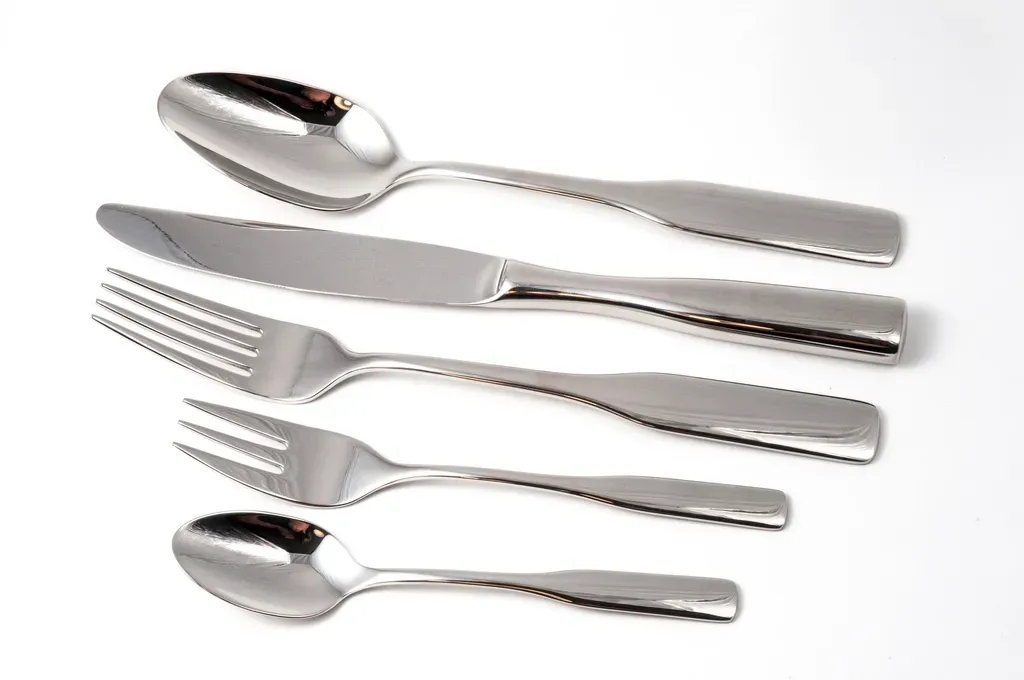
Your knives, forks, and spoons fight a quiet, constant war with water, oxygen, and acids in your food – and they mostly win. Stainless steel earns its name from a clever trick: it contains chromium, which reacts with oxygen faster than the iron in the steel does, forming a microscopically thin, tightly bonded oxide layer on the surface. That layer is so thin you can’t see it, but it effectively seals off the metal underneath from further attack.
The wild part is that this protective film can repair itself. If you scratch stainless steel, fresh chromium at the surface reacts with oxygen again and rebuilds that barrier. This process of passive protection is why stainless steel shows up in everything from kitchen sinks to surgical tools and skyscraper cladding. The spoon you stir your coffee with is wearing a kind of invisible armor that constantly renews itself, using nothing more exotic than the air around it.
10. Ceramic Coffee Mugs: From Brittle to Heat‑Shield Tough

Ceramic mugs feel fragile in your hand; drop one on the floor and it usually shatters. That brittleness makes it easy to underestimate ceramics, but structurally they’re some of the toughest heat-handling materials we have. The clay and mineral ingredients are fired at high temperatures until they form strong bonds in a dense, mostly crystalline structure. Once locked in, those bonds don’t rearrange easily, which is why a mug can handle boiling coffee day after day without deforming.
The same family of materials, when fine-tuned and reinforced, is used in jet engine components, car brake discs, and even protective tiles on space vehicles. Certain advanced ceramics can shrug off temperatures that would melt most metals, while remaining electrically insulating and chemically resistant. That makes your morning mug a kind of gateway object: a friendly, everyday reminder of a material class that quietly keeps planes in the sky and spacecraft from burning up on reentry.
A Superpowered World Hiding in Plain Sight

Once you start to see the hidden physics and chemistry behind these everyday materials, the world feels a bit less ordinary and a lot more alive. Tape, salt, rubber bands, and coffee mugs stop being “just stuff” and become tiny laboratories where electricity, light, heat, and structure are constantly in motion. The line between cutting-edge research and your kitchen drawer is much thinner than it looks at first glance.
I remember the first time I learned that peeling tape could make X‑rays and honestly felt a little betrayed by my stationery drawer. What else have I been handling carelessly without realizing how weird it really is? Maybe the real scientific superpower isn’t hidden in these materials at all, but in the habit of looking closer at them. Which everyday object are you going to see differently the next time you pick it up?