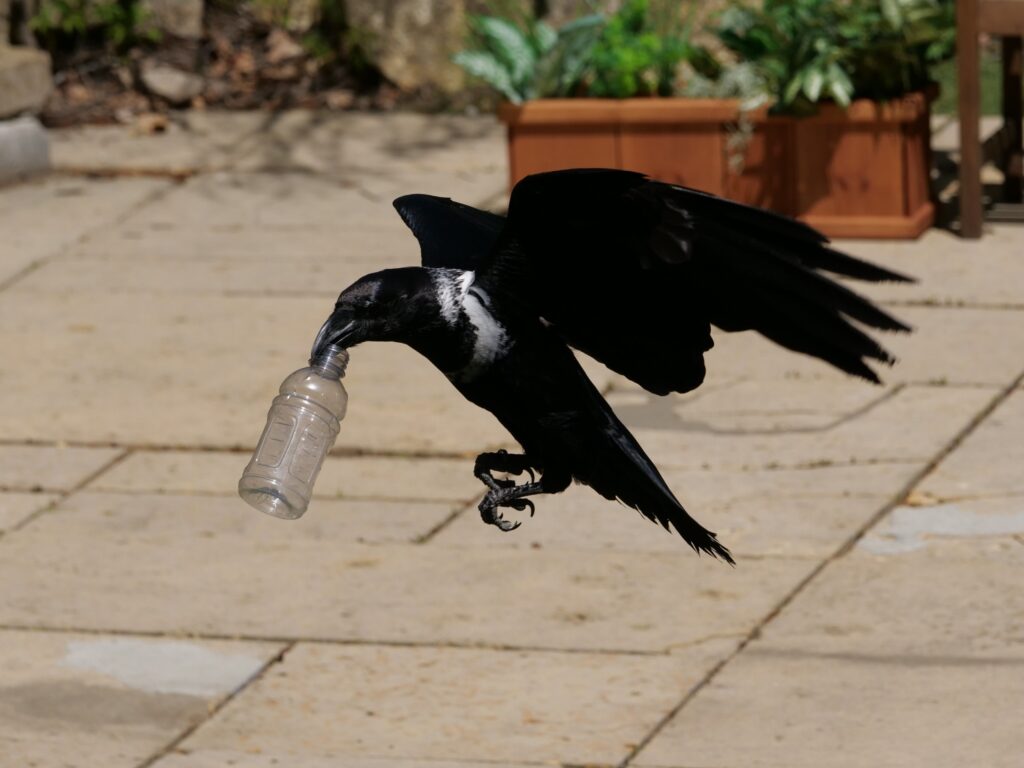

Most people assume a crow is just a noisy black bird raiding your trash cans. That assumption falls apart fast once you look at the research. Scientists who’ve spent decades tagging, scanning, and filming these birds have found something that reads like science fiction: crows plan for events they haven’t experienced yet, build tools from memory instead of copying them, and can hold a grudge against a specific human face for nearly two decades.
Some of these behaviors are so layered that researchers still argue about what’s actually happening inside a brain the size of a walnut. The deeper you go, the stranger it gets – and the tool tricks, memory chains, and death rituals ahead are exactly why crows keep landing in the same conversation as chimpanzees. Here’s what the actual research says.
#1 – They Recognize Human Faces Well Enough to Hold Multi-Year Grudges
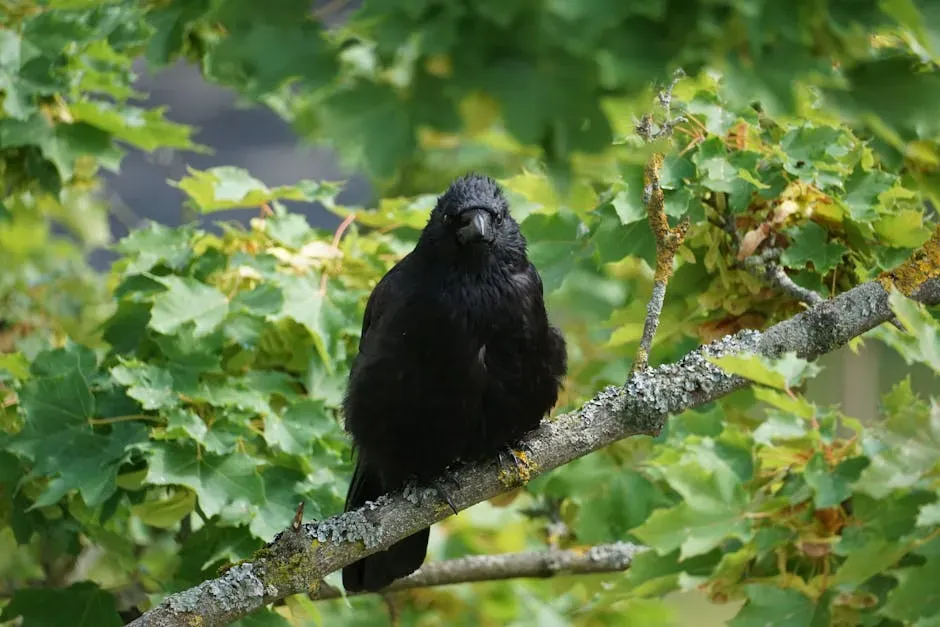
A crow you’ve never met can already know exactly who you are.
The most cited research on this comes from John Marzluff’s lab at the University of Washington. In 2008, his team started trapping and banding crows while wearing a rubber caveman mask they labeled “dangerous.”
The birds never forgot the face. Crows treated maskless researchers and differently-masked researchers normally, but they scolded anyone wearing the dangerous mask – even when it was flipped upside-down. As word spread through the flock, more and more birds joined in the scolding, without ever having been trapped themselves.
What makes this genuinely strange is the timeline. Researchers kept walking campus in that same mask for years, and more than a decade later, they’re still getting scolded and dive-bombed – even though the original crows from the study have likely died of old age.
That means younger birds who never met the original researchers inherited the grudge secondhand, like a piece of family folklore. But that’s nothing compared to what we found in #2.
#2 – They Teach Grudges to Offspring Who Never Witnessed the Threat
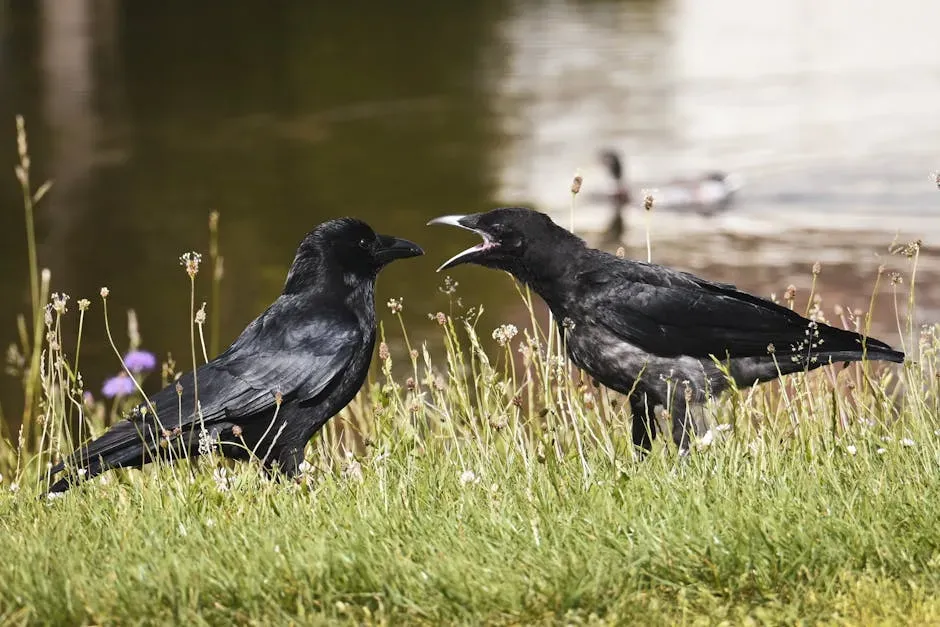
Crows don’t just remember danger – they pass the memory down like a family story.
Follow-up work tracked exactly how the memory spreads through a population. Crows that were actually trapped learned the face directly. Crows that only watched the capture – circling and calling in the mob overhead – picked it up just from witnessing it. Young crows that had never seen a trapping at all still scolded the mask on their own, clearly cued by their parents.
The persistence surprised even the researchers. A single encounter with a threatening face was enough for crows to keep scolding that same face for at least 2.7 years afterward.
The reaction only grew over time. Five years into the study, on one walk across campus in the dangerous mask, Marzluff was scolded by 47 of the 53 crows he passed – far more birds than had ever even been present at the original trapping.
Fast Facts
- Study launched in 2008 at the University of Washington under John Marzluff
- Crows scolded the “dangerous” mask even when it was worn upside-down
- By year five, 47 of 53 crows encountered scolded the masked researcher
- The grudge persisted at least 2.7 years and was passed to birds born after the original trapping
Researchers are careful not to call this a true grudge in the human emotional sense. But the behavior clearly spreads socially and outlasts the birds who lived through the original threat. That’s mild compared to the puzzle-solving trick waiting in #3.
#3 – They Pass a Real-World Version of Aesop’s Fable
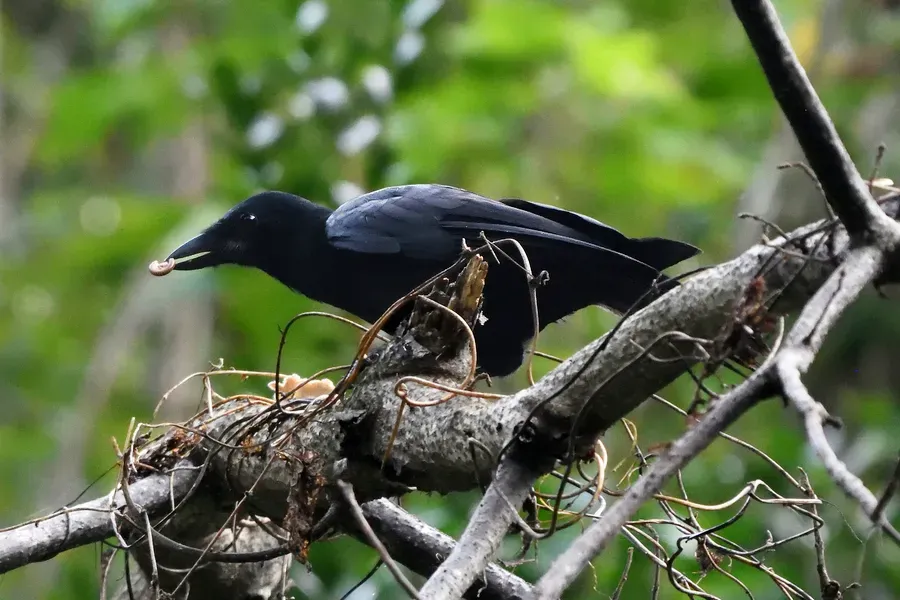
Crows can solve a multi-step physics problem that most children can’t figure out until age seven or eight.
In Aesop’s fable “The Crow and the Pitcher,” a thirsty crow drops stones into a pitcher until the water rises high enough to drink. It turns out that’s not just a nice story.
While completing her PhD at the University of Auckland, researcher Sarah Jelbert recreated the exact setup with real birds. New Caledonian crows solved it – proving they have the cognitive ability to work through a genuine multi-step physics problem, not just a party trick.
The catch: the crows weren’t just dropping random objects into a tube. They selected particular objects, meaning they understood which materials would actually displace water and which wouldn’t.
That’s the line between mimicry and genuine cause-and-effect reasoning, and it’s exactly the kind of result that keeps cognitive scientists arguing over how much “understanding” is really happening in there. But #4 is where the tool-building gets even stranger.
#4 – They Build Tools From a Mental Blueprint, Not Trial and Error
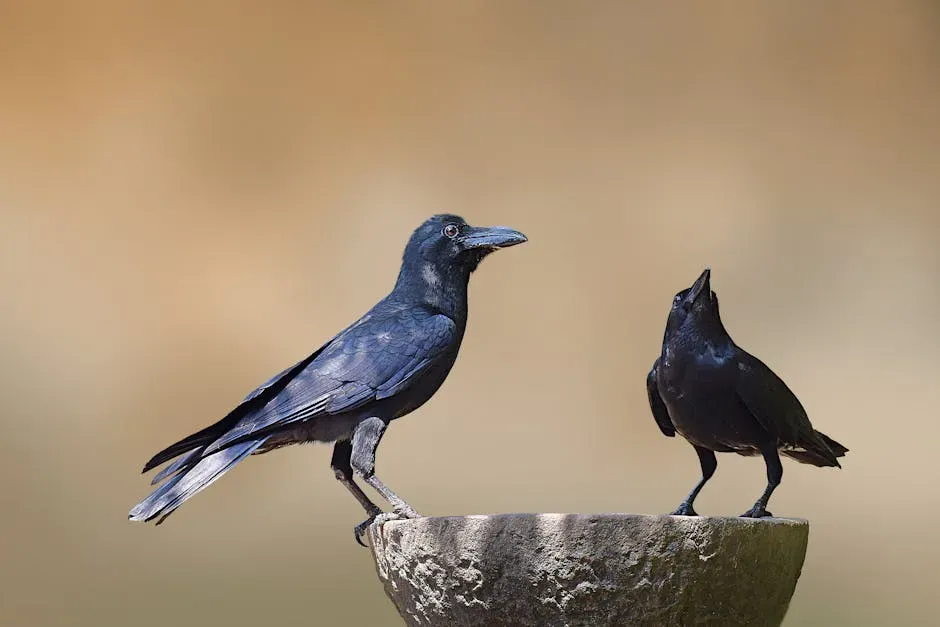
Most tool-using animals copy a shape they’ve already seen. Crows appear to build from a memory of the tool’s dimensions instead.
Sarah Jelbert and her colleagues found that crows use something like “mental templates” to build simple tools. They remember the rough dimensions of the tool they need and can build it from scratch – the study found evidence crows aren’t simply mimicking a tool-making behavior they watched.
That’s a significant claim. It suggests something closer to an internal design plan than blind copying, which is a much higher bar for animal cognition.
This lines up with decades of field observation. New Caledonian crows are the most prolific avian tool users on the planet, using at least three distinct tool types to pull invertebrate prey out of deadwood and vegetation – some of which require genuinely complex manufacture and modification.
Their beaks even evolved to support this. A uniquely shaped bill lets the bird hold a tool tightly while still seeing exactly what it’s doing as it forages for beetle grubs. But that’s nothing compared to what happens when these crows chain multiple tools together in #5.
#5 – They Chain Multiple Tools Together in a Sequence
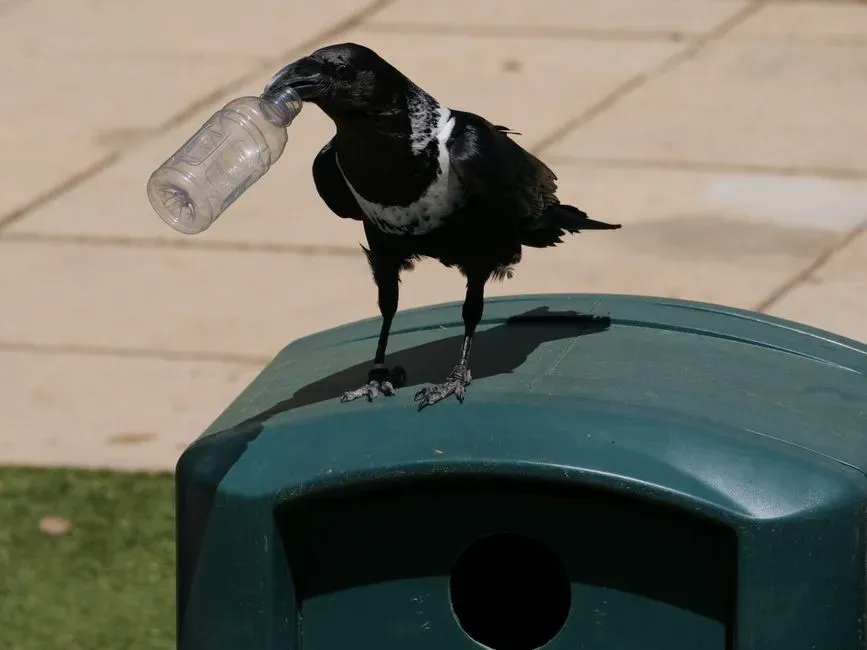
A single tool is impressive. Three tools, used in the correct order, to solve one problem is something else entirely.
Researchers have documented crows working through genuine multi-tool sequences rather than single-step tasks. In one set of experiments, seven captive New Caledonian crows faced six different tasks requiring up to three tools used in the correct order just to retrieve food.
The test was specifically designed to probe whether the birds actually understand the physical relationships involved – not just performing a memorized trick they’d been rewarded for before.
The classic version of this puzzle: a short tool that can’t reach the food directly, but can reach a second, longer tool that can. The crow is handed a short tool that’s useless for the food but perfectly sized to fetch the longer tool – and only that second tool can actually reach the reward.
Quick Compare
- Most tool-using animals: one tool, one step, one task
- New Caledonian crows: up to three tools chained in the correct order
- Test conditions: seven crows, six separate multi-tool tasks
- Signature puzzle: a “useless” short tool that exists only to fetch the real tool
Solving it means holding a goal in mind across two separate physical steps. Scientists still debate exactly which cognitive mechanism explains that, which brings us to an even bigger unresolved question in #6.
#6 – They Appear to Plan for Tools They Don’t Need Yet
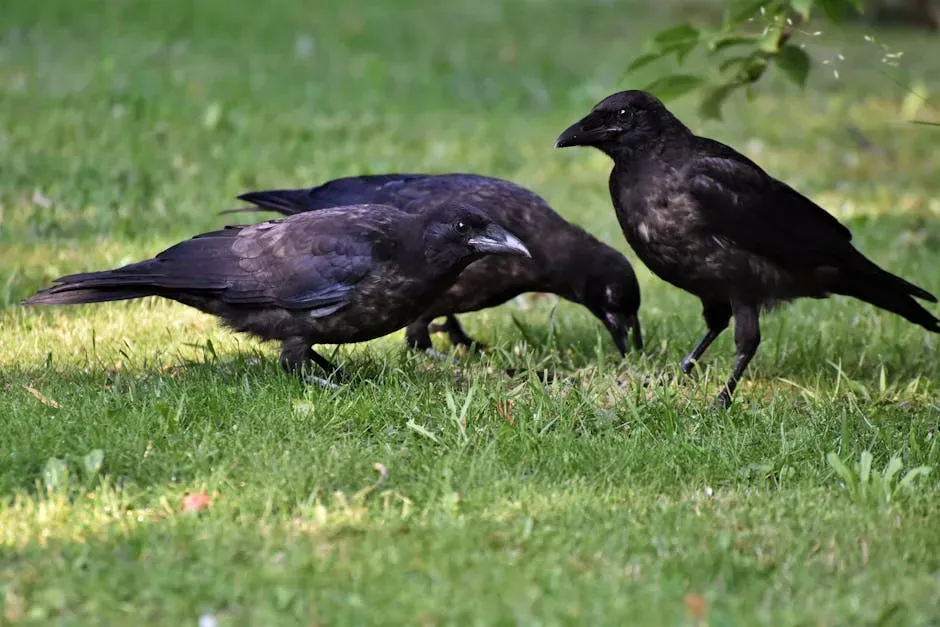
This is the finding that made even skeptical researchers sit up: crows choosing the right tool for a job they haven’t encountered yet.
Researchers showed that New Caledonian crows can use tools to plan for events they haven’t gotten to yet. Crows learned a sequence: first they saw a baited apparatus, then five minutes later they were given a choice of five objects, then ten minutes after that they got access to the apparatus.
That delay matters. It rules out the simplest explanation – that the crow is just grabbing whatever’s in front of it in the moment.
At test, the crows faced one of two tool-apparatus combinations, and in each case they chose the correct tool for the task ahead – while ignoring previously useful tools and even a low-value food item sitting right there.
This is genuinely controversial territory. Whether non-human animals can plan for specific future situations remains contested even after two decades of research; some scientists say this doesn’t fully prove future planning, others call it some of the strongest evidence yet outside primates. That debate looks tame next to #7.
#7 – They Treat Their Best Tools Like Prized Possessions
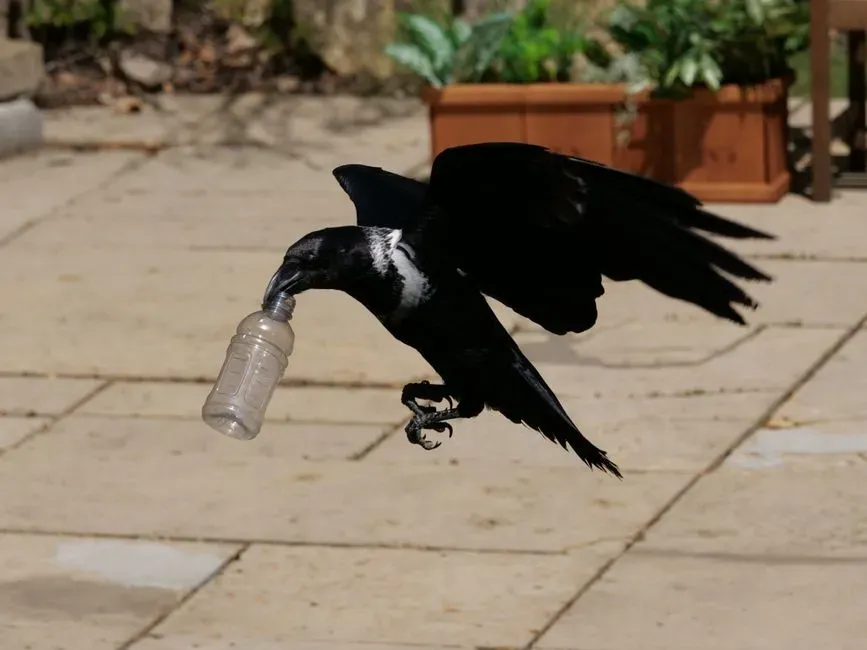
Crows don’t just make tools. They appear to know which ones are worth protecting.
In a clever experiment, wild-caught New Caledonian crows got to choose between two tool types that differed in effort to make and effectiveness in use. This population uses both hooked and non-hooked stick tools, which differ in raw material, manufacturing cost, and how well they actually work for foraging.
Researchers wanted to know two things: whether the birds preferred one tool type over the other, and whether they took better care of their favorites – safely storing them underfoot or tucked into nearby holes between uses.
The results were clear-cut. Crows strongly preferred hooked stick tools, and that preference showed up in how they handled them afterward – hooked tools got tucked away safely far more often than the simpler, non-hooked ones pulled straight from leaf litter.
Worth Knowing
- Hooked stick tools take more effort to make but work far better for foraging
- Non-hooked tools can be grabbed straight from leaf litter with almost no effort
- Crows consistently chose the hooked tool when given both options
- Hooked tools were tucked away safely between uses far more often than simple ones
In plain terms: the crow’s hardest-to-make, most effective tool got protected. The cheap, easy one got left lying around. That’s a form of valuation most people wouldn’t expect from a bird – and it’s mild compared to the death rituals in #8.
#8 – Their “Funerals” Are Actually Death Investigations
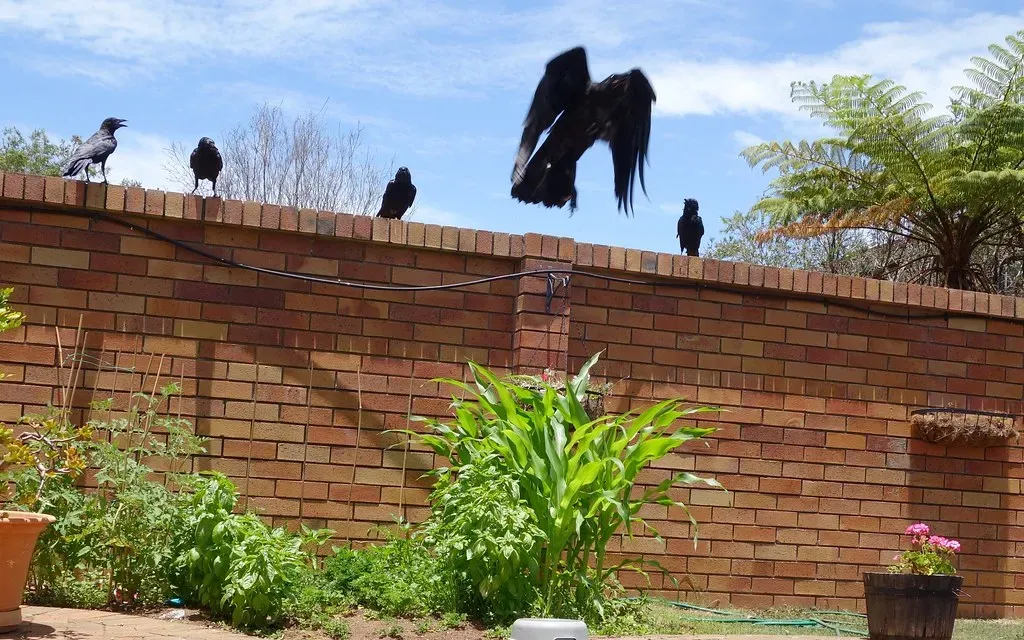
Call it a murder investigating a murder – when a crow dies, the flock doesn’t just mourn. It interrogates the scene.
In parks, parking lots, and ordinary neighborhoods, entire groups gather around a dead crow in a formation that looks almost ceremonial. It feels like a small outdoor funeral, but scientists say these gatherings actually help the flock learn, assess danger, and share information about a threat.
Researchers even gave the phenomenon a formal name: corvid thanatology, the study of how crows and related species respond to death.
The unsettling part is how the flock treats the humans connected to a death. Crows in these study neighborhoods remembered the masked faces that had appeared near dead crows and treated those faces as a threat for weeks afterward – scolding and avoiding feeding near that person even when they walked by later completely empty-handed.
Here’s the controversial opinion worth sitting with: calling these gatherings “funerals” might be giving crows too much emotional credit, and too little credit for what’s actually a cold, calculated threat assessment. That distinction gets a lot clearer once you see what’s happening inside their brains in #9.
#9 – Their Brains Light Up Almost Exactly Like Ours
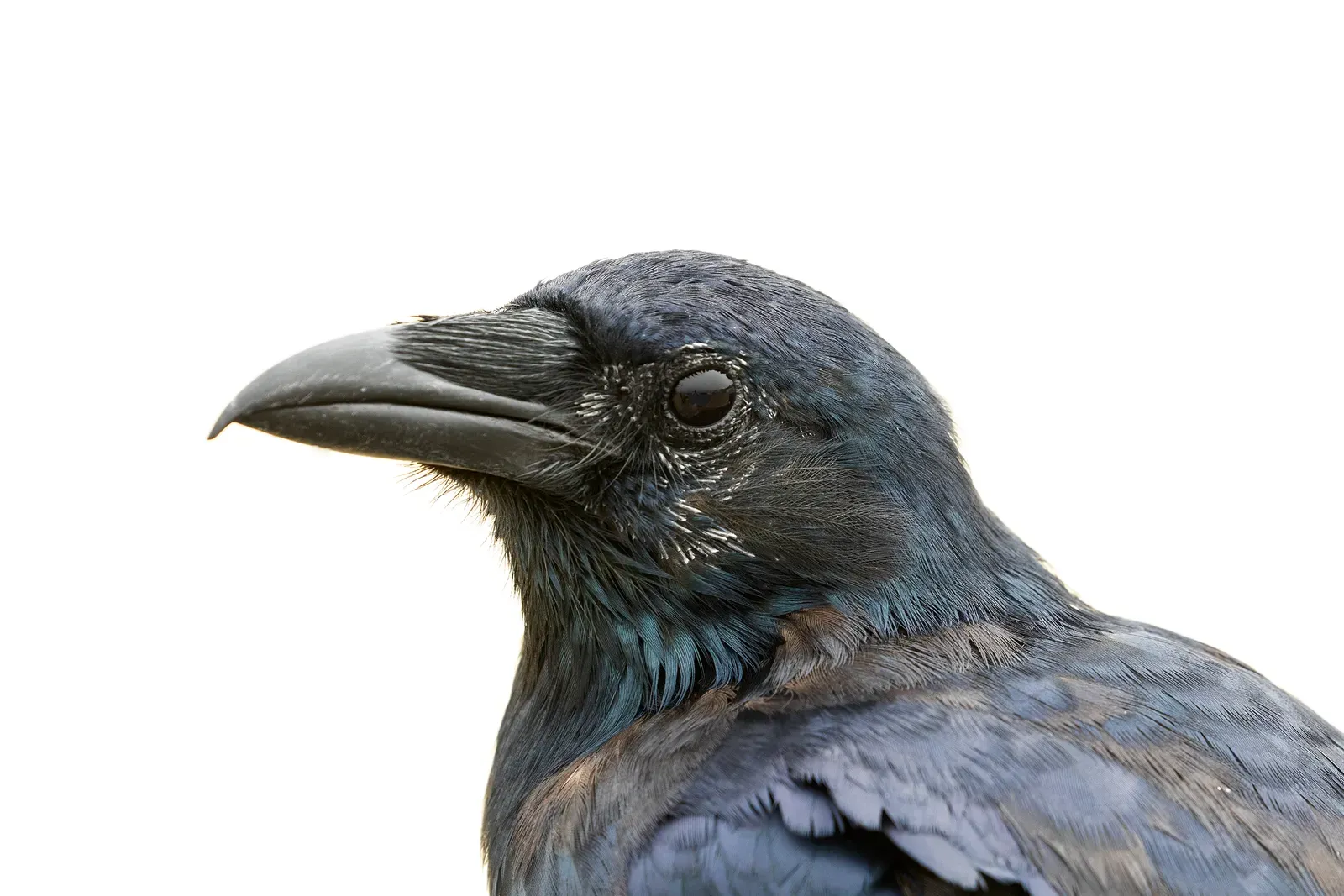
Scientists used to have to guess whether a crow’s clever behavior was reflexive or genuinely reasoned. Then they started scanning crow brains directly.
John Marzluff, the University of Washington wildlife scientist who pioneered this whole field, explained the core question this way: when crows do these remarkable things, is it a robotic response, or a truly reasoned one?
For years, crow awareness and intention were something scientists could only speculate about from behavior alone. Now researchers can measure and plot actual brain activity, watching how the birds process information, make decisions, and work through problems in real time.
The imaging results were striking. Researchers injected a glucose tracer into fully alert crows to see what lit up in their brains around threatening versus caring masks – and found the birds have a brain region analogous to the mammalian amygdala. That’s the same region humans use to store fear-based memories.
The amygdala is the region of the vertebrate brain where negative associations are stored as memories.
John Marzluff
In other words, a crow’s “grudge” isn’t just behavioral folklore anymore – it’s showing up on a brain scan. Nothing captures how far this intelligence spreads, though, quite like the payoff waiting in #10.
#10 – They Spread Knowledge Through the Flock Like a Social Network
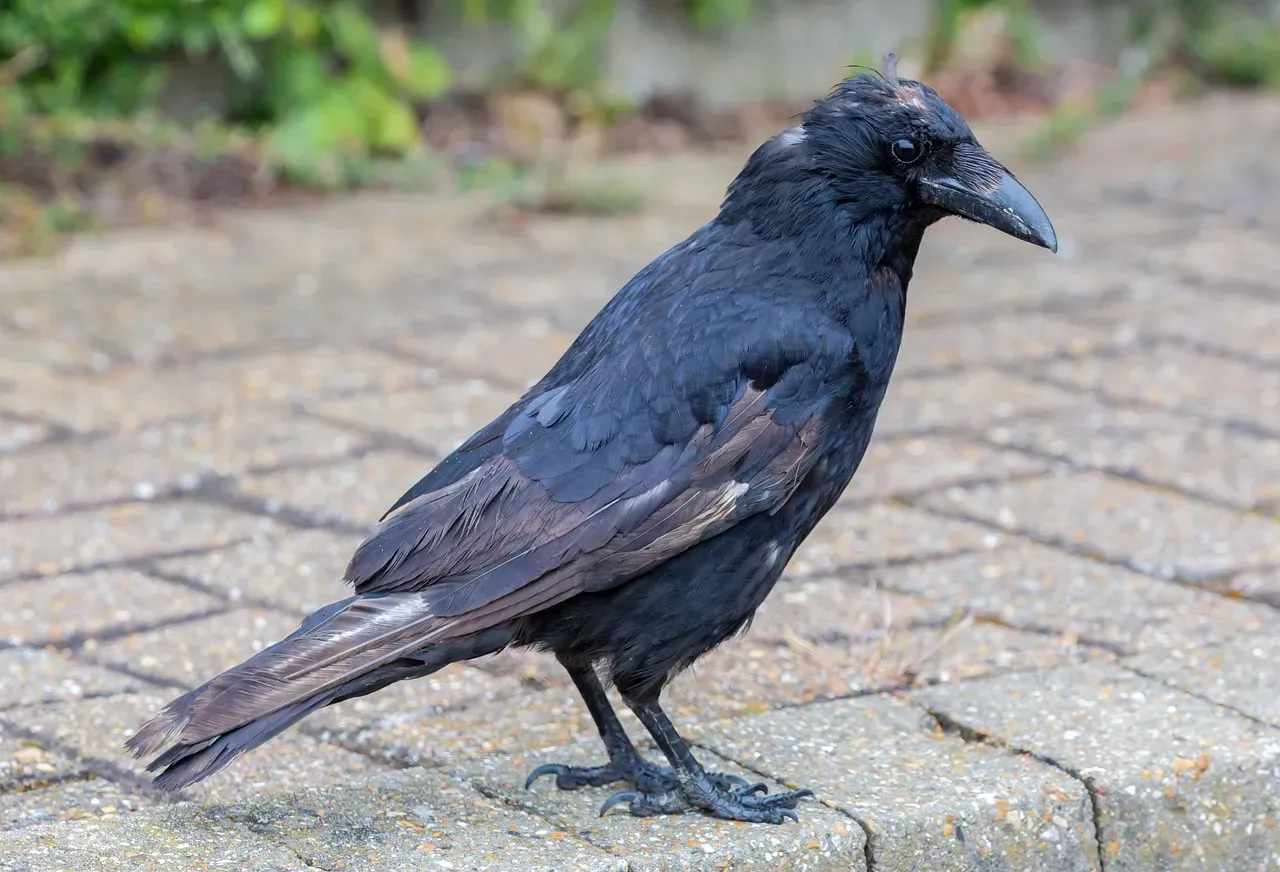
This is the behavior that convinced many researchers crows deserve to be studied alongside primates: they don’t just learn individually – they distribute what they know.
Field researchers tagged dozens of wild birds specifically to trace this. One team ran intensive experiments with New Caledonian crows, tagging 33 wild birds to map exactly how information about food abundance spread – from pairs and families outward to neighbors and entire communities.
Tool skills travel the same social pathway. New Caledonian crows use natural items like small twigs and branches to probe holes in tree bark for insect prey, and those skills are thought to pass to other observing crows through social learning – though how far and how fast likely depends on the structure of each group’s relationships.
At a Glance
- 33 wild crows tagged to trace how food-location knowledge spreads
- Information moves outward from mated pairs and families to neighbors
- Tool-use skills appear to pass between crows through social observation
- Researchers describe the pattern as a form of local crow “culture”
Put together with the grudge-teaching from #2, this points to something researchers are still fully mapping out: crow “culture” – localized knowledge and habits that spread through a community and outlast the individual birds who first learned them. That’s a claim usually reserved for chimpanzees and humans, and it’s still an active, unresolved area of study.
The Bottom Line
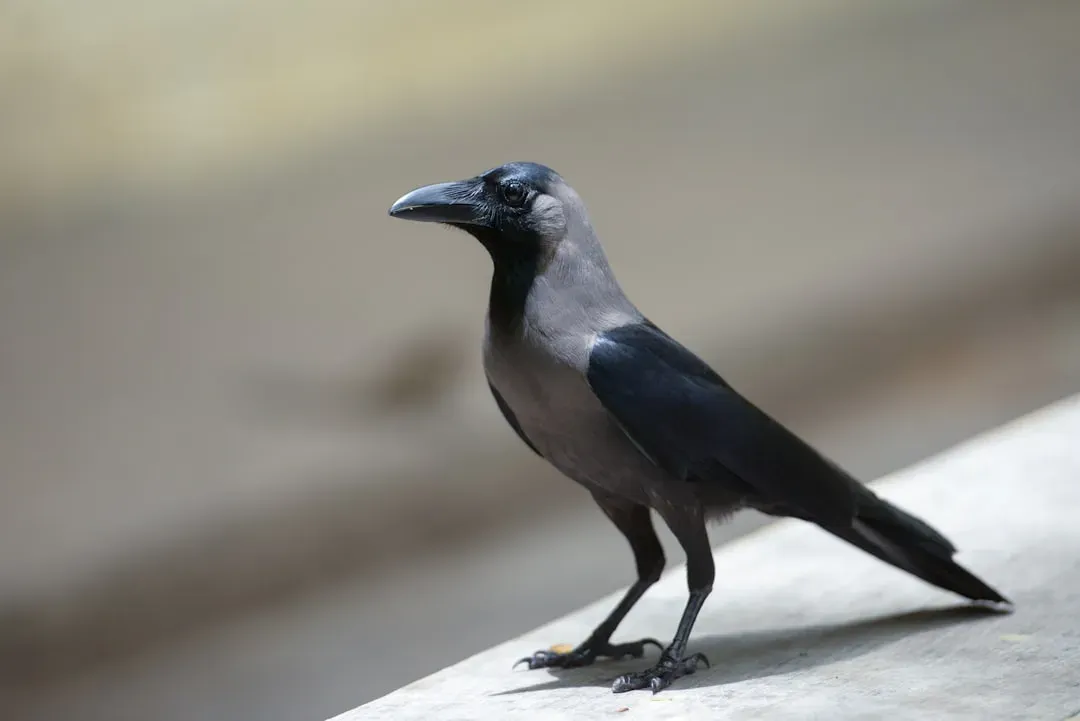
The research is clear on one thing: crows are not simply reacting on instinct. From building tools out of a mental blueprint, to solving multi-step Aesop’s-fable puzzles, to holding a grudge long enough to warn birds not even born yet, these behaviors keep forcing scientists to raise the bar for what counts as “real” intelligence in a non-primate brain.
Here’s the opinion worth sitting with: crows almost certainly experience something behaviorally close to grief and resentment, and the field’s reluctance to say so outright says more about human bias than about the birds themselves. Science is comfortable calling a chimpanzee’s memory “emotional” but hesitates the moment feathers are involved.
Which of these ten behaviors surprised you the most? Have you had your own run-in with a crow that clearly remembered you? Drop it in the comments.