

Christmas is more than just a single day on the calendar. It’s an entire season filled with customs, rituals, and practices that have been passed down through generations, evolving and transforming along the way. You might hang stockings by your fireplace, decorate a tree in your living room, or kiss someone under the mistletoe without ever stopping to wonder where these traditions actually come from.
Honestly, the are far more fascinating than you might imagine. Some trace back thousands of years to ancient pagan festivals, while others emerged from medieval Christian practices or Victorian innovations. Let’s be real, the stories behind these beloved customs are often stranger and more surprising than the traditions themselves.
The Christmas Tree: From Pagan Rituals to Victorian Trend
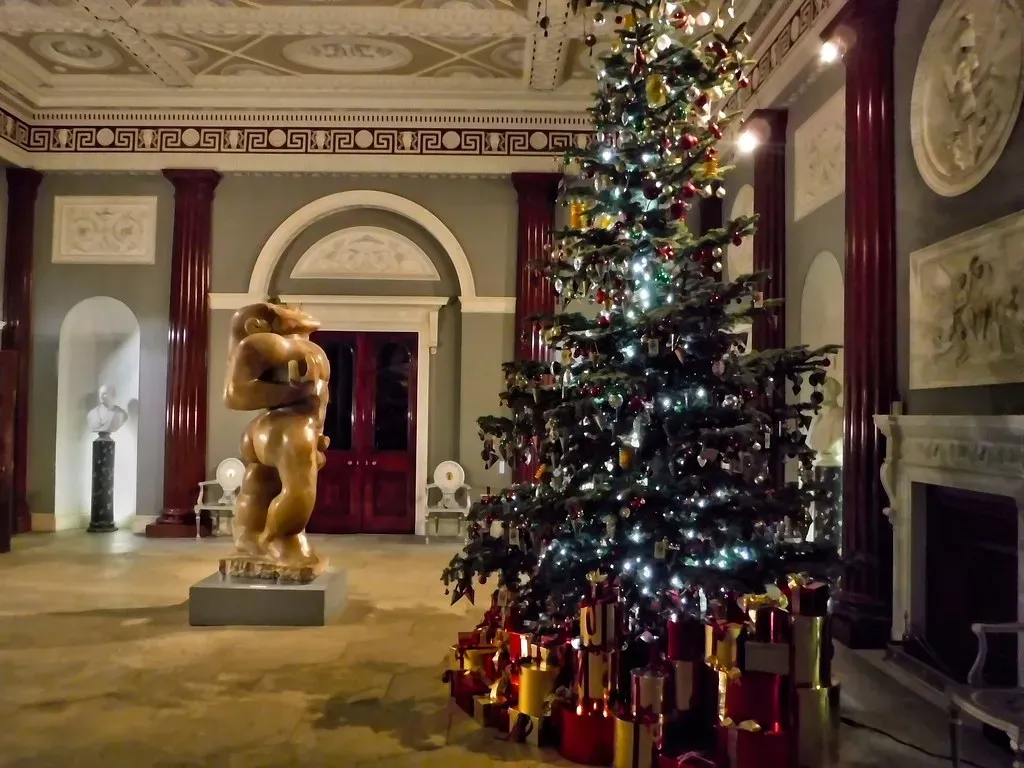
Before Christianity even existed, ancient peoples hung evergreen boughs over their doors and windows during winter. Many cultures believed that evergreens would keep away witches, ghosts, evil spirits, and illness. Think about it: when everything else is dead and barren, these plants remain stubbornly green and alive.
The modern Christmas tree originated in Germany, where families set up a paradise tree in their homes on December 24, the religious feast day of Adam and Eve. These were fir trees hung with apples that represented the Garden of Eden. Germany is credited with starting the Christmas tree tradition as we now know it by the 16th century, when devout Christians brought decorated trees into their homes. The tradition became widespread in England after Queen Victoria and Prince Albert were depicted with their Christmas tree in 1848, published in the Illustrated London News. That single image changed everything.
Advent Calendars: Counting Down with Anticipation

The Advent calendar was first used by German Lutherans in the 19th and 20th centuries. The whole idea started much simpler than the chocolate-filled versions you see today. In religious families, 24 pictures were gradually hung on the wall in December, or 24 chalk marks were painted on walls or doors, from which children were allowed to wipe one away each day.
German publisher Gerhard Lang is credited with adding small doors in the 1920s, behind which were pictures; other publishers later included Bible verses. Lang had been inspired by his mother, who sewed either 24 cookies or 24 pictures on cardboard and allowed him to eat or look at one each day during Advent. It’s hard to say for sure, but the gesture of a mother creating something special for her child might have sparked a worldwide phenomenon. The first chocolate-filled Advent calendars reportedly appeared in the 1950s, and Cadbury began commercially producing them in 1971, though it took two more decades before they were popular enough for continuous production.
Mistletoe: Kissing Under a Parasitic Plant

Here’s the thing about mistletoe: it’s a parasite, attaching to its host tree and siphoning off water and nutrients for itself. Not exactly romantic when you think about it. Yet this clingy plant has become one of the most iconic symbols of Christmas romance.
The consensus among experts is that the use of mistletoe in ritual form started with the Celtic Druids who lived on the British Isles. The mistletoe became a sacred symbol of vivacity and fertility to the Druids after they saw it blooming in the trees during harsh winters. In Norse culture, the mistletoe plant was a sign of love and peace, with the goddess Figg losing her son to an arrow made of mistletoe, then vowing that mistletoe would kiss anyone who passed beneath so long as it was never again used as a weapon. The kissing tradition began between 1720 and 1784 in England. The kissing tradition appears to have first caught on among servants in England before spreading to the middle classes, with men allowed to steal a kiss from any woman caught standing under the mistletoe.
Christmas Stockings: Gold in Unexpected Places
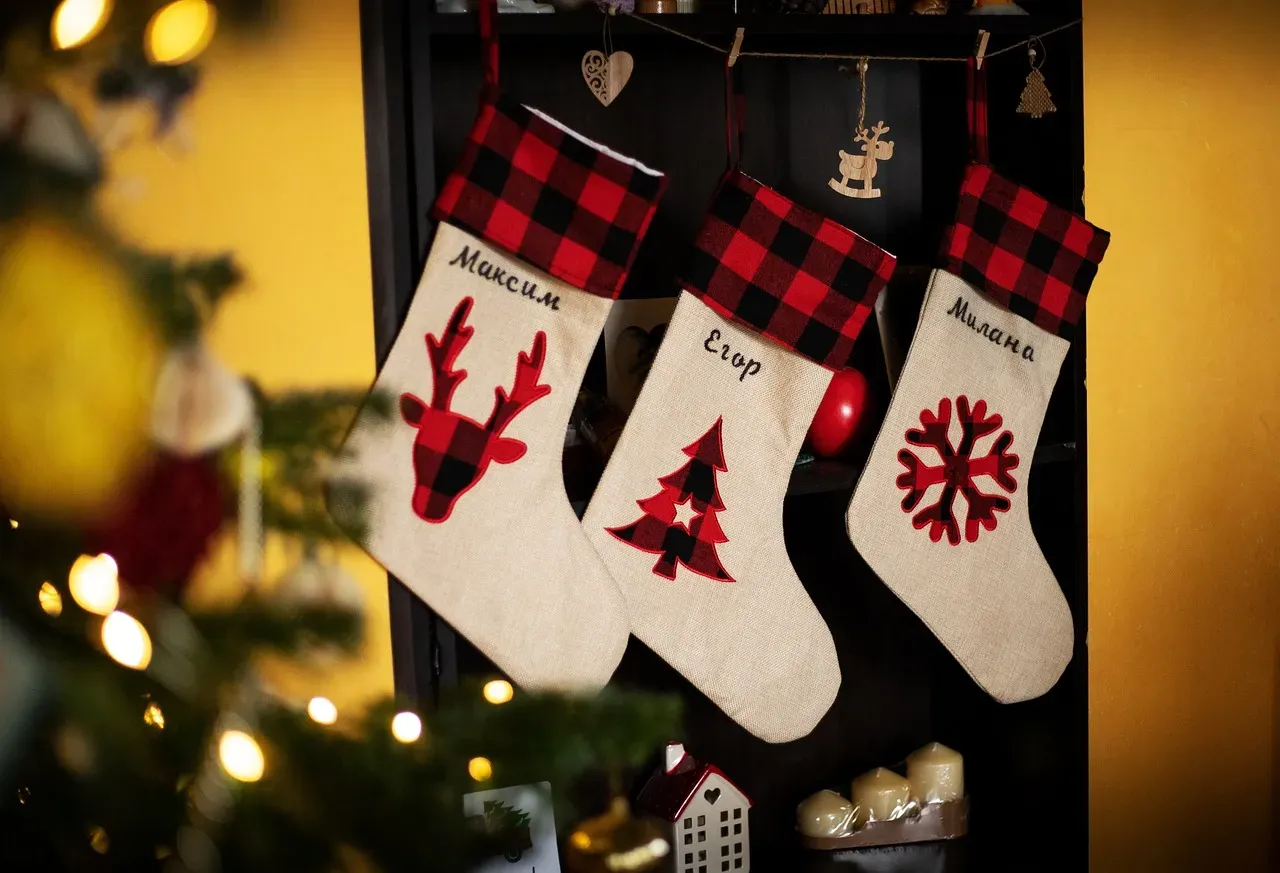
The origin of the Christmas stocking is thought to originate in the life of Saint Nicholas. The legend goes something like this: Saint Nicholas was staying with a poor family and heard that the father was planning to sell his three daughters into prostitution to save them from starvation. Saint Nicholas wanted to help but knew the man would not accept charity, so when he left the house after dark he threw three bags of gold through an open window; one landed in a stocking. When the family woke the next morning they found the bags of gold and were overjoyed.
Christmas stockings were mentioned as an established American tradition as early as 1823 in the poem “A Visit from St. Nicholas”. The practice evolved over time. Children originally used one of their everyday socks, but eventually special Christmas stockings were created for this purpose, traditionally used on Saint Nicholas Day although in the early 1800s they also came to be used on Christmas Eve. The custom of having a tangerine or small orange at the bottom of Christmas stockings comes from the story of Saint Nicholas putting bags of gold into stockings; if people couldn’t afford gold coins, some golden fruit was a good replacement.
Christmas Carols: Songs That Almost Disappeared
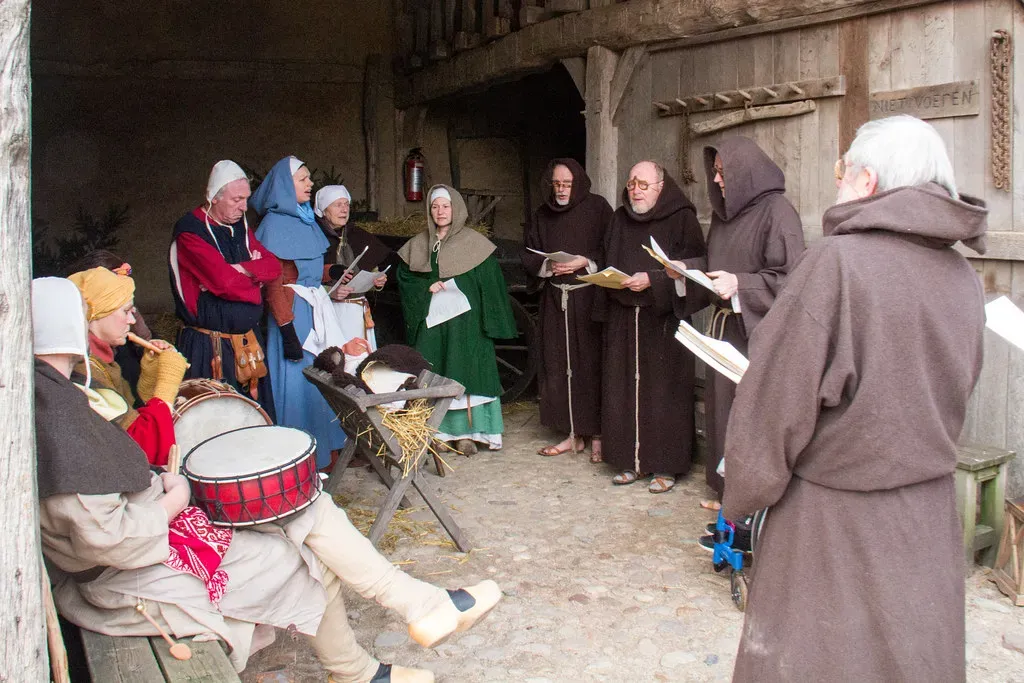
When Christians began replacing pagan winter festivals with Christmas, bishops across Europe requested certain hymns to be sung at Christmas services. Many composers wanted to write their own Christmas carols, but since they were always in Latin, they weren’t terribly popular. Can you imagine Christmas carols that nobody wanted to sing?
By the 13th century, in France, Germany, and Italy, under the influence of Francis of Assisi, a strong tradition of popular Christmas songs in the native language developed. Christmas carols in English first appear in a 1426 work of John Awdlay, a Shropshire chaplain, who lists twenty-five caroles of Cristemas, probably sung by groups of wassailers who went from house to house. The songs, now known specifically as carols, were originally communal folk songs sung during celebrations such as harvest tide and Christmas, and it was only later that carols began to be sung in church. The transformation from folk songs to sacred hymns took centuries, and many of our favorite carols have surprisingly secular .
Santa Claus: A Dutch Import to America
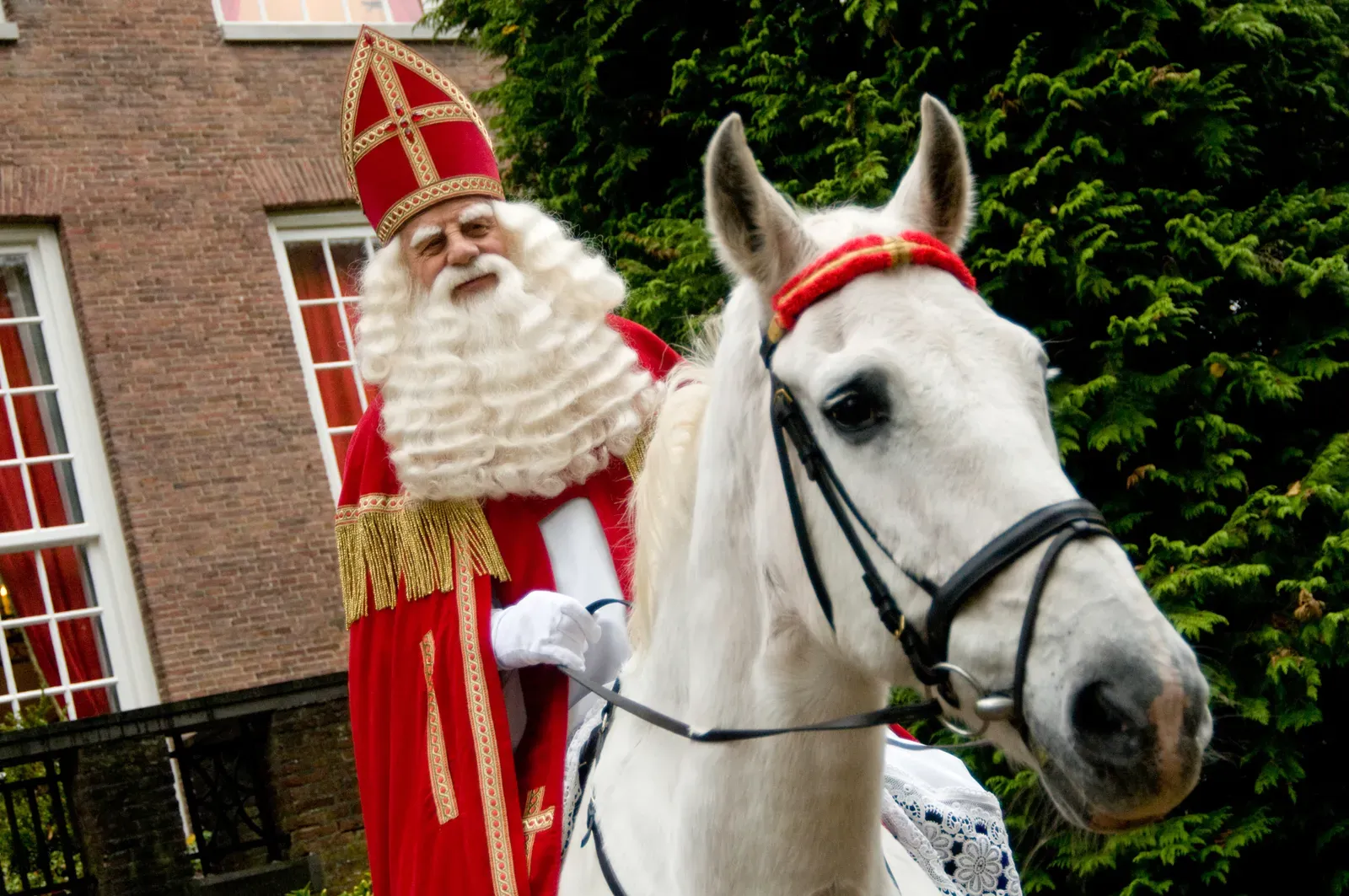
The modern popular image of Santa Claus was created in the United States, particularly in New York, with the transformation accomplished with the aid of notable contributors including Washington Irving and the German-American cartoonist Thomas Nast. Following the American Revolutionary War, some inhabitants of New York City sought out symbols of the city’s non-English past. New York had originally been established as the Dutch colonial town of New Amsterdam, and the Dutch Sinterklaas tradition was reinvented as Saint Nicholas. In 1809, the New-York Historical Society named Sancte Claus the patron saint of Nieuw Amsterdam.
Saint Nicholas represents a 3rd century Turkish Bishop who famously left gifts in people’s shoes, but other parts of the Santa lore come from the Norse God Odin. Traditional imagery of Santa shows similarities to Odin, who takes the form of an old, white-bearded traveler clad in a hooded cloak, riding on horseback. Odin was also known to ride an eight-legged horse through the sky named Sleipnir, while the original Santa rode a horse before he was given his eight tiny reindeer in the 1823 poem. I know it sounds crazy, but the jolly fellow we know today is basically a mash-up of multiple mythological figures.
Nativity Scenes: Francis of Assisi’s Living Display
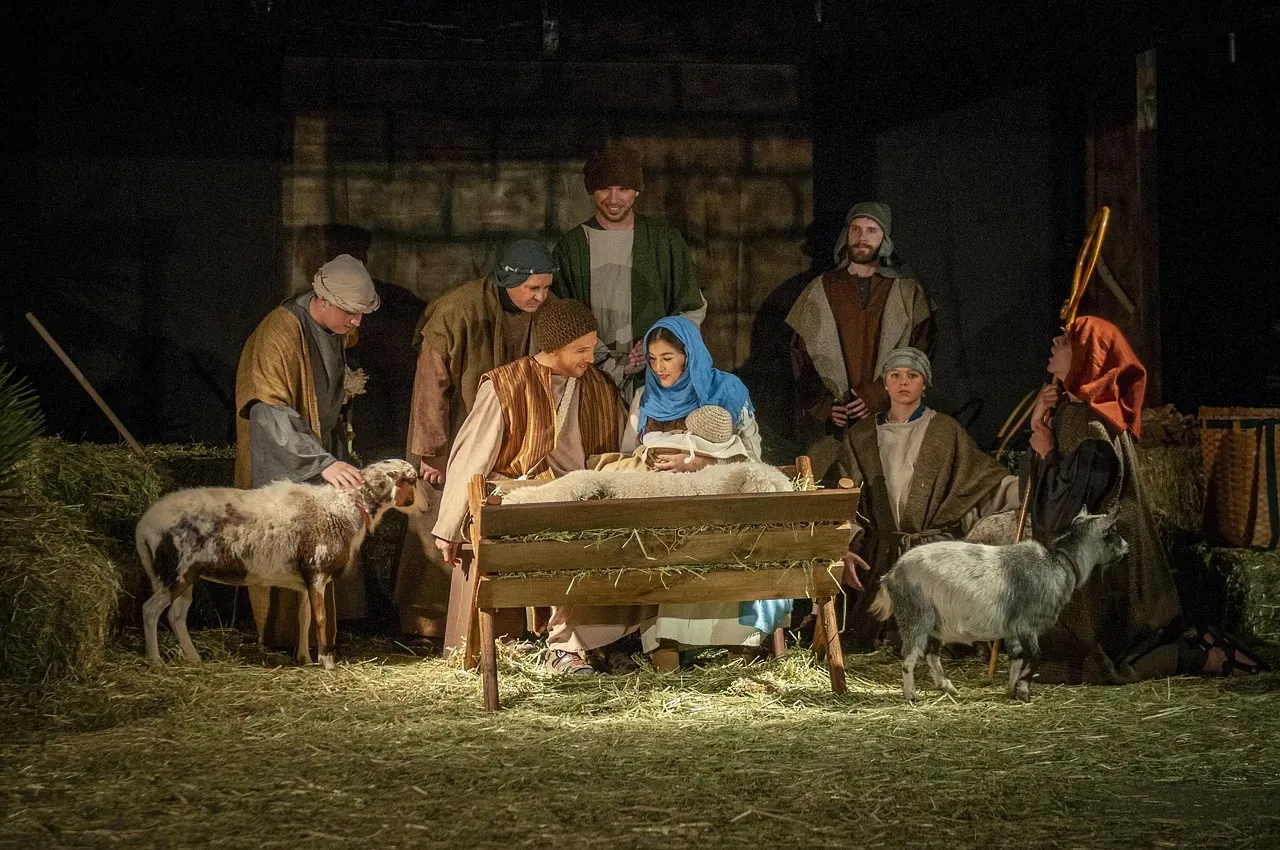
In 1233, St. Francis of Assisi started putting on nativity plays, which included canticles that told the story of Christ’s birth. This was revolutionary for its time. Different types of nativity scenes developed across the Christian world, dependent on local tradition and available resources, and can vary from simple representations of the crib to far more elaborate sets.
In certain parts of the world, notably Sicily, living nativity scenes following the tradition of Saint Francis are a popular alternative to static crèches. These elaborate displays brought the Christmas story to life for people who couldn’t read the Bible themselves. The tradition spread rapidly throughout Europe and eventually to the Americas, becoming a central part of Christmas celebrations for millions of families.
Gift Giving: From Winter Solstice to Christmas Morning

Giving gifts on 25 December wasn’t always tradition, with gift giving mainly occurring on the Feast of St Nicholas on 6 December or at New Year. The shift to Christmas Day gift giving happened gradually over centuries. During the Reformation in 16th and 17th-century Europe, many Protestants changed the gift bringer to the Christ Child or Christkindl, and the date of giving gifts changed from December 6 to Christmas Eve.
Leaving treats for Santa and his reindeer dates back to ancient Norse mythology, but Americans began to embrace the tradition during the Great Depression in the 1930s as a sign of showing gratitude during a time of struggle. Here’s the thing: what started as ancient pagan practices of honoring gods during winter festivals transformed through Christianity into the gift-giving extravaganza we know today. Popular customs now include exchanging gifts, decorating Christmas trees, attending church, sharing meals with family and friends and waiting for Santa Claus to arrive.
Christmas Feasting: Ancient Excess Meets Christian Celebration
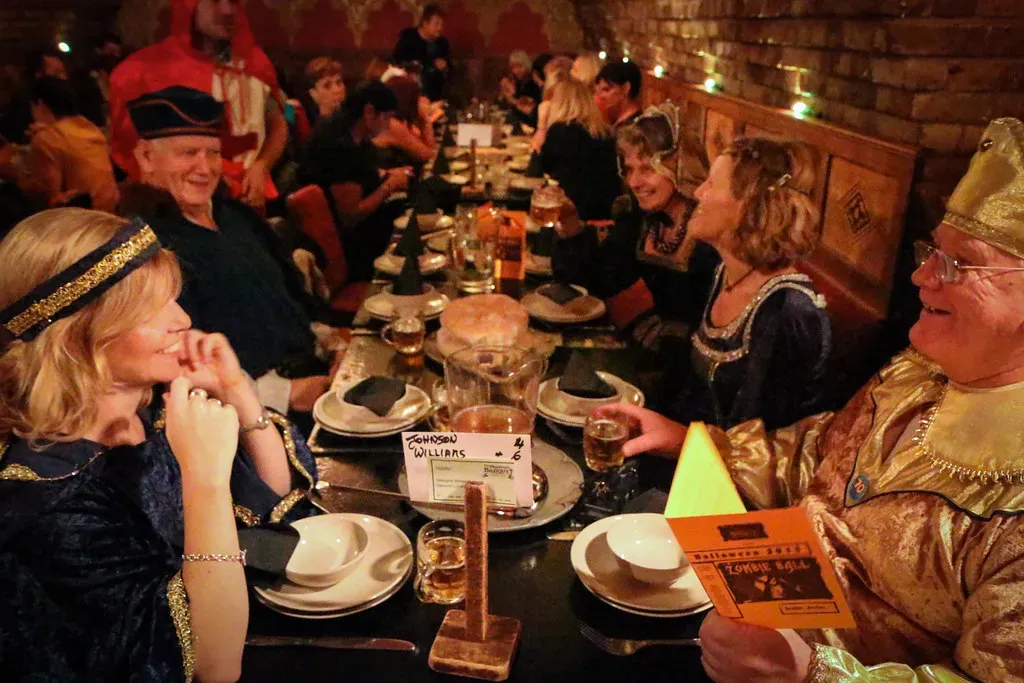
In Rome, people celebrated Saturnalia in honor of Saturn, the god of agriculture. Beginning in the week leading up to the winter solstice and continuing for a full month, Saturnalia was a hedonistic time when food and drink were plentiful. For a month, enslaved people were given temporary freedom and treated as equals, with business and schools closed so everyone could participate in the festivities.
Eating and drinking a lot at Christmas is a longstanding feature. If you were very wealthy in the past you could afford to celebrate with a massive feast every evening for two weeks over Christmas. Richard II threw a spectacular Christmas feast that was so extravagant it got recorded in medieval chronicles, with 28 oxen and 300 sheep cooked every day just to keep up with main meat courses. Ancient peoples gathered around the winter solstice to feast before cold weather wiped away their crops, and the wine and beer that had been fermenting since spring were finally ready to drink. As Christmas replaced these solstice celebrations by the Middle Ages, the feasting continued with the all-important addition of desserts.
The Date of Christmas: December 25th Was a Strategic Choice
The first recorded Christmas that celebrated the birth of Jesus is often cited as A.D. 336, and by the fourth century church officials had decided to institute the birth of Jesus as a holiday. The Bible does not mention a date for his birth, but Pope Julius I chose December 25. It is commonly believed that the church chose this date in an effort to adopt and absorb the traditions of the pagan Saturnalia festival.
It was not until 336, during the reign of the emperor Constantine, that the church in Rome began formally celebrating Christmas on December 25. As Constantine had made Christianity the effective religion of the empire, some have speculated that choosing this date had the political motive of weakening established pagan celebrations. Let’s be real, the church was smart about this. Rather than fighting against deeply ingrained winter celebrations, they simply transformed them into Christian observances. Christians and non-Christians participate in many popular Christmas traditions, with few contemporary Christmas customs having their origin in theological or liturgical affirmations, and most being of fairly recent date.
Conclusion

The Christmas you celebrate today is a beautiful collision of ancient pagan rituals, medieval Christian practices, Victorian innovations, and modern commercialization. Each tradition carries layers of history, mythology, and cultural evolution that span thousands of years and cross multiple continents.
What’s truly remarkable is how these customs have adapted and survived. From Celtic Druids hanging mistletoe to German Protestants decorating trees, from Roman Saturnalia feasts to Saint Nicholas dropping gold down chimneys, these disparate practices have woven together into the rich tapestry of Christmas we recognize today. The next time you hang a stocking or kiss someone under the mistletoe, you’re participating in a living history that connects you to countless generations who came before.
Did the of these traditions surprise you? What will you think about differently this Christmas season?
Hi, I’m Andrew, and I come from India. Experienced content specialist with a passion for writing. My forte includes health and wellness, Travel, Animals, and Nature. A nature nomad, I am obsessed with mountains and love high-altitude trekking. I have been on several Himalayan treks in India including the Everest Base Camp in Nepal, a profound experience.