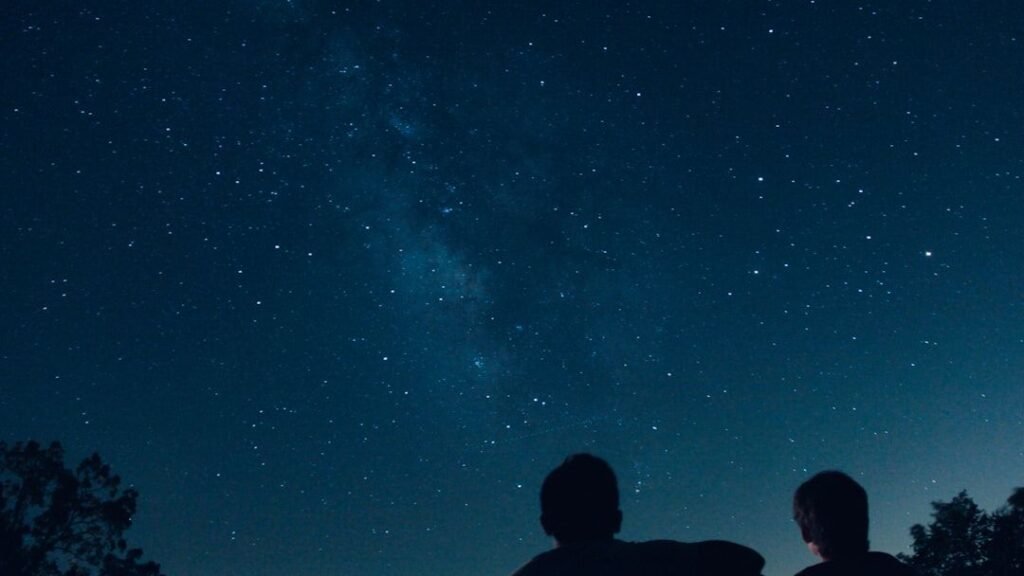

There is something almost embarrassingly humbling about standing outside under a dark sky and realizing just how tiny you are. Honestly, no photograph, no IMAX film, no high-definition livestream truly captures the raw, chest-tightening feeling of witnessing the universe perform one of its great spectacles directly above your head. It hits differently in person.
From glowing moons that blush crimson red, to comets stitching fiery trails across the dark, to the sun vanishing in broad daylight, the cosmos has a lineup so spectacular it could make even the most rational, science-minded person feel like something cosmic is calling out to them. So let’s dive in.
1. Total Solar Eclipse: When Day Becomes Night in an Instant

A total solar eclipse is one of the rarest and most breathtaking celestial events you can ever witness. As daylight vanishes in an instant and the world is cast into an eerie twilight, everything around you quiets. Birds stop singing. Temperatures drop. People gasp. It’s as if the whole planet suddenly holds its breath together.
Total eclipses are only visible from the same place on Earth once every 375 years on average, which means if you miss your local chance, your grandchildren might miss it too. Here’s something exciting for 2026: a total solar eclipse on August 12th will be best viewed around Iceland, Greenland, and Spain, but will also be visible to a lesser extent from parts of Europe, northern Asia and Africa, and North America. Totality will last a maximum of 2 minutes and 18 seconds. That’s roughly the time it takes to brew a cup of coffee, and it will change how you see the universe forever.
2. Total Lunar Eclipse: The Blood Moon Rises

Few things in nature are as visually dramatic as watching a full moon slowly blush from bright white to deep, burning copper. One of the most dramatic sights of the year is a total lunar eclipse, when the Moon passes completely through Earth’s shadow and turns a deep reddish color, colloquially called a “Blood Moon.” The effect is slow, almost theatrical, as if the universe is pulling a curtain across the stage one inch at a time.
March 2026 is packed with celestial highlights, but the Blood Moon on March 3 is a true standout. During totality, the Moon turns a deep reddish hue, a breathtaking sight visible from the USA, Canada, New Zealand, Australia, and Asia. When the moon sits in the darkest part of Earth’s shadow, the sun’s rays peek out from behind Earth and the light refracts, giving the moon a reddish hue. It’s science, yes. But it also looks genuinely otherworldly.
3. The Aurora Borealis: Nature’s Own Light Show

I think if you could bottle the feeling of seeing the Northern Lights for the first time and sell it, you’d make a fortune. There’s simply nothing else like it. The aurora borealis is a natural light display caused by electrically charged particles from the sun colliding with gases in Earth’s upper atmosphere near the north magnetic pole. The result is a slow, swirling dance of greens, purples, and pinks across the dark sky that looks almost too surreal to be real.
Solar storms increased aurora borealis activity in 2025 and are expected to continue into 2026, with strong chances that the year will see more stunning aurora displays seen widely across the country, including deep south states. Predicting when the aurora might bathe the sky in ethereal curtains of purple, pink, green, and yellow is tricky, but experts say there’s a good chance auroral activity will continue in 2026, especially between the spring and autumn equinoxes. In other words, keep your eyes on space weather alerts this year.
4. The Perseid Meteor Shower: Sixty Shooting Stars an Hour

Let’s be real, most of us have wished on a shooting star at some point. Now imagine lying back under a summer sky and counting dozens of them streaking overhead every single hour. That’s the Perseid meteor shower, and it is genuinely one of the best free shows the universe puts on all year. Named for the constellation Perseus, the Perseid meteor shower peaks every August when Earth travels through Comet Swift-Tuttle’s dust and rock trail.
Famous for producing a large number of fireballs, the Perseids meteor shower is regarded as the best of the year. The shower generally produces around 50 shooting stars an hour at the peak, and the moon is new on August 12 in 2026, meaning there will be no moonlight to interfere with the show. In fact, the peak night of August 12 to 13 will occur just hours after a total solar eclipse, and eclipse chasers in Spain in particular could see two of astronomy’s most spectacular events on the same day. The universe really does have a flair for the dramatic.
5. A Planetary Parade: Six Worlds Lined Up in the Sky

Imagine stepping outside just after sunset and spotting six planets hanging in the sky at the same time like a cosmic necklace. It sounds like science fiction, but it’s just orbital mechanics. Six planets are above the horizon after sunset around late February 2026. You should start watching 30 to 60 minutes after sunset, though they sit low on the western horizon. Four of the six planets will be visible to the naked eye.
Mercury, Venus, Neptune, Saturn, Uranus, and Jupiter will appear in the sky shortly after sunset on February 28. Think of it like a family reunion for the solar system, with everyone showing up at once. If you have binoculars or a small telescope, you can try to catch Uranus, which sits about halfway between bright Jupiter and the main group of evening planets. Neptune sits close to Saturn. Spotting them might take a bit of effort, but their presence completes this rare celestial lineup. Worth every minute of effort.
6. The Quadrantid Meteor Shower: Fireballs in January
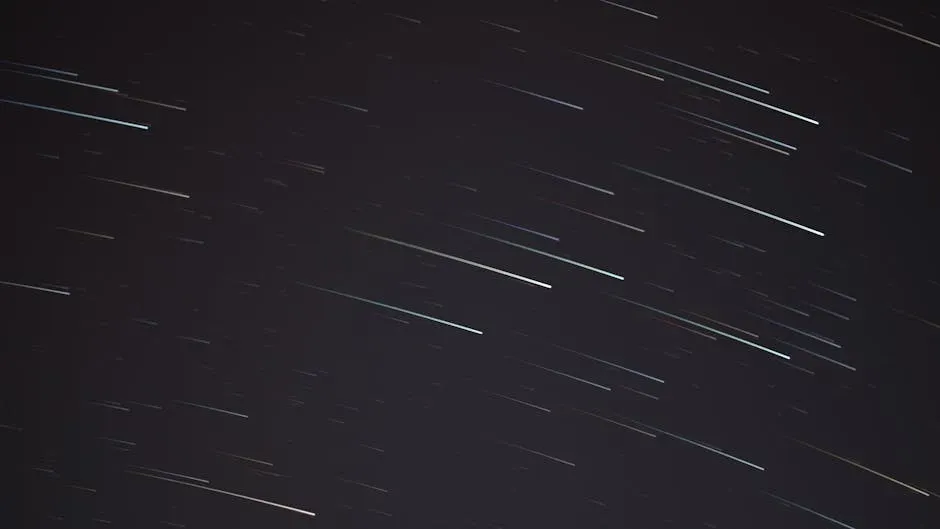
Most people ring in the new year and then go straight to bed. Astronomers, on the other hand, bundle up and head outside, because January brings one of the most intense, if overlooked, meteor showers of the entire year. The Quadrantids is one of the strongest and most reliable yearly meteor showers. Active from late December through early January, this shower is famous for its fireballs, which are exceptionally bright meteors. In 2026 the Quadrantid shower peaks in the early hours of January 4, with a possible rate of up to 120 meteors per hour at the maximum.
To see this shower, you need to bundle up nice and warm, find a dark location free from light pollution, and fill your eyes with as much of the sky as possible. To work out if you’ve seen a Quadrantid meteor, trace it back to its radiant point, which should be in the northern part of the constellation Boötes. The Quadrantids have a notoriously narrow peak window of just a few hours, so timing is everything. Set that alarm.
7. A Supermoon: The Moon Up Close and Personal

Here’s the thing about a supermoon: skeptics will tell you the size difference is barely noticeable. To some degree, they’re right. A supermoon occurs when the moon is at or near its closest point to Earth in its elliptical orbit, causing it to appear larger and brighter in the sky. As a result, the moon can appear up to roughly 14 percent larger than when it’s at its farthest point. It’s subtle on paper, but somehow, in person, it feels enormous.
To close out 2026, skywatchers are being treated to a special Christmas Eve Supermoon. A supermoon occurs when a full Moon is closest to Earth, making it appear bigger and brighter. There will actually be three supermoons in 2026, on January 3, November 24, and December 23. Catching them at moonrise delivers the full moon illusion effect, when the moon hangs just above the horizon and looks like something out of a fantasy film. It’s worth stepping outside for.
8. A Bright Naked-Eye Comet: The Original Sky Wanderer
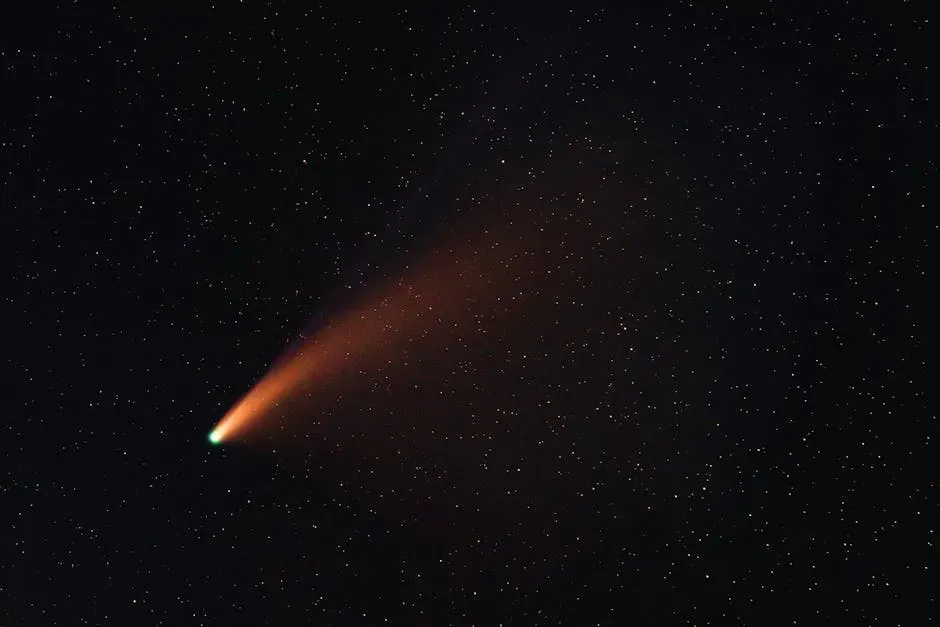
Few things in the night sky carry more mystique than a comet. The majestic sight of comets streaking across the night sky is a rare and captivating event that has fascinated civilizations throughout history. These cosmic travelers, composed of ice, dust, and rocky debris, leave behind a brilliant trail as they journey through our solar system. Ancient peoples feared them. Modern astronomers obsess over them. Either reaction feels completely justified.
Later in April 2026, comet C/2025 R3 (PANSTARRS) is expected to brighten, and unlike its sungrazer counterpart, it should be easier to plan for and may linger longer in the sky. If it overperforms, it could become a naked-eye comet, making April a rare chance to potentially spot not one, but two comets without big optics. PANSTARRS should appear in the evening sky as a fuzzy glow that may show a faint tail under darker skies. It’s hard to say for sure how bright any comet will get, but the anticipation alone is half the thrill.
9. Venus and Jupiter Conjunction: Two Brightest Planets Side by Side

Picture two of the most dazzling objects in the entire night sky appearing so close together that you could cover both with a single fingertip. That is exactly what a close planetary conjunction delivers, and it is the kind of event that stops strangers on the street and has them pointing up at the sky in disbelief. It’s a reminder that the solar system is always in motion, always rearranging itself into something new.
Skywatchers will be treated to a special planetary event in 2026 when the two brightest planets in the sky, Venus and Jupiter, will appear only a pinky finger apart in June. No telescopes will be required for this one. Think of it as the universe putting two spotlights side by side on an empty stage. The rare occurrence of planetary alignments presents a stunning visual spectacle as celestial bodies appear to converge in the night sky. While these alignments are purely a result of the observer’s perspective, they serve as a reminder of the harmonious dance of planets within our solar system.
10. Saturn at Opposition: The Ringed Wonder at Its Best

Of all the planets in our solar system, Saturn is the one that makes people audibly gasp when they first see it through a telescope. It seems almost unbelievable, that perfect golden disk suspended in black, those iconic rings tilted at just the right angle. Even seasoned astronomers admit it never gets old. Saturn reaches opposition on October 4 in 2026, meaning it will be directly opposite the Sun in the sky and look especially bright. As one of the more visible planets to reach opposition, this could be a good opportunity to try to capture photos of the beautiful ringed planet. Around this date, Saturn will rise in the east around sunset and set in the west around sunrise, meaning it is visible in the southern sky all night long.
Even a modest backyard telescope will reward you with a view that no screen can replicate. There is something almost philosophically staggering about looking at a world over 800 million miles away with your own eyes and actually seeing its rings. The universe is constantly in motion, and the coming decades promise a series of celestial displays that will dazzle and awe. Whether you are a seasoned astronomer or a casual stargazer, these phenomena provide a unique opportunity to witness the dynamics of our universe in real time.
Conclusion: Look Up More Often

Here’s the simple truth: most of these events require nothing more than a clear night, a dark spot away from city lights, and your own two eyes. No expensive equipment, no scientific training, no special membership. Just you and an ancient sky that has been putting on shows long before humans were around to appreciate it.
Some experiences defy description, as words alone cannot capture the overwhelming sense of awe that comes with witnessing Earth’s most extraordinary phenomena. The Northern Lights streaking across the Arctic sky, the fleeting darkness of a total solar eclipse, these moments must be felt to be truly understood. They command our attention, shift our perspective, and remind us of our place within something far greater than ourselves.
In a world that pulls your attention in a thousand directions every single day, the sky offers something rare: a reason to stop, breathe, and be genuinely astonished. Not by a notification or a headline, but by something vast, real, and utterly indifferent to your schedule. Look up more. You won’t regret it. Which of these ten events are you most determined to witness with your own eyes? Tell us in the comments below.