
Several miles below the waves, in places where sunlight never reaches and the pressure could crush a submarine, life gets weird. Not just a little weird, but mind‑bendingly alien. Down in the world’s deepest trenches, animals have evolved shapes, colors, and behaviors that make even science fiction feel tame.
What makes this even more thrilling is that ocean explorers are still finding new species almost every time they send a remotely operated vehicle into these abyssal zones. The deep ocean is not a barren wasteland; it’s more like a dark, endless city of strange, glowing, gelatinous residents. Let’s dive into some of the strangest real creatures scientists have discovered down there, and why they matter more than you might think.
1. Dumbo Octopus – The Deep Sea’s Quiet Cartoon
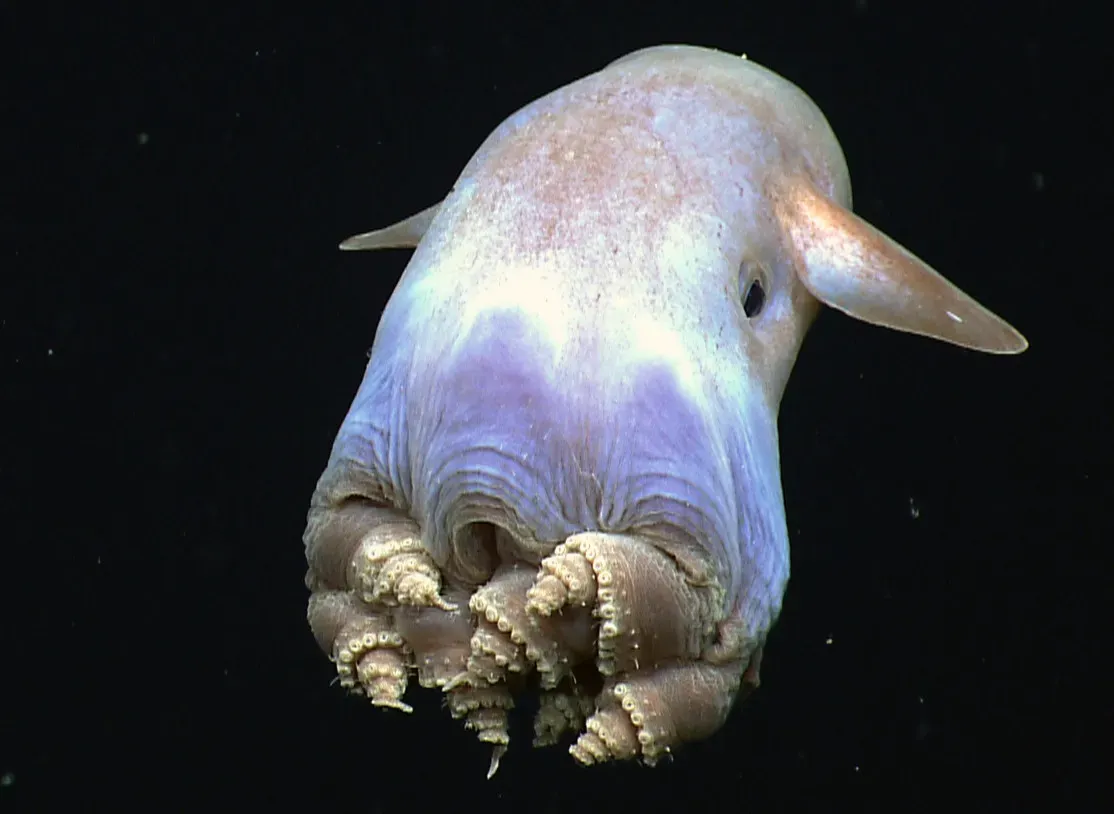
The dumbo octopus looks like it escaped from an animated movie and accidentally dropped into the hadal zone. Named for its ear‑like fins that resemble the famous flying elephant, this small, ghostly octopus drifts above the seafloor at depths where most animals simply cannot survive. Instead of jetting around like shallow‑water octopus species, it gently flaps those fins, hovering calmly in the black water.
What makes the dumbo octopus so bizarre isn’t just its appearance, but its lifestyle. It lives deeper than nearly any other known octopus, sometimes more than four miles down, where the pressure would feel like an elephant standing on every square inch of your body. It does not have an ink sac, because you don’t bother with smoke screens when there’s no light. Instead, it quietly grabs passing snacks like worms and tiny crustaceans, living a slow, drifting life in a place most animals never reach.
2. Snailfish – The Deepest Living Fish on Record
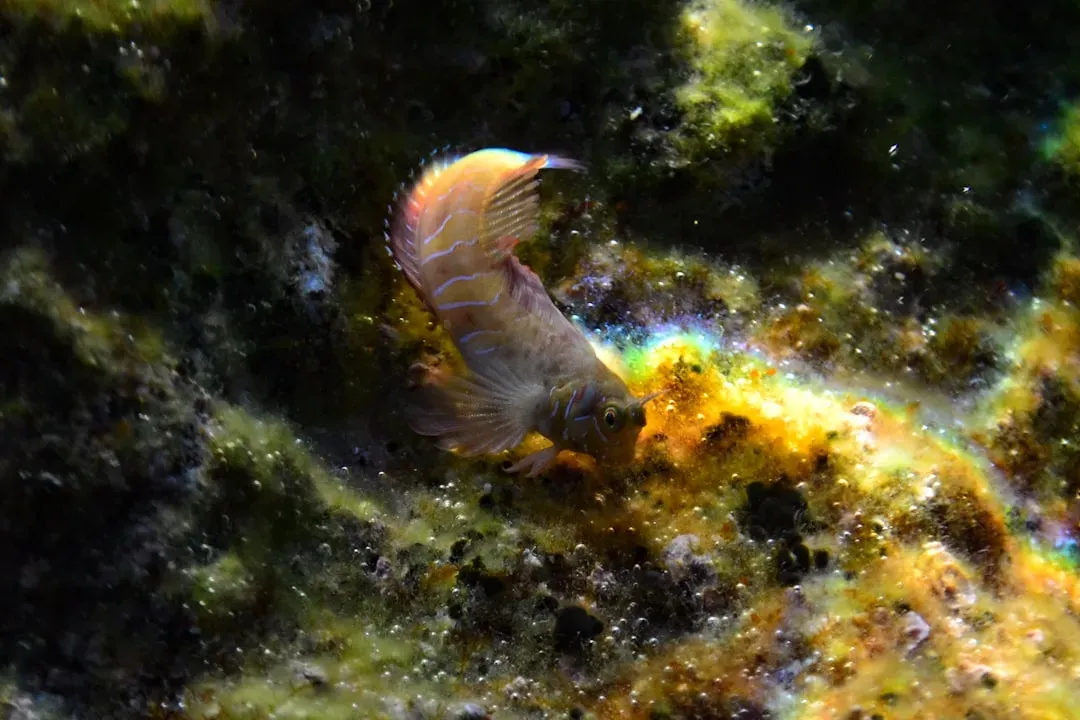
If you picture the deepest fish on Earth as some terrifying monster with fangs and glowing eyes, the snailfish will surprise you. The deepest known species are pale, soft‑bodied fish that look more like melted gummy candy than fearsome predators. Scientists have filmed them more than five miles down in hadal trenches like the Mariana, where pressures are hundreds of times higher than at the surface.
What makes them so strange is how fragile they look, yet how incredibly tough they actually are. Their bodies lack heavy bones, which would likely snap under those brutal pressures, and instead use a flexible, jelly‑like structure that can bend without breaking. They also carry special molecules in their cells that help proteins keep working despite the crushing forces. It’s a quiet reminder that toughness doesn’t always look like armor and teeth – sometimes it looks like a ghostly, see‑through fish calmly gliding along the trench floor.
3. Anglerfish – Living Lanterns of the Abyss
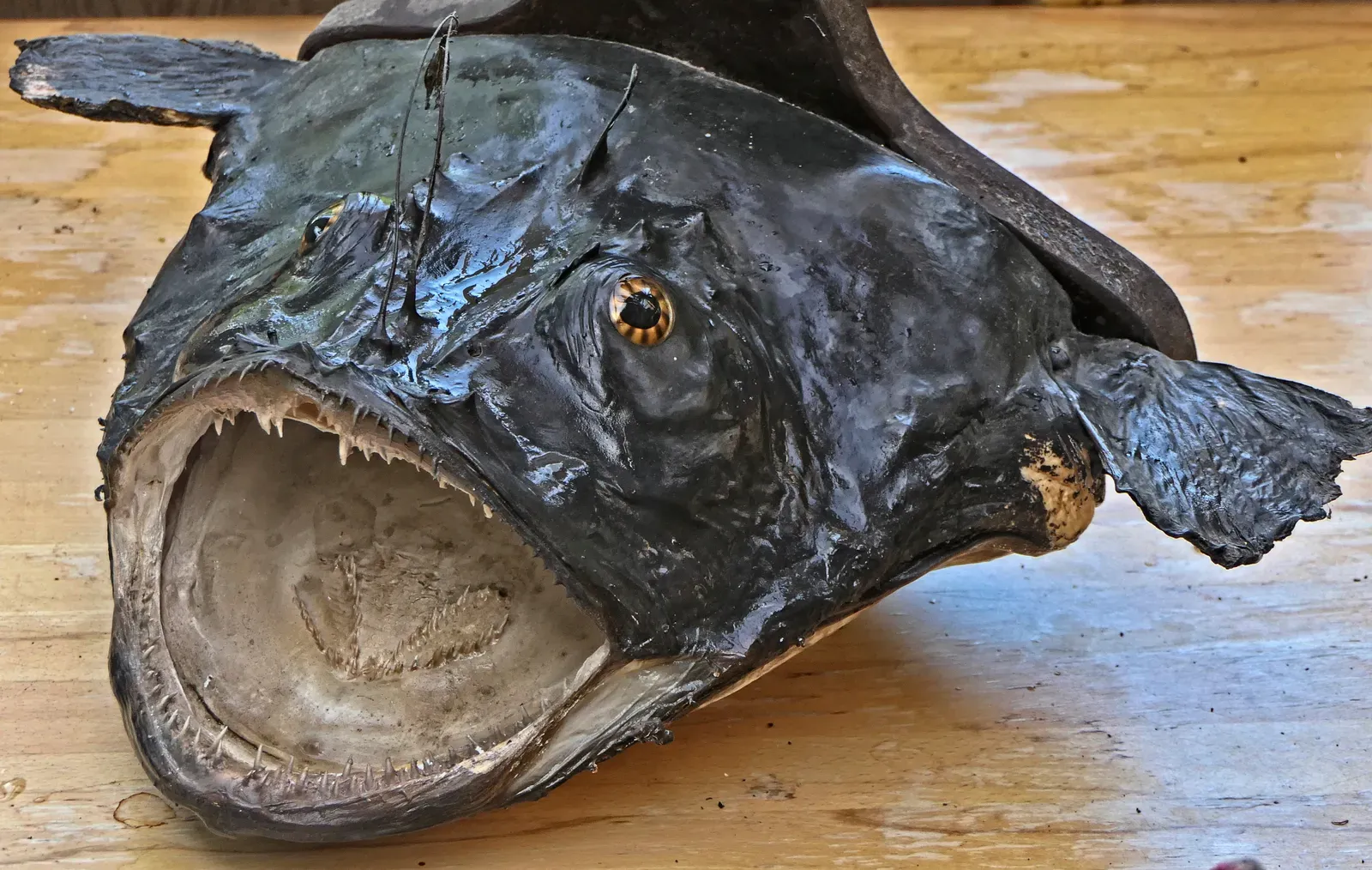
Anglerfish are the stuff of nightmares and biology textbooks at the same time. Females carry a fleshy rod on their heads with a glowing tip, like a living fishing pole dangling in front of their own massive mouths. That eerie light comes from bioluminescent bacteria that live inside the lure, producing a faint glow in the absolute darkness of the deep sea.
Their hunting style is as unsettling as their looks: they hang in the water almost motionless, letting the glow tempt curious prey closer until it’s suddenly all jagged teeth and snapping jaws. Some deep‑sea anglerfish take things even further with their truly bizarre mating strategy, where tiny males permanently fuse onto the much larger females, eventually sharing a bloodstream and becoming little more than living sperm sacks. It’s a strange, brutal solution to the problem of finding a partner in a near‑empty black ocean.
4. Giant Amphipods – Oversized Crustaceans from the Abyss
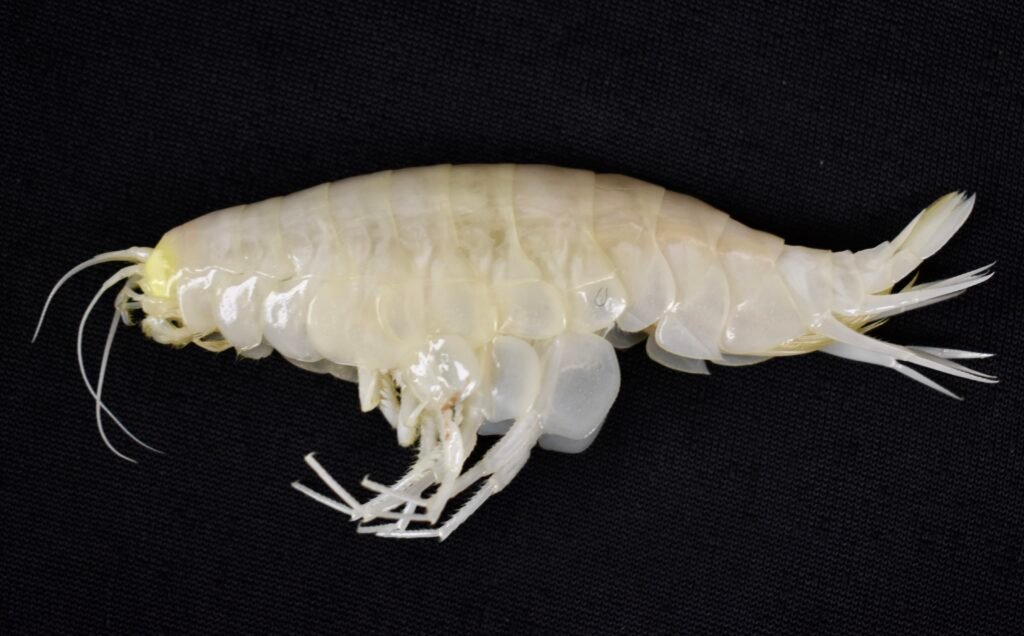
Imagine a shrimp the size of a small cat, drifting up from the seafloor in the beam of a submersible’s lights. That’s what scientists saw when they pulled up giant amphipods from deep trenches near New Zealand and other locations. These transparent, ghostly crustaceans can be more than ten times larger than the typical amphipods you might see on a beach or in shallow waters.
Their oversized bodies are a striking example of what researchers call deep‑sea gigantism, where some species grow far larger at extreme depths than their shallow cousins. The reasons are still being debated – colder temperatures, high pressure, slow metabolisms, and limited predators may all play a part. Watching one of these outsized “shrimp” appear on camera is like suddenly seeing a cockroach the size of a skateboard crawl across your living room floor: familiar, but wrong in scale, and impossible to ignore.
5. Vampire Squid – The Misunderstood Phantom
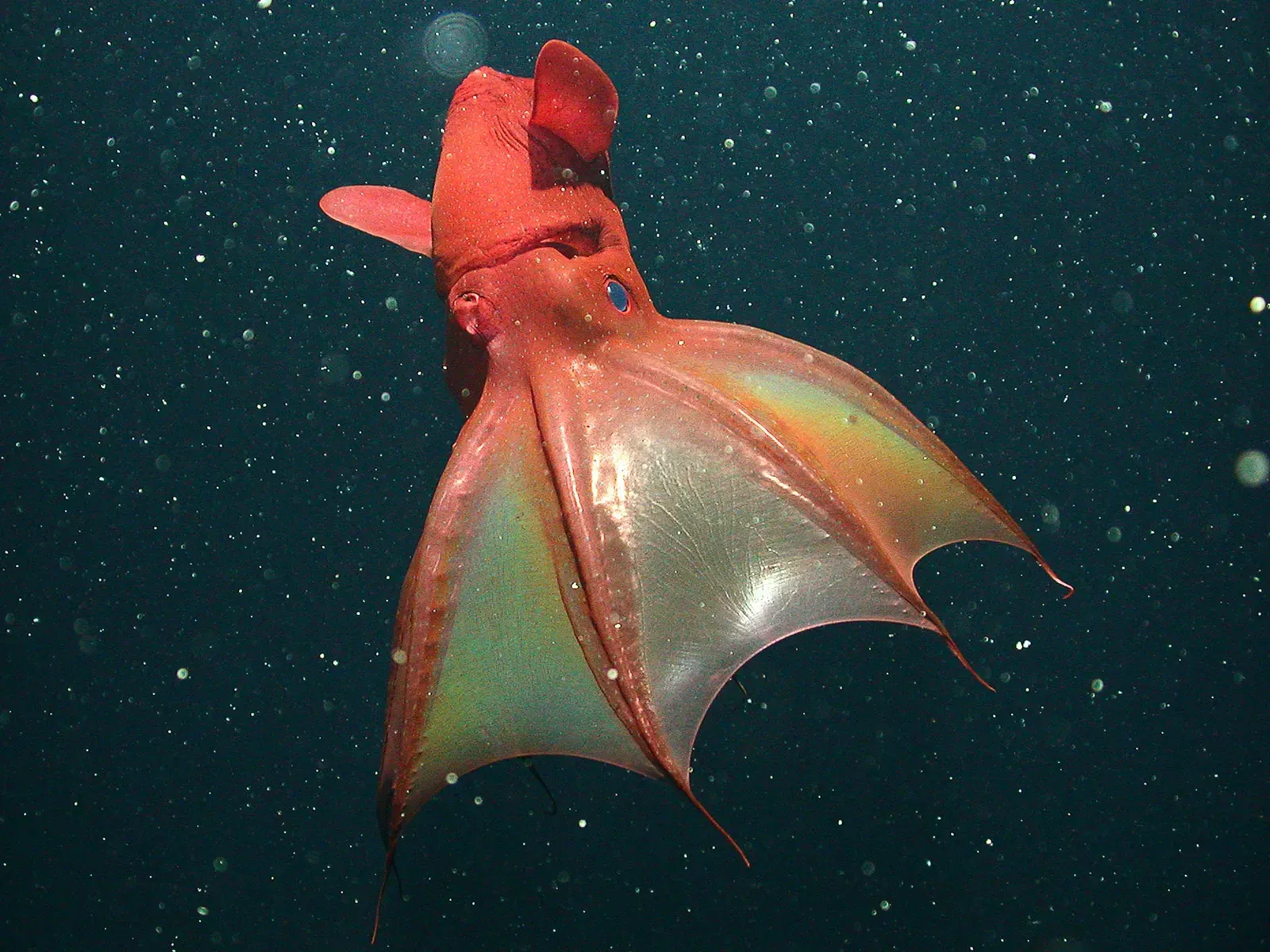
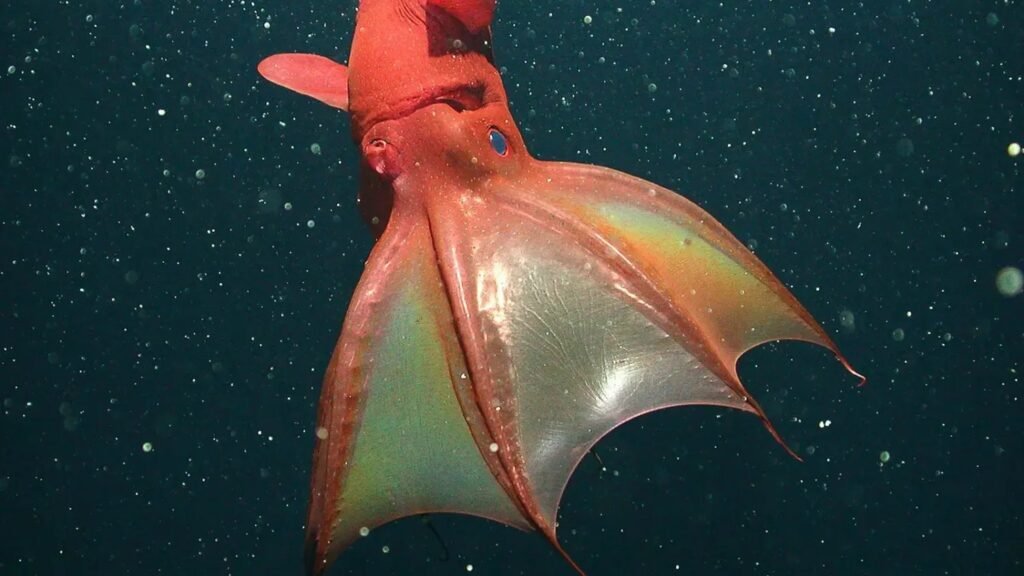
The vampire squid sounds like a horror movie villain, but it’s more of a gentle recycler than a blood‑thirsty predator. It lives in oxygen‑poor, mid‑to‑deep waters between the sunlit surface and the trench floor, thriving where most animals would suffocate. Its body is a dark, velvety shade, and when it spreads its arms and webbing, it looks like a floating cloak in the darkness.
Instead of hunting living prey, the vampire squid feeds mainly on “marine snow,” the constant drift of dead particles and organic debris falling from above. It uses filament‑like appendages to collect this falling dust of the ocean, packing it into little food balls. When threatened, it can flip its cloak over its body, exposing rubbery spikes and turning itself into a spiky, inside‑out ball. It’s bizarre, a little spooky to look at, but also strangely elegant – more a quiet janitor of the deep than a villain.
6. Deep-Sea Dragonfish – Transparent Terror with Invisible Teeth
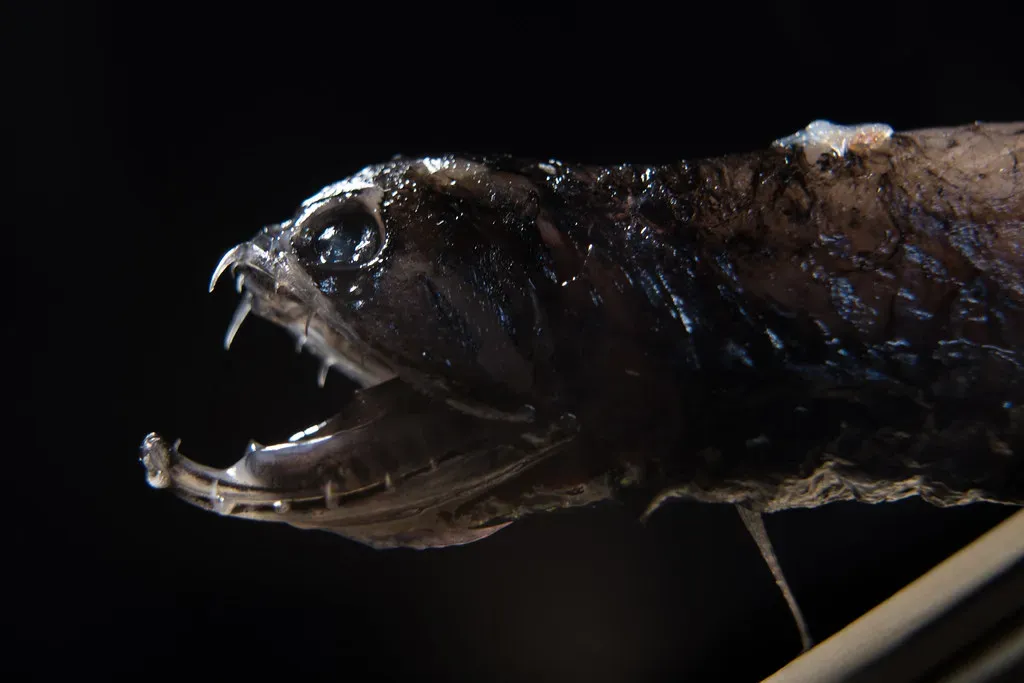
The deep‑sea dragonfish looks like a creature specifically designed to haunt underwater nightmares. It has a long, slender body, huge head, and oversized jaws packed with needle‑like teeth. Some species have teeth that are almost completely transparent, which makes them harder for prey to spot right before it’s too late. When a dragonfish opens its mouth, it’s like a trap made of invisible glass.
Even more bizarre is its use of light. Dragonfish carry light‑producing organs along their bodies, and many can create red bioluminescent light, which is unusual because red light barely exists naturally in the deep sea. Most animals down there can’t see red, so the dragonfish can shine a kind of secret flashlight to spot prey without being noticed. It’s like having night‑vision goggles in a world where everyone else is stumbling around in the dark.
7. Sea Cucumbers of the Trenches – Living Vacuum Cleaners
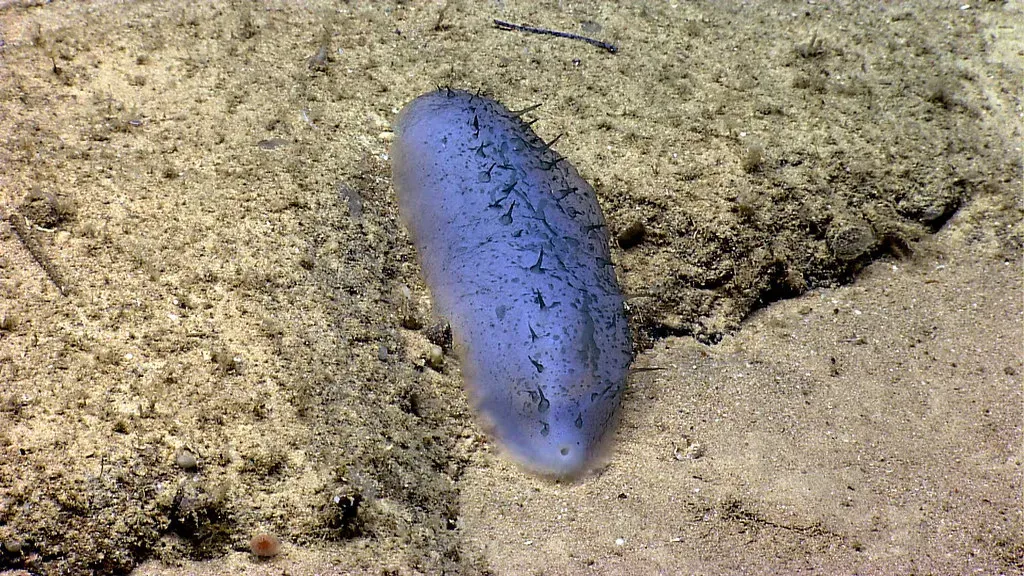
At first glance, deep‑trench sea cucumbers do not look exciting. Many resemble limp, pale blobs stretched across the mud. But watch them longer and they start to feel oddly alien, like slow, breathing bags that glide or crawl over the seafloor, constantly vacuuming sediment. In some trench surveys, these soft‑bodied scavengers dominate the landscape, turning vast stretches of mud into their feeding grounds.
Some deep species have strange adaptations, such as transparent bodies that show their internal organs, or elaborate feeding tentacles that spread out like underwater flowers. Others can inflate and swim awkwardly above the bottom when disturbed, a bit like a jelly‑filled balloon trying to escape trouble. It’s bizarre to think that some of the most important recyclers at the greatest depths are these squishy, overlooked creatures, quietly cleaning up the endless rain of dead material from above.
8. Xenophyophores – Single Cells the Size of Dinner Plates
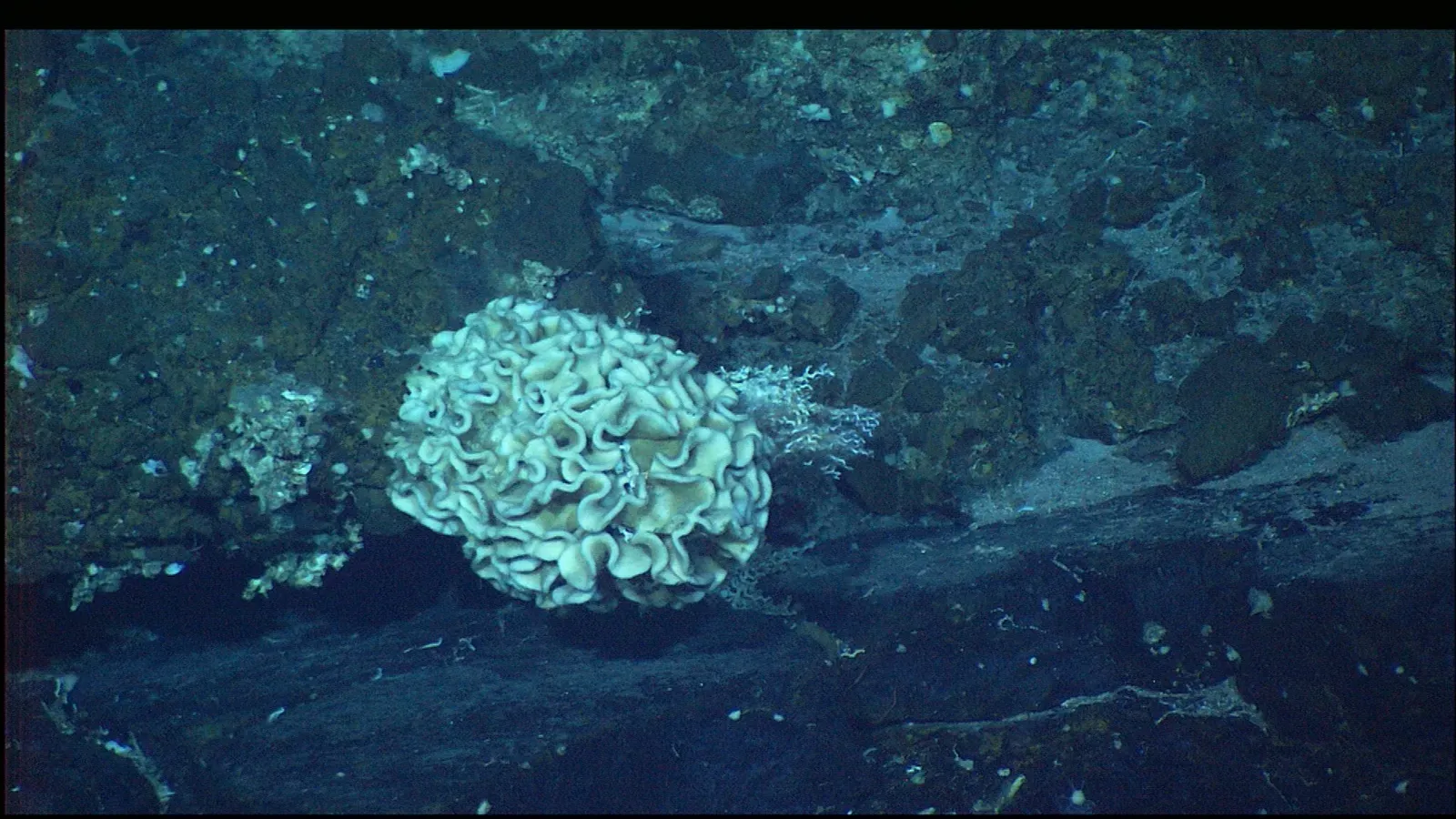
Xenophyophores barely sound real: they are single‑celled organisms that can grow larger than your hand, spreading across the seafloor like lumpy, intricate sculptures. Found in deep trenches and other abyssal plains, they build their structures from particles they gather from the surrounding sediment, almost like microscopic masons stacking grains into bizarre, fractal buildings. You’re basically looking at a single cell that decided it wanted to be a neighborhood.
What makes them especially fascinating is how they shape their environment. Whole mini‑ecosystems form on and around them, as tiny animals use their complex surfaces as shelter and feeding grounds. For something made of just one cell, they have an outsized influence on life in the deep ocean, a bit like a lone tree in a desert that still manages to host birds, insects, and shade‑loving plants. They challenge our normal idea of what “simple life” looks like.
9. Barreleye Fish – The Fish with a Transparent Head
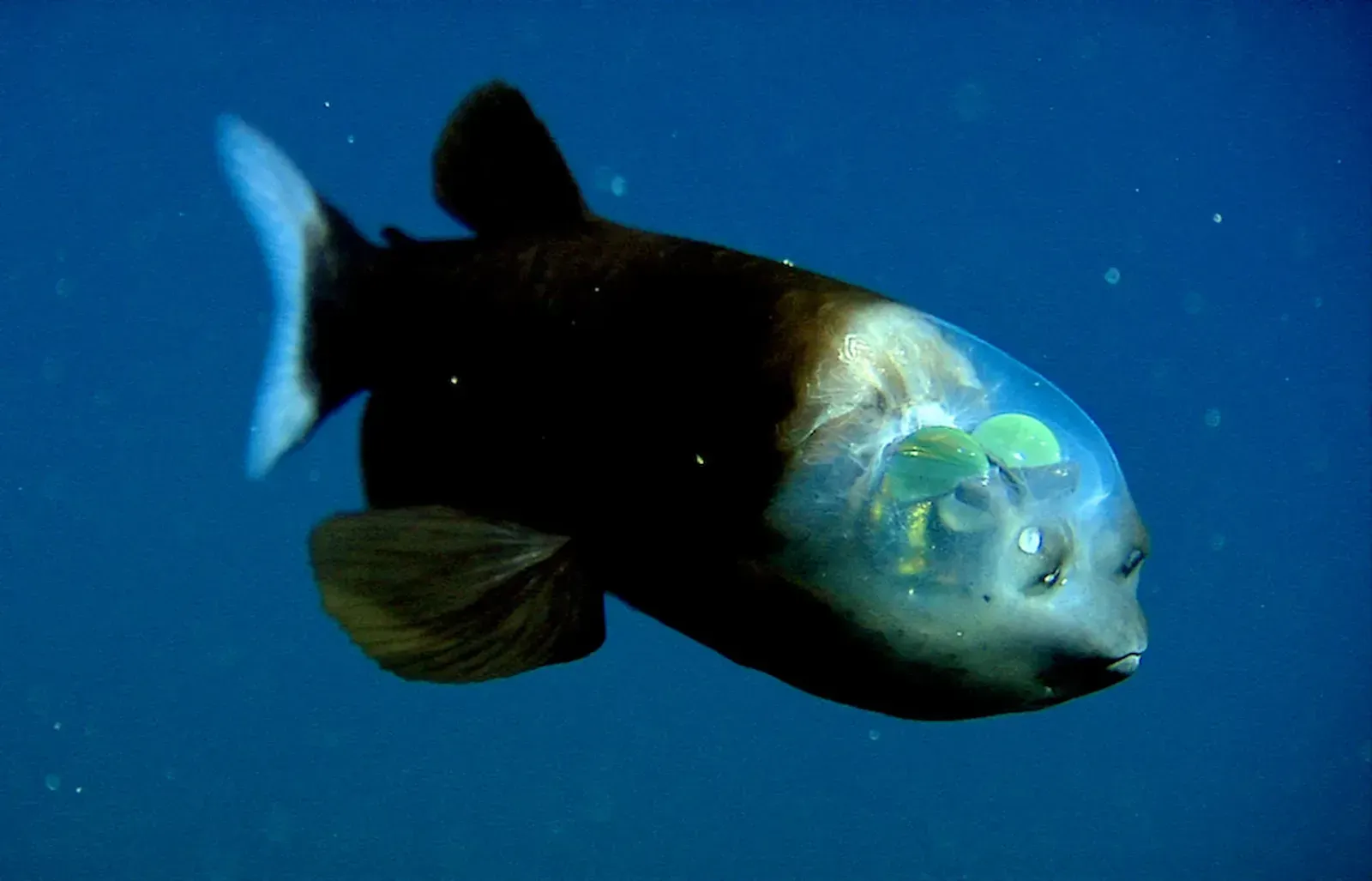
The barreleye fish is one of the ocean’s most unsettling and mesmerizing designs. From the outside, it looks like a typical dark fish with small fins, until you notice that the front of its head is a completely transparent dome. Inside that clear bubble, you can see its bright green, tube‑shaped eyes staring upward, like tiny telescopes in a glass helmet. It’s one of those creatures that makes you wonder if nature is just showing off.
Those upward‑pointing eyes let the barreleye scan the faint silhouettes of animals swimming above, even in near‑total darkness. It can apparently rotate its eyes forward when closing in on prey, giving it a flexible field of view that would put most predators to shame. The transparent shield may protect its sensitive eyes from stinging cells or debris while it steals food from other animals’ tentacles. The first time researchers filmed one alive in the deep mid‑water, it felt less like a new fish and more like discovering a living submarine drone built by the ocean itself.
10. The Blobfish – Misunderstood Icon of the Deep
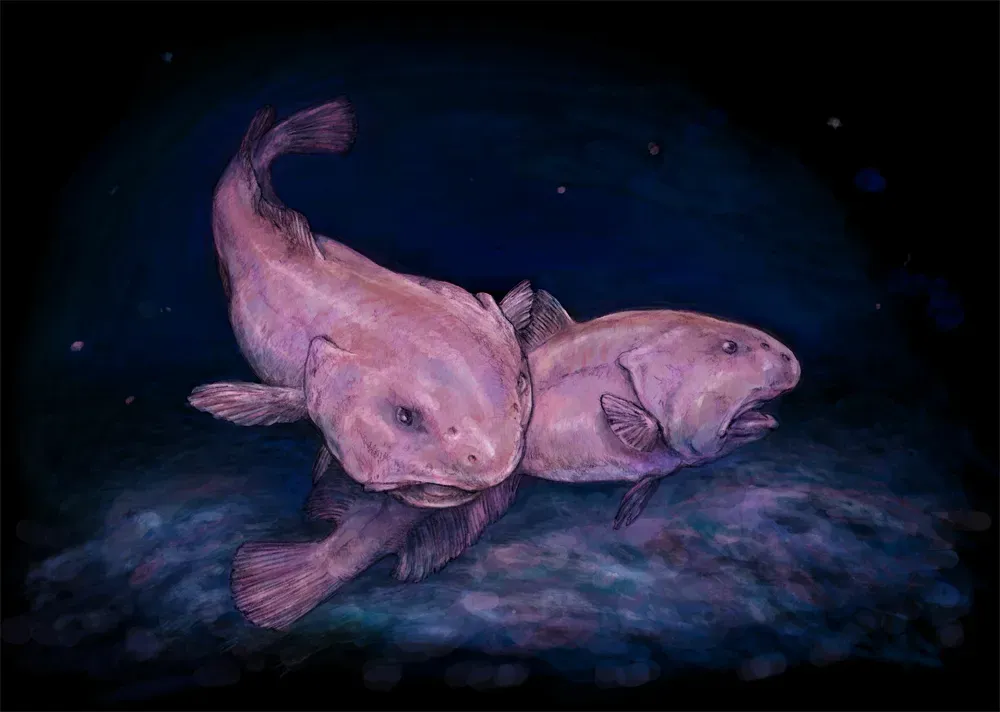
The blobfish became internet‑famous for looking like a sad, melting face, but that image is only half the story. In its natural deep‑sea home, far below the surface off places like Australia, it doesn’t look nearly as ridiculous. Down there, under intense pressure, its gelatinous body is actually well‑suited to the environment. It has very little bone or muscle, which makes it lighter than the high‑pressure water around it and helps it hover just above the seafloor without much effort.
The meme version of the blobfish appears when it’s hauled up quickly to the surface, where the sudden drop in pressure makes its tissues swell and sag. It’s like opening a container of whipped cream that was meant to stay frozen – everything slumps into an unrecognizable mess. In a way, the blobfish is a reminder that we judge deep‑sea animals by surface‑world standards, even though they’re masters of a world we barely understand.
A Strange, Living Frontier Beneath Our Feet
The creatures of the ocean’s deepest trenches are not just curiosities; they’re proof that life can adapt to almost unimaginable extremes. From glowing lures and transparent heads to single cells the size of your hand, each species rewrites our sense of what is biologically possible. The fact that many of these animals have been filmed or collected only in the last couple of decades shows how young our exploration of the deep still is.
As technology improves and more expeditions venture into the abyss, there’s every reason to believe even stranger creatures are waiting in the dark. At the same time, deep‑sea mining and pollution are creeping toward these remote habitats before we’ve even learned who lives there. The deep ocean may be out of sight, but it’s not separate from us; it’s part of the same planet we breathe, eat, and depend on every day. When you think about these bizarre trench dwellers, do they feel more like monsters from another world – or neighbors we’ve only just met?