
Not so long ago, the universe was a quiet backdrop in our textbooks: stars burned, planets orbited, and space felt like an empty stage. Then a handful of astronomical events ripped that stage wide open, revealing a universe that is violent, quantum-strange, and stitched together by invisible forces we’re only beginning to grasp. From the first glimpse of galaxies racing away from us to the eerie “chirp” of colliding black holes, each breakthrough has forced us to rewrite what we thought was settled truth. These moments did more than fill in blanks; they shattered assumptions, bridged theory and observation, and turned speculative ideas in cosmology and quantum physics into hard evidence. What follows is a journey through ten such turning points – and how they still shape the questions we dare to ask next.
The Expanding Universe: When Galaxies Started Running Away
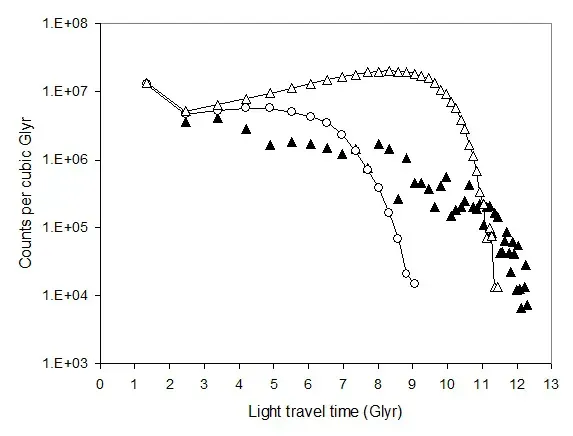
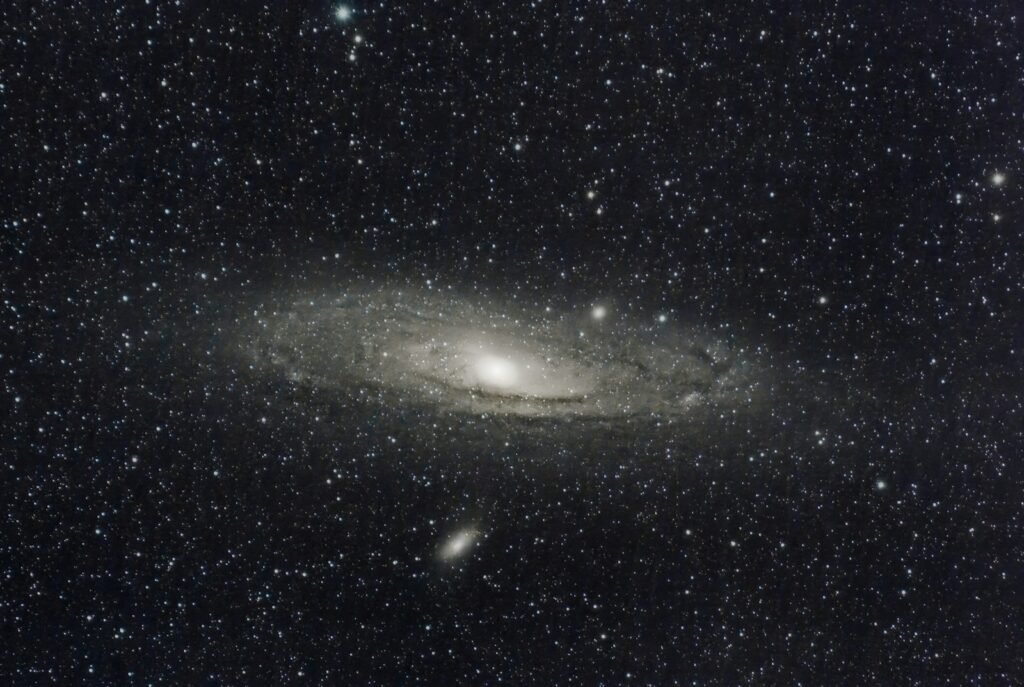
In the 1920s, astronomers expected a mostly static universe, a kind of eternal, unchanging arena for stars and nebulae. That illusion cracked when Edwin Hubble measured the light from distant galaxies and found it was stretched toward the red end of the spectrum, a clear sign those galaxies were racing away from us. The farther the galaxy, the faster it appeared to recede, like milestones on a highway flashing past an accelerating car. This simple but shocking pattern meant space itself was expanding, not just objects moving through it. The idea was so radical that even some physicists resisted it at first, clinging to older models that kept the cosmos fixed in place.
The expanding universe gave real weight to what would become the Big Bang theory: if everything is flying apart now, then long ago, it must have been closer together, denser, hotter. That took cosmology from philosophical musing into something testable, complete with predictions about what leftover signals we ought to see. It also raised unsettling questions about beginnings and endings – was there a cosmic birth, and will there be a cosmic death? This one discovery reset the cosmic timeline and made the universe feel dynamic, evolving, and strangely alive in a way earlier generations never imagined.
The Cosmic Microwave Background: The Afterglow That Confirmed a Bang
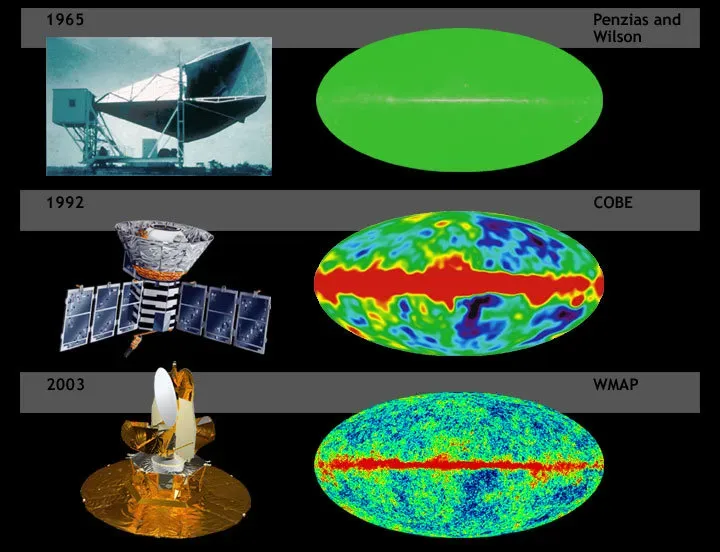
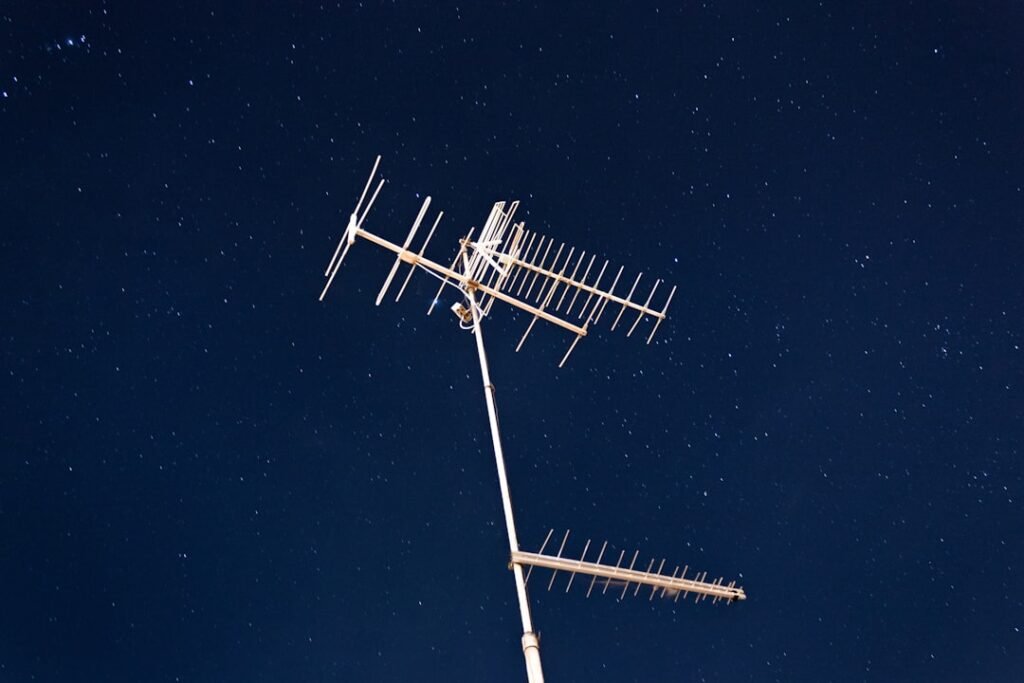
Four decades after the idea of an expanding universe took hold, a faint radio hiss changed everything again. In 1965, two engineers testing an antenna in New Jersey stumbled on a persistent background signal that seemed to come from every direction in the sky. What they were hearing was the cooled remnant of the primordial fireball: radiation released when the early universe went from an opaque plasma to a transparent, expanding cosmos. This glow, now stretched into microwave wavelengths by billions of years of expansion, became known as the cosmic microwave background, or CMB.
The CMB turned cosmology into precision science. Tiny temperature variations mapped later by satellites revealed the seeds of galaxies and cosmic structure, essentially a fossil record of quantum fluctuations stretched to astronomical size. Measurements of the CMB helped pin down key numbers, such as the age of the universe and the relative amounts of normal matter, dark matter, and dark energy. For theorists, it was both a victory lap and a challenge: models that once lived mostly on chalkboards now had to survive direct comparison with sky-wide data. The afterglow of the Big Bang became one of the clearest bridges between quantum physics in the infant universe and the sprawling cosmic web we see today.
Quasars and Black Holes: Monsters Lighting Up the Early Cosmos
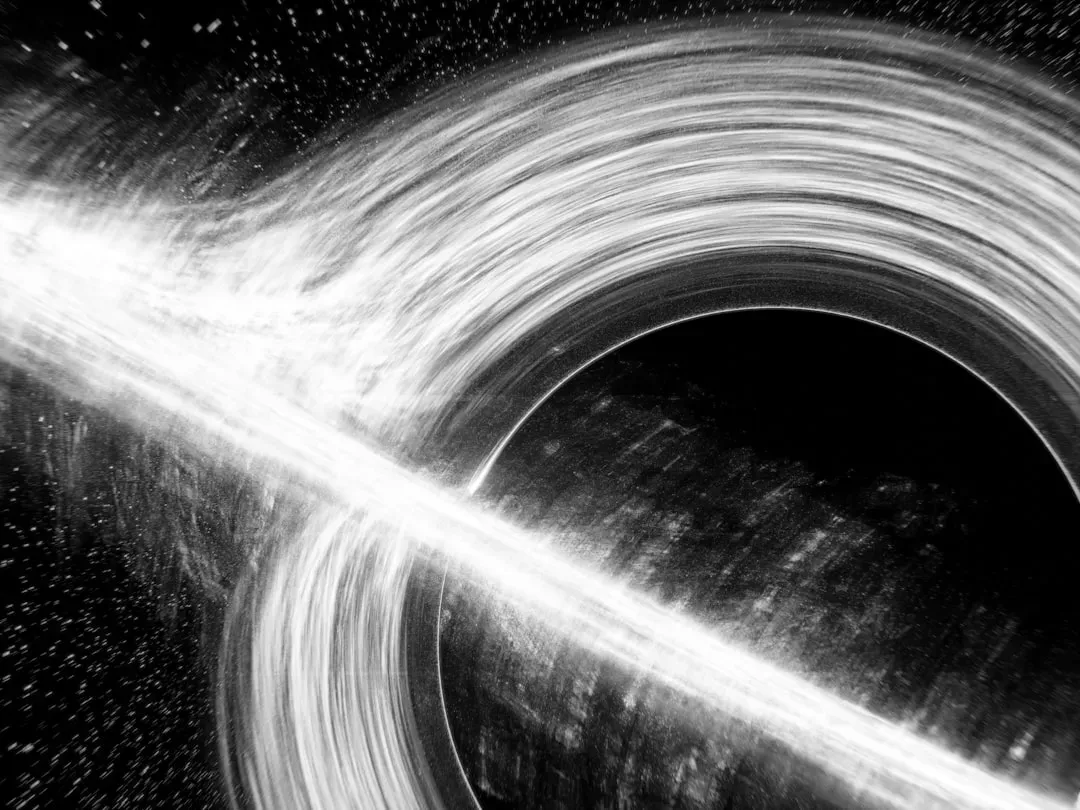
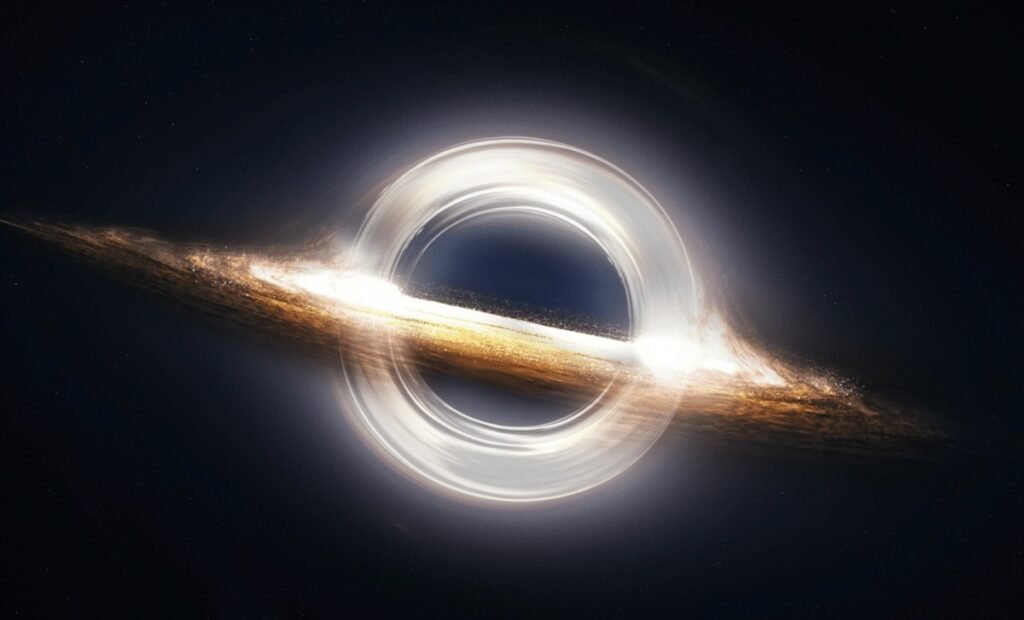
When quasars were first identified in the 1960s, they looked like distant stars that behaved very badly. They shone with the energy of entire galaxies from a region smaller than our solar system, and many were located billions of light-years away, meaning they lit up when the universe was still relatively young. The only power source that made sense was gravity taken to an extreme: supermassive black holes feeding on surrounding gas, heating it to such intense temperatures that it outshone everything else around it. Suddenly, black holes, once considered exotic mathematical curiosities, became central actors in the cosmic story.
These hyperactive cores showed that the universe is not just expanding but also building complex structures in surprisingly short cosmic time. Observations suggested that nearly every massive galaxy, including our own Milky Way, harbors a central black hole, and that the growth of galaxies and their central monsters is tightly linked. On a deeper level, black holes are where general relativity and quantum physics collide most violently, forcing physicists to confront paradoxes about information, spacetime, and the limits of known physics. Quasars and active galactic nuclei transformed black holes from theoretical end points into laboratories for some of the hardest questions in science.
Dark Matter and Galactic Rotation: The Invisible Hand in the Night
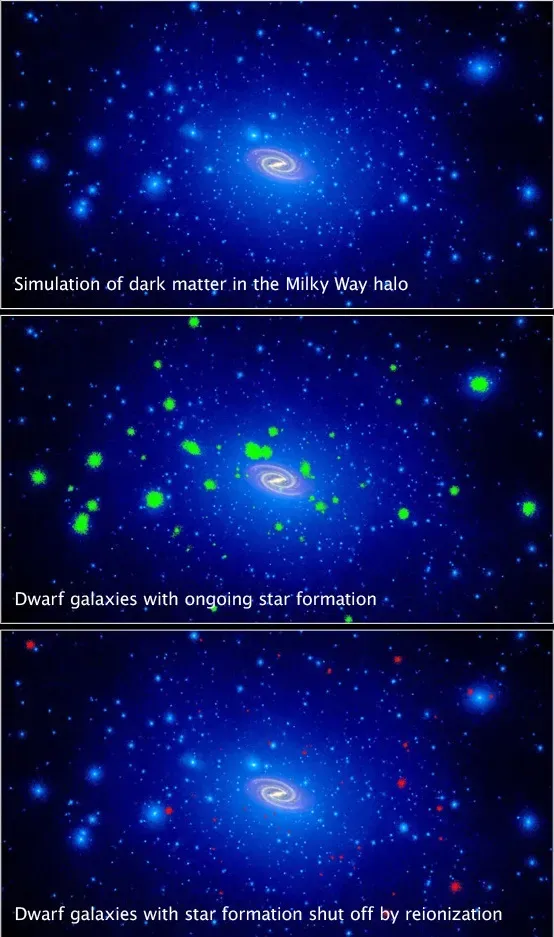
In the 1970s, astronomer Vera Rubin noticed something unsettling while studying how stars orbit within spiral galaxies. Instead of slowing down at large distances from the galactic center, stars in the outer regions were whipping around far faster than visible matter alone could explain. To keep these galaxies from flying apart, there had to be a huge amount of unseen mass providing extra gravitational glue. This invisible material, later dubbed dark matter, did not emit or absorb light, but its gravitational fingerprints were all over cosmic structures.
Dark matter forced a profound shift in how we think about what the universe is made of. Today, astronomers estimate that ordinary atoms – the stuff of planets, people, and stars – make up only a small fraction of the total cosmic matter content. The rest is some unknown form that may consist of as-yet-undetected particles interacting weakly with normal matter, a mystery that bleeds into particle physics and quantum field theory. The evidence stacks up across many fronts: galaxy rotation curves, gravitational lensing, galaxy cluster dynamics, and the pattern of fluctuations in the cosmic microwave background. Each of these threads points toward a universe where most of the matter is fundamentally invisible, shaping everything we see from behind the scenes.
Accelerating Expansion and Dark Energy: A Universe Pushing Itself Apart
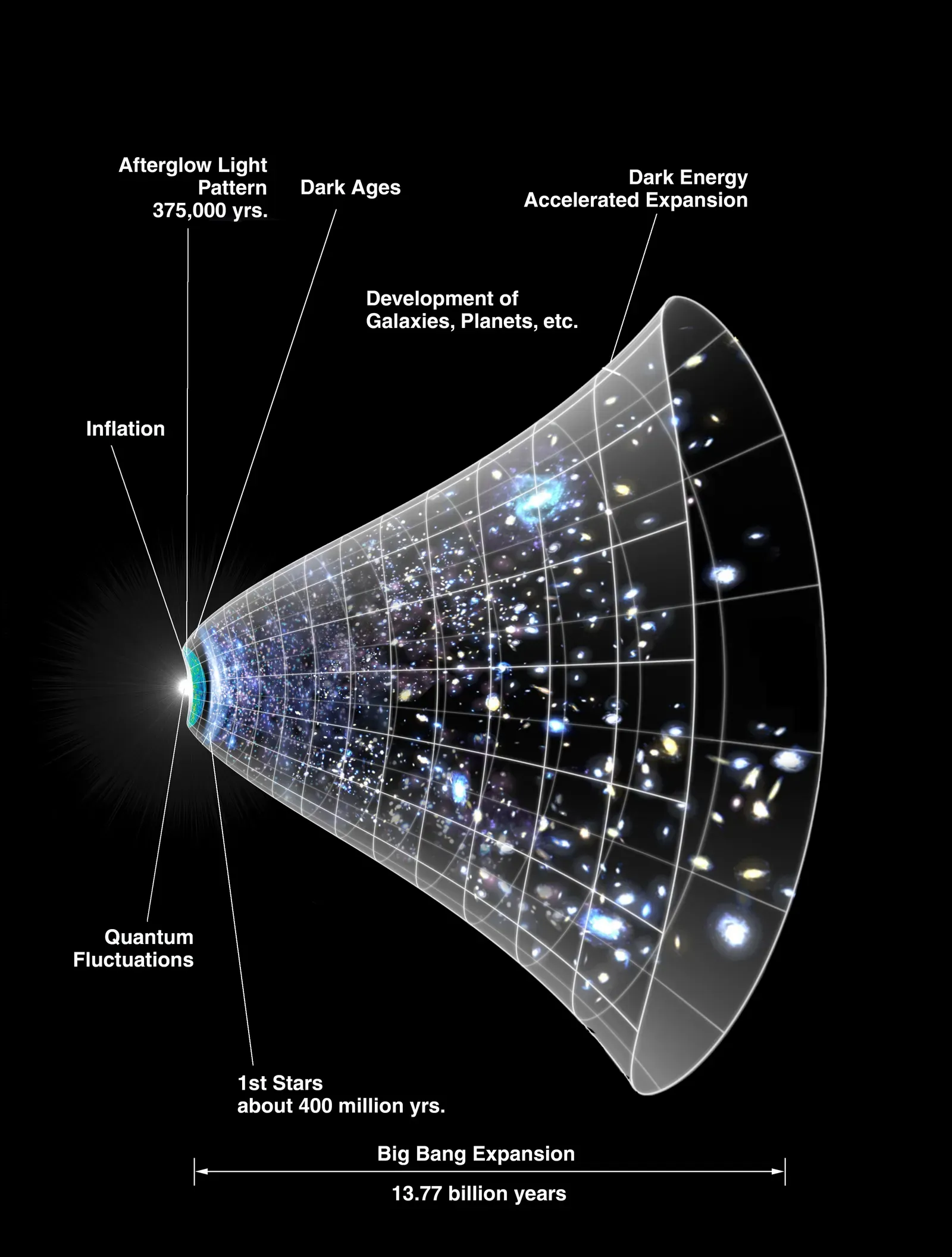
By the late 1990s, astronomers thought they had a solid grip on cosmic expansion: the Big Bang sent galaxies flying apart, and gravity should gradually slow that motion. Then teams using Type Ia supernovae as standard candles discovered something truly unsettling – the expansion of the universe is not slowing down, but speeding up. These exploding stars, all with similar intrinsic brightness, appeared dimmer than expected at large distances, implying they were farther away than a simple decelerating expansion model would predict. The best explanation was that some mysterious component of the cosmos, dubbed dark energy, is driving an accelerated expansion.
Dark energy now accounts for roughly about two thirds of the total energy budget of the universe in leading models, dwarfing both normal matter and dark matter. The simplest explanation is that it is related to the energy of empty space itself, a kind of cosmological constant, but theoretical calculations from quantum field theory overshoot the observed value by mind-bending factors. This “why is the vacuum so light?” problem is one of the biggest unsolved puzzles in modern physics. The discovery of acceleration did not just tweak existing cosmology; it exploded it, forcing scientists to wonder whether gravity behaves differently on the largest scales or if our most basic theories are missing a piece. The universe, it turns out, is not just expanding – it is increasingly dominated by a force we barely understand.
Gravitational Waves: Listening to the Universe’s Dark Collisions
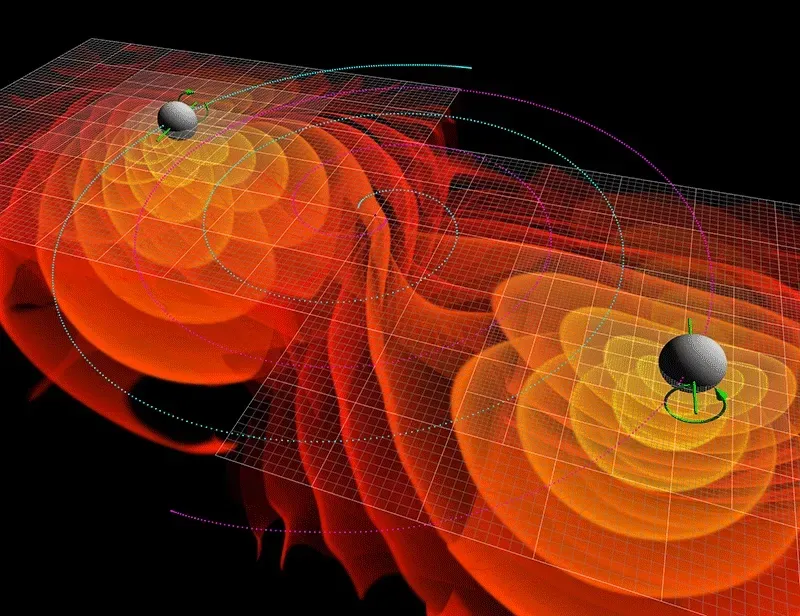
For a century, gravitational waves lived mostly as a beautiful prediction of general relativity: ripples in spacetime produced by massive objects in motion. In 2015, the Laser Interferometer Gravitational-Wave Observatory (LIGO) finally caught one in the act, detecting the tiny stretching and squeezing of space caused by two colliding black holes more than a billion light-years away. The signal, a brief “chirp” in the detectors, matched exquisitely detailed models of black hole mergers generated using Einstein’s equations. That single event announced a new era in astronomy, one where we no longer just see the universe – we hear it as well.
Gravitational-wave astronomy does more than confirm a century-old theory; it opens a way to study objects that do not emit light at all. Black hole binaries, neutron star collisions, even potential signatures of cosmic strings or early-universe phase transitions all become accessible through their spacetime vibrations. The 2017 detection of merging neutron stars, accompanied by light across the electromagnetic spectrum, tied together gravitational waves, gamma rays, visible light, and heavy element production in one spectacular event. These observations probe extreme gravity, dense matter, and aspects of quantum field theory in curved spacetime that would be impossible to recreate on Earth. In just a few years, we have gone from silence to a growing symphony of cosmic collisions rewriting textbooks in real time.
Exoplanets and Habitable Zones: Finding Other Worlds in the Dark
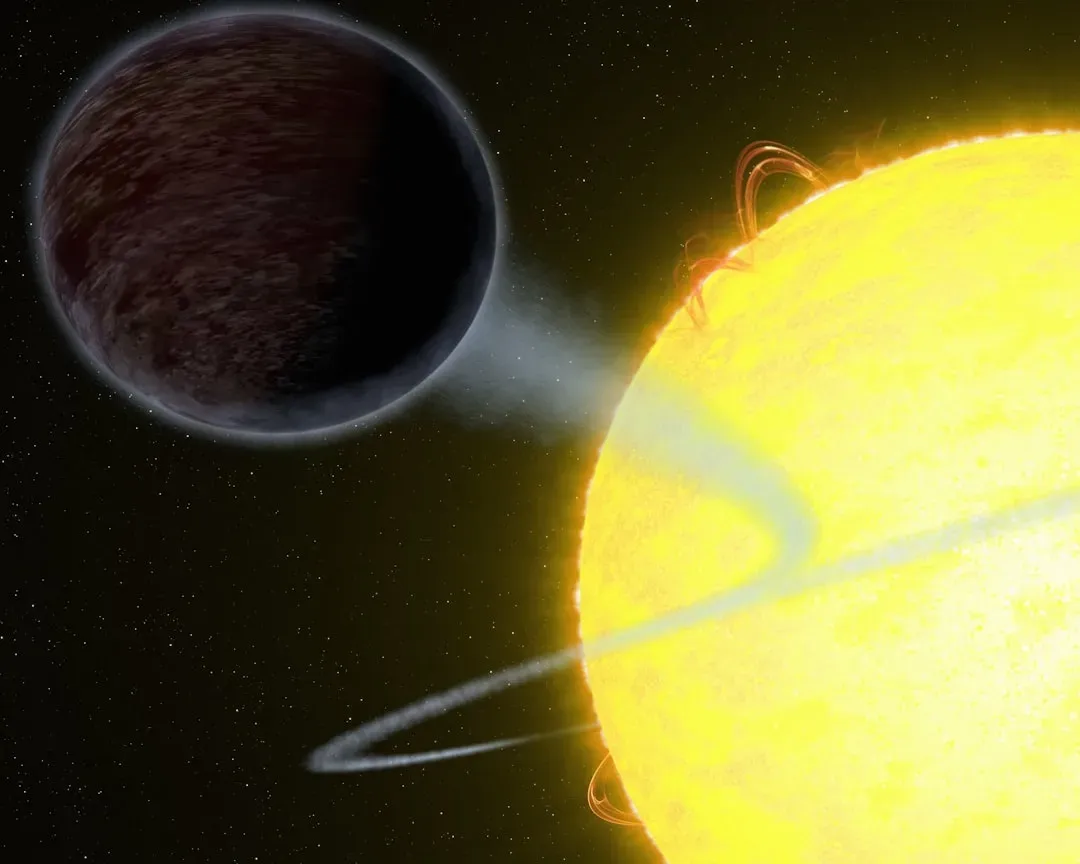
For most of human history, other planetary systems were the stuff of stories and speculation. That changed in the 1990s when astronomers confirmed planets orbiting Sun-like stars, and it exploded in the 2000s and 2010s with missions like Kepler and TESS. Suddenly, thousands of exoplanets emerged from the data, from hot Jupiters skimming the surfaces of their stars to rocky worlds in temperate orbits. The sheer variety of planetary systems shattered neat models based solely on our own solar system, showing that nature is wildly more inventive than we had guessed.
These discoveries carry profound implications for our place in the universe. Worlds in the so-called habitable zone – where conditions might allow liquid water – have become prime targets in the search for life. New telescopes are beginning to analyze exoplanet atmospheres, hunting for chemical fingerprints that could hint at biological activity or unusual geochemical processes. At the same time, the formation and evolution of these worlds tie into broader questions about how disks of gas and dust evolve, how gravity sculpts planetary architectures, and how frequently habitable conditions really arise. Exoplanets transformed the night sky from a static dome of stars into a crowded neighborhood of potential homes, each one a test of our theories about planetary and even biological evolution.
Quantum Fluctuations and Inflation: Tiny Tremors, Gigantic Structures
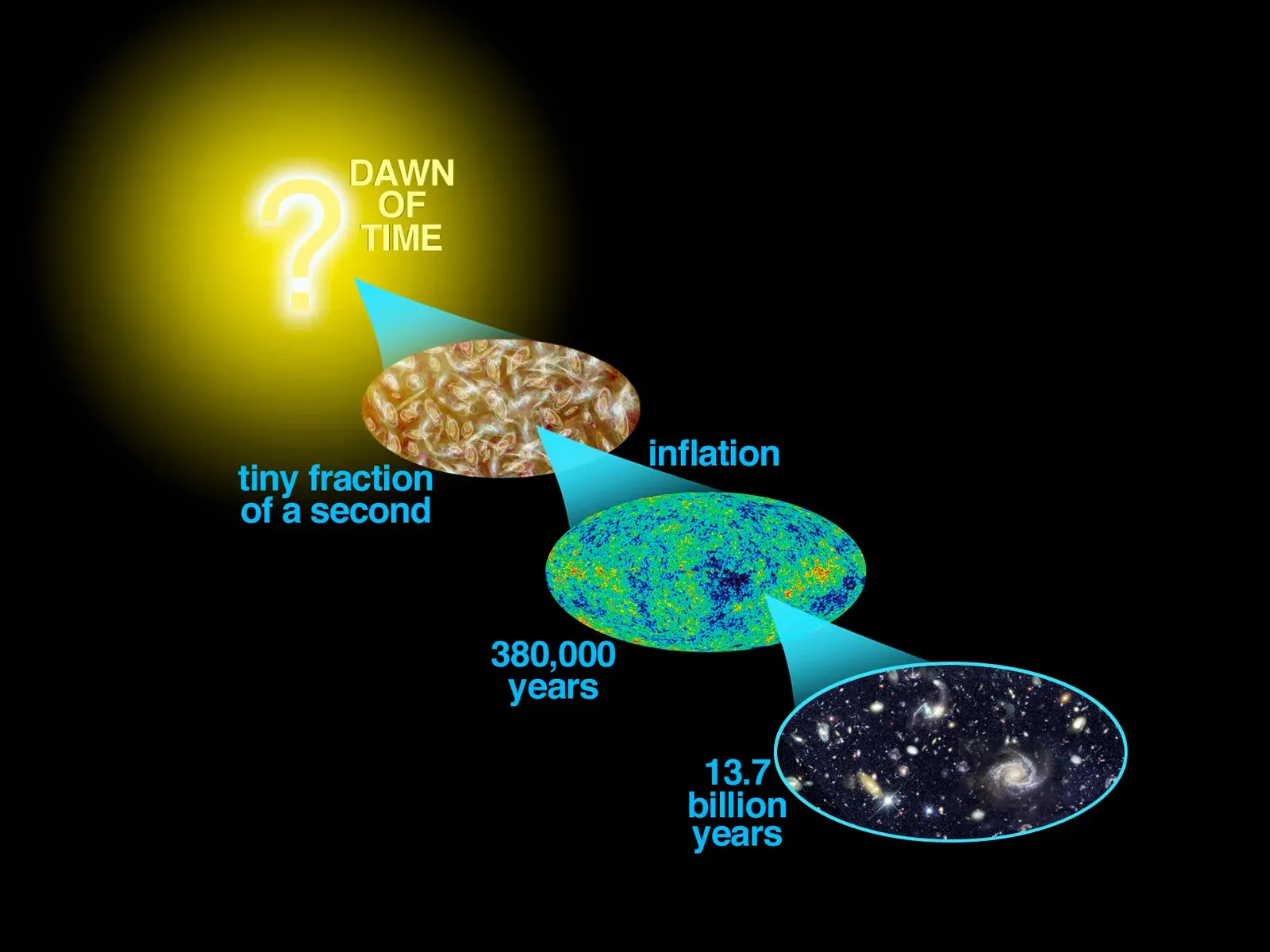
One of the strangest insights of modern cosmology is that the largest structures in the universe may trace their origins to the smallest scales allowed by quantum mechanics. Inflation theory proposes that in a fraction of a second after the Big Bang, the universe underwent an almost unimaginably rapid expansion, smoothing out irregularities and stretching tiny quantum fluctuations to cosmic size. These fluctuations in energy density became the seeds of galaxies and clusters, leaving their imprint as subtle temperature variations in the cosmic microwave background. The match between inflationary predictions and observed patterns in the CMB gave the idea significant credibility.
This is where quantum physics and cosmology practically collide head-on. In inflationary models, the randomness of quantum fields helps determine the large-scale distribution of matter billions of years later. That link between micro and macro scales challenges our intuition and raises deep questions about initial conditions, multiverse scenarios, and what it even means to talk about the “beginning” of the universe. While the details of inflation – its exact mechanism, its energy scale – remain under intense investigation, the general idea that quantum jitters helped sculpt the cosmic web is now woven into mainstream cosmological thinking. The universe we see through telescopes may quite literally be a blown-up snapshot of quantum noise.
Why These Events Matter: Rewriting Our Cosmic Story
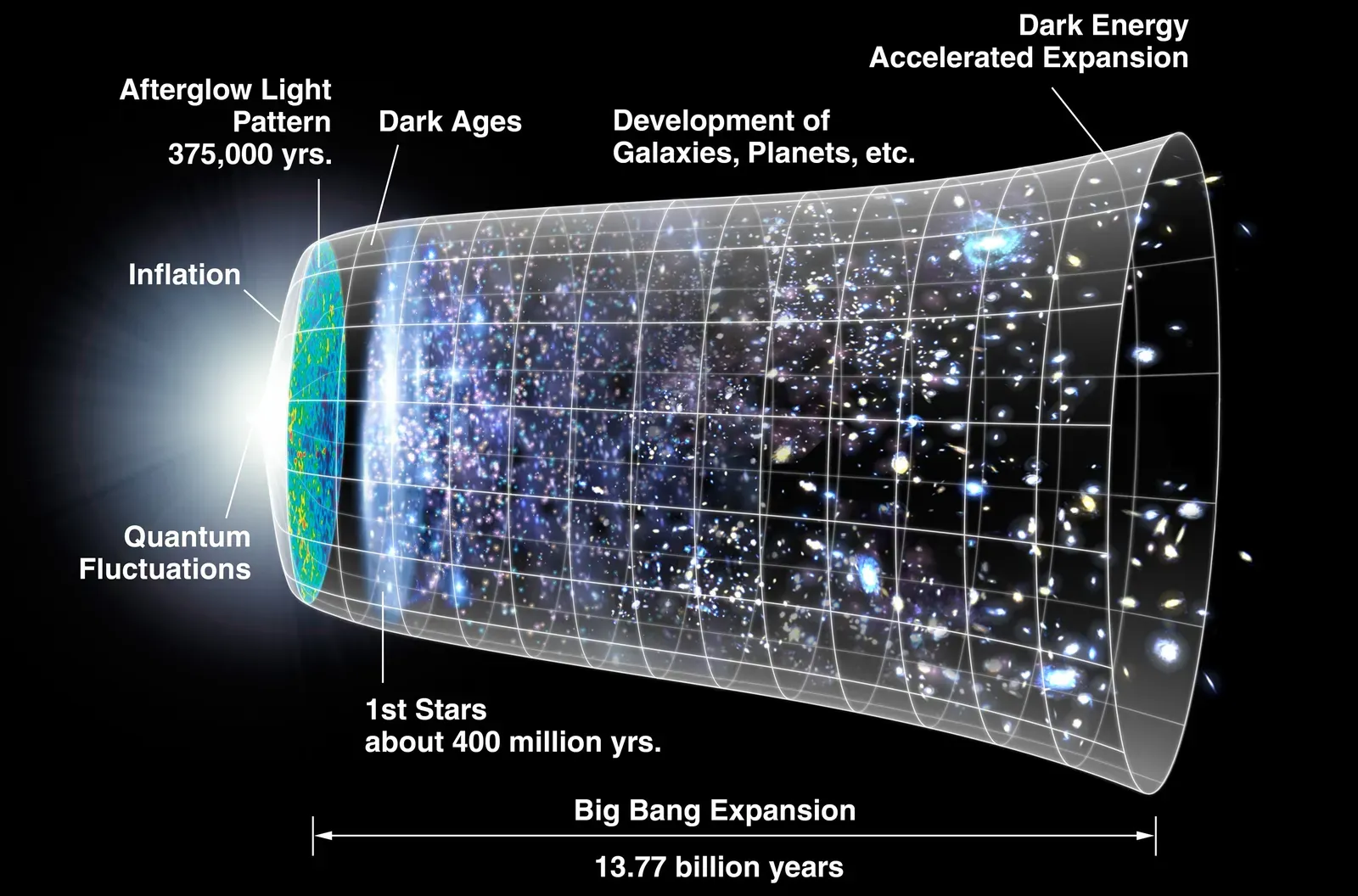
Each of these breakthroughs did more than add a new chapter to an astronomy textbook; they forced us to tear out and rewrite earlier pages. Before the discovery of the expanding universe and the cosmic microwave background, cosmology was closer to philosophical speculation than hard science. Dark matter, dark energy, and gravitational waves turned abstract equations into testable predictions, often confirming the wildest features of general relativity while exposing its limits. Exoplanets and quasars took us from a cozy, solar-system-centered view to a universe where our neighborhood looks almost provincial.
Compared with traditional models that assumed a static cosmos made mostly of stars and gas, the modern universe is dominated by invisible components, shaped by quantum fluctuations, and punctuated by violent gravitational events. This shift matters far beyond academic curiosity. It affects how we estimate the ultimate fate of the cosmos, how we interpret high-energy phenomena like gamma-ray bursts, and how we design future experiments in particle physics and quantum gravity. On a human level, these discoveries challenge our sense of uniqueness, placing Earth in a sea of worlds and our galaxy in a web of structures sculpted by forces we barely understand. They remind us that science is not a steady march toward certainty but a series of jolts that keep the universe stranger than we ever expected.
The Future Landscape: Quantum Telescopes, Next-Gen Observatories, and New Mysteries
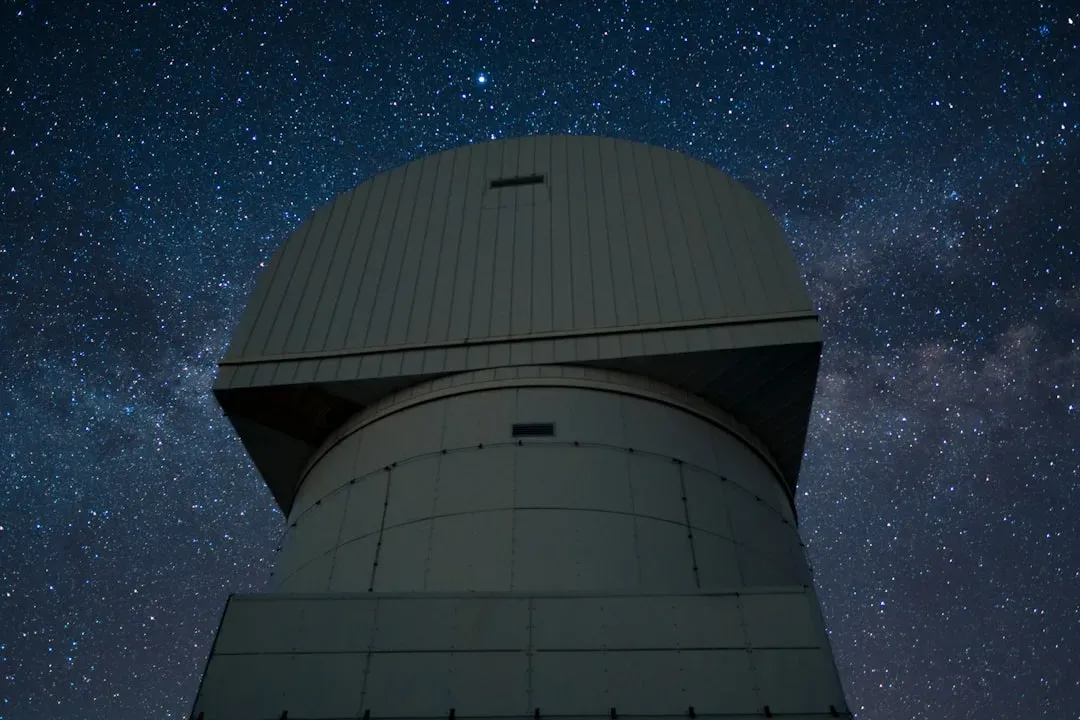
The next few decades in astronomy are poised to be just as disruptive as the last century, if not more. New space telescopes and giant ground-based observatories will peer deeper into cosmic history, targeting the first stars, galaxies, and black holes that lit up the universe after the Big Bang. Gravitational-wave detectors will become more sensitive and more numerous, potentially catching signals from sources we have not yet imagined, like intermediate-mass black holes or even echoes of early-universe physics. Radio arrays and cosmic microwave background experiments will refine measurements of inflationary fingerprints and dark energy’s subtle tug on the expansion rate.
At the same time, quantum technologies are beginning to creep into astronomy, from ultra-precise atomic clocks for timing pulsars to entangled-photon techniques that could push the limits of imaging. Efforts to directly detect dark matter particles in underground labs and at accelerators will test whether our favorite theories about hidden sectors of the universe have any grounding in reality. These tools do not just aim to fill in missing decimals; they could flip our understanding again, revealing that dark energy is not constant, that gravity behaves differently on vast scales, or that our standard model of cosmology needs a radical overhaul. The future landscape is less a finished map and more a set of expedition plans into uncharted territory.
How You Can Stay Engaged With a Changing Cosmos
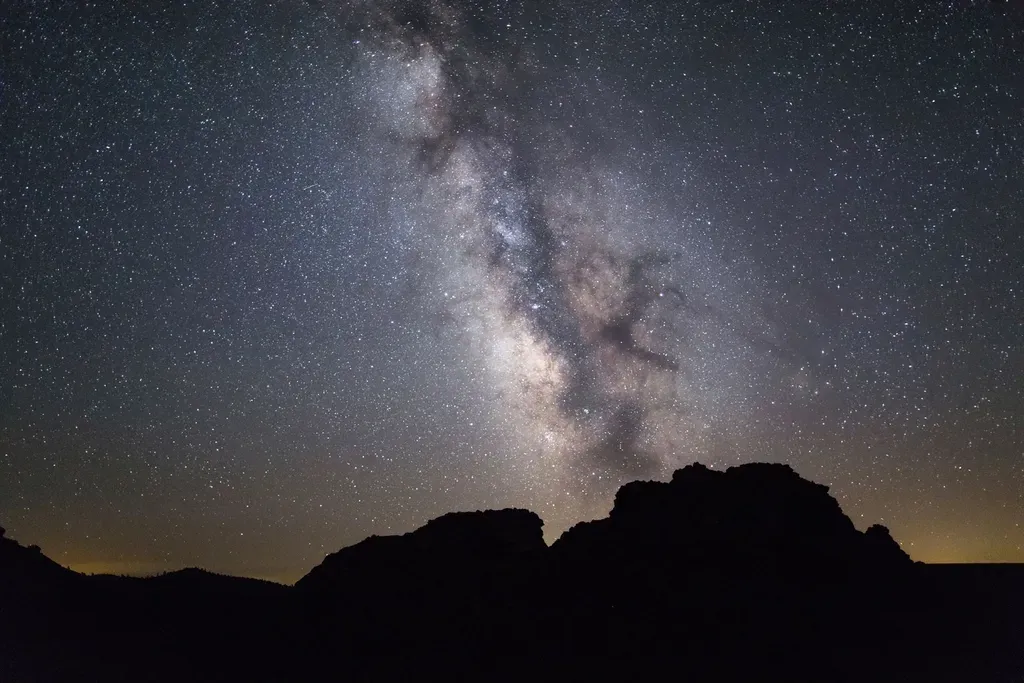
You do not need a PhD or access to a telescope on a mountaintop to be part of this unfolding story. Public data from major missions are increasingly open, allowing citizen scientists to help discover exoplanets, classify galaxies, and even flag strange gravitational-wave candidates. Supporting science-focused organizations, museums, and journalism outlets keeps the flow of accurate, nuanced reporting alive in a world drowning in misinformation. Even small choices – like following reliable research institutions, attending local astronomy nights, or joining online observing projects – can keep you connected to discoveries as they happen.
On a broader level, public interest helps drive funding and political will for the big, ambitious projects that redefine our cosmic picture. When you vote, share science stories, or encourage curiosity in kids, you are nudging the universe’s next big revelation a little closer. The night sky above you is not just a backdrop; it is an active laboratory, and its greatest surprises are almost certainly still ahead. The real question is whether we will be paying attention when the next universe-changing signal arrives.
Suhail Ahmed is a passionate digital professional and nature enthusiast with over 8 years of experience in content strategy, SEO, web development, and digital operations. Alongside his freelance journey, Suhail actively contributes to nature and wildlife platforms like Discover Wildlife, where he channels his curiosity for the planet into engaging, educational storytelling.
With a strong background in managing digital ecosystems — from ecommerce stores and WordPress websites to social media and automation — Suhail merges technical precision with creative insight. His content reflects a rare balance: SEO-friendly yet deeply human, data-informed yet emotionally resonant.
Driven by a love for discovery and storytelling, Suhail believes in using digital platforms to amplify causes that matter — especially those protecting Earth’s biodiversity and inspiring sustainable living. Whether he’s managing online projects or crafting wildlife content, his goal remains the same: to inform, inspire, and leave a positive digital footprint.