
There is a star sitting at the heart of our solar system that you have depended on every single second of your life. You have never shaken its hand or sent it a thank-you note, yet without it, you would simply not exist. Not the planet. Not the oceans. Not a single blade of grass.
Most people think of the Sun as just the bright thing that makes summers unbearable or gives you a reason to buy sunglasses. Honestly, that’s a bit like thinking of the ocean as just the thing that gets your beach towel wet. The Sun is a staggeringly powerful, mind-bending cosmic engine, and what it does for life on Earth goes so far beyond warmth and light that you might be shocked to learn just how deep the relationship runs. Buckle up, because what follows might genuinely change how you look up at the sky.
You Are Essentially Powered by a 4.5-Billion-Year-Old Nuclear Reactor
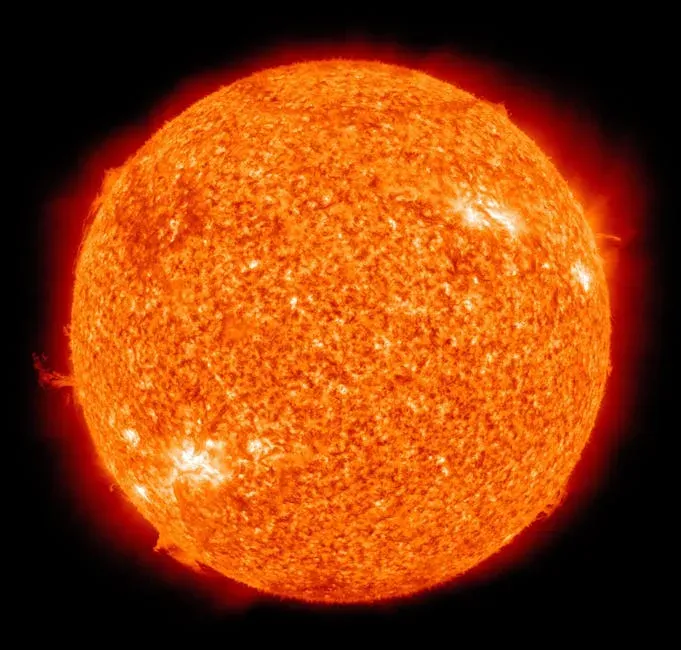
Your Sun is a 4.5-billion-year-old yellow dwarf star, a hot glowing ball of hydrogen and helium at the center of the solar system. That might sound like an ordinary cosmic object, but the scale of what it does every single second is almost incomprehensible. Think of the most powerful nuclear plant ever built and then try to multiply it by an astronomical number that your brain simply cannot process.
The Sun’s core is a 15-million-degree maelstrom converting hydrogen into helium at an astonishing rate. With each passing second, the Sun converts approximately 600 million tons of hydrogen into 596 million tons of helium, transforming 4 million tons of matter into energy, released as sunshine. Every breakfast you eat, every tree you see, every breath you take traces back to that relentless nuclear furnace. You are, in the most literal sense, powered by stellar fire.
The Sun Contains Nearly Everything in the Solar System
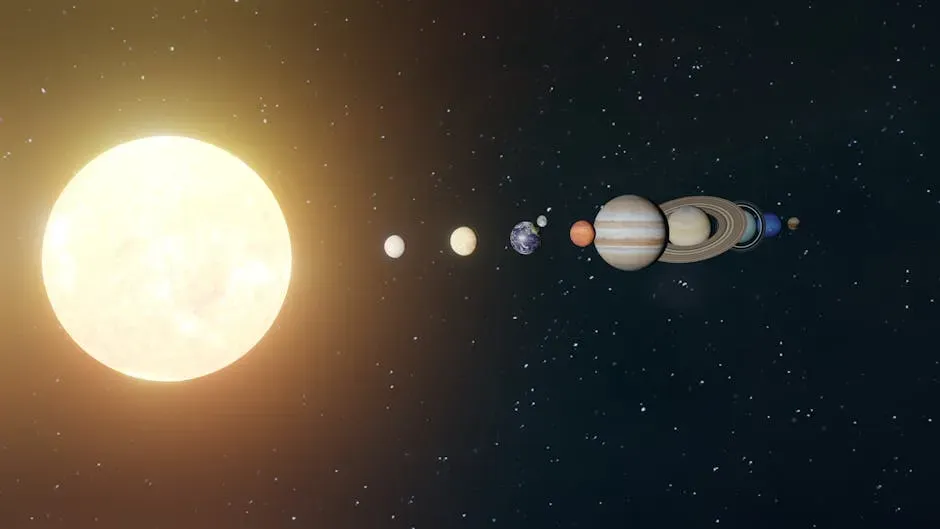
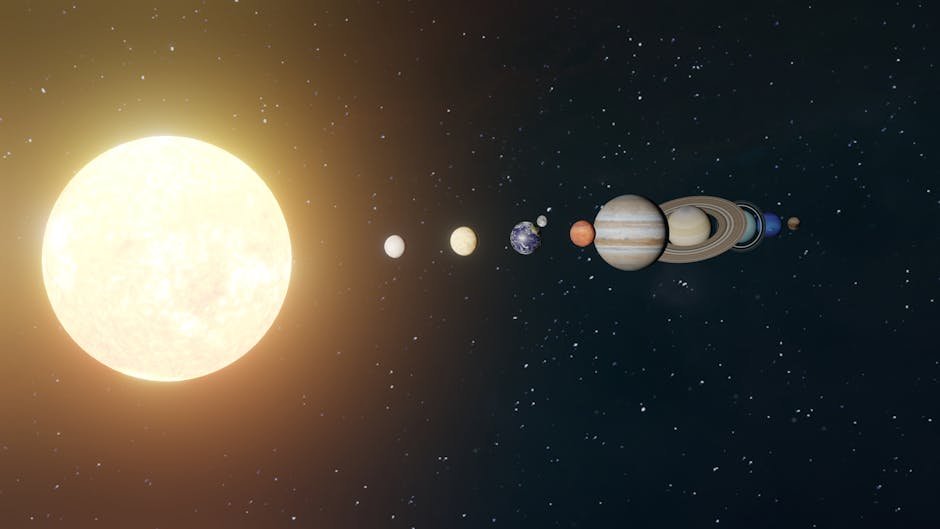
Your Sun contains nearly all of the mass of the entire solar system and weighs about 333,000 times as much as Earth. In terms of volume, about 1 million Earths would fit inside the Sun. Let that sink in for a moment. Every planet, every moon, every asteroid, every comet, every wandering chunk of rock you have ever heard of, all of it combined, adds up to a tiny fraction of what the Sun contains.
The Sun contains almost all of the material in the solar system, nearly all of it. All the planets, asteroids, and comets add up to less than one percent of the total. It is the gravitational anchor and the energy engine all at once. You live in the Sun’s solar system in a very real way, occupying a small, warm orbit around a dominant, generous giant.
The Sunlight Warming Your Skin Is Thousands of Years Old

Here is a fact that genuinely makes me pause every time I think about it. You feel the Sun on your face and assume you are experiencing something happening right now. You are not. The photons created in the Sun’s core undergo a radiative random walk process, taking on average between 10,000 and 170,000 years to reach the photosphere. Then, only after that epic internal journey, do they finally escape into space.
A photon then takes about 8 minutes and 20 seconds to cover the distance from the Sun’s surface to Earth. This final step, although quick, is only possible after an odyssey of tens of thousands of years within the Sun. So the next time you step outside on a sunny morning, just know that the warmth you feel has been traveling toward you since before the ancient Egyptians built their pyramids. That warm ray of sunshine is almost unimaginably old.
The Core Temperature Is So Extreme It Defies Imagination

The core is the hottest part of the Sun and of the entire solar system. It has a density of 150,000 kg/m³ at the center and a temperature of 15 million degrees Kelvin. To give that some perspective, the surface of the Sun is already roughly 5,500 degrees Celsius, which would vaporize any material known to science. The core makes the surface look like a pleasant afternoon in spring.
The solar core is the hot, dense region at the center of the Sun where energy is generated by nuclear fusion. It is considered to extend from the Sun’s center to about 20 percent of the solar radius. Yet here is the odd twist: despite its intense temperature, the peak power-generating density of the core is similar to an active compost heap and is lower than the power density produced by the metabolism of an adult human. The Sun’s sheer scale is what produces such immense total output, not any special efficiency per cubic meter. Somehow, that fact makes it both more and more astonishing at the same time.
The Sun Is the Invisible Architect of Earth’s Weather and Climate

The Sun is responsible for the wind, the weather changes, ocean currents, and just about everything that makes life possible on Earth. When you look at a swirling hurricane on a weather map or feel a sea breeze in summer, you are witnessing the Sun’s energy doing its work, redistributed through air and water across the entire planet. It is basically a giant, remote-controlled climate engine.
Energy from the Sun supports life on Earth by photosynthesis, allows vision in animals, and drives Earth’s climate and weather. Even ocean currents, which regulate temperatures across entire continents, are driven largely by the uneven distribution of solar heating. Remove the Sun and you do not just lose light. You lose wind. You lose rain. You lose the entire dynamic engine that keeps your planet livable. It is truly the invisible hand behind every weather forecast ever made.
The Sun Wraps the Entire Solar System in a Protective Bubble
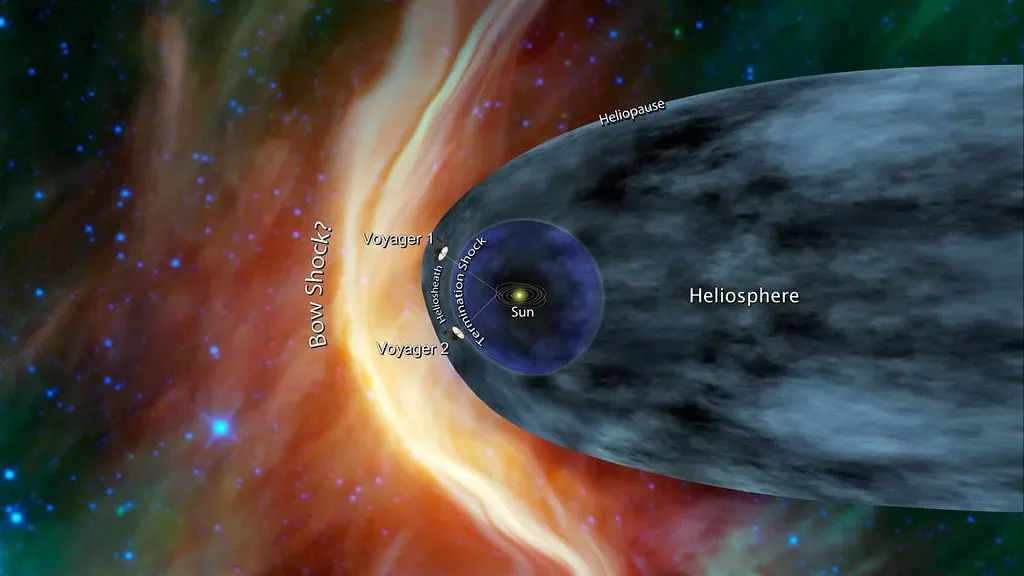
You might not have heard of the heliosphere, but it is one of the reasons you are alive to be reading this right now. The Sun sends out a constant flow of solar material called the solar wind, which creates a bubble around the planets called the heliosphere. The heliosphere acts as a shield that protects the planets from interstellar radiation. Think of it as a giant force field, stretching billions of miles in every direction.
The heliosphere acts as a protective shield, defending us against cosmic rays consisting of energetic particles that can damage living cells. Cosmic rays are generated outside our solar system and blaze along at almost the speed of light. Without this protective bubble, these high-energy atom fragments would constantly bombard Earth. You live inside the Sun’s protective atmosphere without ever knowing it. Every day, the Sun is quietly deflecting cosmic bullets aimed at your planet.
Solar Flares Can Reach Out and Disrupt Life on Earth
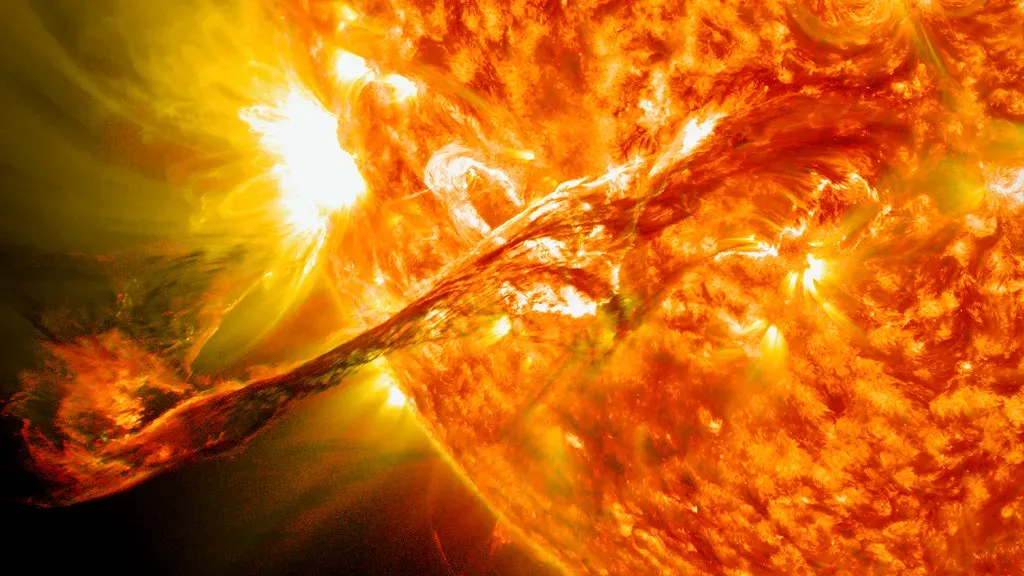
It would be easy to think of the Sun as a gentle, steady provider. It is not always that. Solar flares are created when the magnetic field lines near sunspots tangle, cross, and reorganize. This generates an explosion of energy, and gas erupts and shoots up from the Sun’s surface. These are not small events. A single solar flare releases energy that dwarfs thousands of nuclear bombs exploding simultaneously.
An increase in solar activity can affect communications on Earth, interfering with satellites and radio communications. It can also affect power grids and corrode pipelines. In December 2006, solar flares disrupted GPS signals for about 10 minutes. A particularly powerful solar storm, if it hit Earth directly, could knock out power grids across entire continents. It is hard to say for sure exactly how catastrophic it could get, but scientists who study space weather are paying very close attention. This is one area where respecting the Sun is not optional.
The Sun Operates on an 11-Year Cycle That Influences Earth
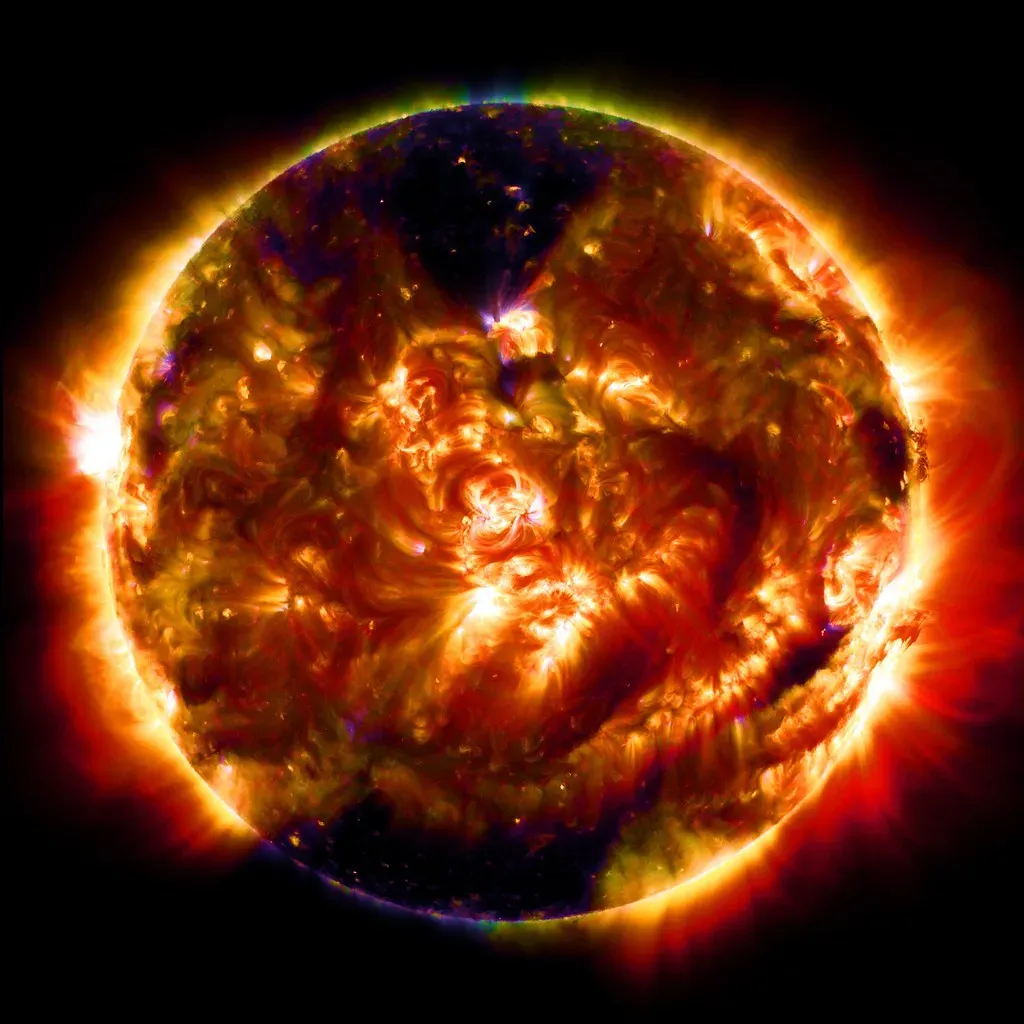
Your Sun is not a static, unchanging object. It breathes, in a way. The Sun goes through ups and downs in activity like solar flares. It gets more active with more sunspots and then less active over a period of 11 years. This is called the solar cycle. During a solar maximum, the Sun becomes dramatically more active, throwing out more energy, more flares, and more magnetic disturbances in every direction.
The Sun’s brightness changes on multiple time scales, from seconds to centuries to millennia, and these changes can influence climate. The cycle that matters most on human timescales is the 11-year sunspot cycle, which is linked to the reversal of the poles of the Sun’s magnetic fields. Researchers have even connected this cycle to drought patterns, regional climate variations, and the behavior of phenomena like El Niño. The Sun does not just light your world. It influences it in rhythmic, predictable, and sometimes surprising ways.
Sunlight Makes All the Oxygen You Breathe Possible

Let’s be real about something that doesn’t get nearly enough credit. Every breath you take is fundamentally a gift from the Sun. Plants make food through the process of photosynthesis. Together with water and carbon dioxide, the Sun helps plants make glucose. Glucose is a type of sugar that serves as food for plants. Another product of photosynthesis is oxygen, which the plants give off. That oxygen is what fills your lungs every single second of your life.
Plants in the oceans like phytoplankton and kelp also use sunlight for photosynthesis. Through them, the ocean produces more than half of the oxygen in the world. So the vast majority of every breath humanity has ever taken has come not from forests but from sunlit ocean surfaces. The Sun is not just warming your planet. It is quite literally manufacturing the air you breathe, one photon at a time, across billions of square miles of ocean.
The Sun Will Eventually Consume the Earth, but Not for a Very Long Time
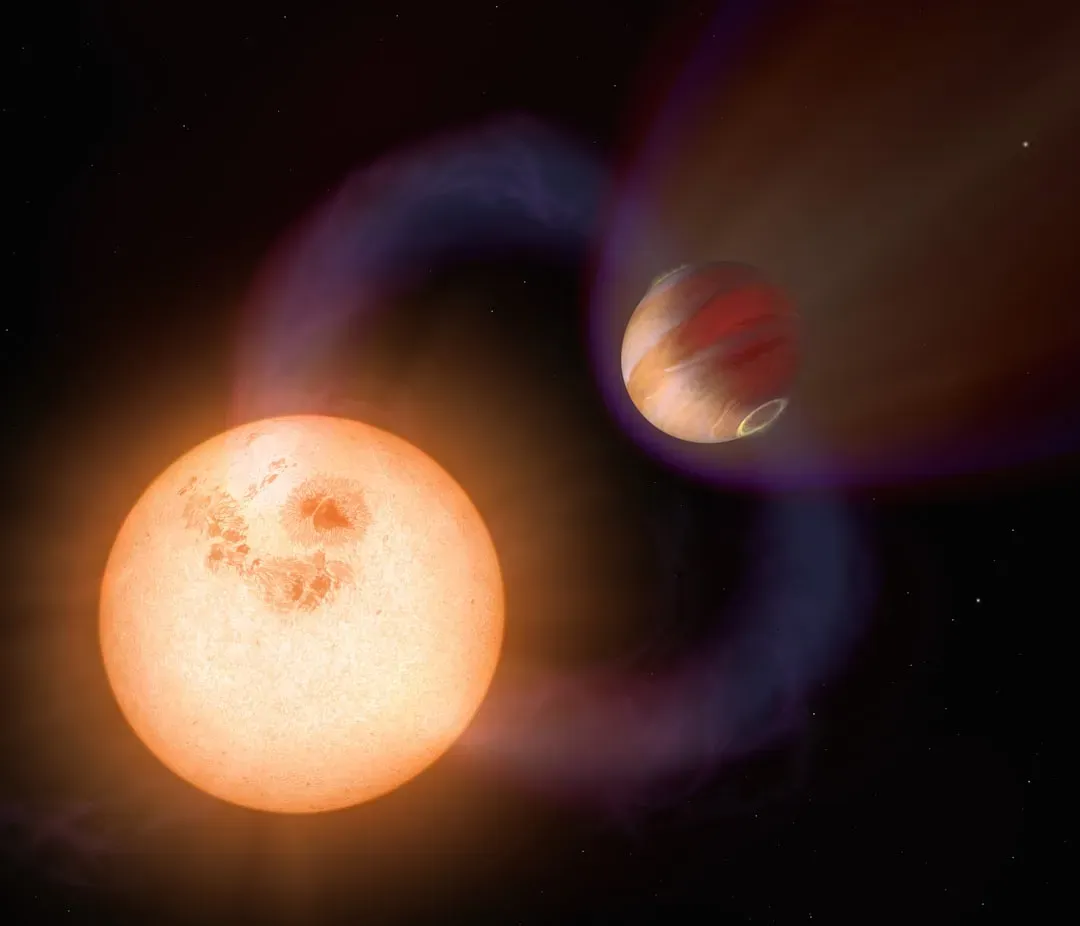
The Sun is halfway through its life. At 4.5 billion years old, the Sun has burned off around half of its hydrogen stores and has enough left to continue burning hydrogen for another 5 billion years. That is an almost incomprehensibly long time. Dinosaurs went extinct roughly 66 million years ago, and even that enormous gap of time is a tiny fraction of what remains of the Sun’s stable life.
Like all stars, your Sun will eventually run out of energy. When it starts to die, the Sun will expand into a red giant star, becoming so large that it will engulf Mercury and Venus, and possibly Earth as well. Scientists predict the Sun is a little less than halfway through its lifetime and will last another 5 billion years or so before it becomes a white dwarf. In the grand cosmic story, you are catching the Sun right in its prime. It is middle-aged, stable, reliable, and still has billions of years of fuel to go. As far as cosmic landlords are concerned, you genuinely could not have asked for better timing.
Conclusion

You share your life with a star. Not metaphorically, not poetically, but physically and literally every second of every day. The Sun built the oxygen in your lungs, the food on your plate, the weather outside your window, and the magnetic shield wrapping your entire planet. It has been doing this, without interruption, for four and a half billion years.
What strikes me most is how easy it is to take all of this for granted. The Sun rises, you grab your coffee, and the whole extraordinary cosmic arrangement that makes that morning routine possible never even crosses your mind. Maybe it should, at least occasionally. The more you understand about your Sun, the more astonishing ordinary life becomes.
The warm light hitting your face right now has been traveling through the cosmos for thousands of years just to reach you. What do you think about that?