
Every so often, history throws us a curveball: an invention so advanced, it feels like it was dropped into the past by time travelers. You look at a two‑thousand‑year‑old device and think, “There’s no way they figured that out this early.” Yet they did, often with nothing more than observation, persistence, and a lot of trial and error.
What fascinates me most is how familiar some of these inventions feel. Hot showers, automatic doors, concrete skyscrapers, precision surgery tools – we treat them as normal, almost boring. But their roots are hidden in ancient workshops, temples, and shipyards, built by people who had no computers, no modern physics, and no “how‑to” guides. Let’s dive into ten ancient inventions that were so , they still have the power to make your jaw drop.
1. The Antikythera Mechanism: The First Known Analog Computer
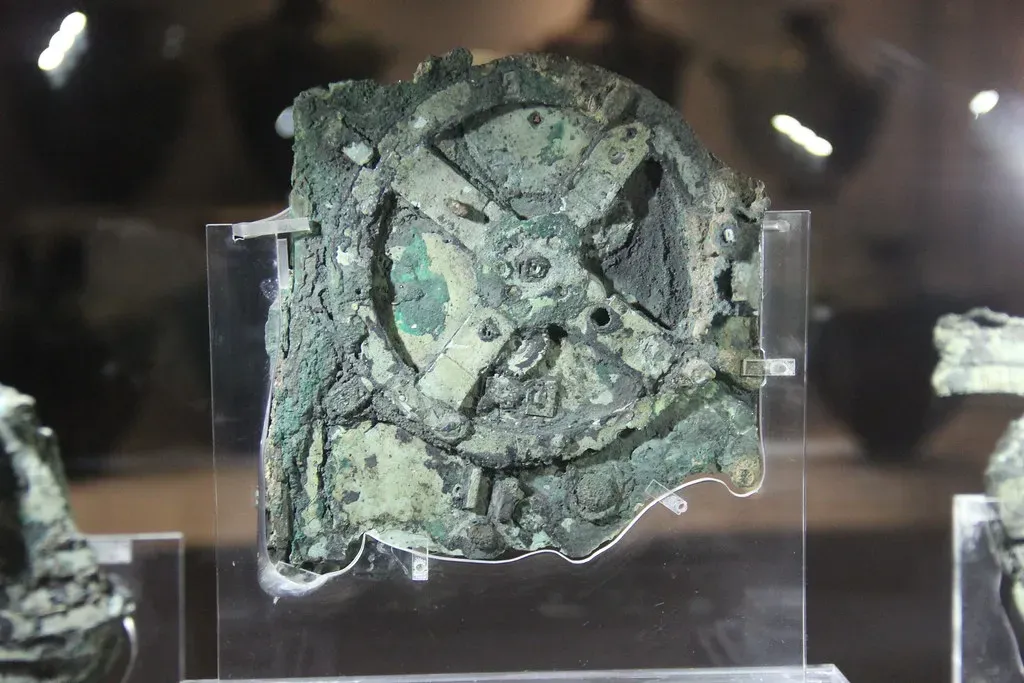
The Antikythera mechanism sat on the seabed for nearly two millennia before divers found it in a Roman shipwreck off a Greek island in the early twentieth century. At first, it just looked like a corroded lump of bronze. Only later did researchers realize it was a complex system of interlocking gears, so intricate that it wouldn’t look out of place in a fine mechanical watch. This ancient Greek device could predict eclipses, track the movements of the sun and moon, and model the positions of known planets.
What makes it shocking is not only what it did, but when it was made: more than two thousand years ago, likely in the second or first century BCE. Nothing approaching its mechanical complexity appears again in the archaeological record for many centuries afterward. Imagine if your great‑great‑grandparents had a smartphone in 1850, and then humanity just forgot how to make them for generations – that’s the kind of technological jump we’re talking about here. It proves that ancient engineers weren’t “primitive”; they were relentless problem‑solvers pushing math and metalworking to their limits.
2. Roman Concrete: A Building Material That Gets Stronger With Time

Modern concrete cracks, crumbles, and demands expensive repairs, especially in marine environments. Meanwhile, Roman harbors, piers, and domes have been standing for nearly two thousand years, battered by waves, earthquakes, and time. Roman concrete used volcanic ash, lime, and seawater, creating a chemical reaction that forms durable crystals inside the material. Instead of slowly falling apart, it can actually self‑heal small cracks as minerals grow and fill the gaps.
Some Roman buildings, like the Pantheon in Rome with its massive unreinforced concrete dome, still baffle modern engineers because of how well they’ve survived. We’re now studying Roman recipes to design more sustainable, long‑lasting concrete that doesn’t rely so heavily on carbon‑intensive production. In a strange twist, the “outdated” ancient mix may help solve very modern climate and infrastructure problems. The Romans weren’t just building for their own lifetimes; consciously or not, they were building for ours.
3. Ancient Greek Steam Technology: Hero’s “Toy” That Wasn’t So Childish

When people think of steam power, they picture smoky nineteenth‑century factories and roaring locomotives. Yet in the first century CE, an engineer in Alexandria named Hero (also called Heron) described a device that used steam to create rotational motion. His aeolipile was basically a hollow sphere mounted on an axis, with steam jetting out of small nozzles, causing it to spin like a wild sprinkler. By modern standards, it was simple – but conceptually, it was a steam turbine long before the Industrial Revolution.
Hero also detailed automatic doors for temples powered by heat and hidden mechanisms, and even coin‑operated devices that dispensed water when a coin dropped into a slot. These were treated more like curiosities or stage magic than engines of economic change. Sometimes I wonder what might have happened if someone had connected Hero’s “toys” to pumps or carts on a large scale. Instead, the knowledge sat in scrolls, admired but not fully exploited, a hint that technology isn’t just about invention – it’s about timing, need, and imagination.
4. The Baghdad Battery: Early Experiment in Electricity?
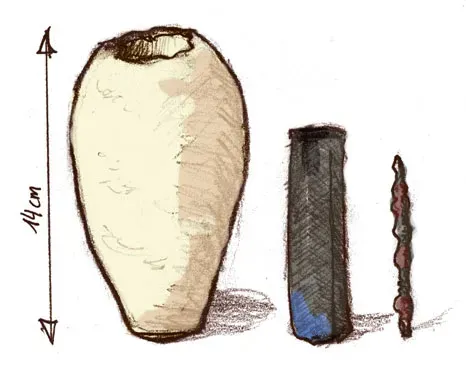
Among the more mysterious artifacts from antiquity are a set of clay jars found near modern‑day Baghdad, dating back roughly two thousand years. Each jar contained a copper cylinder and an iron rod, separated so they didn’t touch. When filled with an acidic liquid like vinegar or wine, this setup can generate a small electric current, working similarly to a simple battery. That alone is enough to make you pause and rethink what people may have experimented with back then.
Scholars still debate what these so‑called Baghdad Batteries were actually for, since there’s no clear written manual explaining their purpose. Some theories suggest they might have been used for electroplating small objects with a thin layer of metal, perhaps for decorative or ritual items. Even if that’s still uncertain, the design shows that people in the ancient Near East were curious about more than just fire, wheels, and stone tools. They were playing, deliberately or accidentally, with the same basic principles that now power every phone and laptop you own.
5. Ancient Indian Plastic Surgery and Medical Tools
Centuries before modern hospitals and surgical theaters, physicians in ancient India were performing remarkably sophisticated operations. Texts attributed to the surgeon Sushruta, dating back more than two thousand years, describe procedures like cataract removal and complex reconstructive surgery. One of the most striking examples is early rhinoplasty – rebuilding noses using flaps of skin from the patient’s cheek or forehead. The method was so effective that versions of it were adopted in Europe many centuries later.
These surgeries weren’t random stabs in the dark; they involved carefully crafted tools, detailed anatomical knowledge, and guidelines for cleanliness and recovery. The Sushruta tradition also emphasized training, comparable in spirit to formal medical education. While they didn’t have anesthesia or antibiotics as we know them, their blend of practical experimentation and observation was way ahead of what many people imagine for “ancient” medicine. It’s a reminder that, long before white coats and MRI scanners, some healers were pushing the boundaries of what the human body could endure and recover from.
6. The Indus Valley Urban Planning and Sewage Systems
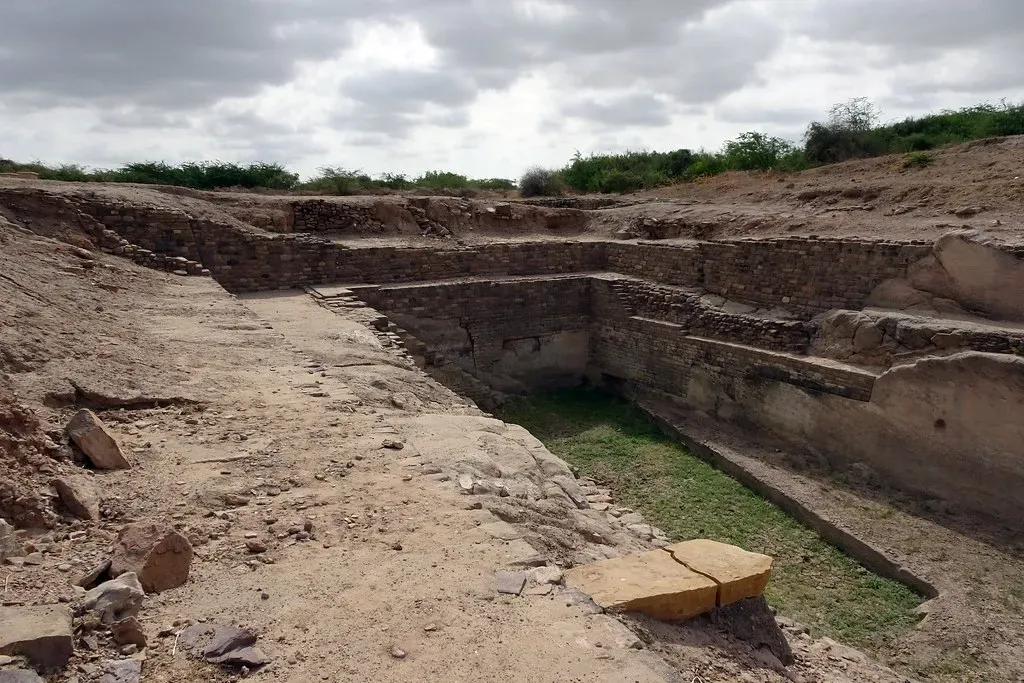
When we picture early cities, we often imagine chaos: muddy streets, cramped huts, and waste tossed out the window. The Indus Valley civilization, which flourished thousands of years ago in what’s now Pakistan and northwest India, tells a very different story. Cities like Mohenjo‑daro and Harappa had straight, carefully laid‑out streets, standardized fired‑brick buildings, and a surprising level of urban order. Homes often included private bathrooms and drains connected to covered sewage channels running beneath the streets.
This wasn’t just about comfort; it was about public health and coordinated planning on a citywide scale. The drainage systems show deliberate design to keep waste and water flowing away from living spaces, something many later societies struggled to manage. Walking through reconstructions of these cities, you get the feeling that their planners thought long‑term, the way a good city architect does today. For a civilization that left behind no deciphered written records, its infrastructure speaks loud and clear: they understood that good living depends on more than just strong walls – it depends on how everything connects.
7. Greek Fire: A Fearsome Ancient Chemical Weapon

Centuries before modern flamethrowers, the Byzantine Empire wielded a weapon so terrifying it became almost legendary: Greek fire. Used especially in naval battles from around the seventh century CE, it was a flammable liquid projected onto enemy ships, where it clung and burned fiercely, even on water. Contemporary enemies were stunned not only by the flames but by how difficult they were to extinguish. Water, the usual savior, often made things worse.
The exact formula for Greek fire has been lost, kept as a state secret and never fully recorded, which only adds to its aura. Modern chemists think it involved a mix of substances like petroleum derivates, resins, and possibly quicklime, but no one can say for sure. Beyond the chemistry, the Byzantines engineered pressurized systems and siphons to project it effectively, turning ships into early platforms for controlled chemical warfare. It’s a rare case where ancient innovation feels disturbingly modern, and honestly, a bit too familiar if you’ve seen footage of twentieth‑century weapons.
8. The Chinese Seismograph: Detecting Earthquakes From Afar
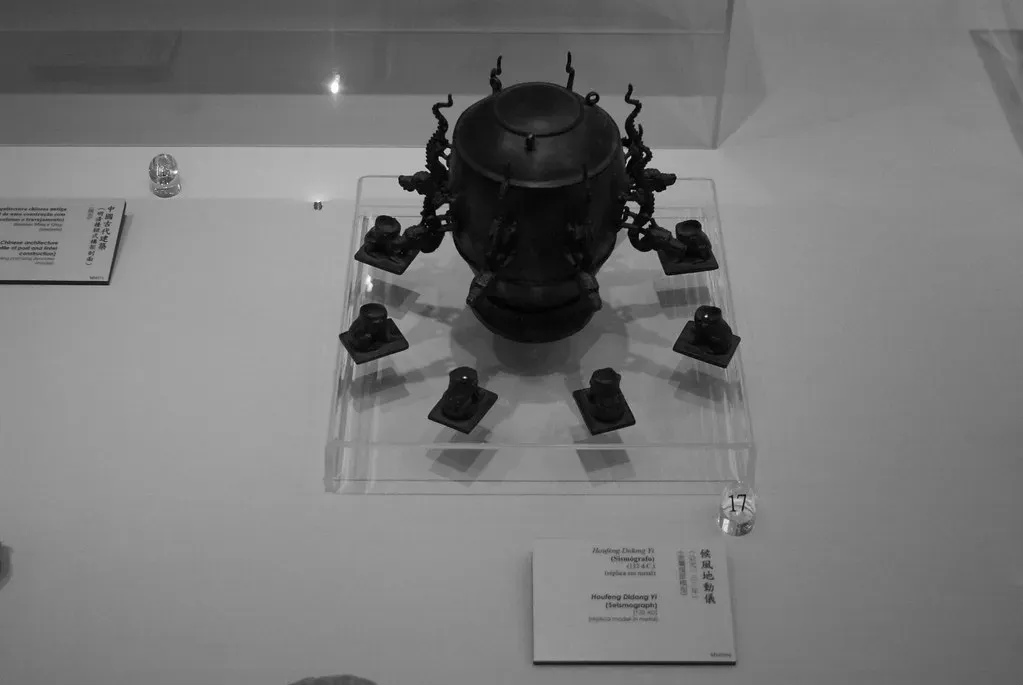
In the second century CE, long before seismology became a formal science, a Chinese polymath named Zhang Heng devised a device that could detect distant earthquakes. His seismograph was a large bronze vessel decorated with dragons, each holding a metal ball in its mouth. Around the base were corresponding frogs with open jaws. When an earthquake occurred, an internal mechanism would cause one of the dragon’s mouths to release its ball into a frog’s mouth, indicating the direction the quake came from.
We still don’t fully understand the exact internal workings, but we know it was sensitive enough to pick up quakes hundreds of kilometers away. That’s incredible for a purely mechanical instrument with no electronics, no satellites, and no digital sensors. Its existence shows how seriously ancient Chinese scholars took the challenge of monitoring natural disasters to help rulers respond appropriately. It’s not that different in spirit from the data dashboards and early‑warning systems we rely on today – just a lot more beautiful and poetic in its design.
9. The Greek Archimedes’ Screw and Advanced Engineering
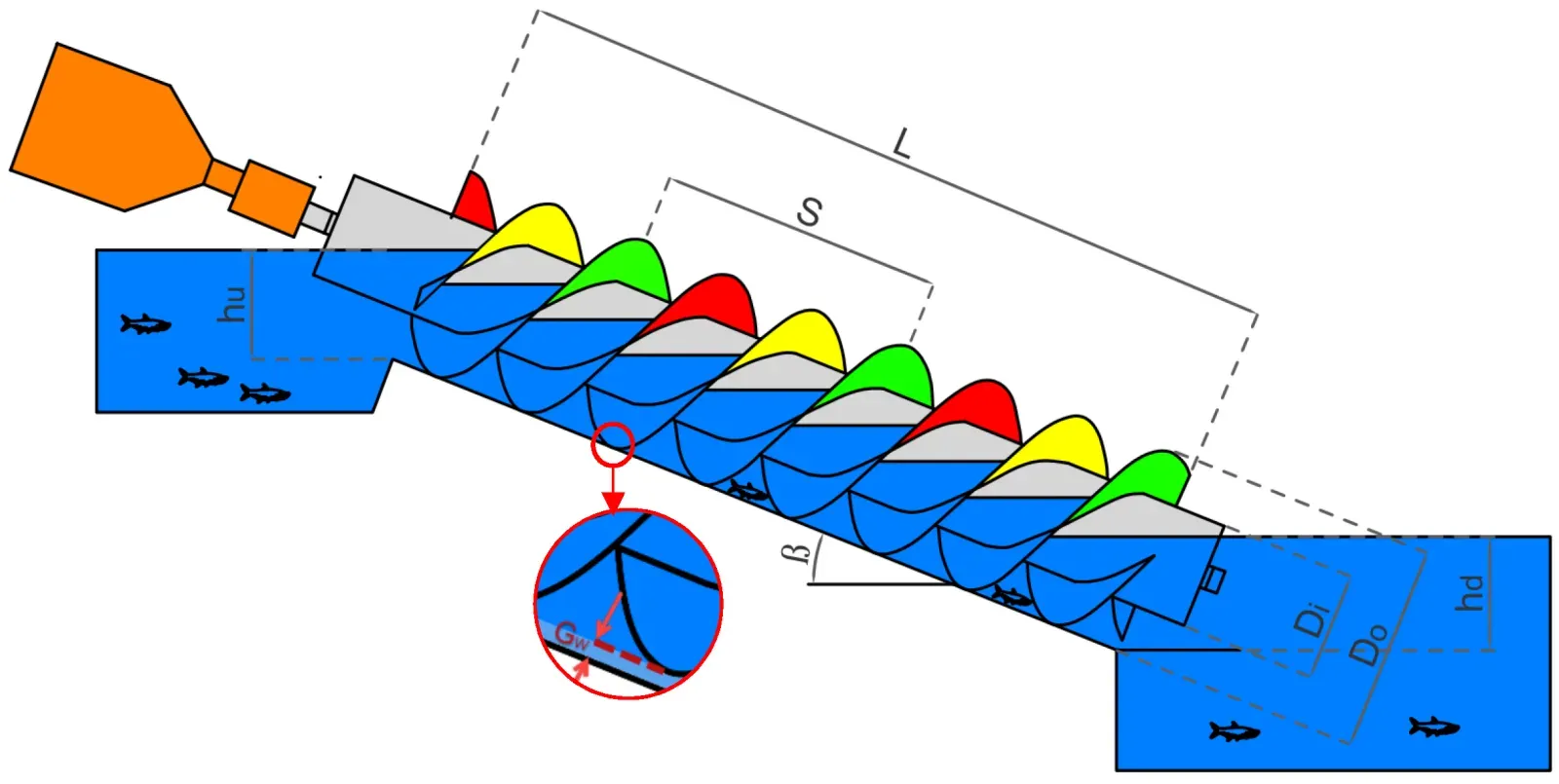
On paper, the Archimedes’ screw looks almost too simple: a helical surface inside a cylinder, turned by hand to lift water upward. But the elegance lies in how it turns human effort into a continuous, efficient flow, making irrigation and drainage far easier than hauling buckets all day. Credited to Archimedes in the third century BCE, the device was widely used around the Mediterranean and, later, beyond. In a sense, it’s an early example of smart mechanical design doing the heavy lifting for people.
What’s wild is that versions of this screw pump are still used in the twenty‑first century for moving water, wastewater, and even grain. In some small hydroelectric plants, the principle is reversed: water turning the screw to generate power. When a design survives that long essentially unchanged, you know its inventor was thinking far beyond their own era. It’s like the ancient equivalent of a user interface that just works – intuitive, robust, and adaptable to new purposes for thousands of years.
10. The Lycurgus Cup: Ancient Nanotechnology in Glass
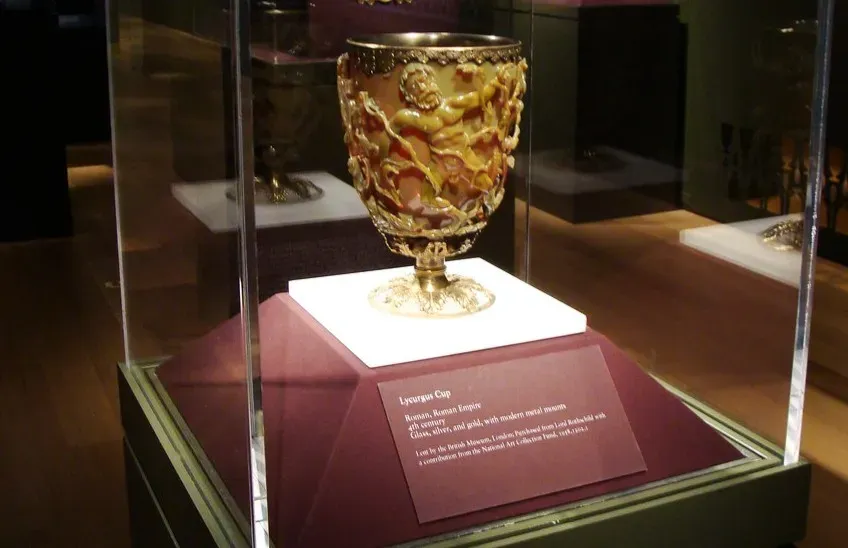
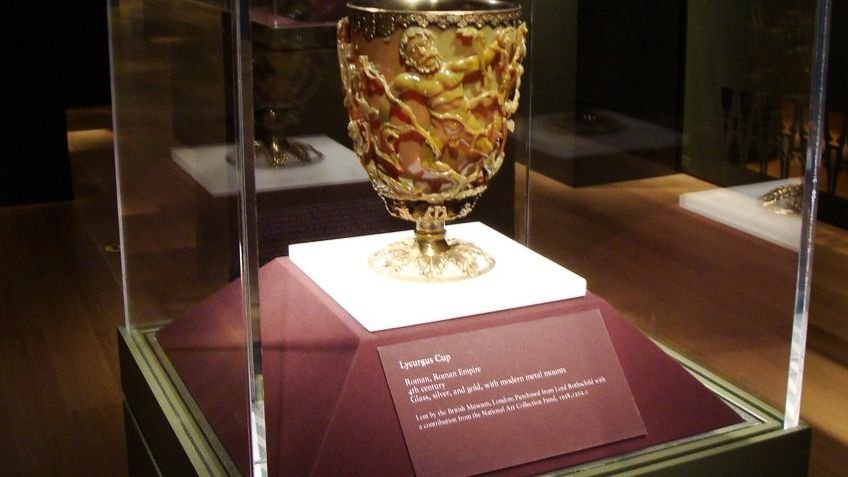
At first glance, the Lycurgus Cup is just a beautiful Roman glass drinking vessel from the fourth century CE. Then someone shines light through it, and it turns from opaque green to a deep, glowing red. This dramatic color change comes from tiny particles of gold and silver embedded in the glass, scattered at a scale so small that modern scientists classify it as a kind of nanotechnology. The particles interact with light in different ways depending on the direction of illumination, producing that magical shift.
The artisans who made it obviously didn’t think in terms of “nanoparticles,” but they mastered a process sophisticated enough to control matter at an incredibly fine level. The effect is so precise that modern labs study the cup to understand how the glass was formed and how the metals were dispersed so evenly. It’s a humbling reminder that sometimes, ancient workers discovered high‑level material science by feel, repetition, and a sharp eye for beauty. They may not have written scientific papers, but they left behind objects that still surprise scientists today.
The Past Was Never Simple

Looking at these inventions side by side, it’s hard to hold onto the idea that history moves in a straight, steady line from simple to complex. Instead, it feels more like waves: bursts of brilliance, periods of forgetting, rediscovery, and reinvention. Ancient engineers and artisans wrestled with the same questions we do now – how to move things, heal bodies, harness energy, predict danger, and make materials do incredible things.
Personally, what strikes me most is how often advanced ideas appeared, then faded or were underused because society wasn’t ready to push them further. The Antikythera mechanism, Hero’s steam devices, and those early experiments with electricity hint at alternate timelines where technology raced ahead centuries earlier. In the end, these inventions tell us that human curiosity and ingenuity have always been powerful, long before digital code and microchips. Knowing that, it’s hard not to wonder: which of today’s “toys” will future generations look back on as the seeds of their most astonishing breakthroughs?
Jan loves Wildlife and Animals and is one of the founders of Animals Around The Globe. He holds an MSc in Finance & Economics and is a passionate PADI Open Water Diver. His favorite animals are Mountain Gorillas, Tigers, and Great White Sharks. He lived in South Africa, Germany, the USA, Ireland, Italy, China, and Australia. Before AATG, Jan worked for Google, Axel Springer, BMW and others.